
The Chronicle of an Era: The Shadow of the Mountains, the Corner Club, and the Acoustic Guerrilla of 1973
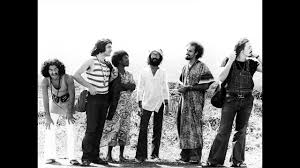
By the arrival of 1973, the state of Minas Gerais had become a profound, insular sanctuary for the absolute vanguard of Brazilian music. While Rio de Janeiro was paralyzed by the military regime’s direct censorship and São Paulo rode the concrete wave of industrial growth, the historic, fog-shrouded mountain towns of Belo Horizonte and Diamantina birthed a quiet, revolutionary collective: the Clube da Esquina (The Corner Club). Yet, within this legendary circle of poets and acoustic strummers, there existed a highly explosive, plugged-in musical engine that demanded a sound far more complex, aggressive, and expansive than traditional folk-pop. This engine was Som Imaginário.
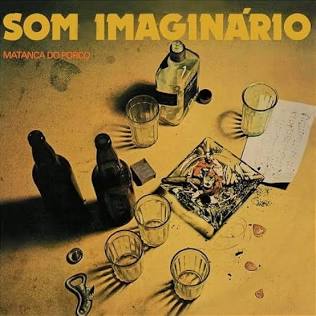
Originally assembled in 1970 by the visionary producer Milton Nascimento to serve as his live backing orchestra, Som Imaginário quickly mutated into a fiercely autonomous, highly experimental entity. By 1973, scaled down to a radical core after the departure of members like Zé Rodrix, the band entered the Odeon Studios in Rio de Janeiro to record their third and definitive album, Matança do Porco (“Slaughter of the Pig”). The historical context was heavy; the album’s very title was an allegorical, dark critique of the state-sponsored violence and social cannibalism of the military dictatorship. Shielded by dense, complex instrumental arrangements and wordless vocal choruses, the group created an uncompromising progressive masterpiece. They did not come to track standard commercial radio hits. They came to build a monumental, sacred bridge between the centuries-old colonial baroque traditions of Minas Gerais and the high-voltage, cross-Atlantic vanguard of British progressive rock and American jazz fusion.
The Biography & The Construction of a Myth: The Architects of the Imaginative Sound
The artistic trajectory of Som Imaginário is a staggering textbook on collective virtuosity and genre-defying brotherhood. At the absolute conceptual and harmonic center of this operation stood the brilliant pianist, keyboardist, and composer Wagner Tiso. Deeply trained in classical music, sacred church liturgy, and modern jazz, Tiso possessed an extraordinary ability to construct immense, sweeping orchestral arrangements that felt both ancient and futuristic. Alongside him was the legendary guitarist Toninho Horta, a musician whose chordal vocabulary, fluid improvisational lines, and unique use of altered chords would eventually transform the global landscape of modern jazz guitar.
To ground these complex harmonic tapestries, Som Imaginário deployed a rhythm section of terrifying, near-telepathic power: the deep, elastic, and driving electric basslines of Luiz Alves and the explosive, color-rich polyrhythmic drum architecture of Robertinho Silva, flanked by the versatile multi-instrumentalist Tavito.
When this collective tracked tape, they operated not as a traditional rock band, but as a mini-symphonic orchestra. Wagner Tiso sat behind acoustic grand pianos, vintage Hammond organs, and early synthesizers, creating a dense, multi-layered environment where traditional regional rhythms—such as the congado and folia de reis—were forcefully accelerated into the outer limits of space-rock, creating a sonic ecosystem that was entirely unique to the Brazilian interior.
The Anatomy of the Vinyl: A Sensorial Excursion Through Sacred Fuzz and Haunting Choirs
To drop the diamond tip onto an original 1973 Odeon Records stereo pressing of this magnificent masterpiece is to experience an immediate, physical wall of analog depth—an incredibly warm, woody, and natural room ambiance, a beautifully balanced stereo separation, and a deep, punching low-end presence that makes your listening room vibrate with the density of a gothic cathedral. The album launches its progressive manifesto with the breathtaking multi-part title suite, “Matança do Porco”. The track opens with a haunting, solitary acoustic piano progression from Wagner Tiso, soon joined by a sweeping, melancholic string section that evokes the colonial solitude of Minas. Suddenly, the arrangement explodes into a monstrous, heavy progressive-rock groove. Toninho Horta’s electric guitar enters the frame with a searing, highly saturated fuzz-tone, tearing through the classical orchestration with a fierce, physical authority. Milton Nascimento’s guest vocals enter not as lyrics, but as a wordless, soaring, and agonizing instrument, screaming over the heavy rhythm section in a stunning display of emotional gravity that leaves the air vibrating with pure theatrical suspense.
The landscape shifts into an intensely beautiful, sun-drenched, and pastoral jazz-fusion dreamstate on Side A with the masterpiece “Armina”. Built around an intricate, fast-moving acoustic guitar and piano motif, this composition highlights the group’s profound chemistry. Robertinho Silva handles the drum kit with extraordinary artistic freedom, painting across his cymbals and rims with a fluid, non-linear timekeeping style that allows the melody to breathe. A lush horn arrangement enters from the far edges of the stereo field, lifting the listener into a weightless, cinematic flight over the green valleys of Minas Gerais. It is an incredibly tátil listening experience, where the smooth satin of the woodwinds continually interacts with the gritty, rhythmic drive of the bass and drums, creating a mesmerizing friction that feels deeply alive.
Flip the heavy vintage wax over to Side B, and your speakers are instantly electrified by the avant-garde, near-frenetic madness of “A Noite”. This track is a tour de force of collective studio experimentation. Driven by a fast, unstable rhythm that slides fluidly between time signatures, the composition features Wagner Tiso unleashing a wave of distorted organ runs and early electronic frequencies that mimic the chaotic anxieties of an urban night under military rule. The entire rhythm section pushes their instruments to the edge of absolute tape saturation, creating a dense web of counter-melodies and polyrhythmic collisions that showcases the absolute apex of 1970s South American progressive crossover musicianship.
The record achieves its absolute emotional, structural, and spiritual climax with the closing track, “Mar de Espanha”. A composition built around a slow-burning, deeply moving modal framework, the track functions as a definitive testament to Toninho Horta’s genius. He delivers a spectacular, historic guitar solo that combines the lightning speed of post-bop jazz improvisation with the deep, soulful lyricism of traditional Brazilian folk music. As Tiso’s piano cascades like a joyful, cascading waterfall beneath Horta’s final, soaring notes, the arrangement slowly dissolves into a beautiful, warm, and natural analog hiss, leaving the listener suspended in a state of absolute spiritual awe.
The Legacy and Modern Coordinates: The Holy Grail of the Progressive Atlantic Vanguard
The historical, cultural, and critical trajectory of Som Imaginário’s Matança do Porco stands today as one of the most vital, mythic, and deeply revered chronicles in the history of global progressive music. Upon its initial release in 1973, the album was a profound cultural shockwave, leaving traditional MPB listeners completely bewildered by its aggressive electric instrumentation, while attracting the intense, lifelong devotion of the global underground progressive community. Because original pressings were manufactured in highly limited quantities, the vinyl became a legendary, near-mythic ghost sought after by a tiny global elite of record collectors, commanding staggering prices on the international market.
As the global musical atlas began to decentralize in the 21st century, the modern coordinates of Jazz Latitude look directly back to this 1973 Odeon session as an immortal, foundational monument. Contemporary jazz-fusion producers, independent post-rock bands, and global crate-diggers treat Matança do Porco as a sacred textbook. They study its total devotion to raw sonic texture, its fearless synthesis of classical orchestration with heavy rock dynamics, and its use of wordless vocalization as a powerful political tool. Som Imaginário carved a deep, permanent, and fiercely brilliant coordinate on our global map: an immortal Brazilian outpost that stands as an eternal testament to the power of cross-genre defiance, geographic pride, and the unchained, limitless depth of the human imagination.