Before Utrecht: How Snarky Puppy Found Its Sound
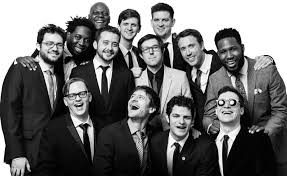
When Snarky Puppy arrived in Utrecht in October 2013 to record We Like It Here, the band was approaching a moment that would eventually become inseparable from its identity. The cameras, the audience sitting only a few feet from the musicians, the dense arrangements, the multiple keyboards, guitars, horns and percussion, and the sense that a studio session could behave like a concert all seemed perfectly natural by then. Yet none of those elements had appeared overnight. They were the result of almost a decade spent discovering what kind of ensemble Snarky Puppy could become. What began among jazz students in Denton, Texas, had gradually absorbed the gospel and R&B culture of nearby Dallas, the rhythmic force of funk, the scale of fusion, the discipline of ensemble writing and an increasingly international range of influences. Just as important, the group had developed an unusual way of presenting that music. Instead of treating recording as an isolated studio process and performance as something separate, Snarky Puppy began bringing audiences into the room and allowing cameras to document the interaction. By the time We Like It Here was recorded, the band had built not only a musical language but a method for making that language visible.
Bassist and composer Michael League formed Snarky Puppy in 2004 while studying jazz at the University of North Texas. Denton offered a formidable environment for a young musician. The university’s jazz program had produced generations of professional players, and its ensemble culture emphasized reading, arranging, precision and the ability to function inside large groups.
Those skills would become crucial.
Snarky Puppy was never designed around the mythology of a single virtuoso surrounded by accompanists. League was clearly the bandleader and increasingly its principal composer and producer, but the ensemble depended on musicians who could move between foreground and background without losing individual character.
That distinction helps explain the name Snarky Puppy came to represent.
It was a band, but not a band in the conventional sense of four or five permanent members. Its personnel expanded and contracted according to recordings, tours and availability. Over the years, numerous instrumentalists became part of what the group informally called its extended family.
This flexibility might have produced instability.
Instead, it became one of Snarky Puppy’s defining strengths.
The continuity existed in the compositions, the arrangements and the collective approach rather than in an absolutely fixed lineup.
Denton Was Only the Beginning
The earliest Snarky Puppy recordings reveal a group still discovering the balance that would later become unmistakable. Live at Uncommon Ground appeared in 2005, followed by The Only Constant in 2006, The World Is Getting Smaller in 2007 and Bring Us the Bright in 2008.
These records belong to the band’s history, but none had the cultural impact that would arrive later.
What changed was not simply that the musicians became better.
The musical environment around them expanded.
League’s move into the professional scene around Dallas brought him into sustained contact with gospel, R&B and soul musicians. The official history of Snarky Puppy identifies this period as a decisive transformation, particularly through musicians such as drummer Robert “Sput” Searight and keyboardists Shaun Martin and Bobby Sparks, as well as the influence of keyboardist Bernard Wright.
This encounter altered the band’s rhythmic priorities.
The jazz education remained audible in the complexity of the writing, but complexity no longer needed to sound academic. Harmony could be sophisticated while the bass line remained physical. Odd meters did not have to announce themselves as technical puzzles. Dense ensemble passages could lead directly into grooves whose effect was immediate.
This became one of Snarky Puppy’s most important principles.
The listener did not need to understand why something was difficult in order to feel it.
The relationship with the Dallas gospel scene reinforced that principle. Gospel musicians could possess extraordinary harmonic and rhythmic knowledge while treating virtuosity as part of communication rather than an end in itself. The music could be highly developed and still reach the room directly.
For League, this offered a path away from one of the traps confronting technically trained jazz musicians: confusing complexity with depth.
Snarky Puppy would certainly make complex music.
But increasingly, it wanted that complexity to move.
The Architecture of a Collective
As the ensemble developed, its unusual instrumentation became central to the sound.
Multiple keyboardists might appear together. Several guitarists could divide rhythmic, textural and melodic functions. Horns could operate as a compact section rather than simply providing individual solos. Drums and percussion created layered rhythmic structures, while League’s electric bass frequently functioned as the point around which those layers were organized.
The arrangements required discipline.
A large ensemble playing groove-based instrumental music can easily become overcrowded. Snarky Puppy’s solution was not to make every player equally active at every moment. The group learned to construct arrangements through addition and subtraction.
A keyboard enters.
A guitar disappears.
Horns answer a phrase.
Percussion changes the rhythmic surface without changing the pulse.
A soloist emerges while the ensemble reduces itself around that voice.
Then the larger sound returns.
This sense of architecture would become essential to We Like It Here. Some of the album’s most memorable climaxes work precisely because the band has spent several minutes controlling density before releasing it.
The collective format also changed the meaning of virtuosity.
There were musicians in Snarky Puppy capable of spectacular solos, but the ensemble’s identity could not depend exclusively on them. A player might dominate one composition and barely appear in another. The music required individuals to accept that the strongest contribution could sometimes be a repeated figure, a sustained chord or silence.
That restraint became part of the groove.
Tell Your Friends
The decisive step toward the format later associated with Snarky Puppy came with Tell Your Friends.
Recorded in Louisiana in November 2009 and released in 2010, the project represented the band’s first serious experiment with recording and filming an album live in the studio before an audience.
The idea was simple but consequential.
Studio recording traditionally attempts to create conditions of control. Concert recording accepts uncertainty in exchange for energy. Snarky Puppy wanted both.
An audience could change the musicians’ behavior. The players were no longer performing only for microphones and one another. Reactions occurred immediately. A solo could generate visible excitement. A rhythmic break could produce laughter, movement or applause.
At the same time, the environment remained controlled enough for detailed recording and filming.
The distinction between album and performance began to dissolve.
Tell Your Friends was made with limited resources, and the process was far from the highly organized visual productions that later became associated with the band. But it established a principle Snarky Puppy would continue developing: the act of making the record could itself become the event.
This was particularly suited to the band’s music.
Snarky Puppy depended on interaction, and interaction becomes easier to understand when it can be seen.
Watching a drummer react to a bassist, a keyboardist glance toward another player or a horn section prepare for an entrance reveals relationships that an audio recording alone can conceal.
The camera was not replacing listening.
It was exposing the mechanics of collective listening.
From Tell Your Friends to groundUP
By groundUP, recorded and filmed at Shapeshifter Lab in Brooklyn in December 2011 and released in 2012, the method had become considerably more confident.
The title would acquire significance beyond the album itself.
League founded GroundUP Music as a way to create a more supportive environment for Snarky Puppy and other artists, turning a record title into an organizational philosophy. Independence was not merely a romantic rejection of the music industry. It was a practical response to the difficulty of building a career around instrumental music that moved freely across categories.
Snarky Puppy was difficult to market through a single genre label.
Jazz described part of the language.
So did funk.
So did gospel, R&B, fusion and rock.
There were also increasingly strong relationships with Brazilian, Caribbean and other international musical traditions.
Instead of solving this problem by choosing one identity, the group allowed the ambiguity to become part of its identity.
groundUP strengthened the connection between music and visual presentation. Performances such as “Thing of Gold,” “Quarter Master” and “Binky” showed a band increasingly comfortable with the idea that listeners might first encounter a composition by watching it.
This mattered at precisely the moment online video was changing how instrumental music circulated.
A long instrumental performance no longer depended entirely on radio, record-store discovery or specialist jazz publications. It could move directly from a recording room to a viewer’s screen.
For a band whose appeal depended heavily on visible interaction, this was an unusually powerful development.
A Different Relationship With the Audience
Snarky Puppy’s audience also began to change.
The group could attract jazz listeners, but it was never confined to them. Musicians were naturally drawn to the technical sophistication of the arrangements. Drummers could focus on rhythmic displacement. Keyboardists could examine voicings and synthesizer choices. Bassists could follow League’s ability to anchor complicated ensemble structures without losing the groove.
But the music also reached listeners who had no interest in analyzing any of those details.
That crossover was essential.
Snarky Puppy did not simplify the compositions in order to become accessible. Instead, it increasingly organized complexity so that the emotional and rhythmic effect remained immediate.
This is a much more difficult achievement.
A piece can move through unusual meters while still feeling natural. An arrangement can contain multiple independent lines while presenting a clear central idea. A solo can become technically extraordinary without interrupting the momentum of the composition around it.
The band was learning how to make sophistication disappear into experience.
And the presence of an audience in the recording room reinforced that objective.
If an arrangement worked only as an intellectual construction, the reaction would be different. When a groove landed, the room revealed it.
Family Dinner and the Expanding Circle
Family Dinner – Volume One, recorded in March 2013 at the Jefferson Center in Roanoke, Virginia, extended the collective idea in another direction.
Instead of presenting Snarky Puppy exclusively as an instrumental ensemble, the project brought a series of vocalists into the band’s musical environment. Lalah Hathaway, Lucy Woodward, N’Dambi, Magda Giannikou, Shayna Steele, Chantae Cann, Tony Scherr and Malika Tirolien appeared across the project.
The concept tested the band’s adaptability.
A group capable of constructing elaborate instrumental arrangements now had to make space for singers with distinct identities. Snarky Puppy became the connective tissue rather than the permanent center of attention.
One performance would have enormous consequences.
With Lalah Hathaway, the band recorded Brenda Russell’s “Something.” The performance eventually earned the Grammy Award for Best R&B Performance in January 2014.
That Grammy would arrive after the sessions for We Like It Here, which is important chronologically.
When Snarky Puppy entered Kytopia in October 2013, it was not yet a Grammy-winning ensemble arriving to celebrate established success.
The breakthrough was still happening.
Europe Changes the Scale
Another transformation had already begun through touring.
Snarky Puppy discovered an especially receptive audience in Europe. The band’s own account of We Like It Here emphasizes the importance of its first overseas performance before a sold-out London audience. Europe quickly became more than another territory on a tour schedule.
The response suggested that the band’s mixture of groove, improvisation and ensemble complexity could travel remarkably well.
There was historical logic to this.
European audiences had supported American jazz for generations, while the continent had also developed extensive networks of festivals, clubs and independent venues for instrumental music. By the 2010s, those networks could accommodate an ensemble that did not fit comfortably into traditional jazz categories.
Snarky Puppy could perform for listeners interested in fusion without becoming a revival band.
It could attract jazz audiences without behaving like a conventional jazz combo.
It could reach younger musicians who discovered performances online before ever encountering the group through an album.
Europe became part of the band’s developing ecosystem.
That relationship ultimately brought Snarky Puppy to the Netherlands.
Toward Utrecht
By October 2013, nearly every element required for We Like It Here was already in place.
The collective structure had been developed through years of changing personnel.
The encounter with Dallas gospel and R&B had deepened the groove.
The band’s early albums had provided the laboratory.
Tell Your Friends had introduced the live-in-studio recording model.
groundUP had refined it and helped give birth to an independent musical infrastructure.
Family Dinner had demonstrated that the ensemble could reshape itself around other voices.
Touring had created an international audience.
Now those elements converged at Kytopia Studios in Utrecht.
From October 7 through 10, Snarky Puppy recorded and filmed eight compositions before a studio audience. There would be no overdubs on the performances that defined the project. The audience sat close enough to observe the smallest interactions. Cameras surrounded musicians who had become increasingly comfortable performing while being documented.
The repertoire was entirely instrumental.
The pieces were demanding.
But the objective was not to demonstrate how difficult they were.
It was to make them feel inevitable.
The album would open with “Shofukan” and move through “What About Me?,” “Sleeper,” “Jambone,” “Kite,” “Outlier” and “Tio Macaco” before reaching the ten-minute “Lingus.”
Those eight performances would eventually become some of the most widely recognized music Snarky Puppy had made.
Yet We Like It Here did not represent a sudden reinvention.
Its achievement was almost the opposite.
After nearly a decade of searching, Snarky Puppy had finally created an environment in which everything the band had been learning could exist at the same time.
Jazz without stylistic obedience.
Complexity without academic distance.
Virtuosity without a permanent star.
A studio that behaved like a stage.
An audience that became part of the session.
And a collective whose individual musicians could step forward precisely because the music never stopped belonging to everyone.
The room in Utrecht was ready.
Now they had to play.
Buy Amazon

Inside We Like It Here
The first sound of We Like It Here does not announce a revolution. “Shofukan” begins by establishing atmosphere and pulse, allowing the ensemble to assemble itself gradually rather than arriving at maximum force. That choice says a great deal about Snarky Puppy’s approach in Utrecht. The album contains formidable players, dense arrangements and moments of extraordinary individual virtuosity, but its deepest achievement lies in organization. Michael League and the musicians around him had learned how to make a large ensemble breathe: when to add weight, when to remove it, when to allow repetition to create anticipation and when to release the accumulated energy. Across eight compositions, We Like It Here repeatedly turns complexity into momentum. Its odd meters, layered keyboards, horn writing and rhythmic subdivisions matter because they serve pieces whose identities remain clear even when the internal machinery becomes intricate. The studio audience intensifies that process. Applause and visible reactions are not substitutes for musical meaning; they reveal how effectively the arrangements communicate in real time. What happened at Kytopia was therefore more interesting than a display of technical ability. Snarky Puppy had found a way to make sophisticated ensemble music behave socially.
“Shofukan,” written by League, is the ideal entrance into that world. Its melodic identity is unusually direct for a piece containing so much internal detail, and that directness gives the arrangement room to expand. The ensemble can move between tightly coordinated passages and broader rhythmic spaces without losing the central character of the composition. Horns do not function merely as decoration over a rhythm section; they participate in the construction of the groove, sometimes reinforcing accents, sometimes widening the harmony and sometimes turning short phrases into communal statements. Keyboards occupy different layers rather than competing for the same harmonic territory, while guitar parts add texture and rhythmic definition. Beneath all of this, bass, drums and percussion prevent the arrangement from becoming top-heavy.
The result demonstrates an important Snarky Puppy principle: density does not have to mean congestion.
There can be many musicians in the room without everyone playing continuously.
“Shofukan” also became one of the group’s most enduring concert pieces because its architecture leaves space for transformation. The composition is recognizable enough to survive changes in personnel, solos and performance circumstances. Its closing material, in particular, invites participation and expansion. Over time, audiences would come to recognize it almost as communal repertoire, but the Utrecht performance captures the piece before years of touring could turn those responses into ritual.
That freshness matters.
The musicians know the arrangement.
They do not yet sound trapped inside its reputation.
Rhythm as Composition
“What About Me?” shifts the emphasis toward rhythm without reducing the composition to a vehicle for drumming. Larnell Lewis is crucial to the performance, but the effectiveness of his playing comes from the relationship between the drum part and the ensemble around him. Rhythmic complexity is distributed across the group. Guitar figures, bass movement, keyboard punctuation and horn accents continually redefine where weight is felt within the pulse.
This is where Snarky Puppy’s relationship with gospel, funk and fusion becomes particularly useful.
A rhythm can be complicated on paper while remaining physically persuasive in performance.
The band refuses the assumption that odd subdivisions must feel cerebral. Instead, rhythmic tension becomes a source of propulsion. Listeners may not count every shift, but they can feel the music repeatedly destabilize and recover its center.
Lewis’s drumming makes that process unusually vivid. His precision allows him to move through dense passages without flattening them into exercises, and his dynamic control gives the arrangement shape. He can increase intensity without simply becoming louder, changing cymbal activity, placement and internal subdivision while the larger groove remains intact.
The band responds accordingly.
That responsiveness is one reason the recording method matters. Because there are no later overdubs repairing or expanding the performance, the arrangement depends on musicians making coordinated decisions in the moment. The composition provides the architecture, but the energy comes from collective execution.
We Like It Here repeatedly lives inside that distinction.
Keyboards as an Ensemble
“Sleeper,” composed by keyboardist Justin Stanton, reveals another defining feature of the album: Snarky Puppy does not treat keyboards as a single instrumental role.
Bill Laurance, Stanton, Cory Henry and Shaun Martin bring different sounds and instincts to the sessions. Acoustic piano, Fender Rhodes, Hammond organ, synthesizers and other keyboards can coexist because their functions are carefully differentiated.
“Sleeper” makes this multiplicity part of the composition.
The opening environment is patient, almost suspended compared with the harder rhythmic attack surrounding it elsewhere on the album. Electronic textures gradually accumulate, creating a space in which harmony becomes as important as groove. But the piece does not remain atmospheric. Its progression toward a heavier rhythmic section illustrates the band’s ability to make changes in scale feel organic.
This is not fusion in the older sense of simply adding electric instruments to jazz improvisation.
By 2013, synthesizers and electronic keyboards had carried several decades of musical history. Gospel, funk, R&B, hip-hop production, progressive rock and electronic music had all changed how keyboard sounds could function.
Snarky Puppy inherited that entire landscape.
The group could therefore use an organ for its gospel associations, Rhodes for warmth, synthesizers for bass or melodic functions and acoustic piano for clarity without treating any one sound as inherently more authentic than another.
That absence of hierarchy is central to the album.
Acoustic and electronic instruments belong to the same vocabulary.
Different Ways to Build a Groove
The middle of We Like It Here prevents the album from becoming a sequence of increasingly spectacular climaxes. “Jambone,” “Kite” and “Outlier” each reorganize the ensemble, demonstrating how much variety Snarky Puppy could create without abandoning its basic identity.
“Jambone,” composed by Bob Lanzetti, draws attention toward guitar and layered rhythm. Rather than relying on a conventional guitar-hero structure, the arrangement places the instrument within a larger network of repeating figures and ensemble responses. The piece’s character emerges from the way these patterns interlock.
“Kite,” by Michael League, opens another space. Its melodic writing gives the ensemble room to emphasize color, and the presence of strings within the Utrecht sessions becomes especially meaningful in moments like these. Violin, viola and cello are not employed to make the music artificially grand. They extend the range of textures available to the arrangement.
This restraint is important.
Large ensembles often encourage composers to use every available instrument simply because it is there. League’s writing is generally more selective. The impact of an instrumental color increases when it has not been present continuously.
“Outlier,” composed by guitarist Mark Lettieri, pushes the music back toward a harder rhythmic edge. Lettieri’s writing reflects the band’s ability to absorb rock-derived weight without losing rhythmic flexibility. Electric guitar can become abrasive or tightly controlled, but it remains part of an ensemble whose rhythmic foundation is more elastic than a conventional rock rhythm section.
Taken together, these compositions demonstrate why We Like It Here works better as an album than a collection of virtuoso clips.
The pieces do not all seek the same effect.
Some build through melody.
Some through rhythm.
Some through texture.
The identity comes from the musicians’ shared approach to arranging and interaction.
“Tio Macaco” and the Percussion Conversation
“Tio Macaco” changes the rhythmic geography again.
The composition places percussion more prominently in the foreground, with Julio Pimentel and Steven Brezet joining Nate Werth alongside Larnell Lewis. The expanded percussion section allows the ensemble to explore a different kind of collective motion from the tightly articulated rhythmic structures heard earlier.
The significance is not simply that more percussion produces more energy.
Percussion changes the way the ensemble organizes time.
Rather than depending exclusively on drum-set patterns to define rhythmic direction, multiple players can create interlocking layers. One pattern establishes continuity while another adds commentary; accents can move across the ensemble without disrupting the larger pulse.
This approach reflects Snarky Puppy’s increasingly international musical curiosity without requiring the group to pretend that every influence has been absorbed into a seamless universal style.
That distinction matters.
The band had listened widely and worked with musicians from different traditions, but We Like It Here is strongest when those influences function as part of an evolving musical vocabulary rather than as labels attached to individual tracks.
“Tio Macaco” succeeds because the percussion conversation feels necessary to the composition.
Not because it demonstrates cosmopolitan credentials.
By this point in the album, another characteristic has become clear: almost every piece depends on repetition, but repetition rarely means stasis. Figures return while orchestration changes around them. A bass line can remain stable while keyboards become denser. A rhythmic pattern can continue while horns alter the perceived shape of the phrase.
Snarky Puppy understands the dramatic possibilities of the vamp.
And nowhere is that understanding more consequential than in the final track.
Before Cory Henry’s Solo
“Lingus” has become inseparable from Cory Henry.
That association is understandable. His synthesizer solo is one of the most celebrated moments in Snarky Puppy’s recorded history and, through the filmed performance, became a reference point for a generation of keyboard players.
But beginning with the solo produces a distorted understanding of the piece.
“Lingus” lasts 10 minutes and 45 seconds.
Henry does not create those ten minutes alone.
The composition must first build the environment in which his entrance can matter.
League’s writing establishes a melodic and rhythmic identity capable of supporting a long arc. The opening does not rush toward the event listeners now know is coming. Instead, the ensemble develops the composition through tightly organized statements, changes in density and rhythmic repetition.
The groove establishes trust.
That trust is crucial.
By the time the solo section arrives, the listener understands the physical logic of the piece. Henry can therefore begin stretching against something stable.
His solo develops through accumulation rather than instant maximalism. Phrases become more rhythmically intricate. Harmonic choices intensify. The synthesizer’s pitch-bending possibilities allow notes to move in ways an acoustic piano cannot, giving the lines an almost vocal flexibility.
But the band underneath him never becomes irrelevant.
League, Lewis and the surrounding musicians continually maintain and reshape the environment. Their restraint allows Henry’s ideas to remain legible even as the solo becomes increasingly dense.
The famous reactions visible around the room — musicians smiling, looking toward one another, responding physically to what is happening — matter because they reveal something recordings often hide.
The band is hearing the solo too.
They are not executing a predetermined backing track beneath a star turn.
They are participating in an event.
Virtuosity Inside the Collective
This is the central paradox of “Lingus.”
The most famous individual moment on We Like It Here demonstrates why Snarky Puppy works as a collective.
Henry’s performance is extraordinary precisely because the arrangement gives him somewhere to go. The rhythm section provides sufficient stability for risk. The ensemble knows when not to interfere. The composition has already established enough identity that an extended improvisation can move far from its opening material without dissolving the piece.
Virtuosity becomes meaningful because it has context.
This distinguishes We Like It Here from music designed primarily as a showcase for technical ability. Snarky Puppy certainly understood that spectacular musicianship attracted attention, especially once performances circulated online. But the Utrecht sessions repeatedly show that individual brilliance works best when it emerges from collective discipline.
Larnell Lewis can play astonishing passages because the arrangement has created the conditions for them.
Cory Henry can transform “Lingus” because the band continues listening.
The horn section can sound enormous because it knows when to disappear.
League can direct the ensemble without requiring his bass to dominate every track.
This balance explains much of the album’s appeal.
It offers musicians endless details to study while allowing listeners who know nothing about those details to experience the same performances as groove, tension and release.
Eight Performances, One Argument
Heard from “Shofukan” through “Lingus,” We Like It Here makes a coherent argument about what a large instrumental ensemble could sound like in the 2010s.
Jazz remained part of the foundation, but the music did not ask permission from jazz convention.
Gospel contributed harmonic and rhythmic language.
Funk supplied physical weight.
Fusion provided a history of amplified instrumental experimentation.
Rock contributed scale and attack.
Electronic keyboards expanded the palette.
International rhythmic traditions widened the band’s conception of groove.
Yet none of these influences alone defines the record.
The defining element is the way Snarky Puppy organizes them.
That is why the album’s most important achievement cannot be reduced to “Lingus,” even though “Lingus” became its most famous performance. Remove “Shofukan,” and an essential part of the band’s melodic identity disappears. Remove “What About Me?,” and the rhythmic architecture becomes less visible. Remove “Sleeper,” and the keyboard language narrows. Remove the middle tracks, and the album loses the variation that makes its final climax effective.
The sequence matters.
So does the room.
The audience at Kytopia was close enough to see the work occurring: cues, glances, reactions, concentration and delight. The cameras captured details that would become almost as important to the public memory of the album as the audio itself.
That would have consequences Snarky Puppy could not fully predict in October 2013.
The band had entered Kytopia to record an album.
What emerged was also a visual document ideally suited to a changing culture of musical discovery.
Millions of listeners would eventually encounter We Like It Here not by placing a record on a turntable or hearing a track on jazz radio, but by watching these musicians in that room.
And once that happened, the relationship between performance, recording and audience that Snarky Puppy had been developing for years would reach a completely different scale.
Buy Amazon
When the Performance Became the Record
The musicians left Kytopia Studios in October 2013 with an album, but the significance of what they had recorded would not become clear immediately. We Like It Here was released in 2014 into a musical culture already being transformed by streaming, online video and the gradual collapse of boundaries between recordings and the images accompanying them. For Snarky Puppy, those changes were unusually favorable. The band had spent years developing a format in which listeners could watch music being created rather than encounter it only as finished audio. At Kytopia, that method reached a new level of clarity. The room was intimate enough for viewers to see the smallest reactions between musicians, the sound was controlled enough to preserve the detail expected from a studio recording, and the performances contained enough uncertainty to retain the tension of a concert. As the videos circulated, We Like It Here became more than another entry in Snarky Puppy’s discography. It offered a particularly effective answer to a question confronting instrumental music in the digital era: how could a large ensemble playing long, complex compositions compete for attention without simplifying what it did? Snarky Puppy’s answer was not to shorten the music. It was to let people see why the music was exciting.
That distinction helps explain the extraordinary afterlife of “Lingus.” The track lasts more than ten minutes, contains no vocal hook and concludes an album rooted in ensemble-oriented instrumental music. By conventional assumptions about popular digital consumption, it should have been difficult material to circulate widely. Yet the filmed performance became one of Snarky Puppy’s defining documents.
Cory Henry’s synthesizer solo was obviously central to that response, but the video offered something audio alone could not provide. Viewers could watch the other musicians hear it.
The glances, smiles and physical reactions surrounding Henry transformed an exceptional improvisation into a visible collective experience. One did not need to understand the harmonic substitutions, rhythmic subdivisions or synthesizer technique to recognize that something unusual was occurring. The musicians themselves supplied part of the emotional context.
That made the performance remarkably shareable.
A viewer could send “Lingus” to another musician as an example of improvisational brilliance, but it could just as easily be sent to someone with little knowledge of jazz because the human drama was immediately legible. Henry begins playing. The solo develops. The musicians around him react. The intensity rises. The room changes.
The camera allows the viewer to enter that room.
Seeing Musicians Listen
This may be the most enduring innovation associated with We Like It Here: not the invention of filmed studio performance, which obviously existed long before Snarky Puppy, but the band’s ability to make collective listening part of the visual experience.
Music videos traditionally place attention on the performer producing the most important sound at a given moment. Snarky Puppy’s Kytopia footage repeatedly does something else. It allows the viewer to see musicians who are waiting, supporting, observing or reacting.
Those moments are educational without behaving like lessons.
They reveal that ensemble music depends on attention.
A horn player counting rests is part of the performance. A keyboardist watching the drummer is part of the performance. A musician smiling after another player takes an unexpected turn is part of the performance.
The audience becomes another layer of this process.
Because the listeners sit inside the studio rather than at the distant end of a concert hall, the distinction between recording session and social gathering becomes unusually thin. The viewers watching online occupy another ring around that same event.
This helps explain why the album resonated so strongly with musicians. Snarky Puppy made the normally hidden labor of ensemble playing visible.
The result could inspire imitation, of course. In subsequent years, live-in-studio videos featuring technically accomplished musicians, carefully staged audiences and highly polished sound became increasingly familiar online. Snarky Puppy did not invent every element of that format, and it would be excessive to attribute the entire trend to one album.
But We Like It Here demonstrated how powerful the combination could be.
The Breakthrough Was Already Underway
The album also arrived at precisely the moment Snarky Puppy’s profile was expanding rapidly.
In January 2014, shortly before the album’s release, the group and Lalah Hathaway won the Grammy Award for Best R&B Performance for “Something,” recorded during Family Dinner – Volume One. The award introduced the Snarky Puppy name to listeners who may never have encountered its earlier instrumental records.
We Like It Here then offered those listeners a very different version of the group.
There were no guest vocalists.
No attempt to reproduce “Something.”
No obvious effort to convert Grammy recognition into a more conventional commercial product.
Instead, Snarky Puppy released eight instrumental compositions recorded before a small audience in the Netherlands.
The timing proved fortunate because the two projects demonstrated complementary aspects of the band’s identity. Family Dinner showed how effectively Snarky Puppy could support distinctive singers and collaborate across genres. We Like It Here demonstrated what the collective could accomplish entirely on its own.
Together, they broadened the meaning of the name.
Snarky Puppy could be a backing ensemble without becoming anonymous.
It could be an instrumental band without requiring one permanent soloist.
It could operate within jazz while collaborating with R&B singers.
And it could win industry recognition without reorganizing itself around conventional expectations.
The breakthrough therefore did not narrow the group’s possibilities.
It expanded them.
From Kytopia to Sylva
The most revealing evidence came with the next major project.
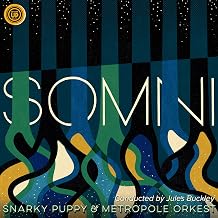
Instead of attempting to reproduce We Like It Here, Michael League wrote Sylva, a six-part suite for Snarky Puppy and the Metropole Orkest. Recorded and filmed live in the Netherlands and released in 2015, the project dramatically enlarged the ensemble’s scale.
The connection with We Like It Here is deeper than geography.
Both projects depend on League’s understanding of orchestration. In Utrecht, he and the other composers had learned how to distribute material across a large electric ensemble without sacrificing groove. With the Metropole Orkest, the palette expanded to orchestral dimensions.
The central challenge remained similar.
How many layers can a composition contain while preserving direction?
Sylva provided a convincing answer.
Pieces such as “The Curtain” and “The Clearing” unfold across extended durations, using orchestral color as part of the architecture rather than as decoration placed behind the band. Strings and orchestral winds do not merely make Snarky Puppy sound larger. They change the way tension can accumulate and resolve.
The project earned Snarky Puppy and the Metropole Orkest the Grammy Award for Best Contemporary Instrumental Album.
More importantly for the band’s artistic development, it showed that We Like It Here had not trapped Snarky Puppy inside its own successful formula.
The lesson of Utrecht was not “make another Utrecht album.”
It was that an audience would follow the band into ambitious instrumental music if the compositions communicated clearly enough.
Success Without a Fixed Lineup
The years that followed reinforced another idea already visible on We Like It Here: Snarky Puppy’s identity could survive substantial changes in personnel.
This is unusual.
Bands often depend on the chemistry of a specific lineup, and replacing even one member can alter the character dramatically. Snarky Puppy developed differently because rotation had been part of its structure almost from the beginning.
The musicians who appeared in Utrecht were crucial to the album, and it would be absurd to suggest that individual identity did not matter. Cory Henry’s contribution to “Lingus” cannot simply be exchanged for another solo and remain historically equivalent. Larnell Lewis’s drumming on “What About Me?” is part of what makes that particular performance what it is.
But Snarky Puppy as an organization was larger than any single recording lineup.
Bill Laurance, Shaun Martin, Mark Lettieri, Bob Lanzetti, Chris McQueen, Justin Stanton, Mike Maher, Chris Bullock, Jay Jennings, Nate Werth and many others developed recognizable roles across different periods, while new musicians continued entering the collective.
League’s achievement as bandleader was therefore partly organizational.
He created a musical framework strong enough to preserve identity while allowing personnel to change.
This helps explain why We Like It Here could become definitive without becoming definitive in the restrictive sense.
It captured one extraordinary configuration of the band.
It did not establish the only configuration that mattered.
The Album Young Musicians Watched
The cultural influence of We Like It Here is particularly visible among musicians who encountered Snarky Puppy through screens.
Previous generations of jazz students often learned by repeatedly listening to records and transcribing solos. That practice continued, but online video added another dimension. A young keyboardist could study Cory Henry’s hands while hearing the solo. A drummer could watch Larnell Lewis’s physical relationship with the kit. A bassist could observe League’s cues. An arranger could see how musicians were distributed around the room.
Performance practice became partially visible.
That changed the educational value of the recording.
The album did not replace the traditional jazz apprenticeship of listening, transcription and ensemble playing, but it became part of a newer environment in which musicians could study sound and gesture simultaneously.
This visibility also carried risks.
Spectacular moments can be detached from the compositions that make them meaningful. A solo becomes a clip. Technical difficulty becomes a challenge to reproduce. Musicians begin learning the impressive surface without understanding the ensemble logic beneath it.
“Lingus” is particularly vulnerable to this problem.
The solo can be treated as the entire composition.
But We Like It Here itself provides the correction.
Listen from the beginning of the album and the famous moment appears as the culmination of a much broader argument about ensemble discipline. The record repeatedly teaches that virtuosity has greater impact when the musicians around it know how to create space.
The lesson is not simply how to play more.
It is when.
A Decade Later
The durability of the album became measurable when Snarky Puppy revisited it for its tenth anniversary.
In 2024, the band released We Like It Here (Remixed + Remastered + Reimagined). The expanded edition returned to the original recordings with new mixes and mastering while also presenting alternate takes of all eight compositions.
The decision to include alternate performances is particularly appropriate for this album.
We Like It Here had always occupied an unusual position between composition and event. The pieces were carefully written, but the recordings captured specific nights in which improvisation could send the music somewhere different.
Alternate takes expose that distinction.
“Lingus” remains “Lingus” even when the improvisation changes.
“Shofukan” remains recognizable while the energy and details of the performance shift.
The composition provides continuity.
The musicians create the event.
The anniversary edition also included “Gretel,” material recorded during the Utrecht period that would later become part of Sylva. Its presence makes the connection between the two projects even clearer. While listeners were hearing We Like It Here as a completed statement, League was already moving toward another scale of composition.
By the time the anniversary edition appeared, the band’s official store described the original album as having accumulated more than 73 million streams.
For a record consisting of eight long instrumental tracks, the number is striking.
But the greater significance lies in what those streams represent.
The album did not become accessible by removing the qualities that made Snarky Puppy unusual.
Its complexity traveled with it.
What We Like It Here Changed
It would be too broad to claim that Snarky Puppy reinvented jazz recording or single-handedly created the online audience for contemporary fusion. Many musicians were already experimenting with live video, independent distribution and genre-crossing instrumental music.
The importance of We Like It Here is more specific.
It demonstrated how effectively those elements could reinforce one another.
The compositions were sophisticated enough to reward repeated listening.
The grooves were immediate enough to reach beyond specialist audiences.
The musicians were individually distinctive.
The collective remained more important than any permanent star.
The recording sounded controlled.
The performances retained risk.
The videos made interaction visible.
And digital circulation allowed long instrumental pieces to reach listeners without waiting for traditional jazz institutions to validate them first.
That combination arrived at exactly the right historical moment.
The album also challenged an old assumption about fusion.
By the early twenty-first century, the word could carry considerable historical baggage. It might evoke the electric experimentation of Miles Davis, the virtuosity of Return to Forever, the compositional precision of Weather Report or later generations of technically oriented jazz-rock.
Snarky Puppy inherited parts of that history without attempting to recreate any one version of it.
The band’s fusion was social as much as stylistic.
Jazz musicians met gospel musicians.
University training met church experience.
Electric instruments met acoustic ones.
Written arrangements met improvisation.
Studio precision met live performance.
American musicians recorded in Europe for an international audience that would encounter much of the music online.
The fusion was in the infrastructure as well as the sound.
The Room Remains
More than a decade after its release, We Like It Here remains one of the clearest documents of Snarky Puppy at a point of transition.
The band had already spent years working.
The Grammy breakthrough was arriving.
Larger projects were ahead.
Sylva, Culcha Vulcha, Immigrance, Live at the Royal Albert Hall and Empire Central would demonstrate that the collective could continue changing scale and context.
But Utrecht preserved something that could never be recreated exactly.
A group of musicians had reached a level of confidence where complexity no longer seemed to require explanation. They could play demanding music before an audience sitting almost inside the ensemble and trust that groove, melody and interaction would carry the listener through the details.
That confidence is audible throughout the record.
It is visible too.
Watch “Lingus” and the temptation is to focus on Cory Henry.
Watch more carefully and the entire philosophy of Snarky Puppy appears around him.
Michael League anchors the music.
Larnell Lewis listens while driving it forward.
Keyboards, guitars and horns occupy carefully negotiated spaces.
Musicians react to one another.
The audience reacts to them.
The cameras capture those reactions.
Later, viewers around the world react again.
The performance expands outward in circles.
That is why We Like It Here became larger than the room in which it was recorded.
Not because the room disappeared.
Because, for anyone watching or listening, it remained possible to feel inside it.