The Philadelphia Titan and the Return to Forever Explosion
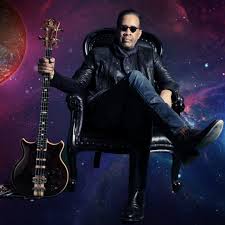
To comprehend the tectonic shift that Stanley Clarke brought to modern music, you have to imagine the bass player being completely liberated from the back row of the band. Born in Philadelphia and classically trained on the acoustic double bass, Clarke arrived in New York with the physical stature of a giant and the jaw-dropping speed to match. In 1972, alongside keyboard wizard Chick Corea, he co-founded Return to Forever. It was here that Clarke unleashed his full fury on the electric bass. Weaponizing his Alembic bass with a fierce, percussive slap and pop technique and lightning-fast flamenco-style strumming, he drove albums like Romantic Warrior (1976) into the progressive rock charts, proving that a bass could unleash as much explosive fire and melodic brilliance as any lead electric guitar.
School Days: The Solo Reign and the Acoustic Masterclass
For the high-art connoisseur exploring the absolute outer boundaries of The Jazz Compass, Stanley Clarke represents the ultimate dual-threat master of low-end frequencies. He didn’t just rule the electric fusion arena; his solo career shattered commercial glass ceilings. In 1976, he released School Days, featuring a title track with a bass riff so iconic, funky, and technically demanding that it became a global rite of passage for every bass player on Earth. Yet, true to his deep jazz roots, Clarke would regularly put down the electric bass, pick up his massive acoustic upright, and deliver acoustic masterclasses alongside titans like McCoy Tyner, Stan Getz, or in the legendary Super Trio with Jean-Luc Ponty and Al Di Meola, showcasing a flawless intonation and a refined, elegant swinging vocabulary.
The Cinematic Architect Across the Eternal Latitude
True to the forward-thinking, borderless latitudes of Jazz Latitude, Stanley Clarke’s musical geography expanded brilliantly beyond the stage and into the elite scoring stages of Hollywood. He became a highly sought-after film and television composer, charting the emotional landscapes of iconic cultural films like Boyz n the Hood (1991), What’s Love Got to Do with It, and The Transporter. Throughout his continuous, multi-Grammy-winning career, Clarke has remained a tireless innovator and bandleader, constantly mentoring young prodigies and pushing the rhythmic architecture of the groove into new centuries. He left an untouchable, thunderous coordinate on our map—a monument that stands as a permanent reminder that the bass is not just a time-keeper, but a magnificent, roaring lead voice capable of shaking the world.