Beyond the Voice
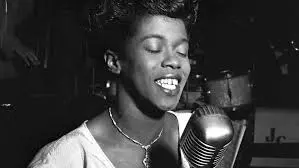
To listen to Sarah Vaughan is to understand that the human voice can function not merely as a vehicle for lyrics, but as a premier jazz instrument. While her contemporaries focused on the narrative weight of the American Songbook, “Sassy” approached music with the mind of a bebop horn player. Rising through the ranks alongside geniuses like Charlie Parker and Dizzy Gillespie in the 1940s, she translated the complex, chromatic shifts of modern jazz into vocal gold.
She did not just sing melodies; she redesigned them in real-time.
The Architecture of Sound: From Opera to Bebop
What separates Vaughan from the pantheon of great vocalists is her staggering three-octave range and an impeccable control over her vocal texture. In a single phrase, she could drop from a rich, operatic contralto into a bright, conversational soprano. This was not gymnastics; it was pure architecture.
In her iconic 1954 collaboration with trumpeter Clifford Brown—an essential record for any serious collector—her voice navigates the intricate turns of “Lullaby of Birdland” with the same precision and velocity as Brown’s horn. She proved that vocal jazz could be just as intellectually demanding and avant-garde as any instrumental session.
The Horizon: The Brazilian Fusion
True to the philosophy of Jazz Latitude, Vaughan’s artistry knew no geographical borders. Her deep, lifelong romance with Brazilian music culminated in late-career masterpieces like I Love Brazil! (1977) and Copacabana (1979).
Working closely with Antônio Carlos Jobim and Milton Nascimento, she stripped away the heavy brass of American big bands to embrace the delicate, syncopated heartbeat of the bossa nova. It remains one of the most sophisticated cross-cultural dialogues in jazz history, showing that her latitude was truly global.