The Chronicle of an Era: The Mid-Fifties Hi-Fi Vocal Dawn and the Fine Sound Studio Sessions
By the arrival of 1954, the landscape of recorded jazz had fundamentally shifted. The era of the bloated, commercial big band was receding, replaced by a sophisticated, intimate aesthetic centered on the small jazz combo—a setting that demanded more than just vocal presence; it demanded telepathic musicality. Inside the legendary Fine Sound Studios in New York City, a quiet revolution was occurring on the EmArcy label, a Mercury sub-label that had become the gold standard for audiophile jazz. Producers were beginning to treat the studio not as a mere documentarian space, but as a high-fidelity instrument in its own right, placing ultra-sensitive tube microphones within inches of performers to capture the breath, the saliva, and the vibration of the room itself.
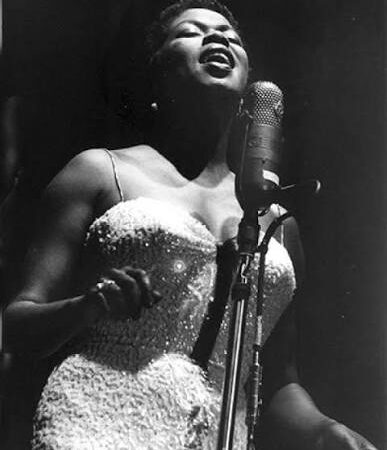
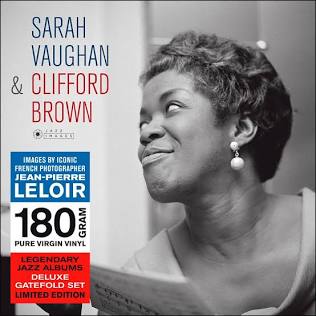
It was precisely within this climate of technical refinement and creative cross-pollination, on December 16th and 18th of 1954, that Sarah Vaughan—already known by the peerless moniker “The Divine One”—walked into the studio to record what would become a singular, untarnished monument in the jazz canon. Backed by the young, luminous trumpeter Clifford Brown, the resulting sessions produced a record of such structural clarity and emotional balance that it effectively reset the bar for the jazz-vocal-plus-combo format. It was a rare, blessed alignment where two giants at the very peak of their respective powers—one providing the definitive vocal architecture, the other the quintessential lyrical brass—converged to create a document that remains, seven decades later, a reference-grade audiophile Holy Grail.
The Biography & The Concept of the Masterwork: The Divine Instrument and the Golden Boy
The artistic trajectory of Sarah Vaughan (1924–1990) is a narrative of absolute vocal sovereignty. Unlike her contemporaries, Vaughan approached the human voice as an instrumentalist, viewing her larynx as a horn that could navigate the complex harmonic language of bebop with the ease of a saxophone. She possessed a four-octave range, but more importantly, she possessed a sophisticated command of pitch, tone, and vibrato control that allowed her to reshape a melody in real-time, effectively improvising like the instrumentalists she grew up with—Charlie Parker and Dizzy Gillespie among them.
The core conceptual architecture of Sarah Vaughan with Clifford Brown was built on the radical idea of “equality of voice.”
She did not want a mere backing band; she wanted a partner.
Clifford Brown, the “Golden Boy” of the trumpet, was the only choice. Brown was at the zenith of his tragically short career, possessed of a tone that was round, rich, and impeccably centered, playing with a melodic logic that was as logical as it was joyful. He was the perfect foil for Vaughan—a musician who did not compete for space but rather extended her phrases, echoing her scatting, and rounding off her melancholic ballads with a golden-hued, lyrical brass halo. The album is a study in conversation: Sarah sings a line, Brown answers with a perfectly formed, golden phrase, and the rhythm section—anchored by the impeccable Jimmy Jones—breathes behind them both.
Buy Amazon
The Anatomy of the Soundstage: A Sensorial Excursion Through Tube-Warmth, Intimacy, and Breath
To experience an original 1954 EmArcy pressing—or a masterfully executed, all-analog AAA audiophile reissue—is to witness the absolute pinnacle of mid-century vocal capture. The recording chain, utilizing high-end Neumann vacuum-tube microphones, produces a three-dimensional depth that is often absent in later, more “processed” vocal recordings. The soundstage is intimate; it feels as though the musicians are positioned in a semi-circle just feet from your listening position. Side A opens with the immortal, jauntily swinging arrangement of “Lullaby of Birdland”. The track materializes from a warm, analog-tape silence with the crisp snap of Roy Haynes’ snare drum.
The physical realism of Vaughan’s voice is the centerpiece of the soundstage. You can hear the chest-resonance of her low register and the shimmering, liquid control of her high notes, perfectly captured with no harshness or sibilance distortion.
As the track unfolds, the interplay between Vaughan and Brown is the ultimate demonstration of spatial separation. Vaughan occupies the center-stage, while Brown’s trumpet is positioned slightly to the right, his solos emerging with a startling, round “brass” texture that feels physically present.
On the tender ballad “Embraceable You”, the mix strips away the density, leaving only Vaughan, the piano, and subtle rhythm support. Here, the room acoustic becomes a tangible element—you can hear the decay of the studio space after she sustains a note, a subtle detail that provides an incredible sense of scale and “being there.”
Every nuance of her phrasing, from the playful scat-singing that mimics Brown’s trumpet lines to the dramatic, slow-burn vibrato on the concluding notes of “September Song,” is rendered with total phase correctness and harmonic richness. It is a lesson in how analog engineering, when paired with world-class performers, can capture not just sound, but the kinetic energy of human connection.