
Before the Sunshine
For many listeners, Roy Ayers begins with sunlight.
A slow electric-piano figure. A bass line that seems to move without urgency. A synthesizer hovering in the background. Voices repeating a phrase that feels less like a conventional chorus than a state of mind. Then the vibraphone enters, bright but never intrusive. “Everybody Loves the Sunshine” became so closely identified with Ayers that it can make everything before 1976 sound like preparation for one inevitable song.
It was not.
By the time that recording appeared, Roy Ayers had already spent more than a decade developing as a professional jazz musician. He had worked in the Los Angeles scene, recorded as a leader, played with established jazz figures, spent crucial years with flutist Herbie Mann, moved to New York and created Roy Ayers Ubiquity, an ensemble whose very name suggested that stylistic boundaries were becoming less useful. The transition from post-bop vibraphonist to architect of jazz-funk was gradual, and understanding that transformation makes the famous records of the mid-1970s considerably more interesting.
Ayers did not simply add funk rhythms to jazz.
He gradually reorganized his music around a different idea of what a band could do.
Los Angeles Before Ubiquity
Born in Los Angeles in 1940, Ayers grew up in a musical household. His father played trombone, while his mother played and taught piano. The frequently repeated story of his childhood encounter with Lionel Hampton is true: Hampton gave the five-year-old Ayers a pair of vibraphone mallets. But Ayers did not immediately become a vibraphonist. He explored piano and steel guitar before seriously taking up vibes as a teenager.
That chronology matters because mythology can make artistic development appear predestined.
A famous vibraphonist hands a child mallets; the child becomes a famous vibraphonist.
Real musical lives are less tidy.
Ayers developed inside a rich Los Angeles environment in which jazz was part of a much larger Black musical culture. The city’s Central Avenue tradition had helped sustain one of the most important African American jazz communities outside New York, associated with figures including Dexter Gordon and Charles Mingus. By the time Ayers began working professionally, Los Angeles contained overlapping worlds of jazz, R&B, studio work and popular music.
That environment would matter later.
Ayers never developed as though jazz existed in isolation.
Learning the Vibraphone
The vibraphone occupied an unusual position in jazz.
Unlike trumpet, saxophone or piano, it had relatively few dominant figures, which meant that every major vibraphonist helped redefine expectations surrounding the instrument. Lionel Hampton had demonstrated its rhythmic force and showmanship. Milt Jackson gave it a deeply blues-oriented modern-jazz vocabulary. Bobby Hutcherson, whom Ayers encountered while young, would push it into increasingly adventurous post-bop territory.
Ayers absorbed this history but eventually developed another relationship with the instrument.
His mature playing was often less concerned with turning the vibraphone into a continuous soloing machine. Instead, he learned how effectively its metallic sustain could function inside electric arrangements.
A single chord could shimmer.
A short melodic phrase could sit above a bass groove.
A few carefully placed notes could change the atmosphere of an entire recording.
This would become crucial to Ubiquity.
West Coast Vibes
Ayers entered professional recording in the early 1960s, appearing as a sideman with saxophonist Curtis Amy before recording West Coast Vibes as a leader in 1963. His early career also placed him alongside musicians including Jack Wilson, Chico Hamilton and the Gerald Wilson Orchestra.
These recordings belong to a recognizably jazz-centered stage of his development.
That fact is essential.
The later funk records were not made by someone approaching jazz from the outside. Ayers had learned the language professionally. He understood ensemble interaction, improvisation, harmony and the role of the vibraphone within modern jazz.
What changed was not his ability to play jazz.
What changed was what he wanted jazz to communicate with.
Meeting Herbie Mann
The decisive transition came through Herbie Mann.
Ayers encountered Mann at the Lighthouse in Hermosa Beach in the mid-1960s and subsequently joined his group, touring and recording with him for several years. Mann also produced Ayers’s Atlantic recordings including Virgo Vibes, Stoned Soul Picnic and Daddy Bug. Ayers was prominently featured on Mann’s commercially successful Memphis Underground.
Mann was an important figure for a musician such as Ayers because he treated stylistic borders with unusual flexibility.
His records could engage with soul, Latin music, Brazilian music and R&B without treating those influences as threats to jazz legitimacy.
For Ayers, the experience broadened the field.
The question was no longer simply:
How should a jazz vibraphonist play?
It became:
Where else can this instrument belong?
What Herbie Mann Taught Without Teaching
The influence of Mann should not be reduced to a technical lesson.
Ayers already knew how to play.
The more important lesson involved musical possibility.
A jazz musician could work with contemporary popular rhythms.
A record could communicate with listeners beyond the jazz audience.
Groove could carry as much structural importance as harmonic complexity.
Musicians from different traditions could share the same session without needing to resolve every stylistic contradiction.
These ideas would become increasingly important as the 1960s ended.
Jazz itself was changing rapidly.
Miles Davis was moving toward electricity.
Soul jazz had established deep relationships with gospel and R&B.
Sly and the Family Stone were transforming funk and popular music.
James Brown had made rhythm an organizing system.
Electric keyboards and basses were changing the physical sound of ensembles.
Ayers was listening.
New York and a New Band
Around 1970, Ayers moved to New York and formed Roy Ayers Ubiquity. The HistoryMakers dates the move and formation to that year, while contemporary biographies consistently identify Ubiquity as the decisive beginning of his jazz-funk period.
The name was unusually appropriate.
Ubiquity means the state of being everywhere.
For Ayers, it became almost an artistic philosophy.
Jazz.
Soul.
Funk.
R&B.
Vocals.
Instrumental improvisation.
Electric keyboards.
Dance rhythms.
Social commentary.
Studio production.
There was no reason these things had to occupy separate rooms.
The group could move among them.
Ubiquity Was a Collective, Not a Fixed Quartet
It is important not to imagine Roy Ayers Ubiquity as one permanent lineup.
The personnel changed considerably across the group’s recordings. Musicians associated with its earlier period included Harry Whitaker, Edwin Birdsong, Sonny Fortune, Billy Cobham, Alphonse Mouzon and others. Session documentation for the early albums reveals a fluid network rather than a single immutable ensemble.
That flexibility became part of the concept.
Roy Ayers was the central identity.
But Ubiquity allowed him to build different configurations around particular recordings.
Keyboards could become more important.
Vocals could move forward.
Percussion could expand.
Horn arrangements could change.
The band name provided continuity while the musical machinery evolved.
The First Ubiquity
The first Ubiquity album, recorded in 1970, already demonstrates the transitional nature of the project. Session documentation lists Ayers alongside musicians including Edwin Birdsong, Harry Whitaker, Richie Resnicoff, John Williams, Alphonse Mouzon and Jumma Santos.
This is significant because several of those musicians could operate comfortably across categories.
Mouzon, for example, would become strongly associated with fusion.
Birdsong’s later work would connect funk, keyboards and production.
Whitaker became particularly important to Ayers’s developing sound.
The music was beginning to move away from the expectations surrounding a conventional vibraphone-led jazz date.
The vibraphone remained.
The center of gravity shifted.
The Groove Moves Forward
In conventional small-group jazz, the rhythm section often supports harmonic movement and improvisational dialogue.
Funk changes that relationship.
A bass figure may repeat for an extended period.
The drummer can establish a pattern whose consistency is more important than constant variation.
Keyboards may become rhythmic.
Percussion adds layers rather than simply decoration.
Ayers increasingly understood that his vibraphone did not need to dominate such a structure.
This is one of the most important developments in his music.
He learned to leave room for the groove.
That sounds simple.
It requires discipline.
A virtuoso musician always has the option of playing more.
Ayers increasingly discovered the expressive power of playing exactly enough.
He’s Coming
The transformation becomes clearer on He’s Coming, released in 1972.
The personnel itself is remarkable. Sessions included Sonny Fortune on soprano saxophone and flute, Harry Whitaker on keyboards, guitarists including Samuel Brown, bassists including John Williams and Ron Carter, David Lee Jr. on drums, Billy Cobham on drums and percussion, and Juma Santos on congas. Arrangements were shared principally between Ayers and Whitaker.
This is no longer simply a vibraphonist with rhythm section.
It is an arrangement environment.
Strings.
Voices.
Electric keyboards.
Percussion.
Multiple rhythmic possibilities.
The band is becoming a production concept as much as a performing ensemble.
“We Live in Brooklyn Baby”
One of the crucial pieces from He’s Coming is “We Live in Brooklyn Baby.”
The song demonstrates how far Ayers had moved from the relatively self-contained world of instrumental modern jazz.
Its importance comes partly from atmosphere and social location. Brooklyn is not presented as an abstract backdrop. The composition belongs to an urban Black experience that gives Ubiquity’s developing sound a different kind of specificity.
The music is darker than the warmth later associated with Everybody Loves the Sunshine.
That contrast is valuable.
The simplified image of Roy Ayers as the master of relaxed, sun-drenched jazz-funk misses how broad his emotional vocabulary could be.
Ubiquity could be warm.
It could also be uneasy.
Harry Whitaker’s Importance
Harry Whitaker deserves particular attention.
As pianist, electric keyboardist, composer and arranger, Whitaker contributed substantially to the early Ubiquity sound. His presence is another reason we should resist treating every Roy Ayers recording as the creation of one person.
Bands develop through relationships.
Ayers supplied leadership, vibraphone, compositions, production instincts and an increasingly clear vision.
But musicians such as Whitaker helped give that vision form.
This is particularly important in jazz-funk, where keyboard texture can determine the identity of a recording almost as strongly as the lead instrument.
Electric piano and organ change the room in which the vibraphone exists.
Ayers understood how to use that room.
Red, Black & Green
The 1973 album Red, Black & Green continued expanding Ubiquity’s language. Documented personnel included Charles Tolliver, Garnett Brown, Sonny Fortune, Harry Whitaker and a substantial group of rhythm-section, percussion and string players.
The title itself carries obvious cultural significance.
Red, black and green are the colors associated with Pan-African identity, and the album belongs to a period in which Black American music was engaging openly with questions of history, identity, political consciousness and community.
This dimension is essential to understanding Ayers.
The later popularity of his music in lounges, DJ sets and rare-groove compilations can sometimes remove it from the cultural conditions in which it was created.
Groove was not automatically escapism.
Danceability did not eliminate social meaning.
Coffy
Also in 1973, Ayers composed the soundtrack for Coffy, the Jack Hill film starring Pam Grier.
The project gave him another opportunity to think beyond the conventional album.
Film music requires a composer to respond to character, pacing, tension and scene. A track may need to establish mood immediately. Instrumental color can communicate before melody develops. Repetition can support visual action. Short cues may have to create complete emotional environments.
These requirements were highly compatible with the direction Ayers was already pursuing.
The vibraphone could become cinematic.
Electric keyboards could establish atmosphere.
Funk rhythm could create movement.
Vocals could provide another narrative layer.
The soundtrack helped demonstrate that Ubiquity’s vocabulary could function outside a jazz-club framework.
The Vibraphone Finds Another Job
Ayers’s greatest instrumental innovation may not have been a new technique.
It may have been a new role.
The vibraphone traditionally attracts attention because of its unusual timbre. In a small jazz ensemble, its metallic resonance can easily become the central sound.
Ayers increasingly used that quality differently.
Instead of demanding attention continuously, the vibes could illuminate an arrangement.
A chord appears and disappears.
A short figure doubles another instrument.
A melodic line floats above the groove.
The instrument becomes almost like light entering the music.
This helps explain why his sound translated so effectively into later hip-hop and neo-soul contexts.
It leaves space.
Jazz-Funk Was Becoming a Language
By the early 1970s, Ayers was part of a much larger transformation.
Donald Byrd, Herbie Hancock, The Crusaders, Lonnie Liston Smith and numerous others were exploring different relationships among jazz, funk, soul and electric instrumentation.
These artists should not be treated as one movement with one sound.
Hancock’s Headhunters did not sound like Ubiquity.
Lonnie Liston Smith’s Cosmic Echoes developed another atmosphere.
The Crusaders had their own path from soul jazz into funk.
Donald Byrd’s work with the Mizell brothers created yet another studio language.
What connected them was a shift in priorities.
Contemporary Black popular rhythm could no longer be treated as something jazz merely borrowed occasionally.
It could become the center of the music.
Ayers Did Not Abandon Jazz
This transition is sometimes described as though musicians such as Ayers abandoned jazz in pursuit of commercial success.
The reality is more interesting.
Jazz remained inside the music.
It survived in instrumental interaction.
In harmony.
In Ayers’s phrasing.
In the musicians he hired.
In the flexibility of arrangements.
But jazz stopped controlling every decision.
Ayers allowed R&B songwriting to matter.
He allowed vocals to matter.
He allowed repeated grooves to matter.
He allowed the studio to matter.
And he increasingly allowed accessibility to exist without treating it as evidence of artistic compromise.
That last point became crucial.
Virgo Red
By Virgo Red in 1973, Ayers’s movement toward a more integrated soul-funk language was increasingly clear.
The title itself connected back to an earlier stage of his career—Virgo Vibes had appeared during his Atlantic years—but the musical environment had changed.
The vibraphone no longer needed to announce “jazz” every time it entered.
That freedom is one of Ubiquity’s achievements.
An instrument strongly associated with jazz could participate naturally in music aimed at the body.
The old distinction between intellectual listening and physical groove was becoming harder to sustain.
Ayers did not need to choose between them.
Change Up the Groove
The title Change Up the Groove, released in 1974, almost summarizes what had happened across the first half of the decade.
Ayers had not thrown away his musical past.
He had changed the groove underneath it.
That shift reorganized everything.
The vibraphone sounded different because the bass sounded different.
Harmony felt different because electric keyboards occupied it differently.
Improvisation felt different because songs could be built around repetition.
The studio became more important because texture became more important.
Vocals could coexist with instrumental passages without the record needing to decide whether it was a jazz album or an R&B album.
Ubiquity was becoming exactly what its name promised.
Toward Mystic Voyage
The next major stage arrived with Mystic Voyage in 1975.
By then, the transformation was no longer experimental.
Ayers had developed a recognizable language.
Warm electric keyboards.
Prominent bass.
Layered percussion.
Vibraphone used as melody and atmosphere.
Vocals integrated into instrumental arrangements.
Funk without abandoning jazz musicianship.
Soul without requiring a conventional soul singer at the center of every track.
The title track became one of the essential recordings in Ayers’s catalog, but its significance lies partly in how naturally all these ingredients coexist.
Nothing sounds as though it has been added merely to prove stylistic range.
The vocabulary has become internal.
The Collective Behind the Name
This is also the point at which the word collective in Roy Ayers Ubiquity becomes especially useful.
The band’s personnel changed, but the music developed through collaboration. Singers, keyboardists, bassists, guitarists, percussionists and arrangers contributed to an identity that could not have existed through vibraphone alone.
Roy Ayers remained the gravitational center.
But gravity is not the entire solar system.
Understanding Ubiquity as a collective allows us to hear the records more accurately.
The bass lines matter.
The electric keyboards matter.
The voices matter.
The percussion matters.
The arrangements matter.
And because all of them matter, Ayers can sometimes play surprisingly little while remaining completely present.
The Road to 1976
By the end of 1975, nearly every ingredient required for Roy Ayers’s best-known recording was already in place.
The journey had taken more than a decade.
Los Angeles jazz.
West Coast Vibes.
Herbie Mann.
Atlantic.
New York.
The formation of Ubiquity.
He’s Coming.
“We Live in Brooklyn Baby.”
Red, Black & Green.
Coffy.
Virgo Red.
Change Up the Groove.
Mystic Voyage.
Each stage had moved Ayers further from the expectation that a jazz vibraphonist needed to organize his career around instrumental soloing.
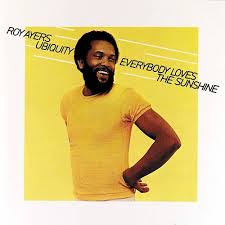
Then came Everybody Loves the Sunshine in 1976. The album reached No. 51 on the Billboard 200 and No. 10 on the R&B albums chart, while its title track eventually acquired a cultural life vastly larger than its original chart moment.
But the record’s later fame creates another danger.
It can make the breakthrough seem inevitable.
It was not.
“Everybody Loves the Sunshine” worked because Ayers and Ubiquity had spent years learning how to remove everything the music did not need.
The groove slowed down.
The arrangement opened.
The vibraphone stopped trying to prove anything.
And one of jazz-funk’s most enduring recordings emerged from that restraint.
Buy Amazon
When the Sunshine Arrived
By 1976, Roy Ayers no longer needed to demonstrate that jazz, funk, soul and R&B could coexist. Ubiquity had spent several albums developing precisely that language. What happened with Everybody Loves the Sunshine was subtler. Instead of adding another element, Ayers simplified the equation.
The title track is built from remarkably economical materials. A repeating keyboard figure establishes the atmosphere almost immediately. Bass provides weight without crowding the arrangement. Synthesizer adds a hazy layer. Voices enter with phrases that function as much through repetition as through narrative. Ayers’s vibraphone appears without demanding control of the recording.
That restraint is essential.
The song does not progress through dramatic harmonic events or instrumental virtuosity. Its power comes from maintaining a particular emotional temperature. The musicians understand that once the atmosphere has been created, excessive development would weaken it.
Ayers had spent years expanding his musical vocabulary.
Here he demonstrated how much could be achieved by reducing it.
“Everybody Loves the Sunshine”
The song has become so culturally familiar that it is easy to stop hearing how unusual it is.
It belongs to soul and funk, yet it does not behave like a conventional dance-floor record. It contains jazz musicianship but does not require extended improvisation to establish its identity. Its vocals are memorable, but the performance is not organized around a dominant lead singer in the conventional soul tradition.
Instead, the track creates an environment.
The repeated references to sunshine, bees, trees and the feeling of summer give the lyrics an almost elemental simplicity. But the arrangement prevents that simplicity from becoming sentimental. The low end is substantial. The keyboards create ambiguity. The voices float rather than explode.
Warmth and melancholy coexist.
That emotional ambiguity helps explain the song’s longevity.
Philip Woo and the Keyboard Language
One of the important musicians in Ubiquity’s mid-1970s development was keyboardist Philip Woo.
The keyboard role in Ayers’s music deserves attention because it helps explain why the vibraphone could become so economical. Electric piano, synthesizer and other keyboards could create the harmonic environment that an acoustic jazz ensemble might have expected the vibraphone itself to help define more continuously.
This gave Ayers freedom.
He could enter as color.
He could double a melodic idea.
He could answer the voice.
He could disappear.
The instrument became more effective because it no longer needed to remain active throughout the arrangement.
This is a recurring principle in sophisticated groove music:
importance is not measured by the number of notes played.
The Vibraphone as Atmosphere
“Everybody Loves the Sunshine” offers perhaps the clearest example of Ayers’s mature relationship with the vibraphone.
The instrument’s natural sustain gives it an unusual ability to occupy space without creating density. A struck note begins clearly and then dissolves gradually.
Ayers exploited that quality.
Rather than using the vibes primarily to articulate complex bebop lines, he could allow a handful of notes to hang above the rhythm section.
The result resembles neither a horn nor a conventional keyboard.
It is percussion that can sing.
That combination made the instrument particularly compatible with the increasingly texture-conscious production of 1970s soul and funk.
Everybody Loves the Sunshine Was More Than One Song
The enormous afterlife of the title track can obscure the album around it.
That is another problem created by streaming culture. A song can accumulate an audience independent of the LP that originally contained it, eventually turning the album into a container for one canonical track.
But the 1976 record belongs to Ayers’s broader evolution.
Tracks such as “The Golden Rod,” “Keep on Walking,” “The Third Eye,” “People and the World” and “Tongue Power” reveal different aspects of the Ubiquity language. The balance among instrumental material, vocals, funk rhythm and studio texture changes across the record.
The title track is exceptional.
It is not isolated.
Vibrations
Later in 1976 came Vibrations, another important record in the Ubiquity catalog.
Its significance is partly chronological. Instead of spending years trying to reproduce “Everybody Loves the Sunshine,” Ayers continued moving.
This is important because successful songs can become traps.
Audiences expect another version.
Labels understand a recognizable formula.
Musicians discover that one specific sound has suddenly become commercially valuable.
Ayers certainly retained elements of the vocabulary he had developed, but Ubiquity was flexible enough to keep adjusting the balance among funk, soul, jazz and vocals.
The collective identity helped.
The sound could evolve without losing its center.
“Searching”
One of the songs associated with this period that became especially important to later listeners is “Searching.”
The title itself captures something fundamental about Ayers’s music in the second half of the decade. There is often a spiritual or introspective dimension beneath the groove, but it is expressed differently from the cosmic jazz associated with artists such as Alice Coltrane or Pharoah Sanders.
Ayers’s spirituality can exist inside electric keyboards and bass lines.
It does not require the music to leave the dance floor.
This ability to combine introspection with physical groove would become especially important to later neo-soul musicians.
The categories were different.
The emotional problem was similar.
How can music be sensual, thoughtful, communal and inward-looking at the same time?
Jazz-Funk Without the Hyphen Anxiety
By this point, arguments about whether Ayers was making jazz or funk become increasingly unhelpful.
The hyphen in jazz-funk is useful only if it describes interaction rather than compromise.
Ayers did not take fifty percent jazz and mix it with fifty percent funk.
The musical elements had begun to affect one another.
Jazz improvisation changed because it occurred inside repeated grooves.
Funk arrangements changed because musicians with jazz backgrounds could respond flexibly inside them.
Vibraphone changed because it was amplified and recorded inside a different rhythm-section environment.
Harmony changed because electric keyboards could sustain and color chords differently.
The result became its own language.
Roy Ayers and Donald Byrd
A useful comparison is Donald Byrd.
Byrd had established himself as a major hard-bop trumpeter before working with Larry and Fonce Mizell on albums such as Black Byrd and Places and Spaces.
Like Ayers, he became central to a period when jazz musicians engaged directly with contemporary Black popular music.
But the results were not identical.
The Mizell productions often created elaborate studio environments around Byrd’s trumpet.
Ayers’s vibraphone became integrated into the texture differently, and Ubiquity developed more explicitly as an ongoing collective identity.
Both careers demonstrate why describing 1970s jazz-funk simply as “jazz musicians going commercial” misses the musical transformation involved.
The studio had become another compositional tool.
Lonnie Liston Smith and Another Kind of Space
Lonnie Liston Smith offers another revealing comparison.
With the Cosmic Echoes, Smith developed music built around electric keyboards, repeated grooves and a strong spiritual dimension. The atmosphere could be expansive, even cosmic.
Ayers often remained closer to soul and R&B.
But both understood the power of repetition and texture.
Both recognized that electric keyboards could create environments rather than merely accompany soloists.
Both made music that later generations would hear through categories that did not yet fully exist when the records were made.
Acid jazz.
Rare groove.
Neo-soul.
Beat culture.
The vocabulary changed around the recordings.
The recordings remained.
The Late-1970s Ubiquity Sound
As the decade progressed, Ubiquity became increasingly comfortable with vocals and song forms.
This should not be treated as a retreat from jazz.
It represented another expansion of Ayers’s idea of what his ensemble could contain.
The vibraphone might share space with a chorus.
Bass and drums could carry the primary musical argument.
A short instrumental break could be more effective than a long solo.
Production decisions could determine how a song developed.
This made Ubiquity increasingly relevant to listeners who might never have entered the music through jazz.
That accessibility would become central to Ayers’s later influence.
Lifeline
The 1977 album Lifeline produced one of Ayers’s best-known recordings, “Running Away.”
The track shows another side of his gift.
Where “Everybody Loves the Sunshine” is relaxed and suspended, “Running Away” moves.
The rhythm section is more immediately dance-oriented. Vocals have greater propulsion. The arrangement demonstrates that Ayers’s interest in atmosphere did not limit him to slow, dreamlike music.
Ubiquity could construct a groove designed for movement without abandoning musical detail.
That range is essential to understanding why Ayers later became so important to DJs.
His catalog offers different kinds of rhythmic material.
The Dance Floor Matters
Jazz histories sometimes treat danceability as though it were an artistic concession.
This is historically strange.
Jazz itself developed in deep relationship with dance.
The separation between serious listening and bodily movement came later and was never complete.
Ayers’s music reconnects those experiences.
A listener can analyze the voicings.
A drummer can study the pocket.
A vibraphonist can examine Ayers’s phrasing.
A DJ can hear where one section could mix into another.
Someone else can simply dance.
None of these responses invalidates the others.
That multiplicity became one of Ubiquity’s strengths.
You Send Me
In 1978, Ayers released You Send Me, continuing his movement through soul-oriented material while maintaining the instrumental identity that listeners associated with him.
The album title, borrowed from the Sam Cooke standard, indicates how comfortable Ayers had become engaging directly with the soul tradition.
This is another point where rigid genre histories become limiting.
Ayers was not a jazz musician temporarily visiting soul.
He was a Black American musician whose career had developed inside overlapping musical traditions.
Jazz was part of that identity.
So were R&B, funk and soul.
Ubiquity made the overlap audible.
“The Third Eye” and “Evolution”
Ayers’s catalog from this period also reveals recurring interests in consciousness, development and perception.
Titles such as “The Third Eye” and “Evolution” point toward a philosophical vocabulary that existed alongside the sensual immediacy of the grooves.
This combination would later resonate strongly with listeners attracted to music that could be spiritually suggestive without abandoning urban soul production.
Again, this helps connect Ayers historically with neo-soul.
The later genre did not simply borrow his sound.
It recognized a compatible emotional vocabulary.
Fela Kuti and Africa
One of the most important episodes in Ayers’s career occurred through his relationship with Fela Anikulapo Kuti.
Ayers toured Nigeria in 1979 and developed a connection with Fela that resulted in the collaborative album Music of Many Colours, recorded with Fela’s Africa 70.
This meeting should not be treated as an exotic detour in an American musician’s career.
Funk itself had deep rhythmic relationships with African and African diasporic traditions, while Fela had created Afrobeat through a complex synthesis involving highlife, jazz, funk and Nigerian political experience.
Ayers entered a musical world with its own history and authority.
The encounter widened the conversation.
Music of Many Colours
The collaborative album contains two extended pieces, one led by Fela and one by Ayers.
The format is revealing.
This was not a conventional guest appearance in which one star added a solo to another’s record.
Each musician was given space to establish his own musical direction within the shared project.
The meeting also illustrates how misleading it is to imagine jazz-funk as a purely American genre that spread outward unchanged.
By the end of the 1970s, Black music was circulating internationally through complex feedback loops.
African American funk influenced African musicians.
African traditions had already shaped the diasporic foundations from which American music developed.
Musicians traveled.
Records traveled.
Rhythms returned transformed.
The End of Ubiquity as a Name
As the 1970s gave way to the 1980s, the formal use of the Ubiquity name gradually became less central to Ayers’s releases.
But the musical concept did not disappear.
That distinction matters.
Ubiquity had helped Ayers establish a framework in which he could move among jazz, funk, soul, vocals, electronic keyboards and studio production without needing to justify the transitions.
Once that language had become identified with Roy Ayers himself, the collective name was less necessary.
The aesthetic survived the branding.
A New Generation Begins Listening
Something unexpected then happened.
The music did not remain confined to the audience that had originally bought the records.
During the 1980s and especially the 1990s, DJs and hip-hop producers began treating the recorded history of funk, soul and jazz as an enormous source of reusable musical information.
Roy Ayers’s catalog was exceptionally well suited to this form of listening.
Why?
Not simply because the records contained good grooves.
Their arrangements contained space.
A bass line might exist clearly enough to be isolated conceptually.
A vibraphone phrase could become recognizable after only a few notes.
A keyboard texture could establish mood instantly.
Drum patterns could provide rhythmic foundations.
Vocals could be extracted and recontextualized.
The very economy that made Ayers’s recordings effective also made them fertile for sampling.
Sampling Changes the Meaning of a Record
Sampling introduced a radically different relationship with recorded history.
A jazz critic might evaluate an album as a complete statement.
A hip-hop producer might hear two seconds.
That does not mean the producer is listening less carefully.
The attention is simply directed elsewhere.
A particular drum sound.
One vibraphone chord.
A bass figure.
A vocal fragment.
A transition that lasts four bars.
Hip-hop turned details into potential compositions.
For Ayers, this meant that recordings made in one cultural context could become building blocks inside another.
The afterlife of Ubiquity had begun.
Why Ayers Fit Hip-Hop So Well
There is a structural reason Roy Ayers became so attractive to producers.
His music frequently combines strong identity with open space.
That is ideal sampling material.
If an arrangement is extremely dense, extracting one element can be difficult.
If it is too generic, the sample may add little personality.
Ayers often occupies the middle.
The groove is clear.
The harmony has character.
The vibraphone is immediately identifiable.
But there is enough room for another rhythm, voice or production layer to be built around it.
This is not something Ayers designed for future samplers.
It is a consequence of how effectively Ubiquity arranged music in the first place.
A Tribe Called Quest, De La Soul and Beyond
As hip-hop’s sampling culture expanded, Ayers’s music entered the vocabulary of numerous producers and artists. His recordings have been sampled, interpolated or referenced across hip-hop and R&B, with his influence reaching artists associated with different generations of beat-making.
The exact count of Roy Ayers samples is less important than the pattern.
His catalog became familiar to producers.
That familiarity created another kind of canon.
A record did not need to appear in a traditional jazz poll to become historically important.
It could become important because thousands of musicians heard possibilities inside it.
Hip-hop created its own map of jazz history.
Roy Ayers occupied a prominent place on that map.
Rare Groove and the British Rediscovery
At roughly the same time, another form of rediscovery was developing in Britain.
The rare groove scene brought renewed attention to older soul, funk and jazz-funk recordings that had fallen outside mainstream circulation.
DJs searched for records capable of sustaining dance floors but not necessarily familiar from contemporary charts.
Ayers’s catalog was perfectly positioned for this environment.
Tracks could be sophisticated without becoming inaccessible.
The rhythm sections were strong.
The production had aged differently from heavily commercial pop records of the same era.
And the vibraphone gave the music a signature that remained immediately identifiable.
Roy Ayers was becoming contemporary again without making new records that imitated his past.
Acid Jazz
The British acid jazz movement extended that rediscovery.
Artists and DJs connected jazz instrumentation with funk, soul, dance music and club culture. Labels and scenes developed around the idea that jazz-derived music could once again belong naturally in nightlife rather than existing primarily in concert halls or specialist clubs.
Ayers fit the narrative almost perfectly.
He had already spent the 1970s dissolving the distinction between jazz musicianship and groove-oriented popular music.
A later generation simply encountered that achievement from another direction.
What had once complicated his relationship with jazz orthodoxy now made him seem prophetic.
Neo-Soul Hears Something Familiar
Then came neo-soul.
During the 1990s and early 2000s, artists including Erykah Badu, D’Angelo, Jill Scott and others developed music deeply engaged with earlier soul and funk while incorporating hip-hop production, jazz harmony and contemporary songwriting.
Roy Ayers’s influence fit naturally into this environment.
Again, the connection was not merely sonic.
It was conceptual.
Warm electric keyboards.
Deep bass.
Rhythmic patience.
Jazz musicianship without jazz formalism.
Sensuality without superficiality.
Spiritual reflection without abandoning groove.
Ayers had spent decades working inside those tensions.
Neo-soul listeners recognized the language.
Roy Ayers and Erykah Badu
The connection became literal through Ayers’s work with Erykah Badu, whose musical world drew heavily from the traditions that his recordings had helped connect.
Their collaboration represents something more interesting than a veteran artist receiving a tribute from a younger generation.
It demonstrates continuity.
Ayers did not need to be reconstructed as a museum figure.
His vibraphone could enter contemporary soul and still make musical sense.
The instrument had not aged out of the conversation.
The conversation had moved toward it.
The Sample Becomes a Family Tree
By the end of the 1990s, Roy Ayers could be heard through several overlapping histories.
Older jazz listeners remembered the vibraphonist.
Soul and funk audiences knew Ubiquity.
DJs knew the dance-floor records.
Hip-hop producers knew the samples.
Rare-groove collectors knew the deeper cuts.
Neo-soul musicians knew the atmosphere.
These audiences did not necessarily agree about which Roy Ayers mattered most.
That is precisely what makes the career significant.
The catalog supports multiple histories.
And they all lead back to the same basic achievement:
Ayers had created music open enough to survive changes in the way people listened.
Beyond “Most Sampled”
This is why describing Roy Ayers merely as “one of the most sampled musicians” ultimately undersells him.
Sampling is evidence of influence.
It is not the explanation.
The interesting question is why musicians kept finding useful material in those recordings.
The answer lies in arrangement.
Groove.
Tone.
Space.
Melody.
Production.
The relationship between vibraphone and electric keyboards.
The willingness to let repetition become structural.
The ability to make sophisticated music communicate immediately.
Those qualities existed before hip-hop heard them.
Sampling revealed their durability.
From 1976 to the Present
“Everybody Loves the Sunshine” therefore occupies two historical moments at once.
The first is 1976.
Roy Ayers Ubiquity had reached a mature synthesis of jazz, funk and soul, and the song captured that synthesis with extraordinary economy.
The second moment has no single date.
It is the continuing afterlife of the recording.
Every sample.
Every cover.
Every DJ set.
Every neo-soul musician who absorbs its atmosphere.
Every younger listener who encounters the song without knowing anything about Ubiquity.
The record keeps entering new contexts.
That is a different kind of success from chart performance.
It is cultural persistence.
What the Final Chapter Must Explain
The remaining question is therefore larger than whether Roy Ayers made influential jazz-funk.
Clearly he did.
The more interesting issue is what survived.
Why does a vibraphone language developed by a musician born in 1940 still sound compatible with hip-hop and contemporary R&B?
Why did Ubiquity become so important to producers?
How should Ayers’s influence be discussed without reducing him to a source of samples?
What did rare groove and acid jazz change about his reputation?
Where does his music sit between jazz history and Black popular music history?
And what happens when “Everybody Loves the Sunshine” becomes more famous than the musical career that made it possible?
Those questions take us beyond the canonical track and back toward the musician.
When Influence Becomes Bigger Than Genre
By the time hip-hop, rare groove and neo-soul had brought new generations toward Roy Ayers, something unusual had happened to his place in musical history. He could no longer be described adequately through the category in which he had begun his professional life. Calling him a jazz vibraphonist was accurate but incomplete. Calling him a funk musician ignored the improvisational background that shaped his playing. Calling Ubiquity a soul group failed to explain why its instrumental language differed so clearly from conventional R&B.
The difficulty is revealing.
Ayers mattered precisely because the boundaries stopped working.
His career connected periods of Black American music that are often narrated separately: post-bop jazz, soul jazz, 1970s funk, soundtrack music, disco-era production, hip-hop sampling and neo-soul. He did not create all of those traditions, nor should his influence be exaggerated into a claim that they depended upon him. What he did was build an unusually durable bridge among them.
The music traveled because it had somewhere to go.
Hip-Hop Did Not Rediscover Ayers by Accident
Sampling changed the historical visibility of countless musicians, but not every jazz-funk catalog became equally useful to producers.
Ayers’s recordings contained characteristics that translated exceptionally well.
The rhythm sections were often strong enough to establish identity immediately. Electric keyboards created harmonic color without necessarily filling every frequency. Vocal phrases could be memorable without requiring an entire song structure around them. And the vibraphone supplied something especially valuable: a timbre recognizable within seconds.
That matters in sampling.
When a producer takes a fragment from another recording, the source material must function in a new environment. It may be slowed, filtered, chopped or looped. Drums may be added. A rapper may occupy frequencies that were previously open.
Ayers’s arrangements frequently had enough space to survive this transformation.
The Vibraphone Becomes a Production Texture
The vibraphone’s journey through Ayers’s career is one of the most fascinating parts of his legacy.
In early jazz settings, it operated recognizably as an instrumental voice.
With Ubiquity, it became integrated into arrangements built around bass, keyboards, percussion and vocals.
In hip-hop, it could be reduced further: no longer even an instrumental performance in the traditional sense, but a recorded texture.
One chord might be enough.
One phrase.
One resonance.
The instrument had moved from solo voice to arrangement color to sample.
Yet Ayers remained identifiable through every transformation.
That is a remarkable form of instrumental continuity.
Why Producers Heard Something Jazz Critics Sometimes Missed
Traditional jazz criticism has often privileged improvisational complexity, harmonic development and instrumental virtuosity. Producers listen differently.
They may focus on texture.
Pocket.
Frequency.
The relationship between kick drum and bass.
The decay of an electric piano chord.
The precise sound of a vibraphone recorded in a particular studio.
This alternative mode of listening helped expose qualities in Ayers’s catalog that conventional jazz evaluation could underestimate.
A four-bar groove might contain little harmonic development.
But if those four bars possess a compelling relationship among bass, drums and keyboards, they can generate an entirely new composition.
Repetition is not necessarily the absence of information.
Sometimes it concentrates information.
Roy Ayers and the Native Tongues Era
The sample-oriented hip-hop that flourished around the late 1980s and early 1990s created an especially fertile environment for Ayers’s music.
Artists and producers associated with groups such as A Tribe Called Quest and De La Soul drew broadly from jazz, soul and funk records, helping introduce younger listeners to musical histories that record companies were not necessarily promoting directly.
This process changed the archive.
A record could acquire prestige because producers valued it.
Musicians previously categorized as belonging to another generation could suddenly become part of contemporary Black musical conversation.
Jazz history was no longer being curated exclusively by critics, labels and specialist institutions.
Turntables and samplers became curatorial tools.
Digging Creates Another Canon
Record digging produced its own hierarchy of musical importance.
Some albums became desirable because of rare drum breaks.
Others contained bass lines producers could isolate.
Some had obscure vocal sections.
Others simply created unusual moods.
This new canon overlapped with established jazz history but did not duplicate it.
A musician with enormous critical prestige might be less useful to beatmakers than a commercially successful soul-jazz artist dismissed by purists.
Roy Ayers benefited from this shift because his music could satisfy both kinds of attention.
You could listen to the entire composition.
Or you could hear ten seconds and imagine another record.
That dual usefulness became central to his afterlife.
Rare Groove and the Return to the Dance Floor
British rare-groove culture approached the same archive from another direction.
Instead of extracting fragments, DJs often allowed the original records to function on their own.
The question was simple:
Does this move a room?
Many Ayers recordings did.
This helped restore an aspect of jazz history sometimes obscured by institutional respectability: jazz and jazz-derived music have repeatedly existed in relationship with dancing.
Ubiquity’s music did not need to be rescued from danceability in order to be taken seriously.
Its rhythmic intelligence was part of its sophistication.
Rare groove understood that instinctively.
Acid Jazz Makes the Connection Explicit
The acid-jazz movement that followed made the relationship between jazz, funk and club culture even more visible.
By the late 1980s and 1990s, younger musicians and DJs were building contemporary music from a vocabulary that Ayers’s generation had already helped develop: Rhodes keyboards, prominent bass, percussion, horns, improvisation and grooves rooted in soul and funk.
Ayers could therefore appear simultaneously historical and current.
His recordings belonged to the 1970s.
Their priorities belonged comfortably inside the 1990s.
That is one reason his revival proved more durable than simple retro fashion.
The new scene did not merely imitate the clothes or production aesthetics of an earlier decade.
It had rediscovered a musical problem that Ayers already understood.
Jazz Can Be Sophisticated and Popular at the Same Time
That problem involved the false choice between sophistication and accessibility.
Jazz criticism has sometimes treated popularity with suspicion, especially when an artist moves toward dance rhythms, vocals or commercially successful forms.
Ayers demonstrates why that framework is inadequate.
Accessibility does not automatically indicate simplification.
A repeated bass line can require exceptional rhythmic control.
A sparse arrangement can require more discipline than a dense one.
Writing a melody that listeners remember after one hearing is not necessarily easier than constructing complex harmonic movement.
Ayers understood communication as a musical skill.
That did not make him less serious.
It made his records unusually portable across audiences.
The Neo-Soul Connection
Neo-soul revealed another dimension of that portability.
When artists during the 1990s began reconnecting contemporary R&B with 1960s and 1970s soul, jazz harmony, live instrumentation and hip-hop production, Ayers’s catalog sounded remarkably compatible.
The connection was not based on nostalgia alone.
Neo-soul frequently valued warmth, rhythmic patience and harmonic atmosphere.
Those qualities are central to Ubiquity.
A track does not always need a dramatic chorus.
The bass can establish continuity.
Electric piano can create emotional depth.
A vocal can remain intimate.
Percussion can make a recording physical without making it aggressive.
And jazz harmony can exist without announcing itself as jazz.
Ayers had been working with that balance decades earlier.
Erykah Badu and Continuity Rather Than Revival
Ayers’s connection with Erykah Badu makes this relationship particularly visible.
Badu’s work emerged from a world in which hip-hop production, jazz influence, funk, soul and spoken rhythmic phrasing could coexist naturally. Ayers therefore did not need to enter that environment as an artifact from the 1970s.
His sound already belonged there.
This distinction is important.
A revival treats an older style as something that disappeared and must be reconstructed.
Continuity means the underlying ideas never stopped circulating.
Ayers’s music had traveled through samples, DJs, record collections and musicians.
By the time neo-soul reached a large audience, the vocabulary was already present.
“Everybody Loves the Sunshine” Becomes Larger Than Its Album
Few songs illustrate this process better than “Everybody Loves the Sunshine.”
Its reputation now extends far beyond the 1976 album.
The song has been covered, sampled, referenced, playlisted and rediscovered repeatedly. It appears in listening contexts Ayers could not have anticipated when it was recorded.
Yet its durability does not depend on novelty.
The recording contains very little that demands attention aggressively.
That is exactly why it survives.
The groove does not exhaust itself.
The melody does not depend on a production gimmick.
The arrangement leaves enough room for listeners to inhabit it.
The song creates an atmosphere rather than forcing a conclusion.
Different generations can therefore place different meanings inside the same space.
The Danger of Letting One Song Replace a Career
Success on this scale creates a problem.
A canonical recording can become so dominant that it hides the artist responsible for it.
For Ayers, this would be especially unfortunate.
Someone who knows only “Everybody Loves the Sunshine” misses the darker urban atmosphere of “We Live in Brooklyn Baby.”
They miss the social consciousness surrounding Red, Black & Green.
They miss the soundtrack work of Coffy.
They miss Mystic Voyage.
They miss the propulsion of “Running Away.”
They miss the Fela Kuti collaboration.
They miss the earlier jazz recordings.
They miss the gradual transformation of the vibraphone itself.
The famous track should be an entrance.
Not an endpoint.
Coffy Deserves Its Own Place
Ayers’s soundtrack for Coffy is particularly important in this broader history because it demonstrates his ability to write music according to dramatic function.
Film scoring requires economy.
A composer may have seconds to establish tension.
Characters need musical identities.
Transitions must work with images.
The arrangement cannot simply behave as though every cue were an independent jazz performance.
Ayers’s developing interest in texture made him well suited to this task.
The soundtrack also places his music inside the history of 1970s Black cinema, where funk and soul often performed cultural work far beyond conventional accompaniment.
It is another reason his career should not be narrated solely through jazz albums.
Fela and the Limits of the “Jazz-Funk Pioneer” Label
The collaboration with Fela Kuti presents another challenge to easy categorization.
Calling Ayers a jazz-funk pioneer is useful.
It is not sufficient.
Fela’s Afrobeat emerged from a different political and musical history, even though jazz and funk were important ingredients. When Ayers entered that environment, the encounter exposed the international circulation underlying Black music.
The Atlantic was not a one-way transmission system.
African diasporic music had always developed through movement, displacement, memory and transformation.
American funk could return to Africa in altered form.
African musicians could reinterpret it.
American musicians could then encounter those reinterpretations.
The circle was never closed.
Roy Ayers Was Not Fela Kuti
It is equally important not to flatten their differences.
Fela’s music was inseparable from explicit political confrontation with Nigerian power structures. His extended performances, band organization and rhythmic language belonged to the specific development of Afrobeat.
Ayers’s work operated differently.
His music could contain social commentary and Pan-African consciousness, but Ubiquity was not an American version of Africa 70.
The collaboration is valuable because the musicians remained distinct.
Exchange becomes interesting when difference survives.
From Ubiquity to Roy Ayers
As Ayers moved beyond the period in which Ubiquity appeared prominently as the group identity, the vocabulary the collective had developed became increasingly associated with him personally.
This is another reason the project’s history matters.
Ubiquity functioned almost like a laboratory.
Personnel could change.
Instrumentation could change.
The balance between instrumental music and vocals could change.
But certain principles became stable:
groove first;
space matters;
the vibraphone does not need to dominate;
electric keyboards can define atmosphere;
jazz improvisation can coexist with song form;
accessibility is not an artistic failure.
Once those principles had become Roy Ayers’s musical identity, the band name itself was less essential.
The Musicians Around Ayers Matter
This is why any serious account of Ubiquity has to resist turning the group into a synonym for Roy Ayers alone.
Harry Whitaker, Edwin Birdsong, Philip Woo and numerous bassists, drummers, percussionists, singers and arrangers helped shape different stages of the music.
Their contributions matter not because Ayers’s leadership was somehow less important.
They matter because this music depended on interaction.
Jazz-funk is especially vulnerable to inaccurate hero narratives. The lead instrumentalist appears on the cover, so the groove becomes attributed to that person.
But grooves are collective achievements.
The exact relationship between bass and drums can determine whether an entire track works.
Keyboard voicings affect the space available to vibraphone.
Backing vocals alter the architecture of a chorus.
Percussion changes movement.
Ayers knew how to organize those elements.
That was part of his leadership.
The Producer’s Ear
This may be one of the least discussed aspects of his artistry.
Roy Ayers increasingly thought like a producer, even when the terminology surrounding his work emphasized instrumental performance.
A producer hears the total recording.
Not simply the solo.
Which instrument needs to disappear?
Where should the vocal enter?
Does the bass need another note or fewer?
Should the vibraphone double the melody or remain absent?
How long can a groove repeat before something must change?
These decisions explain much of Ubiquity’s durability.
The records often contain enough detail to reward close listening without allowing detail to overwhelm the song.
That balance is difficult.
Why Mystic Voyage Still Works
Mystic Voyage remains one of the best albums for understanding this balance.
It sits at a point where Ayers’s jazz background, Ubiquity’s collective identity and his increasingly sophisticated production instincts are clearly integrated.
The music has atmosphere without becoming static.
The grooves are accessible without becoming generic.
The vibraphone remains identifiable without needing to control every arrangement.
And the album demonstrates that the famous 1976 breakthrough did not appear from nowhere.
Ayers had already solved many of the musical problems that Everybody Loves the Sunshine would present in their most distilled form.
A Different Kind of Virtuosity
Roy Ayers also forces us to reconsider what virtuosity means.
If virtuosity is defined primarily through speed, harmonic density or extended improvisation, his most famous music may seem less technically demonstrative than the work of many major jazz instrumentalists.
But there is another virtuosity:
knowing what not to play.
Ayers developed an extraordinary ability to place his instrument within a groove.
One vibraphone phrase can be enough to identify him.
A chord can function almost like a production signature.
That economy is not the absence of technique.
It is technique subordinated to arrangement.
Why the Old Rating System Failed This Music
This is also why reducing an artist such as Ayers to categories like Musicianship ★★★★★, Innovation ★★★★★, Production ★★★★★, Historical Importance ★★★★★ tells the reader almost nothing.
What does five-star musicianship explain about “Everybody Loves the Sunshine”?
Nothing.
The interesting information lies in the relationship between the parts.
Why does the groove feel unhurried?
Why does the vibraphone remain effective despite playing relatively little?
Why did later producers hear reusable space inside the arrangements?
Why could Ubiquity move from jazz audiences toward R&B and dance floors?
Why does the music remain recognizable after being sampled and transformed?
Criticism becomes useful when it answers those questions.
Not when it assigns stars.
Influence Without Prophecy
It is tempting to describe Ayers as a musician who “predicted” hip-hop or neo-soul.
That language should be avoided.
Roy Ayers was making music for his own present.
He was not recording in 1976 with future sampling technology in mind.
Hip-hop producers later heard possibilities in the recordings.
Neo-soul musicians later recognized compatible values.
Acid-jazz audiences later discovered that the grooves worked perfectly inside another cultural environment.
The future did not prove that Ayers had predicted it.
The future reinterpreted him.
That is more interesting.
What Roy Ayers Actually Changed
So what can reasonably be claimed for Roy Ayers without turning criticism into mythology?
He helped establish the vibraphone as a natural voice within electric funk and soul environments.
He developed Ubiquity into a flexible collective capable of moving among jazz improvisation, R&B songwriting, funk rhythm and studio production.
He created recordings whose spacious arrangements made them unusually durable across later sampling culture.
He participated in the international circulation of Black music through his collaboration with Fela Kuti.
And he built a catalog that helped later audiences hear jazz, funk, soul and hip-hop less as isolated genres than as parts of a continuing conversation.
Those achievements require no exaggeration.
Where to Begin With Roy Ayers
For a listener arriving through “Everybody Loves the Sunshine,” the best next move is backward and sideways.
He’s Coming reveals a darker, earlier Ubiquity and contains “We Live in Brooklyn Baby.”
Coffy demonstrates Ayers as soundtrack composer.
Mystic Voyage captures the collective approaching its mature mid-1970s language.
Everybody Loves the Sunshine remains essential, but hearing the complete album prevents the title track from swallowing the surrounding music.
Vibrations and Lifeline show how Ayers continued developing the formula rather than simply repeating his biggest success.
Music of Many Colours opens the route toward Fela Kuti and Afrobeat.
And the earlier Atlantic recordings reveal the jazz musician who existed before Ubiquity.
The catalog becomes richer when heard chronologically.
Roy Ayers and the Jazz Canon
Ayers’s position in conventional jazz history has sometimes been less secure than that of musicians whose careers remained closer to acoustic or improvisation-centered models.
That tells us as much about the canon as it does about Ayers.
Genre institutions often reward continuity.
Ayers pursued permeability.
His music became more vocal.
More electric.
More rhythmically connected to contemporary Black popular music.
More interested in studio production.
More accessible.
Those choices could make him appear less central to a narrowly defined jazz narrative.
But they made him increasingly central to several other narratives.
Hip-hop heard him.
R&B heard him.
DJs heard him.
Neo-soul heard him.
The Collective That Changed Modern Music
The current title of this article calls Roy Ayers Ubiquity “The Jazz-Funk Collective That Changed Modern Music.”
The phrase is strong, so it requires precision.
Ubiquity did not single-handedly change modern music.
No group does.
But its recordings became part of a network of sounds that later musicians repeatedly returned to. That influence traveled through direct listening, sampling, DJ culture, collaboration and stylistic inheritance.
The group’s importance therefore lies less in one revolutionary moment than in continuity across generations.
Music created in the early and mid-1970s remained useful decades later.
That is a substantial historical achievement.
The Sunshine Is Still There
Return once more to “Everybody Loves the Sunshine.”
Strip away the mythology.
Forget the sample lists.
Forget how many playlists contain it.
Forget its canonical status.
Listen to the arrangement.
The song remains remarkably patient.
The rhythm section establishes the environment.
Keyboards create haze.
Voices provide intimacy.
Ayers allows the vibraphone to enter without disturbing the balance.
Nothing seems desperate to impress.
That may be the secret.
The recording trusts the groove.
Nearly fifty years of cultural history have accumulated around it, but the original performance still feels spacious enough to hold them.
Final Thoughts: Ubiquity Was the Right Name
Roy Ayers began his professional career inside jazz, learning an instrument with a distinguished but relatively compact lineage. He could have remained an accomplished vibraphonist within that tradition.
Instead, his career kept expanding.
Herbie Mann demonstrated that musical borders could be crossed without apology. New York provided another environment. Ubiquity gave Ayers a flexible collective through which jazz could interact directly with soul, funk, R&B, vocals, electronics and studio production.
He’s Coming showed the music becoming darker and more socially grounded.
Red, Black & Green connected groove with Black consciousness.
Coffy expanded Ayers’s compositional vocabulary through film.
Mystic Voyage brought the developing language into focus.
Then Everybody Loves the Sunshine reduced years of experimentation to something almost elemental.
After that, the music continued moving.
Vibrations.
Lifeline.
“Running Away.”
Fela Kuti.
The end of Ubiquity as a prominent group name.
Hip-hop.
Rare groove.
Acid jazz.
Neo-soul.
New generations of producers and listeners.
The remarkable part is not that every stage sounds identical.
It is that Roy Ayers remains recognizable across them.
His vibraphone could be a jazz instrument, a funk texture, a melodic signature, a sampled fragment or a voice inside contemporary soul.
The context changed.
The instrument adapted.
And perhaps that is why Ubiquity was such an appropriate name from the beginning.
The project was never really about forcing jazz to become funk.
It was about allowing music to exist in more than one place at once.
Decades later, Roy Ayers’s work still does.