Houston, New York and the Acoustic Trio
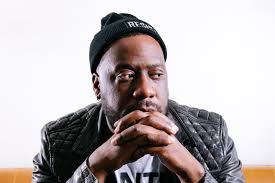
Long before Black Radio made Robert Glasper one of the most visible musicians working between contemporary jazz, hip-hop and R&B, those categories were already overlapping in his musical life. The conventional version of his career can make the story appear more orderly than it was: a gifted jazz pianist establishes himself through acoustic trio records, becomes interested in popular music and eventually breaks away from jazz convention by creating the Robert Glasper Experiment. Glasper’s development tells almost the opposite story. Gospel, jazz, R&B and hip-hop were present from the beginning, while the acoustic piano trio became one of several environments through which he learned to express a musical identity that had never respected the industry’s genre divisions. By the time Black Radio appeared in 2012, the important transition had already happened. It could be heard in the rhythmic conception of his early trio, in the musicians he worked with outside jazz, in the repertoire he chose and in his understanding that the music surrounding his generation belonged inside his jazz vocabulary rather than outside it.
Glasper was born in Houston, Texas, in 1978, and his earliest musical education came through his mother, Kim Yvette Glasper. She sang jazz and blues in clubs and also played piano and served as a musical presence in church, exposing her son to environments that are sometimes separated in histories of American music but were part of the same lived culture for the young pianist. Glasper began playing in church himself, absorbing not only harmony but the social function of music: accompaniment, responsiveness, repetition, dynamics and the ability to follow what was happening around him. Gospel playing could require technical command, but technique existed in service of an event involving singers, congregation and other musicians. The lesson was different from learning repertoire exclusively through notation. Music had to react.
At the same time, Houston provided a broader musical environment in which jazz education was unusually strong. Glasper attended the city’s High School for the Performing and Visual Arts, an institution whose influence on contemporary American jazz extends far beyond a single famous graduate. Pianist Jason Moran had come through the school before him, and musicians including drummer Chris Dave and later Kendrick Scott and others would form part of a remarkable Houston lineage. The significance of that environment was not simply that talented students received formal instruction. Young musicians could encounter peers who treated jazz as a current language rather than a historical specialty.
Houston Before New York
This Houston background matters because it complicates the assumption that Glasper acquired his openness to hip-hop after moving to New York. Hip-hop was already the popular language of his generation. Gospel belonged to his musical upbringing. Jazz was becoming the discipline through which he developed instrumental depth. R&B was part of the surrounding culture. None of these required him to abandon the others.
That combination shaped his understanding of rhythm in particular. Hip-hop’s influence on a jazz musician does not have to appear through sampling or a rapper standing beside the band. It can enter through placement of the beat, repetition, the relationship between bass and drums, the construction of short motifs and an awareness of how producers organize musical time. Glasper would eventually make these relationships explicit, but their presence in his acoustic playing predates the Experiment.
The church provided another layer. Gospel harmony and jazz harmony share substantial territory, but their purposes can differ. Glasper learned that sophisticated chords did not necessarily require music to become emotionally distant or formally complex. A rich harmonic movement could support a direct melody. Repetition could intensify feeling rather than signal a shortage of compositional ideas. A pianist could use dense voicings while remaining connected to singers and listeners.
These ideas would later become fundamental to Glasper’s records, yet they were not innovations invented in a studio. They came from environments he had known since childhood.
Houston also placed him within a lineage. Jason Moran’s path was particularly significant because Moran demonstrated that a pianist from the same school could enter the highest levels of contemporary jazz without reducing his musical identity to imitation of the past. Glasper’s generation inherited a jazz tradition that remained demanding, but the question was increasingly what musicians could do with that knowledge once they possessed it.
For Glasper, the next stage of that education would take place in New York.
New York and the Working Musician
After Houston, Glasper attended the New School for Jazz and Contemporary Music in Manhattan. The move placed him inside a dense professional network in which classroom study and working life could quickly overlap. New York offered access not only to established jazz musicians but to artists working across hip-hop, soul and R&B. Glasper began building relationships in both worlds without treating one as his serious career and the other as a side interest.
His jazz credentials developed rapidly. He worked with musicians including Christian McBride, Kenny Garrett, Roy Hargrove and others, learning inside ensembles led by players with strong individual approaches. These were not merely résumé-building appearances. Working as a sideman teaches forms of judgment that formal education cannot fully reproduce: how much space to occupy behind a soloist, how quickly to understand a bandleader’s conception, when harmonic complexity helps and when it gets in the way.
At the same time, Glasper was developing professional relationships with artists from hip-hop and R&B. His work with Yasiin Bey, then widely known as Mos Def, became especially important, as did connections with Bilal, Q-Tip and other musicians in the broader network surrounding progressive hip-hop and neo-soul. The proximity between these scenes in New York meant that Glasper did not have to imagine an abstract bridge between jazz and hip-hop. He could play with jazz musicians in one setting and work with rappers or singers in another, carrying musical information between them.
That movement is essential to understanding what came later. The Robert Glasper Experiment was not created by a jazz musician suddenly deciding that hip-hop might modernize his sound. Glasper had already been working professionally within both environments.
Mood and the Beginning of a Recorded Career
Glasper’s first album as a leader, Mood, appeared on Fresh Sound New Talent in the early 2000s, before his association with Blue Note. The record introduces a pianist much closer to the acoustic contemporary-jazz world than the image many listeners would later associate with Black Radio. Yet hearing it only as a conventional beginning misses the point. Glasper was establishing the instrumental foundation that would make his later movement between contexts convincing.
The piano trio is unforgiving. There are few places for weak time or uncertain harmonic decisions to hide. Glasper’s early recordings demonstrate that his later crossover success was built upon a serious engagement with that format. He could improvise through complex harmonic structures, accompany sensitively and create the kind of interaction expected within contemporary jazz.
When Blue Note signed him, the label did not initially present Glasper as an R&B artist who happened to understand jazz. His 2005 Blue Note debut, Canvas, positioned him clearly as a jazz pianist and composer. The record featured Vicente Archer and Damion Reid in the rhythm section, with additional appearances expanding the trio setting, and demonstrated Glasper’s growing ability to combine lyrical writing with a rhythmic conception that did not always behave like a traditional straight-ahead piano trio.
What becomes particularly interesting in retrospect is that Canvas does not sound like an identity Glasper would later discard. The acoustic piano remained fundamental to his musical thinking even after Fender Rhodes, vocoder and studio production became more prominent. The harmonic sensibility that listeners identify immediately on later records is already developing here: spacious voicings, repeated figures, melodic fragments and an ability to allow a groove to establish itself without constantly filling the available space.
In My Element
If Canvas established Glasper at Blue Note, In My Element in 2007 made the relationship between his musical worlds increasingly difficult to ignore. With Vicente Archer on bass and Damion Reid on drums, Glasper could use the acoustic trio not as a refuge from contemporary popular music but as a laboratory for absorbing it.
One of the clearest examples is “J Dillalude,” built from material associated with producer J Dilla. Dilla’s importance to hip-hop rhythm extends far beyond individual beats; his approach to timing became enormously influential because rhythmic elements could feel displaced without losing the underlying pulse. For jazz musicians accustomed to thinking deeply about microtiming, swing and rhythmic interaction, that conception offered rich possibilities.
Glasper did not need a sampler to explore them.
The trio could interpret beat-oriented ideas acoustically, allowing bass, drums and piano to reproduce some of the tension between repetition and instability that made hip-hop production compelling. The result was not jazz decorated with a hip-hop reference. The reference affected the musicians’ conception of time.
The album’s treatment of Herbie Hancock’s “Maiden Voyage” alongside Radiohead’s “Everything in Its Right Place” makes a related point. Rather than presenting jazz history on one side and contemporary repertoire on the other, Glasper could allow material from different sources to occupy the same performance. Hancock and Radiohead became resources for improvisation because the trio did not need repertoire to arrive with a predetermined genre identity.
Other pieces on In My Element reveal the gospel dimension just as clearly. “Y’Outta Praise Him” connects Glasper’s sophisticated harmonic language with the church tradition that preceded his formal jazz education, while “One for ‘Grew” acknowledges pianist Mulgrew Miller. These references coexist without contradiction. Dilla, gospel, Radiohead, Hancock and Miller all belong within the same musical biography.
This is why describing Glasper simply as someone who “bridged jazz and hip-hop” is inadequate. A bridge implies two territories separated by a gap. Glasper’s music suggests that much of that separation had been imposed by categories around the music rather than by musicians themselves.
The Trio as a Rhythmic Laboratory
Glasper’s acoustic work also depended heavily on the drummers who understood this conception. Damion Reid was central to Canvas and In My Element, while Chris Dave would become another crucial collaborator as Glasper’s music moved toward the next stage. Both could operate inside jazz improvisation while understanding rhythmic ideas shaped by hip-hop and contemporary R&B.
That flexibility changed the role of the piano. Glasper did not always need to propel a performance through constant bebop lines. He could repeat a figure while the rhythm section altered the meaning underneath it. A chord could function almost like a sample, returning often enough to become structural rather than merely harmonic. Silence could matter because the groove continued even when the pianist stopped filling the measure.
These techniques did not eliminate swing or traditional trio interaction. They expanded the rhythmic possibilities available inside them.
This is one reason Glasper’s early Blue Note albums became influential among younger musicians. They demonstrated that contemporary jazz vocabulary did not require musicians to pretend that the music dominating their everyday listening had no place inside an acoustic ensemble. Hip-hop could influence the internal mechanics of a trio without turning the performance into a novelty collaboration.
The implications extended beyond repertoire. Jazz musicians had always absorbed the popular music surrounding them. Standards themselves had often originated in theater and popular song. Glasper’s generation was doing something historically familiar by incorporating the music of its own environment. What changed were the sounds being incorporated.
Double-Booked
By 2009, the division between Glasper’s musical settings had become explicit enough to provide the concept for an entire album. Double-Booked was divided between two groups: the Robert Glasper Trio and the Robert Glasper Experiment.
The structure is revealing because the album does not present the Experiment as a replacement for the trio. Both exist under Glasper’s name. On one side is the acoustic group, with piano, Vicente Archer’s bass and Chris Dave’s drums. On the other is the electric ensemble, with Glasper moving toward keyboards alongside Derrick Hodge and Casey Benjamin, whose saxophone and vocoder would become fundamental to the Experiment’s identity.
The title captures Glasper’s professional reality. He was not moving cleanly from jazz into another genre. He was literally working in different musical environments.
Yet Double-Booked also demonstrates that the distinction between those environments was becoming increasingly artificial. The rhythmic ideas heard in the trio do not disappear when electric instruments arrive. The Experiment does not suddenly introduce Glasper to groove, repetition or hip-hop. Instead, the instrumentation gives him different ways of expressing ideas already present in his music.
The electric band could work more directly with textures associated with R&B production. Fender Rhodes could occupy a different sonic role from acoustic piano. Casey Benjamin’s vocoder allowed the human voice to become part of the ensemble without requiring a conventional lead singer. Derrick Hodge’s electric bass could interact with Chris Dave’s drumming in ways that brought the rhythm section closer to the physical weight of hip-hop and funk.
The conceptual distance between In My Element and the Experiment was therefore smaller than it appeared.
Before Black Radio
By the end of the 2000s, Glasper had already established nearly every element required for the next stage of his career. He possessed a recognizable harmonic language. He had years of experience inside the acoustic trio. He had professional relationships with jazz musicians, rappers and R&B singers. He understood gospel from lived experience rather than stylistic study. He had begun translating hip-hop’s rhythmic logic into live ensemble playing. And with the Robert Glasper Experiment, he had a band capable of moving among these languages without changing personnel every time the category changed.
What he did not yet have was the album that would bring those relationships together on a sufficiently large scale.
That distinction matters.
Black Radio would become Glasper’s breakthrough and dramatically expand his audience, but it did not mark the moment when a jazz pianist discovered hip-hop and R&B. Nor was it the point at which he abandoned the acoustic tradition in search of commercial relevance. The groundwork had been laid across Houston churches, HSPVA classrooms, New York gigs, sideman work, hip-hop sessions and three increasingly expansive Blue Note albums.
The music had been converging for years.
What changed in 2012 was that Glasper stopped allowing the recording industry’s genre divisions to determine how much of that convergence could appear on a single album.
The Robert Glasper Experiment was ready.
So were the musicians and singers around it.
Black Radio would give that community a record.
Buy Amazon
The Experiment and Black Radio
By the time Robert Glasper released Black Radio in 2012, the central idea behind the album was no longer new to him. He had spent years moving between jazz ensembles, hip-hop sessions, R&B collaborations and church-derived musical language, while records such as In My Element and Double-Booked had already demonstrated that those experiences could occupy the same artistic identity. What changed with Black Radio was scale. Instead of allowing the acoustic trio and the electric Experiment to represent different sides of his career, Glasper built an album in which a working band could interact with a wide network of singers and rappers without treating the guests as decorative additions to a jazz project. The Experiment supplied the musical center; the vocalists entered a language flexible enough to accommodate them. The resulting record reached audiences far beyond Glasper’s previous jazz following, but its success came precisely because it did not sound like a calculated attempt to make jazz commercially acceptable. It sounded like musicians playing the music they already knew.
The transition had become visible on Double-Booked. Glasper’s 2009 album literally divided itself between the Robert Glasper Trio and the Robert Glasper Experiment, making the contrast between acoustic and electric instrumentation part of the concept. Yet the more important development was the formation of a band capable of carrying Glasper’s ideas beyond the conventional piano trio. Casey Benjamin brought saxophone, vocoder and an unusually fluid understanding of how instrumental and vocal roles could overlap. Derrick Hodge’s electric bass connected jazz improvisation with the weight and repetition of contemporary R&B and hip-hop rhythm sections. Chris Dave’s drumming could move between intricate subdivisions, displaced accents and deep pocket without making those approaches sound incompatible. Glasper, increasingly heard on Fender Rhodes as well as piano, could occupy the ensemble differently from the way he did in an acoustic trio.
The Experiment therefore was not simply Glasper with electric instruments. It changed the architecture around him. In a piano trio, the pianist’s harmonic and melodic role is naturally prominent. Inside the Experiment, keyboards could become part of a larger texture. A repeated Rhodes figure might function almost like a sample while bass and drums determined the shape of the groove. Benjamin’s vocoder could transform a melodic line into something halfway between horn arrangement and lead vocal. The band could improvise without constantly announcing that improvisation was taking place.
That flexibility made Black Radio possible.
A Band Rather Than a Crossover Concept
The distinction matters because collaborations between jazz musicians and hip-hop artists were hardly unprecedented by 2012. Hip-hop had sampled jazz for decades. Miles Davis had engaged with hip-hop production near the end of his life. Guru’s Jazzmatazz projects had explicitly paired rappers with jazz musicians. The Roots operated as a live band within hip-hop, while artists associated with neo-soul had long relied on musicians capable of moving between jazz harmony, gospel and groove-based popular music. Glasper was entering a history already rich with exchange.
What the Robert Glasper Experiment offered was a particularly integrated ensemble solution.
Glasper later summarized the band’s identity by explaining that its members were jazz musicians who also embodied R&B, hip-hop, funk, gospel and other forms of Black music. That observation is more useful than describing the project as a fusion experiment. The musicians did not have to imitate hip-hop from the outside because its rhythmic language belonged to the culture in which they had developed. Nor did they need to simplify their jazz vocabulary before working with singers. They could decide how much harmony, improvisation or rhythmic complexity a particular song required.
This adaptability shaped Black Radio. Rather than presenting twelve tracks designed to demonstrate the versatility of Robert Glasper, the album frequently allows Glasper himself to recede. The pianist is not always the principal melodic voice. Some of the most memorable performances are organized around singers, grooves and ensemble textures in which the keyboards provide harmonic atmosphere rather than virtuoso display.
That restraint is one of the reasons the record works.
“Afro Blue” and the Meaning of Repertoire
The album’s version of “Afro Blue,” featuring Erykah Badu, offers an immediate example of how the Experiment approached jazz history. Mongo Santamaría’s composition had become a jazz standard through interpretations by John Coltrane and many others, carrying decades of association before Glasper’s group touched it. The Experiment does not attempt to reproduce a canonical arrangement. Instead, the song becomes compatible with Badu’s vocal identity and the band’s contemporary rhythmic language.
This is not a rejection of jazz tradition. It is an older jazz practice applied to contemporary conditions.
Jazz musicians have always transformed existing songs. The Great American Songbook became jazz repertoire because musicians altered harmony, rhythm, phrasing and form until popular compositions could support improvisation. Glasper’s generation simply had access to a different body of songs and production languages. The question was no longer whether a piece came from Broadway or Tin Pan Alley, but whether musicians could find enough material inside it to create something of their own.
The rest of Black Radio extends that principle across a remarkably broad guest list. Lalah Hathaway appears on Sade’s “Cherish the Day.” Lupe Fiasco and Bilal share “Always Shine.” Ledisi sings “Gonna Be Alright (F.T.B.).” KING appears on “Move Love,” while Musiq Soulchild and Chrisette Michele join “Ah Yeah.” Meshell Ndegeocello appears on “The Consequences of Jealousy,” and Stokley Williams on “Why Do We Try.” The title track features Yasiin Bey, while Bilal returns for David Bowie’s “Letter to Hermione.” The standard edition closes with a transformation of Nirvana’s “Smells Like Teen Spirit.”
On paper, the list could resemble a compilation assembled around famous names. In practice, the Experiment provides enough continuity to prevent that from happening.
The Rhythm Section at the Center
The key to that continuity is rhythm.
Chris Dave had already demonstrated with Glasper that he could approach the drum kit with the sensibility of both an improviser and someone deeply aware of programmed beats. His playing could create the illusion of instability while maintaining a powerful underlying pulse. Accents might arrive where a listener did not expect them, subdivisions could shift, and patterns could feel deliberately fractured without losing the groove.
Derrick Hodge supplied the necessary counterweight. His bass could anchor repetitive structures while remaining responsive enough for the music to breathe. In a conventional jazz setting, a bassist may spend substantial time defining harmonic movement through walking lines. In the Experiment, Hodge could reduce the amount of information while increasing its physical impact. A bass figure repeated with the right placement could become more important than constant harmonic motion.
Glasper understood how to leave room for both.
This was one of the clearest continuities from his earlier acoustic work. The pianist had already learned that repetition did not mean musical inactivity. On Black Radio, that understanding becomes central to the arrangements. Chords can remain in place while vocal phrasing, drums, bass and subtle keyboard changes alter the listener’s perception of the groove.
Casey Benjamin expands the palette further. His saxophone connects the band directly to improvisational jazz practice, but his use of vocoder complicates the distinction between instrumentalist and vocalist. Rather than treating electronic processing as something opposed to jazz expression, Benjamin incorporates it into the ensemble’s normal language.
The Experiment sounds coherent because none of these devices feels borrowed temporarily for the album.
The Voices of Black Radio
The singers and rappers also prevent the record from becoming a pianist’s showcase disguised as an R&B album. Erykah Badu, Bilal, Lalah Hathaway, Meshell Ndegeocello and Yasiin Bey arrive with musical identities too strong to function merely as Glasper’s guests. Their presence changes the material.
This collaborative balance is particularly important on the title track. Yasiin Bey’s appearance places hip-hop at the conceptual center of the record rather than treating rap as an occasional stylistic color. The song also gives the album its broader metaphor. “Black Radio” can be heard as a space in which forms of Black music separated by industry categories are allowed to coexist.
The album does not claim that those forms are identical. Jazz improvisation, R&B songwriting and hip-hop production retain different histories and working methods. Glasper’s achievement is to allow musicians fluent in several of those languages to decide when the distinctions matter.
Sometimes they do.
A singer requires a different kind of accompaniment from a saxophone soloist. A rap verse creates rhythmic space differently from a jazz melody. A groove intended to remain compelling through repetition demands another form of discipline than a rapidly changing harmonic progression.
The Experiment’s strength lies in understanding those differences without turning them into barriers.
From Jazz Audience to a Much Larger Public
The commercial response to Black Radio changed Glasper’s career. The album reached No. 1 on Billboard’s jazz chart and also entered the upper reaches of the R&B/Hip-Hop and broader album charts, placing Glasper in front of listeners who might never have encountered Canvas or In My Element. More significantly, it circulated in musical contexts where a contemporary jazz pianist was not normally expected to appear.
That success can tempt retrospective exaggeration. Black Radio did not suddenly reconnect jazz with popular culture after decades of isolation. Jazz musicians had been interacting with funk, soul, rock, electronic music and hip-hop continuously. Nor did Glasper create the network of musicians and singers surrounding the album. Many had been crossing those boundaries independently for years.
What Black Radio accomplished was to make that continuity unusually visible at a particular historical moment.
The record arrived when genre boundaries were already becoming less effective at describing how listeners discovered music. Digital platforms allowed audiences to move between categories quickly, while hip-hop and R&B had become central forces in global popular culture. At the same time, a generation of jazz musicians had grown up treating those forms not as external influences but as part of everyday listening.
Glasper had the band, relationships and institutional position to bring those realities together on a major-label jazz release.
Blue Note’s role should not be overlooked. The label carried enormous historical associations within jazz, and releasing Black Radio under that banner gave the project a symbolic dimension. A company associated with Thelonious Monk, Bud Powell, Herbie Hancock and generations of modern jazz was presenting a record featuring Erykah Badu, Lupe Fiasco, Bilal, Meshell Ndegeocello and Yasiin Bey without requiring the music to stop being part of its jazz catalog.
The label itself had changed, just as the music had.
The Grammy
In February 2013, Black Radio won the Grammy Award for Best R&B Album.
The category matters.
Glasper had built his reputation primarily as a jazz pianist, yet the Recording Academy recognized the Experiment in R&B rather than placing the album safely within a jazz category. The result demonstrated both the record’s reach and the inadequacy of trying to locate it within a single genre.
Glasper’s reaction was revealing. Rather than presenting himself as a jazz musician who had successfully crossed into R&B, he emphasized that the members of the band had grown up inside multiple traditions. Their ability to combine them came from familiarity rather than strategy.
That distinction helps explain why Black Radio aged differently from many crossover projects. The album is tied unmistakably to the sound of the early 2010s, but its premise was not based on attaching a fashionable production style to jazz improvisation. It documented musicians for whom the supposed boundaries had already become culturally unrealistic.
The Grammy dramatically increased Glasper’s visibility, but it also created a new problem: how to follow a record whose success had turned an organic part of his musical identity into a recognizable formula.
Black Radio 2
Glasper answered quickly.
Black Radio 2 arrived in October 2013, again built around the Experiment but with a modified rhythm section. Casey Benjamin and Derrick Hodge remained central, while Mark Colenburg occupied the drum chair. The guest list became even larger: Common, Brandy, Jill Scott, Dwele, Marsha Ambrosius, Anthony Hamilton, Faith Evans, Norah Jones, Snoop Dogg, Lupe Fiasco, Emeli Sandé and Lalah Hathaway were among the contributors.
The second album also placed greater emphasis on songwriting. Rather than simply repeating the mixture of the first record, Glasper deliberately concentrated more strongly on R&B song structures. Eleven of its twelve standard-edition tracks were new compositions, making Black Radio 2 less dependent on the transformation of existing repertoire.
That change is important. The first Black Radio had demonstrated how the Experiment could reinterpret material from Mongo Santamaría, Sade, David Bowie and Nirvana alongside original songs. The sequel asked whether the band’s language could sustain a body of contemporary songwriting of its own.
Songs such as “Calls,” featuring Jill Scott, and “Let It Ride,” featuring Norah Jones, allow the Experiment to operate almost as an unusually flexible R&B house band. The jazz background remains audible in harmony and interaction, but the musicians do not insist on foregrounding it. “Persevere,” with Snoop Dogg, Lupe Fiasco and Luke James, moves toward hip-hop, while the closing interpretation of Stevie Wonder’s “Jesus Children of America,” featuring Lalah Hathaway and spoken word from Malcolm-Jamal Warner, reconnects the project with a broader tradition of socially conscious Black popular music.
The album received another nomination for Best R&B Album, while “Jesus Children of America” later earned the Experiment the Grammy for Best Traditional R&B Performance.
By this point, Glasper’s position had changed completely from the beginning of his Blue Note career.
After the Breakthrough
The success of the two Black Radio albums could easily have trapped Glasper inside the format he had helped create. There was an obvious commercial path available: continue assembling prominent vocalists around the Experiment, maintain the Rhodes-centered production language and extend the brand for as long as audiences responded.
Instead, Glasper returned to the acoustic trio.
The decision resulted in Covered, recorded live at Capitol Studios with Vicente Archer and Damion Reid — the musicians who had accompanied him during his earlier Blue Note period. Yet even this apparent return refused to restore a clean division between “jazz Glasper” and “Black Radio Glasper.”
The trio played Radiohead, Joni Mitchell, John Legend, Musiq Soulchild, Jhené Aiko and Kendrick Lamar alongside jazz material and Glasper originals.
Nothing had been reversed.
The Experiment had changed the scale of Glasper’s career, but it had not replaced the pianist who recorded Canvas and In My Element. Likewise, the acoustic trio did not represent a retreat to authenticity after years of crossover success. Both ensembles belonged to the same musical biography.
That continuity is the real significance of Black Radio.
The album did not prove that jazz could survive by borrowing from hip-hop and R&B. It demonstrated what could happen when musicians who already understood those traditions stopped behaving as though the categories separating them were more important than their shared musical experience.
For Glasper, the breakthrough did not close the argument.
It opened a much larger career.
Kendrick Lamar, Miles Davis and Life After Black Radio
The success of Black Radio could have defined Robert Glasper too narrowly. By 2013 he had become one of the most recognizable musicians associated with the renewed conversation between jazz, hip-hop and R&B, and the commercial logic of that success offered an obvious route forward: more guest vocalists, more electric keyboards, more records organized around the Experiment. Glasper instead spent the following decade demonstrating how incomplete that description of his music had always been. He returned to the acoustic trio, contributed to one of the defining hip-hop albums of its era, entered into a complicated musical conversation with the legacy of Miles Davis, formed another collaborative ensemble, composed for film and television and eventually returned to the Black Radio name from a very different position in his career. The common element was not a particular sound. It was Glasper’s ability to operate inside several overlapping traditions without treating movement among them as a departure from his identity.
That became immediately apparent on Covered, released by Blue Note in 2015. Recorded live at Capitol Studios with bassist Vicente Archer and drummer Damion Reid, the album reunited Glasper with the acoustic-trio setting associated with his earlier career. Yet the repertoire made it impossible to interpret the record as a retreat from Black Radio. Radiohead, Musiq Soulchild, John Legend, Jhené Aiko and Kendrick Lamar entered the trio’s world alongside Glasper originals and jazz material. The instruments were acoustic, but the musical memory behind them included everything that had happened during the Experiment years. Glasper was demonstrating that contemporary songs did not require electric production to become legitimate improvisational material. A piano trio could approach them in the same spirit with which previous generations had transformed Broadway songs and popular standards.
Covered and the Return to the Trio
The importance of Covered lies partly in how little Glasper needed to announce the transition. The acoustic piano returned to the center, but the rhythmic conception remained informed by the years he had spent working alongside hip-hop and R&B musicians. Archer and Reid understood that language from the earlier Blue Note trio, allowing the music to move between open improvisation and groove without making either feel imposed on the other. Glasper’s interpretation of contemporary repertoire consequently became less about demonstrating that a pop or hip-hop song could be “turned into jazz” and more about recognizing that strong melodic and harmonic material had always been available for improvisers to reshape.
The inclusion of Kendrick Lamar’s “I’m Dying of Thirst” was especially timely. Glasper’s relationship with the Los Angeles musical network surrounding Lamar was developing beyond repertoire into direct participation. The connection would place him inside To Pimp a Butterfly, released the same year, a record whose relationship with jazz became one of the most discussed aspects of hip-hop during the 2010s. Glasper was one contributor among a much larger group that included musicians such as Terrace Martin, Kamasi Washington and Thundercat, and that collective context is essential. To Pimp a Butterfly was not a Robert Glasper project, nor should its jazz vocabulary be attributed to any single instrumentalist. Its sound emerged through a network of producers, musicians, rappers and composers working across Los Angeles and beyond.
Glasper’s participation nevertheless made historical sense. By then he had spent years operating in precisely the territory the album explored: jazz musicianship functioning inside contemporary Black popular music without needing to be presented as a special crossover event. His keyboards became part of a broader musical architecture in which live improvisation, funk, hip-hop production, spoken language and harmonic sophistication could coexist. The cultural visibility of To Pimp a Butterfly gave that approach an audience vastly larger than the one contemporary jazz normally reached, but for Glasper the underlying method was familiar.
Kendrick Lamar and a Wider Musical Network
The importance of the Kendrick Lamar connection extends beyond the credits of a single album. It reveals how Glasper’s career increasingly functioned through networks rather than fixed bands. Terrace Martin is particularly important in this context. A saxophonist, producer and composer comfortable inside jazz and hip-hop, Martin had developed a career in which the distinction between instrumental musician and record producer was as porous as it was for Glasper. Their paths represented parallel responses to a musical culture in which the studio and the bandstand no longer needed to belong to separate professional identities.
This broader network complicates the familiar narrative of a “jazz revival” inside hip-hop. Jazz had never disappeared from hip-hop’s musical memory. Samples, harmonic references and collaborations had connected the forms since hip-hop’s early development. What changed during the 2010s was the visibility of a generation of instrumentalists who could participate directly in hip-hop production while maintaining independent careers associated with jazz. Instead of an old recording being sampled, musicians could be present in the studio, altering harmony, rhythm and arrangement as a track developed.
Glasper was ideally positioned for this environment because collaboration had always been central to his work. His strength was not simply the ability to play jazz piano over a hip-hop beat. He understood when the piano should disappear into the production, when a repeated chord mattered more than a solo and when harmonic information could change the emotional direction of a song without drawing attention to itself. Those skills are less spectacular than virtuosity, but they help explain why he became valuable to artists whose records were not organized around showcasing instrumental technique.
At the same time, Glasper never abandoned the possibility of improvisation as an independent center of the music. That balance — between being a distinctive pianist and being a musician willing to serve another artist’s record — became increasingly important as his career expanded beyond albums released under his own name.
Miles Davis Without Recreating Miles Davis
The next major project placed Glasper in conversation with a figure whose legacy towers over modern jazz. Don Cheadle’s 2015 film Miles Ahead, inspired by Miles Davis, required music capable of connecting historical Davis recordings with newly created material. Glasper contributed to the film’s musical world and then became central to Everything’s Beautiful, released in 2016 as a project reimagining material from the Miles Davis archive.
The danger of such a record is obvious. Davis’s catalog has generated decades of tribute albums, reinterpretations and attempts to reproduce particular periods of his sound. Glasper had little reason to make another one. Instead, Everything’s Beautiful treated the archive as source material. Fragments of Davis’s recordings could be sampled, reorganized and surrounded by contemporary musicians, allowing the project to function more like a producer’s engagement with musical history than a conventional jazz tribute.
The guest list reflected that approach. Erykah Badu, Bilal, Laura Mvula, Hiatus Kaiyote, Phonte, KING, Ledisi and Stevie Wonder were among the artists brought into the project. Their presence moved the album away from the expectation that honoring Davis required reproducing his trumpet language or assembling musicians to imitate one of his famous ensembles. Glasper instead asked what Davis’s willingness to change might mean in a contemporary studio.
That approach was appropriate precisely because Davis himself had repeatedly resisted stylistic confinement. From bebop through modal jazz, electric music and later encounters with funk and contemporary production, his career had been defined partly by an unwillingness to remain inside the version of Miles Davis that audiences already understood. Glasper’s project could therefore honor that history more effectively by refusing literal reconstruction.
Everything’s Beautiful was not an attempt to make Davis contemporary, as though his music needed updating. It was a conversation between recorded history and musicians working in another era.
R+R=NOW
By the late 2010s, Glasper’s collaborative network produced another ensemble. R+R=NOW brought him together with Terrace Martin, trumpeter Christian Scott aTunde Adjuah, bassist Derrick Hodge, drummer Justin Tyson and multi-instrumentalist Taylor McFerrin. The group’s name — Reflect + Respond = Now — captured a philosophy already present throughout Glasper’s career: musicians should understand history without becoming trapped inside it.
Their 2018 album Collagically Speaking is particularly revealing because it does not sound like the Robert Glasper Experiment under another name. The ensemble contains several strong composers and bandleaders, making the music less centered on Glasper’s keyboard identity. Electronic textures, improvisation, hip-hop rhythm, spoken voices and atmospheric passages coexist within a collective framework.
The band also illustrates how the ecosystem surrounding Glasper had expanded. Derrick Hodge connected R+R=NOW directly with the Experiment years, while Terrace Martin brought the Los Angeles production world into the ensemble. Christian Scott aTunde Adjuah represented another contemporary approach to jazz tradition, and Taylor McFerrin brought his own relationship with beat culture and electronic production. These were musicians who did not require Glasper to teach them how genres could overlap. They arrived with their own histories of doing exactly that.
The significance of R+R=NOW therefore lies less in stylistic fusion than in collective fluency. A group of musicians could move among improvisation, electronic production and groove because none of those languages belonged exclusively to one member.
Beyond the Album Cycle
Glasper’s career was also becoming increasingly difficult to summarize through conventional discography. Film and television work, production, residencies and collaborations became important alongside leader albums. He could appear with singers, rappers or jazz musicians without every project needing to reinforce a single Robert Glasper brand.
This flexibility reflected changes in the professional lives of contemporary musicians more broadly. The older model of a jazz career — record an album, tour it with a stable band, return to the studio and repeat — had never been universal, but by the streaming era it described even less of what musicians actually did. Glasper’s work could circulate through recordings, soundtracks, live events, guest appearances and collaborative projects whose audiences overlapped only partially.
His long-running residency at New York’s Blue Note club became an especially visible expression of that philosophy. Rather than treating the jazz club as a place separated from the rest of contemporary music, Glasper could invite musicians and guests from across his professional network. The venue became a meeting point in much the same way that his records had become meeting points.
Again, the important idea was not that Glasper was bringing outsiders into jazz. Many of those musicians already possessed deep relationships with the music. What he helped create was a context in which those relationships could remain visible.
Returning to Black Radio
A decade after the original Black Radio, Glasper returned to the title with Black Radio III. By 2022, however, the cultural landscape had changed considerably. The first album had arrived when the idea of a Blue Note pianist making a record centered on R&B singers and rappers still carried a certain institutional tension. Ten years later, the movement of musicians between jazz, hip-hop, R&B and electronic production had become far more visible.
Glasper himself had helped normalize that visibility, but he was only one figure in a much broader development. Kamasi Washington had reached large international audiences. Terrace Martin’s production and instrumental careers had become deeply intertwined. Thundercat occupied a space between virtuosic musicianship and alternative popular culture. Younger British and American musicians were releasing records for audiences whose listening habits crossed categories almost automatically.
Black Radio III therefore could not reproduce the historical conditions of 2012, nor did it need to.
The album instead demonstrated how durable Glasper’s collaborative method had become. H.E.R., Jennifer Hudson, Yebba, Q-Tip, Esperanza Spalding, Common, Ty Dolla $ign, Killer Mike and other artists entered a record that once again allowed hip-hop, R&B and jazz-informed musicianship to coexist without requiring a single stylistic center. “Better Than I Imagined,” featuring H.E.R. and Meshell Ndegeocello and released ahead of the album, had already earned Glasper another Grammy, this time for Best R&B Song.
The title Black Radio now carried its own history.
What had begun as a statement about musical categories had become a continuing platform for collaboration.
What Glasper Actually Changed
Robert Glasper’s influence is easiest to exaggerate when his career is described as a heroic battle against jazz traditionalism. He did not rescue jazz from a museum, and he did not invent the relationship between jazz and hip-hop. Musicians had crossed boundaries between jazz and Black popular music throughout the twentieth century, while hip-hop had been engaging with jazz recordings and musicians for decades before Glasper’s first album.
His contribution is more specific.
Glasper became one of the most visible musicians of his generation to demonstrate that high-level contemporary jazz musicianship could coexist naturally with the rhythmic, technological and collaborative practices of hip-hop and R&B. He did so not only through occasional crossover projects but across the structure of an entire career. The acoustic trio, the Experiment, Kendrick Lamar sessions, Miles Davis archive, R+R=NOW, film work and Black Radio albums all reveal different versions of the same principle.
Just as importantly, he helped change expectations around repertoire. For Glasper, Herbie Hancock, Radiohead, J Dilla, Nirvana, Kendrick Lamar and jazz standards could all become material for improvisation because repertoire was not a test of genre loyalty. The question was what musicians could hear inside the material.
That idea has historical precedent. Jazz has always transformed the popular music surrounding it.
Glasper’s generation simply grew up surrounded by different records.
The Continuity Behind the Categories
Looking back from Black Radio III, the apparent divisions in Glasper’s career begin to disappear. The young pianist accompanying singers in Houston churches is connected to the musician supporting vocalists decades later. The student absorbing jazz language at HSPVA and the New School is still present in the pianist returning to an acoustic trio on Covered. The musician who listened to hip-hop as part of everyday life becomes the collaborator capable of entering Kendrick Lamar’s recording environment without treating the session as an excursion into foreign territory.
Even the Fender Rhodes, vocoder and production techniques associated with the Experiment do not represent a rejection of acoustic jazz. They are additional tools.
This is why the phrase “bridging jazz and hip-hop,” though convenient, ultimately describes Glasper poorly. Bridges are built between places assumed to be separate. His career repeatedly suggests that the separation itself is the less interesting part of the story.
Jazz, gospel, R&B and hip-hop possess distinct histories, practices and communities, and collapsing them into a single category would erase important differences. Yet they have also developed through continuous exchange within Black American musical life. Glasper’s music makes those relationships unusually audible.
He did not create the connections.
He grew up inside them, learned how they worked and built a career in which listeners could hear them without requiring the boundaries to disappear.
That is a more durable achievement than simply crossing genres.