
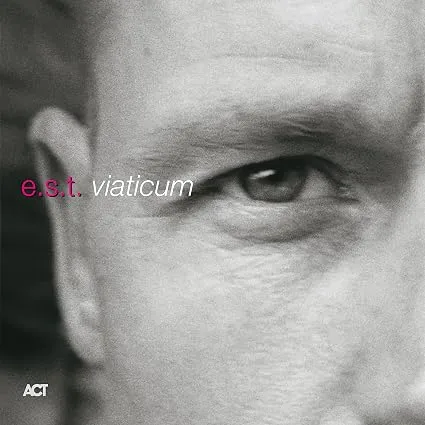
Recording Viaticum: Precision Without Perfection
By the autumn of 2004, Esbjörn Svensson Trio had reached a rare point in its artistic evolution. Years of relentless touring had refined the trio’s musical language to such an extent that recording no longer meant documenting individual performances—it meant capturing an ongoing conversation.
The sessions for Viaticum reflected this philosophy.
Rather than constructing performances piece by piece, the trio sought complete musical narratives. Technical perfection was never the primary objective. Emotional honesty was.
Producer Siggi Loch understood that the chemistry between Esbjörn Svensson, Dan Berglund and Magnus Öström could not be manufactured through excessive editing. Instead, the recording process emphasized spontaneity while preserving exceptional sonic fidelity.
The result is an album that feels simultaneously intimate and expansive. Every instrument occupies its own acoustic space, yet the trio performs with remarkable cohesion. Listeners can almost visualize the musicians responding to one another in real time.
This balance between precision and freedom became one of Viaticum‘s defining characteristics.
JazzLatitude Insight
One of the album’s greatest achievements is its dynamic range. Quiet passages remain genuinely quiet, allowing crescendos to feel dramatic without relying on excessive compression. For audiophiles, Viaticum remains an outstanding demonstration of modern jazz recording.
A Sound That Breathes
Much has been written about Esbjörn Svensson’s compositional gifts, but Viaticum is equally remarkable for its sonic architecture.
The piano sounds warm without becoming overly resonant.
Dan Berglund’s double bass provides both harmonic depth and melodic clarity, often functioning as a second lead voice rather than a supporting instrument.
Magnus Öström’s drums display extraordinary subtlety. Brushes, cymbal washes and carefully controlled dynamics contribute as much to the emotional narrative as rhythmic pulse.
Silence becomes another instrument.
Instead of filling every moment with notes, the trio allows space to shape the music. These pauses create anticipation, making each melodic entrance feel inevitable rather than decorative.
The production rewards attentive listening. With high-quality headphones or a well-balanced stereo system, new details emerge on every revisit.
Few contemporary jazz recordings possess this level of transparency.
Track Highlights
Rather than presenting isolated compositions, Viaticum unfolds as a carefully sequenced journey.
The opening title track immediately establishes the album’s emotional landscape. A lyrical piano theme gradually expands into a dialogue where every instrument contributes equally to the evolving narrative. Rather than rushing toward a climax, the trio allows tension to build naturally.
Throughout the album, melody remains central.
Even during highly improvised passages, listeners rarely lose sight of the underlying emotional direction. This accessibility explains why Viaticum continues to resonate with audiences beyond traditional jazz circles.
Certain pieces reveal the trio’s fascination with dramatic contrast. Delicate piano figures may suddenly give way to explosive rhythmic interplay before dissolving once again into near silence.
Elsewhere, Berglund’s bass lines emerge with almost orchestral authority, while Öström transforms subtle rhythmic gestures into powerful emotional statements.
No track exists merely to showcase technical ability.
Every composition serves the larger narrative.
JazzLatitude Insight
Unlike many classic jazz albums built around extended solo sections, Viaticum emphasizes collective storytelling. Even when one musician appears to take the lead, the other two continuously reshape the musical landscape.
Critical Reception
Upon its release in early 2005, Viaticum received widespread acclaim across Europe and beyond.
Critics praised the trio’s ability to merge sophisticated improvisation with memorable composition. Reviewers frequently highlighted the album’s emotional depth, cinematic atmosphere and extraordinary ensemble communication.
More importantly, audiences embraced the music.
Jazz listeners appreciated its artistic ambition.
Rock listeners discovered improvisation through its energy.
Classical audiences recognized its structural elegance.
Few contemporary jazz albums managed to bridge these worlds so naturally.
Commercially, Viaticum reinforced e.s.t.’s reputation as one of Europe’s leading jazz ensembles. International tours attracted increasingly diverse audiences, confirming that the trio had moved well beyond the traditional jazz club circuit.
An Enduring Legacy
Looking back today, Viaticum occupies a remarkable position in modern jazz history.
Its influence extends far beyond Scandinavian music.
Countless contemporary piano trios have adopted aspects of e.s.t.’s approach, whether through democratic interaction, broader harmonic language or the integration of influences from outside jazz.
The album also demonstrated that European jazz no longer existed in the shadow of American traditions.
Rather than imitating established styles, musicians across the continent felt encouraged to develop distinctive artistic voices rooted in their own cultural experiences.
This shift continues to shape contemporary jazz.
Many younger artists now view stylistic openness not as experimentation but as the natural language of the genre.
In many respects, Viaticum helped make that evolution possible.
Why This Album Still Matters
Great albums survive because they capture something larger than their historical moment.
Viaticum does exactly that.
It reminds us that innovation need not reject tradition.
It demonstrates that technical brilliance becomes meaningful only when placed in the service of emotional expression.
Above all, it proves that jazz remains one of the world’s most adaptable art forms.
More than twenty years after its release, Viaticum continues to inspire musicians, producers and listeners who believe that creativity flourishes where curiosity outweighs convention.
Its quiet confidence may be its greatest strength.
Rather than demanding attention, it rewards it.
Every return uncovers another detail, another conversation, another emotional nuance waiting to be discovered.
Few albums offer such lasting companionship.
Technical Data
Artist: Esbjörn Svensson Trio (e.s.t.)
Album: Viaticum
Release: 2005
Label: ACT Music
Genre: Contemporary Jazz · European Jazz
Personnel
- Esbjörn Svensson — piano
- Dan Berglund — double bass
- Magnus Öström — drums
Producer: Siggi Loch
JazzLatitude Rating
| Category | Rating |
|---|---|
| Historical Importance | ★★★★★ |
| Musical Innovation | ★★★★★ |
| Composition | ★★★★★ |
| Ensemble Interaction | ★★★★★ |
| Recording Quality | ★★★★★ |
| Emotional Impact | ★★★★★ |
| Accessibility | ★★★★☆ |
| JazzLatitude Essential | ★★★★★ |
Buy Amazon
Frequently Asked Questions
Is Viaticum a good introduction to modern jazz?
Yes. Its memorable melodies, exceptional production and emotional clarity make it one of the most accessible contemporary jazz albums without sacrificing artistic depth.
Why is e.s.t. considered so influential?
The trio reimagined the piano trio format by giving equal creative responsibility to all three musicians while embracing influences from rock, classical music and ambient sound.
Is Viaticum suitable for audiophiles?
Absolutely. Its natural dynamics, spacious soundstage and transparent production make it a favorite reference recording for high-fidelity listening.
What makes Viaticum different from traditional piano trio albums?
Instead of focusing on individual virtuosity, the album prioritizes collective interaction, atmosphere and long-form musical storytelling.
Final Thoughts
Viaticum is more than one of the defining jazz albums of the twenty-first century—it is a reminder that genuine innovation often emerges through refinement rather than revolution.
Esbjörn Svensson Trio expanded the language of the piano trio without abandoning its essence. Their achievement was not to reinvent jazz from the ground up, but to reveal new possibilities within a timeless form.
For listeners discovering the album today, Viaticum remains as compelling as it was upon its release: thoughtful without being distant, sophisticated without becoming inaccessible, and deeply human from its opening notes to its final silence.