

The Forgotten Fusion Band That Helped Shape Modern European Jazz
When most people hear the name Placebo, they immediately think of the British alternative rock band formed in the 1990s. Yet more than two decades earlier, another group bearing the same name was quietly redefining the possibilities of European jazz.
Founded in Belgium by pianist, composer and producer Marc Moulin, Placebo became one of the most adventurous instrumental ensembles of the 1970s. Blending jazz improvisation, funk grooves, electronic keyboards and experimental composition, the group created a sound that anticipated musical developments that would not become widespread until decades later.
Although its commercial impact remained relatively modest outside Europe, Placebo’s recordings have since become cult classics among jazz collectors, producers and musicians searching for innovative approaches to rhythm, harmony and texture.
Today, the band’s work is increasingly recognized as one of the hidden treasures of European jazz fusion.
Marc Moulin: A Musical Visionary
At the center of Placebo stood Marc Moulin (1942–2008), one of Belgium’s most original musical minds.
A classically trained pianist with deep interests in jazz, electronics, broadcasting and composition, Moulin consistently resisted artistic labels. Throughout his career, he explored the spaces between acoustic improvisation, studio experimentation and popular music, developing an approach that often seemed years ahead of its time.
Unlike many fusion musicians whose primary focus remained instrumental virtuosity, Moulin viewed the studio itself as an instrument.
Keyboards.
Electric pianos.
Synthesizers.
Tape effects.
Production techniques.
All became integral elements of his musical language.
This broader perspective would shape every aspect of Placebo’s identity.
Belgium’s Emerging Jazz Scene
During the late 1960s and early 1970s, Belgium occupied a fascinating position within European jazz.
Situated between France, Germany and the Netherlands, the country became a meeting point for musicians influenced by American bebop, avant-garde improvisation, progressive rock and emerging electronic music.
Marc Moulin embraced this environment enthusiastically.
Rather than imitating American fusion, he sought to create a distinctly European sound—one built upon atmosphere, subtle rhythmic development and harmonic sophistication rather than sheer instrumental power.
This ambition would distinguish Placebo from many of its contemporaries.
A Fusion Beyond Rock
By the time Placebo emerged, jazz fusion had already become internationally popular through artists such as Weather Report, Return to Forever and Mahavishnu Orchestra.
Marc Moulin admired these musicians.
He simply pursued a different direction.
Instead of emphasizing virtuosic soloing and rock energy, Placebo explored groove, texture and repetition with remarkable patience. Funk rhythms intertwined with minimalist ideas, electronic colors expanded harmonic possibilities and improvisation developed gradually rather than explosively.
Listening today, many passages sound surprisingly contemporary.
The band’s music anticipated elements of acid jazz, downtempo, nu-jazz and electronic jazz decades before those movements acquired names.
JazzLatitude Insight
Marc Moulin understood that innovation often comes through sound rather than speed. Placebo’s recordings demonstrate how atmosphere, rhythm and subtle harmonic development can be every bit as adventurous as dazzling instrumental virtuosity.
The First Recordings
Placebo’s early albums immediately established the group’s artistic personality.
Rather than producing conventional jazz standards or straightforward fusion compositions, the band presented carefully constructed pieces built around hypnotic grooves, rich keyboard textures and unusually spacious arrangements.
Every musician contributed actively to the evolving musical landscape.
Improvisation remained essential.
Yet collective atmosphere often mattered more than individual solos.
This philosophy would become one of the defining characteristics of Placebo’s enduring legacy.
Buy Amazon
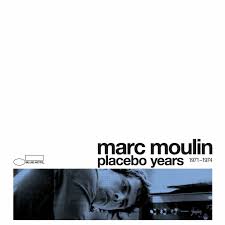
Albums That Were Decades Ahead of Their Time
Following its formation, Placebo quickly established itself as one of Europe’s most adventurous instrumental groups. Rather than chasing commercial success or following the dominant trends of American jazz fusion, Marc Moulin encouraged the ensemble to pursue an entirely original artistic direction.
The resulting recordings sounded unlike almost anything else released during the early 1970s.
Jazz improvisation merged with hypnotic funk grooves.
Electric keyboards replaced traditional piano textures.
Electronic experimentation became part of the composition itself.
Minimalist repetition coexisted with harmonic sophistication.
Looking back today, it is remarkable how contemporary these albums still sound.
Ball of Eyes
Released in 1971, Ball of Eyes introduced listeners to Marc Moulin’s distinctive musical vision.
Although rooted in jazz, the album consistently avoids conventional expectations. Instead of presenting lengthy displays of instrumental virtuosity, the music unfolds patiently through evolving grooves, layered textures and subtle rhythmic development.
Electric piano occupies a central role throughout the recording.
Bass lines function as melodic anchors.
Drums create hypnotic motion rather than aggressive momentum.
Improvisation grows organically from the surrounding atmosphere.
The result is a recording that rewards careful listening and reveals new details with every return.
Today, many critics regard Ball of Eyes as one of the most underrated European jazz albums of the early 1970s.
1973
If Ball of Eyes established Placebo’s identity, 1973 expanded it dramatically.
The compositions became more adventurous.
Electronic textures assumed greater importance.
Rhythmic ideas grew increasingly sophisticated.
The ensemble displayed even stronger confidence in allowing repetition and space to become expressive musical elements.
Rather than relying on constant harmonic movement, many pieces develop gradually through small transformations in rhythm, timbre and interaction.
This compositional patience would later become a defining characteristic of numerous electronic and nu-jazz artists.
Marc Moulin explored these ideas decades earlier.
JazzLatitude Insight
Listening to Placebo today, one quickly realizes that the band was never simply performing jazz with electronic instruments. Marc Moulin was reimagining the entire relationship between composition, improvisation, production and sonic texture, anticipating musical ideas that would only become mainstream many years later.
Beyond Traditional Fusion
One reason Placebo remains difficult to classify is its refusal to embrace the conventions that defined most fusion groups of its era.
Where American fusion frequently emphasized dazzling solos and rock-influenced intensity, Placebo often pursued restraint.
Grooves evolved gradually.
Textures remained transparent.
Every instrument served the overall atmosphere rather than individual performance.
This approach places the group closer to later developments in ambient jazz, electronic improvisation and contemporary European jazz than to many of its own contemporaries.
It is fusion built upon listening rather than competition.
Marc Moulin and Electronic Innovation
Marc Moulin’s fascination with electronic instruments extended far beyond their novelty.
He viewed synthesizers, electric pianos and studio technology as creative tools capable of expanding jazz rather than replacing it.
This philosophy later influenced his work with Telex, the pioneering Belgian electronic group that became internationally recognized for blending synthesizers with intelligent pop songwriting.
Although Placebo and Telex occupy different musical worlds, both projects reveal Moulin’s extraordinary curiosity about sound itself.
His career consistently challenged the artificial boundaries separating jazz, electronic music and popular culture.
Rediscovery Through Sampling
Long after Placebo’s original recordings disappeared from record store shelves, a new generation of listeners began rediscovering the band through an unexpected source.
Hip-hop producers.
Electronic musicians.
Record collectors.
Searching for unusual grooves and sophisticated harmonic textures, many discovered Placebo’s catalog during the 1990s and 2000s. Several recordings were sampled, reissued and discussed within collector communities, leading to renewed appreciation for Marc Moulin’s remarkable originality.
The music sounded astonishingly modern.
Many listeners assumed the recordings were contemporary.
Instead, they had been created more than twenty years earlier.
A Cult Following That Continues Growing
Unlike many jazz artists whose reputations fade with time, Placebo has experienced a steady expansion of its audience.
Reissues introduced the albums to younger jazz enthusiasts.
Streaming platforms made once-obscure recordings accessible worldwide.
Critics increasingly recognized the band’s historical importance.
Meanwhile, musicians working in electronic jazz, broken beat, acid jazz and experimental fusion continued citing Marc Moulin as an overlooked pioneer.
Today, Placebo occupies a unique position within European jazz history.
Neither fully mainstream nor completely obscure.
Simply waiting for each new generation to discover it.
Essential Albums
For listeners exploring Placebo for the first time, these recordings provide the ideal introduction to Marc Moulin’s visionary work.
- Ball of Eyes (1971) — The groundbreaking debut introducing the band’s hypnotic blend of jazz, funk and electronic textures.
- 1973 (1973) — A more adventurous and atmospheric recording that deepened Placebo’s experimental identity.
- Placebo (1974) — Often regarded as the group’s most refined statement, combining sophisticated groove with remarkable ensemble interaction.
Together, these albums document one of the most innovative yet underappreciated chapters in the history of European jazz fusion.
The Legacy of Placebo
Few European jazz groups have been rediscovered with as much enthusiasm in recent decades as Placebo. While the band’s original recordings attracted a loyal following during the 1970s, its true international recognition arrived much later, as collectors, producers and younger musicians began uncovering Marc Moulin’s remarkably forward-thinking work.
Today, Placebo occupies a unique position in jazz history.
Too experimental to fit comfortably within mainstream fusion.
Too groove-oriented to belong entirely to the avant-garde.
Too sophisticated to be classified simply as funk.
Instead, the group stands as one of the clearest examples of how European musicians developed their own identity within jazz, independent of American models.
Redefining European Jazz Fusion
Marc Moulin’s vision differed fundamentally from that of many of his contemporaries.
Rather than emphasizing technical competition or extended displays of virtuosity, he focused on sound design, rhythmic subtlety and collective atmosphere. His compositions encouraged listeners to immerse themselves in evolving textures, where repetition became hypnotic rather than predictable and electronic instruments served expressive musical purposes instead of technological novelty.
This philosophy would later become central to numerous musical movements.
Nu-jazz.
Acid jazz.
Broken beat.
Electronic jazz.
Ambient improvisation.
Placebo anticipated aspects of each of these styles long before they entered the musical vocabulary.
JazzLatitude Insight
Marc Moulin understood that the future of jazz would not depend solely on new harmonic ideas but also on new ways of shaping sound itself. Placebo’s recordings remain remarkably contemporary because they explore texture, rhythm and space with extraordinary imagination.
Influence Beyond Jazz
Perhaps the most fascinating aspect of Placebo’s legacy is how widely its influence has spread.
Hip-hop producers discovered the band’s hypnotic grooves through vinyl digging.
Electronic musicians admired its spacious production and synthesizer work.
Jazz artists appreciated its understated sophistication.
Experimental composers found inspiration in its patient structural development.
Unlike many influential groups, Placebo rarely inspired direct imitation.
Instead, it encouraged musicians to think differently about musical possibilities.
That may be its greatest contribution.
Marc Moulin’s Continuing Impact
After Placebo, Marc Moulin continued expanding his artistic horizons through broadcasting, composition, production and the pioneering electronic pop project Telex.
Although very different stylistically, Telex reflected the same curiosity that defined Placebo.
Technology remained a creative partner.
Genres remained flexible.
Humor and experimentation coexisted naturally.
Throughout his career, Moulin consistently rejected unnecessary boundaries between popular and experimental music.
His influence now reaches far beyond the jazz community, extending into electronic music, contemporary production and modern European popular culture.
Essential Collaborations
Although Placebo functioned primarily as a self-contained ensemble, Marc Moulin collaborated with numerous musicians whose work shaped Belgian and European music.
Among the most significant artistic relationships are:
- Philip Catherine — One of Belgium’s greatest jazz guitarists, sharing with Moulin a commitment to expanding European jazz beyond American conventions.
- Richard Rousselet — The distinguished Belgian trumpeter contributed to the country’s vibrant modern jazz scene alongside Moulin.
- Telex — Marc Moulin’s groundbreaking electronic trio became one of Europe’s most influential synth-pop projects, demonstrating the remarkable breadth of his artistic vision.
- The Belgian Radio Community — As a broadcaster and cultural figure, Moulin introduced countless listeners to adventurous jazz, electronic music and contemporary composition.
- European Jazz Musicians of the 1970s — Through festivals, recordings and collaborations, Placebo became part of a broader movement redefining the sound of European jazz.
These relationships reveal an artist whose influence extended well beyond a single ensemble.
Technical Profile
Band Origin:
- Brussels, Belgium
Founded:
- 1971
Founder:
- Marc Moulin
Primary Styles:
- Jazz Fusion
- Jazz-Funk
- European Jazz
- Electronic Jazz
- Experimental Jazz
Musical Characteristics:
- Electric piano and synthesizers
- Funk-inspired grooves
- Atmospheric arrangements
- Collective improvisation
- Minimalist rhythmic development
Essential Albums:
- Ball of Eyes (1971)
- 1973 (1973)
- Placebo (1974)
Five Lesser-Known Facts About Placebo
1. The band predates the famous British rock group by more than two decades.
Although the name later became associated with the alternative rock band formed in 1994, Marc Moulin’s Placebo was already creating groundbreaking jazz fusion in the early 1970s.
2. Marc Moulin was also a pioneer of electronic pop.
His later work with Telex helped shape the development of European synth-pop while demonstrating his remarkable versatility as a composer and producer.
3. Placebo’s recordings became favorites among vinyl collectors.
Original pressings of the band’s albums have become highly sought after because of both their musical quality and historical significance.
4. Hip-hop producers helped revive the band’s reputation.
The rediscovery of Placebo’s grooves through sampling culture introduced Marc Moulin’s music to an entirely new generation of listeners.
5. The band’s influence continues to expand.
Modern artists working in nu-jazz, electronic music, broken beat and experimental soul increasingly recognize Placebo as one of the overlooked pioneers of contemporary groove-based improvisation.
Frequently Asked Questions
What is Placebo (Marc Moulin)?
Placebo was a Belgian jazz fusion group founded by pianist, composer and producer Marc Moulin in 1971. The band became known for blending jazz improvisation, funk rhythms, electronic keyboards and experimental production into a highly original European sound.
Why is Placebo important?
The group anticipated many musical ideas that later became central to acid jazz, nu-jazz, electronic jazz and contemporary groove-based music. Its recordings are now regarded as some of the most innovative examples of European jazz fusion.
What is Placebo’s best album?
Many listeners consider Ball of Eyes the band’s defining statement because of its originality and historical importance, while 1973 and Placebo further expanded Marc Moulin’s visionary musical language.
Who was Marc Moulin?
Marc Moulin was a Belgian pianist, composer, producer, broadcaster and one of Europe’s most original musical innovators. Beyond Placebo, he gained international recognition as a founding member of the electronic pop group Telex.
Which artists are similar to Placebo?
Listeners who appreciate Placebo often explore Nils Petter Molvær, Bugge Wesseltoft, Jaga Jazzist, The Cinematic Orchestra, E.S.T. (Esbjörn Svensson Trio), Nik Bärtsch’s Ronin, Azymuth and Telex, all of whom combine jazz with electronic textures, groove and modern production.
JazzLatitude Rating
| Category | Rating |
|---|---|
| Compositional Originality | ★★★★★ |
| Groove and Rhythm | ★★★★★ |
| Electronic Innovation | ★★★★★ |
| Ensemble Interaction | ★★★★★ |
| Historical Importance | ★★★★★ |
| European Jazz Legacy | ★★★★★ |
| Replay Value | ★★★★★ |
| Accessibility for New Listeners | ★★★★☆ |
| JazzLatitude Essential | ★★★★★ |
Final Thoughts
Placebo remains one of the most fascinating hidden chapters in the history of European jazz. Long before electronic jazz, nu-jazz and groove-oriented improvisation became established movements, Marc Moulin imagined a musical language in which atmosphere, rhythm and sonic exploration carried as much expressive power as virtuoso improvisation.
Listening to the band’s recordings today is a striking experience.
They sound remarkably contemporary.
The spacious production, hypnotic grooves, subtle electronic textures and patient structural development feel closer to many twenty-first-century recordings than to much of the jazz released during the early 1970s. That sense of timelessness is the clearest measure of Marc Moulin’s originality.
His vision also reminds us that innovation is not always loud or immediately recognized. Placebo never pursued commercial success or fashionable trends. Instead, the group quietly developed an artistic identity so distinctive that it required decades for the wider musical world to fully appreciate its significance.
Today, the band’s influence can be heard across contemporary jazz, electronic music, experimental soul and modern production. Each new generation of listeners discovers the same remarkable truth: these recordings were not simply ahead of their time.
They continue to feel ahead of ours.
For anyone interested in the evolution of European jazz fusion, Placebo is far more than an overlooked curiosity.
It is one of the genre’s most visionary achievements.