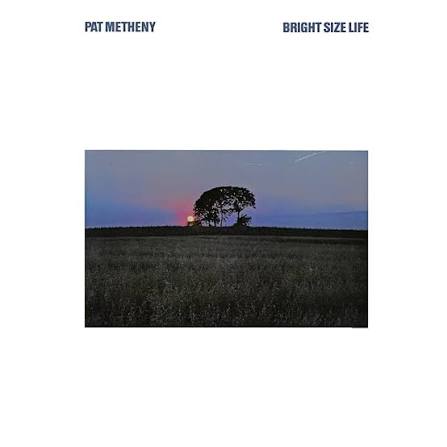
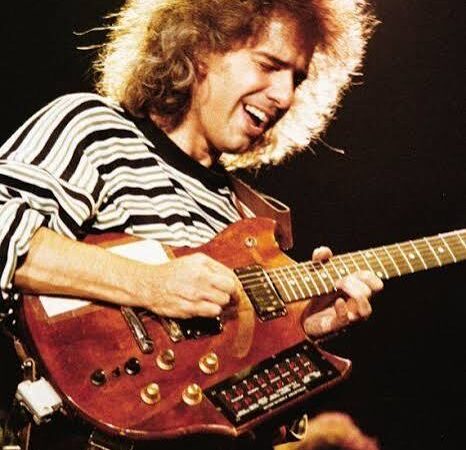
Pat Metheny and Bright Size Life: The Album That Redefined the Modern Jazz Guitar Trio

Pat Metheny and Bright Size Life: The Album That Redefined the Modern Jazz Guitar Trio

Before the Pat Metheny Sound Had a Name

By the middle of the 1970s, the electric guitar occupied a complicated place in jazz. The instrument had already traveled an extraordinary distance from Charlie Christian’s pioneering amplification through Wes Montgomery’s melodic authority, Jim Hall’s conversational subtlety, Grant Green’s blues-centered directness, and the increasingly powerful influence of rock. Fusion had made volume, distortion, electric keyboards, and extended improvisation part of the contemporary landscape. For a young guitarist arriving during this period, there were many available directions, but none of them quite described what Pat Metheny was beginning to hear.

Bright Size Life emerged from that uncertainty.

It did not reject fusion, but it did not behave like the most aggressive fusion of its era. It did not reject the jazz guitar tradition, but it did not attempt to reproduce the established language of an earlier generation. It was electric without making electricity its subject, lyrical without becoming delicate, harmonically sophisticated without sounding academic, and spacious without sacrificing rhythmic momentum. Even more importantly, it introduced a trio in which guitar, electric bass, and drums interacted without accepting the conventional hierarchy of soloist and accompaniment.

At its center was a guitarist from Missouri who was still discovering how the places, musicians, and ideas of his early life could become composition.

From Missouri to the Wider Jazz World

Pat Metheny was born in Lee’s Summit, Missouri, in 1954, into a musical family. He initially played trumpet before moving decisively toward guitar as a teenager. That transition would ultimately matter for more than instrumental biography. Metheny’s later guitar language often displayed a horn player’s concern with melodic line: phrases that breathed, developed across long arcs, and seemed less interested in guitaristic display than in sustaining a musical argument.

His development was extraordinarily fast. By his late teens, Metheny had already entered professional musical environments, and education soon became intertwined with teaching. After a brief period at the University of Miami, he was invited to teach there; he subsequently taught at Berklee College of Music in Boston while still barely older than many of his students.

Boston placed him inside a dense network of musicians and ideas. But one relationship would become especially decisive.

Gary Burton heard something in the young guitarist.

Gary Burton and the Discipline of Patience

Metheny joined vibraphonist Gary Burton’s group in the mid-1970s, entering one of the most important laboratories for young jazz musicians of the period. Burton’s ensembles were already exploring spaces between jazz, rock, country, chamber-like textures, improvisation, and composition. For Metheny, the experience offered more than visibility. It demanded musical discipline.

Burton was a demanding leader.

Metheny later recalled that playing alongside musicians of that level forced him to develop stronger narrative logic in his improvisations. Burton could challenge him after performances about whether his solos were communicating, whether ideas connected, and whether a musical statement actually went somewhere.

This became essential preparation for Bright Size Life.

When Manfred Eicher offered Metheny an opportunity to record for ECM, the young guitarist understandably wanted to move immediately. Burton advised him not to rush. Metheny might only get one chance to make a first record, Burton argued, so he should know exactly what he wanted that record to say.

Metheny listened.

Instead of treating the opportunity as proof that he had arrived, he spent roughly another year and a half writing, thinking, playing, and clarifying his musical priorities.

Years later, he would still credit Burton for that decision.

The Debut as a Statement

The idea of a debut album has changed dramatically in the digital era. Musicians can release recordings continuously, revise their public identities, and build audiences through individual tracks before making a conventional album. In the 1970s, an opportunity to record for a label such as ECM carried a different weight.

Metheny understood that.

He did not know whether another record would follow.

So Bright Size Life became less a demonstration of everything he could play than an attempt to define what mattered to him. Melody mattered. Harmony mattered. Trio interaction mattered. Composition mattered. Improvisation needed narrative shape. Electric instruments could create new possibilities without requiring jazz to become a competition in volume or technique.

Most strikingly, place mattered.

Titles such as “Missouri Uncompromised,” “Midwestern Nights Dream,” “Omaha Celebration,” and “Unity Village” locate the music inside an American geography rarely central to the mythology of modern jazz.

Jazz history is often narrated through cities.

New Orleans.

Chicago.

Kansas City.

New York.

Los Angeles.

But Metheny’s Midwest was different from the urban mythology usually associated with Kansas City swing. His compositions suggested open distances, highways, small towns, changing skies, and the strange scale of the American interior.

He was beginning to discover that landscape could become harmony.

Jaco Before the Myth

Then there was Jaco Pastorius.

Today it is nearly impossible to hear his name without the mythology arriving first. The fretless electric bass revolution. Weather Report. Heavy Weather. “Portrait of Tracy.” The harmonics. The virtuosity. The Fender Jazz Bass. The tragic final years.

But the Jaco who entered Tonstudio Bauer with Metheny in December 1975 was not yet that public figure.

He was an extraordinarily ambitious young bassist whose abilities were already obvious to musicians around him, but whose name had not yet become synonymous with a transformation of the electric bass.

Metheny knew him from Florida.

More importantly, they had played together.

The trio with Jaco and Bob Moses was not assembled by a producer for the album. Metheny later emphasized that it was an ongoing working group that played while he was also performing with Burton. That fact changes how Bright Size Life should be heard.

This was not a meeting of three virtuosos hoping chemistry would appear in the studio.

The chemistry already existed.

The Bass Refuses to Stay Downstairs

Jaco’s role on Bright Size Life is revolutionary partly because it rarely announces itself as revolutionary. He does not spend the album trying to prove that the electric bass can compete with the guitar.

Instead, he changes what the trio can be.

Traditional jazz rhythm sections had already contained extraordinarily interactive bassists, from Jimmy Blanton through Charles Mingus, Scott LaFaro, Charlie Haden, Ron Carter, and many others. The bass had never truly been restricted to a simple supporting function. But the electric bass brought another set of physical and timbral possibilities, and Jaco was developing a vocabulary capable of exploiting them without abandoning jazz interaction.

On Bright Size Life, bass lines can become counter-melodies.

Jaco can shadow Metheny, answer him, move away from him, reinforce harmony, destabilize it, or temporarily sound like a second lead voice.

The trio therefore avoids the familiar geometry of guitar in front, bass underneath, drums behind.

It becomes triangular.

Each musician can redirect the music.

Bob Moses and the Art of Not Closing the Door

Bob Moses is sometimes the least discussed member of the trio, partly because Metheny and Pastorius became such enormous historical figures. That imbalance does the music a disservice.

Moses is essential.

His drumming gives Bright Size Life motion without trapping it inside a rigid rhythmic frame. Cymbals breathe around the guitar and bass. Accents can redirect a phrase rather than simply reinforce it. Time remains present, but the music often feels as though it is floating over the bar line instead of marching through it.

This is exactly what Metheny and Jaco need.

A drummer who attempted to dominate the music would reduce the available space. A drummer who merely kept time would fail to participate in the conversation.

Moses finds another position.

He keeps the door open.

The trio can swing, drift, accelerate emotionally, or become almost weightless without losing its internal coherence.

Manfred Eicher and ECM

The album was recorded in December 1975 at Tonstudio Bauer in Ludwigsburg, West Germany, with Manfred Eicher producing. The original ECM release followed in March 1976.

ECM was still a relatively young label, but it had already developed a powerful artistic identity. Eicher’s catalog was becoming a home for musicians whose work crossed conventional boundaries without necessarily fitting the dominant American fusion model. The label’s attention to space, ensemble identity, composition, and improvisational detail made it an unusually appropriate environment for Metheny.

But Bright Size Life should not be reduced to “the ECM sound.”

Metheny already had a concept before arriving in Germany.

The label gave that concept a setting.

The difference is important. The spaciousness of the music did not originate from studio ambience alone. It was written into the compositions and into the way the trio interacted. Eicher could recognize and frame those qualities, but the musicians brought the language with them.

“Bright Size Life”

The opening title track makes the new language immediately audible.

Metheny’s melody does not enter like a declaration of technical authority. It unfolds with an unusual mixture of clarity and openness, carrying enough shape to remain memorable while leaving enormous room around itself.

Then Jaco begins answering.

The bass is not simply identifying the harmony. It is participating in the melody’s emotional direction. Metheny and Pastorius sound almost like two singers who have learned how to avoid occupying the same sentence at the same time.

Moses surrounds them rather than enclosing them.

The effect is conversational.

This quality would become one of the defining characteristics of Metheny’s career. Even when his later groups grew much larger and incorporated synthesizers, percussion, voices, orchestrations, and increasingly elaborate compositional structures, the ideal of musicians listening deeply to one another remained central.

On Bright Size Life, that principle appears in unusually exposed form.

There is nowhere to hide.

“Sirabhorn” and Harmonic Movement

“Sirabhorn” reveals another part of Metheny’s emerging identity: his ability to create compositions that feel melodically accessible while moving through sophisticated harmonic terrain.

This would eventually become so characteristic of Metheny that it could be mistaken for inevitability.

It was not.

Much of the electric jazz surrounding him in the mid-1970s emphasized groove, extended vamps, aggressive rhythmic repetition, or high-energy soloing. Metheny could engage with all of those elements, but his compositional instincts pushed strongly toward songs that developed through harmonic movement.

He wanted melodies capable of carrying improvisation.

The harmony was not a platform beneath the solo.

It was part of the story.

The Midwest as Musical Material

“Missouri Uncompromised” and “Midwestern Nights Dream” make Metheny’s geographical imagination impossible to ignore.

The Midwest in these compositions is not presented through literal musical quotation. There is no attempt to imitate regional folk music in an obvious way. Instead, the connection feels psychological.

Space becomes part of phrasing.

Distance becomes part of form.

There is an expansiveness that avoids both urban density and pastoral sentimentality.

This is where Metheny begins separating himself decisively from the stereotypes surrounding jazz guitar.

He does not need the instrument to sound dangerous.

He does not need it to sound sophisticated.

He does not need it to prove its legitimacy against the saxophone.

The guitar becomes a way to describe a world.

An Alternative to Fusion’s Arms Race

By 1976, jazz fusion had produced extraordinary music. Miles Davis, Weather Report, the Mahavishnu Orchestra, Return to Forever, Herbie Hancock’s electric groups, Tony Williams Lifetime, and numerous others had radically expanded the possibilities of jazz instrumentation and rhythm.

But every successful musical revolution creates imitators.

Fusion increasingly risked being reduced to speed, volume, complicated meters, and technical display.

Bright Size Life offered another route.

It was electric but not overloaded.

Virtuosic but not exhibitionistic.

Contemporary but deeply connected to the jazz tradition.

Spacious without becoming passive.

The trio demonstrated that modernity did not have to mean maximum density.

Sometimes the future could arrive quietly.

Ornette Coleman at the End of the Road

The album closes with Ornette Coleman’s “Round Trip/Broadway Blues,” the only material not composed by Metheny.

Its presence is crucial.

Ornette represented freedom, but not freedom as chaos. His music demonstrated that strong melody, blues feeling, collective improvisation, and formal openness could coexist without relying on conventional harmonic structures.

Metheny would maintain a deep relationship with Coleman’s musical ideas throughout his career.

Ending his debut with Ornette therefore places Bright Size Life inside a lineage.

The album may evoke Missouri landscapes and ECM spaciousness, but its freedom is connected to one of the most radical traditions in American jazz.

Metheny was not escaping jazz history.

He was choosing which parts of that history could help him move forward.

The Beginning of an Argument

Decades later, Metheny would say that he could still play the music from Bright Size Life and still believe in the ideas behind it.

That may be the most revealing way to understand the album.

It was an argument.

An argument that electric guitar could remain lyrical without becoming nostalgic.

That electric bass could function as an equal melodic voice.

That a trio could create complexity through interaction rather than density.

That the American Midwest could become jazz geography.

That melody and freedom did not have to oppose one another.

That Ornette Coleman and a songlike harmonic sensibility could belong to the same musical imagination.

And that a twenty-one-year-old guitarist did not need to sound like the loudest musician in the room to propose a new future for jazz.

Bright Size Life did not yet contain everything Pat Metheny would become.

But the map was already there.

Buy Amazon

pat cd

Three Musicians, Eight Tracks, and a New Kind of Electric Jazz

The Trio as a Conversation

The most radical quality of Bright Size Life is easy to overlook because the album rarely behaves as though it is trying to be radical. Pat Metheny, Jaco Pastorius, and Bob Moses do not announce a manifesto. There are no extended displays designed to prove that the musicians have discovered a new technical frontier. Instead, the argument emerges through interaction. Three instrumental voices occupy the music with unusual independence, and none is required to remain permanently inside a traditional role.

This is especially striking in the relationship between Metheny and Pastorius. Guitar and electric bass might ordinarily suggest a clear vertical hierarchy: the guitarist states melodies and improvises while the bassist supplies harmonic foundations. Jaco certainly provides foundations when the music requires them, but he constantly moves beyond that responsibility. His lines respond to Metheny’s phrases, create secondary melodies, anticipate harmonic movement, and sometimes seem to pull the guitarist toward another direction. Metheny leaves enough room for those interventions to matter. Moses, meanwhile, avoids reducing the exchange to two melodic voices supported by drums. His rhythmic decisions can change the direction of both players.

The result is less like soloist plus rhythm section than a mobile triangle.

That concept was not unprecedented. Bill Evans, Scott LaFaro, and Paul Motian had transformed expectations of piano-trio interaction more than a decade earlier, and Ornette Coleman’s groups had demonstrated other possibilities for collective improvisation. Metheny’s trio belongs to that broader history. What makes Bright Size Life distinctive is the way those principles are translated into an electric instrumentation associated with a very different musical moment.

Jaco Pastorius Without the Bass Hero Narrative

Because Jaco Pastorius would soon become one of the most influential electric bassists in history, it is tempting to hear Bright Size Life primarily as evidence of the revolution to come. That perspective can distort what is actually happening.

Jaco is astonishing on the album, but his greatness lies largely in his refusal to turn every opportunity into a demonstration.

The fretless bass gives him unusual control over pitch inflection, sustain, and articulation, allowing lines to approach the expressive flexibility of a horn or voice. Yet those possibilities are placed at the service of the compositions. He can occupy the foreground, but he understands how to disappear into the ensemble. He can answer Metheny melodically and then return immediately to a more foundational role.

This flexibility would become one of the central lessons of his playing. Jaco did not merely make the electric bass louder, faster, or more technically spectacular. He expanded the range of functions it could perform inside an ensemble.

On Bright Size Life, that expansion feels organic because Metheny’s compositions leave space for it.

“Bright Size Life”: Equality in Motion

The title track remains the clearest introduction to the trio’s method. Metheny’s melody has the directness of a song, but the arrangement prevents it from becoming fixed. Jaco’s bass moves with enough independence that the harmonic foundation seems alive beneath the tune. Moses creates a pulse that supports the composition while preserving elasticity.

The crucial quality is motion.

Nothing feels stationary.

Even when the harmonic sequence repeats, the musicians’ relationships continue changing. Jaco may approach a chord from another direction. Metheny may extend a phrase differently. Moses may alter the weight of the beat or reposition an accent.

This is jazz in one of its most fundamental senses: not simply improvising solos over a composition but allowing the composition itself to remain responsive to the musicians playing it.

The title track became one of Metheny’s enduring pieces because its melody survives these transformations. It is memorable enough to anchor the freedom around it.

That balance would become central to his work.

“Sirabhorn”: Composition Before Display

“Sirabhorn” reinforces the importance of Metheny as a composer. Even at this early stage, he was not approaching an album merely as a sequence of vehicles for guitar improvisation. His tunes had identities.

“Sirabhorn” moves through harmonic changes with an almost effortless continuity. The sophistication is embedded rather than advertised. Instead of stopping the listener with complexity, the harmony creates forward movement beneath the melody.

This is an important distinction because the mid-1970s contained no shortage of extraordinary instrumental virtuosity. Jazz-rock had expanded expectations around technique, speed, amplification, and rhythmic difficulty. Young musicians could easily feel pressure to establish credibility by demonstrating what they could execute.

Metheny’s ambition was different.

Technique needed to disappear inside musical purpose.

A difficult passage should sound inevitable rather than difficult.

A sophisticated harmonic sequence should create emotion rather than simply establish the composer’s knowledge.

“Sirabhorn” already reflects that philosophy.

“Unity Village” and the Possibility of Simplicity

“Unity Village” turns toward another dimension of Metheny’s emerging language. The title refers to a community near his Missouri home region, reinforcing the geographical imagination running throughout the album. But the composition matters because it demonstrates how comfortable Metheny could be with apparent simplicity.

His melodic writing often carries an unusual openness. The phrases can feel almost familiar on first encounter, as though they belong to a musical memory the listener cannot quite identify. Yet beneath that accessibility are subtle harmonic choices and rhythmic details that prevent the music from becoming predictable.

This ability would eventually become one of Metheny’s greatest strengths and, paradoxically, one reason some listeners underestimated the complexity of his work.

Difficulty is easy to recognize when it sounds difficult.

Metheny often made complexity sound natural.

“Unity Village” is an early example of that gift.

“Missouri Uncompromised”

The title “Missouri Uncompromised” sounds almost like a declaration of identity. Metheny was entering an international jazz world in which New York remained the dominant center of gravity, yet he did not attempt to erase the geography that formed him.

Missouri had obvious jazz history through Kansas City, Count Basie, Charlie Parker, Mary Lou Williams, and the extraordinary musical culture surrounding the city’s clubs. But Metheny’s relationship to the region was not simply an extension of Kansas City swing. He was drawing on another image of the Midwest: open land, suburban and small-town environments, long-distance travel, changing weather, and the psychological experience of space.

That landscape becomes musical without requiring literal representation.

Metheny’s lines stretch.

The trio leaves air around ideas.

Melodies can suggest distance.

The music moves without feeling crowded.

This is not “pastoral jazz” in any simple sense. There is rhythmic intensity and harmonic complexity throughout the record. But Metheny was discovering that the environment from which he came could become part of his musical identity rather than something to escape on the way toward the established centers of jazz.

“Midwestern Nights Dream”

That idea reaches perhaps its most evocative form in “Midwestern Nights Dream.” Even the title joins geography with imagination. This is not documentary realism. It is a remembered or imagined Midwest transformed through composition.

Metheny’s later career would repeatedly return to this kind of landscape. Albums and compositions would evoke highways, skies, journeys, small towns, deserts, plains, and the emotional experience of movement across large spaces. His music often suggests travel even when no explicit narrative is provided.

On Bright Size Life, this sensibility is still emerging.

Jaco’s bass is essential because it prevents the music from becoming sentimental landscape painting. His lines introduce rhythmic and melodic tension. Moses likewise keeps the music active beneath its openness.

The landscape moves.

It is not a postcard.

“Omaha Celebration”

“Omaha Celebration” extends the album’s map farther across the Midwest. Again, the geographical title matters because it gives Metheny’s debut a sense of place unusual for jazz of the period.

But there is another point worth emphasizing: Metheny was not rejecting urban jazz culture. His musical education depended on encounters with musicians, schools, clubs, and professional networks far beyond Missouri. He was already working with Gary Burton and participating in an international jazz environment.

The significance lies in his refusal to believe that becoming a modern jazz musician required adopting a fictional biography.

He could enter the wider world without pretending he had come from somewhere else.

That confidence would eventually help him construct one of the most recognizable musical identities of his generation.

“Unquity Road”

“Unquity Road” reveals another aspect of Metheny’s compositional thinking: the ability to create a strong melodic identity without making the music rigid. The tune gives the trio enough definition to establish a shared destination but enough flexibility to choose different routes toward it.

This balance between composition and improvisation is one of the central achievements of Bright Size Life.

Some jazz compositions function primarily as frameworks for solos. Others are so thoroughly arranged that improvisation occupies a carefully controlled space inside them. Metheny was interested in another possibility: compositions with memorable emotional identities that remained open enough to be transformed in performance.

The song does not disappear when improvisation begins.

Improvisation reveals another side of the song.

That principle would become increasingly important in the Pat Metheny Group.

“Round Trip/Broadway Blues”: Ornette at the Center

The album’s closing medley of Ornette Coleman’s “Round Trip” and “Broadway Blues” is not an appendix attached to a record otherwise concerned with Metheny’s own compositions. It reveals one of the deepest sources of his musical thinking.

Metheny’s admiration for Ornette Coleman was profound. He recognized that Coleman’s revolution had never been merely about abandoning chord changes. Ornette’s music remained deeply connected to melody, blues, rhythm, and the personalities of individual musicians.

Freedom did not mean the absence of structure.

It meant discovering structures capable of responding to human expression.

That principle fits Bright Size Life perfectly.

Metheny’s compositions may use harmonic movement very differently from Ornette, but the trio shares Coleman’s belief that musicians can interact as individuals without destroying coherence.

Jaco was particularly suited to this approach. His ability to move melodically around the bass register gives the medley a flexibility that would be impossible if he remained confined to root notes. Moses understands the same principle rhythmically.

The closing track therefore reveals the album’s hidden ancestry.

Behind the ECM setting, the Midwestern titles, and Metheny’s emerging guitar voice stands one of the great radicals of American jazz.

Bob Moses and the Freedom to Breathe

Across all eight pieces, Bob Moses performs one of the album’s most difficult tasks: maintaining rhythmic identity without overdetermining the music.

This requires enormous confidence.

A drummer can make a trio sound more powerful simply by playing more aggressively. Moses often chooses something subtler. He listens to the melodic interaction between guitar and bass and shapes the rhythmic environment around it.

His cymbal work can create continuity without closing the space between phrases. Accents become commentary. The kit responds to the direction of the music rather than forcing the music to respond to the kit.

This approach makes Bright Size Life feel lighter than much electric jazz of the period, but lightness should not be mistaken for lack of intensity.

The intensity comes from attention.

Three musicians are listening closely enough that small decisions matter.

Why This Was Not Typical Fusion

The album appeared at a moment when fusion was becoming both enormously creative and increasingly codified. The first wave had broken open possibilities. Miles Davis’s electric bands challenged nearly every assumption about jazz instrumentation and production. Mahavishnu Orchestra brought astonishing rhythmic complexity and rock-level intensity. Return to Forever combined virtuosity, composition, Latin influence, and electric power. Weather Report pursued collective texture, electronics, and global rhythmic ideas.

Metheny admired and learned from this expanded world.

But Bright Size Life does not sound like an attempt to join the arms race.

There are no banks of keyboards.

No enormous drum kit.

No long displays of distorted guitar heroics.

No need to demonstrate that jazz musicians can compete with rock musicians in volume.

The trio uses electric instruments to become more intimate rather than more massive.

That was a significant alternative.

Metheny demonstrated that the electric future of jazz could also contain lyricism, acoustic sensitivity, melodic clarity, and space.

Electric Guitar Without Guitar Heroics

This is especially important in understanding Metheny’s guitar playing.

By 1976, rock had transformed the cultural meaning of the electric guitar. The instrument could signify rebellion, sexual energy, technological power, distortion, virtuosity, and spectacle. Fusion guitarists had already absorbed much of that vocabulary.

Metheny chose a different route.

His playing on Bright Size Life rarely seems designed to make the listener think first about the guitar.

The instrument becomes a melodic voice.

That may sound obvious, but it represents a substantial aesthetic decision. Metheny’s phrases often resemble the logic of horn improvisation. He develops lines across measures rather than relying primarily on familiar guitar shapes. Notes connect through melodic purpose.

His early trumpet experience may have contributed to this sensibility, but so did his intense engagement with jazz improvisers beyond the guitar tradition.

He wanted to participate in jazz as a musician who happened to play guitar, not remain trapped inside a separate category called “jazz guitar.”

Jaco’s Revolution in Context

The same principle applies to Pastorius.

Jaco’s subsequent influence became so enormous that generations of bassists would imitate his harmonics, fretless slides, bright articulation, and soloistic vocabulary. But copying those surface characteristics can obscure the deeper revolution.

Jaco listened like a composer.

On Bright Size Life, he understands when Metheny’s melody needs support and when it can tolerate another independent voice. His bass lines have direction. They do not merely fill available space.

The revolutionary aspect is relational.

He changes what the other musicians are able to do.

Metheny can leave harmonic areas more open because Jaco understands them.

Moses can imply rather than state because Jaco’s rhythmic sense is so strong.

The trio becomes more flexible because the bassist refuses to behave like a fixed piece of architecture.

Before Weather Report

The timing of the album makes this particularly fascinating. Jaco’s association with Weather Report would soon transform his public reputation. His own self-titled debut appeared in 1976, and his work with Joe Zawinul and Wayne Shorter would make him one of the defining musicians of fusion.

Bright Size Life therefore captures a narrow historical window.

Jaco is already Jaco.

But the world does not fully know it yet.

This allows us to hear the musical personality before the legend overwhelms it.

There is confidence, certainly.

There is extraordinary technique.

But above all there is listening.

Metheny After Bright Size Life

The album also stands immediately before another major transformation. Metheny’s partnership with keyboardist Lyle Mays would soon develop into the Pat Metheny Group, whose 1978 debut expanded many ideas already present here.

The trio’s openness would become a larger ensemble language.

The Midwestern sense of space would deepen.

Melody would become even more central.

Electric and acoustic textures would coexist.

Latin American and other global rhythmic influences would increasingly enter Metheny’s vocabulary.

Technology would become a creative tool rather than an end in itself.

The seeds are already audible in Bright Size Life.

But the debut remains distinctive because those ideas have not yet become an established aesthetic.

They are being discovered in real time.

An Album Without Excess

Perhaps the most striking thing about Bright Size Life nearly five decades later is how little of it feels unnecessary.

The record is concise.

The instrumentation is minimal.

The compositions have enough structure to remain memorable and enough openness to remain alive.

Nothing appears designed merely to prove that 1976 has arrived.

That absence of period spectacle helps explain the album’s longevity.

Its modernity came from relationships rather than technology.

Three musicians listening.

A composer finding his voice.

A bassist reinventing his instrument without interrupting the music to announce the revolution.

A drummer understanding that space can carry as much energy as impact.

This is why Bright Size Life remains larger than the story of a famous guitarist’s debut.

It documents the moment when three young musicians discovered that electric jazz could move forward without becoming heavier, louder, or more complicated for its own sake.

The future they proposed had room to breathe.

The Album That Kept Opening Into the Future

A Debut That Did Not Stay in 1976

Some debut albums are valuable because they preserve an early version of an artist who would later become more interesting. Bright Size Life is different. Pat Metheny changed enormously after 1976, yet the central musical questions posed by his first album never really disappeared. How could melody remain central to adventurous jazz? How could electric instruments expand the music without overwhelming it? How could composition and improvisation operate as parts of the same narrative? How could musicians from different backgrounds create an ensemble identity stronger than individual virtuosity? And how could a distinctly American sense of place enter jazz without becoming nostalgia?

Metheny would spend decades producing different answers.

That is why Bright Size Life does not feel like a primitive sketch of later achievements. The album is complete on its own terms. What followed was not the correction of an immature aesthetic but its expansion. Larger ensembles, synthesizers, acoustic guitars, percussion, orchestration, international collaborations, extended compositions, free improvisation, and increasingly sophisticated production would eventually enter Metheny’s music. Yet underneath much of that work remained the same instinct audible in the trio with Jaco Pastorius and Bob Moses: give musicians enough structure to know where they are and enough freedom to discover where they might go.

The debut established a direction rather than a formula.

From Trio to Pat Metheny Group

The next decisive chapter arrived through Metheny’s partnership with Lyle Mays. The keyboardist brought a harmonic and compositional imagination capable of expanding Metheny’s ideas beyond the exposed guitar-bass-drums format. When the Pat Metheny Group emerged at the end of the 1970s, the music became broader in scale without abandoning the qualities established on Bright Size Life.

Melody remained essential.

So did space.

So did movement.

But the landscape grew.

Mays’s keyboards could create wide harmonic fields around Metheny’s guitar, while bass and drums maintained the rhythmic flexibility necessary to keep those fields from becoming static. Over time, percussion and additional textures would transform the ensemble further. The group’s music could suggest folk song, jazz improvisation, Latin American rhythm, rock, minimalism, and cinematic expansiveness without settling permanently inside any of those categories.

The connection to Bright Size Life is not difficult to hear. The debut had already demonstrated Metheny’s resistance to the idea that modern jazz needed to choose between accessibility and experimentation. The Pat Metheny Group would carry that refusal toward a much larger audience.

Lyle Mays and the Expansion of the Landscape

Mays deserves particular emphasis because his relationship with Metheny became one of the defining musical partnerships of modern jazz. Their shared language was not based on one musician simply accompanying the other. Mays could challenge Metheny harmonically, compositionally, and structurally, much as Jaco had challenged him melodically within the earlier trio.

The instrumentation changed, but the principle remained.

Metheny wanted conversation.

This is one of the most important continuities between Bright Size Life and his later career. His ensembles frequently contain musicians with identities strong enough to redirect the music. He does not build settings in which every element exists solely to frame the guitar.

That philosophy was already obvious in 1975.

A guitarist interested primarily in establishing himself as the leader would hardly have chosen Jaco Pastorius as a bassist and then left him so much room.

Metheny was interested in what happened when strong voices met.

Jaco Goes Another Way

Pastorius, of course, followed his own extraordinary path. His self-titled debut and his work with Weather Report quickly moved him toward international recognition. The electric bass would never be perceived quite the same way after his rise.

Yet hearing Bright Size Life after knowing everything that followed creates a productive distortion. We instinctively search for signs of the famous Jaco—the harmonics, the speed, the singing fretless tone, the personality that would dominate stages.

Those elements exist.

But the album preserves something equally important: Jaco the ensemble musician.

His revolutionary contribution was not simply that he could make the bass sound unprecedented. It was that he understood how those new possibilities could alter relationships inside a group.

That lesson extends beyond bass playing.

Instrumental innovation becomes historically important when it changes what other musicians can imagine.

Jaco did that.

Bob Moses and the Third Voice

The later fame of Metheny and Pastorius can make Bright Size Life look retrospectively like a summit meeting between two future legends. That description unfairly reduces Bob Moses to the person who happened to play drums behind them.

Without Moses, this record would be fundamentally different.

His approach creates the conditions under which Metheny and Jaco can move so freely. He provides momentum without excessive weight and structure without rigidity. His rhythmic decisions respond to melodic events rather than simply establishing a fixed grid underneath them.

This is a form of generosity.

Great ensemble musicians often create freedom for other people without making the source of that freedom obvious. Moses does precisely that.

His contribution also reinforces the album’s deepest principle: the trio is the instrument.

Not guitar plus accompaniment.

Not two stars plus drummer.

Three musicians.

The Guitar After Bright Size Life

Metheny’s subsequent career would transform the vocabulary of jazz guitar in ways that extended far beyond his compositions. His phrasing, tone, melodic architecture, use of technology, acoustic instruments, guitar synthesizer, and approach to ensemble playing became enormously influential.

Influence, however, has an unfortunate side effect.

Once a musician develops an instantly recognizable language, imitators reproduce its surface characteristics. What began as personal discovery can become style.

Metheny’s lyrical phrasing could be copied.

His sense of spaciousness could be copied.

Certain guitar tones could be copied.

The broad outlines of the Pat Metheny Group aesthetic could be copied.

But Bright Size Life reminds us what existed before those characteristics became conventions.

The music was not created from a desire to establish “the Pat Metheny sound.”

It was created by a young musician trying to solve musical problems.

That distinction is essential.

Originality is often the result of pursuing questions more seriously than categories.

A Different Model of Virtuosity

Metheny’s technical abilities were already formidable when the album was recorded, and Pastorius possessed one of the most extraordinary instrumental vocabularies of his generation. Yet Bright Size Life rarely turns virtuosity into its central drama.

This gives the album a different relationship to technique.

Virtuosity appears as fluency.

The musicians can respond quickly because they have the technique to do so. They can leave space because they do not need constant activity to prove mastery. They can play difficult material without turning difficulty into spectacle.

This approach has aged remarkably well.

Technical standards in jazz and contemporary instrumental music have continued rising. Musicians can now encounter breathtaking performances almost instantly online. Speed and complexity that once seemed astonishing can become familiar through repetition.

Musical judgment remains much harder to imitate.

When should a phrase end?

When should the bass stop following the root?

When should the drummer leave a space open?

When should a melody remain simple?

Bright Size Life is filled with answers to those questions.

The Midwest Was Not a Gimmick

Metheny’s geographical imagination also became increasingly important after the debut. The Midwest continued to appear in his work not necessarily through titles alone but through an emotional vocabulary of distance, travel, openness, memory, and horizon.

This should not be romanticized into a simplistic theory that Metheny sounds spacious because Missouri has wide landscapes. Music is not produced by geography so mechanically.

What matters is that Metheny allowed personal geography to become artistic material.

Jazz musicians have always transformed place. New Orleans, Harlem, Kansas City, Chicago, Detroit, Philadelphia, Los Angeles, and countless other locations became audible because musicians carried social environments into their work.

Metheny expanded that map in another direction.

Suburban Missouri, Midwestern roads, small communities, and the experience of looking outward from the American interior could belong to modern jazz imagination too.

That was a cultural statement even when it was not announced as one.

Ornette Coleman Never Left

Perhaps the most important indication that Metheny’s lyricism should never be confused with conservatism is his continuing relationship with Ornette Coleman’s music.

The inclusion of “Round Trip/Broadway Blues” on his first album was not a youthful gesture he later abandoned. Metheny’s fascination with Ornette continued throughout his career and eventually led to the extraordinary 1986 album Song X, recorded with Coleman himself.

Song X startled listeners who knew Metheny primarily through the more melodic and expansive work of the Pat Metheny Group. To anyone who had listened carefully to Bright Size Life, however, the connection was already present.

Ornette offered Metheny a model of freedom grounded in melody.

That combination was crucial.

Coleman’s music could be radical without abandoning song.

It could be harmonically liberated while remaining connected to blues.

It could allow musicians extraordinary independence while preserving collective identity.

Those principles are woven into Metheny’s debut.

The Importance of Melody

Metheny’s commitment to melody may be the album’s most durable quality. In jazz criticism, melodic accessibility is sometimes treated suspiciously, as though music becomes less serious when listeners can remember a tune.

Metheny never accepted that assumption.

A memorable melody can support enormous harmonic and improvisational complexity. In fact, the stronger the melodic identity of a composition, the more meaningful its transformation can become during improvisation.

The title track demonstrates this beautifully.

Its melody is recognizable enough to remain present even after the trio moves away from its initial statement. Improvisation therefore becomes a journey from somewhere rather than activity occurring over an anonymous framework.

This would remain central to Metheny’s work.

He wanted listeners to remember the journey.

ECM and the Question of Identity

Bright Size Life also became part of the mythology surrounding ECM. By the mid-1970s, Manfred Eicher’s label was developing an identity associated with unusual attention to ensemble sound, space, composition, and international perspectives on jazz.

Metheny fit naturally into that environment.

But describing the album primarily as an example of an “ECM aesthetic” reverses the relationship. The musicians already possessed a concept. Eicher recognized it and provided conditions in which it could be expressed clearly.

This matters because record labels are often given too much authorship when their catalogs develop strong identities.

ECM was important precisely because it allowed distinctive musicians to remain distinctive.

Metheny did not sound like Keith Jarrett.

Jaco did not sound like Eberhard Weber.

Bob Moses did not become Jon Christensen.

The label created continuity without demanding uniformity.

Bright Size Life benefited from that philosophy.

Why the Recording Still Feels Contemporary

The album’s longevity is sometimes explained through production quality. But focusing on recording characteristics alone misses the deeper reason it has aged so gracefully.

The music does not depend heavily on fashionable gestures.

There are electric instruments, certainly, but they are not used primarily to announce modern technology. There are sophisticated compositions, but they do not depend on complexity as a novelty. The trio is virtuosic, but virtuosity is not presented as competition.

What remains is interaction.

Human interaction ages differently from technology.

A conversation among musicians can still feel immediate decades later because listening, risk, response, surprise, and trust are not period effects.

They are musical behaviors.

That is what we hear on Bright Size Life.

Why the Audiophile Story Misses the Album

The old version of this Jazz Latitude article framed the record through ideas such as spatial transparency, instrument separation, soundstage dimensions, transient response, playback equipment, and “reference-grade” reproduction.

Those observations might interest someone evaluating an audio system.

They do not explain the album.

Jaco Pastorius’s bass is not important because a loudspeaker can place it precisely within a stereo image. It matters because his lines change Metheny’s options.

Bob Moses’s cymbals are not valuable because a tweeter reproduces their upper frequencies accurately. They matter because his rhythmic choices give the trio space.

Metheny’s guitar does not deserve attention because equipment reveals its tone with exceptional transparency. It deserves attention because his phrasing proposes another way for the electric guitar to behave in jazz.

The musicians are the story.

The recording exists to preserve what they did.

Reversing those priorities turns art into test material.

What to Listen for Instead

Listen first to the bass when Metheny states a melody. Notice how rarely Jaco is satisfied merely to identify the harmonic foundation. Then listen again to Metheny and notice how much room he leaves for those bass decisions.

Follow Moses.

Notice the difference between maintaining time and defining every beat. Listen to how frequently his drumming suggests motion without insisting on weight.

Follow the compositions geographically. “Missouri Uncompromised,” “Midwestern Nights Dream,” “Omaha Celebration,” and “Unity Village” create an unusual map across the record. Ask what those places mean emotionally rather than whether the music literally depicts them.

Then listen to Ornette’s compositions at the end.

Suddenly the album’s freedom becomes easier to understand.

The apparent openness was never emptiness.

It came from a tradition.

The Reunion With the Music

One of the strongest measures of a debut album is whether its creator eventually outgrows it.

Metheny grew beyond Bright Size Life in almost every practical sense. His compositions became larger. His technology became more sophisticated. His ensembles expanded. His collaborations crossed continents and genres. His discography grew into one of the most substantial bodies of work in modern jazz.

Yet he did not outgrow the album’s central ideas.

The music remained playable.

It remained relevant to him.

That continuity became especially visible when Metheny returned publicly to the Bright Size Life repertoire decades later. The compositions did not need to be treated as historical artifacts. New musicians could enter them because their structures remained open enough to support new conversations.

That is one of the clearest signs of durable composition.

A museum piece asks to be preserved.

A jazz composition asks to be played again.

Jaco’s Absence

Any return to Bright Size Life inevitably carries the weight of Jaco Pastorius’s absence. His death in 1987, at only thirty-five, transformed the way every earlier recording would subsequently be heard.

There is no need to romanticize that tragedy.

Jaco’s life and final years were complicated, and the mythology surrounding brilliant musicians who die young can easily consume the music they actually made.

Bright Size Life offers another way to remember him.

Here he is not a tragedy.

He is not yet a legend.

He is working.

Listening.

Responding.

Building bass lines around another musician’s compositions.

Laughing musically with a drummer.

Taking risks.

The record preserves a living creative relationship rather than a memorial.

That may be one of its greatest gifts.

Three Young Musicians Before History Arrived

There is something moving about hearing the album with knowledge of what happened afterward.

Metheny would become one of the most influential guitarists and composers of his generation.

Jaco would permanently alter the electric bass.

Moses would continue a wide-ranging career as drummer, composer, and musical thinker.

But none of that future is necessary for the album to work.

In December 1975, they were simply three musicians entering a German studio with a collection of tunes they had already been playing together.

History came later.

The chemistry came first.

What Bright Size Life Actually Changed

The album did not single-handedly transform jazz guitar. Musical history rarely belongs to one record. Nor did Metheny invent lyrical electric jazz, interactive trio playing, spacious composition, or the idea of drawing from American geography.

His achievement was synthesis.

He brought together ideas that had rarely occupied the same space in quite this way: the freedom associated with Ornette Coleman, a composer’s devotion to memorable melody, the possibilities of electric instrumentation, the conversational equality of modern jazz rhythm sections, a Midwestern sense of identity, and an alternative to fusion’s increasing emphasis on power and technical spectacle.

The combination felt new because it belonged to him.

That is often how innovation really happens.

Not through invention from nothing.

Through relationships nobody else had assembled in the same way.

A Bright Size Life

The title remains mysterious enough to resist definitive interpretation, which is appropriate for an album whose influence has continued to expand beyond its original moment.

What is clear is that Bright Size Life announced a musician already unwilling to accept inherited boundaries. Pat Metheny could admire Wes Montgomery and Ornette Coleman. He could play electric guitar without imitating rock guitar heroes. He could work within ECM without becoming reducible to an ECM stereotype. He could come from Missouri without treating New York as the only geography capable of producing serious modern jazz. He could value melody without abandoning experimentation.

And he could choose collaborators strong enough to challenge him.

That final point may be the most important.

Metheny’s debut succeeds because it does not sound like a young guitarist presenting himself to the world.

It sounds like three musicians discovering something together.

Jaco’s bass opens possibilities.

Bob Moses keeps those possibilities moving.

Metheny’s compositions give them somewhere meaningful to go.

Nearly fifty years later, that interaction still feels unfinished in the best possible sense. Every melody seems capable of opening another route. Every rhythmic decision suggests another response. The album does not close around its own historical importance.

It keeps moving.

That was the future Bright Size Life proposed in 1976: not jazz made modern through equipment, volume, or spectacle, but jazz renewed through composition, listening, personality, and space.

Three musicians entered the room.

And the room became larger.