
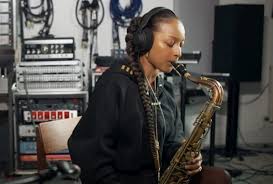
London Before the Breakthrough
When Nubya Garcia’s Source arrived in 2020, the London-born tenor saxophonist was often presented internationally as one of the leading figures in a remarkable new generation of British jazz. The description was understandable, but it could also be misleading. Garcia had not suddenly appeared with a debut album and a fashionable scene behind her. Years of study, community music programs, small ensembles, collaborations and independent releases had already shaped a musical identity in which jazz existed alongside dub, Caribbean music, soul, electronic culture and the rhythms of contemporary London. Source brought that identity to a much larger audience, eventually earning a Mercury Prize nomination, but the album’s importance was less about announcing a new star than revealing how much musical history Garcia had already absorbed and reorganized.
That distinction matters when discussing the so-called British jazz renaissance of the late 2010s. The phrase can make the movement sound spontaneous: a collection of young musicians suddenly revitalizing a tradition that had become dormant. London’s reality was more complicated. Behind many of the musicians who gained international attention were years of education, community networks, jam sessions, club culture and overlapping ensembles. Garcia’s trajectory demonstrates how that ecosystem worked. She studied with pianist Nikki Yeoh at Camden Music, joined bassist Gary Crosby’s Tomorrow’s Warriors in her late teens and later trained at Trinity Laban Conservatoire of Music and Dance. She also became part of Nérija, the collective whose members included several important voices from the same generation.
Garcia therefore emerged not simply as an individual virtuoso but from a community in which musicians repeatedly appeared in one another’s projects. That collaborative environment would become one of the defining characteristics of London’s contemporary jazz identity.
Tomorrow’s Warriors and the Importance of Community
Tomorrow’s Warriors deserves particular attention because Garcia’s association with it places her within a much larger story. Founded by Gary Crosby and Janine Irons, the organization has played a major role in supporting young jazz musicians in Britain, particularly those from backgrounds historically underrepresented within formal music education and the professional jazz industry. Garcia’s development there connected technical study with an environment built around performance, mentorship and collaboration.
For a young improviser, this distinction can be decisive. Conservatoire training can provide harmony, ear training, instrumental technique and historical knowledge, but jazz also develops through social experience. Musicians learn how to react to different rhythm sections, how to recover when an improvisation goes somewhere unexpected, how to listen rather than merely execute, and how individual sound changes depending on who else is on stage.
Garcia’s later career would repeatedly demonstrate the value of that collective education. Even when her name eventually appeared alone on album covers, the music rarely suggested an isolated soloist surrounded by anonymous accompaniment. Her bands sound like groups of musicians with histories together, and many of the players around her belong to the same interconnected London environment.
This helps explain why reducing the British jazz resurgence to a collection of individual stars misses something essential. Its strength has often come from networks rather than hierarchy.
Finding a Voice on Tenor
Garcia’s primary instrument is the tenor saxophone, an instrument carrying an intimidating history. Coleman Hawkins, Lester Young, Sonny Rollins, John Coltrane, Joe Henderson and Wayne Shorter are only a few of the figures whose languages became deeply embedded in jazz vocabulary. For a contemporary tenor player, technical command is therefore only part of the challenge. The harder task is avoiding the feeling that every possible direction has already been explored.
Garcia’s solution has not been to reject that lineage.
Instead, she places the tenor inside rhythmic and cultural environments that change how its familiar qualities are perceived. Her sound can be broad and forceful without depending on constant aggression. Long phrases frequently unfold across grooves rather than simply riding over them, and repetition can become as important as harmonic complexity. She is capable of projecting strongly over an ensemble, but some of her most effective playing comes from understanding when the saxophone should become part of the texture rather than dominate it.
That relationship with rhythm would become increasingly important as her recorded work developed.
Jazz remains the foundation.
But it is not the boundary.
Nubya’s 5ive: The First Statement
Garcia’s first major release under her own name, Nubya’s 5ive, appeared in 2017 through the Jazz re:freshed 5ive series. The project predates the international attention surrounding Source and offers an important document of her emerging compositional identity. Her official label biography notes that the EP sold out its initial vinyl run within 24 hours, an early indication that interest in the new London scene was extending beyond clubs and specialist circles.
What matters more than the sales anecdote is what the recording represents. Garcia was beginning to move from being recognized as an important participant in London’s scene toward establishing a body of work under her own name. The distinction between player and bandleader is significant. Leading a session requires decisions about repertoire, personnel, pacing and the amount of freedom musicians receive inside a composition. Garcia’s subsequent development would show increasing confidence in precisely those areas.
A year later, When We Are expanded the picture. The title track attracted wider critical attention, while Garcia’s presence on the Brownswood compilation We Out Here placed her within a document that became internationally associated with London’s emerging jazz generation. She appeared on five of its nine tracks.
By that point, something larger was becoming visible.
We Out Here and the London Network
Released in 2018, We Out Here became useful shorthand for an interconnected group of musicians who had already spent years developing their individual projects. The international press could suddenly point to a record and say: this is happening in London.
But the compilation was valuable precisely because the musicians did not all sound alike.
The scene contained acoustic jazz, Afrobeat, broken beat, electronic production, Caribbean rhythmic influence, spiritual jazz, hip-hop and dance music. What united many of these artists was not a standardized style but a willingness to treat jazz as an active contemporary language rather than a historical repertoire requiring preservation in fixed form.
Garcia fit naturally within this environment.
Her saxophone could function inside music built for concentrated listening, but it also made sense in rooms where audiences stood, moved and responded physically to rhythm. That distinction became part of the appeal of the broader London movement. The separation between jazz club and dance floor was less rigid than it could appear in more conservative contexts.
The audience was changing with the music.
Beyond the “London Jazz” Label
Success creates categories, and categories eventually create limitations. Once Garcia became widely associated with London’s jazz resurgence, there was a risk that the scene itself would become the explanation for everything she did.
But geography alone cannot explain her music.
Garcia’s work reflects Afro-diasporic musical relationships extending well beyond Britain. Her compositions and arrangements have drawn on dub, reggae, cumbia and other rhythmic languages, while family history and ideas of ancestry became increasingly explicit within Source. The album’s track list alone points outward: “La cumbia me está llamando” features Colombian group La Perla, while “Before Us: In Demerara & Caura” invokes places connected to histories and family geographies beyond London.
This does not make Garcia less British.
It makes the category more interesting.
Contemporary British music has always been shaped by migration, diaspora and exchange. London’s sound cannot be separated neatly from the Caribbean, Africa, South Asia, Europe or the Americas. Garcia’s music belongs to that reality.
Rather than asking whether her work is authentically “British jazz,” it is more useful to ask what British jazz can contain.
Rhythm as Identity
One of the clearest answers lies in rhythm.
Garcia’s compositions frequently resist the idea that the saxophone should sit above the rhythm section as the principal source of musical information. Bass, drums, percussion and keyboards often establish environments strong enough to determine the character of the entire piece. Her tenor then enters that environment as both melodic voice and rhythmic participant.
This is particularly important when dub enters the picture.
Dub is not simply a reggae flavor added to otherwise conventional jazz harmony. Its conception of bass, space, repetition and studio texture offers another way of organizing music. A bass line can become the central structural element. Absence can become as important as density. Echo and spatial relationships can reshape material without requiring new harmonic information.
Garcia’s attraction to these possibilities would become especially clear on Source, whose label description explicitly identifies soul, Afro-diasporic music and dub among its layers.
The important point is not that Garcia “mixes genres.”
That phrase has become almost meaningless.
What matters is how different musical principles change one another when they occupy the same composition.
Building Toward Source
By the time Garcia began preparing her first full-length album, she had already accumulated a substantial network of experiences: formal study, Tomorrow’s Warriors, Nérija, her own releases, We Out Here, touring and DJ work. She had also received the Jazz FM Breakthrough Act of the Year and Sky Arts Breakthrough Act of the Year awards in 2018, followed by Jazz FM UK Jazz Act of the Year in 2019.
These achievements created expectations.
A debut album can be difficult for an artist who already possesses a reputation. The record has to introduce the musician to listeners who know nothing while satisfying an audience that has followed the earlier work.
Garcia responded by making Source unusually expansive.
Released on August 21, 2020, through Concord Jazz, the nine-track album was produced by Garcia in collaboration with Kwes. It contains almost an hour of music and includes collaborators such as Ms Maurice, Cassie Kinoshi, Richie Seivwright, La Perla and Akenya.
The album did not attempt to distill Garcia into a single easily marketable sound.
Instead, it made multiplicity the subject.
“Pace”: Movement Without Hurry
The opening track, “Pace,” provides an effective introduction because it establishes Garcia’s relationship with movement without immediately revealing everything the album will contain. The performance has forward motion, but its development depends on ensemble interaction rather than constant escalation.
Garcia’s tenor is authoritative without occupying every available space.
That balance is important.
A saxophonist leading a record can easily turn every composition into a vehicle for saxophone solos. Source repeatedly avoids that trap. Garcia’s identity as a composer and bandleader becomes as important as her instrumental ability.
The rhythm section does not simply support her.
It helps define the argument.
That approach reflects the collaborative London environment from which she emerged. Individuality does not require suppressing the personalities around you.
Sometimes the clearest evidence of leadership is knowing how much space to give everyone else.
“The Message Continues”
The title of the second track can almost be read as a statement about Garcia’s relationship with jazz history.
“The Message Continues.”
There is continuity, but not imitation.
Garcia’s music acknowledges a tradition of tenor saxophone playing and Black improvisational music while refusing to behave as though that tradition ended decades ago. Contemporary rhythm, production and cultural experience are not intrusions into jazz. They are part of the environment in which jazz now exists.
This is one reason Garcia’s work reached listeners beyond conventional jazz audiences.
She did not need to advertise the music as a rebellion against tradition.
She simply treated tradition as something alive enough to change.
The Title Track: Finding the Source
The album’s conceptual center arrives with “Source,” a twelve-minute composition featuring Ms Maurice, Cassie Kinoshi and Richie Seivwright. Garcia described the album as deeply personal, and the title track brings together several ideas that run throughout the record: community, identity, strength, ancestry and the relationship between individual expression and collective support. Concord’s album notes emphasize the project’s combination of jazz, soul, Afro-diasporic sound and dub, while Garcia’s own Bandcamp presentation connects the title track with ideas of personal power and supporting one another.
Musically, the piece is valuable because those ideas are not merely attached to it afterward.
The ensemble itself embodies them.
Multiple voices coexist.
Rhythm carries as much structural importance as harmony.
Garcia leads without demanding that every moment revolve around her tenor.
The title Source therefore works on several levels. It can suggest origin, family, community, musical lineage and the question every improviser eventually faces:
Where does your sound come from?
Garcia’s answer is deliberately plural.
A Debut That Opened the World
Source transformed Garcia’s international profile. The album entered the UK Top 30, received extensive critical attention and was shortlisted for the Mercury Prize. Her label biography also records recognition from outlets including NPR, Pitchfork, Rolling Stone and The New York Times.
But awards and reviews are less interesting than what happened to the artistic question.
After Source, Garcia could easily have repeated the formula.
The album had established a recognizable combination of jazz, dub, Afro-Caribbean influence, strong grooves and expansive tenor playing. A commercially cautious follow-up might simply have refined that sound.
She did something else.
Four years later, Odyssey arrived with strings, orchestration, vocal collaborators and a broader compositional scale. Garcia described the period leading to it as a process of reconnecting with composition and learning to trust her own creative direction. The album brought back Joe Armon-Jones, Daniel Casimir and Sam Jones while adding musicians including esperanza spalding, Georgia Anne Muldrow, Richie Seivwright and the Chineke! Orchestra.
That evolution changes how we should understand Source.
It was not the destination.
It was the point at which Garcia acquired enough visibility to make the next transformation possible.
And Odyssey would demonstrate just how far she intended to go.
Buy Amazon

Odyssey: Refusing to Repeat Source
When Odyssey appeared in September 2024, four years had passed since Source. That interval matters because Garcia was returning to a musical landscape that had changed significantly. The wave of international attention surrounding London’s young jazz community was no longer new, and the musicians associated with it had increasingly developed careers that resisted being understood through a single scene. Garcia faced a particularly interesting problem. Source had given her an identifiable international profile, but repeating its combination of tenor saxophone, rhythmic propulsion, dub influence and ensemble interplay would have risked turning a successful moment into a formula. Odyssey instead expanded the scale of her writing. Strings became central to the arrangements, vocals assumed greater importance, and the album’s conception moved closer to a broad compositional statement than a conventional saxophonist-led jazz record. Concord describes the project as Garcia’s most ambitious work to that point, bringing together her regular quartet with a string orchestra and collaborators including esperanza spalding, Georgia Anne Muldrow and Richie Seivwright. (concord.com)
The transformation is significant because Garcia does not use orchestration merely to make the music sound larger. Strings can easily become decorative in jazz: a layer of prestige placed around material that could otherwise function unchanged. Odyssey is more interesting when the orchestral writing is heard as part of the compositions’ emotional and structural language. The strings alter the relationship between Garcia’s tenor and the ensemble. They create sustained textures where a smaller group might leave open space, expand harmonic colors and occasionally reposition the saxophone as one voice inside a much broader field. Garcia remains the leader, but the music is less dependent on proving her authority through continuous solo presence.
That is a meaningful development from Source. The earlier album established Garcia as a composer-bandleader as well as an improviser. Odyssey asks what happens when that compositional identity becomes larger than the traditional jazz group.
Writing for Strings Without Losing the Band
Garcia’s core ensemble remains essential to the project. Joe Armon-Jones on keyboards, Daniel Casimir on bass and Sam Jones on drums provide continuity with Source, ensuring that the expanded arrangements do not detach the music from the rhythmic language that had already become central to her work. (concord.com)
This balance is harder to achieve than it sounds.
An orchestra can overwhelm a rhythm section. Conversely, strings can be mixed so cautiously that they become little more than atmosphere. The challenge is creating a relationship in which orchestral color and groove contribute different kinds of information without one neutralizing the other.
Garcia’s writing benefits from the fact that rhythm has never been secondary in her music. Bass and drums continue to establish strong physical foundations, allowing strings to expand the harmonic and emotional environment rather than carrying the entire structure. Armon-Jones is particularly valuable in this setting because keyboards can operate as a bridge between those worlds: harmonic enough to connect with orchestral material, rhythmic enough to remain part of the groove.
The tenor consequently has several environments available to it.
Garcia can emerge from the arrangement as a soloist, disappear partially into the texture, respond to vocal material or work rhythmically with the band.
Leadership becomes a matter of perspective.
“Dawn”: Beginning Again
The album opens with “Dawn,” featuring esperanza spalding. The choice immediately signals that Odyssey will not simply reproduce the instrumental architecture of Garcia’s earlier work. Spalding is not a conventional featured vocalist brought in to provide a chorus around which the band improvises. Her own career has consistently blurred distinctions between bassist, singer, composer and conceptual artist, making her particularly appropriate for a record concerned with expanding roles.
“Dawn” establishes an atmosphere of emergence. The title suggests beginning, but the music arrives after years of Garcia’s development, making the idea more complex than a simple debut-like reset. This is a musician beginning again without starting over.
That distinction applies to the album as a whole.
The rhythmic intelligence of Source remains.
The collaborative philosophy remains.
Garcia’s interest in diaspora and movement remains.
What changes is the scale through which those concerns are expressed.
The Saxophone Inside the Arrangement
One of Garcia’s strengths on Odyssey is her willingness to avoid treating every orchestral passage as preparation for a tenor solo. This sounds obvious, but it challenges a deeply established model of jazz leadership.
Historically, many jazz albums are organized around the leader as principal improviser. The composition introduces material; other musicians establish the environment; eventually the leader occupies the center.
Garcia often works more collectively.
Her tenor can be central without being constant.
This makes tone especially important. When she does enter prominently, the sound needs enough identity to separate itself from the surrounding arrangement without requiring excessive volume or virtuosity. Garcia’s tenor possesses that quality: full-bodied, direct and capable of carrying melodic weight while retaining rhythmic flexibility.
Her phrasing also reveals the continuing importance of groove. Even within more expansive orchestral writing, she rarely sounds disconnected from the rhythmic center. Lines have shape, but they also have placement.
The saxophone is not floating above the composition.
It lives inside it.
“Odyssey” and the Meaning of Movement
The title Odyssey inevitably suggests travel, and movement has long been embedded in Garcia’s work. But the journey here is not simply geographical. The album deals with artistic movement: the distance between the musician who made Nubya’s 5ive, the bandleader of Source and the composer capable of imagining a larger orchestral environment.
This makes the title especially appropriate to Garcia’s career.
Her work repeatedly resists fixed categories. She is described as a jazz saxophonist, correctly, but that phrase does not explain the complete musical environment. Dub, electronic music, Caribbean rhythms, contemporary composition and club culture all occupy parts of the picture.
The journey is therefore not away from jazz.
It is through the possibilities jazz permits.
That difference is important because contemporary jazz musicians are still frequently described through a vocabulary of fusion: jazz “mixed with” reggae, jazz “combined with” electronic music, jazz “blended with” Caribbean influences.
Those descriptions can be useful initially, but they imply that each musical tradition exists in a separate container before the artist combines them.
Garcia’s music suggests something less tidy.
For a musician raised in contemporary London, these sounds may already coexist culturally before composition begins.
London as a Musical Condition
This is one reason Garcia’s British identity remains relevant even as her career becomes increasingly international. London is not simply the city listed beside her birthplace. It is an environment where diasporic traditions encounter one another continuously.
Caribbean sound-system culture, West African music, British electronic production, hip-hop, soul, classical institutions and generations of jazz history can exist within the same urban ecosystem. A musician does not necessarily encounter them as separate academic genres.
They can be part of ordinary listening life.
Garcia’s generation benefited from this density, but it also inherited the work of earlier British musicians who had already challenged narrow definitions of jazz. The contemporary London scene did not begin from zero in 2015 or 2018. Britain’s jazz history includes generations of Caribbean, African and diasporic musicians whose contributions made later developments possible.
This longer history matters because the phrase “British jazz renaissance” can accidentally imply that jazz in Britain needed to be resurrected.
It did not.
What changed was visibility.
A younger generation found new audiences, new networks of independent labels and promoters, and a media environment increasingly willing to recognize jazz that interacted openly with club culture and contemporary Black British experience.
Garcia became one of the most visible musicians within that shift.
Heritage Without Biography as Explanation
Garcia was born in London to a Guyanese mother and Trinidadian father, and her Caribbean heritage is frequently mentioned in profiles of her work. That background is relevant, particularly when discussing the diasporic concerns of Source, but biography should not become a shortcut for musical analysis.
A composer’s ancestry does not automatically explain a rhythm.
What matters is how cultural memory becomes musical decision.
On Source, Garcia made these relationships unusually explicit. Titles, collaborators and rhythmic languages pointed toward connections between Britain, the Caribbean, South America and the wider African diaspora. “La cumbia me está llamando,” recorded with Colombian percussion-and-vocal group La Perla, is the clearest example: the encounter does not merely decorate a jazz piece with Latin percussion but changes the rhythmic center of the performance.
The broader lesson carries into Odyssey. Identity in Garcia’s work is not a fixed point to which the music repeatedly returns.
It is movement between places.
Beyond Genre-Mixing
One of the easiest ways to make contemporary jazz writing sound generic is to praise an artist for “breaking boundaries” or “blending genres.” Almost every musician working across traditions can be described that way, which means the phrase eventually tells us almost nothing.
Garcia’s music becomes more interesting when the actual mechanisms are identified.
Dub contributes space and bass-centered organization.
Caribbean traditions contribute particular rhythmic possibilities and historical relationships.
Jazz provides improvisational language, ensemble interaction and a deep instrumental lineage.
Electronic and club culture alter expectations about repetition and physical groove.
Orchestral writing on Odyssey expands duration, texture and harmonic scale.
These elements do not simply sit beside one another.
They change the choices Garcia can make.
That is the real significance of stylistic openness.
Collaboration as Composition
Garcia’s choice of collaborators also demonstrates how she thinks about composition. esperanza spalding, Georgia Anne Muldrow and Richie Seivwright bring voices with strong identities. Inviting such musicians into a project means surrendering a degree of control over how the final music will be perceived.
That can be productive.
A collaborator is most valuable when they alter the composition rather than merely confirm the leader’s intentions.
This philosophy connects Odyssey with Garcia’s earlier career. Nérija, Tomorrow’s Warriors and the interconnected London scene all taught versions of the same lesson: music develops through relationships.
Garcia’s albums remain clearly hers, but authorship does not require isolation.
The ensemble is part of the writing.
The Importance of Restraint
Garcia’s development can also be heard in what she chooses not to play. Younger improvisers are often judged through visible technical achievement: speed, range, harmonic complexity, extended techniques. Garcia possesses considerable instrumental command, but her mature work increasingly demonstrates another kind of confidence.
She allows arrangements to exist without constantly occupying them.
This is especially effective with strings.
A tenor saxophone can easily dominate an orchestral texture because its tone is so immediately identifiable. Garcia frequently resists that temptation, waiting until the composition creates a meaningful place for the instrument.
When the tenor arrives, it therefore sounds consequential.
Restraint becomes part of the improvisational vocabulary.
From Scene to Individual Artist
By the time of Odyssey, continuing to introduce Nubya Garcia primarily as a representative of “the new London jazz scene” had become inadequate.
Scenes are useful early in careers because they help audiences understand context. They explain networks, shared venues and common cultural conditions.
Eventually, however, an artist has to become larger than the category that helped introduce them.
Garcia reached that point.
Her trajectory from Tomorrow’s Warriors and Nérija through Nubya’s 5ive, We Out Here, Source and Odyssey demonstrates increasing independence of scale and conception. The community remains visible, but it no longer defines the limits of the work.
This is an important distinction for understanding contemporary British jazz more broadly. The scene succeeded not because its musicians remained stylistically united, but because many of them developed sufficiently strong identities to move in different directions.
Garcia’s orchestral expansion is one example.
A Contemporary Jazz Career Without a Fixed Destination
There is a temptation in retrospective writing to make careers look inevitable. Early recordings become “signs” of the mature artist, breakthrough albums become turning points, and later projects appear to fulfill a path that was supposedly visible from the beginning.
Real artistic development is less orderly.
Garcia could not have known exactly where Nubya’s 5ive would lead when it appeared in 2017. Source arrived in the extraordinary circumstances of 2020. Four years later, Odyssey expanded the music again rather than repeating the breakthrough.
The continuity exists, but so does uncertainty.
That uncertainty is healthy.
It means the next Nubya Garcia record does not have to sound like Odyssey any more than Odyssey had to reproduce Source.
Her career remains open.
And that may ultimately be more important than the label of “British jazz renaissance” that helped introduce her to international audiences.
The question is no longer whether Nubya Garcia represents the future of British jazz.
A more interesting question is what her career tells us about what contemporary jazz has already become.
What Nubya Garcia Tells Us About Contemporary Jazz
The story of Nubya Garcia becomes more interesting once the need to present her as a symbol of a movement disappears. Her career certainly helps explain the extraordinary visibility achieved by a generation of London musicians during the late 2010s, but reducing her to that context misses the development visible between Nubya’s 5ive, Source and Odyssey. Each stage enlarges the previous one without completely abandoning it. Community remains fundamental. Rhythm remains structural. The tenor saxophone remains her principal instrumental voice. Yet the environments surrounding those constants continue to change. This is one reason Garcia provides such a useful example of what contemporary jazz has become: not a genre surviving by absorbing external influences, but a living musical practice shaped by people for whom multiple traditions were already present before anyone attempted to categorize them.
That distinction also explains why arguments about whether music like Garcia’s is “really jazz” are increasingly unproductive. Jazz has never developed through isolation. Its history is a history of movement—between cities, communities, technologies, generations and musical traditions. Garcia’s work belongs to that history precisely because it continues the process rather than attempting to preserve a particular historical result. Her music does not need to sound like 1964 to demonstrate respect for the jazz tradition. The deeper continuity lies in improvisation, interaction, rhythmic invention and the expectation that individual musicians will transform the materials they inherit.
Beyond the British Jazz Renaissance
The phrase British jazz renaissance was useful when international audiences were beginning to notice the concentration of young musicians emerging from London. It helped journalists connect artists including Garcia with Shabaka Hutchings, Moses Boyd, Joe Armon-Jones, Ezra Collective and others whose projects were attracting listeners beyond traditional jazz circles. But “renaissance” inevitably simplifies history. British jazz did not disappear and suddenly return. Musicians including Joe Harriott, Tubby Hayes, Stan Tracey, Michael Garrick, Courtney Pine, Julian Joseph and generations of others had already built substantial bodies of work in Britain. Caribbean migration had also profoundly shaped British musical culture long before the current generation arrived.
What changed in Garcia’s era was the relationship among community infrastructure, club culture, independent releases, streaming, festivals and international media attention. Tomorrow’s Warriors created pathways for musicians who might otherwise have encountered barriers to jazz education. Ensembles overlapped. Artists appeared on one another’s records. DJs and clubs helped connect jazz to audiences accustomed to electronic music and dance floors. Labels such as Brownswood and Jazz re:freshed documented this activity, while projects such as We Out Here made the network easier for international listeners to recognize.
Garcia benefited from that ecosystem.
She also helped make it visible.
But her subsequent career demonstrates the success of the system precisely because she no longer needs to remain inside the category.
A Saxophone Sound Built for Different Environments
Across Garcia’s recordings, the tenor provides continuity while the surrounding music changes. Her sound is substantial enough to carry a melody over a dense rhythm section, yet flexible enough to work within arrangements where the saxophone is not always the dominant element. This balance separates instrumental identity from instrumental exhibition.
Garcia can play with considerable power, but power in her work does not depend exclusively on volume or speed. Long tones, repeated figures and carefully placed phrases can be equally effective. She often allows rhythm to shape melodic decisions, making her improvisations feel integrated with the ensemble rather than positioned above it.
This is particularly significant when comparing the contexts of Source and Odyssey. The former frequently places the tenor inside strong grooves and Afro-diasporic rhythmic environments. The latter expands the field through strings and additional vocal writing. Garcia remains recognizable in both because identity comes from phrasing, tone and musical judgment rather than from one fixed production style.
That adaptability will probably matter more to her long-term significance than any association with a particular scene.
Improvisation Without Hierarchy
There is another continuity running through Garcia’s work: the refusal to treat improvisation as a simple hierarchy in which everyone prepares the stage for the leader’s solo.
This reflects the community from which she developed.
In ensembles built from musicians who have played together repeatedly across different projects, accompaniment becomes less passive. Bassists, drummers and keyboard players are not simply following a saxophonist’s decisions. They can redirect the music. A rhythmic variation can change the direction of an improvisation; a bass figure can become structural; a keyboard texture can redefine harmonic space.
Garcia’s leadership frequently allows these possibilities to remain audible.
The result is music that feels composed without becoming rigid and collaborative without losing authorship.
That balance is difficult.
Too much control can make improvisers sound ornamental.
Too little can make compositions lose identity.
Garcia’s strongest recordings occupy the territory between those extremes.
Why Source Remains the Essential Starting Point
Although Odyssey expands Garcia’s compositional scale, Source remains the most effective introduction to her musical world. It captures the moment when many strands of her development became simultaneously visible: the London network, Caribbean and Afro-diasporic connections, dub, improvisation, strong rhythmic architecture and an increasingly confident compositional identity.
The album also benefits from variety without feeling like a demonstration reel. Its different musical environments belong to a coherent idea about origin and connection. The title becomes increasingly appropriate as the record unfolds because “source” does not point toward one tradition. Garcia’s musical origins are plural.
That plurality distinguishes the album from projects in which stylistic diversity functions mainly as novelty.
The different languages on Source have biographical and musical relationships with one another.
The album’s 2021 Mercury Prize nomination consequently mattered less as institutional validation than as evidence of how far this music had traveled. A record grounded in jazz improvisation and diasporic rhythmic thinking had entered a much broader British cultural conversation.
Why Odyssey Matters Differently
Odyssey should not be judged primarily by whether it improves on Source. It attempts something different.
Where Source asks questions about origin, Odyssey is concerned with movement.
Where the earlier record establishes Garcia’s world, the later one expands its dimensions.
The addition of strings is the most immediately audible change, but the more significant development is compositional confidence. Garcia appears increasingly comfortable allowing her music to exist without constant confirmation from the tenor saxophone. The record can breathe through arrangements, voices and ensemble textures.
That willingness is a sign of maturation because instrumental virtuosity can become a trap. Once audiences recognize a musician for a particular sound, there is commercial pressure to foreground it repeatedly.
Garcia instead enlarges the frame.
The saxophone remains important precisely because it no longer needs to explain everything.
The Value of the DJ Booth
Another aspect of Garcia’s musical identity deserves attention: her work as a DJ. It would be easy to treat DJ activity as separate from her “serious” jazz career, but that division misunderstands contemporary musical practice.
DJing encourages a particular relationship with sequencing, atmosphere and audience response. It also exposes connections between recordings that genre classifications might keep apart. Jazz can sit beside dub, soul, house, Afrobeat or electronic music because the transition is being evaluated through sound and energy rather than academic taxonomy.
This sensibility is relevant to Garcia’s compositions.
Her albums often understand that a groove can be an argument.
Repetition can generate development.
Bass can determine architecture.
Texture can matter as much as chord progression.
These principles do not originate exclusively in DJ culture, but the ability to hear music across those relationships reinforces Garcia’s resistance to rigid genre boundaries.
The dance floor and jazz stage are not opposites in her musical universe.
Tomorrow’s Warriors as Part of the Story
Garcia’s career also demonstrates why musical infrastructure matters. Discussions of successful artists often concentrate on talent as though careers emerge entirely from individual determination. Talent is essential, but musicians need places to learn, experiment, fail, collaborate and perform.
Tomorrow’s Warriors helped provide such an environment for Garcia and many other British musicians. Its importance extends beyond any single famous alumnus. Organizations like it affect who receives access to musical education and, eventually, whose voices become part of the professional culture.
That makes Garcia’s success relevant beyond biography.
Her trajectory illustrates what can happen when community investment and artistic development reinforce one another.
The lesson is not that Tomorrow’s Warriors “created” her style. Garcia did that through years of listening, writing and performing.
The organization helped create conditions in which that development could happen.
Essential Listening: A Short Route Through Nubya Garcia
For listeners discovering Garcia, the best approach is not necessarily strict chronology.
Start with Source. It offers the broadest introduction to the rhythmic, cultural and improvisational ideas central to her work.
Then move backward to Nubya’s 5ive. Hearing the earlier release after Source makes it easier to recognize which elements were already present before the international breakthrough.
Continue with When We Are and the We Out Here compilation to understand Garcia within the wider London network rather than exclusively as a solo artist.
Then hear Odyssey.
The contrast becomes much clearer once the listener understands what Garcia chose to expand. Strings and voices no longer sound like isolated production decisions; they become the next stage of an ongoing compositional development.
Finally, explore Nérija. Garcia’s role within the ensemble provides another perspective on the collaborative culture from which her leadership emerged.
Together, these recordings tell a much richer story than one “essential album” can provide.
What to Listen for
When listening to Garcia’s tenor, begin with rhythm rather than technique. Notice where phrases enter relative to the groove and how frequently she allows the rhythm section to establish an idea before responding.
Then listen to the bass.
On music influenced by dub and Caribbean traditions, the bass is often carrying information that conventional jazz listening habits might assign to piano or saxophone.
Next, focus on space.
Garcia does not fill every opening, and the arrangements often depend on that restraint.
On Odyssey, listen specifically to the relationship between strings and rhythm section. Ask whether the orchestral material is decorating the composition or changing it. The most interesting moments are generally those where the distinction between those roles becomes unclear.
Finally, listen to the musicians around Garcia.
Her records become substantially richer when heard as ensemble music rather than saxophone albums.
A Career Still Being Written
There is a particular difficulty in writing about a musician such as Nubya Garcia in historical terms: the history is unfinished.
She was born in 1991. Source appeared only in 2020. Odyssey followed in 2024. Any attempt to define her ultimate place in jazz history would therefore be premature.
That is not a weakness in the story.
It is one of its attractions.
We can hear an artist making decisions while the consequences remain uncertain. Garcia may continue toward larger orchestral compositions. She may return to smaller ensembles. Electronic production may become more central. Her tenor language may change substantially. Collaborations could lead somewhere currently impossible to predict.
Contemporary jazz is most interesting when we resist turning active musicians into completed narratives.
Garcia does not need a monument yet.
She needs listeners.
From London to a Larger Conversation
What began within a particular London community now belongs to a much broader musical conversation. Garcia’s international touring, major festival appearances, critical recognition and expanding recorded work have carried her music far beyond the environment in which it developed. Yet the values visible at the beginning remain recognizable: collaboration, rhythmic curiosity, openness to diaspora, respect for jazz history without obedience to historical boundaries, and the conviction that improvisation belongs in contemporary cultural life.
This may ultimately be the strongest connection between Garcia and the generation with which she first became associated.
They did not rescue jazz.
Jazz did not need rescuing.
What they helped demonstrate was that audiences who supposedly stood outside jazz could already be part of it.
Put the music in different rooms.
Change the relationship with rhythm.
Allow contemporary identities into the repertoire.
Remove unnecessary barriers between stage and dance floor.
And listeners will decide for themselves.
Final Thoughts: Redefining Without Rejecting
The word “redefining” in the title of this article requires some caution. No single musician can redefine something as historically broad and culturally complex as British jazz, and Nubya Garcia has never worked in isolation. Her career belongs to networks of teachers, institutions, collaborators and earlier generations whose contributions made the current moment possible.
But Garcia does demonstrate how definitions change.
Not through manifestos.
Through practice.
A tenor saxophonist emerges from Tomorrow’s Warriors and London’s interconnected jazz community. She develops through Nérija and her early releases. Source turns ancestry, rhythm, dub and improvisation into a personal statement. International recognition follows, but instead of repeating the breakthrough, Odyssey introduces strings, expanded composition and a different sense of scale.
The tradition remains present throughout.
So does change.
That combination is the point.
Nubya Garcia’s importance to contemporary British jazz does not come from abandoning what jazz was.
It comes from treating jazz history as something strong enough to encounter the present without losing itself.
Her tenor carries that history.
The rhythms surrounding it carry many others.
And the conversation between them remains unfinished.