
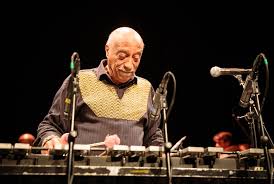
Between Addis Ababa, London and New York
Few musicians embody the international history of jazz as naturally as Mulatu Astatke. His music was shaped by movement across countries, institutions and musical traditions, but it never settled comfortably inside any one of them. Ethiopia provided the melodic foundations and cultural memory; London introduced him to a cosmopolitan musical environment in which jazz, Caribbean music and African traditions circulated side by side; Boston offered a deeper encounter with modern jazz education; and New York brought him into contact with Latin rhythms and the energy of one of the most diverse musical cities in the world. Out of those journeys came Ethio-jazz, a language whose originality is sometimes obscured by the convenient description of it as a “fusion” of Ethiopian music and jazz. Astatke’s achievement was more ambitious. He did not simply place Ethiopian melodies over American jazz arrangements or add congas and vibraphone to traditional material. He developed a musical system in which Ethiopian modes, Afro-Latin percussion, jazz instrumentation and modern urban arrangement could interact without any one element functioning as decoration. The resulting music could be hypnotic without becoming static, rhythmically insistent without surrendering mystery, and unmistakably Ethiopian while remaining open to influences gathered far beyond the country’s borders.
Born in Jimma, Ethiopia, in 1943, Astatke left his homeland while still young and eventually pursued musical studies in Britain. His time at Trinity College of Music in London became an important stage in a development that would have been difficult to imagine from Ethiopia alone. London at the beginning of the 1960s was becoming an increasingly international musical crossroads. Jazz circulated alongside Caribbean traditions, African musicians were establishing new networks within the city, and recordings arriving from the United States exposed young players to rapidly changing forms of modern jazz. For Astatke, the importance of this environment was not simply that it introduced him to new sounds. It demonstrated how musical identity could be constructed through encounter. A musician did not necessarily have to choose between the traditions inherited at home and the languages discovered abroad. Those traditions could instead become materials for something new, provided the relationship between them was deeper than imitation. This idea would eventually become fundamental to Ethio-jazz.
Discovering a Wider Jazz World
Astatke’s musical education expanded further when he moved to the United States and studied at Berklee College of Music in Boston. Berklee placed him within a more formalized understanding of contemporary jazz, but the most decisive influence of his American years may have come from the broader musical environment surrounding those studies. Jazz was only one part of it. Latin music, particularly the Afro-Cuban traditions thriving in American cities, fascinated him, and percussion increasingly became central to the music he imagined. Congas and bongos offered rhythmic possibilities different from conventional jazz drumming, while the vibraphone provided a melodic voice capable of moving between percussive attack and sustained atmosphere. Astatke adopted the instrument as one of his principal signatures, but he would eventually use it very differently from figures such as Lionel Hampton or Milt Jackson. Rather than treating the vibraphone primarily as a vehicle for extended jazz improvisation, he often positioned it within carefully constructed arrangements where a handful of notes could change the entire emotional temperature of a piece.
The United States also brought Astatke closer to the cultural history behind jazz. This was important for a young African musician searching for ways to modernize his own musical heritage without abandoning it. Jazz demonstrated that music rooted in a particular community and historical experience could become internationally influential precisely because of its specificity rather than despite it. African American musicians had developed a language capable of continuous transformation while retaining a profound connection to the histories from which it emerged. Astatke recognized a comparable possibility for Ethiopian music. Modernity did not have to mean replacing local musical structures with Western ones. It could mean allowing those structures to participate in a larger conversation.
His earliest American recordings document that conversation before it had fully stabilized. Working with musicians under the Ethiopian Quintet name during the 1960s, Astatke explored arrangements in which Ethiopian material encountered Latin rhythms, jazz instrumentation and the dance-oriented energy of New York. These recordings are sometimes approached retrospectively as the beginning of Ethio-jazz, but their greatest value lies in showing how gradually the language emerged. Some passages lean strongly toward Latin jazz, with percussion and rhythmic patterns providing much of the momentum; elsewhere, Ethiopian melodic shapes begin to change the character of the ensemble more fundamentally. Astatke was not merely searching for unusual combinations. He was learning which elements could coexist naturally and which needed to be reorganized before a genuinely independent style could appear.
The decisive element was Ethiopian modality. Much of the country’s music draws upon modal systems whose intervallic relationships differ from the major-minor framework dominant in Western popular music. These modes could produce melodic contours that sounded unfamiliar to American and European listeners while remaining deeply connected to Ethiopian musical memory. Astatke understood that their importance went far beyond adding an exotic melody to a jazz rhythm section. If the modes were allowed to determine the melodic center of the composition, everything around them could begin to behave differently. Horn arrangements, bass patterns, percussion and keyboards no longer needed to follow the harmonic assumptions of bebop or hard bop. Repetition could become structural rather than merely decorative; short melodic cells could establish an atmosphere that remained compelling without constant harmonic movement; improvisation could emerge from within the composition rather than forcing it toward conventional jazz forms. This was where Astatke’s experiments began to become a language.
The Road Back to Addis Ababa
Returning to Ethiopia placed those ideas inside one of the most fertile periods in the country’s modern musical history. Addis Ababa during the late 1960s and early 1970s possessed a vibrant urban scene built around hotels, clubs, theaters, state ensembles and recording studios. Singers including Mahmoud Ahmed, Alemayehu Eshete and Tilahun Gessesse were helping reshape Ethiopian popular music, while highly trained instrumentalists moved through ensembles connected to hotels, police and military institutions. Brass arrangements, soul, funk, traditional melodies and jazz circulated through the same city. Ethiopia was developing its own modern popular culture, and Astatke returned with a musical vocabulary unusually suited to that moment.
What distinguished him within this scene was the breadth of the connections he could hear. The vibraphone might provide a floating melodic layer above an Ethiopian mode; congas could introduce an Afro-Latin pulse without displacing the character of the underlying composition; electric piano or organ could expand the harmonic atmosphere; saxophones and trumpets could draw upon jazz articulation while remaining inside arrangements whose melodic logic came from somewhere else entirely. Astatke’s music consequently resisted easy categorization. It was too rooted in Ethiopian scales and melodic sensibility to function simply as American jazz, yet too transformed by international instrumentation and rhythmic ideas to fit comfortably inside conventional definitions of Ethiopian traditional music. Ethio-jazz became the name for that space between categories.
The term was useful, but the music itself was more complex than the label suggested. Astatke did not establish a rigid formula that could be repeated from composition to composition. What connected his work was instead a particular approach to atmosphere and organization. Bass lines often established patient, cyclical foundations; percussion created layers of movement rather than simply marking time; horns entered with concise phrases whose repetition could become almost hypnotic; and the vibraphone appeared less as a soloistic centerpiece than as a source of color and suspension. The arrangements frequently allowed considerable space, resisting the temptation to fill every measure with activity. That restraint became one of Astatke’s most recognizable qualities. His music could contain jazz, funk and Latin rhythm while remaining unusually spacious.
This quality can be heard across compositions such as “Yèkèrmo Sèw,” “Yègellé Tezeta,” “Munayé” and “Yèkatit,” recordings that would eventually become central to the international understanding of Ethio-jazz. They reveal how effectively Astatke had learned to make contrasting musical histories coexist. A horn phrase may initially suggest soul jazz before bending toward an Ethiopian melodic contour; percussion may establish a groove associated with Latin music while bass and keyboards create an entirely different emotional environment; vibraphone notes can hover above the ensemble without demanding attention, becoming part of the atmosphere rather than an exhibition of technique. The music rarely announces its complexity. Its sophistication is embedded in the relationships among the parts.
Tezeta, Memory and Modern Ethiopia
One of the most revealing concepts within this musical world is tezeta, a term closely associated in Ethiopian culture with memory, longing and nostalgia. Its significance extends beyond any single composition or scale. In Astatke’s music, the emotional character associated with tezeta helps explain why rhythm and melancholy can coexist so naturally. Western popular traditions often separate reflective music from dance music, as though contemplation requires stillness. Ethio-jazz frequently rejects that distinction. A repeating bass figure can propel the music forward while the melody seems suspended in memory; percussion can remain active beneath a line whose emotional character is deeply introspective. Movement and reflection occur simultaneously.
This tension would become one of the most recognizable characteristics of Astatke’s music. His compositions often seem to inhabit several times at once. Ethiopian melodic traditions carry a sense of continuity with the past, while electric instruments, jazz arrangements and Afro-Latin percussion place the music firmly inside the urban modernity of the 1960s and 1970s. The result is neither nostalgic preservation nor wholesale modernization. Astatke’s Ethiopia is a place in motion, connected to international currents but still organized around musical ideas that could not have emerged anywhere else.
By the early 1970s, the experimentation of his years abroad had matured considerably. Mulatu of Ethiopia, recorded in New York and released in 1972, provided one of the clearest early demonstrations of how confidently he could now organize these influences. The album belongs to the same international journey that had taken him from Ethiopia to Britain and the United States, but it no longer sounds like the work of a musician searching for a bridge between traditions. The bridge has already disappeared beneath the music. Ethiopian modality, jazz instrumentation and Latin-derived rhythm function as parts of a single compositional vocabulary.
At the same time, Astatke’s work in Addis Ababa was becoming part of a remarkable recorded legacy that the wider world would only understand much later. Tracks made during the late 1960s and early 1970s circulated within an Ethiopian musical ecosystem that was about to experience profound disruption. The revolution of 1974 and the political order that followed transformed cultural life in the country, interrupting the environment in which Addis Ababa’s extraordinary modern music scene had developed. What had seemed like the beginning of an expanding musical movement instead became the record of a particular historical window.
Mulatu Astatke had nevertheless established something that political change could not erase. His journeys through London, Boston and New York had not separated him from Ethiopia; they had given him additional ways of understanding what Ethiopian music might become. Ethio-jazz emerged from that accumulated experience as neither imitation nor compromise. It was the work of a musician who understood that cultural identity could become more distinctive through encounter rather than less.
For years, much of this music would remain known primarily within Ethiopia and among comparatively small communities of collectors and listeners elsewhere. Then, decades after the recordings were made, a remarkable process of rediscovery would begin. Records from Addis Ababa would circulate internationally, the Éthiopiques series would reveal an almost forgotten musical world to a new audience, and Astatke would find himself influencing musicians who had not even been born when his original Ethio-jazz experiments were recorded. The second life of Mulatu Astatke’s music would eventually become almost as important as its creation.

The Golden Age of Ethio-Jazz
By the early 1970s, Mulatu Astatke had moved beyond the exploratory phase of his career. The musical ideas gathered during his years in London, Boston and New York had begun to function as an integrated language, and Addis Ababa provided the environment in which that language could develop with particular intensity. Ethiopia’s capital was experiencing an extraordinary period of musical creativity. Hotel bands, nightclub ensembles, institutional orchestras and independent singers participated in a scene that absorbed influences from American soul, funk and jazz while remaining grounded in Ethiopian melodic traditions. Records were being made for local labels, musicians circulated between ensembles, and a generation of performers was creating an urban sound whose sophistication would only become widely recognized outside Ethiopia decades later. Astatke belonged to this world but also occupied a distinctive position within it. His international education had given him experience with arranging, percussion and modern jazz instrumentation that few Ethiopian musicians shared in quite the same combination, while his commitment to Ethiopian modes prevented his work from becoming simply an imported version of American jazz. The compositions from this period reveal a musician who had stopped asking whether Ethiopian music and jazz could coexist. He was now exploring how far the language created from their encounter could be expanded.
One of the striking characteristics of Astatke’s mature Ethio-jazz is how little it depends on conventional demonstrations of virtuosity. The music is often built from relatively concise elements: a repeated bass figure, a restrained percussion pattern, a horn phrase, a keyboard texture and the distinctive shimmer of vibraphone. Yet these components interact with extraordinary precision. Astatke understood repetition not as a lack of development but as a means of intensifying atmosphere. A melodic figure can return again and again while tiny changes in instrumentation, articulation or rhythmic emphasis alter the listener’s perception of it. Instead of moving rapidly through harmonic sequences, many compositions establish a modal environment and remain inside it long enough for its emotional character to deepen. This approach distinguishes Ethio-jazz from much of the American jazz being recorded during the same period. The connection to jazz remains clear in instrumentation, improvisational freedom and ensemble interaction, but the music does not need to reproduce bebop’s harmonic density or the extended solo structures associated with hard bop. Astatke was constructing another kind of modernity, one in which groove, modality and arrangement could carry as much structural importance as harmonic progression.
A Language of Its Own
“Yèkèrmo Sèw” is among the clearest examples of this approach. The composition unfolds with a patience that became central to Astatke’s aesthetic, allowing its melodic identity to establish itself gradually rather than rushing toward development. The horns carry a phrase that feels simultaneously ceremonial and intimate, while rhythm and accompaniment create movement underneath without disturbing the composition’s introspective character. Vibraphone enters as color rather than spectacle. The instrument’s resonance leaves space around the notes, contributing to the strange sense of suspension that defines much of Astatke’s best work. Nothing needs to be exaggerated because the arrangement derives its power from balance. The groove is persistent but never oppressive; the melody is memorable without becoming simplistic; improvisational gestures appear within a larger architecture rather than dominating it. “Yèkèrmo Sèw” demonstrates why the word “fusion” is insufficient for Ethio-jazz. One can identify individual sources, but the finished music no longer behaves like a collection of borrowed elements.
“Yègellé Tezeta” reveals another dimension of the same language. Its relationship with tezeta places memory and longing at the center of the musical atmosphere, but Astatke refuses to equate melancholy with immobility. The rhythm continues to pulse beneath a melody whose emotional character suggests reflection and distance. This coexistence is fundamental to Ethio-jazz: introspection does not interrupt physical movement. A listener can respond to the groove while simultaneously being drawn into the modal ambiguity of the melodic line. That duality would eventually make Astatke’s music especially attractive to later generations of musicians working in genres far removed from the original Addis Ababa scene. Hip-hop producers, electronic musicians, contemporary jazz ensembles and groove-oriented instrumental groups could all recognize something familiar in the cyclical foundations of the music, while its Ethiopian melodic identity ensured that it never became interchangeable with conventional funk or soul jazz.
Other compositions from the period reveal how flexible Astatke’s vocabulary had become. “Munayé” develops through carefully layered rhythm and melody, while “Yèkatit” carries a darker, more insistent character. “Nètsanèt” and “Dèwèl” demonstrate how arrangements could shift emphasis without abandoning the underlying principles of the style. Across these recordings, the vibraphone remains important but rarely monopolizes attention. Astatke was fundamentally an arranger and conceptualist as much as an instrumentalist. His identity cannot be understood in the same way as that of a jazz musician whose discography is organized primarily around improvisational solos. The signature lies in the total environment: the selection of instruments, the balance between repetition and variation, the placement of percussion, the use of Ethiopian modes and the creation of a mood capable of surviving even when individual personnel changed.
This makes Astatke an important figure in a broader history of jazz that extends far beyond the United States. Jazz had been international almost from the beginning, traveling through records, touring musicians, radio broadcasts and migration, but musicians outside the United States did not merely reproduce American styles. In different cities they absorbed jazz into existing musical cultures and developed local languages whose relationship with the American tradition could be intimate without being subordinate. Ethio-jazz belongs to this history alongside Brazilian samba-jazz, South African jazz, European modernism and numerous other regional transformations. What makes Astatke’s case particularly compelling is how clearly geographical movement shaped the music. Ethiopia, Britain and the United States were not simply places where he happened to live. Each contributed something to the musical grammar he eventually assembled.
Addis Ababa Before the Rupture
The cultural world surrounding these recordings was transformed dramatically after the Ethiopian Revolution of 1974. The overthrow of Emperor Haile Selassie and the rise of the Derg introduced a period of political repression, conflict and economic difficulty that changed everyday life as well as the conditions under which musicians could work. Nightlife contracted, cultural activity became more tightly controlled, and many musicians left the country. The vibrant ecosystem that had supported the golden age of Ethiopian popular recording could not continue in the same form. For later international listeners encountering the music through reissues, it can be tempting to imagine the Addis Ababa of the late 1960s and early 1970s as a timeless musical world. In reality, it was a specific and relatively brief historical moment, produced by particular social conditions and interrupted by political upheaval.
Astatke continued working, composing and developing musical projects, but the international trajectory of Ethio-jazz did not proceed in a straight line. The recordings that would later define his reputation outside Ethiopia were not immediately integrated into the conventional history of jazz. This absence says as much about the way jazz history was documented as it does about the music itself. For decades, narratives of postwar jazz were overwhelmingly organized around American developments: bebop, cool jazz, hard bop, modal jazz, free jazz, fusion and the musicians associated with those movements. Extraordinary scenes elsewhere were often treated as peripheral, if they were documented at all. Ethiopian recordings were also difficult for international audiences to obtain. Labels, distribution networks and political circumstances limited circulation, and much of the music effectively disappeared from the awareness of listeners who had not encountered it during its original release.
This obscurity did not mean that Astatke’s work had ceased to matter. Within Ethiopia, he remained an important musical figure, while his ideas continued to develop through performance, composition and cultural projects. But the global audience that would eventually transform his reputation had not yet formed. The distance between creation and recognition is one of the most fascinating aspects of his career. Many canonical jazz musicians became internationally known while their most important recordings were new. Astatke experienced something very different: some of his most influential music reached its largest audience approximately three decades after it had been created.
The Éthiopiques Revelation
The decisive change came through the work of French producer and researcher Francis Falceto and the Éthiopiques series, launched by Buda Musique in the late 1990s. The project began making recordings from Ethiopia’s extraordinary twentieth-century musical history accessible to listeners who had little or no awareness of them. Its fourth volume, Éthiopiques 4: Ethio Jazz & Musique Instrumentale 1969–1974, released in 1998 and devoted to Astatke, became particularly important. Tracks including “Yèkèrmo Sèw,” “Mètché Dershé,” “Kasalèfkut Hulu,” “Tezeta,” “Yègellé Tezeta,” “Munayé,” “Yèkatit,” “Nètsanèt” and “Dèwèl” suddenly circulated within an international context that had changed enormously since their original recording.
The effect was not merely archival. Listeners encountered these recordings as living music. By the late 1990s and early 2000s, audiences had become increasingly receptive to sounds that challenged conventional divisions between jazz, funk, global music and electronic culture. DJs and record collectors were searching for overlooked grooves from Africa, Latin America and Asia; hip-hop had accustomed listeners to hearing older recordings recontextualized through sampling; independent labels were recovering forgotten catalogs; and younger jazz musicians were looking beyond familiar American lineages for new compositional possibilities. Astatke’s recordings entered this environment with extraordinary force because they sounded simultaneously historical and contemporary. Their cyclical bass lines, percussion, spacious arrangements and modal melodies could have been created decades earlier, yet they communicated naturally with musical developments that had occurred long after them.
The rediscovery also changed the way Ethiopia’s musical history was perceived internationally. Astatke was no longer an isolated curiosity described as the inventor of an unusual hybrid style. Through Éthiopiques, listeners could hear him as part of a broader culture that included Mahmoud Ahmed, Alemayehu Eshete, Tlahoun Gèssèssè, Girma Bèyènè and numerous singers, arrangers and instrumentalists whose recordings demonstrated the depth of modern Ethiopian music. This context is essential. Astatke’s originality was extraordinary, but Ethio-jazz did not emerge from a cultural vacuum. Addis Ababa provided musicians, audiences, venues and recording networks capable of supporting experimentation. The international revival restored some of that surrounding history.
Recognition brought another consequence: Astatke began to occupy a different position within contemporary music. He was no longer simply a veteran musician whose most influential recordings belonged to a vanished period. Younger artists wanted to work with him, labels sought new projects, and audiences who had discovered Ethio-jazz through reissues wanted to experience the music as something more than an archival artifact. The transition would culminate in collaborations and recordings that introduced Astatke to another generation, most notably his work with the London collective The Heliocentrics and the renewed attention generated by cinema.
Few careers in jazz have contained such an extended interval between innovation and international recognition. Astatke had created the foundations of Ethio-jazz decades earlier, but the world that eventually embraced those recordings was profoundly different from the one in which they had been made. Their return demonstrated something essential about the durability of his musical language. The records did not survive because they represented a historical curiosity from 1970s Ethiopia. They survived because musicians and listeners in another century could still hear possibilities inside them. The next phase of Astatke’s career would show just how many of those possibilities remained open.
Rediscovery, Reinvention and a Global Legacy
The international rediscovery of Mulatu Astatke did more than rescue a remarkable body of recordings from obscurity. It changed the chronology of his career. Musicians are usually introduced to audiences through new work and gradually become historical figures as their catalogs accumulate, but Astatke experienced almost the reverse. By the beginning of the twenty-first century, listeners outside Ethiopia were discovering recordings made three decades earlier as though a previously missing branch of jazz history had suddenly appeared. Éthiopiques 4 had established the foundation for that revival, but the decisive expansion came when Astatke’s music began circulating beyond specialist collectors and listeners interested in Ethiopian recordings. The qualities that had made Ethio-jazz difficult to categorize in the early 1970s now made it unusually compatible with a musical culture increasingly comfortable with blurred boundaries. Jazz musicians heard modal possibilities and unusual approaches to arrangement; DJs heard loops and grooves; hip-hop producers recognized fragments that could be recontextualized; musicians interested in Afrobeat, psychedelic music and global funk heard rhythmic connections; younger Ethiopian artists encountered a modern musical history that had been partly obscured by decades of political and cultural disruption. Astatke’s past was returning, but it was returning into a world far more prepared to understand what he had created.
Cinema played a major role in that transformation. Jim Jarmusch’s 2005 film Broken Flowers, starring Bill Murray, used several Astatke recordings and brought the strange, suspended atmosphere of Ethio-jazz into a completely new context. The choice was remarkably effective because Astatke’s music did not behave like conventional film scoring. Its cyclical structures and ambiguous emotional tone could accompany movement without dictating exactly how a scene should be understood. Melancholy existed alongside groove; repetition created momentum while simultaneously suggesting reflection. Those were qualities Jarmusch could use dramatically, but their impact extended well beyond the film itself. For many listeners, Broken Flowers became their first encounter with Astatke, and the soundtrack helped turn a rediscovery already underway through Éthiopiques into a much broader cultural phenomenon. Astatke’s official discography and contemporary biographies continue to identify both Éthiopiques and Broken Flowers as central to the expansion of his international audience.
The revival could easily have trapped him inside his own history. An artist rediscovered through recordings from a celebrated earlier period is often expected to reproduce those recordings indefinitely, becoming a touring representative of an archival catalog. Astatke chose another route. The renewed attention created opportunities not simply to revisit Ethio-jazz but to place it into conversation with musicians who had developed their own languages decades after his original experiments. His relationship with the Massachusetts-based Either/Orchestra became an important early example. After meeting the ensemble in Addis Ababa in 2004, Astatke began a collaboration that eventually extended into performances across Europe and North America. The partnership demonstrated that his compositions could be reopened rather than merely reproduced. Ethio-jazz had become a repertoire, but it remained sufficiently flexible to survive changes in ensemble, generation and context.
The Heliocentrics and a Second Creative Life
The collaboration with London collective The Heliocentrics pushed that principle considerably further. The group had developed a musical identity around jazz, funk, psychedelia, experimental recording practices and the influence of artists ranging from Sun Ra to James Brown. Rather than approaching Astatke as a historical figure whose classics needed respectful preservation, they treated him as a contemporary collaborator. The resulting Inspiration Information 3, released in 2009, contains reinterpretations alongside newly created material and places Astatke’s vibraphone, percussion and compositional sensibility inside a denser, more psychedelic environment. The connection worked because The Heliocentrics had absorbed some of the musical possibilities that Astatke’s generation helped make imaginable, yet they had arrived at them through an entirely different historical route. Their music belonged to a post-hip-hop world of sampling culture, obscure-record discovery, studio experimentation and genre collision. Astatke brought a language developed before any of those categories had solidified.
The collaboration consequently avoided the usual hierarchy between elder master and younger disciples. Astatke himself described the sessions as an experiment in which the band could take his material and add what they felt, an attitude entirely consistent with the openness that had produced Ethio-jazz in the first place. Inspiration Information 3 ranges from Ethiopian melodic ideas to heavy grooves, free textures and psychedelic passages, demonstrating how naturally his musical vocabulary could enter a twenty-first-century ensemble without losing its identity. The Heliocentrics were not attempting to sound like an Addis Ababa band from 1972, and Astatke was not trying to become a contemporary London producer. The value came from the space created between them.
This period also makes clear why describing Astatke primarily as the “father of Ethio-jazz,” although historically useful, can become limiting. The phrase recognizes his foundational role but risks freezing him at the moment of invention. His later career demonstrates continued curiosity. Mulatu Steps Ahead in 2010 combined musicians associated with his newer international collaborations, while Sketches of Ethiopia in 2013 expanded his orchestral and compositional ambitions. Work with Australia’s Black Jesus Experience produced further exchanges between Ethiopian musical ideas, jazz, funk and contemporary groove, and his activities extended beyond recording into research and musical education. During a Radcliffe Institute fellowship at Harvard, Astatke explored ways of modernizing Ethiopian instruments and developed work connected to The Yared Opera, inspired by the Ethiopian sacred musical tradition associated with Saint Yared. His interest in modernizing traditional instruments is especially revealing: the same musician who had once brought vibraphone and Latin percussion into a new Ethiopian jazz language remained interested decades later in how older Ethiopian instruments might participate in contemporary music.
There is a consistent philosophy underneath these projects. Tradition, for Astatke, is not valuable because it can be kept untouched. It becomes valuable when musicians understand it deeply enough to extend it without erasing its character. That principle connects the young Ethiopian student encountering jazz and Latin music abroad with the veteran composer working alongside experimental musicians in London or reconsidering the possibilities of Ethiopian instruments at Harvard. The tools change; the underlying question remains similar. How can a musical culture move forward while remaining recognizably itself?
From Addis Ababa to Hip-Hop
The influence of Astatke’s recordings also expanded in directions he could not have anticipated when the original music was created. Hip-hop sampling became one of the clearest examples. Producers and artists discovered in his catalog precisely the qualities that had once separated Ethio-jazz from more conventional jazz forms: cyclical grooves, memorable melodic fragments, unusual instrumental colors and arrangements built around atmosphere. Musicians including Nas, Kanye West, Madlib, Cut Chemist and others have been associated with sampling or drawing upon Astatke’s work, demonstrating how easily recordings created in one historical context could become raw material for another.
Sampling can sometimes reduce an older recording to a few seconds detached from its original meaning, but in Astatke’s case it also contributed to a larger process of discovery. Listeners encountering a fragment could follow it backward toward the original recording, then toward Éthiopiques, and eventually toward the broader history of Ethiopian popular music. This reverse journey became increasingly common in the internet era, when music that had once been geographically difficult to obtain could suddenly circulate internationally. Astatke became part of a wider reassessment of jazz history in which scenes outside the United States were no longer treated merely as local responses to an American original. Ethiopian jazz, Brazilian jazz, South African jazz, Japanese jazz and numerous European traditions began to receive greater attention as histories possessing their own internal development and aesthetic priorities.
Astatke’s importance within that reassessment is particularly strong because his biography itself undermines simple distinctions between center and periphery. Ethio-jazz was created through circulation. London, Boston and New York were as essential to its development as Addis Ababa, but Ethiopia provided the musical structures through which those experiences were reorganized. It therefore makes little sense to describe the music as a peripheral Ethiopian version of jazz. Astatke was participating in the same international modernity that shaped musicians everywhere, but from a different geographical and cultural position. Jazz supplied possibilities; Ethiopian music supplied others; Latin music supplied still others. His originality came from refusing to establish a hierarchy among them.
That is why the vibraphone remains such an effective symbol of his work. The instrument has a recognizable place in American jazz history, yet when it appears inside an Astatke arrangement it seems to acquire another identity. Its metallic resonance sits naturally beside Ethiopian modal melodies and layered percussion, sometimes providing a melodic statement and sometimes appearing almost as a trace in the background. Astatke did not need to invent a new instrument to invent a new sound. He changed the network of relationships around an existing one. The same principle applies to much of Ethio-jazz: familiar instruments behave differently because the musical grammar surrounding them has changed.
A Legacy Still in Motion
The most convincing evidence of Astatke’s lasting importance is that his music has not become dependent on nostalgia. The recordings from the golden period remain central, but his career continued through new ensembles and projects well into the twenty-first century. His official catalog includes collaborations and later recordings that extend beyond the revival that began around Éthiopiques and Broken Flowers, showing that the rediscovery became the beginning of another creative phase rather than merely a retrospective celebration.
This longevity also complicates the familiar story of the forgotten genius finally recognized by the West. Astatke was not simply waiting in obscurity until European and American listeners discovered him. He had remained an important figure within Ethiopian music, working as composer, arranger, educator and performer. What changed was the geographical scale of recognition. The international music industry and jazz historiography had failed for decades to give Ethiopian modern music the attention it deserved; the later revival corrected part of that imbalance, but it did not create Astatke’s importance. It revealed to a larger audience something that already existed.
That distinction matters when considering his place in jazz history. Astatke should not be treated as an exotic side chapter attached to the conventional narrative of the genre. His work belongs to the larger story of what happened when jazz traveled and musicians around the world responded to it creatively. He demonstrates that influence is not a one-way process moving outward from the United States. Once transformed elsewhere, jazz-derived languages can return to international circulation and influence musicians in entirely new contexts. Astatke absorbed American jazz and Afro-Latin music, reorganized them through Ethiopian structures, and decades later saw that resulting language influence musicians in America, Europe, Australia and beyond. The circle did not close; it continued expanding.
The enduring fascination of Ethio-jazz comes from this refusal to settle. Even its most recognizable characteristics contain contradictions: melancholy melodies over persistent grooves, ancient modal relationships inside modern arrangements, Ethiopian identity articulated through instruments gathered from elsewhere, repetition that creates movement rather than stasis. Astatke’s music sounds distinctive because those contradictions were never resolved into a single dominant tradition. They remain active inside the compositions.
More than half a century after the recordings that established his language, Mulatu Astatke can therefore be understood not simply as the inventor of a genre but as one of jazz’s great translators of musical experience. He translated geographical movement into arrangement, cultural encounter into rhythm and historical memory into modern composition. Addis Ababa, London, Boston and New York became less a sequence of places than a map embedded inside the music itself.
Ethio-jazz was the name eventually given to the result, but the achievement reaches beyond the name. Astatke demonstrated that a musician could engage deeply with jazz without surrendering the structures of another musical culture, and that modernization did not require cultural disappearance. The music he created during Ethiopia’s extraordinary years of urban transformation survived revolution, limited international distribution and decades of relative neglect because its identity was never dependent on the fashion of a single moment.
When the world finally caught up with those recordings, they did not sound like artifacts waiting to be cataloged. They sounded like possibilities.
That may be Mulatu Astatke’s most important legacy. He did not simply create a bridge between Ethiopia and jazz. He showed that the most interesting music often begins after the idea of a bridge is no longer necessary.