
Music That Breathes Like a Living Organism
Every so often, a jazz ensemble appears whose music seems to exist outside the ordinary passage of time. It neither rushes toward dramatic climaxes nor settles comfortably into familiar traditions. Instead, it unfolds with the quiet inevitability of natural processes: waves reaching the shore, wind moving through trees, the slow migration of clouds across an open sky. The British trio Mammal Hands belongs unmistakably to this rare category. Since emerging during the remarkable renaissance of British jazz in the 2010s, the group has developed a musical language that is instantly recognizable yet extraordinarily difficult to classify—a sound built upon hypnotic repetition, subtle improvisation, global rhythmic traditions and an almost meditative sense of emotional space.
At first encounter, listeners often search for familiar points of reference. Some hear echoes of Portico Quartet in the trio’s atmospheric textures. Others recognize the rhythmic precision of GoGo Penguin, the contemplative spirit of Matthew Halsall or the patient structural development associated with The Necks. These comparisons are understandable, yet they ultimately reveal more about the richness of contemporary British jazz than about Mammal Hands itself. The trio has absorbed elements from many traditions while transforming them into something wholly original. Their music draws equally from modal jazz, minimalism, West African polyrhythms, contemporary classical composition, folk traditions and spiritual practices rooted in attentive listening. None of these influences dominates. Instead, they merge into a musical ecosystem where every element exists in delicate balance.
This remarkable synthesis explains why Mammal Hands has attracted audiences extending far beyond jazz. Their recordings appear in playlists devoted to meditation, ambient music, post-classical composition and experimental instrumental music just as frequently as in jazz collections. Yet unlike many crossover projects, the trio never sounds as though it is trying to combine genres. The music feels organic, almost inevitable, as though these traditions had always belonged together.
Understanding Mammal Hands therefore requires more than tracing influences or cataloguing stylistic characteristics. It requires understanding a generation of musicians who grew up in an interconnected cultural world where the boundaries separating jazz, world music, classical composition and electronic experimentation had already begun to dissolve. Their work represents not a rejection of jazz history, but one of its most thoughtful continuations.
Norwich: Creativity Beyond the Capital
Unlike many of the defining names in contemporary British jazz, Mammal Hands did not emerge from London’s vibrant network of clubs and conservatories. The trio was formed in Norwich, a historic city in eastern England whose quieter cultural landscape encouraged a different kind of artistic development.
Distance from the country’s major music industry centers proved unexpectedly liberating.
Without constant pressure to conform to prevailing trends, musicians found space to cultivate personal artistic identities.
Local collaborations flourished.
Improvisation coexisted naturally with contemporary classical music, folk traditions and experimental performance.
Rather than seeking rapid visibility, artists often focused on long-term creative exploration.
This environment profoundly shaped Mammal Hands.
Their music reflects patience rather than urgency.
Collective listening rather than competition.
Exploration rather than stylistic allegiance.
These qualities would later become defining characteristics of the trio’s sound.
Three Musicians, One Shared Language
Mammal Hands was founded by Nick Smart on piano, Jesse Barrett on drums and tabla, and Jordan Smart on saxophone. Although each musician brought distinct influences and technical backgrounds, they quickly discovered a shared fascination with repetition, rhythmic cycles and deeply immersive ensemble interaction.
Nick Smart’s piano playing avoids the overt virtuosity often associated with contemporary jazz.
Instead, he constructs elegant patterns that evolve gradually through subtle variation.
A single motif may remain present for several minutes, continually changing through touch, harmony and rhythmic emphasis rather than dramatic melodic transformation.
Jordan Smart’s saxophone provides the ensemble with its most immediately lyrical voice.
His phrasing favors clarity and emotional directness over technical exhibition.
Long melodic lines rise naturally from the surrounding textures, often sounding less like traditional jazz solos than like another layer within the evolving musical landscape.
Jesse Barrett completes the trio through one of the most distinctive rhythmic vocabularies in contemporary jazz.
Drawing equally from jazz drumming, Indian tabla traditions and African rhythmic concepts, he creates pulse without rigidity.
His playing rarely announces itself.
Instead, it quietly reshapes the emotional direction of the music from within.
Together, the three musicians achieve something remarkably difficult.
The disappearance of hierarchy.
No instrument dominates.
No solo interrupts the collective flow.
Every voice contributes equally to the unfolding conversation.
Beyond Jazz
One of the most fascinating aspects of Mammal Hands is the extraordinary breadth of its musical influences. While jazz provides the foundation, the trio approaches improvisation with an openness that reflects twenty-first-century listening habits rather than traditional genre boundaries.
Minimalist composers such as Steve Reich and Philip Glass offer important structural inspiration.
The spiritual intensity of Alice Coltrane and Pharoah Sanders informs the group’s emotional atmosphere.
African rhythmic traditions shape its sense of pulse.
European folk music contributes melodic simplicity.
Contemporary classical composition influences orchestration and pacing.
Meditative practices encourage deep listening and patience.
These diverse elements never appear as quotations or stylistic experiments.
They have become part of the trio’s musical instinct.
The listener rarely notices where one tradition ends and another begins.
JazzLatitude Insight
Mammal Hands demonstrates that contemporary jazz no longer evolves by adding new influences one at a time. Instead, it grows by dissolving the boundaries between traditions until only the music itself remains.
Gondwana Records and the Perfect Home
The trio’s artistic philosophy found an ideal partner in Gondwana Records, the Manchester-based label founded by Matthew Halsall. More than simply releasing Mammal Hands’ recordings, Gondwana provided an environment where patience, sonic beauty and long-term artistic development were valued above commercial formulas.
The relationship proved transformative.
The label’s extraordinary production standards complemented the trio’s attention to acoustic detail.
Its international reputation introduced Mammal Hands to audiences already receptive to contemplative, genre-defying music.
Most importantly, Gondwana encouraged the ensemble to continue refining its unique language without compromise.
Few artistic partnerships in contemporary British jazz have proved so naturally aligned.
Together, Mammal Hands and Gondwana Records helped define a new chapter in the evolution of European jazz.
Buy Amazon

Finding a Voice That Could Not Be Mistaken
One of the most remarkable achievements of Mammal Hands is how quickly the trio established a musical identity that felt entirely its own. In contemporary jazz, originality is increasingly difficult to achieve. Musicians have access to virtually every tradition ever recorded, and influences circulate globally with unprecedented speed. Under such circumstances, many promising ensembles develop impressive technical skills but struggle to cultivate a recognizable voice. Mammal Hands avoided that trap almost immediately. From its earliest recordings, listeners could identify the trio within seconds—not because of any single instrument or compositional device, but because of the extraordinary coherence of its musical language.
That coherence emerged from discipline rather than limitation.
The trio rarely relied on dramatic harmonic modulation.
It resisted unnecessary virtuosity.
Improvisation never disrupted the flow of a composition.
Every musical decision served the atmosphere of the whole.
This unwavering commitment to collective expression would become the defining characteristic of Mammal Hands’ artistic journey.
Animalia: The Beginning of a Distinctive Journey
Released in 2014, Animalia introduced the trio to a rapidly expanding international audience and immediately suggested that something unusual was taking place within British jazz. The album did not seek to impress through complexity. Instead, it invited listeners into an immersive sonic environment where rhythm, melody and texture evolved with extraordinary patience.
Pieces such as “Boreal Forest”, “Murmuration” and “Snow Bough” revealed the group’s fascination with natural processes.
Themes emerged gradually.
Patterns repeated without becoming mechanical.
Improvisation functioned as quiet transformation rather than dramatic interruption.
The album’s emotional atmosphere felt remarkably organic.
Listening to Animalia resembled observing an ecosystem rather than following a traditional musical narrative.
That relationship with nature would continue shaping the trio’s work for years to come.
JazzLatitude Insight
Mammal Hands composes in cycles rather than straight lines. Their music reflects the rhythms of breathing, walking, tides and seasons far more often than the conventional dramatic arcs associated with jazz performance.
Floa: Expansion Without Excess
If Animalia introduced Mammal Hands’ artistic identity, Floa (2016) demonstrated increasing confidence in expanding that language without sacrificing its essential character.
The rhythmic vocabulary became richer.
The harmonic landscapes widened.
Improvisations grew more conversational.
Yet nothing felt overstated.
Instead of pursuing greater complexity for its own sake, the trio deepened the qualities already present within its music.
Tracks such as “Parallel Lives”, “Glass” and “In the Treetops” displayed extraordinary balance between structure and spontaneity.
The piano introduced gently evolving patterns.
The saxophone floated above them with lyrical restraint.
Drums and percussion shaped momentum through subtle shifts in texture rather than overt rhythmic display.
The result was one of the most elegant recordings produced during the British jazz renaissance.
Rhythm Beyond Swing
Perhaps no aspect of Mammal Hands’ music distinguishes it more clearly than its relationship with rhythm.
Traditional jazz derives much of its energy from swing.
Many contemporary ensembles explore groove through funk, hip-hop or electronic influences.
Mammal Hands follows another path.
Its rhythmic language draws deeply from African polyrhythms, Indian rhythmic cycles and minimalist repetition.
Pulse remains constant.
Yet accents continually evolve.
Small variations create extraordinary forward motion.
The listener often experiences movement without immediately identifying its source.
This subtle rhythmic sophistication gives the trio’s music an almost trance-like quality.
It encourages immersion rather than excitement.
Attention rather than spectacle.
Shadow Work: The Maturing of the Trio
By the release of Shadow Work in 2017, Mammal Hands had become one of the leading voices of contemporary European jazz.
The album represented an important artistic milestone.
The compositions grew increasingly expansive.
Dynamic contrasts became more pronounced.
The emotional range broadened considerably.
Rather than remaining within a consistently meditative atmosphere, the trio explored tension, darkness and release with greater confidence.
Pieces such as “Belo Horizonte”, “Kandaiki” and the title composition revealed musicians increasingly willing to trust silence and restraint even during moments of heightened intensity.
The recording confirmed that Mammal Hands had moved beyond the promise of an emerging ensemble.
It had become one of the defining groups of its generation.
The Influence of Nature
Throughout Mammal Hands’ discography, references to landscapes, forests, rivers, animals and natural phenomena appear with remarkable consistency.
These titles are far more than poetic decoration.
Nature profoundly shapes the trio’s compositional philosophy.
Growth occurs gradually.
Patterns repeat without exact duplication.
Change remains continuous rather than abrupt.
Silence carries meaning equal to activity.
This ecological way of thinking distinguishes Mammal Hands from many contemporary improvising groups.
The music does not attempt to describe nature.
It behaves according to similar principles.
Listeners often leave concerts with the unusual sensation of having experienced something closer to a natural environment than to a conventional musical performance.
Captured Spirits and a New Level of Confidence
Released in 2020, Captured Spirits arrived during a period of profound global uncertainty.
The album’s quiet intensity resonated deeply with listeners searching for reflection rather than distraction.
Its compositions displayed remarkable compositional maturity.
Every gesture felt purposeful.
Improvisation became increasingly integrated into the broader architecture of each piece.
The trio no longer appeared to alternate between composed and spontaneous material.
The distinction had almost disappeared.
The recording also highlighted the extraordinary production values associated with Gondwana Records.
Every acoustic detail remained beautifully preserved.
Every instrument occupied its own carefully balanced space.
The result rewarded repeated listening.
New layers emerged with every return.
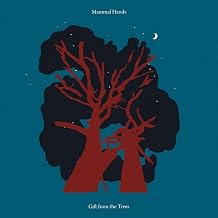
Gift from the Trees
With Gift from the Trees (2023), Mammal Hands reached another significant artistic summit.
The album refined rather than reinvented the trio’s language.
Rhythmic interaction became even more subtle.
Melodic writing gained additional warmth.
The ensemble displayed extraordinary confidence in allowing compositions to unfold without unnecessary intervention.
The title itself reflects one of the central ideas running throughout the group’s career.
Nature offers gifts quietly.
Listening requires patience.
Beauty often reveals itself gradually.
These principles have always guided Mammal Hands.
The album simply expresses them with greater clarity than ever before.
Many critics now regard it as one of the finest contemporary jazz recordings produced in Britain during the decade.
Essential Albums
For listeners discovering Mammal Hands for the first time, these recordings provide the ideal introduction to the trio’s remarkable artistic evolution.
- Animalia (2014) — The stunning debut that introduced the trio’s distinctive blend of jazz, minimalism and global rhythmic traditions.
- Floa (2016) — A beautifully balanced exploration of atmosphere, melody and collective improvisation.
- Shadow Work (2017) — A deeper and more emotionally expansive statement that established Mammal Hands among the leading voices of contemporary British jazz.
- Captured Spirits (2020) — A mature recording where composition and improvisation merge almost seamlessly.
- Gift from the Trees (2023) — Perhaps the clearest expression of the trio’s refined artistic vision, combining extraordinary production, lyrical beauty and profound rhythmic subtlety.
Together, these recordings reveal an ensemble that has continually deepened its musical language while remaining remarkably faithful to its original artistic philosophy.
But Amazon
Listening as a Form of Presence
One of the defining characteristics of twenty-first-century jazz has been its willingness to rediscover qualities that earlier generations often took for granted. Rather than pursuing innovation through increasing complexity alone, many contemporary musicians have begun asking more fundamental questions about attention, silence and the shared experience of listening. Few ensembles embody this shift more completely than Mammal Hands. Their music suggests that improvisation is not primarily an opportunity for individual expression, but a practice of collective awareness in which every musical decision emerges from deep attentiveness to the surrounding environment.
This philosophy distinguishes the trio from many of its contemporaries.
Their performances rarely revolve around extended solos.
No musician attempts to dominate the conversation.
Technical brilliance remains present but deliberately understated.
Instead, every composition evolves through continuous interaction.
Small rhythmic changes reshape entire harmonic landscapes.
A slight alteration in dynamics transforms emotional perspective.
The music grows organically, almost as though it were discovering itself while the audience listens.
In this sense, Mammal Hands belongs to one of jazz’s oldest traditions.
Collective creation.
Only the language has changed.
The British Renaissance in Context
The remarkable international recognition enjoyed by British jazz during the past decade has often been described as a sudden phenomenon. In reality, it reflects years of patient artistic development undertaken by musicians, independent labels and local communities that believed jazz could evolve without abandoning its essential values.
Within that movement, Mammal Hands occupies a unique position.
Unlike the groove-oriented energy of Ezra Collective.
The Afro-Caribbean explorations of Nubya Garcia.
The electronic precision of GoGo Penguin.
Or the contemplative lyricism of Matthew Halsall.
Mammal Hands developed a musical language centered on rhythm as meditation.
Its recordings emphasize gradual transformation rather than dramatic contrast.
The trio demonstrates that contemporary jazz can remain emotionally compelling without relying upon spectacle.
This contribution has significantly broadened international perceptions of what British jazz can become.
JazzLatitude Insight
Perhaps Mammal Hands’ greatest achievement is reminding us that rhythm is not simply movement. It can also become a form of contemplation. Their music transforms repetition into discovery, allowing listeners to experience time not as something measured by clocks, but by attention itself.
A Dialogue with the Natural World
Throughout the trio’s discography, one encounters recurring images of forests, rivers, birds, changing seasons and organic growth. These references are not merely aesthetic choices. They reveal a deeper compositional philosophy.
Nature rarely develops through abrupt transformation.
It evolves gradually.
Patterns repeat with subtle variation.
Complex systems emerge from simple interactions.
Mammal Hands composes according to remarkably similar principles.
Themes return.
Rhythms cycle.
Textures accumulate.
Nothing remains static, yet nothing changes suddenly.
This ecological understanding of musical form gives the trio’s recordings unusual emotional coherence.
Listeners often describe the experience as calming.
Reflective.
Immersive.
Those reactions arise because the music mirrors processes already familiar from the natural world.
Beyond the Jazz Audience
Another remarkable aspect of Mammal Hands’ success is the diversity of its audience.
Their recordings circulate among jazz listeners, certainly.
But also among admirers of ambient music.
Minimalist composition.
Meditation.
Contemporary dance.
Independent cinema.
Modern classical performance.
Electronic music.
Rather than weakening the trio’s jazz identity, this broad appeal confirms one of jazz’s greatest historical strengths.
Its ability to absorb ideas from many traditions while preserving the improvisational conversation at its core.
Mammal Hands has become a gateway into contemporary jazz for listeners who might never have approached the genre through more conventional recordings.
That cultural role may ultimately become one of its most enduring achievements.
Essential Collaborations and Artistic Connections
Although Mammal Hands has remained remarkably consistent as an independent trio, its artistic identity is enriched by numerous creative relationships and shared influences.
Among the most significant are:
- Gondwana Records — The visionary independent label whose commitment to artistic freedom provided the ideal environment for the trio’s development and international recognition.
- Matthew Halsall — As founder of Gondwana Records, Halsall helped cultivate the broader creative ecosystem within which Mammal Hands flourished, while sharing a deep interest in spiritual atmosphere, modal harmony and contemplative listening.
- Portico Quartet — Though musically distinct, both ensembles expanded the emotional vocabulary of contemporary British jazz through atmosphere, repetition and carefully crafted sonic landscapes.
- Steve Reich — His minimalist philosophy of gradual transformation offers one of the clearest conceptual parallels to Mammal Hands’ compositional architecture, even as the trio’s music remains fundamentally improvisational.
- Alice Coltrane and Pharoah Sanders — Their vision of spiritual jazz continues to resonate throughout Mammal Hands’ approach to collective expression, modal harmony and emotional openness.
Together, these artistic connections place Mammal Hands within one of the richest creative lineages in contemporary improvised music.
Technical Profile
Origin:
- Norwich, England
Formed:
- 2012
Members:
- Jordan Smart – Saxophone
- Nick Smart – Piano
- Jesse Barrett – Drums, Tabla
Primary Styles:
- Contemporary Jazz
- British Jazz
- Spiritual Jazz
- Minimalist Jazz
- Ambient Jazz
- World-Inspired Improvised Music
Musical Characteristics:
- Hypnotic rhythmic cycles
- Collective improvisation
- Nature-inspired composition
- African and Indian rhythmic influences
- Modal harmony
- Spacious ensemble interaction
Essential Albums:
- Animalia (2014)
- Floa (2016)
- Shadow Work (2017)
- Captured Spirits (2020)
- Gift from the Trees (2023)
Five Lesser-Known Facts About Mammal Hands
1. Jesse Barrett’s study of tabla fundamentally shaped the trio’s rhythmic identity.
Rather than treating Indian percussion as an exotic addition, Barrett integrated its concepts into the group’s overall approach to pulse and ensemble interaction.
2. The trio deliberately minimizes traditional jazz soloing.
Improvisation occurs continuously, but it is distributed collectively rather than concentrated in extended individual performances.
3. Nature influences the music structurally, not only symbolically.
Many compositions evolve according to patterns inspired by ecological processes rather than conventional jazz forms.
4. Gondwana Records helped preserve the trio’s artistic independence.
Instead of encouraging commercial compromise, the label allowed Mammal Hands to develop its distinctive language patiently over many years.
5. Their audience extends far beyond jazz.
Meditation practitioners, film composers, minimalist musicians and contemporary classical listeners frequently embrace Mammal Hands alongside traditional jazz audiences.
Frequently Asked Questions
Who are Mammal Hands?
Mammal Hands is a British contemporary jazz trio formed in Norwich, England, consisting of Jordan Smart, Nick Smart and Jesse Barrett. The group is internationally recognized for blending jazz improvisation with minimalism, African and Indian rhythmic traditions, contemporary classical music and spiritual atmosphere.
Why are Mammal Hands important?
The trio has become one of the defining voices of modern British jazz by creating a unique musical language based on collective improvisation, hypnotic rhythm and contemplative composition, helping expand the international audience for contemporary jazz.
Which Mammal Hands album should new listeners hear first?
Floa offers perhaps the most accessible introduction to the trio’s sound, while Shadow Work reveals its increasing compositional depth and Gift from the Trees represents the remarkable maturity of its recent work.
Is Mammal Hands similar to GoGo Penguin?
Although both groups belong to the contemporary British jazz movement and share an interest in repetition and atmosphere, Mammal Hands draws more deeply from African rhythms, Indian percussion traditions and spiritual jazz, creating a distinctly organic and ritualistic musical language.
Which artists are similar to Mammal Hands?
Listeners who appreciate Mammal Hands often explore Matthew Halsall, Portico Quartet, GoGo Penguin, The Necks, Alice Coltrane, Pharoah Sanders, Dawn of Midi, Steve Reich, Nik Bärtsch’s Ronin and Hania Rani, all of whom investigate different relationships between repetition, atmosphere and musical contemplation.
JazzLatitude Rating
| Category | Rating |
|---|---|
| Compositional Originality | ★★★★★ |
| Collective Improvisation | ★★★★★ |
| Rhythmic Innovation | ★★★★★ |
| Atmospheric Writing | ★★★★★ |
| Spiritual Expression | ★★★★★ |
| Influence on Contemporary British Jazz | ★★★★★ |
| Replay Value | ★★★★★ |
| Accessibility for New Listeners | ★★★★★ |
| JazzLatitude Essential | ★★★★★ |
Final Thoughts
Mammal Hands has achieved something increasingly rare in contemporary music: the creation of an artistic language that is immediately recognizable without ever becoming formulaic. Across more than a decade of recordings, the trio has remained remarkably faithful to its central values while continually discovering new possibilities within them. Rather than pursuing novelty through dramatic stylistic changes, the musicians have refined a musical philosophy based on patient listening, collective awareness and rhythmic transformation.
That philosophy speaks directly to the broader evolution of jazz in the twenty-first century. As the genre has become increasingly global, musicians have discovered that innovation no longer depends solely upon extending harmonic complexity or technical virtuosity. It can emerge just as powerfully through openness to different cultural traditions, new relationships with time and a renewed appreciation for atmosphere. Mammal Hands embodies this shift with unusual clarity. African rhythmic concepts, Indian percussion, European minimalism and spiritual jazz coexist naturally because they are united by a deeper commitment to attentive listening.
The trio’s partnership with Gondwana Records has further amplified this vision, placing Mammal Hands within one of the most influential creative communities in modern European jazz. Alongside artists such as Matthew Halsall, GoGo Penguin and Portico Quartet, they have helped redefine international perceptions of British jazz, proving that contemporary improvisation can be simultaneously adventurous, emotionally generous and widely accessible.
Perhaps the group’s greatest contribution, however, lies in the listening experience itself. Mammal Hands invites us to inhabit music rather than simply hear it. Their compositions unfold with the quiet confidence of natural processes, reminding us that beauty often emerges gradually, through patience rather than urgency. In an era increasingly dominated by speed and distraction, that invitation feels not only artistically significant but culturally necessary.
For anyone seeking to understand the most thoughtful and original directions of contemporary jazz, Mammal Hands is far more than an exceptional trio.
It is one of the ensembles quietly redefining how modern music can breathe, evolve and communicate.