
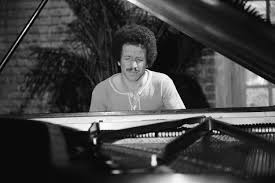
The Prodigy’s Leap and the Miles Davis Electric Fire
To grasp the fierce, uncompromising artistic sovereignty of Keith Jarrett, you have to look at a young man from Allentown, Pennsylvania, who was playing Mozart concertos at the age of seven but possessed a mind too restless for the classical conservatory alone. After a groundbreaking stint with Charles Lloyd’s hit 1960s quartet, Jarrett was handpicked by Miles Davis to join his volcanic electronic fusion laboratory. Playing electric organs and Fender Rhodes synths alongside Chick Corea on historic albums like Live-Evil, Jarrett displayed a ferocious, funky virtuosity. Yet, in a move that shocked the industry, he walked away from Miles and swore off electric instruments forever. Jarrett made a radical vow of acoustic purity, setting out to prove that a single human being sitting at a wooden piano could generate a universe of sound deeper and more electric than any amplifier on Earth.
The Köln Miracle: Turning a Flawed Piano into Absolute Eternity
For the high-art connoisseur tracking the legendary milestones on The Jazz Compass, January 24, 1975, represents a date of pure, unadulterated musical magic. Arriving in Cologne, Germany, completely exhausted and suffering from agonizing back pain, Jarrett discovered the opera house had provided the wrong piano—a small, tinny, out-of-tune baby grand with sticking pedals. He initially refused to play. Persuaded at the last minute, Jarrett stepped onto the stage and delivered The Köln Concert. By avoiding the piano’s harsh upper register and leaning into hypnotic, rolling left-hand ostinatos and heartbreakingly beautiful gospel-inflected melodies, he created a masterpiece of pure, continuous improvisation. It became a global phenomenon, proving that Jarrett’s improvisational mind didn’t just interpret music—it was a direct conduit for the divine.
The Telepathic Trio and the Silent Coordinate
True to the borderless, forward-thinking latitudes of Jazz Latitude, Keith Jarrett’s musical geography expanded in two parallel, towering directions. For over three decades, alongside bassist Gary Peacock and drummer Jack DeJohnette, his “Standards Trio” rearchitected the Great American Songbook, developing a level of telepathic, swinging interplay that has never been equaled. Simultaneously, Jarrett remained a revered classical interpreter, recording definitive versions of Bach’s Goldberg Variations and Shostakovich. Though severe strokes in 2018 tragically paralyzed his left side, ending his public performing career, his position on our map is eternal. Keith Jarrett left behind a monumental legacy—a shining reminder that music, at its highest level, is a terrifyingly honest act of surrender, where the artist vanishes completely to let the infinite speak.