The Chronicle of an Era: The Volcanic Awakening of a Velvet Revolution
By the arrival of December 1964, the American landscape was fractured, bleeding, and roaring with change. The optimistic sheen of the early 1960s had dissolved into the grim reality of the Vietnam War, the civil rights struggle was reaching a boiling point on the streets of Selma and Birmingham, and jazz was undergoing its most violent internal identity crisis. The smooth, late-night architecture of Hard Bop and Cool Jazz no longer seemed capable of containing the rage, the hope, and the structural chaos of the era. The avant-garde “Free Jazz” movement had torn down the walls of melody and harmony, letting out a raw, unfiltered scream. Jazz was no longer a soundtrack for casual nightlife; it had been weaponized into a political and existential arena.
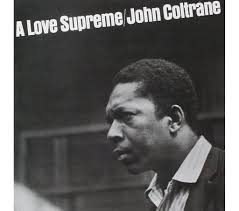
It was against this backdrop of cultural fire that saxophonist John Coltrane walked into Rudy Van Gelder’s legendary studio in Englewood Cliffs, New Jersey, on the night of December 9, 1964. Coltrane did not come to record a mere collection of jazz tunes to fulfill a contract for Impulse! Records. He came to deliver a prayer. He came to present a musical receipt to the universe—a sonic testimonial of a man who had stared directly into the abyss of addiction, madness, and spiritual death, and had been pulled back into the light by a profound religious awakening. A Love Supreme was not designed to be listened to as passive entertainment. It was engineered as a four-part liturgical suite, a monolithic bridge spanning the gap between traditional jazz discipline and a borderless, ecstatic cosmic consciousness that aimed to heal a broken world through the sheer velocity of sound.
The Biography & The Construction of a Myth: The Seeker Who Found God in the Horn
John William Coltrane was not born a saint; he was forged in the fires of human frailty. Born in Hamlet, North Carolina, in 1926, Coltrane grew up immersed in the deeply emotional, vocal traditions of the African Methodist Episcopal Zion Church, where both of his grandfathers were ministers. But when he moved north to Philadelphia and entered the professional jazz circuit of the late 1940s, the crushing pressures of the road and the pervasive culture of the bebop era caught up with him. By the time he landed the coveted saxophone chair in Miles Davis’s legendary First Great Quintet in 1955, Coltrane was functional but deeply dependent on heroin and alcohol. Miles, notorious for his intolerance of unprofessionalism, famously fired Coltrane in 1957 after a string of erratic, drug-fueled performances.
This public humiliation became Coltrane’s crucible. In May of 1957, locked inside a bedroom in his Philadelphia home, Coltrane underwent a brutal, cold-turkey detoxification. During those agonizing days of physical withdrawal, he experienced a profound spiritual epiphany. He vowed that if he survived, he would dedicate his music entirely to the glorification of the Divine and the elevation of humanity. He returned to the scene as a man possessed. His technique underwent a staggering evolution; he developed what the critic Ira Gitler famously termed “sheets of sound”—a rapid-fire, cascading improvisational style where chords were stacked upon chords at a blinding pace, as if the saxophonist was trying to play every possible harmonic variation simultaneously.
After a brilliant, transitional stint with Thelonious Monk and a triumphant return to Miles Davis’s side for Kind of Blue, Coltrane formed his definitive artistic vehicle: The Classic Quartet. Featuring the ferocious, polyrhythmic polyphony of drummer Elvin Jones, the deep, modal architectural block chords of pianist McCoy Tyner, and the unyielding, earth-anchoring double bass of Jimmy Garrison, this unit became less of a jazz band and more of a spiritual laboratory. They spent four years on the road, turning jazz clubs into temples of high-intensity improvisation, preparing themselves for the definitive recording session that would enshrine Coltrane’s vow to the cosmos.
The Anatomy of the Vinyl: A Sensorial Walk Through the Spiritual Suite
To drop the needle onto A Love Supreme is to participate in an ancient, sacred ritual. The suite opens with “Part I: Acknowledgement”, initiated by a clean, solitary strike of a Chinese gong by Elvin Jones, followed immediately by Coltrane’s saxophone entering not with a melody, but with a soaring, declamatory fanfare that sounds like a prophet stepping onto a mountaintop. Then, Jimmy Garrison plucks the most famous four-note bassline in jazz history—a simple, hypnotic phrase that matches the rhythmic cadence of the words “A-Love-Su-preme”. Coltrane begins to improvise over this rolling modal carpet, repeating the four-note motif in all twelve musical keys, systematically acknowledging the presence of the Divine across every corner of the harmonic spectrum. The movement reaches a chilling, ecstatic climax when Coltrane puts down his horn and uses his own deep, raw voice to chant the phrase “A Love Supreme” nineteen times in a hypnotic, devotional trance.
The suite shifts gears seamlessly into “Part II: Resolution”, the most hard-swinging and traditionally jazz-rooted section of the masterpiece. Introduced by a thunderous, unaccompanied bass solo by Garrison, the track erupts into a driving, fast-paced modal groove. McCoy Tyner delivers a magnificent, sprawling piano solo constructed on percussive fourths and complex pentatonic scales that showcase his absolute technical mastery. When Coltrane returns, his tenor saxophone boasts a fierce, crying tone—he pushes the boundaries of the instrument, utilizing false fingerings and split-tones to make the horn scream with an intense, joyful agony. It is a musical translation of the human struggle for moral clarity and spiritual discipline.
Side B of the original vinyl contains the interconnected volcano of “Part III: Pursuance” and “Part IV: Psalm”. “Pursuance” is an absolute explosion of energy, kick-started by a wild, polyrhythmic drum solo by Elvin Jones that sounds like a tropical thunderstorm fracturing the sky. The band charges into a hyper-accelerated minor blues framework where Tyner and Coltrane trade lightning-fast, modal phrases over Jones’s relentless, rolling triplet beat. The energy is fiercely aggressive yet completely controlled, a demonstration of collective group intuition operating at the absolute limits of human capability.
As “Pursuance” collapses under its own immense gravity, Garrison performs another lonely, meditative bass interlude, clearing away the smoke to introduce the breath-taking finale: “Part IV: Psalm”. This movement is a historic anomaly in Western music. Coltrane does not improvise here; instead, he performs a “wordless recitation” of a devotional poem he had written, which was printed inside the album’s gatefold sleeve. Note for note, syllable for syllable, Coltrane uses his saxophone to preach the poem, matching the exact inflections, pauses, and emotional weight of his written words. Supported by Tyner’s majestic, non-metered piano chords and a dense, oceanic wash of cymbals and timpani-like rolls from Elvin Jones, the saxophone weeps, praises, and surrenders. The track concludes with a quiet, multi-tracked saxophone overdub that sounds like an angel responding from the ether, leaving the room in a state of absolute, stunned silence.
The Legacy and Modern Coordinates: The Eternal Echo of the Divine Scriptorium
The historical and cultural resonance of A Love Supreme is completely boundless. It transcended the boundaries of jazz almost instantly, becoming a massive cultural touchstone for the counterculture generation of the late 1960s. Rock icons like Jimi Hendrix, Carlos Santana, and The Byrds’ Roger McGuinn studied Coltrane’s modal lines on the album to revolutionize how the electric guitar was played in psychedelic rock; avant-garde minimalist classical composers like Philip Glass and Terry Riley drew inspiration from its repetitive, mantric structures; and generations of hip-hop, spiritual jazz, and ambient producers continue to raid its deep acoustic archives for its timeless, elevated aura.
A Love Supreme remains the defining monument of spiritual jazz, a work so profoundly moving that it literally inspired the creation of a church—the Saint John Coltrane African Orthodox Church in San Francisco, where the album is still utilized as a central piece of liturgical worship. John Coltrane proved with this definitive masterwork that music could transcend its role as mere sensory pleasure to become an instrument of pure, cosmic transformation. He fixed the most elevated, incandescent, and unshakeable golden coordinate on the map of Jazz Latitude: an eternal lighthouse of spiritual artistic devotion that will continue to challenge, heal, and illuminate humanity for as long as we dare to listen to the infinite possibilities of the human soul.