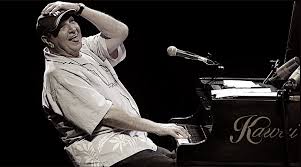
The Musician Who Made Groove Sound Effortless
Some musicians transform music through dazzling virtuosity. Others do so through revolutionary harmonic ideas or breathtaking technical command. João Donato achieved something far more elusive. He transformed the feeling of rhythm itself. Few pianists in the history of Brazilian music have created a musical language that sounds so relaxed while concealing such extraordinary sophistication. His compositions seem to float effortlessly. His piano appears almost conversational. Yet beneath that apparent simplicity lies one of the most refined rhythmic imaginations ever to emerge from Latin America.
For more than seven decades, Donato quietly influenced generations of musicians without always receiving the international recognition granted to some of his contemporaries. While Antônio Carlos Jobim became synonymous with bossa nova and João Gilberto revolutionized Brazilian singing, João Donato followed an entirely different path. He became the musician other musicians studied. Pianists admired his harmonic economy. Arrangers marveled at his sense of balance. Percussionists recognized the extraordinary precision hidden within his seemingly casual grooves. Jazz improvisers discovered that his compositions offered harmonic landscapes unlike anything else in Brazilian music.
His influence extends astonishingly far.
Bossa nova.
Samba jazz.
MPB.
Latin jazz.
Jazz fusion.
Contemporary Brazilian instrumental music.
Each absorbed something essential from João Donato’s artistic vision.
Remarkably, he accomplished this without creating a movement centered around himself.
Instead, his ideas spread organically through collaboration, friendship and the quiet authority of exceptional musicianship.
Understanding João Donato therefore means understanding one of the hidden foundations of modern Brazilian music.
From the Amazon to Rio de Janeiro
João Donato de Oliveira Neto was born on August 17, 1934, in Rio Branco, in the Brazilian state of Acre.
Geographically, his birthplace could hardly have been farther from the musical centers that would later define his career.
Yet the Amazonian environment left subtle marks upon his artistic imagination.
The rhythms of northern Brazil.
The coexistence of indigenous, African and European traditions.
The relaxed relationship with time characteristic of many Amazonian musical cultures.
Although these influences would later mingle with jazz, they remained quietly present throughout his life.
As a child, Donato’s first instrument was not the piano.
It was the accordion.
This early experience proved surprisingly significant.
Unlike the piano, the accordion encourages sustained melodic phrasing and continuous breathing through musical gesture.
Many listeners have observed that even after becoming one of Brazil’s greatest pianists, Donato continued thinking melodically like an accordion player.
His piano rarely sounded percussive.
It sang.
Discovering the Piano
Following his family’s move to Rio de Janeiro, Donato entered one of the most fertile musical environments in Brazilian history.
The city pulsed with samba.
American jazz.
Radio orchestras.
Dance bands.
Popular song.
Young musicians gathered constantly to exchange ideas.
Improvisation flourished.
The piano gradually replaced the accordion as Donato’s principal instrument.
Yet he approached it differently from many of his contemporaries.
Technical brilliance never became his primary objective.
Instead, he searched for balance.
Between melody and rhythm.
Harmony and silence.
Movement and stillness.
These concerns would eventually define his unmistakable musical identity.
Johnny Alf and a New Brazilian Modernity
Among the earliest musicians to shape Donato’s artistic thinking was Johnny Alf, one of the true pioneers of modern Brazilian harmony.
Long before bossa nova reached international audiences, Alf had begun integrating sophisticated jazz harmonies into Brazilian popular music.
His influence upon younger pianists proved enormous.
João Donato absorbed these lessons eagerly.
So did Luiz Eça, Dick Farney and many others who would soon participate in a remarkable musical transformation.
Together, they represented a generation unwilling to choose between Brazilian tradition and American jazz.
Instead, they explored the fertile territory where both traditions naturally met.
This search would eventually lead toward the birth of bossa nova.
JazzLatitude Insight
João Donato never separated rhythm from melody. In his music, the groove sings and the melody dances. That inseparable relationship explains why his compositions feel so natural even when their rhythmic architecture is astonishingly sophisticated.
Before Bossa Nova Had a Name
History often presents bossa nova as if it appeared suddenly in the late 1950s through a handful of iconic recordings.
Reality proved far more gradual.
Throughout Rio de Janeiro, musicians experimented with quieter singing.
More sophisticated harmony.
Subtle rhythmic displacement.
Jazz-inspired improvisation.
João Donato stood near the center of this creative environment.
Although his music ultimately followed an independent direction, many of the rhythmic ideas later associated with bossa nova already appeared in his early performances.
Rather than emphasizing dramatic contrasts, he cultivated continuity.
The groove remained gentle.
The pulse never disappeared.
Everything flowed.
Looking Beyond Brazil
Even during these formative years, Donato displayed unusual curiosity about music beyond Brazilian borders.
American jazz fascinated him.
Particularly the rhythmic freedom of bebop.
The elegance of cool jazz.
The emerging language of Latin jazz.
Unlike musicians content to absorb foreign influences through recordings alone, Donato dreamed of participating directly in those conversations.
That opportunity would soon arrive.
Its consequences would permanently reshape his music.
A Musician Without Borders
By the end of the 1950s, João Donato had already established himself as one of Brazil’s most original young pianists.
Yet his greatest artistic discoveries still lay ahead.
The next chapter of his life would take him to the United States, where encounters with Latin jazz, Afro-Cuban rhythms and some of the most remarkable musicians of the era would transform his already distinctive musical language into something entirely unprecedented.
Finding Brazil Again Through America
When João Donato left Brazil for the United States in the late 1950s, he was not escaping his musical roots. He was searching for new ways to understand them. Like many Brazilian musicians of his generation, he arrived at a moment when American jazz was undergoing extraordinary transformation. Hard bop had reached artistic maturity, modal jazz was opening new harmonic horizons, and Afro-Cuban music was reshaping the rhythmic vocabulary of New York and the West Coast. Donato entered this environment not as a tourist but as an active participant, absorbing ideas that would permanently redefine his own musical language.
Curiously, it was abroad that he began hearing Brazil differently.
Distance sharpened perspective.
The familiar became newly fascinating.
Samba rhythms revealed unexpected complexity.
Brazilian melody acquired fresh harmonic possibilities.
The result was neither American jazz nor traditional Brazilian music.
It was something uniquely João Donato.
Los Angeles and the Latin Connection
Although New York remained the symbolic capital of modern jazz, Donato spent much of his American period in Los Angeles, where the musical atmosphere differed considerably.
West Coast jazz emphasized lyricism.
Latin music flourished.
Studio musicians moved effortlessly between jazz, film scores and popular music.
These diverse communities proved ideal for Donato’s unusually flexible artistic personality.
He collaborated with leading figures of the Latin jazz movement.
Performed with musicians deeply connected to Afro-Cuban traditions.
Expanded his rhythmic vocabulary without ever abandoning the relaxed pulse that had become his signature.
Rather than simply importing Brazilian music into the United States, Donato entered a broader conversation encompassing the entire Americas.
JazzLatitude Insight
Great musical identities are rarely created through isolation. João Donato became more Brazilian not by staying within Brazil, but by allowing his music to converse freely with Cuba, the United States and the wider world of Latin jazz.
Cal Tjader, Mongo Santamaría and the Afro-Latin Conversation
Among the musicians whose artistic worlds intersected naturally with João Donato’s were vibraphonist Cal Tjader and percussionist Mongo Santamaría, two central figures in the evolution of Latin jazz.
Although their musical languages differed, all three shared remarkable rhythmic curiosity.
Each understood groove as architecture rather than decoration.
Each valued melodic clarity above unnecessary complexity.
Donato absorbed Afro-Cuban rhythmic concepts with unusual subtlety.
Instead of reproducing established patterns, he integrated them into his own Brazilian sensibility.
This synthesis would later become one of the defining characteristics of his mature compositions.
Listeners often recognize Donato’s music immediately.
Not because it imitates Latin jazz.
Because it extends the conversation naturally.
The Economy of Greatness
One of João Donato’s most remarkable artistic qualities is the extraordinary economy of his writing.
Many composers achieve sophistication by adding harmonic complexity.
Donato frequently achieves the opposite.
He removes.
Simplifies.
Clarifies.
A few carefully chosen chords.
A gently shifting bass line.
A melody that appears almost childlike in its directness.
Yet beneath that apparent simplicity lies remarkable structural precision.
Every rhythmic placement matters.
Every silence contributes.
Nothing feels excessive.
This elegant restraint explains why his compositions have remained timeless while many technically more elaborate works have gradually faded from memory.
Returning Home
When João Donato eventually returned to Brazil, he brought with him far more than new professional experience.
He carried a transformed artistic vision.
The rhythmic dialogue between samba and Afro-Cuban music.
The harmonic openness of modern jazz.
The relaxed lyricism of the American West Coast.
All merged naturally with Brazilian musical traditions.
Rather than rejoining the bossa nova movement exactly as he had left it, Donato introduced fresh perspectives that expanded the possibilities of Brazilian instrumental music during the 1960s and 1970s.
His influence soon reached far beyond jazz.
The Composer Emerges
Although João Donato has always been admired as a pianist, many musicians ultimately regard his compositional work as his greatest achievement.
Pieces such as “A Rã,” “Lugar Comum,” “Amazonas,” “Bananeira,” “Cadê Jodel?” and numerous others reveal an astonishing ability to create memorable melodies supported by deceptively sophisticated harmonic foundations.
These compositions possess extraordinary flexibility.
Jazz musicians improvise over them effortlessly.
Popular singers embrace them naturally.
Instrumental ensembles continually reinvent them.
The music feels simultaneously simple and inexhaustible.
This rare quality defines the greatest composers.
The Groove That Cannot Be Written
Perhaps the most fascinating aspect of João Donato’s music is something that cannot be fully captured on paper.
Musicians often refer simply to “o balanço do Donato.”
The phrase resists literal translation.
It suggests swing.
Flow.
Elasticity.
Relaxed rhythmic confidence.
Yet none of these words proves sufficient.
Donato places notes slightly behind expectation.
Then gently anticipates the next phrase.
The pulse remains perfectly stable while creating the illusion of complete freedom.
Countless pianists have attempted to reproduce this feeling.
Very few have succeeded.
The groove belongs not only to rhythm.
It belongs to personality.
A Bridge Between Musical Worlds
By the 1970s, João Donato occupied a unique position within Brazilian music.
Too deeply rooted in jazz to be considered merely a popular composer.
Too melodically generous to remain confined within instrumental circles.
Too rhythmically Brazilian to become simply another Latin jazz pianist.
His career dissolved categories.
Younger musicians increasingly recognized him as an artist whose work connected multiple traditions without diminishing any of them.
That role would continue expanding throughout the following decades.
Essential Albums
For listeners discovering João Donato for the first time, these recordings provide the ideal introduction to one of the most original musical voices ever to emerge from Brazil.
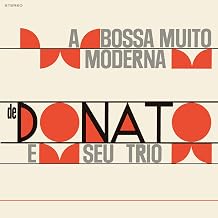
- Muito à Vontade (1962) — An early masterpiece revealing Donato’s lyrical piano style and unmistakable rhythmic personality.
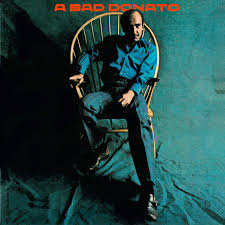
- A Bad Donato (1970) — A landmark recording created during his American years, blending Brazilian music, jazz and Latin influences with remarkable originality.
- Quem é Quem (1973) — One of the defining albums of Brazilian instrumental music, featuring many of his best-known compositions and mature artistic language.
- Lugar Comum (1975) — A beautiful synthesis of MPB, samba, jazz and Donato’s incomparable harmonic elegance.
- Donato Elétrico (2016) — A vibrant late-career recording proving that his creativity remained fresh and adventurous well into his eighties.
Together, these albums document a career whose influence extends across Brazilian music, Latin jazz and contemporary instrumental composition.
Buy Amazon
The Invisible Influence Behind Modern Brazilian Music
The greatest innovators are not always the most visible. Some transform an art form from the center of public attention, while others quietly reshape its foundations until future generations can no longer imagine the music without them. João Donato belongs unquestionably to the second group. His name may never have achieved the worldwide recognition of Antônio Carlos Jobim or João Gilberto, yet countless musicians—from Brazil, the United States, Europe and Latin America—have acknowledged that their understanding of rhythm, harmony and melodic simplicity changed after listening carefully to Donato.
His influence is remarkably difficult to quantify.
It appears in piano voicings.
In bass lines.
In subtle rhythmic displacement.
In the relaxed dialogue between melody and accompaniment.
Many listeners recognize these qualities instinctively without realizing where they originated.
That is perhaps the highest form of artistic influence.
Ideas become so deeply integrated into musical language that they cease belonging to a single creator.
The Rhythm of Simplicity
João Donato demonstrated throughout his career that sophistication rarely depends upon complexity.
Many jazz musicians impress through rapid improvisation or dense harmonic substitutions.
Donato often achieved equal expressive depth using fewer notes.
A repeating rhythmic figure.
A gently shifting harmony.
A melody that seems almost effortless.
This economy demands extraordinary confidence.
Nothing hides behind technical excess.
Every phrase must carry meaning.
His recordings therefore possess remarkable transparency.
Listeners hear space.
Air.
Balance.
The music never feels crowded.
It breathes naturally.
That breathing quality continues inspiring contemporary composers searching for elegance rather than spectacle.
JazzLatitude Insight
João Donato understood that groove is not created by playing more notes. It emerges from placing exactly the right note in exactly the right moment—and having the confidence to let silence complete the phrase.
Beyond Bossa Nova
Although João Donato contributed significantly to the environment from which bossa nova emerged, limiting his legacy to that movement would overlook the extraordinary breadth of his artistic vision.
His music anticipated later developments in:
Samba jazz.
MPB.
Latin jazz.
Jazz fusion.
Contemporary Brazilian instrumental music.
Even modern neo-soul and groove-based jazz reveal echoes of Donato’s rhythmic philosophy.
He consistently refused stylistic confinement.
Each new collaboration expanded rather than replaced what had come before.
This openness explains why musicians from dramatically different traditions continue discovering fresh inspiration in his catalogue.
A Composer’s Composer
Among Brazilian musicians, João Donato occupies a particularly respected position because composers themselves admire his writing.
His melodies possess remarkable inevitability.
They seem as though they have always existed.
Yet close examination reveals astonishing craftsmanship.
Unexpected intervals.
Gentle harmonic ambiguity.
Rhythms that flow naturally around the pulse rather than sitting rigidly upon it.
Songs such as “A Rã,” “Lugar Comum,” “Amazonas,” “Bananeira,” “Naturalmente” and many others continue inviting reinterpretation precisely because they balance simplicity with endless possibility.
Great compositions survive changing musical fashions.
Donato’s work continues flourishing across generations.
A Musical Conversation Across Continents
One reason João Donato occupies such a distinctive place in international jazz is that he helped establish genuine dialogue between Brazilian music and the broader world of improvisation.
Earlier musicians had introduced samba rhythms to jazz audiences.
Donato expanded the conversation.
His work influenced not only Latin jazz but also pianists exploring contemporary harmony in Europe and North America.
Artists associated with modern Brazilian instrumental music frequently acknowledge his importance.
Jazz musicians admire his economy.
Latin performers celebrate his groove.
Popular songwriters borrow his melodic elegance.
His music belongs everywhere precisely because it never abandoned its Brazilian identity.
Essential Collaborations and Artistic Connections
João Donato’s remarkable career unfolded through collaborations that illuminate both his extraordinary versatility and his central role in the evolution of Brazilian and Latin American music.
Among the most significant are:
- Antônio Carlos Jobim — Although their artistic personalities differed, both helped redefine modern Brazilian harmony, influencing generations of jazz musicians around the world.
- João Gilberto — Together they participated in the remarkable creative environment from which bossa nova emerged, each contributing distinct ideas about rhythm, phrasing and musical restraint.
- Mongo Santamaría — Donato’s interaction with Afro-Cuban musicians deepened his rhythmic vocabulary and strengthened the dialogue between Brazilian music and Latin jazz.
- Cal Tjader — The celebrated vibraphonist’s sophisticated approach to Latin jazz paralleled Donato’s own search for elegance, groove and harmonic clarity.
- Gilberto Gil — Their collaborations revealed how naturally Donato’s harmonic imagination could enrich Brazilian popular song while preserving its rhythmic vitality.
These artistic relationships demonstrate that João Donato never viewed music through national or stylistic boundaries. His career became a continuous conversation among Brazil, jazz and the wider musical world.
Technical Profile
Born:
- August 17, 1934
Died:
- July 17, 2023
Birthplace:
- Rio Branco, Acre, Brazil
Primary Instruments:
- Piano
- Accordion
Professional Roles:
- Pianist
- Composer
- Arranger
- Bandleader
Primary Styles:
- Brazilian Jazz
- Samba Jazz
- Bossa Nova
- Latin Jazz
- MPB
- Jazz Fusion
Musical Characteristics:
- Exceptionally relaxed groove
- Harmonic economy
- Singing melodic phrasing
- Afro-Brazilian rhythmic subtlety
- Latin jazz influences
- Elegant improvisational language
Essential Albums:
- Muito à Vontade (1962)
- A Bad Donato (1970)
- Quem é Quem (1973)
- Lugar Comum (1975)
- Donato Elétrico (2016)
Five Lesser-Known Facts About João Donato
1. His first instrument was the accordion.
Long before becoming one of Brazil’s greatest pianists, Donato developed his melodic sensibility through the accordion, an influence that remained audible throughout his career.
2. He spent formative years in the United States.
Living and working alongside major figures of Latin jazz profoundly expanded his rhythmic language and strengthened the international character of his music.
3. His compositions are among the most recorded in Brazilian instrumental music.
Artists from jazz, MPB and Latin music continue reinterpreting his melodies because of their remarkable balance between simplicity and harmonic sophistication.
4. Musicians often speak of “the Donato groove.”
His unique rhythmic feel has become legendary among Brazilian instrumentalists and remains almost impossible to reproduce exactly.
5. He remained creatively adventurous into his eighties.
Albums such as Donato Elétrico proved that curiosity, rather than nostalgia, continued guiding his artistic vision throughout his life.
Frequently Asked Questions
Who was João Donato?
João Donato was a Brazilian pianist, composer and arranger widely regarded as one of the most influential architects of Brazilian jazz, samba jazz and modern Brazilian instrumental music.
Why is João Donato important?
He transformed Brazilian rhythm and harmony by creating an unmistakable groove that influenced bossa nova, MPB, Latin jazz and generations of pianists and composers around the world.
What is João Donato’s greatest album?
Many musicians consider Quem é Quem his defining masterpiece, although Muito à Vontade, A Bad Donato and Lugar Comum are equally essential for understanding his artistic evolution.
Did João Donato play only jazz?
No. His career embraced Brazilian popular music, samba jazz, bossa nova, MPB and Latin jazz, always maintaining a uniquely personal musical identity that transcended conventional genre boundaries.
Which artists are similar to João Donato?
Listeners who appreciate João Donato often explore Antônio Carlos Jobim, João Gilberto, Luiz Eça, Dom Salvador, Hermeto Pascoal, Egberto Gismonti, Cal Tjader, Eddie Palmieri, Gonzalo Rubalcaba and Brad Mehldau, all of whom reflect different aspects of rhythmic sophistication, harmonic elegance and improvisational creativity.
JazzLatitude Rating
| Category | Rating |
|---|---|
| Piano Performance | ★★★★★ |
| Compositional Originality | ★★★★★ |
| Groove and Rhythm | ★★★★★ |
| Harmonic Innovation | ★★★★★ |
| Influence on Brazilian Music | ★★★★★ |
| Latin Jazz Legacy | ★★★★★ |
| Replay Value | ★★★★★ |
| Historical Importance | ★★★★★ |
| JazzLatitude Essential | ★★★★★ |
Final Thoughts
João Donato occupies a singular place in the history of modern music because he achieved something that very few artists ever accomplish: he changed the way musicians feel rhythm without drawing attention to the revolution itself. His piano never depended on dramatic virtuosity or theatrical gestures. Instead, it revealed an extraordinary confidence in the expressive power of simplicity. Every phrase seemed to breathe naturally, every harmony unfolded with quiet inevitability, and every groove carried an effortless sense of motion that concealed remarkable rhythmic precision.
His importance extends far beyond Brazil. By bringing together samba, jazz, Afro-Cuban traditions, bossa nova and popular song with exceptional subtlety, Donato helped create a musical language that transcended national boundaries while remaining unmistakably Brazilian. The influence of that language can be heard in generations of composers, pianists and arrangers who continue to draw inspiration from his elegant harmonic economy and deeply human sense of groove. From Hermeto Pascoal and Egberto Gismonti to Brad Mehldau and countless contemporary improvisers, the echoes of Donato’s ideas continue shaping modern music.
What perhaps distinguishes João Donato most profoundly is the absence of artistic ego. Throughout a career spanning more than seven decades, he never sought to dominate musical conversations. Instead, he enriched them. His compositions welcomed reinterpretation. His collaborations encouraged dialogue. His performances demonstrated that sophistication and accessibility need never be opposing ideals. The result is a catalogue whose warmth feels as contemporary today as when it was first recorded.
In many ways, João Donato represents the finest qualities of Brazilian music itself: rhythmic generosity, melodic grace, harmonic intelligence and an unwavering belief that joy can coexist with extraordinary artistic depth. His recordings continue reminding listeners that true innovation often arrives quietly, without manifestos or grand declarations, carried instead by musicians whose ideas become inseparable from the language they helped create.
For anyone seeking to understand the deepest connections between Brazilian music, Latin jazz and modern improvisation, João Donato is far more than one of the greatest pianists Brazil has ever produced.
He is one of the essential architects of groove in twentieth-century music—and one of the most elegant musical thinkers jazz has ever embraced.