Before Funky Stuff: A Japanese Jazz Scene in Motion
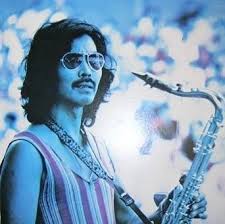
When Funky Stuff appeared in 1975, Jiro Inagaki was not a young musician suddenly discovering funk. He had already spent years moving through a Japanese jazz scene undergoing profound transformation. Acoustic modern jazz remained important, but the boundaries surrounding it were becoming increasingly permeable. Electric instruments, rock rhythms, soul, psychedelic music and American funk were entering studios and changing what Japanese jazz musicians considered possible. Inagaki’s career belongs directly to this period of transition.
That context matters because Funky Stuff can sound surprisingly immediate to contemporary listeners. Its electric bass lines, Fender Rhodes, wah-wah guitar, tightly organized drums and saxophone melodies make it easy to hear the album simply as an exceptionally effective piece of jazz-funk. But reducing it to groove alone misses the trajectory that produced it. Inagaki and his Soul Media ensemble had already explored jazz-rock and electric instrumentation on earlier recordings. By the middle of the decade, the question was no longer whether jazz musicians should engage with contemporary popular rhythms. It was how completely those rhythms could reorganize the music.
Funky Stuff represents one particularly convincing answer.
Jiro Inagaki Before Soul Media
Inagaki belonged to a generation of Japanese musicians whose professional development coincided with the rapid expansion of jazz culture in postwar Japan. By the 1960s, the country’s jazz infrastructure included clubs, record collectors, magazines, university scenes and musicians capable of working at a high technical level.
Yet Japanese jazz should not be understood merely as an echo of American developments.
American jazz obviously supplied essential vocabulary, but Japanese musicians increasingly adapted that vocabulary to their own professional environments and changing listening culture. The late 1960s and early 1970s were particularly important because the definition of jazz itself was becoming unstable internationally.
Miles Davis was moving toward electric music.
Herbie Hancock would eventually move from the exploratory Mwandishi period into the groove-centered world of the Headhunters.
Soul jazz had already demonstrated that blues, gospel and R&B could coexist with improvisation.
Rock had changed amplification, studio production and expectations surrounding rhythm.
Funk was making the groove an increasingly powerful organizing principle.
Japanese musicians heard these developments while creating their own responses.
Inagaki was among them.
The Formation of Soul Media
The name Soul Media already tells us something about the direction Inagaki wanted to pursue. The ensemble was capable of jazz improvisation, but the musical identity that emerged around it increasingly embraced electric instrumentation and rhythm-centered composition.
This was not simply a cosmetic modernization.
When a jazz ensemble moves from acoustic bass toward electric bass, from acoustic piano toward Fender Rhodes, and from swing-centered drumming toward funk and rock-derived patterns, the entire architecture changes.
The bass can become repetitive rather than walking.
The drums can lock into a backbeat.
Keyboards can sustain or color harmony rather than continuously articulate it.
Guitar becomes a rhythmic instrument as much as a harmonic one.
A saxophonist has to reconsider how phrases sit against that foundation.
Inagaki’s tenor therefore operated in a musical environment very different from the one associated with conventional hard bop.
The rhythm section was no longer merely accompanying the soloist.
The groove could become the composition’s central event.
Head Rock: The Earlier Transformation
One of the essential stops before Funky Stuff is Head Rock, released in 1970. Even the title suggests the changing landscape. The music belongs to a moment when jazz-rock was becoming a serious field of exploration rather than an occasional experiment.
Head Rock reveals an Inagaki already interested in electric energy, heavier rhythm and the possibilities created when jazz improvisation encounters rock.
That makes it misleading to treat Funky Stuff as a sudden stylistic conversion five years later.
There is a trajectory.
Head Rock → Soul Media’s early-1970s recordings → Funky Stuff.
Across that period, the balance shifts.
Rock energy becomes part of a broader interest in groove.
Soul becomes increasingly important.
Funk eventually moves toward the center.
The transformation reflects both Inagaki’s development and a larger change occurring in jazz internationally.
Fusion Was Not One Sound
The word fusion can make this period seem more uniform than it actually was.
There was no single fusion sound.
Miles Davis’s electric music did not sound like Return to Forever.
Weather Report did not sound like the Headhunters.
Tony Williams Lifetime did not sound like Lonnie Liston Smith.
Japanese musicians working with electric instruments were equally varied.
Some emphasized progressive rock.
Some moved toward funk.
Others combined free jazz with amplification.
Still others developed sophisticated studio-oriented instrumental music that eventually overlapped with what would later be categorized as city pop, jazz-funk or Japanese fusion.
Inagaki’s importance lies partly in the way his discography passes through several of these possibilities.
He did not simply attach an electric keyboard to hard bop.
The rhythmic assumptions themselves changed.
Why 1970s Japan Matters
The Japanese recording industry of the 1970s provided unusually fertile conditions for this experimentation. Major labels were documenting jazz musicians while studios offered increasingly sophisticated production possibilities. Musicians could encounter imported American records and respond rapidly to changes occurring internationally.
But imitation is the wrong framework.
Every jazz culture develops through transmission.
American jazz itself grew through constant exchange among African American musical traditions, Caribbean rhythms, European instruments, popular song, blues, gospel and countless regional influences. To demand complete isolation as proof of Japanese originality misunderstands how musical culture works.
The more interesting question is what Japanese musicians did with the information they received.
Inagaki’s recordings show that process happening in real time.
From Jazz-Rock Toward the Groove
By the early 1970s, Soul Media’s music increasingly demonstrated that rhythm could organize the entire arrangement.
This distinction separates much jazz-funk from jazz that merely includes funky passages.
In a conventional jazz performance, harmony and improvisational form may provide the primary structure while rhythm responds dynamically around them.
In funk, the hierarchy can reverse.
A repeated bass figure may be the essential composition.
A guitar pattern may continue almost unchanged.
The drummer’s responsibility becomes maintaining a precise physical relationship among kick, snare and hi-hat.
Small changes acquire importance because the foundation remains stable.
For an improviser, this requires another kind of discipline.
The temptation is to escape repetition.
The challenge is to enter it.
Inagaki understood that distinction.
The Role of Hiromasa Suzuki
Any serious discussion of Funky Stuff must move beyond Inagaki himself, because Hiromasa Suzuki is fundamental to the album’s identity.
Suzuki was a pianist, keyboardist, composer and arranger whose career occupies an important position in Japanese jazz and fusion. On Funky Stuff, his role was decisive: he handled the arrangements and Fender Rhodes, and composed most of the original material. Contemporary release documentation identifies Suzuki as the composer behind tracks including “Painted Paradise,” “Funky Motion,” “Breeze,” “One for Jiroh,” “Gentle Wave” and “Four Up.”
This changes how the album should be described.
Funky Stuff is a Jiro Inagaki and Soul Media record, but its musical architecture is deeply collaborative.
Inagaki’s saxophone gives the ensemble a recognizable lead voice.
Suzuki helps construct the world in which that voice operates.
The partnership is essential.
The Ensemble Behind the Record
The documented personnel for Funky Stuff includes Jiro Inagaki on tenor saxophone, soprano saxophone and flute; Hiromasa Suzuki on Fender Rhodes and arrangements; Takashi Imai on trombone; Hiroshi Yasukawa on guitar; Akira Okazawa on bass; and Hajime Ishimatsu on drums. Japanese release documentation dates the recording to August 1974 at Nippon Columbia Studio No. 2, with Inagaki credited as producer.
This instrumentation immediately explains much of the album’s character.
There is no need for an enormous ensemble.
The palette is compact but flexible.
Rhodes provides warmth and harmonic color.
Electric bass supplies weight.
Guitar can move between chordal support, rhythmic punctuation and funk texture.
Trombone expands the horn arrangements.
Drums keep the music physically grounded.
And Inagaki can move among tenor, soprano and flute.
The record’s richness comes from how those elements are arranged rather than from sheer size.
Funky Stuff Arrives
The album was released by Nippon Columbia in January 1975, containing eight tracks and approximately forty-four minutes of music.
The track sequence is:
“Painted Paradise”
“Funky Motion”
“Breeze”
“Scratch”
“Funky Stuff”
“One for Jiroh”
“Gentle Wave”
“Four Up”
Two pieces reveal the album’s American funk connections particularly clearly. “Scratch” is a composition by Crusaders trombonist Wayne Henderson, while the title track is a version of Kool & the Gang’s “Funky Stuff.” The remaining material is largely associated with Suzuki’s writing.
That balance is important.
The album acknowledges American funk directly.
But it does not consist simply of American covers.
The imported vocabulary becomes the framework for original Japanese composition.
“Painted Paradise”
The opening “Painted Paradise” establishes the record’s intentions almost immediately.
Rather than introducing the album through a long abstract statement, the ensemble begins with a groove strong enough to organize everything that follows. Electric bass and drums establish the physical foundation while guitar and Rhodes occupy carefully defined spaces around it.
Inagaki does not need to overwhelm this structure.
His horn enters a landscape that already has an identity.
This is one of the defining strengths of Funky Stuff.
The arrangements do not treat rhythm sections as neutral platforms waiting for soloists.
The rhythm section is already saying something.
Improvisation becomes a response to that statement.
The Bass Is Not Walking Anywhere
The electric bass deserves particular attention because it demonstrates how far this music has moved from conventional modern jazz organization.
A walking bass line creates forward motion by continually articulating harmonic movement.
Funk often works differently.
The bassist can repeat a short figure until it becomes almost architectural.
The listener begins to anticipate it.
The pleasure comes partly from recurrence.
Then tiny variations become meaningful.
Akira Okazawa’s role throughout Funky Stuff belongs to this world. His bass is not simply identifying chord roots beneath Inagaki’s saxophone.
It gives the music mass.
The compositions can sit on the groove rather than constantly moving away from it.
That changes how every other musician plays.
“Funky Motion”
The title “Funky Motion” is almost a description of the album’s central method.
Motion does not require constant harmonic change.
A repeated rhythmic figure can create movement through interaction, articulation and dynamics.
Suzuki’s Rhodes is especially important here because the electric piano can occupy several functions at once. It can provide harmony, attack rhythmically like a guitar, create sustained atmosphere or answer the horns.
This flexibility made the Fender Rhodes one of the defining instruments of 1970s electric jazz.
In Funky Stuff, it also helps bridge worlds.
The instrument can belong to jazz.
It can belong to soul.
It can belong to funk.
The music does not have to choose.
“Breeze” and the Need for Contrast
An album built entirely around maximum funk intensity would become exhausting quickly.
Funky Stuff works because it understands contrast.
“Breeze” reveals a softer, more spacious side of Suzuki’s writing. The rhythmic foundation remains important, but atmosphere moves closer to the foreground.
This is where the album’s sophistication becomes clearer.
Jazz-funk is sometimes reduced to danceability, as though groove automatically means simplicity.
But arranging an entire album requires control of tension.
If every track uses the same tempo, rhythmic density and instrumental attack, the groove loses its effect.
Breeze allows the record to breathe.
The title is appropriate.
“Scratch”: Looking Toward the Crusaders
The inclusion of Wayne Henderson’s “Scratch” places Soul Media directly in conversation with American soul-jazz and jazz-funk. Henderson’s work with the Jazz Crusaders/Crusaders helped demonstrate how improvisational musicians could build increasingly groove-centered music without abandoning instrumental sophistication.
Inagaki’s decision to include the composition is therefore more than a casual cover choice.
It reveals a lineage.
The Crusaders represented one path from hard bop and soul jazz toward funk.
Soul Media was navigating a related transition in Japan.
But again, the important point is not imitation.
A composition changes when another ensemble reorganizes it through its own musicians, studio environment and rhythmic sensibility.
The source is American.
The recording belongs to Soul Media.
The Title Track and Kool & the Gang
The album’s most explicit engagement with American funk comes from “Funky Stuff,” originally associated with Kool & the Gang. Release documentation confirms the writing credits to members of the group.
Choosing the song as both a performance and the album’s title makes the declaration unmistakable.
Inagaki was not hiding funk influence behind jazz terminology.
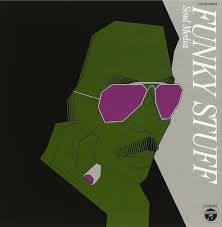
He put it on the cover.
Yet the interesting question is what happens when musicians with substantial jazz backgrounds approach this material.
They can preserve the essential groove while opening different spaces around it.
Horn phrasing can become more flexible.
Rhodes can alter harmonic color.
Instrumental interaction can shift from repetition toward improvisation and back again.
The composition becomes a meeting point.
Funk Without Abandoning Jazz
This is where the phrase Japanese jazz-funk becomes useful, provided we do not treat it as a rigid genre.
Funky Stuff is not jazz with a superficial backbeat.
Nor is it simply American funk performed by Japanese musicians.
The musicians retain improvisational instincts, instrumental interaction and harmonic vocabulary associated with jazz while accepting a fundamental lesson from funk:
the groove does not need to apologize for repeating itself.
That may sound simple.
For musicians trained to demonstrate development through harmonic movement and improvisational variation, it can represent a profound change in priorities.
The best moments on Funky Stuff occur when nobody tries to escape the groove merely to prove sophistication.
Sophistication is already inside it.
“One for Jiroh”
The title “One for Jiroh” also reminds us of the collaborative relationship at the center of the album. Suzuki’s composition places Inagaki within music written specifically around the ensemble’s character.
That matters because bandleaders are sometimes credited so completely that arrangers and composers become secondary figures in the historical narrative.
Funky Stuff resists that interpretation.
Inagaki’s leadership matters.
Suzuki’s writing matters.
Okazawa’s bass matters.
Ishimatsu’s drums matter.
The record works because these functions are interdependent.
There is no need to invent a solitary genius.
The ensemble is the achievement.
“Gentle Wave”
“Gentle Wave” extends the album’s more relaxed side and demonstrates again that Soul Media’s understanding of groove was broader than aggressive funk.
Rhythm can remain central without becoming heavy.
This matters for the pacing of the record. The listener experiences a series of related rhythmic environments rather than eight attempts to reproduce the same effect.
Suzuki’s compositional contribution is especially important here.
His writing gives Funky Stuff enough melodic and harmonic variety to prevent its stylistic coherence from becoming uniformity.
The record knows what it is.
It does not need every track to prove it.
“Four Up” and the Album’s Closing Argument
By the time “Four Up” closes the album, the listener has heard several versions of the same broad proposition: jazz musicians can place groove at the center without sacrificing interaction, arrangement or instrumental personality.
This is why Funky Stuff has aged well.
Its appeal does not depend on an argument that it was the first record to combine these ingredients.
It was not.
Its importance does not require claiming that Inagaki invented Japanese fusion.
He did not.
What the record offers is something more durable:
an unusually coherent example of musicians understanding exactly what funk could contribute to their jazz vocabulary.
Why Funky Stuff Sounds Contemporary Again
There is an irony in the album’s modern reputation.
Much of what made Funky Stuff sound contemporary in 1975 eventually became associated with its era: Fender Rhodes, electric bass, wah-wah guitar, tightly recorded drums and horn-driven funk arrangements.
For a period, these sounds could be heard as unmistakably “seventies.”
Then musical culture changed again.
Hip-hop producers sampled jazz and funk.
DJs excavated forgotten records.
Rare-groove culture transformed obscure pressings into sought-after objects.
YouTube and streaming services allowed listeners outside Japan to encounter recordings that had once required specialist collectors to locate.
Younger jazz musicians began openly embracing beat culture, funk and electric instrumentation again.
Suddenly, the very characteristics that had dated the album helped make it feel relevant.
The record had not changed.
The listening environment had.
Rediscovery Without Mythology
This later rediscovery is an important part of the Inagaki story, but it needs to be handled carefully.
There is a tendency in contemporary writing about Japanese jazz to describe every rediscovered album as a “lost masterpiece.” That language creates excitement but eventually flattens the history. If everything is a forgotten masterpiece, the phrase stops meaning anything.
Funky Stuff does not need mythology.
Its continuing availability provides concrete evidence of renewed interest. The album has received multiple later vinyl editions, including documented reissues in 2020, 2023 and subsequent years, while contemporary streaming services make the 1975 recording readily accessible internationally.
That is more interesting than calling it “legendary.”
A record made in Tokyo in 1974 can now reach a listener in São Paulo, London, New York or Berlin instantly.
The geography of discovery has changed completely.
The Problem With the “Japanese Jazz” Label
The international rediscovery of records such as Funky Stuff has produced enormous interest in Japanese jazz, but the label can create another simplification.
Japan did not have one jazz sound.
Inagaki does not sound like every Japanese musician of the period.
Terumasa Hino followed different paths.
Masabumi Kikuchi followed others.
Takeo Moriyama, Fumio Itabashi, Hiroshi Suzuki, Akira Ishikawa and countless others developed distinctive musical identities.
Even Inagaki’s own discography refuses a single category.
Jazz-rock.
Soul.
Funk.
Fusion.
Soundtrack-like textures.
Straighter jazz elements.
The diversity is the point.
“Japanese jazz” should tell us where a musical culture developed.
It should not tell us in advance what the music sounds like.
From Head Rock to Funky Stuff
Seen in this context, the five years between Head Rock and Funky Stuff become especially revealing.
In 1970, Inagaki was already exploring the collision between jazz and amplified rock energy.
By 1975, the center of gravity had shifted.
The groove became tighter.
Soul and funk became more explicit.
Hiromasa Suzuki’s writing and Rhodes helped define the arrangements.
Electric bass acquired greater structural weight.
The music became less concerned with demonstrating that jazz could become electric.
That battle had already been won.
The new question was:
How deep into the groove could the music go while remaining unmistakably the work of improvising jazz musicians?
Funky Stuff answered that question with remarkable confidence.
But it represents only one point in Inagaki’s larger story.
To understand why his work has become so compelling to contemporary listeners—and why the international rediscovery of Japanese jazz is about far more than collectible vinyl—we need to move beyond Funky Stuff itself.
Buy Amazon
Beyond Funky Stuff
The international rediscovery of Jiro Inagaki has become so closely associated with Funky Stuff that the album can distort our understanding of his career. Its appeal is obvious: direct grooves, electric bass, Fender Rhodes, guitar, compact horn arrangements and a visual identity that fits comfortably into the contemporary fascination with 1970s Japanese jazz-funk. Yet Inagaki’s importance becomes clearer when the record is treated as one stage in a longer evolution rather than the destination toward which everything else was moving. The musician heard on Funky Stuff had already passed through hard bop, jazz-rock, soul and electric experimentation, and his subsequent work would continue responding to changes in Japanese popular music and studio culture.
This broader view also prevents a common historical mistake. When older music is rediscovered decades later, listeners often reorganize an artist’s entire career around the album that happens to appeal most strongly to contemporary taste. The result can be a distorted chronology in which everything before the celebrated record becomes preparation and everything after it becomes decline. Inagaki’s catalog is more complicated than that. His adaptability was not an interruption of his artistic identity. It was one of its defining characteristics.
The Japanese Electric Turn
The late 1960s and early 1970s brought profound changes to jazz internationally. Electric keyboards became increasingly common. Amplified bass changed the physical foundation of ensembles. Rock altered expectations around volume and rhythmic attack. Soul and funk demonstrated how repetition could become a compositional principle. Studio technology offered possibilities that could not be reproduced simply by documenting musicians in a room.
Japanese musicians responded rapidly.
This did not produce a single school of “Japanese fusion.” The term covers recordings with radically different priorities: technically intricate fusion, jazz-rock, psychedelic experimentation, funk, orchestral music and forms increasingly connected with the Japanese commercial recording industry.
Inagaki’s Soul Media belongs inside this transformation but cannot represent all of it.
That distinction matters.
The value of Funky Stuff does not come from its ability to summarize Japanese jazz in 1975.
It comes from how clearly it captures one route through that changing landscape.
Soul Media as a Working Concept
The name Soul Media became increasingly appropriate as Inagaki’s music moved beyond a narrowly defined jazz ensemble.
“Media” suggests transmission.
The group could absorb information from different sources—American soul, jazz improvisation, rock, funk, electric instrumentation—and transmit it through another cultural and musical environment.
This flexibility allowed the ensemble to change without requiring a dramatic break every time the surrounding musical world shifted.
A group defined exclusively by bebop language would have had to abandon part of its identity to embrace funk.
Soul Media could simply change the balance.
That adaptability is one reason Inagaki’s recordings from the period remain so revealing.
They document movement.
The Importance of Arrangement
One of the strongest lessons of Funky Stuff is that groove alone does not explain good jazz-funk.
The arrangements matter enormously.
Hiromasa Suzuki’s role demonstrates this. A rhythm section can create a powerful pocket, but an album still needs melodic shape, contrast, instrumental distribution and pacing. Horns have to enter at the right moment. Rhodes cannot occupy every frequency and every bar. Guitar needs space. Saxophone improvisation must interact with the composition rather than simply sit on top of it.
This is where the old language of “raw groove” can become misleading.
The music may feel spontaneous.
That does not mean it is casually organized.
In fact, making a complex ensemble sound effortless usually requires considerable discipline.
Fender Rhodes as Cultural Technology
The Fender Rhodes became one of the defining sounds of this era because it changed more than timbre.
An acoustic piano has a particular attack and decay. It occupies physical space in a studio and interacts acoustically with the room. The Rhodes offers another relationship with amplification, effects and sustained sound.
In jazz-funk, this flexibility becomes especially valuable.
The instrument can provide soft harmonic clouds.
It can punctuate rhythmically.
It can support a solo without competing with it.
It can be processed.
And its rounded electric tone can sit naturally beside electric bass and guitar.
On Funky Stuff, Suzuki’s Rhodes helps create continuity between jazz harmony and funk rhythm.
The instrument does not symbolize modernization.
It participates in it.
Electric Bass Changes the Floor
The same transformation occurs in the low register.
The shift from acoustic to electric bass should not be treated merely as an equipment choice. It changes what the rhythm section can do.
Electric bass can sustain differently.
It can produce greater low-frequency weight.
It encourages different articulations.
Most importantly, it can make short repeated figures extraordinarily effective.
Funk depends heavily on this possibility.
Instead of constantly outlining harmonic movement, the bassist can establish a pattern that becomes a physical reference point for everyone else.
The drummer locks against it.
The guitarist finds spaces around it.
The keyboard player can reduce harmonic density.
The saxophonist can phrase across it.
The groove becomes collective architecture.
Groove Is Not Simplicity
This is worth emphasizing because jazz-funk has sometimes been treated dismissively by listeners who equate harmonic density with sophistication.
A repeated vamp may contain fewer chord changes than a bebop standard.
That does not mean performing it convincingly is easier.
Repetition exposes musicians.
If the time is unstable, the listener hears it.
If the drummer and bassist disagree about where the beat sits, the groove weakens.
If every player fills every available space, the arrangement becomes crowded.
If nothing changes, repetition becomes mechanical.
The difficulty lies in producing variation without destroying continuity.
Soul Media’s strongest performances understand this.
The Saxophonist Inside the Groove
Inagaki’s role is particularly interesting because saxophonists can easily dominate an ensemble.
The instrument is naturally capable of projection. In jazz history, the tenor saxophone often functions as the principal narrative voice, especially during improvisation.
But jazz-funk changes the hierarchy.
Inagaki frequently has to enter a structure that already possesses enormous rhythmic identity.
The challenge is not to make the rhythm section follow the saxophone.
It is to find a place inside the groove.
This encourages another kind of phrasing.
Shorter statements can become more effective.
Repeated figures can interact with the rhythm section.
Tone becomes important because a sustained note may carry more weight than a long sequence of harmonic substitutions.
The saxophone becomes part of the machine without losing its human flexibility.
Japan Was Listening to Black American Music
Any discussion of Japanese jazz-funk needs to acknowledge its debt to Black American music clearly.
Soul, funk and jazz were not neutral international vocabularies. They emerged from specific African American histories and communities.
Japanese musicians such as Inagaki engaged deeply with those traditions.
Acknowledging this does not reduce their creativity.
It makes the exchange historically legible.
The interesting question is what happens after influence travels.
Musicians do not receive music passively.
They interpret it through their own training, industries, audiences, technologies and local traditions.
That is why Soul Media does not simply sound like Kool & the Gang or the Crusaders.
The vocabulary travels.
The result changes.
The Headhunters Comparison
Herbie Hancock’s Head Hunters, released in 1973, is an unavoidable reference point when discussing jazz musicians moving decisively toward funk during this period.
But comparisons should be handled carefully.
Hancock’s record emerged from his own trajectory: Miles Davis, post-bop, the Mwandishi ensemble, electronic experimentation and an increasing interest in funk.
Inagaki’s trajectory was different.
The shared element is not a direct formula.
It is a historical question.
Both musicians were confronting a world in which the rhythmic language of Black popular music had become impossible for jazz to treat as peripheral.
The answers were different because the musicians, cities and recording cultures were different.
That difference is precisely what makes comparison worthwhile.
Soul Jazz, Funk and the Crusaders
The Crusaders provide another useful connection because their evolution from the Jazz Crusaders toward a more explicitly funk-oriented sound demonstrates how porous these categories had become.
Wayne Henderson’s “Scratch,” included on Funky Stuff, makes that relationship explicit.
But Soul Media’s interpretation belongs to a different environment.
The Japanese musicians were not simply consuming a finished American style.
They were participating in an international conversation about what an improvisational ensemble could become once funk reorganized the rhythm section.
The question crossed borders.
The answers remained local.
Japanese Recording Culture
The sound of these records is also inseparable from Japanese recording culture.
By the 1970s, Japanese studios could produce technically sophisticated recordings across jazz, pop, soundtrack music and commercial sessions. Musicians often moved among these environments, developing skills that encouraged versatility.
This matters because contemporary listeners sometimes romanticize Japanese jazz as though it existed in an underground world untouched by commercial culture.
The reality was more complicated.
Musicians worked.
They recorded for labels.
They arranged music.
They played sessions.
They responded to audiences.
They operated inside an industry.
That professional environment helped produce the precision listeners now admire.
The Collector’s Version of History
The international revival of interest in Japanese jazz has been heavily shaped by collectors.
This has produced enormous benefits.
Rare records have been reissued.
Musicians have received new audiences.
Discographies have become easier to explore.
Albums once difficult to obtain outside Japan can now be heard globally.
But collector culture also introduces distortions.
Rarity can become confused with musical importance.
An expensive original pressing may attract more discussion than a historically significant album that remained widely available.
Cover art can become almost as important as music.
The phrase “Japanese jazz” can become a lifestyle aesthetic.
Inagaki’s music deserves better than that.
The vinyl object is fascinating.
The music is the reason it matters.
YouTube Changes the Archive
Before streaming, discovering an obscure Japanese jazz record outside Japan could require specialist stores, mail-order catalogs, record fairs or expensive imports.
The internet transformed that process.
YouTube uploads allowed entire albums to circulate among listeners who had never encountered the original LP. Recommendation algorithms could connect a listener exploring one Japanese fusion record with dozens of others.
This produced a new kind of informal archive.
It was messy.
Metadata could be incomplete.
Uploads could disappear.
Release dates could be wrong.
But discovery accelerated dramatically.
Albums such as Funky Stuff benefited from this environment because they communicate quickly.
A listener does not need historical knowledge to understand the groove.
The first minute can create curiosity.
Streaming and the Collapse of Geography
Streaming pushed this transformation further.
A record created for the Japanese market in the 1970s can now sit beside contemporary London jazz, Brazilian samba-jazz, Detroit techno and American hip-hop inside the same listening session.
This changes musical history.
Not the past itself, but how listeners experience it.
Earlier generations encountered music partly through geography and distribution.
Contemporary listeners can construct histories retrospectively according to sound.
Someone hears BADBADNOTGOOD.
The algorithm suggests Japanese jazz-funk.
They encounter Jiro Inagaki.
Then Hiroshi Suzuki.
Then Casiopea.
Then Ryo Kawasaki.
The chronology may be chaotic.
But the connections can be musically productive.
Why Producers Hear These Records Differently
Hip-hop and electronic producers also helped change how older jazz-funk recordings are heard.
A traditional jazz listener may focus on the saxophone solo.
A producer might hear the drum break.
A bassist hears the pocket.
A DJ hears the transition.
A record collector hears the arrangement.
A contemporary keyboard player hears the Rhodes voicing.
None of these listening modes is inherently superior.
Together they help explain why music can acquire new relevance decades after release.
Funky Stuff contains enough rhythmic and textural information to support multiple forms of attention.
That adaptability is part of its longevity.
Japanese Jazz and the Internet Generation
The contemporary fascination with Japanese jazz also tells us something about younger audiences.
Genre loyalty has weakened.
A listener does not necessarily identify as a “jazz fan” before enjoying a Jiro Inagaki record.
They may arrive through lo-fi beats, hip-hop samples, anime aesthetics, city pop, vinyl collecting, funk playlists or YouTube recommendations.
This resembles what happened decades later with artists such as BADBADNOTGOOD.
The path into jazz changes.
The music does not need to become simpler.
The listener simply needs another entrance.
The Danger of Exoticism
There is, however, a problem with the way Japanese jazz is sometimes marketed internationally.
Words such as “mysterious,” “hidden,” “exotic” and “forgotten” can turn an entire national jazz history into a collector’s fantasy.
Japan was not a secret musical civilization waiting for Western listeners to discover it.
These musicians had careers.
They had audiences.
They recorded for established labels.
They participated in a sophisticated domestic jazz culture.
What changed was international access.
This distinction matters.
Saying that Western listeners recently discovered Jiro Inagaki is very different from saying Jiro Inagaki was an undiscovered musician.
The first describes the listener.
The second rewrites the musician’s history.
Funky Stuff as a Gateway
For many contemporary listeners, Funky Stuff now functions as a gateway record.
That is an important role.
A gateway album does not have to represent an entire scene accurately. Its job is to create enough curiosity that the listener continues.
From Inagaki, one can move toward Hiromasa Suzuki, whose importance extends far beyond his contribution to this album.
From Suzuki, the listener can explore other areas of Japanese jazz and fusion.
From Head Rock, another path opens toward jazz-rock.
From Soul Media, one can investigate Japanese funk, electric jazz and studio musicians of the period.
The record becomes valuable not because it ends the conversation.
It starts one.
Hiromasa Suzuki Beyond Funky Stuff
Suzuki deserves particular attention because listeners who know him only as the keyboardist and arranger on Funky Stuff encounter only one part of his career.
His work as pianist, composer and arranger extends across numerous recordings and contexts. His own discography demonstrates the same kind of stylistic flexibility that characterized the broader Japanese scene.
Understanding Suzuki also changes how we hear Funky Stuff.
The album stops being simply “Jiro Inagaki’s funky record.”
It becomes evidence of a network of musicians whose careers repeatedly intersected.
This is another reason personnel research matters.
Jazz history becomes much richer when sidemen stop being anonymous.
The Network Behind Japanese Jazz
Following personnel across records reveals how interconnected the Japanese scene was.
A musician appearing as a sideman on one record may lead another.
An arranger working behind a saxophonist may become central to another project.
Session musicians move between jazz, popular music and soundtrack work.
The idea of isolated masterpieces begins to collapse.
What appears from a distance as a shelf of collectible albums becomes a network of working musicians.
That network is the real history.
Inagaki’s career provides an excellent entry point because Soul Media intersects with several areas of that ecosystem.
Why Funky Stuff Survives
The simplest explanation for the album’s continuing appeal may also be the strongest.
It feels good.
Historical importance matters.
Context matters.
Personnel matter.
Influence matters.
But none of these explains why someone presses play again.
Funky Stuff survives because the musicians understood groove.
The bass and drums create a foundation strong enough to be immediately physical.
The Rhodes provides warmth.
The horns give the arrangements personality.
The compositions contain enough contrast to sustain an album.
And the improvisation rarely interrupts the rhythmic purpose of the music.
That combination remains effective regardless of decade.
Beyond Nostalgia
This is why the current revival of interest in the record should not be dismissed as nostalgia.
Many listeners discovering Funky Stuff today were not alive in 1975.
They cannot literally be nostalgic for its original moment.
What they respond to is a musical language that has become meaningful again through later developments in hip-hop, neo-soul, contemporary jazz and beat culture.
The album’s past has collided with the listener’s present.
That is different from nostalgia.
It is reinterpretation.
What Comes After Rediscovery?
Rediscovery is only the first stage.
Once a record becomes visible again, criticism has to move beyond saying that it is rare, cool or underrated.
We need to ask more difficult questions.
Where does it sit within the artist’s career?
Who actually composed and arranged the music?
What traditions shaped it?
What did Japanese musicians contribute to those traditions?
Why do contemporary listeners hear it differently?
Which other recordings does it lead toward?
And how much of its current reputation reflects the music itself versus collector culture?
Those questions turn rediscovery into understanding.
That is the task of the final section.
Because Jiro Inagaki’s significance is not ultimately measured by the price of an original LP or by how often Funky Stuff appears in a YouTube recommendation.
It is measured by what happens when we place the record back inside the musical world that produced it—and then listen carefully to what still speaks to us fifty years later.
Putting Funky Stuff Back Into History
The easiest way to misunderstand Funky Stuff is to hear it only through the enthusiasm surrounding Japanese jazz today. In that version of the story, a rare 1975 LP disappears for decades, collectors rediscover it, the internet spreads the word and an overlooked masterpiece finally receives recognition. There is some truth in that sequence from the perspective of international listeners, but it places too much emphasis on rediscovery and too little on the musical culture that produced the record.
Jiro Inagaki was already an established professional musician. Hiromasa Suzuki was an accomplished composer, arranger and keyboardist. Soul Media had existed before Funky Stuff. Nippon Columbia was not an obscure private label operating outside the Japanese recording industry. The album belonged to an active professional environment in which jazz musicians were responding to soul, rock, funk and changing studio practices.
The modern story is therefore not about rescuing a forgotten record.
It is about expanding the geography of jazz history.
Japanese Jazz Was Never a Single Story
International discussions of Japanese jazz often compress decades of music into a recognizable aesthetic: immaculate recording, adventurous musicianship, attractive album artwork and expensive vinyl.
The reality is much broader.
Japan produced swing musicians, bebop players, hard-bop groups, free improvisers, modal jazz, big bands, jazz-rock, fusion, funk-oriented ensembles and musicians who crossed continuously into commercial recording, soundtrack work and popular music.
Jiro Inagaki belongs to this history precisely because he refuses to remain inside one category.
His development from earlier jazz settings toward the electric force of Head Rock and the groove-centered language of Soul Media illustrates a musician responding to changes around him rather than protecting a fixed stylistic identity.
That adaptability is not a footnote.
It is the story.
Head Rock and Funky Stuff Should Be Heard Together
Listeners approaching Inagaki through Funky Stuff should eventually return to Head Rock.
The comparison reveals more than either album does alone.
Head Rock captures an earlier stage of electric transformation. Rock energy is more obvious. The music reflects a period when amplification itself could feel like a challenge to established jazz conventions.
By Funky Stuff, electricity no longer needs to announce itself.
The instruments have become normal.
The important change is rhythmic.
Funk has reorganized the ensemble.
This is why the five-year distance between the records is so instructive. It documents a broader transformation occurring throughout jazz during the early 1970s: electric instrumentation stopped being the central controversy, allowing musicians to focus on what new rhythmic and production possibilities those instruments made available.
Hiromasa Suzuki Must Remain in the Story
Any reassessment of Funky Stuff that turns Inagaki into its sole creative architect reproduces an old problem in jazz writing: the bandleader receives the history while arrangers and sidemen disappear.
Hiromasa Suzuki cannot disappear.
His compositions and arrangements are fundamental to the record. His Fender Rhodes is one of its defining sounds. His ability to organize horns, rhythm section and melodic material gives the album much of its coherence.
Recognizing Suzuki does not diminish Inagaki.
It clarifies what leadership meant.
Inagaki assembled musicians capable of creating a collective identity and gave that identity a framework through Soul Media. The achievement is stronger when understood collaboratively.
The Rhythm Section Is the Argument
The same applies to Akira Okazawa and Hajime Ishimatsu.
Jazz criticism often directs attention toward the soloist because improvisation is easier to narrate. We can describe a saxophone entering, building tension and reaching a climax.
Groove works differently.
Its achievement is frequently collective and continuous.
Okazawa’s bass and Ishimatsu’s drums create the conditions under which Funky Stuff makes sense. If the pocket were unstable, the entire project would weaken. If the bass attempted to fill every space, Suzuki’s Rhodes would lose room. If the drums continually announced their complexity, Inagaki’s phrasing would have to fight for attention.
The rhythm section succeeds partly because it understands proportion.
That is musicianship.
What Funk Changed
Funk contributed more than a backbeat to jazz.
It changed the hierarchy of musical information.
A short repeated bass line could become more important than a long harmonic progression.
A rhythmic guitar figure could function as composition.
The exact placement of a snare hit could matter as much as a chord substitution.
Repetition could create tension rather than represent a lack of development.
For improvising musicians, these ideas required adjustment.
Jazz had always contained repetition, groove and dance rhythms, but funk intensified their structural importance.
Soul Media understood that development.
The group did not stop improvising.
It learned that improvisation could exist inside repetition rather than constantly trying to escape it.
The Global Conversation
It is tempting to organize the history geographically:
American musicians create jazz and funk.
Japanese musicians receive them.
Japanese records are eventually rediscovered by Western audiences.
That sequence is too simple.
Music circulates.
American jazz itself developed through complex cultural exchange. Brazilian music affected American jazz. African and Caribbean rhythmic traditions moved across borders. European harmonic traditions interacted with African American musical practices. Japanese musicians absorbed American jazz and produced recordings that later influenced international collectors, DJs and musicians.
By the twenty-first century, the direction of travel had become even more complicated.
A young producer in London could discover a Japanese jazz-funk album online.
A Brazilian listener could hear the same record on a streaming service.
A Canadian band influenced by hip-hop could lead someone toward 1970s fusion.
A Japanese recording could enter a contemporary DJ set half a century after it was made.
There is no longer a useful single arrow.
The Connection With Hip-Hop
Hip-hop is essential to understanding why music like Funky Stuff communicates so easily with contemporary listeners.
Sampling taught generations to hear records differently.
The drum break became an object.
The bass line became an object.
A two-second keyboard phrase could become an object.
Producers learned to extract musical information from contexts radically different from the ones in which it was originally recorded.
This listening practice transformed the cultural value of older jazz, soul and funk recordings.
An instrumental LP that might once have been categorized according to the reputation of its saxophonist could now be heard for its rhythm section, production texture or isolated groove.
That does not replace jazz listening.
It adds another layer.
From Jiro Inagaki to BADBADNOTGOOD
This creates an interesting bridge to a much later generation.
A band such as BADBADNOTGOOD emerged in a world where hip-hop had already transformed how young musicians listened to jazz. Their approach to repetition, electric bass, production and groove belongs to a different historical and cultural environment from Soul Media, but the comparison reveals continuity.
Inagaki’s generation encountered funk while electric jazz was being formed.
BADBADNOTGOOD’s generation encountered jazz partly through a world that hip-hop had already reorganized.
The result is not the same music.
The underlying question is related:
What happens when improvising musicians take the rhythmic priorities of contemporary popular music seriously?
Different generations produce different answers.
Why Contemporary Jazz Listeners Recognize the Language
Listeners familiar with the contemporary London scene, neo-soul, beat music or modern jazz-funk may find Funky Stuff unexpectedly accessible.
That does not mean contemporary musicians are simply recreating the 1970s.
It means some musical priorities have returned to prominence.
Electric keyboards are common again.
Bass-heavy mixes are normal.
Jazz musicians collaborate openly with hip-hop producers.
Repetition no longer needs to be defended against accusations of simplicity.
The distinction between instrumentalist and producer has weakened.
In that environment, Soul Media can sound less like an artifact and more like part of a continuing conversation.
What Modern Listeners Should Not Project Backward
At the same time, contemporary relevance can create historical distortion.
We should not assume Inagaki was anticipating hip-hop.
He was not making music for future samplers.
We should not describe every Rhodes sound as “lo-fi.”
The recordings were not created to resemble twenty-first-century beat tapes.
We should not call every repeated figure a “sample-ready groove,” as though the musicians’ primary historical purpose were to provide raw material for later producers.
They made records for their own moment.
Later listeners created additional meanings.
Both histories can coexist.
The Importance of Reissues
Reissues play a major role in that second life.
A responsible reissue does more than manufacture another collectible object. It can restore availability, improve documentation and reconnect musicians with audiences that original distribution could never have reached.
The renewed circulation of Funky Stuff demonstrates how catalog management can alter historical visibility.
A record may exist physically for decades yet remain effectively inaccessible to most listeners.
Once it returns to print and reaches digital platforms, the potential audience changes dramatically.
This is why availability should be considered part of music history.
What people can hear influences what people believe mattered.
Streaming Corrects One Problem and Creates Another
Streaming solves scarcity.
It also creates abundance.
A listener can access enormous catalogs instantly, but albums are increasingly encountered without context. Release dates, personnel, labels and historical relationships can become secondary to playlist placement.
This is where music journalism still has a role.
The purpose is not to tell readers that an album is “essential” and assign it a rating.
The purpose is to provide enough context that listening becomes richer.
Who were these musicians?
Why were they using these instruments?
What changed between their earlier and later records?
Where did the rhythms come from?
Who composed the material?
What happened around the music?
These questions transform access into understanding.
Why Ratings Tell Us Very Little
This is also why the old JazzLatitude format of assigning stars to categories such as musicianship, production, innovation and historical importance is poorly suited to an album like Funky Stuff.
What does five stars for innovation actually tell us?
Compared with what?
Herbie Hancock?
Miles Davis?
The Crusaders?
Other Japanese records from 1975?
Inagaki’s own catalog?
The number creates an appearance of precision without explaining the judgment.
Historical criticism works better through argument.
We can say exactly what the album does effectively and where it sits within a broader development.
The reader can then listen and disagree.
That is healthier than pretending taste can be measured objectively.
Five Facts Are Not a History
The same problem applies to “lesser-known facts” sections when they become substitutes for narrative.
Facts are useful.
But isolated trivia does not necessarily create understanding.
Knowing a recording date matters when it helps establish chronology.
Knowing the personnel matters when it reveals collaboration.
Knowing that “Scratch” came from Wayne Henderson matters because it connects Soul Media with the Crusaders.
Knowing that the title track comes from Kool & the Gang matters because it demonstrates the album’s direct engagement with American funk.
Information becomes valuable when relationships emerge.
That is what this reformulation is designed to accomplish.
A Better Way to Describe Funky Stuff
So what is Funky Stuff?
It is not the album that invented Japanese jazz-funk.
It is not proof that Japanese musicians secretly surpassed everyone else.
It is not a mysterious artifact discovered by the internet.
It is not important because original copies became collectible.
It is a 1975 Jiro Inagaki and Soul Media album built around an unusually effective integration of jazz improvisation, funk rhythm, electric instrumentation and Hiromasa Suzuki’s arranging and compositional language.
That description is less dramatic.
It is also more useful.
Where to Go After Funky Stuff
For listeners using the album as an entrance into Japanese jazz, several directions are possible.
The first is backward through Inagaki’s own catalog, particularly toward Head Rock, where the jazz-rock dimension of his development becomes clearer.
Another is through Hiromasa Suzuki, whose work reveals how much more there is to his musical identity than the arrangements heard here.
The wider Japanese electric-jazz landscape opens additional paths toward musicians such as Hiroshi Suzuki, Akira Ishikawa, Terumasa Hino and others whose recordings demonstrate how varied the scene actually was.
The goal should not be to construct another list of “rare Japanese masterpieces.”
It should be to understand the network.
Jiro Inagaki Beyond the Algorithm
There is something fitting about Inagaki’s current visibility arriving through digital discovery.
The name Soul Media belonged to an ensemble created decades before social media, streaming or recommendation algorithms existed.
Yet the music has proven unusually capable of moving through all of them.
A groove recorded at Nippon Columbia Studio No. 2 in Tokyo in August 1974 can now cross borders without a physical record changing hands.
That technological transformation would have been difficult to imagine when the session took place.
But the reason the music survives the journey is not technological.
The technology merely delivers it.
The musicians make it worth hearing.
Final Thoughts: The Groove Travels
Jiro Inagaki’s career provides a useful corrective to several simplified versions of jazz history.
Jazz did not develop only in the United States and then remain frozen when exported elsewhere.
Japanese musicians were active participants in the music’s international evolution.
Electric jazz did not represent one uniform style.
It contained competing ideas about rock, funk, soul, improvisation and studio production.
And the rediscovery of Japanese jazz did not suddenly create the value of these recordings.
It changed who could hear them.
Funky Stuff sits at the intersection of all these histories.
Inagaki brought the experience of a jazz saxophonist who had already moved through significant stylistic changes. Hiromasa Suzuki supplied compositions, arrangements and Rhodes textures essential to the album’s identity. Akira Okazawa and Hajime Ishimatsu helped give the record its rhythmic foundation. Hiroshi Yasukawa and Takashi Imai contributed to a compact ensemble whose sound was larger than its personnel count suggests. American funk entered directly through Wayne Henderson and Kool & the Gang, but Soul Media transformed those influences within a Japanese recording environment.
Then history continued.
Collectors carried records across borders.
DJs found grooves.
Reissues restored availability.
YouTube changed discovery.
Streaming removed geographic barriers.
Hip-hop taught new generations to listen to rhythm sections and recorded texture with different ears.
And Funky Stuff acquired another life.
The album’s renewed visibility should encourage us to explore beyond it rather than build another mythology around it. Head Rock deserves attention. Hiromasa Suzuki deserves attention. Soul Media’s broader catalog deserves attention. The musicians surrounding Inagaki deserve attention. The many Japanese jazz artists who followed completely different paths deserve attention.
That is the most valuable consequence of rediscovery.
A great gateway record should eventually make itself insufficient.
It should create questions.
It should lead somewhere else.
More than fifty years after these musicians entered a Tokyo studio, Funky Stuff still does exactly that.
The groove survived.
Now the history around it can travel too.