The Chronicle of an Era: The Late-Fifties Cinematic Shift and Hollywood’s High-Fidelity Realism
By the arrival of 1959, American cinema was breaking away from the rigid codes of the classical studio system. Directors were no longer satisfied with sanitized melodramas or bombastic, Eurocentric orchestral scores that dictated exactly when an audience should cry or feel suspense. Filmmakers wanted a gritty, psychological realism that captured the moral ambiguities of post-war American life. This cultural shift found its absolute sonic counterpart in the world of modern jazz. Instead of relying on traditional symphonic arrangements, forward-thinking directors turned to the sharp, syncopated, and deeply atmospheric textures of the jazz combo and big band—a style captured with stunning, uncompressed clarity by a new wave of high-fidelity stereo recording studios.
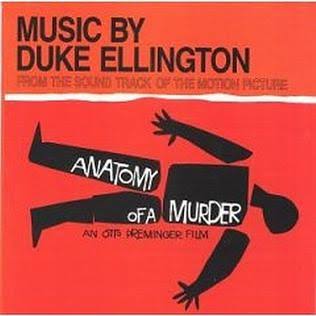
It was precisely within this climate of artistic rebellion, in the spring of 1959, that director Otto Preminger made a revolutionary executive decision for his landmark courtroom drama, Anatomy of a Murder. Rather than hiring a standard Hollywood studio composer, Preminger commissioned Duke Ellington and his long-time creative alter-ego Billy Strayhorn to write an entirely original jazz score. It was an extraordinary, historic creative threshold—the very first time a Black composer was hired to write a major, non-musical Hollywood film score. Recorded across several high-octane sessions in Los Angeles, the resulting soundtrack did not merely decorate the film’s background; it operated as a living, breathing character, establishing an untouchable, reference-grade audiophile monument for big-band brass bite, deep room ambiance, and visceral dynamic scale.
The Concept of the Masterwork: The Ellington Ensemble as a Cinematic Lens
The core conceptual architecture of the Anatomy of a Murder score represents a total rejection of the standard Hollywood “Mickey-Mousing” technique—the habit of matching musical accents directly to physical actions on screen. Ellington and Strayhorn approached the film as a vast, multi-layered canvas, developing a complex series of character motifs that utilized the highly specialized, individual instrumental voices within the legendary Duke Ellington Orchestra. They understood that jazz, with its innate tension between composed structure and improvisational freedom, was the perfect psychological language to mirror the shifting, unreliable testimonies of a brutal murder trial.
Rather than delivering a monolithic orchestral sound, the compositions are broken down into sharp, specific instrumental colors.
To evoke the seductive, elusive nature of the film’s female protagonist, Laura Manion, Ellington constructed a sultry, blues-soaked theme carried entirely by the deep, woody purr of a solo flute and muted brass.
For the intense, rapid-fire legal battles inside the courtroom, the score erupts into complex, polyrhythmic brass explosions powered by the volcanic trumpet work of Cat Anderson and the unmatched, driving rhythmic clockwork of drummer Sam Woodyard. The music does not manipulate the audience’s emotions; instead, it provides a smoky, sophisticated, and deeply authentic urban atmosphere that challenges the viewer to decode the moral truths of the narrative for themselves.
Buy Amazon
The Anatomy of the Soundstage: A Sensorial Excursion Through Smoldering Reeds, Room Bloom, and Massive Brass Slams
To experience an original 1959 Columbia “Six-Eye” stereophonic pressing—or a masterfully executed, modern AAA audiophile vinyl reissue cut directly from the original three-track analog master tapes—is to witness a mind-boggling demonstration of mid-century soundstage depth, instrumental separation, and uncompressed transient authority. Engineered inside Columbia’s state-of-the-art Hollywood studio facilities using world-class Telefunken and Neumann vacuum-tube condenser microphones, the mix places the entire big band in a massive, hyper-realistic semi-circle that stretches far beyond the physical placement of your speakers. Side A opens with the explosive, swaggering “Main Title”. The track materializes with a low, threatening groove from Jimmy Woode’s upright acoustic bass, its low-frequency notes carrying an immense, tactile weight that resonates deep in your chest.
Suddenly, the legendary sax section enters, led by the heavy, rich, and unmistakably smoky tone of Johnny Hodges on alto and Paul Gonsalves on tenor.
The physical realism of the reeds is jaw-dropping; you can hear the natural vibration of the wooden reeds against the mouthpieces, entirely free of modern digital compression or artificial filtering.
As the track mounts to its climax, the full Ellington brass section delivers a series of massive, high-velocity hits that serve as the ultimate test for modern high-end system headroom. The trumpets slice through the air with a blinding, metallic “bite” that captures the raw, kinetic energy of the room, while the natural acoustic bloom of the studio space allows the notes to decay with absolute phase correctness.
On the intimate track “Flirtibird”, the spatial isolation of individual soloists reaches a masterclass level. You can pinpoint the exact physical location of Johnny Hodges on the soundstage, tracking every subtle shift in his breath control and micro-tonal pitch bends, delivering a visceral lesson in how analog recording can transform cinematic atmosphere into pure audiophile fine art.
The Legacy and Modern Coordinates: The Eternal Intersection of Sound and Shadow
The historical, critical, and archival trajectory of Duke Ellington’s Anatomy of a Murder stands today as an untouchable, globally canonized milestone that permanently altered the relationship between jazz and the silver screen. The album swept the 1959 Grammy Awards, taking home three trophies including Best Sound Track Album, and paved the way for other iconic, jazz-infused cinematic masterpieces like Miles Davis’s Ascenseur pour l’échafaud and Henry Mancini’s Touch of Evil. It provided definitive, historical proof that jazz was not merely a subculture or background lounge music, but a highly sophisticated, deeply intellectual art form capable of handling the complex narrative demands of high-art cinema.
Our map looks directly back to this 1959 Hollywood document as an essential, foundational textbook for the art of cinematic atmosphere, big-band arranging, and acoustic space management. From contemporary film composers who utilize minimalist jazz motifs to convey psychological tension to the high-end audiophiles who use the demanding, uncompressed transients of Ellington’s horn sections to evaluate the speed, transient attack, and soundstage imaging of premium audio components, everyone operates directly within the trade routes mapped out by Duke and Strayhorn. Duke Ellington carved a permanent, brilliantly glowing coordinate of celluloid, brass, and deep cinematic shadow on our map: an eternal vanguard outpost that stands as an immortal monument to the infinite triumph of the syncopated musical soul.