
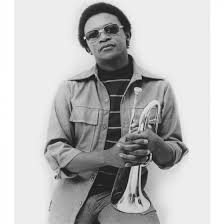
When a Trumpet Became a Voice for Freedom
Throughout the history of jazz, certain musicians have transcended the boundaries of music itself. Louis Armstrong reshaped the language of improvisation while becoming one of the twentieth century’s most recognizable cultural ambassadors. Charles Mingus transformed composition into social commentary. Nina Simone turned the concert stage into a platform for civil rights. Hugh Masekela belongs naturally within this remarkable lineage. Although celebrated as one of the finest trumpeters ever to emerge from Africa, his greatest achievement was far larger than instrumental mastery. He transformed jazz into an international language of memory, resistance and hope, carrying the sound of South Africa across the world during one of the darkest chapters in his country’s history.
For many listeners, Masekela’s name immediately evokes the joyful optimism of “Grazing in the Grass,” the instrumental hit that unexpectedly reached the top of the American charts in 1968. Others remember the emotionally powerful anthem “Bring Him Back Home,” whose call for Nelson Mandela’s freedom became inseparable from the global struggle against apartheid. Both recordings reveal important aspects of his artistry, yet neither fully captures its extraordinary breadth. Across six decades, Masekela refused to separate music from lived experience. Every performance carried traces of the townships where he grew up, the political exile that shaped his adulthood, the jazz clubs of New York, the rhythms of West Africa and the enduring belief that culture could challenge oppression more powerfully than violence.
His music therefore occupies a unique position within jazz history.
It swings with unmistakable joy.
It dances with irresistible energy.
Yet beneath that vitality lies profound historical memory.
Every trumpet phrase carries echoes of home.
Every rhythm preserves stories that political systems attempted to erase.
Understanding Hugh Masekela means understanding how jazz became one of the most important cultural expressions of modern Africa.
Growing Up in Witbank
Hugh Ramapolo Masekela was born on April 4, 1939, in Witbank, a mining town east of Johannesburg. South Africa at the time was already marked by deep racial inequality, although the formal system of apartheid would not be fully institutionalized until 1948.
Music surrounded his childhood.
Church choirs.
Traditional African songs.
Street performances.
Popular dance bands.
American jazz recordings arriving through radio broadcasts.
These diverse influences formed the earliest layers of his musical imagination.
Unlike many future jazz musicians who began through formal conservatory training, Masekela’s first education came from community life itself.
Music belonged to celebrations.
Religious gatherings.
Political meetings.
Everyday survival.
This intimate relationship between music and society would remain central throughout his career.
Trevor Huddleston and the First Trumpet
One of the decisive moments in Hugh Masekela’s life occurred through an unexpected friendship.
Father Trevor Huddleston, an Anglican priest deeply committed to opposing racial injustice, recognized the young Masekela’s curiosity and determination.
Inspired after seeing the film Young Man with a Horn, Masekela dreamed of playing the trumpet.
Huddleston made that dream possible.
He obtained Masekela’s first instrument and arranged lessons through respected musicians connected to Johannesburg’s growing jazz community.
The gesture changed history.
A simple act of encouragement became the beginning of one of Africa’s most extraordinary musical careers.
Years later, Masekela frequently acknowledged Huddleston’s importance.
Not simply because he had given him a trumpet.
Because he had offered belief.
Sometimes the future of an entire musical tradition begins with one person recognizing another’s potential.
Johannesburg and the Birth of South African Jazz
During the 1950s, Johannesburg emerged as one of Africa’s most vibrant musical centers.
American swing and bebop mixed naturally with local traditions.
Dance orchestras flourished.
Township musicians developed increasingly distinctive styles.
Jazz became both entertainment and subtle resistance.
Within this creative environment, Masekela joined the Huddleston Jazz Band, widely regarded as South Africa’s first youth jazz orchestra.
Soon afterward, he became associated with the legendary musical King Kong, a production that introduced many South African performers to international audiences.
The city’s jazz scene possessed remarkable vitality.
Yet political repression grew steadily harsher.
Apartheid increasingly shaped every aspect of daily life.
Musicians faced censorship.
Restricted movement.
Limited opportunities.
Artistic freedom itself became an act of resistance.
JazzLatitude Insight
Great musicians often inherit traditions. Hugh Masekela inherited a struggle. His trumpet became remarkable not simply because of its sound, but because it carried the hopes of people whose voices were systematically silenced.
Sharpeville and Exile
The Sharpeville Massacre of 1960, during which South African police killed dozens of peaceful demonstrators protesting apartheid laws, permanently altered Masekela’s life.
The tragedy shocked international opinion.
For many artists, it also made remaining in South Africa increasingly impossible.
With support from friends including Harry Belafonte, Masekela left his homeland.
The journey would become an exile lasting more than thirty years.
Although physically distant from South Africa, he never ceased writing about it.
Every concert.
Every recording.
Every collaboration.
Home remained present.
His music became the emotional bridge connecting exile with memory.
America: Learning from the Masters
Arriving in the United States during one of jazz’s most creative periods proved transformative.
Masekela studied at the Manhattan School of Music, refining his technical abilities while immersing himself in the extraordinary musical environment of New York.
More importantly, he encountered many of the musicians he had admired from afar.
Louis Armstrong encouraged him.
Dizzy Gillespie became an inspiration.
Miles Davis, John Coltrane and countless others expanded his understanding of modern jazz.
Yet Masekela never attempted to become an American trumpeter.
He listened carefully.
Learned deeply.
Then returned constantly to the rhythms and melodies of southern Africa.
This balance between international openness and cultural rootedness would become the defining characteristic of his music.
The Beginning of a Global Career
By the mid-1960s, Hugh Masekela had established himself as far more than a promising young expatriate.
He had become one of the most distinctive new voices in international jazz.
His trumpet carried unmistakable traces of Louis Armstrong’s warmth, Dizzy Gillespie’s rhythmic imagination and African musical traditions that few Western audiences had previously encountered.
The world was about to discover that jazz possessed another great geographical center.
Not only New Orleans.
Not only New York.
But Johannesburg.
Buy Amazon

Turning Exile Into a Global Musical Language
Exile has shaped the lives of many great jazz musicians, but rarely in the same way it shaped Hugh Masekela. Unlike artists who left home primarily in search of greater creative opportunity, Masekela departed South Africa because returning had become politically impossible. His homeland remained present in every performance, not as nostalgic memory but as unfinished reality. The distance deepened rather than weakened his relationship with African music. Instead of assimilating completely into the American jazz tradition, he gradually built a new artistic language in which township rhythms, modern jazz, soul, funk and African popular music existed as equal partners.
This transformation distinguished Masekela from nearly every other trumpeter of his generation.
He admired American jazz.
He mastered its vocabulary.
Yet his greatest ambition was never to reproduce it.
He wanted listeners to hear Africa speaking through jazz.
That vision would soon reshape the international perception of African music itself.
Finding His Own Sound
During the 1960s, Masekela recorded a remarkable series of albums revealing an artist constantly searching for new possibilities.
Rather than choosing between straight-ahead jazz and popular music, he embraced both.
Soul grooves.
Hard bop.
African melodies.
Latin rhythms.
Contemporary pop production.
His recordings refused stylistic boundaries.
Some critics initially viewed this eclecticism with uncertainty.
History has judged it differently.
Masekela anticipated the increasingly global direction jazz would take decades later.
His music demonstrated that authenticity did not require stylistic purity.
It required cultural honesty.
JazzLatitude Insight
Hugh Masekela never treated African music as something to be added to jazz. For him, African music was already part of jazz’s deepest history. His career simply restored a conversation that had existed since the music’s earliest beginnings.
Grazing in the Grass: The Instrumental That Conquered the World
In 1968, Hugh Masekela achieved something almost unimaginable for a jazz musician.
His instrumental recording “Grazing in the Grass” reached number one on the Billboard Hot 100, becoming one of the biggest international hits of the decade.
The recording radiates optimism.
Bright trumpet melodies.
Irresistible rhythm.
Effortless joy.
Its infectious energy introduced millions of listeners to Masekela’s music, many without realizing they were hearing an African jazz musician.
Commercial success, however, never altered his artistic priorities.
Rather than remaining within the comfortable world of crossover popularity, Masekela used his growing visibility to draw international attention to South Africa’s political reality.
His greatest hit became a doorway leading audiences toward much deeper stories.
Few musicians have transformed commercial success into cultural advocacy with comparable effectiveness.
Miriam Makeba and a Shared Exile
No discussion of Hugh Masekela’s career can ignore his profound connection with Miriam Makeba.
Their marriage during the 1960s represented more than a personal relationship.
Together, they became two of the world’s most visible South African cultural ambassadors.
Both lived in exile.
Both introduced African music to international audiences.
Both transformed concerts into spaces where artistic excellence and political consciousness naturally coexisted.
Although their marriage eventually ended, mutual respect endured.
Their parallel careers helped ensure that South African music remained visible throughout decades when the apartheid government attempted to isolate the country’s artists from the wider world.
Township Jazz
One of Hugh Masekela’s most enduring achievements was his role in bringing township jazz to international attention.
Emerging from Black urban communities around Johannesburg, township jazz blended American swing, bebop, marabi, kwela and local dance traditions into a vibrant new musical language.
The music possessed remarkable vitality.
It invited dancing.
Celebration.
Collective participation.
Yet beneath that joy lay the everyday realities of apartheid.
Economic hardship.
Segregation.
Resilience.
Masekela understood that these rhythms represented far more than entertainment.
They preserved community memory.
Every groove carried history.
Every melody reflected survival.
Throughout his career, township jazz remained one of the emotional foundations of his music.
Beyond Jazz: Afro-Pop and Global Music
As the 1970s progressed, Masekela’s artistic vision expanded even further.
He embraced funk.
Soul.
Afro-pop.
Traditional African rhythms.
Popular song.
The resulting recordings often defied easy classification.
Some jazz purists questioned these stylistic explorations.
Younger audiences embraced them enthusiastically.
Looking back, Masekela appears remarkably ahead of his time.
Long before the phrase “world music” entered international marketing vocabulary, he had already demonstrated that meaningful cultural exchange could occur without sacrificing artistic integrity.
His recordings suggested that jazz did not exist at the center of global music.
It existed within it.
West Africa and New Perspectives
During years spent across Africa, particularly in Guinea, Ghana and Nigeria, Masekela deepened his understanding of the continent’s extraordinary musical diversity.
These experiences profoundly influenced his compositions.
Rather than viewing Africa through the lens of exile alone, he encountered living traditions that broadened his artistic imagination.
His friendship with Fela Kuti proved especially significant.
Both musicians believed African music possessed immense political and cultural power.
Both challenged oppressive systems.
Both insisted that popular music could become serious historical testimony without losing its capacity for celebration.
Although their musical languages differed considerably, they shared a common conviction.
Art mattered because people mattered.
Paul Simon and Graceland
Hugh Masekela’s international visibility increased once again through his association with Paul Simon during the celebrated Graceland era.
Although the project generated significant political debate concerning cultural boycotts of apartheid South Africa, it also introduced many international listeners to South African musicians whose extraordinary artistry had long remained underrecognized.
Masekela’s participation reinforced his role as one of the leading ambassadors of African music.
Unlike artists who sought international careers by distancing themselves from local traditions, he consistently brought South Africa with him.
Every collaboration expanded awareness not only of his own work but of an entire musical culture.
Music as Political Memory
Perhaps no aspect of Hugh Masekela’s career distinguishes him more clearly than his refusal to separate artistic beauty from historical responsibility.
Many protest songs become dated once political circumstances change.
Masekela’s greatest works endure because they never reduce history to slogans.
Instead, they preserve emotional memory.
Loss.
Hope.
Celebration.
Longing.
Community.
These themes remain timeless.
His music reminds listeners that freedom is not merely a political condition.
It is also a cultural one.
Essential Albums
For listeners discovering Hugh Masekela for the first time, these recordings provide the ideal introduction to one of the most important careers in African and international jazz.
- The Americanization of Ooga Booga (1966) — A fascinating early statement introducing Masekela’s blend of jazz and African musical identity.
- The Promise of a Future (1968) — Featuring the immortal “Grazing in the Grass,” the album that brought his music to global audiences.
- Home Is Where the Music Is (1972) — One of his artistic masterpieces, balancing jazz sophistication with deep African roots.
- Hope (1994) — A magnificent live recording capturing the emotional power of Masekela’s mature performances following the end of apartheid.
- Playing @ Work (2012) — A vibrant late-career album demonstrating that his creativity remained undiminished decades after his international breakthrough.
Together, these recordings reveal an artist whose music continually evolved while remaining profoundly connected to the rhythms, melodies and histories of Africa.
The Sound of a Nation That Refused to Be Silenced
Few jazz musicians have carried the emotional weight of an entire nation as completely as Hugh Masekela. His trumpet did far more than interpret melodies. It became a vessel for collective memory, preserving the voices of communities separated by apartheid, exile and political violence while reminding international audiences that South Africa’s struggle could never be reduced to newspaper headlines. Throughout six decades of extraordinary artistic activity, Masekela proved that music possesses a unique ability to cross borders that politics often cannot.
His performances rarely felt like political speeches.
They felt like celebrations.
The rhythms invited dancing.
The melodies radiated warmth.
The humor remained unmistakably African.
Yet beneath that irresistible vitality lay profound historical awareness.
Listeners were not merely entertained.
They were asked to remember.
This remarkable balance explains why Masekela’s music continues speaking powerfully to audiences who know little about apartheid itself.
Great art survives because it reaches emotions before it reaches ideology.
Bringing Africa Back to Jazz
Jazz was born from the African diaspora, yet for much of the twentieth century many listeners overlooked the continuing dialogue between African musicians and the music that had emerged across the Atlantic. Hugh Masekela helped restore that historical conversation.
Rather than treating African rhythms as exotic additions to modern jazz, he reminded audiences that they belonged to the music’s deepest foundations.
His work suggested that African jazz was not a regional variation.
It was part of jazz’s original story.
This perspective profoundly influenced later generations of musicians across the continent.
Artists increasingly felt free to explore local languages, indigenous rhythms and traditional instruments without questioning whether such choices remained “authentically” jazz.
Masekela had already answered that question through his own career.
Authenticity grows from truth.
Not geography.
JazzLatitude Insight
Hugh Masekela understood something essential about jazz: the music has always traveled, adapted and absorbed new voices without forgetting where it came from. His career reminds us that honoring tradition sometimes means allowing it to return home.
The Return Home
With the release of Nelson Mandela in 1990 and the gradual dismantling of apartheid, Hugh Masekela finally returned to South Africa after more than three decades in exile.
The return represented far more than the conclusion of a personal journey.
It marked the reunion of an artist with the country whose memory had sustained his music for thirty years.
The South Africa he encountered had changed dramatically.
New generations had grown up knowing him largely through recordings.
Young musicians regarded him as a national hero.
Audiences welcomed him not only as an internationally acclaimed jazz artist but as one of the cultural figures who had kept South Africa visible during years of isolation.
Rather than resting upon past achievements, Masekela immediately resumed performing, recording, mentoring and supporting emerging artists.
His work entered a remarkable new chapter.
Bring Him Back Home
Among Hugh Masekela’s many compositions, “Bring Him Back Home (Nelson Mandela)” occupies a unique place in modern musical history.
Written while Mandela remained imprisoned, the song became one of the international anti-apartheid movement’s most recognizable anthems.
Its power lay not in anger.
But in hope.
The lyrics imagined Mandela walking freely through the streets of South Africa.
Celebration replaced despair.
The future became audible long before it became reality.
When Mandela was finally released, the song acquired extraordinary symbolic significance.
Few compositions have anticipated history with such emotional clarity.
Even today, it remains one of the defining musical documents of the global struggle for justice.
Mentor, Storyteller and Cultural Historian
During the final decades of his life, Masekela increasingly embraced another important role.
He became one of Africa’s great musical historians.
Through interviews, lectures, autobiographical writings and public conversations, he documented the extraordinary journey of South African jazz from township dance halls to international concert stages.
Young musicians valued his generosity.
Researchers valued his memory.
Audiences valued his storytelling.
Whether discussing Louis Armstrong, Fela Kuti, Miriam Makeba or anonymous township musicians whose names rarely appeared in history books, Masekela understood that preserving musical memory represented another form of artistic responsibility.
His legacy therefore extends beyond recordings.
He also preserved the stories surrounding them.
Influence Across Continents
Hugh Masekela’s impact reaches far beyond South Africa.
Across Africa, musicians such as Mulatu Astatke, Manu Dibango, Richard Bona and countless younger artists have continued exploring relationships between indigenous traditions and modern improvisation.
In Europe and North America, jazz musicians increasingly recognize African rhythmic concepts as living creative resources rather than historical references.
Popular musicians have sampled his recordings.
Film composers have drawn inspiration from his melodic language.
Festival audiences continue discovering his work through new generations of performers.
Few artists have shaped such diverse musical communities while remaining so unmistakably themselves.
Essential Collaborations and Artistic Connections
Throughout his remarkable career, Hugh Masekela built artistic relationships that reflected both the global reach of jazz and the cultural richness of Africa.
Among the most significant are:
- Miriam Makeba — More than musical collaborators, they became two of the most influential cultural ambassadors South Africa has ever produced, introducing African music to international audiences during decades of political exile.
- Harry Belafonte — His support helped Masekela establish himself in the United States, opening educational and professional opportunities that profoundly shaped the trumpeter’s career.
- Dizzy Gillespie and Louis Armstrong — Both encouraged the young Masekela, whose trumpet playing absorbed elements of their warmth, rhythmic vitality and expressive freedom while developing an unmistakably African voice.
- Fela Kuti — Although their musical languages differed, both artists believed music could become a powerful instrument of political consciousness, cultural pride and social transformation.
- Paul Simon — Their association during the Graceland era helped introduce South African musicians to wider international audiences while stimulating important discussions about cultural exchange and artistic responsibility.
Together, these collaborations reveal an artist who viewed music not as individual achievement but as an ongoing conversation across continents.
Technical Profile
Born:
- April 4, 1939
Died:
- January 23, 2018
Birthplace:
- Witbank (now Emalahleni), South Africa
Primary Instruments:
- Trumpet
- Flugelhorn
- Vocals
Professional Roles:
- Trumpeter
- Composer
- Singer
- Bandleader
- Activist
- Cultural Ambassador
Primary Styles:
- South African Jazz
- Township Jazz
- Afro-Jazz
- Afro-Pop
- Hard Bop
- World Jazz
Musical Characteristics:
- Bright, lyrical trumpet tone
- African rhythmic foundations
- Jazz improvisation rooted in township traditions
- Soulful melodic writing
- Political storytelling through music
- Seamless integration of African and American influences
Essential Albums:
- The Americanization of Ooga Booga (1966)
- The Promise of a Future (1968)
- Home Is Where the Music Is (1972)
- Hope (1994)
- Playing @ Work (2012)
Five Lesser-Known Facts About Hugh Masekela
1. His first trumpet was a gift that changed history.
Anglican priest Trevor Huddleston recognized Masekela’s passion for music and secured his first trumpet, an act that launched one of the most influential careers in African jazz.
2. He spent more than thirty years in exile.
Forced to leave South Africa after the Sharpeville Massacre, Masekela transformed exile into a global artistic mission, keeping international attention focused on apartheid through his music.
3. “Grazing in the Grass” became one of the biggest instrumental hits ever recorded.
The joyful 1968 single reached No. 1 on the Billboard Hot 100, introducing millions of listeners to an African jazz musician at an unprecedented level.
4. He believed African music should never be separated from jazz history.
Throughout his career, Masekela argued that jazz’s African roots remained living traditions, not distant historical references.
5. His influence reached far beyond music.
As an activist, educator, storyteller and cultural ambassador, Masekela helped preserve South African history while inspiring generations of artists across Africa and around the world.
Frequently Asked Questions
Who was Hugh Masekela?
Hugh Masekela was a South African trumpeter, composer, singer and activist widely regarded as one of the most influential figures in African jazz. His music combined township rhythms, jazz improvisation and political consciousness into one of the twentieth century’s most distinctive artistic voices.
Why is Hugh Masekela important?
Beyond his achievements as a trumpeter, Masekela became an international symbol of South Africa’s cultural resistance to apartheid, helping introduce African jazz to global audiences while inspiring generations of musicians.
What is Hugh Masekela’s most famous song?
His best-known recording is “Grazing in the Grass,” the 1968 instrumental hit that reached No. 1 on the Billboard Hot 100. He is also celebrated for “Bring Him Back Home (Nelson Mandela),” one of the defining musical anthems of the anti-apartheid movement.
What style of jazz did Hugh Masekela play?
His music blended township jazz, Afro-jazz, hard bop, soul, funk and traditional South African rhythms into a unique style that profoundly influenced modern African music.
Which artists are similar to Hugh Masekela?
Listeners who appreciate Hugh Masekela often explore Abdullah Ibrahim, Mulatu Astatke, Fela Kuti, Manu Dibango, Randy Weston, Miriam Makeba, Richard Bona, Pharoah Sanders, Charles Lloyd and Louis Armstrong, all of whom demonstrate different connections between jazz, African musical traditions and cultural storytelling.
JazzLatitude Rating
| Category | Rating |
|---|---|
| Historical Importance | ★★★★★ |
| Trumpet Performance | ★★★★★ |
| Compositional Originality | ★★★★★ |
| Cultural Impact | ★★★★★ |
| Influence on African Jazz | ★★★★★ |
| Political and Social Legacy | ★★★★★ |
| Replay Value | ★★★★★ |
| Global Influence | ★★★★★ |
| JazzLatitude Essential | ★★★★★ |
Final Thoughts
Hugh Masekela’s life reminds us that jazz has never been merely a musical genre. At its greatest moments, it becomes a language through which communities remember, resist and imagine a better future. Few artists embodied that possibility more completely than the South African trumpeter whose career united extraordinary musicianship with unwavering moral purpose.
What makes Masekela’s legacy so enduring is the remarkable balance he achieved between celebration and struggle. His music never allowed political commitment to extinguish joy, nor did its infectious rhythms distract from the realities of apartheid. Instead, he demonstrated that hope itself could become a powerful form of resistance. Every trumpet solo carried echoes of township streets, every melody preserved memories of home, and every concert reminded international audiences that culture could challenge injustice in ways politics alone often could not.
His influence extends far beyond South Africa. By reconnecting jazz with the living musical traditions of the African continent, Masekela helped reshape global understanding of the music’s origins and future. He encouraged countless artists to embrace their own cultural identities without abandoning jazz’s improvisational spirit, proving that the genre grows stronger each time it welcomes another authentic voice into the conversation.
Today, his recordings remain as vibrant as ever. Grazing in the Grass still radiates optimism. Home Is Where the Music Is continues to reveal new layers of artistic depth. Hope captures the emotional power of a musician finally returning to the country that had inspired every note he played in exile. Together, these works document not only an extraordinary career but one of the most compelling stories in modern music.
For anyone seeking to understand the history of African jazz, the cultural struggle against apartheid or the universal power of music to unite people across borders, Hugh Masekela is far more than a legendary trumpeter.
He is one of the great moral and musical voices of the twentieth century—and one of the indispensable architects of jazz as a truly global art form.