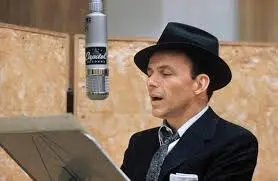
If Duke Ellington treated the orchestra as his instrument, Frank Sinatra did the same with his own voice and, crucially, the microphone. Sinatra was not merely a singer with natural gifts; he was the first great master of recording technology, understanding that the microphone allowed for a whispered intimacy that grand concert halls had previously made impossible. His approach, deeply influenced by the breath control of trombonists (notably Tommy Dorsey) and the phrasing of Billie Holiday, allowed him to sing long, effortless lines, bending time and meter to serve the emotional weight of the lyrics.
Throughout his career, Sinatra evolved from the ‘crooner’ causing swoons in the 1940s to the existential interpreter of the 50s and 60s. Collaborating with brilliant arrangers like Nelson Riddle and Billy May, he created history’s first ‘concept albums,’ such as the melancholic In the Wee Small Hours. To Sinatra, jazz wasn’t just swing; it was the art of interpreting the ‘Great American Songbook’ with perfect diction and a dramatic sensibility that elevated popular songs to the status of theatrical soliloquies.
At Jazz Latitude, Frank Sinatra is celebrated as the link between popular music and jazz sophistication. He proved that an interpreter can be as much an author as a composer, imprinting an identity so strong that it becomes impossible to hear certain songs without evoking his presence. From smoky casinos to crowded stadiums, ‘Old Blue Eyes’ remained the gold standard of elegance, technique, and vocal storytelling