
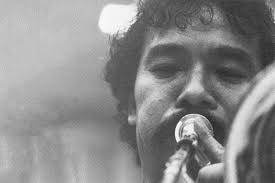
The Trombonist Behind a Japanese Jazz Cult Classic
Some jazz records become famous immediately. Others disappear into catalogs, circulate quietly among collectors and only much later find the audience that seems to have been waiting for them all along. Hiroshi Suzuki’s Cat belongs unmistakably to the second category. Recorded in Tokyo in October 1975 and released by Nippon Columbia in February 1976, the album eventually became one of the Japanese jazz records most frequently encountered in contemporary collector culture. Its striking cover, warm electric piano, deep rhythm section and Suzuki’s unusually relaxed trombone have traveled far beyond the circumstances that produced them. Yet the modern reputation of Cat can distort the story. Hiroshi Suzuki was not an obscure musician who suddenly appeared in a studio, made one miraculous album and disappeared. By the time Cat was recorded, he had already spent years inside Japanese big bands and modern-jazz circles, participated in the group Freedom Unity and moved to the United States, where Las Vegas exposed him to another professional musical environment. The album that now seems so effortlessly cool was the product of experience, reunion and a very particular moment in Japanese jazz.
The trombone itself makes Suzuki’s story especially interesting. In small-group jazz, the instrument has always occupied a complicated position. Its physical character can produce extraordinary warmth and weight, but its slide demands a different kind of articulation from trumpet or saxophone. Great trombonists learned to turn those limitations into identity: J.J. Johnson demonstrated extraordinary modern-jazz fluency, while players across swing, bop and later styles developed radically different approaches to phrasing. Suzuki’s playing on Cat belongs to none of those traditions through imitation. What makes the record compelling is how naturally the trombone settles into music driven by electric piano, bass and drums. Instead of sounding heavy, it floats. Instead of fighting the groove, it bends around it. The result is an album in which the trombone feels less like an unusual lead instrument than the only instrument that could have occupied that particular space.
Before Cat: Hiroshi Suzuki in Japanese Jazz
Hiroshi Suzuki was born in 1933 and developed his career through the Japanese professional music scene long before Cat. Nippon Columbia’s J-DIGS archive documents work with ensembles including Tadaaki Misago & His Tokyo Cuban Boys, Toshiyuki Miyama & His New Herd, and Nobuo Hara and His Sharps & Flats—major professional settings that required versatility, reading ability and ensemble discipline. The same source describes Suzuki as an unusually prominent trombonist within Japanese jazz and identifies three albums under his name: Variation with Masahiko Togashi, Jump on the Beat with Hiroshi Suzuki and the Happy Cats, and Cat.
That history is important because today’s international audience frequently encounters Suzuki backward. Cat appears first—perhaps through a recommendation, streaming algorithm, reissue, record-store bin or online discussion—and the musician is reconstructed from the album. But Suzuki belonged to a Japanese jazz culture that had already been developing for decades. After the Second World War, American jazz became enormously influential in Japan, initially through clubs, broadcasts, records and the presence of American servicemen. Japanese musicians absorbed swing, bebop, hard bop and later modal and free-jazz languages with remarkable intensity. By the 1960s and early 1970s, however, the most interesting question was no longer whether Japanese players could master American jazz vocabulary. Increasingly, musicians were determining what they wanted to do with that vocabulary once mastery had been achieved.
Suzuki’s career crossed that transition. Big-band professionalism gave him one kind of discipline; smaller modern-jazz contexts offered another. He belonged to a generation capable of operating inside established jazz forms while gradually participating in a scene that was becoming stylistically more independent. By the time Japanese jazz entered its remarkable 1970s period, musicians could move among hard bop, free jazz, fusion, funk, electric instrumentation and highly individual compositional approaches without assuming that one language had to replace all the others.
Freedom Unity and a Crucial Network
One of the most important pieces of Suzuki’s pre-Cat history is Freedom Unity. Nippon Columbia’s own description of Cat explicitly identifies the 1975 session as a reunion of musicians associated with the group. When Suzuki temporarily returned to Japan after relocating to the United States, he gathered Akira Ishikawa, Takeru Muraoka, Hiromasa Suzuki and Kunimitsu Inaba—musicians with whom he already shared history.
This changes how the album should be heard. Cat was not created by five musicians cautiously discovering one another in a studio. The interaction rested on familiarity. Each player had developed further, but a foundation already existed. That helps explain one of the album’s most remarkable qualities: the performances sound relaxed without sounding casual. Nobody appears desperate to establish authority. Suzuki does not overwhelm the arrangements with trombone. Takeru Muraoka’s saxophone can occupy substantial space without turning the record into a battle between horns. Hiromasa Suzuki’s keyboards often shape the harmonic atmosphere rather than demanding constant attention. Kunimitsu Inaba and Akira Ishikawa make groove feel structural rather than decorative.
The personnel also connects Cat with a much wider map of Japanese jazz. These were not anonymous session musicians assembled around a leader. Akira Ishikawa became a significant figure across Japanese jazz, funk and fusion. Hiromasa Suzuki developed an extensive career as a keyboardist, composer and arranger. Kunimitsu Inaba became one of Japan’s respected bassists, while Takeru Muraoka established a substantial saxophone career. The chemistry on Cat therefore came from a concentration of musicians who already possessed strong identities. Official release documentation confirms the same five-man lineup throughout the album.
Las Vegas and the Distance From Home
Suzuki’s decision to move to the United States added another layer to that development. Nippon Columbia states that he relocated to Las Vegas in March 1971, where he became acquainted with prominent trombonist Carl Fontana and worked as both player and arranger. Some later reissue descriptions also associate his American period with Buddy Rich, although the surviving documentation around the precise nature of that connection is less consistent than the evidence for Suzuki’s Las Vegas residence. For that reason, the American chapter is better understood through what can be stated securely: Suzuki left Japan, spent several years working in the United States and returned temporarily in 1975 as a musician whose experience had broadened.
Distance can alter musical identity in unexpected ways. A musician who leaves home encounters another professional culture, but he also begins hearing his original environment from outside it. Suzuki’s temporary return therefore created more than a logistical opportunity to make a record. It reunited a player who had changed with musicians who had also continued developing inside Japan. Nippon Columbia’s description emphasizes precisely this point: the players reconvened after each had accumulated further experience.
This helps prevent another simplistic reading of Cat. The album is sometimes presented internationally as a pure expression of “Japanese jazz,” as though nationality alone explains its character. But the record emerged from circulation. American jazz had influenced Japan; Suzuki then lived and worked in the United States; he returned to Tokyo and reconnected with Japanese musicians whose own careers were changing. The result was neither an imitation of American jazz nor a sealed national style. It was music produced through exchange.
Tokyo, October 1975
The factual circumstances of the recording are unusually well documented. Cat was recorded at Nippon Columbia’s Studio No. 1 in Tokyo from October 8 to 10, 1975. The original Japanese release followed on February 25, 1976, catalog number SP-7006. The personnel was Hiroshi Suzuki on trombone, Takeru Muraoka on saxophone, Hiromasa Suzuki on keyboards, Kunimitsu Inaba on bass and Akira Ishikawa on drums.
Five tracks made up the album: “Shrimp Dance,” “Kuro to Shiro,” “Walk Tall,” “Cat,” and “Romance.” The compact track list matters. There is no attempt to overwhelm the listener with material. Instead, the album feels almost perfectly scaled for the ensemble. Several pieces have enough duration for the musicians to establish a groove, move through solos and return without sounding hurried.
The writing was also shared. Suzuki composed “Shrimp Dance” and “Kuro to Shiro”; Takeru Muraoka wrote the title track, while Hiromasa Suzuki composed “Romance.” That alone complicates the idea of Cat as simply a trombonist’s showcase. The album’s identity is collective. Hiroshi Suzuki is unquestionably the central voice, but the record works because the ensemble is allowed to define much of its character.
“Shrimp Dance”: The Record Begins in Motion
“Shrimp Dance” opens the album by immediately establishing the relationship between groove and improvisation that will define much of what follows. The rhythm section does not treat funk as an accessory placed beneath jazz soloing. The pulse is part of the composition’s identity. Akira Ishikawa’s drumming gives the track forward motion without making it rigid, while Inaba’s bass provides weight and Hiromasa Suzuki’s electric keyboard fills the middle register with color.
Then comes the trombone.
What is striking is not aggression but confidence. Hiroshi Suzuki’s tone has body, yet he rarely sounds as though he is forcing the instrument through the ensemble. His phrases can sit behind the beat, stretch across the rhythm and then accelerate without destroying the relaxed character of the performance. The trombone becomes almost vocal—not because it imitates a singer literally, but because Suzuki allows phrases to breathe and bend.
This is where the word groove becomes more useful than the older article’s tendency to describe every sonic detail as an audiophile achievement. The attraction of Cat is fundamentally musical. The instruments interact in a way that makes rhythm feel physical while preserving enough openness for improvisation. A high-end playback system may reveal recording details, but it cannot create the reason those details matter.
The musicians already did that.
“Kuro to Shiro”: Space Without Inactivity
The second track, “Kuro to Shiro,” extends the album’s language across a longer form. At more than eleven minutes, it gives the ensemble room to develop ideas gradually. The title translates approximately as “Black and White,” and the performance itself benefits from contrasts: density and openness, horn statements and rhythm-section movement, warmth and sharper edges.
Here the relationship between Hiroshi Suzuki and Takeru Muraoka becomes especially important. Trombone and saxophone occupy very different physical registers and articulations, and the arrangement allows those differences to remain audible rather than blending the horns into a generic front line. Muraoka can bring a more penetrating edge while Suzuki retains the rounded, elastic character of the trombone. The conversation works because neither musician needs to prove dominance.
Hiromasa Suzuki’s electric piano is equally important. Across Cat, the keyboard frequently provides the element that makes the album sound unmistakably mid-1970s without trapping it there. The Rhodes-like warmth connects the horns to the rhythm section, smoothing transitions while also giving the music a subtle soul-jazz character. Yet the keyboards rarely become excessive. Texture is present without becoming decoration.
Why the Rhythm Section Matters So Much
Modern discussions of Cat understandably focus on Hiroshi Suzuki, but the album’s durability depends heavily on Kunimitsu Inaba and Akira Ishikawa. Inaba’s bass provides the music with a center of gravity. Ishikawa’s drums supply precision without sterilizing the performances. Together they make the music groove deeply enough to attract listeners who may have little initial interest in trombone-led jazz.
That last point would become enormously important decades later.
Jazz collectors frequently rediscover recordings through different criteria from those that shaped their original reception. A trombone enthusiast might focus on Suzuki’s phrasing. A student of Japanese jazz might approach the record historically. A beatmaker may hear the drums and electric piano first. A DJ may immediately recognize how naturally certain passages inhabit a room. None of those listening modes cancels the others.
Cat survives because it supports all of them.
“Walk Tall” and the Soul-Jazz Connection
The third track, “Walk Tall,” pushes the album closer to the language of soul jazz. The title itself carries associations with a broader jazz-funk vocabulary, but what matters is how comfortably the group handles the shift. There is no sense of musicians abandoning “serious jazz” to play something more accessible. Groove and improvisation belong to the same continuum.
This is one reason Cat fits so naturally within the wider Japanese jazz landscape of the 1970s. Artists were absorbing the electric changes that had transformed American jazz after Miles Davis, Herbie Hancock and others, while Japanese funk, rock and studio culture were also evolving rapidly. But the results varied enormously. Some musicians pursued aggressive fusion. Others moved toward free improvisation. Some remained close to hard bop. Others found combinations that did not fit comfortably into a single category.
Suzuki’s album occupies a particularly attractive middle ground.
It is sophisticated without advertising sophistication.
The Japanese Jazz Boom Was Never One Style
The international rediscovery of Japanese jazz has created another historical problem: albums recorded by very different musicians are frequently packaged together as though they represent a single “Japanese jazz sound.” Cat may appear beside Ryo Fukui’s Scenery, Jiro Inagaki recordings, Three Blind Mice releases or Japanese fusion albums simply because all came from roughly the same national and historical environment.
That can be useful for discovery.
It is less useful for understanding the music.
The Japanese scene contained enormous stylistic variety. Jiro Inagaki’s work could move forcefully toward jazz-rock, funk and electric experimentation. Ryo Fukui became associated with a piano-trio language rooted much more directly in modern acoustic jazz. Other musicians pursued free improvisation, big-band composition, modal jazz or highly polished fusion.
Suzuki belongs in this history precisely because Cat adds another possibility: trombone-led jazz where hard-bop knowledge, electric-piano warmth, soul-jazz accessibility and deep groove meet without one element completely controlling the others.
That combination is specific.
“Cat”: The Title Track
By the time the album reaches “Cat,” the ensemble no longer needs to explain its language. The title track, composed by Takeru Muraoka, condenses many of the record’s strengths into a more compact form. The groove is immediate, the horns have room and the electric keyboard gives the track its characteristic warmth.
The title also became inseparable from Suzuki himself. Reissue material refers to him by the nickname “Neko” — Cat. That connection helped give the record an identity unusually easy to remember. Artist, nickname, album title and visual presentation became linked.
But the music remains the reason the identity lasted.
The track does not depend on novelty. It depends on balance. Nothing is radically new in isolation: trombone, saxophone, electric piano, bass and drums were hardly unprecedented in 1975. What matters is the proportion. The arrangements leave exactly enough room for the trombone’s warmth, the saxophone’s sharper profile and the rhythm section’s pocket to remain distinct.
“Romance” and Another Side of the Ensemble
The closing “Romance,” composed by Hiromasa Suzuki, reveals another side of the group. After the rhythmic confidence of the preceding material, the album can afford to become more lyrical. This matters because Cat would be less interesting if every track simply reproduced the same deep groove.
Hiroshi Suzuki’s trombone is particularly suited to this change in temperature. The same physical qualities that give the instrument weight in funkier passages allow it to sound unusually intimate when the tempo and arrangement open up. His phrasing avoids excessive sentimentality. The melody is allowed to breathe.
The album therefore closes by reminding us that groove is only one part of its identity.
Warmth may be the more useful word.
An Album Waiting for Another Generation
When Cat appeared in 1976, it did not immediately become the international emblem of Japanese jazz that later listeners sometimes imagine. Its present status was constructed gradually through reissues, collectors, record dealers, DJs and eventually internet-era discovery. Nippon Columbia remastered the album in 2014, and later international reissues—including the edition from We Release Jazz—introduced it to audiences far removed from its original Japanese market. The reissue label explicitly notes the album’s subsequent popularity among jazz collectors, music diggers and lo-fi listeners.
That later history raises an important question.
Why this record?
Japanese jazz contains thousands of recordings, many performed by extraordinary musicians. Why did Cat, specifically, become one of the albums capable of crossing from specialist collector culture into a much wider contemporary audience?
Part of the answer is visual.
Part is scarcity and reissue culture.
Part is the renewed international fascination with Japanese jazz.
But none of those explanations is sufficient.
The deeper answer lies in the music’s unusual ability to feel rooted in 1975 without feeling confined to it.
Buy Amazon
How Cat Escaped Its Original Moment
The modern reputation of Cat tells us almost as much about the changing ways jazz is discovered as it does about the Japanese scene of the 1970s. For years, Hiroshi Suzuki’s album belonged primarily to collectors and listeners already familiar with Japanese jazz. Today, its reach is dramatically wider. Reissues, streaming platforms, specialist record stores, online communities and the international appetite for Japanese jazz have transformed a once difficult-to-find recording into something approaching a modern cult classic. That transformation can create the illusion that Cat was always destined for canonical status, but records do not possess fixed reputations. They acquire new meanings as audiences change.
What makes Cat particularly suited to rediscovery is that listeners can approach it without knowing much about the circumstances that produced it. The album does not require familiarity with Freedom Unity, Suzuki’s years in Las Vegas or the careers of Takeru Muraoka, Hiromasa Suzuki, Kunimitsu Inaba and Akira Ishikawa to make an immediate impression. The rhythm section establishes a physical connection quickly, the electric piano creates a warm tonal environment and the trombone provides a lead voice unusual enough to distinguish the record from countless saxophone-led sessions. Historical knowledge deepens the experience, but the music works before the research begins. That accessibility is one reason Cat could travel so successfully into a completely different century.
Five Musicians, One Sound
The temptation to describe Cat as Hiroshi Suzuki’s great trombone album is understandable, but the record becomes more interesting when heard as an ensemble achievement. Suzuki’s playing supplies much of its personality, yet every musician occupies a clearly defined role. Takeru Muraoka provides a reed voice capable of contrasting with the trombone rather than merely doubling it. Hiromasa Suzuki uses electric keyboards to connect the horns with the rhythm section. Kunimitsu Inaba gives the performances low-end authority, while Akira Ishikawa supplies a rhythmic language flexible enough to move between jazz interaction and groove.
The fact that these musicians had previous history through Freedom Unity helps explain the absence of unnecessary competition. Cat does not sound like a studio date in which every soloist has been allocated a predetermined number of choruses to establish credentials. The musicians already knew how to listen to one another. The result is confidence without exhibitionism.
This quality is especially valuable in groove-oriented jazz. When every player attempts to maximize individual activity, rhythm loses weight. Groove depends partly on what musicians refuse to play. The spaces between keyboard chords, the duration of bass figures and the placement of drum accents matter as much as instrumental density. Cat repeatedly demonstrates that the ensemble understands this principle.
Hiroshi Suzuki’s Trombone
Suzuki’s approach to the trombone deserves closer attention because his sound is central to the album’s unusual character. The instrument can easily become dominant. Its lower register carries physical weight, and aggressive articulation can make it cut through an ensemble with enormous force. Suzuki often chooses another approach. His tone remains full, but his phrasing is remarkably relaxed. Notes can lean into the rhythm rather than attack it. Lines often unfold conversationally, and the slide gives certain phrases an elasticity that would sound completely different on trumpet or saxophone.
This is particularly effective against electric piano. The keyboard provides soft edges and sustained harmonic color; the trombone introduces a human irregularity above it. One instrument can hover while the other bends. The contrast creates much of the warmth associated with the album.
Suzuki also avoids the trap of making every performance a technical demonstration. His command of the instrument is obvious precisely because he does not need to advertise it constantly. The playing serves the character of each piece. On groove-centered passages he can become rhythmically concise; on more open sections he stretches phrases; on “Romance” the instrument reveals a lyrical quality that would be less effective if the preceding tracks had exhausted every expressive possibility.
Hiromasa Suzuki and the Electric Center
If Hiroshi Suzuki provides Cat with its most recognizable lead voice, Hiromasa Suzuki supplies much of its harmonic atmosphere. The shared surname can occasionally create confusion for international listeners, but the two musicians were distinct figures with substantial careers of their own. Hiromasa Suzuki was already an important keyboardist and composer in Japanese jazz, and his presence gives Cat much of the electric warmth now associated with the recording.
The electric piano is especially important because it allows the album to occupy a space between acoustic jazz and the more overtly electronic fusion that was spreading rapidly by the mid-1970s. There is electricity in the sound, but technology never becomes the subject. Hiromasa’s keyboard work does not overwhelm the horns with synthesizer spectacle. Instead, the instrument creates continuity. Chords can sustain behind a trombone phrase, small rhythmic figures can reinforce the pocket, and harmonic colors can shift without forcing the arrangement into constant motion.
This is one reason Cat has attracted later listeners interested in jazz-funk, beat culture and lo-fi aesthetics. The keyboard sound is immediately evocative, yet its effectiveness comes from arrangement rather than nostalgia. Remove the fashion surrounding vintage electric pianos and the musical decisions still work.
Kunimitsu Inaba: The Weight Beneath the Record
Kunimitsu Inaba is equally essential. Bass often determines whether a groove-centered jazz record feels genuinely physical or merely stylistically “funky.” A composition can contain electric piano, syncopation and the correct production textures while still failing to move if the bass does not establish authority.
Inaba does.
His contribution is not based on excessive complexity. The strongest moments frequently come from clarity: a figure placed precisely enough to give the drums something to push against and the horns something to float above. The bass becomes a point of stability inside music that still allows substantial improvisational freedom.
That balance helps explain why Cat can appeal to both jazz listeners and DJs. Traditional jazz listening may focus attention upward toward the soloist, but dance-floor listening frequently begins from the bottom. Inaba gives the album an unusually strong foundation for a session led by a trombonist.
The music can be analyzed from the horns downward.
It can also be felt from the bass upward.
Akira Ishikawa and the Pocket
Then there is Akira Ishikawa, whose drumming provides another link between Cat and the broader development of Japanese jazz-funk. Ishikawa had the versatility to work in contexts ranging from modern jazz to increasingly electric and groove-centered projects. On Cat, that experience becomes crucial. He does not play funk as though switching into a separate stylistic mode. The groove remains responsive.
This is the difference between a rhythm and a pocket.
A rhythm can be notated.
A pocket depends on relationships.
The exact placement of the bass note relative to the kick drum, the weight of the snare, the openness of the cymbals and the amount of space left for the keyboards all determine how the listener experiences time. Ishikawa understands that the horns should be able to phrase around the rhythm rather than fight against it.
His playing therefore contributes enormously to the record’s relaxed confidence.
Cat moves without sounding hurried.
“Shrimp Dance” as an Opening Statement
Returning to “Shrimp Dance” after understanding the ensemble makes the track sound even more purposeful. It functions almost as a declaration of method. Rhythm comes first, but not in the sense that improvisation becomes secondary. Instead, the groove establishes a common language from which the soloists can depart.
Suzuki’s trombone demonstrates how effectively a relatively heavy instrument can interact with funk-derived rhythm when phrasing remains flexible. He does not simply place bebop vocabulary over a contemporary beat. His articulation responds to the pocket. Hiromasa Suzuki’s keyboards create enough harmonic information for the music to retain sophistication without crowding the rhythm section. Muraoka provides another melodic color, and the ensemble moves between written material and improvisation with very little visible machinery.
This apparent ease is one of the record’s greatest strengths.
Listeners hear flow.
Behind it lies discipline.
The Patience of “Kuro to Shiro”
“Kuro to Shiro” reveals something different: patience. Its extended duration allows the group to develop an environment rather than simply state a theme, take solos and finish. The music has time to accumulate meaning through interaction.
Long tracks can easily become self-indulgent, particularly when each musician is expected to contribute an extended solo. “Kuro to Shiro” largely avoids that problem because the rhythm section maintains continuity while the front line changes the emotional temperature above it. Suzuki’s trombone and Muraoka’s saxophone do not need to sound alike to create coherence. Their differences become part of the form.
The track also reveals why describing Cat purely as jazz-funk is insufficient. Funk is clearly present, but the musicians retain the patience and conversational logic of jazz. The groove provides stability without determining every event.
That distinction matters.
The rhythm repeats.
The performance does not.
“Walk Tall” and the Problem of Genre
“Walk Tall” is perhaps the clearest invitation to abandon rigid classification. Depending on the listener’s background, the track can be heard as soul jazz, jazz-funk, electric hard bop or simply mid-1970s modern jazz. None of those descriptions is entirely wrong, and none is sufficient.
Genre becomes useful when it helps listeners find relationships. It becomes less useful when the label starts dictating what they are supposed to hear. Cat belongs to a period when the boundaries around jazz were becoming especially porous. Electric keyboards had become normal. Funk rhythm had entered the vocabulary. Soul remained an important source. Fusion was moving in multiple directions simultaneously.
Suzuki’s group did not need to resolve those categories.
They simply played through them.
That may be one reason the album sounds less dated than recordings built around a more aggressive declaration of stylistic modernity. Cat does not constantly announce, “This is the future.” It sounds like five experienced musicians using the available language naturally.
The future arrived later, through listeners.
The Title Track and the Art of Economy
The title track “Cat” offers a lesson in economy. Nothing in the arrangement feels unnecessary. The theme is memorable without being overstated, the rhythm establishes character quickly and the instrumental voices are sufficiently distinct that the listener can follow the ensemble without effort.
This clarity becomes important when considering the record’s later life. Albums that survive through collector and DJ culture often contain moments of immediate recognition. A listener dropping the needle somewhere in the middle does not need five minutes of context to understand the atmosphere. Cat frequently establishes identity within seconds.
That does not make it simplistic.
It makes the arranging efficient.
The same quality appears throughout great soul-jazz and funk recordings. Musical sophistication does not require hiding the entrance.
“Romance” and Why the Ending Matters
Closing with “Romance” prevents the album from becoming too easily summarized. If Cat ended with another aggressive groove, listeners might remember it primarily as a stylish jazz-funk session. Instead, the final track allows Suzuki’s lyrical character to move forward.
The trombone’s warmth becomes especially effective here. Suzuki can sustain emotion without exaggerating it, and the ensemble gives him enough space for the instrument’s natural resonance to matter. Hiromasa Suzuki’s compositional voice provides a fitting conclusion because the keyboardist had already shaped so much of the album’s atmosphere from inside the arrangements.
The sequencing therefore creates a subtle arc.
The record opens by moving.
It closes by lingering.
That contrast gives Cat emotional range beyond its cult reputation as a groove record.
Japanese Jazz and the Western Collector’s Gaze
The rediscovery of Cat also belongs to a broader phenomenon that deserves some scrutiny. International collectors have increasingly treated Japanese jazz of the 1960s, 1970s and early 1980s as a vast territory of hidden treasures. The enthusiasm has brought extraordinary music to audiences that might otherwise never have encountered it. Reissues have made rare recordings accessible, and musicians who once received limited recognition outside Japan now have genuinely global followings.
But the language surrounding this rediscovery can become reductive. Japanese records are sometimes praised primarily for rarity, cover design, pressing quality or an imagined national perfectionism. The music risks becoming an exotic collector object.
Cat deserves better.
Its importance does not come from being a mysterious Japanese artifact.
It comes from being an excellent jazz record made by excellent musicians.
Japan is essential to its history.
Exoticism is not.
Jiro Inagaki and a Different Electric Japan
The contrast with Jiro Inagaki is useful here. Inagaki’s work with Soul Media represents another powerful route through Japanese electric jazz, frequently emphasizing heavier funk, jazz-rock and more overtly electric textures. His recordings can feel urban, muscular and forward-driving.
Cat inhabits another zone.
Its electricity is softer.
The trombone changes the front-line character.
The rhythm section grooves deeply, but the arrangements retain more air. Even at its funkiest, the album rarely feels aggressive.
Putting Suzuki and Inagaki beside one another demonstrates why the phrase “Japanese jazz-funk” describes a field rather than a single sound. Musicians could respond to the same broad changes in jazz and popular music while producing radically different results.
That diversity is the real story.
Ryo Fukui and the Danger of the Algorithmic Canon
Another useful comparison is Ryo Fukui, whose Scenery has become one of the most internationally recognizable Japanese jazz albums of the internet era. Fukui’s renewed popularity demonstrates how streaming, YouTube recommendations and online communities can radically alter historical visibility.
The result is positive when it encourages exploration.
The danger comes when a small number of algorithmically successful records begin representing an entire national scene. A listener encounters Scenery, Cat and a few famous reissues and assumes these constitute “the essential Japanese jazz canon.”
They are entrances.
Not boundaries.
Suzuki’s rediscovery should therefore encourage listeners to move outward—to Muraoka, Hiromasa Suzuki, Ishikawa, Inaba and the networks connecting them to hundreds of other recordings.
The personnel list itself can become a map.
From Scarcity to Availability
Scarcity once played a significant role in Cat‘s mythology. Original Japanese pressings became desirable objects, and the difficulty of finding the record outside Japan enhanced its reputation among collectors. But scarcity and quality are not the same thing. Plenty of rare records are merely rare.
What changed Cat‘s position was the combination of scarcity and musical durability.
As reissues made the album more widely available, the mythology could have collapsed. Listeners could finally judge the music without the thrill of possessing something difficult to obtain.
Instead, the audience expanded.
That is an important test.
A record whose reputation depends entirely on rarity becomes less interesting when everyone can hear it.
Cat became more interesting.
The Reissue Era
Modern reissues by Nippon Columbia and international labels helped move Cat from specialist knowledge into wider circulation. This process is part of a broader re-evaluation of Japanese catalogs. Labels began recognizing that global audiences were interested not only in famous Japanese fusion artists but in hard bop, modal jazz, free improvisation, jazz-funk and privately issued or historically overlooked recordings.
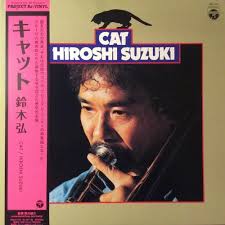
Reissues also changed the visual presence of these albums. Artwork that had once been seen mainly by Japanese buyers and dedicated collectors now circulated constantly online. Cat benefited enormously because its cover is instantly memorable.
But again, artwork opens the door.
Music keeps it open.
Why Beatmakers Hear Something Different
The same qualities that appeal to DJs also make Cat attractive to listeners shaped by hip-hop production and beat culture. Electric piano, exposed bass, crisp drums and clearly separated instrumental layers encourage a different kind of listening. Instead of following only the solo, the ear moves through textures.
Where is the drum break?
What happens if the keyboard figure repeats?
How does the bass sit behind the trombone?
Which two seconds create the entire atmosphere?
This way of hearing jazz would have seemed unusual to many listeners in 1976, but it reveals aspects of the arrangement that traditional solo-centered criticism can overlook.
The rhythm section is not background.
Production is not decoration.
Texture is compositional information.
Cat rewards that kind of listening.
The “Lo-Fi” Association
The album has also circulated among listeners interested in lo-fi and chill-oriented instrumental music, a connection acknowledged by later reissue promotion. This association is understandable: warm electric keyboards, relaxed tempos, rounded bass and Suzuki’s unhurried phrasing can resemble some of the sonic vocabulary later producers sought to recreate.
But calling Cat an ancestor of lo-fi should be done cautiously. The musicians were not attempting to produce background music. The performances contain active improvisational decisions, rhythmic tension and ensemble interaction that deserve focused listening.
What later audiences extract from a record is not necessarily what the musicians intended.
That is part of the fascination.
A 1975 jazz session can become meaningful to a listener using categories that did not yet exist.
Audiophile Language Can Miss the Point
The old JazzLatitude version of this article placed heavy emphasis on Cat as an audiophile reference, discussing frequency ranges, equipment performance and the recording’s usefulness for evaluating playback systems. There is nothing wrong with appreciating the sound of a well-recorded album. The bass has presence, the electric piano is beautifully integrated, the drums retain detail and Suzuki’s trombone occupies a convincing physical space.
But turning those qualities into the central argument reverses the relationship between music and equipment.
Cat is not important because it can test a sound system.
A sound system is useful because it can help us hear what these musicians did.
The distinction matters for JazzLatitude’s editorial direction. Sound quality should illuminate musical decisions rather than replace discussion of them.
The recording serves the performance.
Not the other way around.
Why Cat Survived
So why did Cat survive when countless competent jazz albums from the same period remained obscure?
There is no single answer.
The cover helped.
Scarcity helped.
Japanese-jazz collecting helped.
Reissues helped.
Streaming helped.
DJ culture helped.
The renewed appetite for Rhodes-heavy jazz helped.
But none of those factors could have sustained interest if the record itself collapsed under repeated listening.
It does not.
The ensemble chemistry remains convincing. Suzuki’s trombone still sounds distinctive. The rhythm section still moves. Hiromasa Suzuki’s keyboards still create warmth without overwhelming the arrangements. The five-track sequence remains compact enough to invite another play immediately after it ends.
The record’s cult reputation may have been built later.
Its foundations were recorded in Tokyo in October 1975.
Beyond the Cult Album
The final challenge is to place Cat correctly within Hiroshi Suzuki’s career and the broader history of Japanese jazz. Treating it simply as a cult object makes the story smaller than it needs to be. Suzuki existed before the album and continued afterward. His collaborators had substantial careers. The musical language belongs to a wider network connecting big bands, modern jazz, American influence, Japanese experimentation and the electric transformation of the 1970s.
At the same time, we should not overcorrect and pretend that Cat is merely one ordinary document among thousands.
Some records genuinely achieve an unusual balance.
This is one of them.
The question for the final part is therefore not whether Cat deserves its reputation. It does.
The more interesting question is what that reputation tells us about Hiroshi Suzuki, Japanese jazz, the construction of modern jazz canons and the way a recording can acquire an entirely new cultural life decades after the musicians leave the studio.
What Cat Really Represents
The easiest way to describe Hiroshi Suzuki today is to call him the trombonist behind one of the great cult albums of Japanese jazz. It is also the description most likely to make his story smaller than it actually is. Cat deserves its reputation, but the album becomes more meaningful when placed back inside the musical network that produced it. Suzuki had already passed through Japanese big bands, modern-jazz ensembles and Freedom Unity before spending several years in the United States. When he returned temporarily to Japan in 1975, he did not assemble anonymous session musicians around a predetermined concept. He reunited with Takeru Muraoka, Hiromasa Suzuki, Kunimitsu Inaba and Akira Ishikawa, players whose own histories represented important strands of Japanese jazz. The three days they spent recording at Nippon Columbia’s Tokyo studio captured a moment when experience, familiarity and the rapidly changing vocabulary of 1970s jazz happened to align.
That is why Cat should not be treated as a mysterious Japanese artifact that somehow anticipated modern taste. Its appeal can be explained musically. The album balances hard-bop discipline with soul-jazz warmth, improvisation with groove, acoustic instrumental personality with electric texture, and technical command with restraint. None of these elements was unprecedented in 1975. American jazz had already been transformed by funk, electric keyboards and fusion, while Japanese musicians had spent years responding creatively to those developments. What distinguishes Cat is proportion. The record rarely overplays any of its strengths. The trombone does not dominate. The electric piano does not drown the ensemble in period effects. The rhythm section never reduces the music to a repetitive backing track. Everything occupies enough space to remain identifiable.
A Trombone Album That Does Not Behave Like One
The choice of trombone as the principal voice remains one of Cat‘s defining characteristics. Small-group modern jazz has historically favored saxophone and trumpet as front-line instruments, while trombone can bring associations with big bands, traditional ensembles or particular schools of bebop playing. Suzuki demonstrates how unnecessary those assumptions are. His instrument fits naturally into a groove-centered electric environment because he does not try to make it behave like something else.
The slide gives his phrasing a particular elasticity. Notes can connect in ways unavailable to valved instruments, and Suzuki uses that physical characteristic without turning it into an effect. His tone can be broad but rarely feels cumbersome. Even when the rhythm section becomes assertive, he often sounds relaxed enough to create tension between the solidity beneath him and the flexibility above.
This is crucial to Cat‘s personality. Replace Suzuki with an aggressive tenor saxophonist and the entire emotional temperature changes. Replace him with trumpet and the music gains another kind of attack. The trombone gives the album weight without urgency.
Suzuki’s greatest contribution may therefore be less about virtuosity than about character.
You recognize the instrument.
Then you recognize the player.
Why Hiromasa Suzuki Matters Almost as Much
The international fame attached to Hiroshi Suzuki’s name can obscure the importance of Hiromasa Suzuki, whose keyboards and compositional contribution are fundamental to the record. The electric piano gives Cat much of the warmth contemporary listeners immediately associate with Japanese jazz-funk, yet its role is sophisticated precisely because it rarely demands center stage.
Hiromasa understands the value of harmonic atmosphere. Chords can remain suspended behind the horns. Rhythmic figures reinforce the groove without duplicating the bass. Electric texture softens the boundaries between the front line and rhythm section. His composition “Romance” also gives the album its closing change of mood, preventing the sequence from being remembered simply as five variations on a funky formula.
This is another reason Cat should be understood as an ensemble record. Hiroshi Suzuki’s name may be on the cover, but the album’s identity belongs partly to another Suzuki as well.
For listeners interested in exploring Japanese jazz beyond Cat, following Hiromasa Suzuki’s discography is one of the most productive next steps. The same is true of Ishikawa, Muraoka and Inaba. Great records often function as intersections. Each musician leads outward toward another part of the scene.
Akira Ishikawa and the Broader Japanese Groove
Following Akira Ishikawa reveals just how broad that scene becomes. Ishikawa worked across modern jazz, jazz-rock, funk and other electric settings, and his ability to establish strong rhythmic identity without sacrificing responsiveness makes him ideal for Cat. His drumming is not remarkable because it contains a single spectacular break or technical display. It is remarkable because the record would lose much of its character if the pocket changed.
That observation connects Suzuki’s album naturally with the work of Jiro Inagaki, another musician whose recordings demonstrate the extraordinary range of Japanese electric jazz during this period. Inagaki’s music can be more forceful, more overtly funk-driven and sometimes closer to jazz-rock. Cat is generally more relaxed. Yet both belong to an environment in which Japanese musicians were no longer treating electric instrumentation as a novelty imported from American fusion. It had become part of their working vocabulary.
This distinction is important historically.
Influence had become language.
Language was becoming identity.
Japanese Jazz Was Not an Imitation Project
Older Western accounts of jazz outside the United States sometimes treated international scenes primarily through the question of authenticity: how convincingly could musicians reproduce American jazz? That framework is inadequate for understanding the Japanese scene of the 1970s. There is no question that American jazz was foundational. Bebop, hard bop, modal jazz, free jazz, soul jazz and fusion all shaped Japanese musicians profoundly.
But influence is not the same thing as passive imitation.
By the time Cat was recorded, Japanese musicians had been engaging seriously with jazz for decades. They had built clubs, magazines, record-collecting cultures, festivals, labels and networks of professional musicians. Artists could absorb developments from Miles Davis, John Coltrane, Herbie Hancock or Art Blakey while making decisions shaped by their own careers and local musical relationships.
Suzuki’s own biography makes this especially clear. He actually moved to the United States and worked in Las Vegas before returning to Tokyo for the session. The resulting album does not sound “more American” because of that experience. Nor does it attempt to manufacture a self-consciously Japanese alternative.
It simply sounds like musicians who knew the language well enough to stop worrying about the examination.
The Myth of Japanese Perfection
The modern enthusiasm surrounding Japanese jazz sometimes creates a different stereotype. Instead of questioning authenticity, international listeners romanticize Japanese recordings as products of exceptional precision, immaculate engineering and obsessive craftsmanship. This narrative can sound complimentary while still reducing musicians to national characteristics.
Cat certainly sounds carefully made.
But perfection is not why it works.
The performances breathe. Timing is not mechanically rigid. Solos contain risk. The rhythm section responds dynamically. The music succeeds because human beings are interacting, not because a supposedly national instinct for precision removed every irregularity.
In fact, some of the most appealing moments come from precisely the opposite quality: Suzuki leaning around the beat, a phrase stretching slightly longer than expected, the drums shifting emphasis beneath a solo.
Groove requires precision.
It also requires flexibility.
The musicians understand both.
Cat and the Collector Economy
The album’s modern reputation cannot be separated from record collecting. Original pressings became desirable, scarcity increased curiosity and Japanese jazz developed substantial value within international collector markets. That process helped recover music that might otherwise have remained inaccessible, but it also changed the vocabulary surrounding it.
Words such as rare, holy grail, masterpiece and audiophile can become substitutes for musical description. Prices become evidence of quality. An original pressing becomes more discussed than the performance engraved into it.
This is precisely where criticism has to resist the market.
A rare record is not necessarily a great record.
An expensive record is not necessarily an important one.
A beautifully pressed record is not necessarily well played.
Cat survives all three tests because its musical value remains after scarcity disappears. Reissues and streaming have made the album dramatically easier to hear. Instead of weakening its reputation, accessibility has enlarged the audience.
That is much stronger evidence than an auction price.
The Cover Opened Another Door
We should nevertheless acknowledge the importance of visual culture. The cover of Cat is memorable, and album artwork has become increasingly important in the digital rediscovery of older records. A striking image can stop someone scrolling through hundreds of recommendations long enough to press play.
Japanese jazz has benefited particularly from this phenomenon because many releases from the period feature artwork that contemporary audiences find visually compelling. Once shared through social media, YouTube thumbnails, record-store pages and streaming platforms, those covers acquire lives independent of the original physical objects.
Cat is unusually suited to that environment.
But visual appeal creates curiosity.
It cannot sustain a forty-minute listening experience.
The fact that people return to the record after the cover has done its work tells us where the real value lies.
Ryo Fukui, Hiroshi Suzuki and the New Canon
The rise of Scenery by Ryo Fukui provides perhaps the clearest parallel. Like Cat, it became dramatically more visible internationally decades after its original release. Streaming and online recommendation systems helped create an audience far larger than either record initially possessed outside Japan.
This has produced something fascinating: a new canon constructed partly by listeners who were not present when the music was made.
Traditional jazz canons were shaped by critics, magazines, labels, musicians and established histories. Digital culture introduced additional forces. YouTube algorithms, Discogs collectors, independent reissue labels, online forums and playlists can now elevate an album rapidly across borders.
That does not necessarily make the new canon less legitimate.
But it does make it different.
The question becomes not only “What records were historically important?” but also “What older records speak most powerfully to listeners now?”
Cat performs exceptionally well under the second test.
Why Modern Listeners Respond to Cat
Part of that response comes from contemporary listening habits. Younger audiences often approach genre with less concern for boundaries. A listener can move from jazz to hip-hop to Brazilian music to electronic production without seeing those transitions as contradictions.
Cat fits naturally into that environment.
The album contains enough improvisation for jazz listeners, enough rhythmic clarity for funk audiences, enough electric warmth for people drawn to 1970s production, enough space for beatmakers and enough melodic accessibility for someone with no specialist knowledge at all.
The trombone then gives the music something rarer.
Identity.
This combination is difficult to manufacture deliberately. Records designed to appeal to everyone often end up meaning little to anyone. Cat reaches different audiences because its original musical choices happened to remain compatible with several later listening cultures.
That is different from compromise.
Lo-Fi Listeners Hear Atmosphere
The album’s popularity among listeners associated with lo-fi and chill-oriented music illustrates this process particularly well. Contemporary producers frequently use warm keyboard textures, restrained drums, bass-heavy mixes and repeated harmonic environments to create music intended for sustained listening.
Cat contains some of those qualities.
But the similarity should not erase the difference. Suzuki’s group is actively improvising. The rhythm section is making decisions from moment to moment. The horn lines create tension that would be unnecessary in purely atmospheric background music.
A modern listener may initially arrive for the warmth.
Jazz is what keeps moving underneath it.
This is one of the pleasures of historical rediscovery: a familiar contemporary texture can become an entrance into an older musical language.
The Brazilian Question
The original JazzLatitude article also emphasized Brazilian influence in Suzuki’s music. That connection should be handled more carefully than simply identifying rhythmic passages as bossa nova or samba whenever the groove becomes lighter. Brazilian music had enormous international influence on jazz by the 1970s, and Japanese musicians were certainly part of that exchange, but Cat is not best understood primarily as a Japanese-Brazilian fusion album.
There are rhythmic and harmonic moments that listeners familiar with Brazilian jazz may find suggestive, and the broader Japanese scene developed substantial connections with bossa nova and Brazilian popular music. Yet Cat‘s central vocabulary remains more convincingly described through modern jazz, soul jazz, funk and the electric transformations of the period.
Specificity strengthens the article.
Not every attractive syncopation needs an exotic origin.
Sometimes musicians simply groove.
The Audiophile Question
Likewise, the album’s sonic qualities deserve appreciation without being converted into laboratory measurements. The recording has excellent instrumental separation, convincing bass presence and enough clarity for Suzuki’s trombone to retain texture without overwhelming the keyboards.
Those are meaningful observations because they help us hear the arrangement.
What matters is that Inaba’s bass remains distinct beneath Hiromasa Suzuki’s electric piano. Ishikawa’s drums retain enough detail to communicate dynamic changes. Trombone and saxophone occupy different spaces rather than collapsing into one horn mass.
The engineering makes musical relationships audible.
That is the useful form of audiophile criticism.
Frequency charts, equipment rankings and arbitrary reference scores tell us much less about why the album matters.
A great recording should bring us closer to the performance.
Then the equipment can disappear.
Cat Versus a “Perfect” Album
Is Cat a masterpiece?
The word is used so frequently in online music writing that it risks becoming meaningless. Not every admired record needs the designation. Cat is compact, beautifully performed and unusually consistent, but its importance should not depend on assigning it a perfect score.
There are larger Japanese jazz statements.
There are more historically radical records.
There are albums with more ambitious composition and more extreme improvisation.
That is fine.
Cat achieves something else extraordinarily well: balance.
It never seems to ask for more space than it needs.
Five tracks are enough.
The ensemble is enough.
The sound is enough.
That economy may explain why repeated listening rarely exhausts the record.
Where to Begin—and Where to Go Next
For a listener approaching Hiroshi Suzuki for the first time, Cat remains the obvious entry point. Start with “Shrimp Dance” if groove is the attraction. Move to “Kuro to Shiro” for the ensemble’s more extended improvisational logic. Hear “Cat” for the compact version of the group’s identity, then let “Romance” demonstrate how effectively Suzuki can move from rhythmic confidence toward lyricism.
Afterward, do not simply search for another album that sounds exactly the same.
Follow the musicians.
Explore Hiromasa Suzuki.
Follow Akira Ishikawa into his electric projects.
Listen to Takeru Muraoka.
Trace Kunimitsu Inaba across Japanese sessions.
Then move outward toward Jiro Inagaki, whose work reveals another side of the electric scene, and toward musicians such as Sadao Watanabe to understand how broad Japanese jazz had become.
Cat works best as a door.
Not a destination.
Why Hiroshi Suzuki Matters
Suzuki’s international legacy is unusual because it rests disproportionately on one album. That can seem like a limitation when compared with artists whose reputations are built across dozens of canonical releases.
But jazz history contains many forms of significance.
Some musicians transform the language through enormous bodies of work.
Others participate in crucial scenes.
Some become teachers, sidemen or composers whose influence exceeds their public recognition.
And occasionally a musician creates one recording whose afterlife becomes much larger than anyone involved could reasonably have predicted.
Hiroshi Suzuki belongs partly to that final category.
Yet Cat was possible only because of everything that came before it.
The big bands mattered.
Freedom Unity mattered.
Las Vegas mattered.
The reunion mattered.
The other four musicians mattered.
The album is not a miracle detached from biography.
It is concentrated experience.
The Real Lesson of the Japanese Jazz Revival
The renewed international interest in Japanese jazz is valuable when it encourages listeners to question the old map of jazz history. The music’s origins remain fundamentally African American, and that historical reality should never be blurred. But jazz became international remarkably early, and musicians around the world spent decades developing local scenes that interacted continuously with American innovation.
Japan became one of the most substantial of those environments.
What the modern revival reveals is not that Japanese musicians secretly made “better” jazz than everyone realized.
It reveals how incomplete international listening had been.
Records were there.
Musicians were there.
Scenes were there.
Distribution and historical attention were uneven.
Digital culture, reissue labels and collector networks changed that equation.
Cat benefited enormously.
Many other records are still waiting.
Final Thoughts: Five Musicians in Tokyo
Strip away everything that came later.
Forget the collector prices.
Forget the YouTube recommendations.
Forget Discogs wantlists, reissue campaigns, “Japanese jazz masterpiece” headlines and debates about original pressings.
Return to Tokyo, October 1975.
Hiroshi Suzuki is temporarily back from the United States. He enters Nippon Columbia’s studio with musicians he already knows: Takeru Muraoka, Hiromasa Suzuki, Kunimitsu Inaba and Akira Ishikawa.
There is no international cult around the session.
No algorithm is waiting.
No one knows that decades later listeners across Europe, North America, South America and elsewhere will search for this record.
They simply play.
Inaba establishes the foundation.
Ishikawa finds the pocket.
Hiromasa Suzuki opens the harmonic space.
Muraoka gives the front line another edge.
Then Hiroshi Suzuki raises the trombone.
The sound is warm, heavy enough to have presence but relaxed enough to float. He does not attempt to explain Japanese jazz to the world. He does not perform for future collectors. He does not try to manufacture a masterpiece.
He plays inside the band.
That may be the most important reason Cat still works.
Its mythology came later.
Its reputation came later.
Its international audience came much later.
But the balance was there from the beginning.
And fifty years after those sessions, when “Shrimp Dance” starts moving and Suzuki’s trombone enters above the rhythm section, all the mythology becomes unnecessary.
The record explains itself.