
The Chronicle of an Era: The Mid-Fifties Transition to Cool, Capitol Records’ Acoustic Fidelity, and the West Coast Aesthetic
By the arrival of 1955, the aggressive, jagged edges of early East Coast bebop were beginning to soften into a sophisticated, highly melodic alternative. Audiences and critics alike were searching for an aesthetic that preserved the complex harmonic discoveries of modern jazz but presented them with an undeniable element of elegance, spatial luxury, and structural restraint. This movement found its perfect technological partner inside the newly constructed, world-class studio facilities of Capitol Records in Hollywood. Capitol’s engineering team was pioneering a pristine, open-room recording philosophy that rejected muddy, compressed tracking in favor of a wide-open, three-dimensional acoustic landscape—a soundstage specifically designed to let complex mid-range frequencies and delicate percussive overtones bloom naturally.
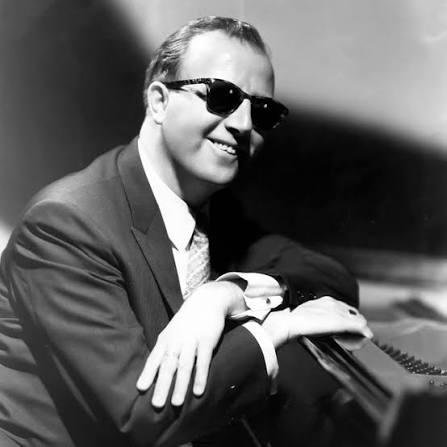
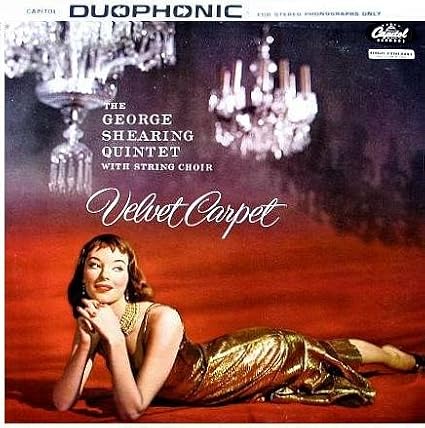
It was precisely within this climate of high-fidelity acoustic refinement, in the spring of 1955, that the blind British pianist George Shearing signed with Capitol Records to unleash his definitive sonic concept. Titled Velvet Carpet, the album stood as an extraordinary, historic creative threshold. Backed by his revolutionary, tightly integrated quintet and a sweeping, understated string section arranged by maestro Billy May, Shearing did not merely deliver polite background music. He executed a flawless, ultra-sophisticated masterclass in tonal blending and cool-era arrangement, establishing an untouchable, reference-grade audiophile monument for percussive transient speed, instrumental separation, and silky mid-range warmth.
The Biography & The Concept of the Masterwork: The Architect of the Locked-Hand Style and the Silk Blueprint
The artistic trajectory of Sir George Shearing (born blind in London in 1919; died in 2011) stands as one of the most brilliant examples of cross-continental stylistic synthesis in jazz history. Emerging from the classical concert halls of England to conquer the intense, competitive clubs of New York’s 52nd Street, Shearing invented a completely singular keyboard architecture known as the “Locked-Hand” or “Block-Chord” style. Instead of playing loose, fast single-note lines with his right hand, Shearing locked his hands together, playing the melody in octaves with the three inner notes filling out the complex jazz harmony.
The core conceptual architecture of Velvet Carpet represents the absolute peak of the famous “Shearing Sound” quintet blueprint.
To make this block-chord voicing sound completely revolutionary, Shearing doubled his top piano melody line with a vibraphone playing in unison, while an electric guitar doubled the exact same melody an octave lower.
By wrapping this incredibly tight, unified three-instrument voice around a large, warm orchestra, the album achieved a seamless, velvet sonic texture. Supported by the crisp rhythmic clockwork of a minimalist rhythm section, the arrangements strip away all aggressive instrumental screaming, replacing it with an undulating, luxurious conversation where the instruments bleed into one another like liquid silk.
Buy Amazon
The Anatomy of the Soundstage: A Sensorial Excursion Through Liquefied Vibraphones, Warm Hollow-Bodies, and Airy Strings
To experience an original 1955 Capitol “Green Label” high-fidelity monaural pressing—or a masterfully executed modern AAA audiophile vinyl reissue cut directly from the original mono three-track magnetic tapes—is to witness an astonishing demonstration of mid-century transient response, inner-detail transparency, and absolute acoustic balance. Engineered using top-tier Neumann and RCA ribbon microphones to tame any potential high-frequency harshness, the soundstage places Shearing’s grand piano directly at the front-center focal point. Side A opens with the breathtaking arrangement of “Autumn in New York”. The track materializes from a pristine analog silence with a whispering string section that gently spreads across a vast, deep semi-circular horizon.
The physical realism of the percussive interplay is jaw-dropping; the moment the vibraphone joins Shearing’s block chords, the microphones capture the sharp, metallic ping of the mallets hitting the metal bars with absolute transient speed.
Yet, this percussive strike is immediately followed by a warm, liquid acoustic bloom that melts perfectly into the wooden decay of the grand piano strings.
As the record transitions into the hypnotic reading of “A Ghost of a Chance”, the instrument separation reaches a reference standard of analog engineering. The clean, hollow-body electric jazz guitar occupies a distinct spatial pocket slightly to the left-center, its warm, tube-amplified mid-range tone carrying a thick, tactile roundness.
The recording captures the absolute absence of artificial electronic manipulation; you can hear the natural, airy decay of the Hollywood studio room after every string swell, preserving an incredible sense of scale.
Every subtle shift in Shearing’s touch, from the soft, feather-light ballad work to the intricate, perfectly synchronized block-chord syncopations, is rendered with total phase correctness, delivering a masterclass in how vintage analog engineering can transform commercial sophistication into pure audiophile fine art.
The Legacy and Modern Coordinates: The Unchanging Standard of Elegant Sophistication
The historical, critical, and archival trajectory of George Shearing’s Capitol masterworks stands today as an untouchable, globally canonized milestone that rests at the very foundation of the “Cool Jazz” and sophisticated pop movements. Velvet Carpet permanently shattered the myth that high-art modern jazz harmony had to be aggressive or inaccessible to the mainstream ear, directly influencing generations of pianists, arrangers, and producers from Oscar Peterson and Bill Evans to the ultra-smooth lounge and bossa nova movements of the early 1960s. It proved that absolute harmonic control and elegant restraint carry an unmatched, timeless emotional weight.
Our map looks directly back to this 1955 Hollywood document as an essential, foundational textbook for the art of instrumental blending, percussive dynamics, and soundstage scale. From contemporary jazz quintets who strive to achieve a perfectly unified ensemble timbre to the high-end audiophiles who use the demanding, simultaneous transients of the piano, vibraphone, and warm orchestra on this record to evaluate the micro-dynamic speed, mid-range neutrality, and high-frequency crossover smoothness of premium multi-way loudspeakers, everyone operates directly within the trade routes mapped out by the Blind Master. George Shearing carved a permanent, brilliantly glowing coordinate of silk, velvet, and pure harmonic silver on our map: an eternal vanguard outpost that stands as an immortal monument to the infinite triumph of the elegant musical soul.