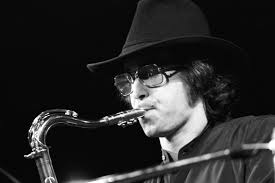
Leandro ‘Gato’ Barbieri was undoubtedly South America’s most pivotal saxophonist on the global stage. Born in Argentina and initially influenced by Charlie Parker’s Bebop, Barbieri traveled a fascinating artistic path: from the experimental avant-garde of Rome and New York to the rediscovery of his Latin rhythmic roots. His sound was unmistakable—a harsh, raspy, and intensely expressive tone that seemed to wring every drop of emotion from every note.
His global acclaim peaked in 1972 when he composed the soundtrack for Bernardo Bertolucci’s controversial film Last Tango in Paris. The hauntingly melancholic and sensual melody of the main theme earned him a Grammy and proved that jazz could be simultaneously sophisticated and popular. However, for purists and genre enthusiasts, his creative zenith lies in the Chapter series (such as Chapter One: Latin America), where he fused Free Jazz with the folk instruments and rhythms of the continent, creating a sound that was as much a political cry as an aesthetic celebration.
At Jazz Latitude, Gato Barbieri represents the ‘voice of resistance’ and boundless passion. He was the musician who proved that jazz didn’t need to speak only English to be relevant. With his trademark fedora and scarf, Gato blew Latin pride to the four corners of the world, leaving a legacy of intensity that continues to resonate in every saxophonist seeking authentic expression.