Beyond Spellbinder: Drones, Sitar and the Search for Another Musical Language
After the Borders Had Already Begun to Disappear
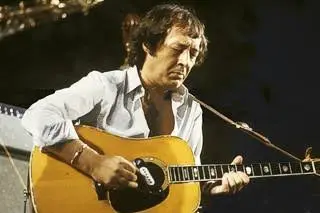
By the time Gábor Szabó made Jazz Raga, the idea that his music should remain inside the conventional boundaries of jazz guitar had already become impossible. Spellbinder had demonstrated how naturally he could move among standards, contemporary pop songs, Hungarian melodic memory, Latin percussion and modal improvisation without treating any of those elements as incompatible. The next step was not simply to repeat that formula with a slightly different repertoire. Szabó pushed toward a more ambiguous territory, one in which the guitar could function less as the traditional front-line instrument of a jazz group and more as a source of drones, repeated figures, unusual resonance and sustained atmosphere.
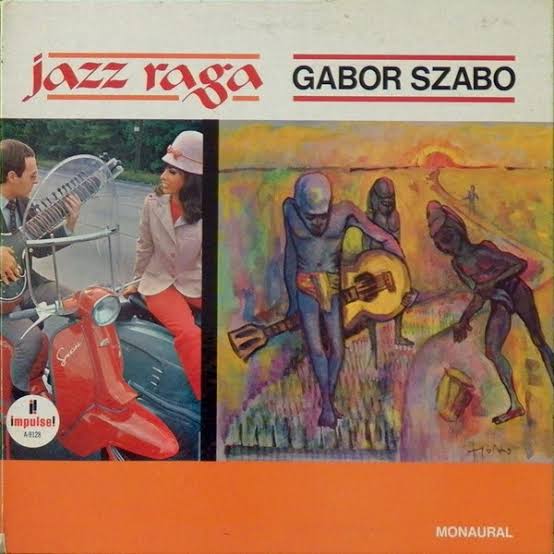
Jazz Raga emerged from precisely that impulse. Its title immediately places the album within one of the defining cultural encounters of the mid-1960s: the rapidly expanding Western fascination with Indian music. Ravi Shankar was becoming an internationally recognized figure, the sitar was entering the vocabulary of rock and pop, and musicians across Europe and the United States were becoming fascinated by drones, modal structures and musical concepts that appeared to offer alternatives to familiar Western harmonic movement. The Beatles’ “Norwegian Wood” had already made the sound of the sitar recognizable to an enormous pop audience, while musicians including John Coltrane had engaged much more deeply with Indian musical thought. By 1966, India occupied a complicated place in Western musical imagination, representing everything from serious artistic inquiry to fashionable exoticism.
Szabó entered this landscape from an unusual position. He was neither an American musician discovering the idea of musical difference for the first time nor an Indian classical musician bringing an established tradition into jazz. He was a Hungarian immigrant whose musical identity had already been constructed through displacement. His relationship with American jazz itself had been cross-cultural from the beginning. Hungarian melodic memories, European popular traditions, jazz improvisation and the rhythmic experiments of Chico Hamilton’s ensembles had already taught him that musical languages could meet without one necessarily erasing the other.
Jazz Raga therefore did not begin Szabó’s interest in music beyond the American jazz canon.
It intensified it.
The Meaning—and the Problem—of “Raga”
The album title requires some care. Jazz Raga is not Indian classical music, nor should it be evaluated as an attempt to reproduce the sophisticated raga tradition through jazz instrumentation. A raga involves far more than the Western shorthand of “playing modally over a drone.” It carries melodic structures, characteristic movements, hierarchies of notes, conventions of development and cultural meanings that cannot simply be transferred by adding a sitar to an American recording session.
Szabó was not becoming an Indian classical musician.
What interested him was a set of musical possibilities that Western musicians increasingly associated with Indian music: sustained tonal centers, repetition, gradual development and a different relationship between melody and harmonic motion. These ideas resonated strongly with tendencies already present in his playing.
That distinction is important because the 1960s produced many recordings in which Indian imagery functioned primarily as decoration. Sitar, incense, mysticism and psychedelic artwork could be combined into an easily marketable language of exoticism. Sometimes the musical encounter went deeper; sometimes it barely moved beyond costume.
Jazz Raga inevitably belongs to that historical moment and carries some of its contradictions. Even its title participates in the period’s fascination with compressing complex traditions into evocative labels. Yet Szabó’s interest cannot be dismissed as merely opportunistic because repetition, drones and modal thinking were already central to his musical personality. Indian sounds did not suddenly teach him to value those elements. They offered another framework through which instincts he already possessed could be explored.
The album becomes most interesting when heard within that tension.
It is neither an authentic raga record nor simply psychedelic decoration.
It is the document of a guitarist testing how far his existing language could stretch.
From Chords Toward the Drone
One of the defining characteristics of Szabó’s guitar playing was his ability to make repetition feel active. In more conventional jazz improvisation, forward motion is often associated with harmonic change: chords move, substitutions create tension, and the improviser traces or challenges that progression. Szabó frequently found another source of movement. He could remain close to a tonal center while altering articulation, rhythm, melodic emphasis and intensity.
The result was hypnotic rather than static.
This quality had already been unmistakable on Spellbinder, particularly in the title track and “Gypsy Queen.” On Jazz Raga, however, the attraction to sustained tonal environments becomes more explicit. A drone can remove some of the harmonic signposts that ordinarily tell a listener where the music is going. Instead of traveling through a sequence of destinations, the improvisation investigates one space.
For Szabó, this was fertile territory.
His guitar sound was never dependent on long streams of bebop lines. Short phrases could carry disproportionate weight. Repeated notes could become rhythmic events. Open strings could blur the distinction between harmony and resonance. Melodies could circle rather than progress.
This was one reason Indian musical ideas appealed so naturally to him. They did not force him to abandon his identity.
They amplified tendencies already inside it.
When the Sitar Enters Szabó’s World
The sitar is the album’s most obvious symbolic gesture, but its presence should not distract from the more important transformation taking place in Szabó’s conception of the guitar. In the Western popular imagination of the period, the sitar could instantly signal India, spirituality, psychedelia or exotic distance. Szabó was certainly not immune to that cultural vocabulary. Yet he approached the instrument from the perspective of a guitarist already fascinated by resonance.
Rather than treating the sitar as evidence that he had somehow mastered Indian music, it is more useful to hear it as another color within an experimental vocabulary.
What matters is the conversation it encourages.
The buzzing resonance associated with the instrument draws attention to sustain and overtones. Against that sonic environment, Szabó’s guitar can become less chordal and more linear, while repeated figures begin to resemble incantations rather than conventional jazz accompaniment. The music occupies a space where timbre itself helps determine form.
That was an important development.
Jazz guitar had often been defined through harmonic capability. The instrument could accompany with chords and then step forward for single-note improvisation. Szabó increasingly challenged that division. His guitar could establish rhythm, create drone-like textures, repeat fragments, leave open strings sounding beneath melodic phrases and participate in the overall atmosphere of the ensemble.
The instrument was becoming an environment rather than simply a solo voice.
Pop Music Was Still Part of the Experiment
For all the Indian imagery surrounding Jazz Raga, Szabó did not abandon the openness toward popular repertoire that had made Spellbinder so revealing. This is essential to understanding his music. He was not moving in a straight line from jazz toward some supposedly purer form of Eastern spirituality. Contemporary songs remained part of his listening world.
That contradiction is actually central to the album.
In the cultural imagination of the mid-1960s, Indian music and psychedelic experimentation could easily be framed as escapes from commercial Western culture. Szabó refused such a simple opposition. He could investigate drones and sitar while continuing to recognize melodic possibilities in songs circulating through contemporary popular music.
The same musician who could engage with modal ideas did not consider a memorable pop melody beneath him.
This was not inconsistency.
It was his aesthetic.
Szabó’s career repeatedly suggests that he judged musical material according to what it could become in performance rather than according to where it originated. Jazz standard, folk melody, pop hit, Hungarian memory, Latin groove or Indian-inspired modal framework: none possessed automatic superiority.
Everything was potential material.
That attitude makes Jazz Raga more interesting than a simple exercise in East-meets-West fusion. The album belongs to a musician whose entire artistic identity was based on refusing the hierarchy implied by those categories.
1966 and the Western Discovery of India
The timing matters. By 1966, Indian music had become increasingly visible across Western culture. Ravi Shankar’s international profile was growing rapidly, and his relationship with musicians outside India would soon make him one of the central figures in this cultural exchange. George Harrison’s interest in the sitar brought the instrument into the center of the Beatles’ extraordinary cultural influence, while the broader counterculture increasingly associated India with spirituality, meditation and alternatives to Western materialism.
But there was a danger inside this enthusiasm.
India could become an idea rather than a place.
Musicians and audiences sometimes compressed an enormous range of traditions into a generalized vocabulary of drones, sitars, incense and mysticism. The resulting music could be imaginative, but the cultural framing often revealed more about Western desires than about Indian traditions themselves.
Jazz Raga should not be removed from that context.
Its language belongs unmistakably to its era.
Yet Szabó complicates the story because he was already an outsider within American culture. He understood, personally rather than theoretically, what happens when musical identity crosses national borders. His Hungarian background had been simplified and romanticized by American audiences as well. Even the recurring description of him through “gypsy” imagery could turn a complex personal and cultural history into an exotic persona.
Szabó was therefore simultaneously participating in the 1960s fascination with the exotic and living inside its contradictions.
That tension runs through Jazz Raga.
Psychedelia Before It Became a Formula
The word psychedelic is almost unavoidable when discussing this period of Szabó’s work, but it can become misleading if treated as a fixed genre. In 1966, psychedelic music itself was still being defined. Rock groups were experimenting with studio effects, extended structures, modal improvisation, feedback, non-Western instruments and altered approaches to repetition. Jazz musicians had independently been exploring many of those possibilities through modal music, free improvisation and increasingly open forms.
Szabó occupied the overlap.
His music could sound psychedelic without adopting the emerging clichés of psychedelic rock because the underlying techniques had other origins. Repetition came partly from his own rhythmic language. Modalism connected with modern jazz as much as Indian influence. His interest in unusual resonance grew naturally from his approach to guitar.
The similarity was real.
The genealogy was more complicated.
This explains why Szabó would become so meaningful to rock guitarists. He offered a model of improvisation that did not depend on bebop vocabulary yet retained jazz freedom. A guitarist could repeat a figure, explore a mode, emphasize tone and rhythm, and create intensity gradually.
That language would become increasingly familiar as the decade progressed.
Szabó was already living inside it.
A Record About Possibility
The greatest mistake would be to present Jazz Raga as the moment Gábor Szabó “discovered India.” The album is more revealing when understood as part of a continuing search for alternatives to stylistic confinement.
Spellbinder had already established the principle.
Jazz Raga tests its limits.
What happens when harmony becomes less important than drone? When the distinction between jazz guitar and an unfamiliar string instrument becomes part of the music’s texture? When contemporary pop songs, Hungarian memory, American improvisation and Western ideas about Indian music occupy the same artistic space?
Szabó did not answer those questions theoretically.
He put them on record.
The result contains the excitement and the contradictions of 1966: genuine curiosity alongside period exoticism, experimentation alongside popular melody, jazz discipline alongside psychedelic atmosphere.
That complexity is precisely why Jazz Raga deserves more than being remembered as an eccentric artifact from the sitar years of the 1960s.
It documents a musician asking a much larger question.
How much could jazz absorb before the boundaries around the word itself began to lose their meaning?
For Gábor Szabó, the answer was already becoming clear.
Almost everything—if the musician absorbing it had a voice strong enough to remain recognizable.
Buy Amazon
Pop Songs, Open Strings and the Architecture of Trance
The Familiar Song as a Doorway
One of the most revealing things about Jazz Raga is that Gábor Szabó did not need to abandon recognizable songs in order to pursue increasingly unconventional sounds. The album’s experimental character exists beside a repertoire that includes material from the contemporary popular world, and that coexistence tells us more about Szabó than any simple description of the record as an Indo-jazz experiment. He was not searching for obscurity. He was searching for transformation.
This had already become clear on Spellbinder, where a Sonny Bono composition could stand beside standards and Szabó originals without being treated as an intrusion. On Jazz Raga, that principle becomes even more radical because the arrangements can alter the environment surrounding a song until something familiar begins to feel strangely suspended. Melody remains important, but it no longer has to lead the listener through conventional harmonic movement. A recognizable tune can instead become the center of a circular structure, surrounded by drones, repeated figures and rhythmic patterns.
For Szabó, this was a natural extension of the way he heard popular music. A song was not a fixed arrangement. It was a melodic object capable of surviving changes in rhythm, harmony, instrumentation and cultural context. If the melody remained strong enough, everything around it could be reconsidered.
That idea places Jazz Raga firmly inside the musical transformation of the mid-1960s. Across jazz and popular music, musicians were beginning to ask whether songs needed to move in the familiar ways inherited from earlier forms. Repetition was becoming a compositional strategy. Timbre was becoming structural. The studio itself was increasingly capable of creating musical spaces that could not be reproduced simply by writing notes on a page.
Szabó approached these developments from the perspective of an improvising guitarist.
The result was music that could be accessible and unsettling at the same time.
“Paint It Black” and the Sound of 1966
Few songs could have been more appropriate for Szabó’s musical world than the Rolling Stones’ “Paint It Black.” Released in 1966, the song already carried one of the decade’s most famous uses of sitar, played by Brian Jones. Its dark modal character and relentless rhythmic movement made it an obvious emblem of the growing interaction between Western popular music and sounds associated with India.
But Szabó’s engagement with material of this kind was not simply a matter of following rock fashion. The deeper connection lay in the musical vocabulary itself. The descending melodic shapes, persistent tonal center and dramatic repetition were compatible with tendencies that had long appeared in his playing. Where a conventional jazz interpretation might begin by reharmonizing a pop song, Szabó could instead intensify the elements already present.
That distinction is crucial.
The purpose was not to prove that a Rolling Stones song could become sophisticated enough for jazz. Szabó had little interest in that kind of hierarchy. The song was already useful because it contained a powerful musical idea.
His task was to enter it.
This helps explain why Szabó’s relationship with 1960s popular culture feels different from some jazz attempts at contemporary crossover. He often seems genuinely fascinated by the material rather than obligated to record it. Pop songs provide structures he can inhabit, distort and redirect.
“Paint It Black,” in particular, belongs naturally to a world of modal repetition and dark resonance. Its connection with the sitar also makes it part of the cultural conversation surrounding Jazz Raga. Yet the transformation becomes most meaningful when the exotic signifier is set aside and the musical mechanics are heard directly: repetition creates tension, the tonal center creates gravity, and the melody becomes increasingly powerful because the music refuses to escape from it too quickly.
The Beatles, the Sitar and a Cultural Shortcut
No discussion of the sitar in Western popular music during this period can avoid the Beatles. George Harrison’s use of the instrument on “Norwegian Wood (This Bird Has Flown)” in 1965 became a watershed moment, not because it represented the first Western encounter with Indian music, but because the enormous reach of the Beatles transformed the sitar into a recognizable sound for millions of listeners.
The consequences were immediate.
Within a remarkably short period, Indian instruments and imagery appeared across pop and rock. Sometimes the interest led musicians toward serious study. Harrison himself would deepen his relationship with Ravi Shankar and Indian classical music considerably. Elsewhere, the sitar could function as little more than an instant marker of exoticism.
This created a cultural shortcut: one plucked resonance could suggest India, mysticism, altered consciousness and the counterculture before the listener had heard anything structurally related to Indian classical music.
Jazz Raga cannot escape that history.
But Szabó’s guitar complicates it.
Even when the sitar provides the most obvious sign of India, much of the deeper musical transformation occurs through Szabó’s approach to his own instrument. Open strings, repeated tones and modal figures allow the guitar to participate in the same world of resonance without attempting to imitate the sitar literally.
The distinction is subtle but important.
The album is most convincing when Szabó sounds like Szabó.
Open Strings and the Reinvention of Jazz Guitar
The physical construction of the guitar gives open strings a special character. Unlike a fretted note, an open string can continue resonating while the left hand moves elsewhere, creating relationships between sustained tones and changing melodic figures. Folk guitarists had long exploited this property, as had musicians in numerous traditions outside jazz. In Szabó’s hands, open strings became part of a language that could suggest drones while preserving the mobility of improvised lines.
This allowed him to loosen the relationship between guitar and conventional chord voicings.
Instead of continuously defining harmony, the instrument could establish a tonal field. A note might remain present beneath several phrases, giving the improvisation a center of gravity. Short motifs could then orbit that center, returning repeatedly without sounding merely repetitive because articulation and rhythmic placement kept changing.
The approach suited Szabó perfectly.
His strength had never depended on presenting an uninterrupted stream of harmonically elaborate lines. He could make a few notes feel consequential through attack and timing. A drone magnified that ability by removing some of the harmonic information competing for attention.
The listener begins to hear smaller differences.
A repeated note struck harder becomes an event.
A pause becomes structural.
A slight rhythmic displacement changes the shape of an entire phrase.
This is where Jazz Raga connects most meaningfully with Indian-inspired thinking—not through imitation, but through a reconsideration of musical time.
Circular Time Versus Harmonic Destination
Much Western popular and jazz repertoire creates movement through harmonic destination. A progression generates tension and eventually resolves. Even when improvisers play freely over that structure, the chords provide an underlying narrative of departure and return.
Drone-based music proposes another experience.
The destination may already be present.
Movement occurs through intensity, rhythm, melodic contour and gradual transformation rather than through constant harmonic travel. The listener is invited to inhabit a tonal environment rather than follow a sequence of changes.
Szabó’s attraction to this idea helps explain the hypnotic quality often associated with his playing. Repetition does not suspend musical development; it relocates development into smaller details.
This is also where his experience with jazz becomes essential. Improvisation allows him to prevent the drone from becoming inert. The fixed center gives him something to resist, decorate or circle around. The tension emerges between stability and invention.
That balance is one of the album’s defining pleasures.
The music can feel motionless and restless simultaneously.
Rhythm Keeps the Drone Alive
A drone alone does not create trance. Rhythm determines whether repetition feels meditative, mechanical, oppressive or propulsive. Szabó understood this from years of playing in rhythmically sophisticated ensembles, particularly with Chico Hamilton.
On Jazz Raga, percussion and guitar therefore work as partners in constructing atmosphere. The rhythmic foundation allows Szabó to repeat ideas without draining them of energy. Each return can sit slightly differently against the pulse. A phrase may begin as melody and gradually become groove.
This fluid relationship between melodic and rhythmic function is central to his style.
Szabó could strike the guitar with a percussive directness that made individual notes part of the beat. At other moments he allowed strings to resonate beyond the immediate attack, creating a haze around the rhythm.
The combination produces the characteristic tension of this period of his work: sharp attack surrounded by lingering resonance.
It is both physical and atmospheric.
Beyond the Novelty of the Sitar
This is why reducing Jazz Raga to “the Gábor Szabó album with sitar” ultimately does the record a disservice. The instrument is historically significant, visually memorable and inseparable from the period’s cultural imagination. But the more durable experiment lies in Szabó’s rethinking of his own guitar language.
The sitar may attract attention.
The guitar carries the argument.
Szabó was investigating how much could be accomplished with repeated melodic fragments, drones, open strings and rhythmic interaction before conventional harmonic development became necessary. Those questions would resonate far beyond jazz.
Rock guitarists were arriving at similar discoveries. Psychedelic groups learned that a riff could sustain an extended performance. Modal improvisation provided an alternative to blues changes. Amplification made sustain itself expressive. Percussion increasingly moved beyond the basic drum kit.
The musical cultures were converging even when the musicians came from different backgrounds.
Szabó stood unusually close to the point of intersection.
The Difference Between Fusion and Encounter
It is tempting to describe Jazz Raga as fusion, but the word can imply a degree of synthesis the album does not always achieve. At its most interesting, the record sounds less like two traditions successfully merged into a stable new genre and more like an encounter whose uncertainties remain audible.
That is valuable.
Szabó does not possess the depth of knowledge required to transform Indian classical practice from within. He approaches it as an outsider, attracted to certain sounds and concepts. The limitations of that position belong to the record just as much as its discoveries.
But encounter can produce important music without producing perfect synthesis.
The album documents curiosity in motion.
Sometimes the cultural references are unmistakably products of 1960s exoticism. At other moments, the musical ideas move beyond their packaging and reveal genuine compatibility with Szabó’s established vocabulary.
The tension between those two conditions makes the record historically richer than a simple celebration of East-West fusion would suggest.
A Guitarist the Rock World Could Understand
By this point, it becomes easier to understand why Szabó would exert such fascination on musicians associated with rock. His playing offered something unusual: the improvisational freedom of jazz without requiring listeners to understand bebop’s dense harmonic language.
The entry point could be rhythm.
Or repetition.
Or melody.
A rock guitarist listening to Szabó did not need to copy his exact vocabulary to recognize the possibilities. A small motif could become the foundation of an extended improvisation. Modal centers could replace complicated progressions. Percussion could create a wider rhythmic field. Tone and attack could carry as much identity as harmonic sophistication.
Carlos Santana would become the most famous example of this influence, but the broader connection belongs to an entire moment when the electric guitar was being reimagined across genres.
Jazz and rock were not simply moving toward each other.
They were independently discovering some of the same tools.
The Strange Coherence of Jazz Raga
Taken piece by piece, the album can appear unstable: pop songs, Indian imagery, sitar, jazz improvisation, drones, open-string guitar and the unmistakable atmosphere of the psychedelic era.
Yet Szabó gives the record coherence precisely because he does not treat these materials as separate demonstrations.
Everything passes through the same musical personality.
The guitarist who interpreted standards on Spellbinder is still present. So is the musician fascinated by rhythm, repetition and modal ambiguity. What changes is the degree of exposure. Jazz Raga pushes those characteristics closer to the surface and places them inside a cultural moment increasingly prepared to hear them.
That does not make the album a flawless synthesis.
It makes it a revealing experiment.
And perhaps that is the better way to understand Jazz Raga: not as Szabó’s definitive statement on Indian music, but as evidence of a musician refusing to stop at the boundary he had just crossed.
Spellbinder had shown that different musical worlds could coexist.
Jazz Raga asks what might happen if the borders between them became even harder to see.
Part III — The Unfinished Experiment and the Future Hidden Inside It
An Album That Makes More Sense in Context
Jazz Raga becomes easier to understand when we stop asking whether it successfully created a new genre. The title promises an encounter between jazz and raga, but the music itself is more provisional than that description suggests. It belongs to a period when musicians across the Western world were discovering sounds, concepts and instruments from India at extraordinary speed, often without possessing the depth of knowledge necessary to distinguish serious engagement from cultural shorthand. The results could be inspired, naïve, opportunistic or some combination of all three.
Gábor Szabó’s album contains precisely that kind of ambiguity.
What separates it from countless period curiosities is the musical personality at its center. Szabó had already developed an approach based on many of the qualities that made Indian music attractive to Western musicians in the first place: modal concentration, repeated melodic cells, rhythmic insistence, open resonance and the possibility of sustaining tension without constant harmonic movement. The encounter therefore did not require him to reinvent himself completely. It gave him another vocabulary through which to intensify instincts that were already present.
That is why the most compelling moments on Jazz Raga do not sound like demonstrations of an imported style. They sound like Gábor Szabó becoming more deeply himself.
The distinction determines the album’s lasting value.
The Sitar Was a Beginning, Not a Destination
In the cultural memory of the 1960s, the sitar can become a convenient symbol for an entire period. One hears the instrument and immediately imagines psychedelic posters, incense, meditation, the Beatles, Ravi Shankar, the counterculture and a generation looking beyond Europe and North America for alternative forms of artistic and spiritual experience.
But symbols simplify.
The deeper legacy of the encounter with Indian music was not that Western musicians suddenly began adding sitars to recordings. That phase was relatively brief. More consequential was the growing awareness that musical structures did not have to depend on the assumptions that had governed much Western popular music.
Harmony did not have to change constantly.
Improvisation could unfold over a sustained tonal center.
Rhythm could be cyclical rather than merely supportive.
Repetition could intensify rather than diminish an idea.
Timbre could become structural.
Szabó’s work belongs to this larger transformation. The sitar on Jazz Raga makes the cultural encounter visible, but his guitar reveals its more durable implications. He was learning how to make fewer harmonic events carry greater expressive weight.
That lesson would outlive the fashion for Indian instrumentation.
The Risk of Exoticism
Any contemporary reading of Jazz Raga also has to acknowledge what has aged less comfortably. Western culture during the 1960s frequently reduced India and other non-Western societies to romantic images of timeless spirituality, mystery and exotic wisdom. Album titles, artwork, promotional language and journalism often participated in this simplification.
Jazz was not immune.
Neither was Szabó.
The language surrounding Jazz Raga belongs partly to that moment, and the album should not be rewritten retrospectively as though it represented a rigorous intercultural study. It did not. Szabó was experimenting with musical ideas that he associated with Indian traditions while operating primarily from within his own background as a European-born jazz guitarist in the United States.
Recognizing that limitation does not diminish the record.
It clarifies it.
Cultural exchange is rarely clean. Musicians encounter fragments before they understand systems. They imitate sounds before comprehending the traditions that produced them. Sometimes superficial fascination becomes deeper study; sometimes it remains superficial. Sometimes, however, even an incomplete encounter causes musicians to rethink assumptions inside their own tradition.
That final possibility is where Jazz Raga becomes important.
Szabó did not transform Indian classical music.
The encounter helped transform Szabó.
What Changed After Jazz Raga
The experiments represented by the album did not disappear once the immediate fascination with raga and sitar began to lose its novelty. Elements of its musical thinking continued through Szabó’s subsequent work: the emphasis on groove, the attraction to contemporary songs, the use of repetition, the increasingly atmospheric function of the guitar and the refusal to accept a strict separation between jazz and the wider musical culture.
His later recordings would move through different combinations of jazz, pop, orchestral writing, funk and other contemporary influences. Some would be more cohesive than others. That unevenness is almost inevitable in the career of a musician who repeatedly chooses exploration over consistency.
But the underlying principle remained recognizable.
Szabó listened outward.
He did not treat jazz history as a closed vocabulary that needed only refinement. The music around him—radio songs, folk traditions, Latin rhythms, rock, new studio sounds and ideas arriving from outside the United States—could all become material.
That attitude placed him in an unusual relationship with the jazz establishment.
It also made him increasingly relevant to musicians outside it.
A Different Road Toward Jazz-Rock
The standard history of jazz-rock fusion often moves rapidly from Miles Davis through In a Silent Way and Bitches Brew toward Weather Report, the Mahavishnu Orchestra, Return to Forever and the electric jazz of the 1970s.
That history is essential.
But it is not the only road by which jazz and rock began to intersect.
Several years before fusion became an identifiable movement, musicians such as Szabó were already dissolving smaller boundaries. The repertoire was changing. Electric guitar was assuming a different cultural meaning. Repetition and modal improvisation created common ground between jazz players and rock musicians. Percussion was expanding beyond conventional swing. Younger listeners were becoming comfortable with long instrumental passages and music organized around atmosphere rather than song form alone.
Jazz Raga belongs to this prehistory.
It does not sound like 1970s fusion because the vocabulary had not yet been consolidated. That is precisely what makes it useful historically.
We can hear the ingredients before the recipe became standardized.
Szabó was not attempting to invent jazz-rock.
He was making the distinction between jazz and the surrounding culture increasingly difficult to maintain.
The Electric Guitar Was Changing Meaning
The instrument itself was undergoing a profound cultural transformation. Earlier jazz guitarists had established the electric guitar as a sophisticated improvisational voice, but by the middle of the 1960s rock was changing what audiences expected from it.
The guitar was becoming louder, more physical and more symbolic.
Feedback, distortion, sustain and amplification would soon turn it into one of the defining sounds of the counterculture. Virtuosity itself would acquire new meanings through players such as Jimi Hendrix and Eric Clapton, while Carlos Santana would develop a sustained melodic voice deeply connected to Latin rhythm and modal improvisation.
Szabó stood adjacent to this transformation.
His importance lies partly in demonstrating another possible genealogy for electric-guitar expression. Intensity did not have to come primarily from volume or blues-rock distortion. It could emerge from rhythmic repetition, unusual articulation and the persistent return to a small group of notes.
The guitar could hypnotize rather than overwhelm.
That idea proved remarkably durable.
From Szabó to Santana—and Beyond
The most visible bridge between Szabó and rock remains Carlos Santana’s adoption of “Gypsy Queen,” but the relationship should be understood as more than a single borrowed composition. Santana recognized in Szabó a way of organizing guitar music around melody, modal improvisation and rhythm.
That affinity becomes even clearer when Jazz Raga is heard after Spellbinder.
The two albums show Szabó moving progressively away from the assumption that jazz guitar should be defined primarily through chord changes and linear improvisation. Repetition becomes increasingly central. Tonal centers become more stable. Percussion acquires greater structural importance. The guitar begins to operate as part of a larger field of resonance.
These were precisely the kinds of possibilities that would become central to many forms of psychedelic and Latin rock.
Influence, however, should not be reduced to a straight line.
Szabó was one participant in a much larger transformation involving musicians from jazz, rock, folk, Latin music and non-Western traditions. Ideas circulated rapidly. Records crossed scenes. Musicians heard one another without necessarily belonging to the same professional world.
The borders were becoming porous.
Szabó thrived in that condition because his own identity had always been porous.
Why the Imperfections Matter
There are more polished albums in Szabó’s discography. There are records with clearer stylistic identities, more consistent arrangements and less historical baggage attached to their cultural references.
That does not make Jazz Raga disposable.
Its imperfections are part of the evidence.
The album documents exploration before the language of cross-cultural fusion became standardized. Szabó does not always know exactly where the experiment is leading, and the listener can hear that uncertainty.
Music history often becomes too orderly in retrospect. Genres appear to develop through inevitable sequences, each innovation leading logically toward the next. Actual musicians rarely experience history that way.
They experiment.
They misunderstand.
They imitate.
They discover something accidentally.
They abandon one idea and carry another forward.
Jazz Raga preserves that messiness.
It sounds like a musician searching.
Beyond the Audiophile Story
Like many recordings from the period, Szabó’s work has subsequently circulated through collector culture, vinyl reissues and discussions centered on recording quality and playback equipment. Those subjects may interest particular listeners, but they should not determine how the album is understood historically.
Jazz Raga is not important because it can reveal the performance of a cartridge, amplifier, loudspeaker or digital converter.
Its significance cannot be measured through frequency extension, transient response, soundstage depth or the separation of instruments in an expensive playback system.
Those categories tell us about reproduction.
They do not tell us why the music exists.
The important questions are different.
Why was a Hungarian guitarist working in American jazz drawn toward Indian musical ideas in 1966? Why did drones and repetition feel increasingly relevant to musicians across apparently separate genres? Why were jazz musicians beginning to interpret contemporary pop repertoire differently? Why could a player shaped by Chico Hamilton eventually become an influence on Carlos Santana?
Those questions place Jazz Raga back where it belongs.
Inside cultural history.
Two Albums, One Moment of Transformation
Heard together, Spellbinder and Jazz Raga form a particularly revealing pair.
Spellbinder demonstrates that Szabó had developed a musical identity capable of absorbing multiple traditions without losing its center. Standards, pop songs, Hungarian memory, Latin percussion and jazz improvisation coexist because the guitarist himself provides continuity.
Jazz Raga asks how far that principle can be pushed.
The second album is less settled because the experiment is more exposed. Indian imagery and psychedelic culture enter the frame. Drones become more explicit. The guitar moves further from conventional harmonic responsibility.
One album establishes a language.
The other stretches it.
That distinction allows both records to occupy meaningful places in Szabó’s story without competing for the same editorial territory.
The Outsider’s Advantage
There is a larger reason Szabó was so comfortable in these unstable spaces.
He had never experienced American jazz as something inherited automatically.
He had chosen it.
As a young musician in Hungary, jazz represented another world. After leaving his country and building a career in the United States, he entered that world while retaining memories and instincts formed elsewhere.
That perspective gave him an outsider’s advantage.
Traditions can appear less permanent when you have crossed borders to reach them.
Rules can seem less inevitable.
Genres can look more like agreements than laws.
Szabó’s career repeatedly tests those agreements.
Jazz Raga may be one of the clearest examples because its very title announces a collision that could never be completely resolved.
But perhaps resolution was never the point.
The Value of an Unfinished Experiment
More than half a century later, Jazz Raga remains a fascinating document precisely because it refuses to become tidy.
It belongs to jazz but looks beyond jazz.
It borrows the imagery and certain musical ideas associated with India without becoming Indian classical music.
It intersects with psychedelic culture while remaining rooted in the instincts of an improvising jazz guitarist.
It embraces popular songs while challenging assumptions about how those songs should behave.
And it points toward musical developments that Szabó himself could not have fully predicted.
The album is therefore best understood not as a destination but as a crossing.
For Gábor Szabó, crossings were rarely temporary.
They were where his music lived.
Jazz Raga captures him standing at one of the most complicated intersections of the 1960s, surrounded by jazz, rock, pop, migration, counterculture and a Western fascination with musical traditions far beyond its own borders.
He does not resolve all of those forces.
He allows them to collide.
And in that collision, the imperfect experiment becomes the historical achievement.