
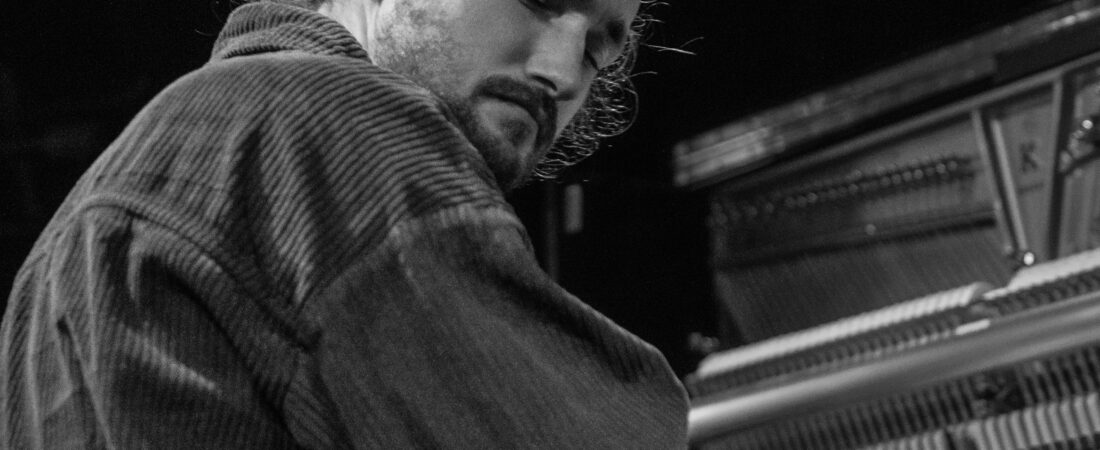
Throughout jazz history, great musicians have found inspiration in cities.
New Orleans gave birth to jazz.
New York refined it.
Chicago expanded it.
For Scottish pianist Fergus McCreadie, however, the greatest source of inspiration has never been an urban landscape.
It has been nature itself.
Mountains shaped by centuries of wind.
Rivers carving their way through the Highlands.
Ancient forests.
Changing weather.
The silence that exists between distant hills.
Rather than treating nature as a poetic metaphor, McCreadie transforms it into music. His compositions seek to capture movement rather than scenery, translating the rhythm of flowing water, shifting clouds and open landscapes into melodies that feel both deeply personal and unmistakably Scottish.
This approach has made him one of the most distinctive voices in contemporary European jazz.
His music combines the harmonic language of modern jazz with the lyrical beauty of Scottish folk traditions, creating a sound that feels timeless while remaining unmistakably contemporary.
Growing Up in Scotland
Fergus McCreadie was born on July 12, 1997, in Jamestown, in the Scottish Highlands, and grew up in the small town of Dollar, surrounded by landscapes that would later become central to his musical imagination.
His first musical ambitions were not centered on the piano.
Like many Scottish children, he initially dreamed of learning the bagpipes. Everything changed, however, after hearing a live jazz pianist perform. The experience revealed a completely different world—one where composition and improvisation existed side by side and every performance could become a unique act of creation.
Inspired, he began teaching himself on an old piano at home. Long hours of practice soon convinced his family that his musical curiosity was becoming something far more serious than a childhood hobby.
The piano had become his voice.
A New Generation of Scottish Jazz
As McCreadie’s talent developed, he enrolled at the Royal Conservatoire of Scotland, where he studied jazz piano and became part of Glasgow’s vibrant and rapidly growing jazz community. The conservatoire exposed him to modern harmony, ensemble performance and some of Scotland’s finest young improvisers, but it also encouraged him to preserve the musical identity that had shaped him from the beginning.
Rather than trying to sound American, McCreadie embraced his own cultural heritage.
Scottish folk melodies.
Traditional dance rhythms.
The spacious atmosphere of the Highlands.
These elements gradually became inseparable from his jazz language.
The result was neither folk music with jazz chords nor jazz decorated with Celtic influences.
It became an entirely personal musical voice.
JazzLatitude Insight
Many European jazz musicians incorporate local folk traditions into their music. Fergus McCreadie goes a step further. Rather than quoting Scottish melodies directly, he captures the emotional character of Scotland’s landscapes, allowing place itself to become an essential part of the improvisation.
The Trio That Grew Together
One of the defining strengths of McCreadie’s music is the extraordinary cohesion of his trio.
Bassist David Bowden and drummer Stephen Henderson have been performing alongside him since their student years, developing a level of communication that allows the ensemble to function almost as a single musical organism. Their long-standing partnership has been central to the evolution of McCreadie’s sound, from the independently released Turas to internationally acclaimed albums such as Cairn, Forest Floor and Stream.
The trio rarely relies on displays of virtuosity.
Instead, every performance emphasizes collective listening.
The bass often introduces melodic ideas.
The drums paint texture rather than simply keeping time.
The piano responds, supports and occasionally leads before returning to the ensemble conversation.
This democratic approach has become one of the group’s defining characteristics.
Forest Floor and International Recognition
Although McCreadie had already earned considerable respect within British jazz circles, Forest Floor, released in 2022, transformed his international reputation.
Inspired by Scotland’s forests and natural landscapes, the album resonated with audiences far beyond the jazz community. It topped the UK Jazz & Blues Chart, received a Mercury Prize nomination, won the Scottish Album of the Year Award—the first jazz album ever to receive the honor—and earned McCreadie the Jazz FM Instrumentalist of the Year award.
Its success confirmed something critics had long suspected.
Fergus McCreadie was not simply one of Scotland’s brightest young musicians.
He had become one of the most important new voices in contemporary European jazz.
From Forest Floor to a Global Stage
How Fergus McCreadie Reimagined the Piano Trio
The success of Forest Floor marked a turning point in Fergus McCreadie’s career, but it did not alter his artistic direction.
Rather than pursuing a more commercial sound or expanding his ensemble to capitalize on his growing reputation, he continued refining the intimate language of the piano trio. The decision reflected one of the defining characteristics of his music: confidence in simplicity.
For McCreadie, the trio is not a limitation.
It is an ecosystem.
Every instrument contributes equally to the emotional landscape, and every performance depends upon attentive listening rather than individual virtuosity. This democratic approach gives his music an organic quality, as though each composition is unfolding naturally instead of following a predetermined path.
That sense of collective creation has become one of the hallmarks of the Fergus McCreadie Trio.
Scottish Folk Without Imitation
Many jazz musicians incorporate folk melodies directly into their compositions.
McCreadie follows a subtler path.
Rather than arranging traditional Scottish tunes, he absorbs the qualities that define them. The modal harmonies, flowing dance rhythms and lyrical phrasing of Scottish folk music become part of his own compositional vocabulary without ever feeling like quotations.
This distinction is important.
His music does not sound nostalgic.
Nor does it attempt to recreate historical traditions.
Instead, it reflects the emotional atmosphere of Scotland itself.
Listeners often describe his compositions as cinematic, but they are perhaps even more geographical. The melodies seem to move through valleys, across rivers and over open hillsides, creating a powerful sense of place that remains rare in contemporary jazz.
The Influence of Nature
Nature has inspired countless composers throughout history, from classical music to folk traditions.
For Fergus McCreadie, however, nature is not simply a source of imagery.
It provides musical structure.
A flowing stream suggests rhythmic motion.
Wind across open landscapes inspires dynamic contrast.
Changing weather influences pacing and emotional intensity.
This philosophy is particularly evident in albums such as Forest Floor and Stream, where the compositions seem to breathe with the same patience found in the natural world.
Nothing feels hurried.
Themes develop gradually.
Silence becomes as meaningful as sound.
The result is music that rewards careful listening, inviting audiences to experience time differently.
JazzLatitude Insight
Fergus McCreadie’s greatest innovation may be his ability to transform landscape into musical form. Rather than describing nature through programmatic effects, he captures its movement, balance and quiet unpredictability, allowing listeners to experience place through improvisation.
International Recognition
The international response to McCreadie’s work has demonstrated that deeply local music can achieve universal appeal.
Although his compositions are rooted in Scottish identity, audiences across Europe, North America and Asia have connected with their emotional honesty and melodic clarity.
Much of this success reflects the timeless qualities of his writing.
His music avoids unnecessary complexity.
Instead, it favors memorable themes, subtle harmonic development and rhythmic flexibility.
These characteristics make his compositions immediately inviting while revealing greater depth with repeated listening.
Critics have frequently noted that McCreadie succeeds in appealing to both dedicated jazz enthusiasts and listeners who rarely explore instrumental music.
That balance is difficult to achieve.
He accomplishes it without compromising his artistic vision.
Edition Records and Artistic Growth
Joining Edition Records represented another significant milestone in McCreadie’s career.
The label has become internationally respected for supporting some of Europe’s most adventurous jazz artists while allowing them complete creative freedom.
Within that environment, McCreadie continued to refine his distinctive musical language.
Each recording demonstrated increasing confidence as both composer and pianist.
Rather than dramatically reinventing his style from album to album, he pursued gradual artistic evolution.
Themes became more spacious.
Improvisations more conversational.
The trio’s collective identity grew even stronger.
This steady development has become one of the defining strengths of his discography.
A New Voice for European Jazz
Fergus McCreadie belongs to a generation of European musicians who no longer feel compelled to measure themselves against American jazz traditions.
Instead, they acknowledge those traditions while contributing perspectives shaped by their own cultural experiences.
In McCreadie’s case, that perspective is unmistakably Scottish.
His music celebrates landscape without becoming sentimental.
It embraces folk influence without becoming folkloric.
It honors jazz history while remaining entirely contemporary.
These qualities have established him as one of the leading voices of modern European jazz and suggest that his artistic journey is only beginning.
The Enduring Legacy of Fergus McCreadie
Few pianists of the twenty-first century have developed such a distinctive musical identity so early in their careers.
While many contemporary jazz musicians build their sound around technical innovation or stylistic experimentation, Fergus McCreadie has followed a different path. His music is rooted in atmosphere, melody and an unwavering connection to place. Rather than asking how far jazz can move away from tradition, he explores how deeply it can absorb the character of a landscape without losing its improvisational spirit.
That artistic vision has made him one of the defining voices of modern European jazz.
His recordings demonstrate that cultural identity need not limit creativity. On the contrary, McCreadie has shown that embracing local traditions can lead to music with universal emotional appeal. Listeners do not need to know the geography of Scotland to recognize the sense of openness, movement and quiet reflection that runs through his compositions.
In an increasingly interconnected musical world, his work stands as a powerful reminder that originality often begins by understanding one’s own roots.
Essential Fergus McCreadie Albums
Although still at the beginning of what promises to be a remarkable career, McCreadie has already produced a series of recordings that have become landmarks in contemporary British jazz.
Turas (2018)
The trio’s debut album introduced McCreadie’s lyrical compositional style and the remarkable chemistry between pianist, bassist David Bowden and drummer Stephen Henderson. Even at this early stage, the ensemble displayed the collective sensitivity that would later define its international reputation.
Cairn (2021)
A significant artistic step forward, Cairn expanded McCreadie’s musical language through compositions inspired by Scotland’s landscapes and history. The album established him as one of the most exciting young voices in European jazz.
Forest Floor (2022)
The breakthrough recording.
Inspired by the forests of Scotland, Forest Floor became one of the most celebrated jazz albums of the decade. It won the Scottish Album of the Year Award, received a Mercury Prize nomination and introduced McCreadie’s music to an international audience.
Its combination of lyrical piano writing, folk-inspired melodies and deeply interactive trio playing has already secured its place among the defining European jazz albums of the 2020s.
Stream (2024)
Continuing his exploration of Scotland’s natural environment, Stream reflects the movement and rhythm of flowing water. The trio’s communication reaches an even higher level of refinement, balancing spacious improvisation with memorable thematic development.
The album confirmed that Forest Floor had not been an isolated success, but part of a coherent and steadily evolving artistic vision.
JazzLatitude Insight
One of Fergus McCreadie’s greatest achievements is his ability to make contemporary jazz feel both deeply personal and universally accessible. His music never sacrifices sophistication, yet its emotional clarity allows listeners from any background to connect with it immediately.
Technical Profile
Full Name: Fergus McCreadie
Born: July 12, 1997
Birthplace: Jamestown, Scotland
Primary Instrument:
- Piano
Additional Roles:
- Composer
- Bandleader
Years Active: 2010s–Present
Primary Styles:
- Contemporary Jazz
- Piano Trio Jazz
- Scottish Jazz
- Folk Jazz
- Modern European Jazz
Record Label:
- Edition Records
Regular Trio Members:
- David Bowden — Bass
- Stephen Henderson — Drums
Major Awards and Honors:
- Scottish Album of the Year Award (Forest Floor)
- Mercury Prize Nominee
- Jazz FM Instrumentalist of the Year
Five Lesser-Known Facts About Fergus McCreadie
1. He originally wanted to play the bagpipes.
Before discovering jazz piano, McCreadie’s first musical ambition reflected his Scottish heritage. Although he chose the piano instead, the melodic character of traditional Scottish music continues to shape his compositions.
2. His trio has remained remarkably stable.
The long-standing partnership with bassist David Bowden and drummer Stephen Henderson has been essential to the trio’s distinctive sound, allowing years of shared experience to deepen their musical communication.
3. Nature serves as a compositional framework.
Rather than simply inspiring album titles, rivers, forests and mountains influence the structure, pacing and emotional development of many of McCreadie’s compositions.
4. Forest Floor made Scottish jazz history.
It became the first jazz album ever to win the Scottish Album of the Year Award, a milestone that brought unprecedented attention to Scotland’s contemporary jazz scene.
5. He represents a new generation of European jazz.
McCreadie’s work demonstrates that young European musicians can build internationally respected careers while remaining deeply connected to their own cultural traditions instead of adopting established American stylistic models.
Frequently Asked Questions
Who is Fergus McCreadie?
Fergus McCreadie is an award-winning Scottish jazz pianist, composer and bandleader whose music blends contemporary jazz with the melodic and emotional character of Scottish folk traditions.
What is Fergus McCreadie’s most famous album?
Forest Floor is widely regarded as his breakthrough recording. The album earned international acclaim, won the Scottish Album of the Year Award and established him as one of Europe’s leading young jazz artists.
What makes Fergus McCreadie’s music unique?
His compositions combine modern jazz improvisation with the atmosphere of Scotland’s landscapes, creating music that feels simultaneously lyrical, cinematic and deeply rooted in place.
Does Fergus McCreadie perform traditional Scottish music?
Not directly. Rather than arranging traditional folk songs, he absorbs their melodic language, rhythmic character and emotional spirit into original jazz compositions.
Why is Fergus McCreadie important to contemporary jazz?
He has demonstrated that regional cultural identity can become a powerful source of innovation, helping shape a distinctly Scottish voice within the broader landscape of modern European jazz.
JazzLatitude Rating
| Category | Rating |
|---|---|
| Piano Technique | ★★★★★ |
| Compositional Originality | ★★★★★ |
| Trio Interaction | ★★★★★ |
| Emotional Expression | ★★★★★ |
| Recording Quality | ★★★★★ |
| Contemporary Relevance | ★★★★★ |
| Cultural Identity | ★★★★★ |
| International Influence | ★★★★☆ |
| JazzLatitude Essential | ★★★★★ |
Final Thoughts
Fergus McCreadie belongs to a generation of artists who have quietly transformed the direction of European jazz.
Rather than pursuing innovation through complexity alone, he has discovered originality by looking inward—toward the landscapes, traditions and cultural memory that shaped his own experience. His music demonstrates that a strong artistic identity does not emerge from rejecting the past, but from allowing it to speak with a contemporary voice.
At the piano, McCreadie combines remarkable technical control with an uncommon sense of restraint. Every note serves a purpose. Every silence carries meaning. His improvisations unfold with the patience of someone who understands that the most memorable musical moments are often those that are allowed to breathe.
Equally important is the extraordinary chemistry of his trio.
The partnership with David Bowden and Stephen Henderson has become one of the most compelling working relationships in contemporary jazz, proving that collective listening remains one of the music’s greatest strengths.
Although his career is still in its early chapters, Fergus McCreadie has already achieved something many musicians spend a lifetime pursuing.
He has created a musical language that is immediately recognizable.
A language shaped by Scotland’s rivers, forests and mountains.
A language spoken through jazz.
And one that continues to remind listeners that the deepest forms of innovation often begin with a profound understanding of where we come from.