Before the World Knew His Name
The Problem With Beginning in 1973
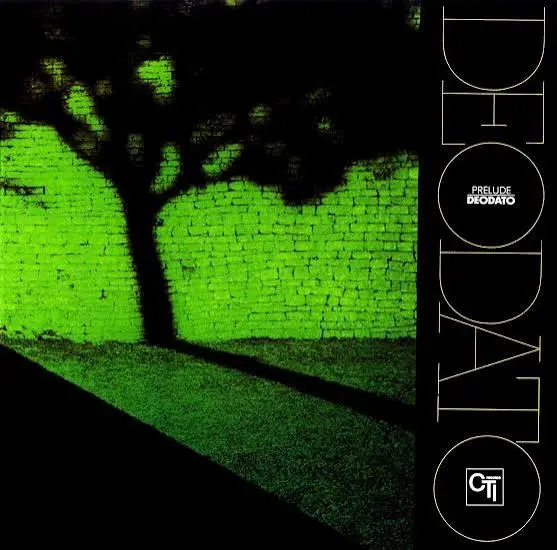
For much of the international audience, the story of Eumir Deodato begins with an electric piano, a large orchestral arrangement and a nineteenth-century tone poem transformed into one of the most unexpected jazz-funk hits of the 1970s. Prelude, released by CTI in 1973, turned Richard Strauss’s “Also Sprach Zarathustra” into a record that crossed boundaries between jazz, funk, classical music and popular culture with remarkable ease. Its success made Deodato internationally recognizable and created an image of the Brazilian musician as a sophisticated studio architect capable of placing an orchestra beside an electric rhythm section without making either sound ornamental. Yet beginning with Prelude produces a misleading picture. The musical intelligence heard on that record had been developing for more than a decade before Creed Taylor placed Deodato at the center of a CTI production.
Long before the international charts, Deodato was working inside one of the most rapidly changing musical environments in the world. Rio de Janeiro during the late 1950s and 1960s was not simply the birthplace of bossa nova. It was a city in which samba, jazz, orchestral popular music, radio, nightclub performance, film, television and the emerging language of MPB continually intersected. Musicians could move between intimate small-group settings and large studio orchestras, between dance music and sophisticated songwriting, between commercial assignments and increasingly ambitious arrangements. For a young musician interested not only in playing but in understanding how music was constructed, this environment offered an extraordinary education.
Deodato’s later career would make sense only because he learned to think beyond the identity of a single instrument. He became a pianist, arranger, composer, conductor and eventually producer, but the crucial skill underneath those roles was his ability to hear music architecturally. Where should a string section enter? How much harmonic information can an arrangement contain before it begins to suffocate the melody? When should brass provide impact and when should it remain absent? How can a rhythm section preserve Brazilian elasticity while an orchestra expands the harmonic field around it? Those questions were being answered in Rio years before they became part of his international reputation.
Rio de Janeiro and an Education Outside the Conservatory Myth
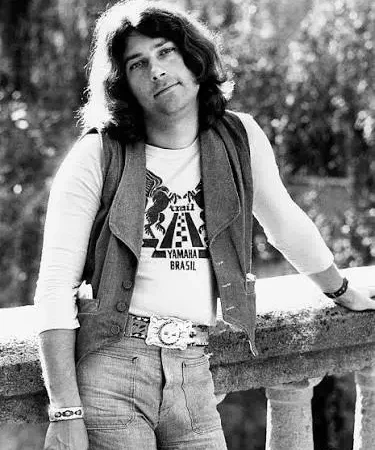
Eumir Deodato de Almeida was born in Rio de Janeiro in 1942. His development did not follow the romantic image of the classical prodigy moving through an elite conservatory toward jazz. Much of his musical formation came through intense practical curiosity, listening, experimentation and work. That distinction matters because arranging is an art that can be studied theoretically but becomes fully intelligible only when ideas are placed in front of musicians and heard in real time. A voicing that appears elegant on paper can become crowded when played. A brass passage can overwhelm a singer. Strings can add emotional depth or reduce a song to sentimentality. Rhythm can be strengthened by orchestration or buried beneath it.
Brazilian popular music offered Deodato a laboratory in which these decisions had immediate consequences. He began working professionally while still very young, at a moment when the country’s music industry was expanding and recording technology was creating new possibilities for arrangers. His early involvement with orchestration placed him among musicians considerably older and more experienced than himself, accelerating an education that did not depend on remaining inside a classroom.
This was also a period when the role of the arranger carried unusual importance. Popular songs were increasingly being recorded with instrumental combinations that extended far beyond a singer accompanied by a rhythm section. Radio orchestras, television ensembles and recording studios required musicians capable of translating songs into larger forms. The arranger occupied the space between composition and performance, deciding how a melody would inhabit the recording.
Deodato discovered that this intermediary position could itself become a creative identity.
Before Bossa Nova Became a Global Brand
By the beginning of the 1960s, Brazilian music was undergoing a transformation that would soon become internationally famous. João Gilberto’s guitar, Antônio Carlos Jobim’s compositions and the new relationship among samba rhythm, harmony and vocal delivery associated with bossa nova had changed expectations inside Brazil before American jazz musicians and international record companies helped turn the style into a worldwide phenomenon.
For young arrangers, however, bossa nova was not merely a style to imitate. It changed the amount of space available inside an arrangement. The restrained vocal delivery and rhythmic subtlety of the music could easily be damaged by orchestration that was too heavy. Sophistication had to be achieved without destroying intimacy.
This challenge was particularly suited to Deodato’s developing sensibility. His later work would become famous for large-scale arrangements, but size alone was never the essential characteristic. What distinguished him was an ability to organize contrasting musical forces so that clarity survived complexity. The seeds of that approach can be understood within the Brazilian environment of the early 1960s, where arrangers had to negotiate between modern harmony, samba-derived rhythm and melodies that often depended on understatement.
The international success of bossa nova after the Carnegie Hall concert of 1962 and the subsequent American fascination with Brazilian music would eventually create opportunities for musicians far beyond Rio. But inside Brazil, the music was already moving. Bossa nova did not freeze into the elegant image exported abroad. Younger composers, instrumentalists and arrangers continued changing its harmonic and rhythmic vocabulary, while political and cultural transformations pushed Brazilian popular music toward new forms.
Deodato was developing inside that movement rather than observing it from a distance.
The Arranger as an Invisible Author
Arrangers occupy a peculiar position in popular music history. Listeners remember the singer and the song. They may know the composer and perhaps the instrumental soloist. The person who determined much of what surrounds those elements can remain invisible. Yet remove the arrangement and the recording may lose the very character by which it is recognized.
Deodato learned to work inside that invisibility. His task was not necessarily to make the listener notice an orchestration. It was to make the song reveal possibilities that had not been obvious before. Strings could extend a harmonic implication already contained in the melody. Brass could alter the scale of a chorus. Woodwinds could create color without competing with the voice. Percussion could retain the internal movement of Brazilian rhythm while orchestral elements expanded around it.
This way of thinking distinguishes arrangement from decoration. The arranger is not simply adding instruments to an existing composition. At his best, he is interpreting the composition through instrumental relationships.
Deodato’s later international work would make this increasingly visible because the arrangements themselves often became central attractions. But the discipline required for those projects was formed while serving other people’s songs. Working behind singers and composers taught him how to make ambitious musical decisions without turning every recording into a demonstration of the arranger’s personality.
That restraint would become one of the foundations beneath his more spectacular achievements.
Brazilian Jazz Was Already Part of the Conversation
The relationship between Deodato and jazz also predates the fusion vocabulary with which his 1970s recordings would later be associated. Brazilian musicians had been interacting with jazz for decades, and by the early 1960s the exchange had become particularly intense. Harmonic ideas from modern jazz circulated among pianists, guitarists and arrangers, while Brazilian rhythms were simultaneously attracting the attention of American musicians.
The exchange was not symmetrical, nor should it be described as a simple meeting of two self-contained traditions. Brazilian musicians did not need American jazz to make their harmony sophisticated, and jazz musicians did not simply import samba as a rhythmic accessory. What emerged was a complex field of listening and adaptation in which musicians selected ideas according to their own needs.
Deodato was particularly responsive to this openness. Jazz offered lessons in orchestration, harmony and instrumental independence. Brazilian music provided rhythmic structures and melodic sensibilities that remained fundamental to his identity. Classical orchestration offered another reservoir of techniques. Popular song imposed the discipline of communication.
Rather than choosing among these languages, he learned to organize them.
That ability would eventually become one of the defining characteristics of his work.
The Studio as a School
A recording studio teaches lessons unavailable on a written score. Instruments occupy frequencies that can collide. A voicing that sounds balanced in rehearsal may behave differently when microphones enter the equation. A rhythm section that feels powerful in the room can lose definition when too many orchestral elements compete for space. The arranger therefore learns not only to write for instruments but to anticipate how those instruments will coexist inside a recording.
Deodato’s early studio experience in Brazil gave him repeated opportunities to develop this practical intelligence. Each assignment added another problem to solve. A singer required one kind of support; an instrumental record required another. A samba arrangement could not breathe like a ballad. A television orchestra imposed different constraints from a nightclub group. Commercial work demanded efficiency because studio time was limited and professional musicians expected usable parts.
This environment also encouraged versatility. Specialization could be a luxury. Musicians who understood several styles, could write quickly and communicate clearly were valuable, and Deodato’s ability to move among different musical roles made him increasingly useful.
The young arranger was therefore building something more durable than a recognizable sound.
He was building a method.
Marcos Valle and a New Generation of Brazilian Songwriting
Among the musicians associated with the rapidly evolving Brazilian scene was Marcos Valle, whose songwriting would become an important bridge between bossa nova and the broader transformations of MPB. Valle’s music combined melodic immediacy with harmonic sophistication and a rhythmic sensibility capable of moving well beyond the narrow international stereotype of bossa nova.
For an arranger, this generation of composers presented fertile material. Their songs already contained strong identities, which meant orchestration could not simply impose a generic cinematic surface. The arrangement had to respond to the internal logic of the composition.
Deodato’s work around this musical world helped develop the sensitivity that would later make him effective in international studio environments. He learned that arranging a sophisticated song is partly an act of restraint. The arranger must know what not to add.
That principle is easy to miss when looking backward from Prelude, where the scale of the orchestration becomes impossible to ignore. But Deodato’s ability to handle large musical forces depended precisely on understanding that density has value only when contrasted with space.
Brazil taught him both.
Wilson Simonal and the Demands of Popular Communication
The Brazilian recording industry of the 1960s also required arrangers to engage with performers whose appeal extended far beyond specialist musical circles. Wilson Simonal became one of the country’s most visible popular singers, and the world surrounding artists like him demanded a different relationship between sophistication and immediacy.
This experience mattered. An arranger working in popular music cannot assume that complexity will be admired simply because it is present. Every orchestral decision has to serve timing, personality and the emotional direction of the song. A brilliant harmonic substitution that weakens a chorus is not a successful arrangement. A sophisticated brass passage that distracts from the singer has misunderstood its function.
Deodato’s later ability to bring complex orchestration into commercially successful recordings did not emerge from ignoring popular communication. It emerged from understanding it intimately.
That distinction helps explain why his career would eventually move so easily across boundaries that critics often prefer to keep separate. Jazz, pop, funk and orchestral music could coexist because Deodato understood that sophistication and accessibility were not opposing values.
They were compositional variables.
The Brazil Behind the International Arranger
By the middle of the 1960s, Deodato was becoming part of a generation whose work would transform the international understanding of Brazilian music. Yet the global narrative often compresses this period into a prelude to later success abroad. Brazil becomes the place where the musician started; the United States becomes the place where the important career happened.
For Deodato, that interpretation is especially misleading.
The Brazilian years were not preparation in the sense of an apprenticeship waiting for validation elsewhere. They were the environment in which his fundamental musical tools were developed. His relationship with rhythm, his sensitivity to singers, his understanding of orchestration and his refusal to treat stylistic boundaries as permanent all emerged through professional experience in Brazil.
When he eventually entered the American recording industry, he did not arrive as an empty vessel ready to learn how sophisticated records were made.
He arrived with a language.
The next stage of the story is therefore not about an arranger leaving Brazil behind. It is about that language becoming more elaborate as Brazilian popular music itself entered one of the most extraordinary periods in its history. New composers, television festivals, changing political realities and increasingly ambitious studio productions were transforming what an arranger could be asked to do.
Before Prelude could exist, Deodato still had another crucial education ahead of him.
It would take place inside the architecture of Brazilian popular music itself.
Buy Amazon
Inside the Architecture of Brazilian Popular Music
When Brazilian Music Outgrew the Bossa Nova Label
By the middle of the 1960s, the phrase “bossa nova” no longer described everything happening in Brazilian popular music. Internationally, the style remained associated with the understated voice of João Gilberto, the compositions of Antônio Carlos Jobim and the extraordinary success of the Brazilian-American collaborations that had introduced a vast audience to songs such as “The Girl from Ipanema” and “Corcovado.” Inside Brazil, however, the musical landscape was already changing. A younger generation of composers and performers was expanding the possibilities of popular song, television festivals were becoming important cultural arenas, and the term MPB began to describe a broad field in which samba, regional traditions, jazz, orchestral writing and contemporary songwriting could interact without producing a single identifiable style.
For Eumir Deodato, this expansion was crucial. An arranger working within such an environment could not rely on one vocabulary. The intimacy that suited a bossa nova song might be completely wrong for an extroverted television performance. A samba required different orchestral decisions from a ballad. A singer with strong rhythmic personality needed another kind of support from one whose phrasing depended on silence and delicacy. Each assignment became an exercise in understanding what was essential to the composition before deciding how much could be added around it. Deodato’s versatility was therefore not simply evidence that he could work in several genres. It was the result of learning to treat arrangement as a form of interpretation.
This is one reason his Brazilian period deserves more attention than it usually receives in international accounts of his career. By the time Deodato became known globally during the 1970s, he had already spent years solving precisely the problems that would later define his work: how to combine orchestral scale with rhythmic precision, how to move between acoustic and electric textures, how to preserve melodic clarity inside dense arrangements and how to make sophisticated musical ideas function within popular formats.
The Arranger in the Age of the Song Festival
Brazilian television festivals became one of the defining musical institutions of the second half of the 1960s. They were competitions, spectacles and cultural battlegrounds at the same time, bringing composers, singers, arrangers and large audiences into an unusually concentrated relationship. Songs could become national events almost overnight, and arrangements mattered because the first major encounter between a composition and the public often occurred in a live or televised performance.
The arranger working in this environment faced a peculiar challenge. The orchestration had to make an immediate impression, but it could not overwhelm the song. Introductions had to establish atmosphere quickly. Brass and strings could create dramatic scale, yet excessive weight might destroy rhythmic flexibility. Transitions had to work under the pressure of live performance rather than the controlled conditions of endless studio revision.
For Deodato, this was another form of practical education. He learned to think dramatically without confusing drama with excess. The experience reinforced an ability that would later become central to his international work: understanding how an arrangement guides attention. Listeners do not experience every instrumental layer equally. A successful orchestration directs the ear, revealing and concealing information at different moments.
This principle would eventually allow Deodato to place large ensembles around grooves without making the music feel permanently congested. The technique did not suddenly emerge in American studios. Its foundations belonged to the professional demands of Brazilian music.
Marcos Valle and the Possibilities Inside a Song
Marcos Valle’s career offers a particularly useful example of the changing musical environment in which Deodato developed. Valle emerged from the bossa nova generation but quickly demonstrated that the language did not need to remain stylistically fixed. His compositions could be harmonically refined and melodically direct while absorbing changing rhythmic ideas and the increasingly eclectic atmosphere of Brazilian popular music.
The relationship between songwriter and arranger becomes especially important with material of this kind. A strong composition does not need orchestration to rescue it. The arranger’s role is to identify possibilities already embedded within the song and decide which should be made audible. A countermelody can expose an emotional tension. A shift in instrumental color can make a familiar harmonic movement feel newly significant. The removal of instruments can be as important as their addition.
Deodato’s work within the world surrounding Valle strengthened his understanding of arrangement as dialogue rather than display. This distinction would remain important throughout his career. Even when his later orchestral productions became larger and more immediately recognizable, their effectiveness often depended on preserving a strong melodic center.
The lesson was fundamental: complexity works best when the listener still knows where the song is.
Wilson Simonal and Music in the Public Arena
Wilson Simonal represented another dimension of Brazilian popular culture. Charismatic, rhythmically assured and capable of commanding mass audiences, Simonal belonged to a world in which music had to function beyond the expectations of specialist listeners. His performances depended on communication, personality and timing, and arrangements had to support those qualities.
Working in such contexts forced arrangers to abandon any notion that sophistication was valuable merely because it could be demonstrated. A chart had to work immediately. Brass figures had to land with precision. Rhythmic accents needed to reinforce rather than obstruct the singer. The arrangement could contain harmonic intelligence, but its success was measured by whether the performance became more convincing.
For Deodato, popular music therefore provided a discipline different from the freedom of an instrumental jazz session. The arranger could not simply follow his own musical curiosity wherever it led. He had to negotiate with the identity of another artist.
This experience would prove invaluable later, when Deodato worked with performers from dramatically different backgrounds. His international career eventually included arranging and production in contexts far removed from Brazilian music, yet the underlying skill remained similar: listen to the artist, understand the material, determine what the arrangement needs to accomplish and resist adding elements merely because they are available.
The studio professional and the creative arranger were not separate identities.
They developed together.
Milton Nascimento and a New Emotional Scale
The emergence of Milton Nascimento during the second half of the 1960s signaled another transformation in Brazilian songwriting. Nascimento’s melodic language, harmonic imagination and distinctive voice did not fit comfortably inside the international stereotype of Brazilian music that had formed around bossa nova. His work opened toward regional Brazilian influences, jazz harmony, choral textures and an emotional scale capable of moving from intimacy to extraordinary dramatic intensity.
Deodato’s connection with this generation of music is important because it placed him in contact with songs that demanded something different from the elegant restraint commonly associated with early bossa nova. The arranger needed to think in larger emotional arcs. Orchestration could become part of the drama of the composition rather than simply an environment around it.
This is where Deodato’s growing command of strings and larger ensembles became particularly useful. Strings in popular music are easily reduced to a shorthand for sentiment. Used unimaginatively, they tell the listener what to feel before the song has earned the emotion. Deodato increasingly understood them structurally. They could create movement, tension, suspension and release. They could expand harmony without simply thickening it.
The difference is crucial. Orchestration becomes meaningful when it participates in the composition rather than decorating it.
By the late 1960s, Deodato was increasingly capable of making that distinction instinctively.
Brazilian Orchestration Without the Exotic Frame
When Brazilian arrangers became internationally visible, their work was often interpreted through ideas of national color. Percussion, syncopation and certain harmonic gestures could be heard abroad as immediately “Brazilian,” sometimes reducing a complex musical culture to a recognizable set of stylistic markers. Deodato’s work resists that simplification because his Brazilian identity did not depend on inserting obvious signs of nationality into every arrangement.
What traveled with him was something deeper: a relationship with rhythm, a sensitivity to melodic space and an understanding that sophisticated harmony did not require heaviness. These characteristics had developed through Brazilian music, but they could operate in contexts where no samba pattern or bossa nova guitar was present.
This distinction would become essential once Deodato began working internationally. He did not have to transform every American recording into Brazilian fusion in order to carry his musical history with him. Identity can survive inside methods of listening and organizing sound rather than only through recognizable stylistic quotations.
That is one reason Deodato eventually proved so adaptable. He could arrange material that had little obvious connection to Brazil without becoming musically anonymous.
The techniques traveled even when the surface changed.
From Piano Player to Musical Architect
Deodato’s piano playing remained important, but his career increasingly demonstrated that the instrument was only one part of his musical identity. The arranger has to imagine sound beyond what two hands can produce. A piano can suggest an orchestral voicing, but it cannot reproduce the difference between a trumpet and a French horn, the physical attack of a string section, the breath of a flute or the way several instrumental colors change when combined.
Thinking orchestrally requires a different relationship with composition. The arranger begins hearing not only notes and chords but weight, register, texture and movement. A melody played by a single instrument means something different when doubled at another octave. A sustained chord changes character according to the instruments carrying its internal voices. Silence itself becomes an orchestration choice.
Deodato’s Brazilian years allowed this way of thinking to become increasingly natural. He could move between the piano and the score, between rhythm-section logic and orchestral scale. That ability would later make his transition into arranging for American recording projects far less dramatic than retrospective narratives sometimes imply.
He was not changing professions.
He was entering a larger studio system with skills he had already spent years developing.
The International Market Discovers Brazilian Arrangers
The worldwide success of bossa nova created an unusual situation during the 1960s. American record companies wanted Brazilian material, musicians and arranging expertise, while Brazilian artists increasingly sought opportunities to record and perform abroad. Yet the international industry did not always distinguish between the specific traditions and personalities it was encountering. “Brazilian” could become a marketing category broad enough to contain almost anything with a soft guitar and syncopated rhythm.
For arrangers such as Deodato, the opportunity therefore came with a challenge. International visibility could expand a career while simultaneously narrowing expectations. A Brazilian musician might be welcomed precisely because the industry wanted a particular idea of Brazil.
Deodato would ultimately escape that limitation because his skills were useful far beyond Brazilian repertoire. He could work with orchestras, rhythm sections and popular singers without requiring the music to announce a Brazilian identity. His harmonic knowledge and practical studio experience translated readily into the increasingly sophisticated production environments of American popular music and jazz.
The move outward was therefore not simply the export of bossa nova expertise.
It was the export of an arranger.
The United States as Continuation, Not Reinvention
By the end of the 1960s, Deodato’s career was becoming increasingly international, and the United States offered access to recording budgets, studio musicians and production networks operating on a scale difficult to match elsewhere. His relocation would eventually place him within a professional environment where arrangers could participate in jazz, pop, film-oriented orchestration and large commercial sessions in rapid succession.
The traditional success narrative would present this as the decisive transformation: talented Brazilian musician moves to America, encounters superior resources and becomes an international artist. But that framework misunderstands what Deodato brought with him.
He already knew how to write for large ensembles.
He already understood the relationship between rhythm and orchestration.
He already knew how to support singers.
He already had experience moving between jazz language and popular music.
He already understood that arrangements had to function under professional studio pressure.
The American recording industry would enlarge the scale of those experiences and introduce new collaborators, but it did not create the musical intelligence behind them.
Brazil had done much of that work.
Luiz Bonfá and the Continuity of Brazilian Music Abroad
One of the important characteristics of Brazilian music’s international expansion was that musicians did not simply leave one cultural environment and enter another independently. Networks traveled. Composers, instrumentalists, arrangers and singers encountered one another again in new professional circumstances, while American musicians increasingly participated in projects connected to Brazilian repertoire.
Luiz Bonfá belonged to an earlier generation whose compositions and guitar playing had already helped establish Brazilian music internationally. Working around musicians with such experience reinforced the idea that the relationship between Brazil and the United States was not a one-directional transfer of influence. Brazilian artists carried established musical languages into international studios, and American musicians responded to them.
Deodato’s role as arranger made him particularly important within this exchange because arrangements determine how musical languages coexist. A rhythm section can preserve Brazilian movement while strings use a different orchestral vocabulary. Jazz musicians can improvise inside structures derived from Brazilian songs without turning those songs into generic standards.
The arranger becomes the person responsible for making coexistence audible.
Creed Taylor and a Different Kind of Opportunity
The figure who would become crucial to Deodato’s next phase was Creed Taylor. By the late 1960s, Taylor had already established himself as one of the most influential producers working at the intersection of jazz and a broader popular audience. His career included an important role in bringing Brazilian music into the American jazz marketplace, and his productions demonstrated a consistent interest in sophisticated arrangements, strong recording identities and musicians capable of crossing stylistic boundaries.
Deodato was an unusually natural fit for this environment.
Taylor did not need an arranger who understood only traditional big-band writing, nor did he need someone who treated Brazilian rhythm as a novelty. Deodato could move between orchestral thinking, jazz harmony, popular song and Brazilian rhythmic sensibility without forcing those elements into rigid categories.
Their relationship would eventually become central to the CTI sound of the early 1970s, but it is important not to treat CTI as the place where Deodato discovered this approach. Taylor recognized qualities that had already been formed through years of Brazilian work.
The partnership worked because preparation met opportunity.
CTI Before Deodato Became the Name on the Cover
Creed Taylor Incorporated would become one of the most distinctive jazz labels of the 1970s, known for ambitious studio productions, striking visual presentation and recordings that often placed improvising musicians within carefully constructed arrangements. Before Deodato became a major artist under his own name, his arranging skills positioned him inside this evolving aesthetic.
The role suited him. CTI required arrangements capable of providing scale without eliminating the personalities of individual musicians. Jazz soloists needed room, but the records also demanded strong identities beyond a sequence of improvisations. Strings, brass and rhythm sections could be integrated in ways that made the arrangement itself part of the composition’s argument.
Deodato had been preparing for this kind of work throughout the previous decade.
The distance from Rio to CTI was considerable geographically.
Musically, it was a continuation.
Before Prelude
By the beginning of the 1970s, nearly every element that would make Prelude possible was already present in Deodato’s musical life. He had spent years working with Brazilian singers and songwriters, learning how arrangements could transform a composition without overwhelming it. He had absorbed jazz as an active harmonic and improvisational language rather than a decorative influence. He understood orchestration from the inside and had developed the practical discipline required by professional studios. He had learned to move between musical cultures without assuming that stylistic identity had to remain fixed.
What had not yet happened was the moment when all of those skills would be placed under his own name for an international audience.
That distinction is essential.
Prelude was not the beginning of Eumir Deodato.
It was the moment when a much older musical story became visible to the world.
From Rio to CTI
Arriving With a Language Already Formed
When Eumir Deodato established himself in the United States, he entered a recording industry that was itself undergoing rapid transformation. The boundaries separating jazz, soul, pop, funk and orchestral production were becoming increasingly porous, while improvements in studio technology allowed arrangers and producers to combine musical forces with a degree of control that earlier generations had rarely possessed. Large ensembles could coexist with electric keyboards, amplified bass and increasingly powerful rhythm sections. For an arranger capable of thinking simultaneously about harmony, texture and groove, the possibilities were enormous.
Yet Deodato’s arrival should not be understood as the beginning of his sophisticated studio education. He was already a seasoned professional whose musical language had been shaped through years of work in Brazil. He knew how to write for orchestras, how to support singers and how to organize rhythm sections without reducing them to background accompaniment. He had experienced the transition from bossa nova toward the broader landscape of MPB and had learned to move between intimate songs and large-scale arrangements. The United States offered greater resources and new collaborators, but the essential method was already in place.
This is what makes the Brazilian years so important to understanding everything that followed. Deodato did not arrive in New York searching for an identity. He arrived with one flexible enough to function in a new environment.
The Arranger Behind Other People’s Records
Before Prelude made Deodato’s name familiar to an international audience, American listeners had already heard his work without necessarily knowing it. Arranging is often invisible in precisely this way. The singer or instrumental leader appears on the cover, while the person responsible for organizing much of the surrounding musical architecture remains in smaller print.
For Deodato, that position was not a limitation. It was another stage of development.
Working behind established performers required adaptability. Each artist brought a different relationship with rhythm, melody and phrasing, and the arrangement had to respond rather than impose. The lessons learned in Brazilian studios translated directly. A singer needed room. An instrumental soloist required a harmonic environment capable of supporting improvisation. Strings could enlarge a recording but had to be written with enough independence to avoid becoming a continuous sentimental wash. Brass could provide force, but only if its entrance had structural purpose.
Deodato’s American work increasingly demonstrated how comfortable he had become inside this intermediary role. He could think like a composer while serving somebody else’s composition and think like a producer before production became the primary label attached to his career.
That combination made him particularly valuable to Creed Taylor.
Creed Taylor and the Art of the Crossover
Creed Taylor understood earlier than many jazz producers that reaching a broader audience did not necessarily require removing musical sophistication. His productions repeatedly sought the point where jazz improvisation, memorable repertoire, carefully designed arrangements and contemporary studio aesthetics could coexist. This approach had already informed his work with Brazilian music during the bossa nova era, and it became increasingly central when he established CTI as an independent label.
Taylor’s philosophy generated criticism as well as success. The carefully produced records, elaborate arrangements and strong visual identity of CTI could appear to some listeners as evidence that jazz was being packaged too deliberately. Yet such criticism can underestimate the degree to which every important jazz label has shaped the presentation of its music. Blue Note had an unmistakable visual and production philosophy. Impulse! cultivated another. CTI simply belonged to a later moment, when the studio itself had become an increasingly powerful compositional instrument.
Deodato was ideally equipped for Taylor’s approach because he understood crossover from the inside. Brazilian popular music had already taught him that accessibility and musical intelligence were not mutually exclusive. His arrangements could establish immediate atmosphere while containing considerable harmonic and orchestral detail. He knew how to make a groove carry structural weight rather than treating rhythm as a foundation over which orchestration was placed.
CTI gave those abilities a larger stage.
From Arranger to Artist
The transition from arranging other people’s recordings to making an album under his own name represented a significant shift. An arranger can solve problems created by somebody else’s repertoire. A leader has to decide what the problem should be in the first place.
For Deodato, this opened a question that had been developing throughout his career: could orchestration, jazz improvisation, Brazilian rhythmic knowledge, electric instrumentation and familiar compositions coexist without one becoming merely decorative?
The answer would become Prelude.
The album did not require Deodato to abandon the skills of an arranger in order to become a recording artist. On the contrary, arranging became the foundation of his identity as a leader. This separates him from instrumentalists whose albums are constructed primarily around their solo voice. Deodato certainly played keyboards, but his larger instrument was the ensemble. The rhythm section, orchestral colors, harmonic movement and distribution of space were all part of the performance.
This concept had been developing since Rio.
Now his name was on the cover.
Strauss Enters the Studio
The decision to transform Richard Strauss’s “Also Sprach Zarathustra” into a contemporary instrumental arrangement can sound, in retrospect, like the kind of conceptual stunt designed to attract attention: take one of the most recognizable themes in Western classical music and place it inside a jazz-funk environment. But the durability of Deodato’s version depends on the fact that the arrangement does more than juxtapose incompatible styles.
The famous opening fanfare provides recognition, but Deodato’s achievement lies in what happens after recognition has been established. The composition becomes material. Rhythm changes its physical meaning. Electric keyboards and the rhythm section create a new environment, while orchestral elements preserve enough of the original work’s scale to maintain tension between the source and the transformation.
This is arranging in its most creative sense. Deodato does not merely orchestrate an existing melody. He changes the conditions under which the melody operates.
The approach also reveals the continuity with his Brazilian background. A musician accustomed to thinking across rhythmic and orchestral languages is less likely to treat genre boundaries as sacred. Classical repertoire, jazz improvisation, funk rhythm and studio production become resources rather than identities that must remain separate.
What sounds like a radical collision in 1973 becomes less mysterious when the previous decade is restored.
The Rhythm Section as Architecture
One of the essential characteristics of Prelude is the relationship between orchestration and groove. Large arrangements can easily become top-heavy, with strings and brass carrying the apparent sophistication while the rhythm section functions as accompaniment. Deodato’s conception depends on the opposite balance. Rhythm is structural.
This principle had deep roots in his Brazilian experience. Samba and related Brazilian traditions teach arrangers that rhythm cannot simply be added beneath harmony. It determines how the music moves internally. Even when Deodato’s later work does not employ an explicitly Brazilian pattern, the understanding remains. The rhythm section must possess its own logic.
In the American studio environment of the early 1970s, this principle could be expanded through electric bass, keyboards, guitar and contemporary drum sounds. Funk offered another way of organizing repetition, accent and forward motion. Jazz musicians brought improvisational flexibility. The orchestra could then operate around that foundation rather than sitting above it.
This is one reason Also Sprach Zarathustra (2001) could reach listeners far beyond conventional jazz audiences. The arrangement contains complexity, but its physical logic is immediately comprehensible.
The groove does not explain the music.
It carries it.
Prelude Was More Than One Famous Track
The extraordinary success of “Also Sprach Zarathustra” inevitably shaped the way Prelude was remembered. A hit can become so dominant that the album surrounding it begins to function as supporting material in public memory. Yet Prelude makes more sense when heard as a statement about Deodato’s larger approach rather than as a vehicle for one ingenious adaptation.
The record places orchestration, electric textures, Brazilian sensibility and jazz musicianship inside a coherent studio conception. The repertoire moves through different sources, but the arranger’s logic provides continuity. Deodato is not attempting to prove that every genre can be fused with every other genre. He is demonstrating how arrangement can create relationships among materials that initially appear distant.
That distinction matters because “fusion” can become a lazy explanation. Calling something a mixture of jazz, funk, classical music and Brazilian influence identifies ingredients without explaining how they interact. Deodato’s real skill lies in proportion. He understands when an orchestral gesture needs to dominate and when it should disappear, when rhythm should repeat and when the arrangement needs movement, when a recognizable melody can carry more weight than another layer of complexity.
These are the decisions of an arranger.
Prelude simply made them unusually visible.
Success Changes the Story
The commercial success of Prelude transformed Deodato’s career. International audiences who had little knowledge of his Brazilian work now encountered him as a contemporary instrumental artist, and the scale of that success inevitably reorganized the narrative around him. Everything before 1973 could begin to look like preparation for the breakthrough, while everything afterward could be judged according to whether it repeated or departed from the formula.
This is one of the distortions created by successful records. Careers become divided into before and after, and the breakthrough acquires an inevitability it never possessed at the time.
Nothing about Prelude was inevitable.
The record emerged from a particular convergence of musician, producer, label, studio culture and historical moment. Creed Taylor’s CTI provided an environment receptive to ambitious crossover production. American jazz and popular music had opened toward electric instrumentation. Funk had transformed the rhythmic vocabulary available to studio musicians. Classical themes could carry mass-cultural recognition partly because of their circulation through film and other media.
Deodato arrived at that intersection with the exact set of skills required to make use of it.
Opportunity mattered.
So did twenty years of listening and more than a decade of professional arranging.
What Brazil Contributed
It would be equally misleading to search Prelude for obvious Brazilian signs and conclude that Deodato had either preserved or abandoned his origins according to how much samba can be heard. Musical identity does not operate so mechanically.
Brazil’s contribution to Deodato’s international work can be heard at a deeper level. It exists in his sensitivity to rhythmic organization, his ability to place sophisticated harmony inside accessible forms, his experience supporting melodies rather than competing with them and his comfort moving among musical traditions without treating stylistic boundaries as absolute.
The Brazil of his formation was itself plural. Samba, bossa nova, jazz, orchestral popular music, radio, television and the emerging MPB environment had already taught him that musicians could inhabit overlapping worlds.
Moving to the United States expanded the geography.
It did not invent the plurality.
From CTI Toward Production
The skills that made Deodato an effective arranger would eventually lead naturally toward production. A producer has to think about many of the same relationships on a larger scale: repertoire, musicians, arrangements, performance, studio environment and the identity of the finished recording. Deodato’s later career would place him behind projects far removed from the Brazilian jazz and bossa nova environment of his youth.
That later work deserves its own story. His involvement with funk, pop and major international artists demonstrates how far his musical architecture could travel. But allowing those later achievements to dominate this particular narrative would once again obscure the question at its center.
What made Deodato possible before Prelude?
The answer is not one influence or one teacher.
It is accumulated practice.
The Credits Behind the Name
Looking backward through Deodato’s Brazilian work changes the meaning of the word “credit.” A discography can reduce arranging to metadata: artist, album, year, arranger. Yet each credit represents a practical musical problem solved under real conditions. A singer needed a setting. A composer needed a structure. An orchestra needed parts. A studio session needed to function within limited time.
Hundreds of such decisions gradually created the musician who could later enter an American studio and reorganize Strauss around a contemporary rhythm section.
The famous record is therefore connected to countless less famous moments.
That connection is more interesting than the mythology of sudden genius.
Before the World Called It Fusion
Deodato’s career also reminds us that musicians often combine languages long before critics settle on terminology for what they are doing. “Fusion” became a convenient description for numerous developments during the late 1960s and 1970s, but the word can imply that previously separate musical worlds suddenly collided.
Deodato had been living inside overlapping musical worlds for years.
Brazilian arrangers worked with jazz harmony while writing for popular singers. Bossa nova transformed samba through a new relationship with rhythm and voice. MPB expanded the possibilities of Brazilian song. American jazz musicians engaged with Brazilian repertoire. Orchestral techniques moved between classical, film and popular music.
By the time electric jazz and funk became central to the international market, Deodato did not need to discover the concept of crossing boundaries.
He needed only different tools with which to continue doing it.
The Long Road to Prelude
This is why Eumir Deodato’s story should not begin in 1973.
It begins in Rio de Janeiro with a young musician fascinated by the construction of music. It develops through the practical demands of arranging, through Brazilian studios and orchestras, through bossa nova and the widening language of MPB, through work with singers and composers whose songs required different solutions, and through an understanding of rhythm that could never be separated from orchestration.
The United States provided another environment. Creed Taylor provided an opportunity. CTI provided a platform.
But the arranger already existed.
When Prelude appeared, international listeners heard a musician capable of placing Strauss, jazz improvisation, electric keyboards, funk rhythm and orchestral writing inside the same recording without treating the combination as a joke or novelty. The achievement seemed sudden only because much of the world had not heard the years that preceded it.
Those years are not a footnote to Prelude.
They explain it.
And once they are restored to the story, Deodato’s most famous album becomes more interesting, not less. It ceases to look like an improbable crossover accident and begins to sound like the logical expression of a musician who had spent his entire professional life learning how different musical languages could occupy the same space.
The world discovered Eumir Deodato through Prelude.
Brazil had been listening to the arranger for years.