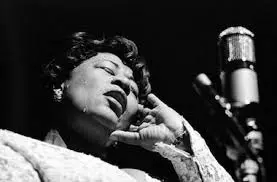
Ella Fitzgerald, affectionately known as ‘The First Lady of Song,’ is the embodiment of technical perfection paired with interpretative joy. Her story began with a challenge on the Apollo Theater stage in 1934, where, at age 17, she chose to sing instead of dance. From that moment, the world was introduced to a voice with a three-octave range and a clarity of diction that turned every word into a polished gem.
What set Ella apart from her contemporaries was her purely instrumental musicianship. While other singers focused on lyrical drama, Ella treated her voice like a trumpet or a saxophone. She was the supreme master of scat singing; her improvisations on tracks like ‘How High the Moon’ or ‘Mack the Knife’ are masterclasses in harmony and rhythm, where she engaged with the orchestra with the same agility as a Bebop instrumentalist.
Her greatest historical contribution was the Great American Songbook series, recorded under the Verve label. By documenting the definitive works of composers such as Cole Porter, Irving Berlin, Rodgers & Hart, and the Gershwins, Ella did more than just preserve the classic American repertoire—she gave it definitive authority. Her interpretations were so pure and accurate that Cole Porter himself once remarked he never knew how good his songs were until he heard Ella sing them.