From Engenho Novo to Beco das Garrafas
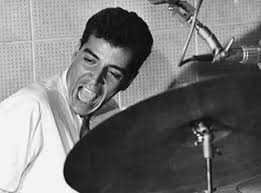
Brazilian jazz in the 1960s is often remembered through harmony: the sophisticated chords of Antônio Carlos Jobim, the understated guitar of João Gilberto, the pianists who carried bossa nova into instrumental settings and the composers who transformed samba through increasingly elaborate arrangements. Yet another revolution was taking place lower in the ensemble, inside the rhythm section. Edison Machado helped change not only how Brazilian drummers played samba but how the drum kit itself could function within modern Brazilian music. His approach gave the cymbal a new prominence, opened rhythmic space between the instruments and helped establish the propulsive language that would become central to samba-jazz. The famous expression associated with him, samba no prato — samba played on the cymbal — describes part of that transformation, but it does not explain its full importance. Machado’s achievement was not simply the invention of a pattern. He reorganized the balance of the drum kit at a moment when Brazilian musicians were searching for new ways to reconcile samba’s rhythmic identity with the improvisational freedom, instrumental intensity and small-group interaction they admired in modern jazz.
Edison dos Santos Machado was born in Rio de Janeiro on January 31, 1934, and grew up in Engenho Novo, far from the polished image that would later become associated internationally with bossa nova’s beachfront modernism. His musical education developed largely through experience rather than conservatory training. He was essentially self-taught, learning by listening, observing other drummers and working out solutions on the instrument itself. This distinction mattered because the drum kit was still relatively young within Brazilian popular music. Samba had developed through an enormous percussion vocabulary long before the modern drum set became a standard component of professional ensembles, and drummers faced a fundamental problem: how could the layered functions of Brazilian percussion be translated onto an instrument originally organized around another musical tradition?
Finding Samba Inside the Drum Kit
Machado did not begin with an empty vocabulary. Brazilian drummers before him had already worked seriously on the problem of adapting samba to the drum set, and Luciano Perrone was particularly important in establishing the instrument within Brazilian music. What Machado represented was another stage of that development. His generation had access not only to Brazilian rhythmic traditions but also to recordings by American jazz musicians whose approach to the drum kit suggested radically different possibilities. The modern jazz drummer was no longer merely keeping time. Musicians such as Max Roach and Art Blakey demonstrated how the entire kit could participate in an improvisational conversation, using cymbals, snare, bass drum and toms as independent but coordinated voices.
Machado absorbed that sense of mobility without abandoning samba. This is essential to understanding why his playing cannot be described simply as Brazilian rhythm performed with jazz technique. The challenge was not to place one vocabulary on top of another. It was to discover a way of organizing the drum kit in which samba could retain its characteristic propulsion while the drummer gained greater freedom to respond to the ensemble.
The story most frequently associated with this discovery has become part of Brazilian jazz mythology. According to the account repeated in biographies of Machado, he was playing samba as a teenager when the head of his snare drum broke. Rather than stop, he transferred the principal timekeeping function to the ride cymbal with his right hand and redistributed accents elsewhere on the kit. From this accident came what would become known as samba no prato. Whether every detail of the story occurred exactly as later retellings describe is less important than the musical practice it identifies. Machado became closely associated with moving the continuous samba pulse toward the cymbal, freeing the snare and other parts of the kit to interact more independently with the music.
That change had enormous consequences. When the cymbal carries a steady stream of subdivisions, the drummer’s other limbs become available for accents, interruptions and responses. The bass drum can reinforce selected points rather than merely duplicate a fixed pattern, while the snare can converse with the ensemble instead of carrying the entire rhythmic burden. The sound becomes simultaneously lighter and more aggressive: lighter because the cymbal creates an airy upper layer, aggressive because accents can arrive with extraordinary force underneath it. Machado developed a way of playing in which momentum remained unmistakably connected to samba even when the internal details of the pattern were constantly changing.
This was not bossa nova drumming in the narrow sense that later became internationally familiar. Machado could play with tremendous volume and physical intensity. His swing was not based on reducing samba to a discreet accompaniment behind a singer or guitarist. He treated rhythm as an active force capable of pushing an instrumental ensemble forward. That quality would become fundamental to samba-jazz.
Gafieiras, Work and the Education of a Drummer
Machado’s real school was professional performance. Rio’s nightlife provided the conditions in which rhythmic ideas could be tested repeatedly, particularly in gafieiras and clubs where musicians had to sustain dancers, singers and instrumentalists across long evenings. Playing samba in such environments required something different from practicing patterns in isolation. Tempo had to remain convincing, the music had to breathe with other musicians, and rhythmic invention could never come at the expense of the collective pulse.
The gafieira tradition was particularly significant because it brought together dance music, samba, brass arrangements and instrumental skill in a setting where rhythm remained physically connected to bodies in motion. Machado’s later reputation as an explosive drummer makes more sense when placed in this environment. His rhythmic language was not developed solely for attentive concert listening. It came from music that had to move.
During his period of military service in the early 1950s, Machado also crossed paths with trombonist Raul de Souza, another musician who would become important to the development of modern Brazilian instrumental music. Their paths would intersect repeatedly, including years later on Machado’s landmark album Edison Machado É Samba Novo. Connections like this were typical of the Rio scene. The musicians who would eventually appear on records identified with bossa nova and samba-jazz were developing through overlapping clubs, orchestras, radio work, recording sessions and informal encounters rather than through isolated stylistic movements.
By the middle of the decade, Machado was increasingly present in the professional scene, and in 1957 he joined one of the ensembles that anticipated the instrumental explosion to come: Turma da Gafieira.
Turma da Gafieira
Turma da Gafieira occupies an important position in the history of Brazilian instrumental music because it brought the energy and repertory associated with Rio dance halls into a modern recording context. The group’s recordings appeared before bossa nova became an international phenomenon, and they document musicians already experimenting with the relationship between samba, jazz-oriented arranging and instrumental improvisation.
For Machado, the ensemble provided an ideal environment. The music required rhythmic authority but also flexibility, and the presence of accomplished instrumentalists meant that the drummer was interacting with arrangements rather than merely accompanying songs. Turma da Gafieira recorded in 1957, and Machado’s participation placed him inside a generation that was beginning to push Brazilian instrumental music toward a new degree of rhythmic and harmonic sophistication.
The significance of this period is easily obscured when Brazilian jazz history is made to begin with the arrival of bossa nova in 1958. The innovations associated with the following decade did not suddenly appear when João Gilberto recorded “Chega de Saudade.” Musicians had already been developing new approaches in clubs, dance halls and recording studios. Machado’s samba no prato belongs to this pre-bossa history, as does his experience with musicians who were already finding ways to bring jazz vocabulary into Brazilian ensemble playing.
When bossa nova arrived, therefore, Machado was not a drummer waiting for a new movement to give him direction. He already possessed a rhythmic identity.
Copacabana After Midnight
The geography of Rio’s music scene shifted dramatically as Machado’s career developed. Copacabana became one of the central locations for the new music, and a narrow alley off Rua Duvivier acquired an importance completely disproportionate to its size. The Beco das Garrafas — Bottles Alley — became associated with clubs such as Bottle’s, Little Club and Bacará, where musicians could perform in intimate conditions late into the night. The name itself referred to bottles reportedly thrown from nearby apartments by residents frustrated with the noise below, an appropriate image for a scene whose music was becoming increasingly difficult to contain.
The Beco is often remembered primarily as a birthplace of bossa nova, but that description can be misleading. The quieter vocal and guitar language that defined bossa nova internationally was only part of what happened there. Instrumental musicians used the clubs as laboratories. Samba could become faster and more aggressive, jazz improvisation could occupy greater space, and small ensembles could experiment with rhythmic interaction in ways that differed substantially from the restrained image exported on many bossa nova recordings.
Machado belonged naturally in this environment. His playing possessed the propulsion required by samba while offering improvisers the kind of rhythmic responsiveness they associated with jazz. Pianists could push against the beat, bassists could create increasingly independent lines and horn players could stretch solos without losing the underlying Brazilian pulse. The drummer was no longer simply preserving the rhythmic identity of the music beneath everyone else. Machado could influence where the performance went.
This distinction is central to samba-jazz. The style did not emerge merely because Brazilian musicians began taking longer solos. The rhythm section itself changed. Piano, bass and drums developed a degree of interaction closer to the modern jazz trio while retaining rhythmic structures derived from samba. Machado’s contribution was fundamental because his approach to the kit created room for that interaction.
The Bossa Três
One of the clearest expressions of this development came through Bossa Três, formed with pianist Luiz Carlos Vinhas and bassist Tião Neto. The instrumentation was deceptively familiar: piano, bass and drums, the classic jazz trio format. What distinguished the group was the rhythmic language inside that format. The trio could approach Brazilian compositions with the freedom of a modern jazz ensemble while maintaining a samba foundation strong enough to prevent the music from becoming simply American jazz played by Brazilian musicians.
Vinhas was an important partner for Machado because his piano playing combined harmonic sophistication with rhythmic drive. Tião Neto provided the third side of the triangle, connecting the pulse while remaining responsive to both piano and drums. Machado’s samba no prato could establish forward movement without occupying every rhythmic space, allowing bass and piano to participate in the groove rather than merely sit above it.
The Bossa Três made its debut in Rio in 1962 and soon became part of the international expansion of Brazilian music. That same period would take Machado to the United States, where Brazilian musicians suddenly found themselves presented to American audiences as representatives of a musical revolution. For Machado, the encounter had particular significance. He was entering the country whose jazz recordings had helped shape his understanding of the drum kit, but he was no longer arriving simply as a student of American music. He carried a rhythmic approach that had developed in Rio through samba, gafieiras, clubs and years of experimentation.
The exchange was becoming reciprocal.
Before “Samba-Jazz” Became a Category
By the early 1960s, the ingredients of what would increasingly be called samba-jazz were already in place. The term itself is useful as a historical orientation, but the musicians did not need a perfectly defined category before creating the music. They were responding to practical musical questions. How could a trio retain the rhythmic force of samba while giving improvisers more freedom? How could a drummer create continuous momentum without filling every space? How could modern jazz harmony coexist with Brazilian rhythmic organization without one simply imitating the other?
Machado’s playing provided answers that could be heard rather than formulated as theory. The cymbal carried the music forward while the rest of the kit remained available for interaction. Accents could answer a pianist’s phrase or intensify a horn solo. The bass drum could participate dynamically rather than function as an automatic metronomic marker. The drummer could shape the ensemble from inside the rhythm.
This helps explain why musicians who worked with Machado remembered more than a particular beat. Bassist Tião Neto emphasized the extraordinary swing of his samba no prato, while later drummer Pascoal Meirelles argued that Machado’s significance extended beyond the invention itself to the modern conception he brought to Brazilian drumming. Such testimony points toward the larger achievement: Machado changed expectations about what a samba drummer could do.
His playing was also unmistakably personal. Accounts from musicians who knew him describe intensity, confidence and an unwillingness to disappear politely into the background. That temperament became part of his sound. Machado could propel an ensemble so forcefully that other musicians had to respond, and this made him particularly suited to the instrumental groups emerging from Rio’s clubs.
Toward a New Brazilian Instrumental Music
The years between Turma da Gafieira and Bossa Três transformed Machado from an innovative Rio drummer into one of the musicians positioned at the center of a rapidly changing Brazilian scene. Bossa nova was opening international doors, but the instrumental movement developing alongside it had different ambitions. The musicians surrounding Machado wanted to preserve samba’s rhythmic identity while extending the possibilities of arrangement and improvisation. They listened to American jazz without accepting the idea that modernity required abandoning Brazilian rhythm, and they embraced the small-group format without treating it as a neutral container imported from elsewhere.
Machado was ideally placed at this intersection because his innovation had begun with the physical organization of the drum kit itself. Samba no prato gave the music a new surface, but beneath that recognizable cymbal pattern lay a broader conception of rhythmic independence. Every part of the kit could contribute to the conversation, and the drummer could respond to the ensemble without sacrificing the continuity that made the music samba.
By 1962, the Bossa Três had carried that conception beyond Rio. The trio would travel to the United States, appear before American audiences and participate in the extraordinary moment when Brazilian music became an international phenomenon. Machado would also work with Sérgio Mendes and enter recording sessions connected with some of the most important figures of the period.
But the decisive statement under his own name had not yet arrived.
In 1964, surrounded by Tenório Jr., Tião Neto, Paulo Moura, Pedro Paulo, Ed Maciel, Raul de Souza and J. T. Meirelles, Edison Machado would make a record that placed his rhythmic conception at the center of an entire ensemble.
Its title was both declaration and description:
Edison Machado É Samba Novo.
Buy Amazon
Bossa Três and Edison Machado É Samba Novo
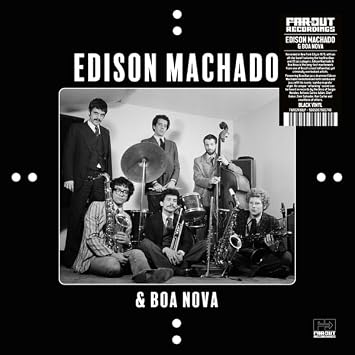
When Edison Machado arrived in the United States with Bossa Três in 1962, he entered a jazz culture he had studied for years from a considerable distance. American drummers had helped expand his understanding of what the drum kit could do, but Machado was no longer traveling merely as an admirer of that tradition. With pianist Luiz Carlos Vinhas and bassist Tião Neto, he belonged to a generation of Brazilian musicians carrying something distinctly their own into the international jazz conversation. Bossa Três took the familiar piano-bass-drums format and reorganized it around Brazilian rhythm, allowing the improvisational freedom of a modern jazz trio to coexist with the propulsion of samba. Their American experience, which included television exposure, recording sessions and appearances in New York clubs, occurred during the first great wave of international interest in bossa nova. Yet the trio represented a harder and more rhythmically assertive side of the Brazilian scene than the intimate guitar-and-voice sound many American listeners were beginning to associate with the new music. Machado’s cymbal-driven samba was central to that distinction.
Bossa Três had emerged from Rio’s Beco das Garrafas with precisely the kind of collective understanding that could survive outside Brazil. Vinhas was not simply supplying sophisticated chords while Machado played Brazilian rhythm underneath him. Piano, bass and drums interacted continuously, and the trio’s instrumental format left no singer or horn player permanently occupying the foreground. That placed greater responsibility on the rhythm section while simultaneously dissolving the idea that it existed only to accompany someone else. In the United States the group appeared on the Ed Sullivan Show and recorded for Audio Fidelity, one of several labels attempting to respond quickly to the sudden American fascination with Brazilian music. The experience exposed Machado to the commercial machinery surrounding bossa nova, but it also demonstrated that Brazilian instrumental groups could communicate without softening their rhythmic identity to fit the most marketable image of the movement.
New York, Bossa Nova and a Broader Musical Exchange
The international bossa nova boom of 1962 and 1963 is often told as a story of American musicians discovering Brazilian harmony and rhythm, but the exchange was more complicated. Brazilian musicians had been listening to American jazz for years, while American players were now trying to understand rhythmic and harmonic ideas that had developed in Rio. Machado stood directly inside this two-way circulation. His playing carried traces of the modern jazz drummers he admired, yet samba remained the organizing principle. The ride cymbal did not simply reproduce American swing with Brazilian accents added elsewhere. Its subdivisions and the coordination of the rest of the kit created a different rhythmic balance, one that allowed Machado to maintain samba’s forward motion while reacting to improvisers with unusual freedom.
His work during these years extended well beyond Bossa Três. Machado became part of a dense network of sessions involving musicians who were defining Brazilian instrumental music in real time. He recorded in contexts associated with Antônio Carlos Jobim, Laurindo Almeida, Stan Getz and Sérgio Mendes, moving between projects that international audiences might place broadly under the bossa nova label even when the music itself contained very different approaches to rhythm and improvisation. This flexibility was important. Machado was not a drummer who required every ensemble to become a vehicle for his signature technique. Samba no prato gave him a recognizable foundation, but he could adjust its weight, dynamics and degree of interaction according to the music around him.
His association with Sérgio Mendes is especially useful for understanding the period because Mendes was pursuing an instrumental language in which arrangements, jazz improvisation and Brazilian compositions could coexist on a larger scale than the piano trio. The Sexteto Bossa Rio included a rotating constellation of musicians associated with the Rio scene, among them Machado, Tião Neto, Raul de Souza and Edson Maciel. The ensemble’s history overlapped with the international expansion of Brazilian music and helped establish connections that would reappear in Machado’s own work. Several of the musicians surrounding Mendes would soon participate in the drummer’s most ambitious recording as a leader.
By 1964, Machado had reached a point where a record under his own name could represent something more substantial than a drummer’s showcase. He had years of experience in gafieiras, had participated in Turma da Gafieira, helped establish Bossa Três, worked in the Beco das Garrafas and encountered the American jazz environment directly. More importantly, he belonged to a community of arrangers and instrumentalists who were developing a sophisticated language for Brazilian small-group jazz. When he assembled the musicians for Edison Machado É Samba Novo, the objective was not simply to place his drums at the front of the mix. The album would present an entire conception of modern Brazilian instrumental music.
Edison Machado É Samba Novo
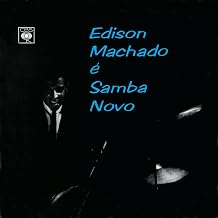
Released by CBS in 1964, Edison Machado É Samba Novo brought together an exceptional ensemble: Machado on drums, Tenório Jr. on piano, Tião Neto on double bass, J. T. Meirelles on tenor saxophone, Paulo Moura on alto saxophone, Pedro Paulo on trumpet, Ed Maciel and Raul de Souza on trombones. The arrangements were divided among Moacir Santos, Paulo Moura and Meirelles, three musicians whose approaches to orchestration and Brazilian rhythm gave the record a breadth that a single arranger might not have produced. The repertory likewise connected several of the most important compositional currents in Brazilian music, including pieces by Moacir Santos, Baden Powell, Vinicius de Moraes, Mário Telles, Meirelles, Rildo Hora and Clóvis Mello.
The instrumentation immediately distinguishes the album from the piano-trio conception associated with Bossa Três. Here Machado’s drums sit beneath a substantial horn section capable of creating dense ensemble passages, sharp accents and contrasting instrumental colors. That density makes his rhythmic approach even more revealing. Samba no prato is not valuable because the cymbal constantly demands attention; it is valuable because it creates continuity while leaving space for the arrangements. The ride can carry the subdivision above the ensemble while snare and bass drum respond to brass figures, reinforce transitions or provoke the soloists. Machado is simultaneously timekeeper, orchestrator and improvising participant.
The opening “Nanã,” associated with Moacir Santos, establishes this balance immediately. Rather than treating the composition as a vehicle for a spectacular drum entrance, the arrangement lets the ensemble announce itself collectively. The horns create a strong architectural frame while Machado supplies a restless rhythmic surface underneath. Tenório Jr.’s piano and Tião Neto’s bass occupy the crucial middle ground between written arrangement and rhythmic freedom, and the result demonstrates why the record cannot be understood merely as an album “by a drummer.” Machado leads by shaping how everyone else can move.
This becomes even clearer across the pieces arranged by J. T. Meirelles. “Aboio,” “Miragem,” “Quintessência” and “Solo” belong to the same instrumental world that produced Meirelles e os Copa 5 and the harder-edged side of samba-jazz. Their themes are concise enough to establish identity quickly, but the arrangements leave room for improvisation and rhythmic expansion. Machado responds not by maintaining an identical samba pattern from one composition to another but by adjusting the internal pressure of the groove. Cymbal articulation, snare accents and bass-drum placement become part of the arrangement even when they are not written as horn lines are.
Tenório Jr. and the Rhythm Section
Tenório Jr. deserves particular attention because his piano playing gives Samba Novo much of its harmonic and rhythmic character. Only in his early twenties at the time, he was already developing the forceful approach that would make his own Embalo another important document of Brazilian instrumental music. His relationship with Machado is based on rhythmic equality rather than conventional accompaniment. Chords can become percussive events, single-note lines can interact with the cymbal pattern, and harmonic movement can generate additional rhythmic tension instead of merely providing a progression over which the drummer plays.
Tião Neto completes this relationship with a bass approach flexible enough to support the arrangements without locking the trio into a rigid pattern. The familiarity between Neto and Machado, strengthened through Bossa Três, is important. They already understood how samba could function inside an interactive jazz rhythm section. On Samba Novo, that experience becomes the foundation beneath a much larger ensemble. The horns may give the album its most immediately recognizable color, but piano, bass and drums provide the elasticity that prevents the arrangements from becoming static.
This is also where Machado’s connection with American jazz becomes most productive. The record contains the energy and instrumental ambition associated with hard bop, but its rhythmic logic is not imported from New York. Machado does not simply place samba percussion beneath bebop horn lines. The entire ensemble has been reorganized around Brazilian pulse. That distinction explains why the strongest samba-jazz recordings of the period sound neither like bossa nova with longer solos nor like American jazz with Brazilian decoration. They constitute a language developed through genuine interaction between traditions.
Moacir Santos, Paulo Moura and the Architecture of the Album
The presence of multiple arrangers gives Samba Novo an unusually varied internal structure. Moacir Santos arranged “Nanã,” “Se Você Disser Que Sim” and “Menino Travesso,” while Paulo Moura handled “Só Por Amor,” “Tristeza Vai Embora,” “Coisa Nº 1” and “Você”; Meirelles was responsible for “Aboio,” “Miragem,” “Quintessência” and “Solo.” These were not anonymous craftsmen decorating a drummer’s project. Each belonged to the transformation of Brazilian instrumental music taking place around Machado.
Moacir Santos brought an especially distinctive understanding of orchestral color and rhythmic organization. His compositions resist easy separation into melody, harmony and percussion because those elements frequently operate as part of the same design. That made his music particularly compatible with Machado. “Nanã” and “Coisa Nº 1,” though represented through different arranging hands on the album, belong to a compositional world in which repeated figures and unusual harmonic movement can generate momentum without relying on standard jazz structures.
Paulo Moura approached the material with his own experience as saxophonist and arranger, while Meirelles brought the direct knowledge of samba-jazz developed through his work as both composer and instrumentalist. Moving among their arrangements gives the album variety without making it feel like a compilation. Machado’s rhythmic identity holds the sessions together.
That is the real meaning of the title.
“Samba Novo” does not require us to claim that everything on the album had never existed before. Brazilian instrumental music had been evolving for years, and Machado himself belonged to that history. The title works because the record captures musicians actively constructing a modern conception of samba rather than preserving an inherited form unchanged.
More Than “Samba no Prato”
It would be easy to use Edison Machado É Samba Novo as evidence for a simple argument: Machado invented samba no prato, then made an album demonstrating it. The music deserves a more ambitious reading. The technique mattered because it enabled a broader conception of ensemble rhythm. Machado’s cymbal created continuity, but the independence of his limbs allowed him to respond to arrangements and improvisers without surrendering that continuity. In effect, he could make the drum kit perform several functions simultaneously.
This is why his influence cannot be reduced to a transcription of a ride-cymbal pattern. Another drummer could reproduce the subdivision and still miss the essential quality of Machado’s playing. The crucial element is the relationship between pulse and reaction. He can establish a groove strongly enough to give the ensemble direction while constantly modifying its internal details. A horn accent can trigger an answer from the snare. A piano phrase can alter the density of the next measure. A soloist can provoke the drums without forcing the music away from samba.
The result is a form of rhythmic leadership that does not require continuous soloing. Machado’s presence is unmistakable precisely because he affects how the entire ensemble behaves.
A Record at the Center of Samba-Jazz
Edison Machado É Samba Novo appeared during an extraordinary period for Brazilian instrumental music. In and around 1964, records by Meirelles e os Copa 5, Tenório Jr., Sérgio Mendes and other musicians were demonstrating how many different directions could emerge from the encounter between samba and modern jazz. There was no single standardized samba-jazz formula. Some groups favored compact horn arrangements, others emphasized piano trio interaction, and still others moved toward more complex orchestration. What connected them was an unwillingness to treat Brazilian rhythm as a static background.
Machado was one of the musicians who made that transformation possible. His album stands at the center of the period not because every samba-jazz recording followed its model, but because it brings together so many of the scene’s crucial figures in a setting where rhythm becomes structural. Tenório Jr., Tião Neto, Paulo Moura, Pedro Paulo, Ed Maciel, Raul de Souza and Meirelles do not appear as supporting characters in the biography of a famous drummer. They form an ensemble whose collective intelligence allows Machado’s ideas to become audible at full scale.
The record also reveals the limitation of describing Machado primarily through bossa nova. He participated in the movement’s world and benefited from the international attention surrounding Brazilian music, but Samba Novo possesses a harder rhythmic edge and a more overtly instrumental ambition than the intimate aesthetic most commonly associated with bossa nova abroad. Its relationship with jazz is not cosmetic. Improvisation changes the shape of performances, and the rhythm section participates actively in that process.
By the end of 1964, Edison Machado had moved far beyond the accidental innovation traditionally associated with a broken snare drum. Samba no prato had become part of a mature musical language, and Edison Machado É Samba Novo showed what could happen when that language was placed inside an ensemble of musicians capable of answering it.
Yet the stability suggested by such an achievement would not last. Brazil itself was changing rapidly after the military coup of 1964, and the musical world in which Machado had built his reputation would become increasingly difficult to separate from the country’s political and cultural upheaval. His career would eventually take him away from Rio, through Europe and finally to New York, where he would spend years working far from the scene that had made him one of Brazil’s most distinctive drummers.
The next chapter would be less straightforward than the rise that preceded it, but Machado’s rhythmic language would travel with him.
Buy Amazon
Exile, New York and the Legacy of Samba no Prato
The achievement of Edison Machado É Samba Novo might suggest the beginning of a long and increasingly visible career as a bandleader. Instead, the years that followed became more complicated. Edison Machado remained one of the most distinctive drummers in Brazilian music, but the musical environment around him was changing, as was Brazil itself. The military coup of 1964 began a political period that would become progressively more repressive, while Brazilian popular music was moving through transformations that altered the professional landscape for instrumental musicians. Bossa nova’s first international explosion had passed, MPB was becoming a major cultural force, television festivals were reshaping popular attention, and a new generation was developing approaches ranging from Tropicália to increasingly experimental instrumental music. Machado continued recording and performing through this changing landscape, but his career never settled into the straightforward progression that the importance of Samba Novo might have predicted. His subsequent journey would eventually carry him out of Brazil and into a prolonged period abroad, including years in New York, where one of the architects of modern Brazilian drumming found himself working far from the scene he had helped transform.
Machado remained active in important Brazilian sessions during the second half of the 1960s. His discography from the period demonstrates how deeply embedded he was in the professional world of Rio rather than existing only as the leader of one celebrated samba-jazz album. He appeared in projects involving major singers, composers and instrumentalists, bringing a rhythmic personality that could be adapted to very different circumstances. This adaptability is important because the force of Machado’s playing sometimes encourages an image of him as a drummer suited only to aggressive instrumental samba. In practice, he understood dynamics and accompaniment as thoroughly as he understood propulsion. The same independence that allowed him to drive a jazz ensemble also allowed him to alter the weight of his playing according to an arrangement, a vocalist or the size of a group. Samba no prato was never a demand that every performance sound the same; it was part of a larger rhythmic vocabulary.
Brazil After Samba Novo
The second half of the decade also revealed a paradox surrounding the generation that had created samba-jazz. Brazilian music was receiving extraordinary international attention, yet the domestic space for instrumental jazz remained fragile. Some musicians found opportunities abroad, others entered television and studio work, and many moved between commercial sessions and more adventurous projects. The Beco das Garrafas era could not remain permanently suspended in the early 1960s. Clubs changed, audiences changed, and musicians who had developed together began following increasingly separate paths.
Machado continued to be heard in this environment, including alongside figures who had shared the formative years of samba-jazz. His rhythmic conception had already become part of the vocabulary available to Brazilian drummers, even as the music surrounding it evolved. The cymbal-led samba that had once sounded like a radical reorganization of the kit was becoming something younger musicians could study, adapt and transform. This is one of the peculiar consequences of genuine innovation: once an idea enters common musical practice, it can become difficult for later listeners to hear how disruptive it originally was.
To understand Machado’s importance, it is therefore necessary to imagine Brazilian drumming before the language he helped establish became familiar. The drum kit had to negotiate a music whose rhythmic organization had historically been distributed among several percussion instruments. Machado’s solution did not attempt to imitate every percussion voice literally. Instead, he created a coordinated system in which the ride cymbal could maintain continuous movement while snare, bass drum and the rest of the kit articulated different layers around it. The drummer gained freedom because the pulse no longer depended upon repeating the same physical gesture across the entire instrument.
By the late 1960s, that idea was already circulating beyond Machado himself.
Leaving Brazil
Machado’s career eventually moved increasingly outside Brazil. Like a number of Brazilian musicians of his generation, he spent significant periods abroad, first encountering European musical environments and later establishing himself in the United States. Political conditions in Brazil form part of the background to this movement, but they should not be used as a simplistic explanation for every professional decision he made. Musicians traveled for many reasons: work, artistic opportunity, economic necessity, personal circumstances and the possibility of entering larger international networks. In Machado’s case, the move abroad became a major dividing line in his career.
Paris was one of the important points in this international phase. The city had long functioned as a meeting place for musicians from Europe, the Americas and Africa, and Brazilian artists found an audience there that extended beyond the initial bossa nova boom. For Machado, working abroad also placed his drumming in contexts where samba could no longer be assumed as a shared native language. The rhythmic concepts he had developed in Rio now had to communicate with musicians whose relationship to Brazilian music might be completely different.
Eventually New York became the center of his life abroad. The move had an almost circular quality. Machado had first traveled to the United States during the period when bossa nova was entering American popular consciousness, carrying with him a rhythmic language partly shaped by his earlier fascination with modern jazz. Now he was returning as a mature musician whose own approach had become part of Brazilian jazz history.
New York, however, did not automatically reward historical importance. The city was filled with exceptional musicians competing for work, and Brazilian instrumentalists did not necessarily arrive with the visibility their reputations at home might suggest. Machado worked, performed and maintained musical relationships, but his American years did not turn him into an international jazz celebrity. His story consequently resists the convenient narrative in which innovation inevitably leads to recognition.
Boa Nova and a Musician Still in Motion
One of the valuable documents of Machado’s later career is Boa Nova, recorded during his years abroad and eventually preserved as part of his discography. The album matters because it prevents his recorded legacy from ending conceptually in 1964. Listening only to Edison Machado É Samba Novo can freeze him at the moment when samba-jazz was exploding in Rio, as though everything important about his musicianship belonged to that specific historical scene. His later recordings show a drummer who continued to work through the consequences of the rhythmic language he had developed.
The circumstances were different, and so was the surrounding musical world. By then jazz had passed through free jazz, electric fusion and numerous post-bop transformations, while Brazilian music had experienced Tropicália, the expansion of MPB and new generations of instrumental experimentation. Machado did not need to imitate those movements in order to remain relevant. His importance came from the strength of the rhythmic conception he already possessed and his ability to apply it without reducing it to a nostalgic reconstruction of early-1960s Rio.
That distinction becomes essential when considering his legacy. Musical innovators are often celebrated by identifying the single moment when they supposedly “changed everything,” but a working musician has to live after that moment. Machado still had to accompany, improvise, travel, find jobs and adapt to changing professional environments. The historical reputation attached to samba no prato did not remove those practical realities.
His later career was therefore less visible than his foundational period, but not less revealing. It shows the difference between influence and fame. Machado’s ideas could circulate widely even when Machado himself was not occupying the center of the international jazz industry.
What Samba no Prato Actually Changed
The most durable part of Machado’s legacy is naturally associated with samba no prato, yet the phrase can become misleading if treated merely as the name of a drum pattern. Its deeper importance lies in the redistribution of responsibilities around the kit. By transferring the continuous articulation of samba toward the cymbal, Machado helped create a system in which the drummer could preserve rhythmic momentum while increasing independence among the limbs. The snare could accent, converse and interrupt; the bass drum could reinforce selected points in the groove; toms could become part of transitions and responses rather than simply decorative additions.
This changed the relationship between drummer and ensemble. A pianist improvising over samba no longer needed the drums to repeat an inflexible accompaniment beneath every phrase. The drummer could respond. A horn section could deliver an accent and receive an immediate rhythmic answer. A bassist could shift emphasis without causing the groove to collapse. The rhythmic foundation remained recognizable, but its internal organization became more elastic.
That elasticity is one reason Machado’s contribution belongs as much to the history of Brazilian jazz as to the history of samba drumming. Jazz depends on interaction, and Machado found a way to increase interaction without sacrificing the rhythmic identity of Brazilian music. He did not solve the relationship between samba and jazz once and for all; no musician could. What he did was create a particularly powerful answer that other drummers could hear and develop for themselves.
Later generations would take Brazilian drum-set language in many directions. Airto Moreira carried Brazilian rhythm into some of the most important jazz and fusion settings of the 1970s. João Palma, Dom Um Romão, Milton Banana, Wilson das Neves and numerous other drummers developed distinct approaches rather than forming a single school. Younger musicians continued expanding the vocabulary through fusion, MPB, instrumental jazz and contemporary Brazilian music. Machado’s importance within this history does not depend upon claiming that every subsequent drummer simply copied him. Influence is more interesting when it opens possibilities rather than producing replicas.
Beyond the Myth of the Inventor
This is also why the familiar description of Edison Machado as “the inventor of samba no prato” should be used carefully. It identifies a real and important association, but it can turn a complex musician into the protagonist of a single anecdote. The broken-snare story is memorable because it gives musical innovation a dramatic origin: an instrument fails, a young drummer improvises a solution, and a new technique is born. History is rarely that clean.
Brazilian drumming had been evolving before Machado, and other musicians were simultaneously confronting similar questions about how samba should function on a modern drum kit. Machado’s achievement belongs within that larger development. What makes him exceptional is not simply that he discovered a place on the cymbal where samba could be played. It is the authority with which he developed that concept and the degree to which it became integrated into an improvisational musical personality.
Listen again to Edison Machado É Samba Novo from that perspective and the difference becomes obvious. The record is not eleven demonstrations of an invention. It is ensemble music. Machado’s greatest accomplishment is heard in what happens around him: the way the horns can attack phrases, the way Tenório Jr. can play rhythmically against the pulse, the way Tião Neto can connect harmonic movement with groove. Machado creates conditions in which those musicians can take risks.
Leadership occurs through rhythm.
Return to Rio
Machado eventually returned to Brazil after his years abroad. By then the musical landscape was profoundly different from the one he had left. The Beco das Garrafas belonged to history, samba-jazz had become a recognized category, and musicians who had once been young experimenters were now reference points for another generation. Yet recognition of Machado’s historical importance did not necessarily translate into the kind of institutional security that might be expected for a musician of his stature.
He continued playing, carrying the same rhythmic identity through circumstances that were often less glamorous than the mythology surrounding the golden age of Brazilian jazz. His life ended suddenly in Rio de Janeiro on September 15, 1990. He was only fifty-six.
The relatively early death intensified the sense that Machado’s story had remained unfinished. There would be no long late-career period of festivals, retrospective albums and international rediscovery led by the musician himself. Much of the work of reconstructing his importance would fall to other musicians, researchers, collectors and listeners returning to the recordings.
That process has continued.
Hearing Edison Machado Now
The renewed interest in samba-jazz has changed the way records such as Edison Machado É Samba Novo are heard. What could once be treated internationally as a regional branch of the bossa nova story is increasingly understood as part of a much broader history of modern jazz. Brazilian musicians were not simply translating American jazz into Portuguese cultural terms. They were producing rhythmic and ensemble solutions that had their own logic and their own influence.
Machado stands near the center of that history because rhythm was not an accessory to his modernism. Rhythm was where the modernism happened.
His contribution can be heard in the ride cymbal, certainly, but also in the spaces created around it. It is present in the freedom given to the snare, in the relationship between drums and bass, in the way a pianist can enter and leave the rhythmic structure, and in the confidence with which an instrumental ensemble can play samba without becoming rigid. These are not spectacular innovations when described in isolation. Their significance emerges through performance.
That may be why Edison Machado remains more compelling as a musician than as a legend. The legend gives us the young drummer with the broken snare who accidentally discovers samba no prato. The records reveal something much larger: a musician who spent years developing an idea, testing it in gafieiras and clubs, carrying it through Turma da Gafieira and Bossa Três, placing it inside the ambitious arrangements of Samba Novo and continuing to live with it long after the historical moment that first made it revolutionary.
The title of that 1964 album now seems particularly appropriate. Edison Machado É Samba Novo did not declare that the old samba had become obsolete. It announced that samba could keep changing.
Machado’s career demonstrated exactly that. He listened to jazz without surrendering Brazilian rhythm, transformed the drum kit without disconnecting it from the music’s percussion ancestry and created greater freedom without weakening the pulse. His influence survived because the solution was never merely technical. It changed the relationship between the drummer and everyone else in the band.
Edison Machado did more than move samba onto the cymbal.
He helped give the modern Brazilian drummer a new place inside the music.