Before the 27 Choruses: Duke Ellington, Newport, and a Career at a Crossroads
On the night of July 7, 1956, Duke Ellington arrived at the Newport Jazz Festival carrying something far more complicated than the reputation of a legendary bandleader. He was already one of the foundational figures of American music, a composer whose career stretched back through the Cotton Club, the Swing Era, the extraordinary orchestra of the early 1940s and ambitious works that had challenged conventional ideas about what jazz composition could become. Yet the musical world surrounding him had changed dramatically. Bebop had transformed the vocabulary of modern jazz. Charlie Parker had come and gone. Dizzy Gillespie had become an international figure. Thelonious Monk was gradually moving from cult recognition toward wider acceptance. Miles Davis was defining a new kind of modern cool, while younger listeners increasingly associated jazz innovation with small groups rather than the great touring orchestras of the previous generation. Ellington had not stopped composing, touring or thinking creatively, but by the middle of the 1950s his position within the public narrative of jazz had become less secure.
Then came Newport.
The story is often told as a resurrection: Duke Ellington, supposedly fading into irrelevance, steps onto a festival stage; tenor saxophonist Paul Gonsalves plays twenty-seven consecutive choruses during “Diminuendo and Crescendo in Blue”; a woman begins dancing; thousands of people erupt; and Ellington’s career is suddenly reborn before midnight.
It is one of the greatest stories in jazz.
It is also too simple.
What happened at Newport was real, extraordinary and enormously consequential. But Ellington did not need to be artistically resurrected. He needed the broader culture to notice again what had never disappeared.
Ellington Before Newport
By 1956, Duke Ellington was fifty-seven years old. That fact alone helps explain how critics perceived him. Jazz was increasingly developing a culture of rapid stylistic change in which a musician associated with the previous generation could be treated as historical even while remaining creatively active.
Ellington had already experienced several careers within one lifetime.
The Cotton Club years had established his national reputation. During the 1930s, the orchestra developed an increasingly sophisticated identity through compositions including “Mood Indigo,” “Sophisticated Lady” and “It Don’t Mean a Thing (If It Ain’t Got That Swing).” The arrival of bassist Jimmy Blanton and tenor saxophonist Ben Webster, combined with the growing importance of Billy Strayhorn, helped produce the extraordinary early-1940s orchestra now frequently regarded as one of the great ensembles in jazz history.
Ellington had also refused to accept the idea that a jazz orchestra should exist only for dancing.
Black, Brown and Beige, premiered at Carnegie Hall in 1943, demonstrated ambitions extending toward long-form composition and African American historical narrative.
None of this disappeared in the 1950s.
But the context changed.
The Big Band Problem
The economics that had sustained the great Swing Era orchestras had deteriorated.
Touring a large ensemble was expensive. Musical tastes were changing. Small jazz groups required fewer musicians and could move more easily between clubs. Bebop had shifted the symbolic center of modern jazz away from the ballroom and toward smaller, more intensely improvisational ensembles.
Big bands increasingly risked being regarded as remnants of another era.
Ellington refused to surrender his orchestra.
That decision was both artistic and economic.
The band was his instrument.
His compositions depended on individual musicians whose sounds he understood with extraordinary precision. A conventional composer might write for alto saxophone, tenor saxophone or trumpet. Ellington frequently wrote with Johnny Hodges, Harry Carney, Clark Terry or Paul Gonsalves in mind.
Replace the personality and the composition changed.
Maintaining the orchestra therefore meant maintaining the laboratory in which Ellington composed.
Even when doing so was difficult.
The Myth of Decline
This is why describing the pre-Newport Ellington simply as a forgotten musician is misleading.
He was still recording.
Still touring.
Still composing.
Still leading an orchestra.
The problem was not creative disappearance.
It was cultural positioning.
Jazz criticism had become fascinated by newer languages. The story of modern jazz was increasingly being narrated through bebop and its descendants. Ellington belonged to the history everyone respected, but respect can become a dangerous form of distance.
A musician can be admired as a monument while listeners stop asking what he is doing now.
Newport would destroy that distance in a matter of minutes.
George Wein and the Newport Experiment
The Newport Jazz Festival itself was still young.
Founded by George Wein with support from Elaine and Louis Lorillard, the festival had begun in 1954 in Newport, Rhode Island. Its very existence reflected an important transformation in jazz culture.
Jazz could now occupy the festival stage.
It could attract large audiences outside the nightclub.
It could be presented as a serious American art form while retaining the excitement of live performance.
This environment was ideal for Ellington.
His orchestra possessed scale.
Color.
History.
And, crucially, enormous live power.
But nothing guaranteed that the 1956 appearance would become legendary.
It was simply another festival booking.
History often looks inevitable only after it happens.
The Orchestra That Came to Newport
The Ellington band arriving at Newport contained musicians capable of producing sounds no other orchestra could reproduce exactly.
Johnny Hodges remained one of jazz’s most distinctive alto saxophonists, capable of turning a melodic line into something almost vocal.
Harry Carney, whose relationship with Ellington stretched back decades, gave the baritone saxophone extraordinary authority.
Clark Terry brought elegance, wit and technical command to the trumpet section.
Ray Nance could contribute trumpet, violin and vocals.
Sam Woodyard supplied the drums with a combination of swing and power.
Jimmy Woode held the bass foundation.
And then there was Paul Gonsalves.
Gonsalves was not yet the musician whose name would forever be followed by the phrase “27 choruses.”
He was simply Ellington’s tenor saxophonist.
That was about to change.
Paul Gonsalves Before the Legend
Born in Massachusetts in 1920, Gonsalves had developed professionally through big-band jazz and had worked with Count Basie and Dizzy Gillespie before joining Ellington in 1950.
His tenor sound offered Ellington something different from the famous Ben Webster period.
Gonsalves could be lyrical, but he also possessed rhythmic endurance and an ability to build intensity across long improvisations.
Ellington understood his musicians.
That understanding was one of his greatest gifts as a bandleader.
He knew who could carry a melody.
Who could create drama.
Who could change the temperature of a room.
And he had discovered that Gonsalves could sometimes transform “Diminuendo and Crescendo in Blue” into something much larger than its original written form.
A Composition From 1937
One of the most fascinating aspects of the Newport story is that the music responsible for the supposed “rebirth” of Duke Ellington was not new.
“Diminuendo in Blue” and “Crescendo in Blue” dated from 1937.
Nearly twenty years separated their composition from Newport.
Originally conceived as separate pieces, they belonged to a very different Ellington era. But the band had developed a practice of connecting them with an improvised tenor saxophone passage.
That bridge gave the old composition new possibilities.
This is jazz at its most characteristic.
A composition is not frozen when written.
It travels.
Musicians change.
Arrangements evolve.
Performance history accumulates.
What had begun in 1937 could become something entirely different in 1956 without ceasing to be Ellington.
The Interlude Becomes the Event
The idea was straightforward.
The orchestra would play “Diminuendo in Blue.”
Gonsalves would improvise over a repeating blues-based sequence connecting the two pieces.
Then the band would enter “Crescendo in Blue.”
Nothing in that description explains what happened.
The structure itself was not revolutionary.
The transformation came from duration, accumulation and audience response.
Jazz improvisation usually creates drama through development. A solo begins somewhere, establishes ideas and gradually changes intensity.
Gonsalves was given unusual space to extend that process.
One chorus became another.
And another.
Instead of reaching a conventional conclusion, the solo kept going.
Repetition stopped functioning as repetition.
It became pressure.
Newport on July 7
The festival audience had already experienced a long evening.
Ellington’s appearance did not begin under ideal circumstances, and the performance unfolded amid the practical realities of a large outdoor event rather than the controlled environment of a recording studio.
This is another reason the resulting moment matters.
Nothing had been engineered as a career-defining spectacle.
The conditions were imperfect.
The schedule was imperfect.
The recording circumstances would later prove complicated.
And yet live jazz thrives on precisely this instability.
A studio asks musicians to capture a performance.
A stage asks them to create one.
At Newport, the audience became part of the composition.
Ellington Sets the Stage
The concert contained more than one number, of course, and Ellington was not simply waiting for Gonsalves to produce a miracle.
The orchestra was presenting the breadth of its personality.
But Ellington understood pacing.
A great bandleader does not merely choose pieces.
He manages energy.
The decision to bring out “Diminuendo and Crescendo in Blue” created an opportunity for a different kind of climax.
The piece began with the orchestra.
Then came the transition.
Paul Gonsalves stepped forward.
What followed would alter the historical meaning of the entire concert.
Twenty-Seven Choruses
The number has become sacred in jazz mythology:
27.
Twenty-seven choruses.
It is tempting to treat the achievement as athletic.
How long could Gonsalves keep playing?
How much stamina did it require?
But endurance alone does not explain why the solo mattered.
A musician can play for a long time and say very little.
Gonsalves built intensity.
His phrases interacted with the rhythmic foundation beneath him. The blues structure provided continuity while he varied articulation, register, density and attack.
The solo did not need increasingly complex harmony.
It needed momentum.
The audience began hearing that momentum collectively.
And then someone started dancing.
The Woman in the Audience
One of the most famous details of the Newport story concerns a woman who began dancing near the stage during Gonsalves’s solo.
Her movement became a visual focus for an audience already responding to the music.
Others rose.
The energy spread.
Jazz history frequently emphasizes individual genius, but live performance is social.
A musician affects a listener.
The listener responds.
The musician hears that response.
The next phrase changes.
More listeners react.
A feedback loop forms.
At Newport, that loop became enormous.
Gonsalves was no longer merely soloing over the orchestra.
He was playing with the crowd.
Sam Woodyard and Jimmy Woode
The mythology understandably centers on the tenor saxophone, but twenty-seven choruses do not sustain themselves.
The rhythm section made the event possible.
Jimmy Woode on bass and Sam Woodyard on drums had to preserve the foundation while allowing intensity to grow.
This is one of the essential lessons of great jazz performance.
The famous solo may belong to one musician.
The conditions that make it possible belong to the ensemble.
Woodyard’s rhythmic authority was particularly important.
The solo needed propulsion without premature climax.
Too much intensity too early and there would be nowhere to go.
Too little and the audience’s excitement would dissipate.
The rhythm section held the road open.
Gonsalves drove.
Ellington Listening
And Ellington listened.
That may be the most important role he played during those minutes.
A lesser bandleader might have controlled the situation.
Twenty-seven choruses could appear excessive.
The schedule existed.
The arrangement had a planned continuation.
But Ellington recognized what was happening.
The audience was changing.
The soloist was responding.
The performance had moved beyond the arrangement without abandoning it.
This was precisely the kind of moment jazz exists to produce.
So Ellington allowed it to continue.
The composer gave way to the bandleader.
The bandleader gave space to the improviser.
And the improviser transformed the composition.
The Crowd Erupts
By the time Gonsalves approached the end of the solo, the atmosphere had changed completely.
People were standing.
Dancing.
Shouting.
Festival organizers had reason to worry that enthusiasm might become difficult to control.
Then the orchestra returned.
The transition into “Crescendo in Blue” transformed the accumulated energy of the solo into orchestral force.
And Ellington still had another weapon.
Cat Anderson.
Anderson’s extraordinary high-register trumpet could cut through an entire big band.
As the performance moved toward its conclusion, his sound pushed the intensity even higher.
What began as a piece from 1937 had become one of the most famous live events in jazz history.
Was This Really a Resurrection?
The newspapers and subsequent histories loved the narrative.
Duke was back.
Ellington had been reborn.
Newport saved his career.
There is truth inside those statements.
The concert generated enormous publicity. It brought Ellington renewed attention. The resulting album became exceptionally successful and introduced his orchestra to listeners who may have regarded him primarily as a figure from an earlier era.
But the word resurrection contains a problem.
You can only resurrect something that was dead.
Ellington’s creativity was not.
The orchestra was not.
The compositions were not.
What Newport resurrected was something closer to public urgency.
Suddenly Duke Ellington was not merely important because of what he had done.
He was important because of what had happened that night.
The Difference Between Legacy and Presence
That distinction is central to the entire Newport story.
Before the festival, Ellington already possessed legacy.
After Gonsalves’s solo, he possessed presence again.
A younger generation could hear the orchestra not as a museum of Swing Era greatness but as a living band capable of generating a level of excitement equal to anything in contemporary jazz.
This was not nostalgia.
Nobody danced because they were respectfully remembering 1937.
They danced because the music was happening now.
That is why the performance became transformative.
But the Record Has Another Story
If the Newport story ended there, it would already be extraordinary.
But the album Ellington at Newport introduces another layer.
The recording that generations came to know as documentation of that historic night was more complicated than it initially appeared. Technical problems affected the festival tapes. Parts of the commercially released album involved material recreated after the concert, and only decades later would restoration work allow listeners to hear a more complete representation of what actually occurred on the Newport stage.
That story changes how we understand one of jazz’s most celebrated “live” albums.
It also raises fascinating questions about memory, recording technology and the difference between the historical event and the record that creates our memory of it.
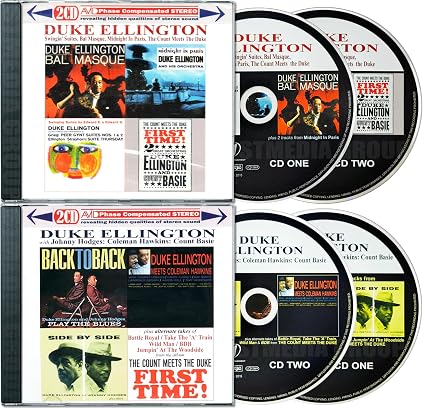
Buy Amazon
When the Arrangement Gave Way to the Moment
The legend of Duke Ellington at Newport is usually compressed into a single irresistible image: Paul Gonsalves standing before thousands of people and playing twenty-seven consecutive choruses while a previously seated festival audience rises, dances and threatens to turn an elegant jazz gathering into something far less controlled. The image is accurate enough to survive, but it can obscure what makes the performance so remarkable. Gonsalves did not simply play an exceptionally long tenor solo. He entered a structure that Ellington’s orchestra had been developing long before Newport, worked with a rhythm section capable of maintaining tension without exhausting it, responded to an audience whose behavior became part of the music, and created an improvisation whose cumulative force transformed a composition written nearly two decades earlier. The famous twenty-seven choruses were not an interruption of “Diminuendo and Crescendo in Blue.” They became the bridge that changed what the composition could mean.
The performance also reminds us that jazz history often depends on circumstances nobody could have planned. Gonsalves famously played into the wrong microphone—the one being used for the Voice of America broadcast rather than Columbia’s designated recording microphone. Producer George Avakian later recalled the problem, explaining that Gonsalves ignored attempts to redirect him and continued through the solo. That apparent technical mistake would eventually become crucial to reconstructing the concert. The very microphone error that complicated the original Columbia recording preserved the solo elsewhere.
The Blues as an Engine
The harmonic foundation beneath Gonsalves was relatively straightforward compared with the sophisticated orchestral writing associated with Ellington.
That simplicity mattered.
A repeating blues framework gives an improviser something exceptionally powerful: a structure stable enough to support increasingly adventurous rhythmic decisions.
Gonsalves did not need to negotiate a constantly changing harmonic maze. He could concentrate on phrasing, dynamics, articulation, register and momentum.
Each chorus created another opportunity.
The question was no longer, “What chord comes next?”
It became, “Where can this energy go?”
This distinction helps explain why counting the twenty-seven choruses tells us surprisingly little about the experience of hearing them.
The solo is not impressive merely because it is long.
Its achievement is that duration becomes drama.
Paul Gonsalves Builds Rather Than Explodes
Gonsalves does not begin at maximum intensity.
Had he done so, twenty-seven choruses would have been impossible to shape convincingly.
Instead, the improvisation develops through accumulation. Phrases begin to push harder against the pulse. Repetition becomes more insistent. Register and attack shift. Ideas that initially sound conversational acquire urgency through recurrence.
This is an old improvisational principle executed on an extraordinary scale.
Great soloists understand that climax requires preparation.
The louder, higher or denser material means more when the listener remembers the restraint that preceded it.
Gonsalves had performed the extended bridge between the two Ellington pieces before Newport; the device itself was not invented spontaneously that night. Sources devoted to his recorded work document earlier performances of the same “wailing interval.”
What changed at Newport was the relationship between soloist, rhythm section and audience.
The room—or rather the festival grounds—began answering him.
Jimmy Woode Holds the Ground
Behind Gonsalves stood bassist Jimmy Woode.
His contribution is easy to overlook because the mythology naturally directs attention toward the tenor saxophone. But a solo of this duration depends on rhythmic continuity.
Woode’s task was not glamorous.
It was essential.
The bass had to keep the harmonic and rhythmic foundation legible while allowing Gonsalves increasing freedom above it. If the pulse became uncertain, the solo would lose momentum. If the accompaniment became too elaborate, it could compete with the narrative developing in the tenor.
Woode supplied the floor.
Gonsalves could then decide how far above it he wanted to climb.
This is one of the recurring paradoxes of great rhythm-section playing: the more successfully the foundation works, the easier it becomes for listeners to forget how much responsibility it carries.
Sam Woodyard and Controlled Escalation
Drummer Sam Woodyard faced an equally demanding challenge.
The temptation during an increasingly excited solo is to push harder immediately.
But maximum intensity cannot be sustained indefinitely.
Woodyard instead helps the performance breathe.
He reinforces the pulse while giving Gonsalves room to determine the trajectory.
As the solo develops, the drummer can respond more forcefully, but the underlying swing never disappears.
The relationship demonstrates why jazz intensity is not simply volume.
Intensity comes from expectation.
A drummer can create excitement by withholding as effectively as by attacking.
Woodyard and Woode provided enough stability that Gonsalves could take risks without breaking the performance apart.
Duke at the Piano
Ellington’s role during the solo is equally fascinating.
He does not attempt to dominate his own composition.
Instead, his piano interventions become part of the rhythm section’s encouragement.
This was one of Ellington’s great qualities as a bandleader: he understood that leadership sometimes means becoming less visible.
The composition belonged to him.
The orchestra carried his name.
The concert could determine his own professional fortunes.
Yet once Gonsalves caught the audience, Ellington allowed the moment to expand.
He could hear that something unusual was happening.
A rigid bandleader might have insisted on returning to the arrangement.
Ellington recognized that the arrangement had opened a door.
His job was not to close it.
Then the Audience Changed
The Newport crowd was not behaving like the stereotypical image of a jazz-festival audience quietly appreciating sophisticated orchestral music.
People began responding physically.
A woman dancing near the stage became the most famous symbol of the transformation. Historical accounts identify her as Elaine Anderson, whose dancing helped focus the crowd’s growing excitement.
It is tempting to turn her into another piece of mythology: one woman dances and suddenly thousands erupt.
The reality is more interesting.
The audience was already hearing the escalation.
Her dancing made that excitement visible.
Once excitement becomes visible in a crowd, it spreads differently.
People who might remain seated when listening alone see permission to stand.
Movement produces more movement.
Applause produces louder applause.
The social boundaries of the concert begin changing.
When the Audience Becomes Part of the Rhythm Section
Live recordings occasionally capture something studio recordings cannot reproduce: the moment when an audience stops being background ambience and becomes a participant.
That happens at Newport.
As Gonsalves continues, the crowd’s reaction becomes part of what he hears.
He responds.
The crowd responds to the response.
A feedback loop develops.
This is why attempting to recreate the twenty-seven choruses note for note would miss their meaning.
The notes were only one part of the event.
The performance depended on thousands of people experiencing the same rising tension at the same time.
Jazz is often described as conversation between musicians.
At Newport, the conversation expanded beyond the stage.
Twenty-Seven Is Not a Magic Number
The number 27 has become so closely attached to the performance that it almost functions as the title.
Paul Gonsalves.
Twenty-seven choruses.
Newport 1956.
But there was nothing inherently magical about twenty-seven.
Gonsalves sometimes played even longer versions. Documentation from the Duke Ellington Music Society notes a performance shortly after Newport in which his solo extended to 38 choruses.
That fact helps us understand Newport.
The achievement was not a world record.
It was convergence.
Right musician.
Right orchestra.
Right audience.
Right night.
The 38-chorus performance did not replace Newport in jazz history because history is not determined by arithmetic.
The Return of the Orchestra
Eventually Gonsalves had to come out.
And this is where Ellington’s original architecture reasserts itself.
The tenor improvisation exists between “Diminuendo in Blue” and “Crescendo in Blue.”
After such an extended solo, the return of the orchestra carries enormous psychological weight.
For chorus after chorus, listeners have heard the relatively concentrated sound of tenor against rhythm.
Then the full ensemble returns.
Brass.
Reeds.
Mass.
Arrangement.
The effect is almost cinematic.
The solo has compressed the musical field.
The orchestra suddenly expands it.
The written music sounds larger because of the improvisation that preceded it.
This is composition and improvisation strengthening one another.
Cat Anderson Goes Upstairs
Ellington still had one more dramatic color available.
Cat Anderson’s trumpet was famous for its extraordinary high register.
In a big band already operating at intense volume, Anderson could rise above the ensemble with notes that seemed to occupy another level of the sonic field.
His contribution helped drive the final stages of the performance toward an even greater climax.
Again, this is Ellington the orchestrator at work.
He understood individual musicians as colors.
Paul Gonsalves was not simply “tenor saxophone.”
Johnny Hodges was not simply “alto saxophone.”
Harry Carney was not simply “baritone saxophone.”
Cat Anderson was certainly not merely “trumpet.”
Each musician represented a specific sound.
Ellington composed with people.
George Wein Has a Problem
For festival producer George Wein, the extraordinary audience reaction created a practical difficulty.
The concert was running late and the crowd was becoming increasingly excited.
A festival organizer has responsibilities a bandleader does not.
Schedules matter.
Curfews matter.
Crowd control matters.
Ellington, however, could sense that stopping the music abruptly would be almost absurd.
The performance had acquired momentum beyond the original program.
Historical accounts describe Wein trying to bring the proceedings under control while Ellington continued beyond the intended ending.
It is one of the beautiful tensions in live music.
The organizer needs the event to end.
The musicians know it cannot end yet.
“Diminuendo” Ends, But Newport Does Not
When “Crescendo in Blue” finally reaches its conclusion, the audience’s energy does not simply disappear.
Ellington has to manage what comes next.
That alone demonstrates the scale of what had occurred.
A normal successful performance ends with applause.
This performance created an audience that wanted the emotional state to continue.
Ellington understood showmanship well enough to handle that energy, but the historical event had already happened.
Nobody needed a critic to explain it.
Nobody needed record sales.
Nobody needed decades of retrospective mythology.
The people standing in Newport knew they had experienced something unusual.
The next problem was figuring out how to put it on a record.
Gonsalves Chose the Wrong Microphone
Columbia had microphones positioned to record Ellington’s performance.
The Voice of America was also recording for broadcast.
During the famous solo, Gonsalves stepped toward the VOA microphone rather than Columbia’s.
The consequences were substantial.
On Columbia’s tapes, the tenor was poorly captured relative to the band.
George Avakian later recalled that soloists had been instructed to use a designated microphone, but Gonsalves played elsewhere and continued despite attempts to redirect him.
The irony is extraordinary.
One of the most famous saxophone solos ever played at a jazz festival nearly became a recording-engineering disaster because the saxophonist was playing into another organization’s microphone.
Fortunately, the other microphone was recording too.
That would matter enormously decades later.
The Original Ellington at Newport
Columbia moved quickly to capitalize on the extraordinary response.
Ellington at Newport appeared in 1956, produced by George Avakian.
The album helped carry the Newport story far beyond the people who had attended the festival and became the most commercially successful LP associated with Ellington’s career.
For listeners buying the record, Newport became reproducible.
You could put the LP on at home and participate in the legend.
But there was a problem.
The record was not a transparent document of the concert.
The Studio After Newport
Soon after the festival, Ellington’s orchestra recorded material again in the studio.
The reasons were understandable.
Parts of the festival performance were imperfect.
The live recording had technical problems.
Ellington wanted the orchestra represented at a high level.
The commercial LP therefore incorporated studio recreations alongside live material, with editing and audience sound helping construct the impression of a continuous live document. The 1999 reconstruction later made it possible to distinguish much more clearly between what had occurred at Newport and what had been recreated afterward.
By contemporary documentary standards, this can seem troubling.
But such practices were not unheard of in live-record production.
The goal was often to create the most convincing album rather than preserve the event with archival purity.
Is a Reconstructed Live Album Still Live?
The question becomes philosophically interesting.
What exactly is a live album?
A historical document?
A commercial representation of a concert?
A musical experience assembled from live and studio material?
Record production has always complicated the apparent simplicity of “live.”
Microphones select.
Engineers balance.
Producers edit.
Tapes are spliced.
Applause can be altered.
A recording is never identical to the event.
But Ellington at Newport pushed that distinction further than listeners initially realized.
For decades, the album helped create the public memory of a concert it did not completely reproduce.
Then an unexpected archival discovery changed everything.
The Voice of America Tapes
Decades after Newport, tapes associated with the Voice of America broadcast emerged.
They contained what Columbia’s recording had lacked.
Gonsalves.
The wrong microphone had become the right historical source.
Reissue producer Phil Schaap was able to work with the surviving VOA material and Columbia tapes to reconstruct the performance far more completely. The resulting Ellington at Newport 1956 (Complete) appeared in 1999, allowing listeners to hear the celebrated concert with a degree of completeness unavailable on the original LP.
Technology had not merely improved the sound.
It had changed the historical document.
Two Recordings Become One
The restoration is particularly fascinating because the two recording sources captured different information.
Columbia had one perspective.
Voice of America had another.
Synchronizing them allowed engineers to create a representation with spatial separation and, crucially, restore the tenor solo far more effectively. Contemporary accounts of the reissue describe the synchronization of the VOA and Columbia sources as central to recovering the complete performance.
The result gives modern listeners something nobody standing in front of a record player in 1956 could possess:
a more accurate recording of what the Newport audience actually heard.
This reverses the usual relationship between recording and memory.
Normally the original release is closest to history.
Here, a reconstruction made more than four decades later brought listeners closer to the event.
The Record and the Night
This makes Ellington at Newport unusual even among legendary jazz albums.
There are really several Newport experiences.
There is the concert people heard on July 7, 1956.
There is the original Columbia LP through which millions encountered the legend.
And there is the later reconstructed edition that changed our understanding of the recording itself.
All three matter.
The original LP is historically important even where it is not archivally pure because it helped create the Ellington revival.
The restored concert matters because it allows us to reconsider the actual performance.
And the night itself remains unreachable in its entirety because no recording can reproduce what it felt like to stand among thousands of people while the audience changed around you.
Paul Gonsalves After Twenty-Seven Choruses
The performance transformed Gonsalves’s public identity.
That brought opportunity, but also a peculiar burden.
Once an improvisation becomes legendary, audiences want the miracle repeated.
Gonsalves would be asked to recreate the extended solo repeatedly. His own discographical history shows that the long bridge became a recurring feature and could expand well beyond the Newport length.
But improvisation is not designed to become an obligation.
The irony is painful.
A solo becomes famous because it is spontaneous.
Then fame requires the musician to reproduce the spontaneity night after night.
Gonsalves became permanently connected to twenty-seven choruses that had originally mattered because nobody knew what was about to happen.
Ellington’s Real Victory
For Ellington, Newport accomplished something different.
The performance collapsed the distinction between historical importance and contemporary relevance.
Before Newport, audiences could admire Duke Ellington.
After Newport, they had to talk about him again.
The difference is enormous.
The festival demonstrated that his orchestra was not surviving on reputation.
It could still create an event capable of overwhelming a modern jazz audience.
The resulting album carried that message internationally.
Yet Newport’s impact would extend far beyond increased record sales.
It altered the final eighteen years of Ellington’s career, strengthened his public position, and helped establish a narrative of late-career renewal that would accompany some of his most ambitious subsequent work.
But that narrative also created a myth we need to examine carefully.
Did Newport really “save” Duke Ellington?
Or did one extraordinary night finally force the jazz world to recognize that Duke Ellington had never needed saving in the first place?
The Morning After Newport
When the Newport Jazz Festival ended on July 7, 1956, Duke Ellington had not suddenly become a better composer, Paul Gonsalves had not suddenly become a more accomplished tenor saxophonist, and the Ellington orchestra had not been transformed overnight into a great band. All of those things already existed before the famous twenty-seven choruses. What changed was visibility. Newport compressed decades of Ellington’s achievement into a moment that the wider public could understand immediately: an enormous crowd standing, shouting and dancing while an orchestra associated with an earlier era generated some of the most visceral excitement at one of America’s most important jazz festivals. The story was irresistible because it transformed an abstract argument about Ellington’s continuing relevance into physical evidence. Nobody needed to explain that the band could still matter. Thousands of people had just demonstrated it with their bodies.
The consequences were immediate. Ellington received renewed press attention, the Newport performance became a central part of his public narrative, and Columbia had an extraordinary event around which to build an album. Yet the familiar claim that Newport “saved” Duke Ellington remains too simple. His career had certainly experienced commercial difficulties, and the economics of maintaining a large touring orchestra were punishing, but he had never stopped working creatively. Newport did not restore an extinct artist. It changed the scale at which the culture was willing to pay attention to an artist who had continued moving while fashion temporarily moved elsewhere.
The Career-Resurrection Story
The word resurrection appears so frequently in accounts of Newport that it can feel inseparable from the event.
There is an obvious reason.
It makes a perfect narrative.
Great artist dominates an earlier era.
Public attention declines.
Career reaches a crossroads.
One extraordinary performance changes everything.
The artist returns.
The structure is almost cinematic.
But jazz history becomes distorted when biography is forced into such clean dramatic arcs.
Ellington’s 1950s were not an empty space between past greatness and Newport. He continued composing, recording and touring. The orchestra remained a functioning creative organization.
The difficulty was that Ellington’s public image had become increasingly historical.
Newport made it contemporary again.
That distinction matters.
From Respect to Excitement
Before Newport, Ellington could be treated with reverence.
After Newport, he became exciting again.
Respect and excitement are not the same cultural currency.
Respect places an artist in history.
Excitement places the artist in the present.
This was particularly important in jazz during the 1950s because modernism had become closely associated with younger musicians and smaller ensembles. Bebop had altered the language. Hard bop was developing. Cool jazz had created another modern identity. Miles Davis was entering one of the most important phases of his career.
Against that background, a bandleader whose career stretched back to the 1920s could easily be positioned as an elder statesman.
The Newport audience refused that role for Ellington.
For one night, the elder statesman became the man causing trouble after midnight.
The Album Carries Newport Around the World
The commercial success of Ellington at Newport extended the impact far beyond Rhode Island.
Most listeners did not experience Paul Gonsalves’s solo while standing in the festival crowd. They encountered the story through records, reviews, radio and word of mouth.
The LP therefore became more than documentation.
It became a distribution mechanism for mythology.
This is an important distinction in jazz history.
A concert happens once.
A record can happen thousands or millions of times.
Every time someone lowered a stylus onto Ellington at Newport, the festival acquired another audience.
The physical event became cultural memory.
And because the original LP itself contained the complicated combination of live and recreated material discussed in Part II, the memory was partly constructed.
That does not make it false.
It makes it recorded history.
Paul Gonsalves and the Burden of a Famous Solo
For Paul Gonsalves, Newport created a different kind of legacy.
He had been a respected tenor saxophonist before July 1956.
Afterward, one performance threatened to become his entire biography.
This happens frequently in popular music. A musician produces one moment so successful that everything else becomes secondary.
For Gonsalves, the phrase “27 choruses” became almost inseparable from his name.
Yet hearing his broader work reveals a musician capable of far more than endurance. His tenor could be warm, lyrical, rhythmically sophisticated and harmonically assured.
The Newport solo should be an entrance into Gonsalves.
Not the exit.
Reducing him to twenty-seven choruses ultimately repeats the same mistake made when Ellington is reduced to Newport.
A great moment can illuminate a career.
It should not erase it.
Ellington Knew How to Use Momentum
Ellington was too experienced a bandleader to misunderstand what Newport had given him.
Renewed attention created opportunity.
And he used it.
The years following Newport were not simply a period in which he toured successfully on the strength of one famous night. Ellington continued producing ambitious work across multiple contexts.
His creativity increasingly demonstrated why the “resurrection” narrative was inadequate.
A musician revived only through nostalgia would naturally return to the past.
Ellington kept expanding.
Large-scale compositions.
Film music.
Suites.
Sacred music.
International influences.
Newport did not send him backward toward the Swing Era.
It helped provide the visibility from which his late career could move forward.
Such Sweet Thunder
One of the major projects that followed was Such Sweet Thunder, Ellington and Billy Strayhorn’s Shakespeare-inspired suite.
The work demonstrates how little sense it makes to view post-Newport Ellington simply as a revived big-band celebrity.
Here was a composer continuing to think in extended forms, translating literary inspiration into orchestral personalities and movements.
Ellington’s great gift had always involved writing for individual musicians.
A Shakespearean suite therefore suited his imagination particularly well.
Characters could become instrumental colors.
Narrative could become orchestration.
The orchestra could function almost like a cast.
This was not the work of an artist content to replay former triumphs.
Anatomy of a Murder
Then came another major step: Otto Preminger’s Anatomy of a Murder in 1959.
Ellington’s score occupies a special place in the relationship between jazz and American cinema. Rather than treating jazz merely as nightclub decoration or generic shorthand for urban danger, the film allowed Ellington’s musical personality to participate meaningfully in its atmosphere.
The project also demonstrates the extraordinary range of his post-Newport activity.
Three years after thousands danced during Gonsalves’s extended blues improvisation, Ellington was working inside the controlled narrative requirements of a major motion picture.
Festival stage and cinema screen.
Spontaneous improvisation and dramatic scoring.
The same composer could inhabit both.
That is why our separate Jazz Latitude article on Anatomy of a Murder deserves to remain independent from the Newport story.
Billy Strayhorn and the Ellington World
Any discussion of Ellington’s continued creativity must also acknowledge Billy Strayhorn.
The tendency to transform Ellington into a solitary genius can obscure how important collaboration was to his musical world.
Strayhorn’s relationship with Ellington was one of the most consequential creative partnerships in twentieth-century American music. Composer, arranger and pianist, Strayhorn contributed profoundly to the sound and repertoire of the orchestra.
The Ellington organization functioned partly because Duke understood how to recognize individual voices.
That applied to Hodges.
Carney.
Gonsalves.
Anderson.
And it applied, at an even deeper compositional level, to Strayhorn.
The orchestra’s identity was collective even when Ellington’s name stood above it.
Newport and the Economics of the Orchestra
Renewed popularity also had a practical consequence.
Large jazz orchestras were expensive.
Every tour required transportation, salaries, accommodation and logistics for many musicians. Keeping such an organization together when public demand declined could become financially punishing.
Ellington’s determination to maintain his orchestra was therefore not merely sentimental.
He needed the band because it was his compositional instrument.
Newport increased demand.
Demand made the orchestra easier to sustain.
This is where commercial success and artistic freedom intersect.
Money does not automatically produce great art.
But maintaining a working big band requires money.
Renewed visibility gave Ellington more room to keep the instrument alive.
Johnny Hodges, Harry Carney and the Meaning of Continuity
Ellington’s orchestra was unlike an abstract ensemble assembled to realize finished scores.
Its personnel shaped the music.
Johnny Hodges possessed a sound so individual that Ellington could compose knowing exactly how a melodic phrase would feel through his alto.
Harry Carney, one of Ellington’s longest-serving musicians, gave the baritone saxophone a depth and authority integral to the orchestral palette.
This is why personnel continuity mattered.
When Ellington wrote, he often did not hear generic instruments.
He heard people.
Newport’s success helped sustain the environment in which that highly personalized method of orchestration could continue.
The band was not merely performing Ellington’s compositions.
In an important sense, the musicians were part of the compositions.
The Late Ellington Expansion
The 1960s would demonstrate just how far Ellington remained from creative retirement.
He continued writing suites inspired by travel and place, exploring longer forms and collaborating with musicians outside the conventional boundaries of his orchestra.
The Far East Suite, developed from experiences connected to the band’s international travels, became one of the major works of his later career.
Ellington’s music had always absorbed impressions without becoming simplistic imitation.
He did not need to reproduce another musical culture literally.
Travel could generate colors, rhythmic ideas, titles and atmospheres that entered the Ellington language.
The world became material.
Ellington and Coltrane
One of the most revealing post-Newport encounters came with John Coltrane.
The 1962 sessions eventually released as Duke Ellington & John Coltrane placed one of jazz’s foundational composers beside a musician helping redefine its future.
On paper, the meeting could have been treated as a symbolic clash of generations.
It does not sound that way.
Ellington does not attempt to become modern by imitating Coltrane.
Coltrane does not treat Ellington as a museum figure.
They meet through music.
This is precisely what Newport had helped make visible six years earlier.
Ellington belonged in the present because his musical language remained strong enough to converse with it.
Ellington and Mingus and Roach
The same year produced another extraordinary meeting: Money Jungle with Charles Mingus and Max Roach.
Again, the idea of the comfortable elder statesman collapses.
Mingus and Roach were forceful personalities associated with modern jazz, and the resulting trio recording contains tension, attack and rhythmic friction.
Ellington sounds completely at home.
Not because he becomes younger.
Because modern jazz still contains elements he helped create.
This is perhaps the strongest argument against treating Newport as an artistic resurrection.
An artist who can enter a trio with Mingus and Roach and retain an unmistakable identity was never musically dead.
Sacred Concerts
Later in the decade, Ellington turned increasingly toward his Sacred Concerts, works combining jazz orchestra with voices, sacred texts and other performance elements.
For Ellington, these projects represented some of his most important music.
They also extended a lifelong refusal to accept narrow boundaries around jazz.
Concert hall.
Nightclub.
Festival.
Cinema.
Church.
Ellington could carry his musical language into each.
The Sacred Concerts were controversial to some listeners precisely because they resisted familiar categories.
But category resistance had always been part of his career.
Newport had celebrated his ability to make a crowd dance.
That was only one dimension of the composer.
Did Newport Change Ellington’s Music?
This is an important question.
The answer is less dramatic than the mythology suggests.
Newport did not suddenly transform Ellington’s compositional vocabulary.
There is no clean stylistic division between “pre-Newport Duke” and “post-Newport Duke.”
The change was largely external.
Audience.
Media.
Commercial position.
Opportunity.
That may seem less romantic than the resurrection story, but it is historically more interesting.
An artist’s career depends not only on what the artist creates.
It depends on whether institutions, critics, labels and audiences are prepared to listen.
Newport changed listening conditions.
The TIME Cover
The renewed public stature culminated symbolically when Ellington appeared on the cover of TIME magazine in 1956, shortly after Newport.
The cover reinforced his status as far more than a surviving Swing Era bandleader.
Ellington had become a national cultural figure.
The timing mattered.
Newport provided a story through which the broader public could rediscover him.
Yet Ellington’s significance could never be contained by a magazine cover any more than by a festival performance.
Public recognition catches up to art intermittently.
The art continues between those moments.
The Myth Becomes Useful
Should we therefore abandon the idea of the Newport resurrection completely?
Not necessarily.
Myths survive because they often contain emotional truth even when historical reality is more complicated.
Something was resurrected at Newport.
Not Ellington’s talent.
Not his orchestra.
Not his creativity.
What returned was the widespread sense that Duke Ellington was an urgent contemporary figure rather than merely a respected historical one.
The myth becomes useful once we define what actually came back.
Attention.
Excitement.
Commercial momentum.
Cultural presence.
Those things mattered enormously.
Newport and the Idea of the Jazz Festival
The event also helped demonstrate what a jazz festival could become.
Festivals were not simply collections of performances.
They could generate history.
The combination of large audiences, multiple artists, press attention and recording technology created conditions in which one spontaneous moment could acquire international significance.
Newport itself would become inseparable from major episodes in jazz history.
Ellington’s 1956 performance helped establish that mythology.
A festival stage could do something a nightclub could not.
It could turn private musical intensity into public spectacle.
Why the Solo Still Works
Nearly seventy years later, the Gonsalves solo remains compelling even after the surprise has disappeared.
We know it lasts twenty-seven choruses.
We know the crowd will erupt.
We know the orchestra will return.
We know the story.
And yet the performance still accumulates tension.
That is the crucial test.
Historical importance can make listeners respectful.
It cannot make a weak performance exciting.
Gonsalves survives the mythology because the musical logic remains convincing.
The repetition works.
The rhythmic pressure works.
The audience interaction works.
The release works.
History amplified the solo.
History did not invent its power.
How to Hear Ellington at Newport Today
For listeners approaching the album now, the later complete reconstruction is essential because it offers a much clearer representation of what happened at Newport.
But the original 1956 LP should not simply be dismissed.
It tells another story.
The reconstructed edition brings us closer to the event.
The original LP brings us closer to how the event entered public memory.
Listening to both reveals something fascinating about recorded jazz.
Records do not merely preserve history.
Sometimes they construct the version of history that generations inherit.
Then archives reopen the case.
Beyond Twenty-Seven Choruses
The greatest mistake would be to finish Ellington at Newport believing that Duke Ellington’s late career can be explained by Paul Gonsalves’s solo.
The solo opened a door.
Ellington walked through it carrying decades of unfinished ambition.
Such Sweet Thunder.
Anatomy of a Murder.
Duke Ellington & John Coltrane.
Money Jungle.
The later suites.
The Sacred Concerts.
International tours.
New compositions.
New contexts.
New audiences.
Newport did not create this music.
It helped create conditions in which more people were paying attention when Ellington made it.
Final Thoughts: The Night Duke Ellington Became Present Again
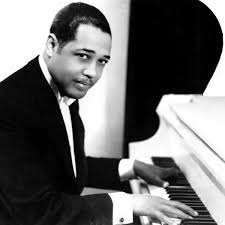
The photograph of Duke Ellington before Newport and the photograph after Newport would show the same man.
Same composer.
Same bandleader.
Same history.
But the culture surrounding him had changed.
That is why July 7, 1956 remains one of the great nights in jazz.
Paul Gonsalves began improvising between two compositions written in 1937. Jimmy Woode and Sam Woodyard kept the foundation moving. A woman started dancing. Thousands of people responded. Gonsalves continued. Ellington listened and allowed the moment to grow. Cat Anderson helped drive the orchestra toward its climax. Festival organizers wondered how to regain control. Somewhere among the microphones, a technical mistake ensured that reconstructing the performance would become a puzzle lasting more than forty years.
Twenty-seven choruses later, the public perception of Duke Ellington had changed.
The convenient version says Newport resurrected him.
The better version is more revealing.
Duke Ellington had spent decades demonstrating that jazz composition could contain orchestral color, blues, popular song, improvisation, African American history, individual instrumental personalities and ambitions extending far beyond the expectations placed upon a dance band. He had continued doing that work even when the cultural spotlight moved toward newer forms of modern jazz.
Then Newport happened.
For a few extraordinary minutes, there was no distinction between old jazz and new jazz, serious music and entertainment, composition and improvisation, artist and audience.
There was only momentum.
And the world remembered to listen.
Newport did not bring Duke Ellington back to life.
It brought the audience back to Duke Ellington.