The Bebop Revolution and the Liberation of the Drum Kit
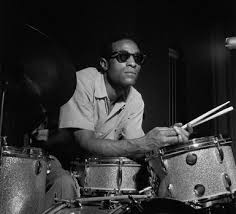
To truly understand the modern drum kit, you have to look at the landscape before and after Max Roach. Emerging from Brooklyn in the early 1940s, a teenage Roach stepped directly into the smoky after-hours laboratories of Minton’s Playhouse, matching wits with Charlie Parker and Dizzy Gillespie. Together, they invented bebop. Roach single-handedly shattered the old swing-era paradigm where the drummer was expected to be a passive, time-keeping machine. He shifted the steady pulse of the rhythm away from the heavy bass drum and onto the shimmering, continuous wash of the ride cymbal. This liberated the rest of the kit, allowing his hands to drop unpredictable, polyrhythmic “bombs” on the snare and bass drum that challenged, provoked, and elevated the front-line soloists in a furious, real-time intellectual dialogue.
The Brown-Roach Metamorphosis and the Weapon of Protest
For the high-art connoisseur tracing the most vital, golden intersections on The Jazz Compass, Max Roach’s mid-1950s output represents an absolute pinnacle of cooperative genius. In 1954, alongside the brilliant young trumpet prodigy Clifford Brown, he formed the Clifford Brown-Max Roach Quintet—the definitive, high-velocity engine of the hard bop movement. Though that dream was tragically cut short by Brown’s fatal car crash in 1956, Roach pushed his music forward into even deeper, fiercely political territories. As the Civil Rights Movement ignited America, Roach weaponized his artistry. Masterpieces like We Insist! Max Roach’s Freedom Now Suite (1960)—featuring the searing, avant-garde vocals of his then-wife Abbey Lincoln—were uncompromising, explosive sonic indictments against segregation and global apartheid, proving that jazz drumming could be a vehicle for absolute social revolution.
The Professor of Rhythm Across the Eternal Latitude
True to the borderless, forward-thinking spirit of Jazz Latitude, Max Roach’s musical geography refused to be confined to a single genre or era. He was a restless academic and a musical shapeshifter who spent his later decades recording avant-garde duets with free-jazz titans like Cecil Taylor and Anthony Braxton, founding the groundbreaking all-percussion ensemble M’Boom, and even collaborating with early hip-hop breakdancers and rappers in the 1980s. He became one of the first jazz musicians to receive a MacArthur “Genius” Grant, cementing his status as a high-art visionary. When he passed away in 2007 at the age of 83, Max Roach left behind a monumental, eternal coordinate on our map—a legacy that proves the drums are not just an instrument of noise, but a canvas of infinite melody, structural architecture, and profound human freedom.