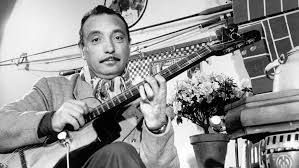
Django Reinhardt was not just a virtuoso; he was the architect of a new musical language: Gypsy Jazz (or Jazz Manouche). Born in a Roma caravan and forced to reinvent his technique after a fire paralyzed two fingers of his left hand, Django defied the logic of both anatomy and music. With his iconic Quintette du Hot Club de France, he moved jazz away from its dependence on American brass and percussion, placing the guitar and violin at center stage. His international relevance is measured by the fact that, during the golden age of jazz, American musicians looked across the Atlantic to understand how Django achieved such speed, lyricism, and sophisticated harmony.
Django’s importance on the global stage lies in his ability to fuse European nomadic tradition with New Orleans syncopation. He didn’t merely try to copy what was coming from the US; he translated jazz into a European aesthetic, influencing everyone from legends like Duke Ellington—with whom he toured the United States—to modern rock and jazz guitarists. His melodic touch and innovative use of octaves and arpeggios created a school of thought that remains alive, serving as the fundamental pillar for any musician seeking to understand the possibilities of the acoustic guitar.
At Jazz Latitude, Django Reinhardt is celebrated as the liberator of jazz. He proved that the essence of the genre lies in freedom of expression and the overcoming of physical and cultural limitations. His music remains a symbol of resilience and sophistication, maintaining a vibrant presence in festivals around the globe, where his ‘gypsy swing’ is still the gold standard of rhythmic and melodic excellence.