
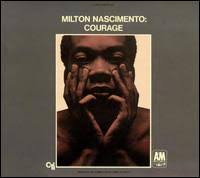
Released by A&M Records and produced by Creed Taylor, Courage (1969) is the ground zero for Milton Nascimento’s presence on the international stage. At a time when the world was still trying to label Brazilian music solely as Bossa Nova, Milton emerged with a voice and a compositional style that seemed to come from a mystical place between the mountains of Minas Gerais and the cosmos. Supported by Eumir Deodato’s lush arrangements and the playing of musicians like Herbie Hancock, Milton introduced a language that blended folklore, harmonic sophistication, and a vocal spirituality that immediately resonated in the world’s leading jazz circles.
The relevance of Courage lies in its refusal to be obvious. Tracks like ‘Bridges (Travessia)’ and ‘Vera Cruz’ were not just songs; they were emotional architectures that introduced foreign audiences to a new way of understanding rhythm and melody. Milton’s performance, with his extraordinary tonal range and use of the voice as a wind instrument, captivated the musical elite of New York and Los Angeles, laying the foundation for future collaborations that would change the course of jazz, such as his historic meeting with Wayne Shorter years later.
At Jazz Latitude, Courage is celebrated as the album that proved Brazilian music possesses a symphonic depth and a universality that goes far beyond the beaches of Rio. It is the work that solidified Milton Nascimento as a ‘musician’s musician’ abroad, an artist whose creative courage opened doors for Brazilian syncopation to be treated with the reverence it deserves on the most prestigious stages across the globe.