A Pianist Between Two Musical Worlds
The history of jazz piano has been shaped by musicians who have continuously challenged the boundaries between composition and improvisation, tradition and experimentation, technical discipline and emotional expression. From the harmonic sophistication of Bill Evans to the rhythmic intensity of McCoy Tyner, from the architectural imagination of Thelonious Monk to the expansive musical language of Chick Corea, the instrument has offered successive generations of artists an extraordinary range of expressive possibilities. Within this evolving tradition, Italian pianist and composer Claudio Vignali has developed an artistic identity that draws upon classical music, modern jazz, improvisation, and an increasingly adventurous exploration of contemporary musical forms.
Born in 1986, Vignali belongs to a generation of European jazz musicians for whom stylistic boundaries have become increasingly fluid. His musical background reflects the rigorous training associated with the European classical tradition, but his artistic development has also been profoundly influenced by the improvisational freedom and rhythmic complexity of jazz. Rather than approaching these traditions as separate disciplines, he has gradually developed a musical language in which their different characteristics can coexist, interact, and generate new creative possibilities.
His career offers an interesting perspective on the changing identity of contemporary European jazz. While the continent has produced influential improvisers for decades, younger generations have increasingly approached jazz as an open artistic environment, incorporating elements of classical composition, electronic music, experimental improvisation, and contemporary popular genres. Vignali’s work belongs to this broader landscape, although his musical personality remains strongly connected to the expressive possibilities of the acoustic piano.
What distinguishes his trajectory is not simply the coexistence of classical and jazz influences, but the manner in which these experiences have shaped his understanding of musical expression. Technical precision, harmonic imagination, melodic sensitivity, and rhythmic freedom are not treated as competing priorities. Instead, they become complementary elements within an approach that values both structural coherence and the unpredictability of improvisation.
This relationship between discipline and freedom would eventually become central to his work as a composer and bandleader, providing the foundations for projects that move beyond conventional jazz formats without abandoning the traditions that initially shaped his musical identity.
Early Encounters: Discovering the Piano
Vignali’s relationship with music began during childhood in an environment where listening and musical curiosity were encouraged. His parents were enthusiastic music listeners, and the family home provided an early introduction to different musical experiences. His sister was already studying piano, giving him access to an instrument that would gradually become the center of his artistic life.
In interviews, Vignali has recalled beginning to explore the piano independently at approximately eight years of age. Before undertaking formal studies, he experimented with melodies by ear and discovered the possibilities of improvisation through direct interaction with the instrument. These early experiences are particularly revealing because they suggest that his interest in spontaneous musical creation developed before he acquired the theoretical and technical vocabulary necessary to describe it.
A decisive moment came when his parents took him to a piano recital organized by a local music school. The experience encouraged him to begin formal lessons, transforming an instinctive fascination into a more disciplined engagement with music. He subsequently studied with Massimo Landroni, beginning a period of musical education that would eventually lead him toward advanced classical and jazz training.
The relationship between these two forms of learning — spontaneous exploration and structured instruction — would remain an important characteristic of his artistic development. Classical studies provided a framework for understanding harmony, counterpoint, form, and instrumental technique, while improvisation preserved the sense of discovery that had initially attracted him to the piano.
For many musicians, formal education can create a tension between technical mastery and personal expression. In Vignali’s case, the available accounts of his early development suggest a different relationship. The discipline of classical piano became a resource through which he could expand his expressive vocabulary, while his natural inclination toward improvisation encouraged him to explore possibilities beyond the written score.
This combination would later become particularly significant as he encountered the music of composers and pianists whose approaches to harmony, rhythm, and musical architecture offered different ways of understanding the instrument.
Classical Foundations: Bach, Ravel, and Rachmaninoff
Vignali’s classical education represents one of the essential foundations of his musical identity. He completed advanced studies in both classical and jazz piano at the conservatories of Ferrara and Adria, graduating with the highest honors. His training exposed him to a broad repertoire while encouraging the development of the technical control and interpretative sensitivity required for demanding solo performance.
Among the composers who have influenced his musical imagination, Johann Sebastian Bach occupies an important position. Bach’s contrapuntal writing, harmonic organization, and intricate relationships between independent melodic lines provide a particularly rich foundation for pianists interested in improvisation. Although the historical contexts of Baroque composition and jazz are fundamentally different, both traditions offer opportunities to explore the interaction between harmonic structure and melodic invention.
Vignali’s interest in this relationship was strengthened through his studies of Baroque improvisation and counterpoint with organist Fausto Caporali. This experience introduced him to an approach to spontaneous musical creation that differs from the harmonic and rhythmic conventions generally associated with jazz improvisation. It also expanded his understanding of how musical ideas can develop through the interaction of independent voices and carefully organized harmonic movement.
The influence of Frédéric Chopin introduces another dimension to his musical language. Chopin’s piano writing combines technical complexity with extraordinary melodic sensitivity, placing particular emphasis on phrasing, tonal color, and expressive nuance. These qualities offer valuable possibilities for a jazz pianist interested in developing a lyrical approach without sacrificing harmonic sophistication.
Maurice Ravel and Sergei Rachmaninoff represent additional aspects of Vignali’s classical interests. Ravel’s harmonic imagination, orchestral sensitivity, and refined treatment of instrumental color provide a point of reference for musicians exploring the expressive possibilities of extended harmony. Rachmaninoff’s music, meanwhile, demonstrates how powerful emotional expression can emerge through elaborate harmonic structures, expansive melodies, and demanding pianistic textures.
Vignali’s command of the classical repertoire was recognized in 2011, when he won the Lions Italia piano competition with a program that included works by Rachmaninoff, Ravel, Beethoven, and Bach. The achievement reflected a level of technical and interpretative development that extended well beyond the requirements of conventional jazz performance.
Yet classical music would not become an alternative to jazz in his artistic career. Instead, it provided a parallel source of inspiration, enriching his approach to composition and improvisation while allowing him to develop a personal relationship with the European piano tradition.
This background is especially relevant when considering his later work. The ability to move between carefully constructed harmonic passages and spontaneous improvisational development reflects a musical sensibility shaped by both traditions. In Vignali’s artistic world, the piano becomes a meeting place where classical architecture and jazz freedom can exist within the same expressive language.
Michel Petrucciani and the Discovery of Jazz
If classical music provided the technical and structural foundations of Vignali’s education, jazz introduced a different understanding of musical possibility. One of the decisive influences in this transition was the French pianist Michel Petrucciani, whose recordings profoundly affected the young musician.
Vignali has described receiving a Petrucciani recording during his youth and being immediately captivated by its musical intensity. The experience encouraged him to explore jazz more seriously, eventually transforming what had begun as an interest in improvisation into a central element of his professional identity.
Petrucciani occupies a distinctive position in the history of European jazz piano. His playing combined remarkable technical virtuosity with melodic directness, rhythmic energy, and an expressive language deeply informed by the American jazz tradition. His ability to move between lyrical passages and powerful improvisational statements demonstrated how technical accomplishment could serve an intensely personal musical vision.
For a young pianist already immersed in classical studies, Petrucciani’s music offered an alternative way of understanding the relationship between technique and expression. The instrument was no longer simply a medium through which written compositions could be interpreted. It became a space for spontaneous creation, where harmonic knowledge, rhythmic imagination, and personal emotion could interact in real time.
The significance of this discovery extends beyond the influence of a single pianist. It introduced Vignali to a musical tradition in which individual identity emerges through the transformation of inherited material. Jazz musicians study the vocabulary of earlier generations, but their artistic development depends upon finding ways to reinterpret that language through their own experiences.
This principle would become increasingly important as Vignali explored the work of other influential pianists and began developing his own approach to improvisation.
From Bill Evans to McCoy Tyner: Learning the Language of Jazz
Vignali’s jazz education has been characterized by a particularly attentive engagement with the history of the instrument. Rather than approaching the piano tradition as a collection of isolated stylistic references, he has described periods of intensive study devoted to individual musicians, allowing him to explore their musical languages in considerable depth.
Among the pianists who have influenced his development are Art Tatum, Earl Hines, Erroll Garner, Phineas Newborn Jr., Bill Evans, Thelonious Monk, McCoy Tyner, and Chick Corea. Together, these musicians represent a remarkable range of approaches to harmony, rhythm, improvisation, and pianistic expression.
Art Tatum’s extraordinary technical command and harmonic imagination expanded the possibilities of jazz piano during the swing era, demonstrating how virtuosic invention could transform familiar musical material. Earl Hines introduced an approach to melodic phrasing and rhythmic independence that influenced generations of pianists, while Erroll Garner developed an immediately recognizable style characterized by rhythmic flexibility, orchestral textures, and melodic exuberance.
Bill Evans represents a particularly important reference for pianists interested in harmonic subtlety and lyrical expression. His approach to chord voicing, melodic development, and ensemble interaction helped redefine the possibilities of modern jazz piano. Evans demonstrated that improvisation could achieve remarkable emotional depth through restraint, harmonic sensitivity, and carefully developed musical ideas.
Vignali has described dedicating extended periods to studying Evans’s recordings, seeking to understand not only his harmonic language but also the distinctive qualities of his touch and phrasing. Such immersion reflects an approach to musical education in which listening becomes an essential form of analysis.
McCoy Tyner offered a contrasting perspective. His powerful rhythmic conception, expansive harmonic vocabulary, and distinctive use of quartal structures helped define the sound of John Coltrane’s classic quartet. Tyner’s playing demonstrated how the piano could function simultaneously as a harmonic foundation, rhythmic force, and independent improvisational voice.
The contrast between Evans and Tyner is especially revealing. One is frequently associated with harmonic transparency, lyrical introspection, and delicate ensemble interaction; the other with rhythmic intensity, modal exploration, and an expansive pianistic language. For a musician seeking to develop an individual voice, studying both approaches provides access to different ways of organizing musical energy.
Thelonious Monk contributes another essential dimension through his unconventional rhythmic placement, angular melodic ideas, and highly personal harmonic imagination. Monk’s music illustrates how originality can emerge from an uncompromising relationship with rhythm and musical form, challenging assumptions about conventional pianistic elegance.
Chick Corea, meanwhile, represents the possibilities of stylistic expansion. His career encompassed acoustic jazz, electric fusion, Latin influences, and contemporary composition, demonstrating how a musician could move between different musical environments while maintaining a recognizable artistic identity.
For Vignali, these influences appear to function less as models to be reproduced than as resources for developing a broader musical vocabulary. Their significance lies in the different questions they raise about improvisation, structure, rhythm, and expression.
Beyond Tradition: Contemporary Influences and Experimentation
Vignali’s musical curiosity has not remained confined to the historical traditions of jazz piano. His interests extend toward contemporary improvisers and composers whose work challenges conventional distinctions between jazz, classical music, electronic sound, and experimental composition.
Among the musicians he has identified as particularly interesting are Craig Taborn, Tigran Hamasyan, and Nikolai Kapustin. Although their musical approaches differ considerably, each offers a perspective on the relationship between technical discipline and creative freedom.
Craig Taborn has developed an improvisational language characterized by intricate rhythmic structures, harmonic ambiguity, and an exploratory relationship with acoustic and electronic instruments. His work frequently challenges conventional expectations of musical form, allowing improvisation to unfold through processes of transformation and interaction.
Tigran Hamasyan represents another approach to contemporary jazz piano, integrating elements of Armenian musical traditions, complex rhythmic patterns, and influences associated with progressive rock and modern composition. His work demonstrates how a pianist can develop a highly individual language through the interaction of different musical cultures and structural approaches.
Kapustin, whose compositions combine classical forms with jazz-derived rhythms and harmonies, offers a particularly interesting reference for musicians trained in both traditions. His work challenges the distinction between written composition and the sound of improvisation, creating elaborate piano pieces in which jazz vocabulary is incorporated into precisely organized classical structures.
These interests help illuminate the broader artistic environment in which Vignali has developed. His musical language is rooted in jazz, but his understanding of composition and improvisation extends beyond the stylistic boundaries of any single tradition.
Electronic music and experimental approaches to sound have also become part of his creative interests. In interviews, he has described drawing inspiration from a wide range of musical forms, including traditional music, avant-garde composition, and electronics. This openness suggests an artistic philosophy in which different musical languages can provide complementary resources for expression.
The challenge, however, lies in transforming these influences into a coherent personal identity. Stylistic diversity alone does not guarantee originality. What matters is the ability to organize different musical elements into a language that reflects the composer’s individual artistic priorities.
Vignali’s development illustrates this process as an ongoing exploration rather than a completed destination. His work as a pianist, composer, and collaborator has gradually expanded the possibilities available to him, preparing the ground for projects in which acoustic improvisation, contemporary rhythms, and experimental textures can coexist.
Montreux: Recognition on the International Stage
A significant moment in Vignali’s professional development came in 2013, when he received third prize at the Parmigiani Montreux International Jazz Piano Solo Competition. Selected among ten pianists under the age of thirty from around the world, he participated in an event associated with one of the most internationally recognized institutions in jazz performance.
The Montreux Jazz Festival has long occupied an important place in the international musical landscape. Established in Switzerland in 1967, the festival developed from its original jazz focus into a major event encompassing a broad range of musical traditions. Its history includes performances by some of the most influential figures in jazz, blues, rock, and contemporary popular music.
For an emerging pianist, recognition within this environment carries considerable significance. Beyond the competitive dimension, participation provides opportunities for international visibility, professional encounters, and artistic development.
Vignali’s achievement reflected the combination of technical mastery and interpretative individuality that had emerged through his classical and jazz training. It also contributed to the expansion of his international career, opening opportunities for performances and collaborations beyond Italy.
His professional activities have subsequently taken him to numerous European countries as well as Japan, where he has performed in different contexts as a soloist and ensemble musician. These experiences have contributed to his development as an artist accustomed to working within diverse musical environments.
International performance can be particularly important for improvising musicians. Different audiences, acoustic spaces, collaborators, and cultural settings introduce variables that influence the character of a performance. Improvisation becomes a process of responding not only to the musical material itself but also to the circumstances in which that material is presented.
For Vignali, these encounters have provided opportunities to refine his musical language while expanding his understanding of the relationship between individual expression and collective performance.
The Emotional Dimension of Improvisation
Despite the technical sophistication associated with Vignali’s playing, his artistic philosophy places considerable emphasis on emotional expression. In interviews, he has described music as an essential part of his life and a means of transforming difficult experiences into artistic creation.
This perspective offers an important key to understanding his approach to improvisation. Technical ability provides the resources necessary for musical expression, but the purpose of those resources lies in communicating something that extends beyond instrumental accomplishment.
The relationship between emotion and structure has been central to jazz throughout its history. Improvisation allows musicians to respond to their immediate experiences while working within harmonic, rhythmic, and formal frameworks. The resulting performances can combine spontaneity with discipline, producing musical narratives that emerge through the interaction of preparation and intuition.
Vignali has described his compositional process as variable and instinctive. Sometimes an idea develops quickly from a melodic fragment or harmonic progression; at other times, musical material requires extended experimentation and transformation. Rather than relying upon a fixed method, he allows the character of the initial idea to influence the direction of the composition.
This flexibility is particularly relevant to his interest in different musical traditions. Classical forms, jazz improvisation, experimental textures, and contemporary rhythmic languages offer different ways of organizing musical ideas, but their expressive potential depends upon the composer’s ability to establish meaningful relationships between them.
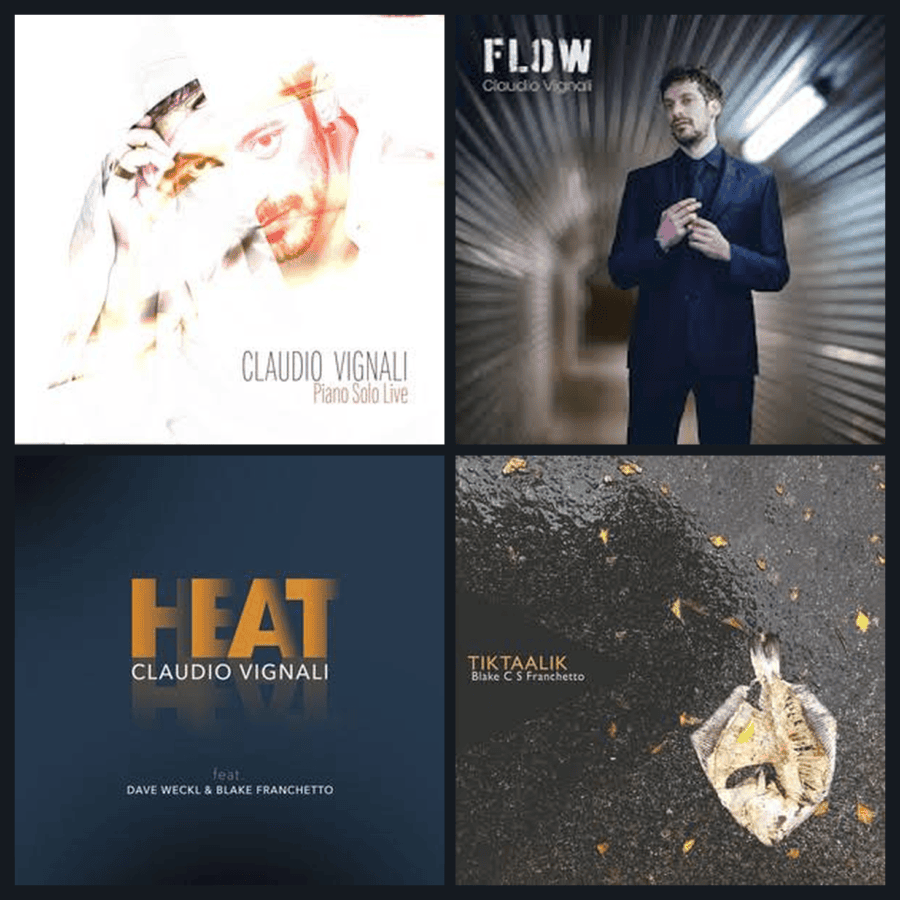
His approach to solo piano performance provides another perspective on this philosophy. In discussing Piano Solo Live, Vignali emphasized the importance of capturing the spontaneity and emotional character of live performance. The relationship between musician, instrument, audience, and acoustic environment becomes part of the creative process, introducing elements that cannot be entirely anticipated or reproduced.
This understanding of performance suggests that improvisation is not simply a demonstration of musical knowledge. It is a form of communication in which the musician responds to the present moment while drawing upon a lifetime of listening, study, and artistic experience.
The Search for an Individual Voice
The development of a recognizable musical identity is one of the most demanding challenges facing any jazz musician. The tradition offers an immense body of knowledge, recordings, compositions, and stylistic approaches, but the accumulation of influences does not automatically produce originality.
For Vignali, the relationship between tradition and personal expression appears to be central to this process. He has emphasized the importance of understanding the history of jazz and studying its influential performers while recognizing that such knowledge must eventually become the foundation for an individual artistic language.
This perspective reflects a broader principle within jazz: tradition provides the vocabulary, but artistic identity emerges through the transformation of that vocabulary into something personal.
Vignali’s classical background contributes technical discipline, harmonic understanding, and sensitivity to musical form. His engagement with the history of jazz provides access to different approaches to improvisation, rhythmic organization, and ensemble interaction. His interest in contemporary composition and experimental sound expands the range of possibilities through which these influences can be expressed.
The resulting musical identity is not defined by a single stylistic category. Instead, it develops through the interaction of different artistic experiences, allowing the pianist to move between lyrical expression, rhythmic intensity, structured composition, and spontaneous invention.
This flexibility would become increasingly important as his professional career expanded beyond solo performance and conventional jazz ensembles. Collaborations with musicians from different backgrounds introduced new creative challenges, while recording projects provided opportunities to explore more elaborate compositional structures and instrumental combinations.
The foundations of this development can be traced to the earliest stages of his musical education: a child discovering improvisation at the family piano, a classical student exploring the expressive possibilities of Bach and Ravel, and a young jazz musician captivated by Michel Petrucciani.
These experiences did not lead toward a rejection of tradition. Instead, they established a musical perspective in which tradition could become a source of creative freedom.
As Vignali’s career progressed, this philosophy began to find expression in an increasingly diverse body of recordings and collaborations. His work would move through acoustic jazz, solo piano, contemporary composition, and experimental ensemble formats, gradually revealing an artistic personality interested in the relationships between different musical languages.
That evolution would ultimately create the conditions for FLOW, his 2026 album released by Alman Music, in which jazz improvisation, hip-hop rhythms, contemporary composition, and vocal expression become elements of a shared musical narrative.
To understand the significance of that project, however, it is necessary to examine the recordings and collaborations that preceded it — the artistic encounters through which Vignali transformed his early influences into an increasingly distinctive compositional voice.
Buy Amazon
FROM TRADITION TO EXPERIMENTATION: RECORDINGS, COLLABORATIONS, AND THE EVOLUTION OF A MUSICAL LANGUAGE
Beyond the Soloist: The Emergence of a Composer
For a jazz pianist whose formative years were shaped by the contrasting worlds of classical interpretation and spontaneous improvisation, the transition from instrumental mastery to an independent compositional identity represents a particularly significant artistic development. Claudio Vignali’s career illustrates how this transformation can unfold gradually, through encounters with different musicians, the exploration of new instrumental combinations, and an expanding understanding of what jazz composition can encompass. His trajectory has not been defined by a complete departure from the piano tradition, but rather by an effort to extend its expressive possibilities beyond familiar stylistic frameworks.
The foundations of this evolution can be traced to the relationship between his classical education and his immersion in the language of jazz. The study of Bach, Ravel, Rachmaninoff, and other European composers provided an understanding of musical architecture, harmonic development, and the expressive potential of written composition. His engagement with Bill Evans, McCoy Tyner, Thelonious Monk, Michel Petrucciani, and other influential jazz pianists introduced a different perspective, emphasizing the relationship between harmonic knowledge, rhythmic freedom, and the spontaneous creation of musical ideas. Together, these traditions established a vocabulary through which Vignali could approach composition not as a fixed structure opposed to improvisation, but as a framework capable of generating new musical possibilities.
This distinction becomes increasingly important when examining his recorded work. In jazz, the pianist often occupies several roles simultaneously: harmonic architect, rhythmic participant, melodic improviser, and musical interlocutor. As a composer and bandleader, however, these responsibilities expand to include decisions about instrumentation, ensemble dynamics, formal development, and the relationship between individual performers. Vignali’s progression toward increasingly varied projects reflects an interest in these broader dimensions of musical creation.
Rather than limiting his artistic identity to the interpretation of standards or the established conventions of the piano trio, he has explored situations in which the piano becomes one component within a more extensive musical conversation. This approach allows the instrument to retain its central expressive importance while creating opportunities for other musical voices to influence the direction of the composition.
The Piano Trio and the Art of Collective Interaction
The piano trio occupies a privileged position in the history of modern jazz. Its apparently simple instrumentation — piano, bass, and drums — provides a remarkable range of possibilities for harmonic exploration, rhythmic interaction, and spontaneous musical development. From the influential recordings of Ahmad Jamal and Bill Evans to the approaches of Keith Jarrett, Brad Mehldau, and numerous contemporary European pianists, the format has continually demonstrated its capacity for reinvention.
For Vignali, working within small ensembles has provided an environment in which the relationship between composition and improvisation can be explored with particular intensity. The absence of a larger orchestral structure places considerable responsibility on each musician, requiring constant attention to the changing relationships between melody, harmony, and rhythm. A pianist may introduce an idea that is immediately transformed by the drummer’s response or redirected through the bassist’s harmonic choices. Musical development becomes a collective process rather than the execution of a predetermined sequence.
The importance of this approach extends beyond instrumental technique. In a successful jazz trio, individual musicians must develop the ability to listen as actively as they perform. Silence, rhythmic displacement, harmonic ambiguity, and subtle changes in dynamics can become essential elements of the musical narrative. Such qualities require not only technical preparation but also an understanding of the personalities and interpretative tendencies of the other performers.
Vignali’s interest in collaborative performance reflects this conception of jazz as an interactive language. His projects demonstrate an attraction to musicians capable of contributing independent creative perspectives while participating in a shared musical structure. This balance between individual freedom and collective coherence would become increasingly relevant as his work expanded toward more unconventional instrumental combinations.
The trio format also offers an important connection to his classical background. Although improvisation introduces an element of unpredictability, the development of musical ideas frequently involves structural relationships that resemble those found in composed music. Themes may be transformed, harmonic tensions developed, and rhythmic figures reintroduced in altered forms. The result is a process in which spontaneous invention and architectural thinking coexist.
For a musician trained in both classical and jazz traditions, this environment provides fertile ground for developing an individual voice. It encourages the pianist to move beyond the reproduction of inherited vocabulary and to consider how different musical elements can interact within a coherent expressive framework.
Rach Mode On: Reimagining the Classical Inheritance
Among the projects associated with Vignali’s artistic development, Rach Mode On provides a particularly revealing example of his relationship with the European classical tradition. The title itself suggests a dialogue with the musical world of Sergei Rachmaninoff, a composer whose harmonic richness, expansive melodic writing, and formidable pianistic demands have long attracted performers interested in the expressive possibilities of the instrument.
Rachmaninoff’s influence on jazz pianists is not difficult to understand. His music frequently employs elaborate harmonic progressions, chromatic movement, dense textures, and melodies capable of sustaining considerable emotional intensity. Although his compositions belong to a different historical and stylistic environment, these characteristics offer possibilities for musicians interested in extending the harmonic and expressive vocabulary of jazz.
For Vignali, whose classical training included demanding works by Rachmaninoff, the relationship carries an additional personal dimension. His familiarity with the composer’s music provides a foundation for approaching classical material not simply as an external source of inspiration but as part of his own artistic history.
The conceptual significance of Rach Mode On lies in this intersection. It points toward a musical identity in which classical influence is neither concealed nor treated as incompatible with jazz improvisation. Instead, the two traditions can become elements of a shared creative process, allowing familiar harmonic and melodic ideas to acquire different meanings within a contemporary context.
Such projects belong to a broader history of encounters between jazz and European classical music. Throughout the twentieth century, musicians explored relationships between improvisation and formal composition, producing works that challenged conventional distinctions between the two traditions. Yet the most compelling examples of this interaction are rarely those that merely alternate classical passages with jazz solos. Their artistic value emerges when different musical principles are integrated into a coherent expressive language.
Vignali’s engagement with this territory reveals an interest in precisely that relationship. The importance of his classical background is not simply that it provides technical resources or sophisticated harmonic references. It also influences his understanding of musical development, encouraging him to approach composition as an evolving structure in which improvisation can play an essential role.
Piano Solo Live: The Intimacy of Unaccompanied Performance
If ensemble performance emphasizes communication between musicians, the solo piano places the performer in a fundamentally different relationship with musical material. Without the rhythmic and harmonic support of other instrumentalists, the pianist must assume responsibility for every dimension of the performance, from melodic development and harmonic movement to rhythmic continuity and the creation of contrasting textures.
Vignali’s Piano Solo Live represents an important expression of this aspect of his musical personality. The unaccompanied format creates an environment in which the relationship between the performer and the instrument becomes unusually direct. Every decision concerning articulation, dynamics, phrasing, and harmonic direction contributes to the musical narrative, while the absence of other musicians allows subtle expressive details to emerge with particular clarity.
The history of solo jazz piano offers a rich context for understanding the demands of this format. Art Tatum demonstrated how technical virtuosity and harmonic imagination could transform the instrument into an almost orchestral medium. Thelonious Monk revealed the expressive power of rhythmic irregularity, silence, and unconventional melodic structures. Keith Jarrett’s solo performances expanded the possibilities of extended improvisation, allowing musical forms to emerge through the interaction of spontaneous ideas and developing emotional intensity.
For a contemporary pianist, engaging with this tradition involves confronting a considerable artistic challenge. The solo format offers freedom, but it also removes many of the external elements that can stimulate improvisational development. The performer must generate contrast, momentum, and structural coherence through an ongoing internal dialogue.
Vignali’s approach to solo performance reflects his interest in the emotional and spontaneous dimensions of music. In discussing the project, he has emphasized the importance of capturing the character of live performance, including the unpredictable relationship between musical intention and the immediate circumstances of interpretation.
This perspective suggests an understanding of improvisation as something more complex than the spontaneous arrangement of familiar musical patterns. The performer responds to the instrument’s resonance, the acoustic environment, and the evolving character of the musical material. A melodic idea may lead toward an unexpected harmonic direction, while a moment of silence can become as important as a passage of technical intensity.
The solo piano therefore provides a particularly revealing perspective on Vignali’s artistic identity. It exposes the relationship between his classical discipline and improvisational imagination while demonstrating the importance of personal expression within his musical philosophy.
Collaboration as a Source of Artistic Transformation
One of the defining characteristics of contemporary jazz is the increasing diversity of collaborative environments in which musicians operate. While the traditional formats of the trio, quartet, and quintet remain central to the music, many artists have expanded their activities toward projects involving unconventional instrumentation, electronic sound, contemporary composition, and musicians from other stylistic backgrounds.
Vignali’s professional development reflects this broader tendency. His work has involved encounters with instrumentalists and composers whose artistic perspectives extend beyond conventional jazz performance, creating opportunities to reconsider the relationship between improvisation and written material.
Collaboration is particularly important for a pianist interested in exploring new compositional possibilities. Different instrumental combinations introduce unfamiliar technical and expressive conditions, requiring the composer to reconsider how musical ideas are organized. The presence of a guitarist, for example, changes the harmonic environment of an ensemble, creating opportunities for contrasting textures, overlapping melodic lines, and more complex rhythmic relationships.
The addition of vocalists introduces another dimension. The human voice carries linguistic meaning, emotional associations, and expressive characteristics that differ fundamentally from instrumental improvisation. When vocal performance becomes part of a jazz composition, the relationship between words, melody, rhythm, and harmony can reshape the entire musical structure.
For Vignali, these possibilities have become increasingly significant. His interest in contemporary musical forms suggests a willingness to approach collaboration not simply as the addition of guest performers but as a process capable of transforming the identity of a project.
This distinction is essential. A recording may feature musicians from different stylistic backgrounds without developing a meaningful relationship between their musical languages. More ambitious collaborations require a shared understanding of the composition’s expressive purpose, allowing each participant to contribute to its development.
The artistic challenge lies in maintaining coherence while preserving the distinctive qualities of the individual performers. When successful, the result can move beyond conventional genre classifications, creating a musical environment in which different traditions interact without losing their expressive identities.
Argentalia: A Dialogue Across Musical Traditions
The collaboration between Claudio Vignali and Argentine-born saxophonist Javier Girotto provides another perspective on the pianist’s interest in musical exchange. Their project Argentalia, released in January 2026, brings together artists whose backgrounds reflect different cultural experiences and approaches to contemporary jazz.
Girotto has developed an international career characterized by the interaction between jazz improvisation and musical traditions associated with Argentina. His work frequently explores relationships between melodic lyricism, rhythmic complexity, and the expressive possibilities of different instrumental combinations. His experience within European jazz has also contributed to a musical language shaped by encounters between South American influences and contemporary improvisational practices.
For Vignali, a collaboration of this nature offers opportunities to engage with musical perspectives that differ from those associated with his classical education and early jazz influences. The interaction between piano and saxophone creates a particularly flexible environment, allowing melodic ideas to move between instruments while harmonic and rhythmic structures remain open to reinterpretation.
The title Argentalia itself evokes a connection between Argentina and Italy, suggesting a cultural dialogue that extends beyond geographical distinctions. Although the musical substance of such a project must ultimately be understood through its compositions and performances, the collaboration provides an example of the international character of Vignali’s artistic activities.
This international dimension is important when considering the development of contemporary European jazz. Musicians working in Italy, France, Germany, Scandinavia, and other regions frequently participate in networks that connect performers from different cultural backgrounds. These encounters have contributed to an increasingly diverse musical landscape, in which jazz traditions interact with regional musical languages and contemporary compositional approaches.
Vignali’s collaboration with Girotto belongs to this environment of exchange. It illustrates how his musical identity continues to develop through relationships with artists whose experiences introduce different possibilities for melodic interpretation, rhythmic organization, and collective improvisation.
The significance of such projects lies not in the simple combination of national traditions but in the potential for musicians to develop new forms of communication through shared performance. Jazz provides a particularly effective framework for this process because its improvisational language encourages performers to respond directly to one another, transforming individual ideas into collective musical development.
Frank Martino and the Expansion of the Harmonic Landscape
Among the musicians associated with Vignali’s more recent work, guitarist Frank Martino occupies a particularly interesting position. His use of the eight-string guitar introduces an instrumental resource capable of extending the harmonic and registral possibilities of a conventional jazz ensemble. The additional strings expand the instrument’s range, allowing it to move between lower-register figures, harmonic accompaniment, and melodic lines that might otherwise require separate instrumental voices.
The relationship between piano and guitar has always presented both opportunities and challenges within jazz. Both instruments can articulate chords, construct harmonic textures, and assume melodic responsibilities, creating the possibility of considerable overlap. In a traditional ensemble, this overlap may require careful negotiation to avoid excessive harmonic density. In more experimental contexts, however, the interaction can become an important source of compositional invention.
The eight-string guitar offers further possibilities because its extended register can blur conventional distinctions between guitar and bass functions. Lower-register patterns may contribute to the rhythmic foundation, while upper-register passages interact with the piano through contrasting timbres and articulations. These resources allow composers to develop arrangements in which harmonic responsibilities are distributed more flexibly.
For a pianist such as Vignali, whose background emphasizes both harmonic sophistication and improvisational freedom, collaboration with an instrumentalist working within this expanded range creates opportunities to reconsider the piano’s position within the ensemble.
The relationship is particularly relevant to FLOW, where Martino’s participation becomes part of a broader instrumental framework involving piano, drums, and rap. His additional role in the album’s mixing also places him within the process through which the recorded ensemble sound is shaped.
This collaboration points toward an important development in Vignali’s artistic direction: the growing significance of instrumental texture as a compositional element. Harmony and melody remain central, but the interaction between different timbres, registers, and rhythmic functions becomes increasingly important in determining the character of the music.
Rhythm, Improvisation, and the Influence of Contemporary Music
The evolution of jazz over recent decades has been accompanied by profound changes in the relationship between improvisation and rhythm. While swing remains an essential component of the tradition, contemporary musicians have increasingly incorporated rhythmic concepts associated with funk, hip-hop, electronic music, progressive rock, and various regional traditions.
These developments have expanded the possibilities available to composers and improvisers. Rhythmic patterns may be organized around repeating grooves rather than conventional swing accompaniment, while changes in accentuation, subdivision, and metric emphasis can create new relationships between the soloist and the rhythm section.
For Vignali, whose pianistic vocabulary includes the rhythmic sophistication of McCoy Tyner and the structural flexibility associated with contemporary improvisation, these possibilities offer a natural extension of his musical interests. The challenge is to preserve the expressive freedom of jazz while engaging with rhythmic languages that may depend upon repetition, consistency, and carefully organized patterns.
Hip-hop provides a particularly interesting example. Its historical relationship with jazz extends back to the development of sampling practices that drew upon recordings by influential jazz musicians. Over time, the relationship evolved beyond the use of recorded fragments, producing collaborations in which live instrumental performance and rap became integrated elements of the same musical structure.
Artists working across these traditions have demonstrated that improvisation and hip-hop need not occupy separate musical environments. The rhythmic articulation of rap can interact with instrumental phrasing, while jazz harmony and melodic development can introduce complexity into groove-based compositions.
For a pianist interested in the relationship between musical structure and spontaneous invention, this intersection presents considerable possibilities. The piano can contribute harmonic movement without interrupting the continuity of the groove, while improvised passages can introduce moments of contrast and expansion.
Vignali’s engagement with these ideas becomes especially significant in the context of FLOW. The album’s incorporation of Devon Miles’s rap suggests a compositional approach in which vocal rhythm becomes part of the music’s structural identity rather than a separate element added to an instrumental arrangement.
This direction reflects a broader transformation in contemporary jazz, where musicians increasingly approach stylistic categories as flexible resources rather than fixed boundaries. The artistic question is no longer simply whether jazz can incorporate hip-hop, but how the two languages can interact in ways that preserve their individual expressive characteristics while creating something coherent.
The Voice as an Instrument of Emotional Expression
The incorporation of vocal performance introduces another important dimension to Vignali’s developing musical language. While instrumental improvisation communicates through melody, harmony, rhythm, and timbre, the human voice adds the expressive possibilities of language and the immediate emotional associations of sung or spoken words.
In jazz, vocal performance has historically occupied a complex relationship with instrumental improvisation. Singers such as Ella Fitzgerald and Sarah Vaughan demonstrated how the voice could function as an improvisational instrument, while later artists expanded the relationship between vocal texture, harmonic exploration, and contemporary composition.
Among modern jazz vocalists, Gretchen Parlato has developed a particularly distinctive approach. Her performances frequently emphasize intimacy, rhythmic subtlety, and an exceptionally refined relationship between vocal phrasing and instrumental accompaniment. Rather than relying exclusively upon dramatic projection, she often explores the expressive possibilities of restraint, allowing delicate changes in articulation and rhythmic placement to shape the musical narrative.
Parlato’s work provides an interesting contrast to the rhythmic directness associated with rap. Where spoken rhythmic delivery may emphasize verbal articulation and the relationship between language and groove, a lyrical vocal approach can create a more suspended atmosphere, allowing melody and harmonic color to occupy the foreground.
For a composer, the inclusion of these contrasting vocal languages presents an opportunity to explore different emotional dimensions within the same project. The voice can function as a rhythmic participant, a melodic protagonist, or an additional instrumental texture, depending upon the requirements of the composition.
Vignali’s collaboration with Parlato on Believe is therefore especially noteworthy. The presence of violin and cellos alongside her voice also suggests a carefully conceived instrumental environment, bringing the possibilities of chamber-music texture into a contemporary jazz setting.
The significance of this combination lies in the relationship between intimacy and structural sophistication. A composition can employ elaborate harmonic resources while maintaining an atmosphere of emotional directness, allowing the listener to experience complexity without losing the expressive character of the melody.
This balance between technical ambition and emotional communication has been present throughout Vignali’s development. His classical training, interest in lyrical improvisation, and openness to unconventional instrumental combinations all contribute to a musical perspective in which compositional complexity serves a broader expressive purpose.
The Recording Studio as a Creative Environment
The relationship between live performance and recorded music has undergone considerable transformation throughout jazz history. Early recordings frequently documented performances under technological conditions that allowed limited opportunities for editing or post-production. As recording technology developed, musicians increasingly explored the studio as an environment in which musical ideas could be organized, transformed, and presented in ways that extended beyond the conventions of live performance.
For contemporary jazz artists, the studio offers possibilities that range from relatively direct documentation of ensemble interaction to elaborate constructions involving overdubbing, electronic processing, and complex production techniques. These approaches are not necessarily opposed. A recording may preserve the spontaneity of improvisation while employing careful production decisions to establish a distinctive sonic environment.
Vignali’s artistic interests make this relationship particularly relevant. His background in acoustic piano performance emphasizes the immediate interaction between musician and instrument, while his engagement with contemporary musical forms introduces questions concerning texture, rhythmic organization, and the broader architecture of recorded sound.
The transition from solo piano to projects involving electric guitar, rap, strings, and contemporary rhythmic approaches requires attention not only to composition but also to the way different instrumental elements occupy the recorded soundscape.
An acoustic piano possesses a wide dynamic and frequency range, making its relationship with amplified instruments particularly important. Extended-range guitar can occupy registers that overlap with the piano, while drums and rhythmically articulated vocals introduce additional demands upon the arrangement and production.
In this environment, recording decisions become part of the artistic presentation. The relative prominence of individual instruments, the treatment of acoustic resonance, and the balance between rhythmic precision and improvisational flexibility can influence how listeners perceive the relationship between different musical elements.
These considerations become especially relevant in FLOW, whose instrumental configuration combines acoustic and amplified resources with vocal performance. Frank Martino’s involvement in the mixing process suggests an additional continuity between instrumental collaboration and the development of the album’s recorded presentation.
Although production techniques should not be confused with composition itself, they can contribute significantly to the realization of a composer’s artistic intentions. The studio becomes a space in which the relationships established during writing and performance are translated into a recorded experience.
For Vignali, this dimension of musical creation represents another aspect of his expanding artistic vocabulary. The pianist who initially discovered music through direct interaction with an acoustic instrument now works within environments where composition, performance, and production can become interconnected parts of a larger creative process.
From Individual Influences to a Shared Musical Language
Looking across Vignali’s artistic development, a consistent principle begins to emerge. His career has been shaped by an interest in the relationships between different musical traditions rather than by the pursuit of a single stylistic identity.
The influence of classical music remains evident in his attention to harmony, form, and instrumental expression. His immersion in the history of jazz provides a foundation for improvisational development, while his interest in contemporary musicians encourages exploration beyond established conventions.
Projects such as Rach Mode On and Piano Solo Live illuminate different aspects of this identity. The former points toward the relationship between classical composition and jazz interpretation, while the latter emphasizes the intimacy and unpredictability of unaccompanied performance. His collaboration with Javier Girotto on Argentalia introduces another dimension, highlighting the importance of international artistic exchange and the dialogue between different musical experiences.
These projects should not necessarily be understood as stages in a predetermined progression toward stylistic experimentation. Artistic development rarely follows such a straightforward path. Musicians frequently return to earlier influences, reconsider familiar ideas, and discover new possibilities within traditions they have studied for decades.
Nevertheless, the diversity of Vignali’s activities reveals an increasing interest in the ways musical languages can coexist within a single artistic project. The piano remains central, but its role becomes more flexible. Rather than functioning exclusively as the dominant melodic or harmonic instrument, it can participate in a larger network of musical relationships.
This approach places considerable importance on collaboration. The creative contributions of other musicians become essential to the character of the composition, while the boundaries between accompaniment, improvisation, and structural development become less rigid.
The significance of this evolution is particularly apparent when considering the relationship between jazz and contemporary popular music. For musicians whose artistic foundations lie in the jazz tradition, incorporating other musical languages requires more than technical adaptation. It involves understanding how different approaches to rhythm, melody, and expression can become part of a shared musical narrative.
Vignali’s work suggests an interest in this deeper level of integration. His musical identity is not defined simply by the number of genres he explores, but by the effort to establish meaningful relationships between them.
FLOW: The Beginning of a New Creative Chapter
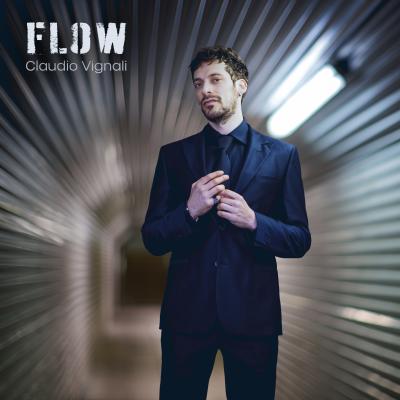
Released on May 15, 2026, by Alman Music, FLOW brings several dimensions of Claudio Vignali’s artistic development into a single recording project. The album features Frank Martino on eight-string guitar, Marco Frattini on drums, and Devon Miles on rap and vocals, with special contributions from Gretchen Parlato and other guest musicians.
Its eight compositions move through a musical environment that brings together contemporary jazz, hip-hop, improvisation, and elements associated with cinematic expression. The project represents a particularly interesting moment in Vignali’s career because it places the relationship between different musical languages at the center of the compositional concept.
The title itself suggests movement, continuity, and transformation. These ideas have long been associated with improvisation, where musical development emerges through the interaction of preparation and spontaneous response. Within the context of contemporary rhythm-based music, however, the concept of flow also acquires additional significance through its relationship with rap, rhythmic articulation, and the continuity of groove.
This dual meaning offers a useful perspective on the album’s artistic direction. Jazz improvisation and hip-hop share an interest in rhythmic invention, individual expression, and the transformation of established patterns. Their historical origins and musical practices differ, but their interaction can create opportunities for new forms of collective expression.
Devon Miles’s participation is central to this conception. His vocal contributions are presented as integral components of the compositions, establishing a relationship between language, rhythm, and instrumental development. Rather than functioning as occasional interruptions within an otherwise instrumental jazz album, the rap passages contribute to the project’s musical identity.
The presence of Gretchen Parlato on Believe introduces a contrasting expressive dimension. Her distinctive vocal approach, combined with the additional colors of violin and cello, creates the possibility of a more intimate musical environment within the album’s broader stylistic framework.
Other compositions reveal connections with the history of jazz and the social concerns of contemporary life. Crazy Bird takes the harmonic structure of John Coltrane’s Lazy Bird as a point of departure, establishing a direct relationship with the language of modern jazz while exploring the possibilities of reinterpretation. This Is Not My War, meanwhile, addresses themes of violence, vulnerability, and hope, demonstrating how musical expression can engage with questions that extend beyond purely instrumental concerns.
These elements suggest that FLOW is not simply an experiment in combining jazz with hip-hop. Its artistic ambitions appear to involve a more comprehensive exploration of how composition, improvisation, rhythmic language, and emotional expression can function within a shared musical environment.
The album also provides an opportunity to reconsider the relationship between Vignali’s earlier influences and his contemporary artistic direction. The harmonic imagination associated with his classical training, the improvisational vocabulary developed through his engagement with jazz history, and the collaborative approach evident in his recent projects all contribute to the conceptual foundations of the recording.
What emerges is an artistic perspective in which tradition and experimentation are not opposing forces. Instead, they become complementary resources through which the composer can explore new expressive possibilities.
The Continuing Evolution of Claudio Vignali
Claudio Vignali’s recorded projects and collaborations reveal a musician whose artistic development has been guided by curiosity, technical discipline, and an increasingly expansive understanding of musical expression. From the intimacy of solo piano to the interaction of small jazz ensembles, from classical influences to international collaborations, his work reflects a sustained interest in the possibilities created when different musical traditions enter into dialogue.
The significance of this trajectory lies not in a rejection of the pianist’s original influences but in their continuing transformation. Bach, Ravel, Rachmaninoff, Bill Evans, McCoy Tyner, and Michel Petrucciani remain meaningful points of reference, yet their influence is increasingly filtered through Vignali’s own compositional decisions and collaborative experiences.
His career also illustrates the importance of artistic openness within contemporary jazz. The music’s history provides an extraordinarily rich foundation, but its continued vitality depends upon musicians willing to explore new relationships between improvisation, composition, rhythm, and cultural expression.
For Vignali, this exploration has gradually expanded the role of the piano. It remains the instrument through which his musical identity is most immediately recognizable, but it is no longer the sole center of the artistic narrative. The interaction between musicians, the organization of instrumental textures, and the relationship between written and improvised material have become increasingly important components of his creative approach.
FLOW brings these concerns into particularly clear focus. Its combination of jazz, hip-hop, vocal expression, and contemporary instrumental writing provides a framework in which the pianist’s diverse experiences can interact within a single project.
Yet the album’s significance cannot be fully understood through its conceptual description alone. Its musical character emerges through the individual compositions, the interaction between piano and eight-string guitar, the rhythmic contributions of Marco Frattini, the distinctive presence of Devon Miles, and the contrasting vocal approaches introduced by Gretchen Parlato and Serena Zaniboni.
The eight tracks offer different perspectives on these relationships, moving between instrumental development, rhythmic experimentation, lyrical expression, and compositions that engage with broader emotional and social themes.
To understand how these elements function together, it is necessary to move beyond Vignali’s biography and artistic influences and examine the album itself — its compositional architecture, instrumental dialogue, rhythmic language, and expressive contrasts.
In FLOW, the pianist’s continuing exploration of musical identity becomes a collective undertaking. The question is no longer simply how Claudio Vignali has developed his own voice, but how that voice interacts with others to create a musical language capable of moving between traditions without being confined by them.
FLOW: WHERE JAZZ, HIP-HOP AND IMPROVISATION CONVERGE
FLOW: The Art of Movement and Musical Transformation
Throughout his career, Claudio Vignali has explored the relationship between musical structure and improvisational freedom, drawing upon classical composition, the jazz piano tradition, and an increasingly diverse range of contemporary influences. With FLOW, released on May 15, 2026, by Alman Music, these interests converge in a project that places collective interaction, rhythmic invention, and stylistic openness at the center of its musical identity. The album is not simply a demonstration of the pianist’s technical abilities or an attempt to introduce contemporary elements into an established jazz format. It represents a broader exploration of how different musical languages can coexist within a coherent compositional environment.
The recording brings together Vignali on piano, Frank Martino on eight-string guitar, Marco Frattini on drums, and Devon Miles on rap and vocals, with special contributions from Gretchen Parlato, Serena Zaniboni, and a small string ensemble. Across eight compositions, the musicians navigate a musical landscape in which jazz harmony, improvisational development, hip-hop rhythms, and cinematic sensibilities become interconnected elements of the same artistic vision. The absence of a conventional acoustic bass in the principal lineup is particularly interesting, placing additional importance on the extended register of Martino’s guitar and the relationship between the instruments responsible for establishing the rhythmic and harmonic foundation.
The title FLOW offers a revealing perspective on the project’s conceptual direction. In jazz, musical flow can describe the continuity of improvisation, the spontaneous development of melodic ideas, and the subtle interaction between performers responding to one another in real time. Within hip-hop, the term carries an additional meaning, referring to the rhythmic organization of language, the placement of syllables against a beat, and the individual expressive identity of the rapper. By bringing these traditions together, Vignali creates an environment in which the concept of flow operates simultaneously at several levels: melodic, harmonic, rhythmic, and verbal.
What makes this approach particularly compelling is the possibility of treating different musical traditions as complementary forms of expression rather than as stylistic categories requiring constant separation. Jazz improvisation and rap possess distinct histories and artistic practices, but both depend upon rhythmic imagination, individual identity, and the creative transformation of established structures. Their interaction can produce a musical language in which instrumental and vocal expression respond to one another without losing their distinctive characteristics.
For Vignali, whose musical background encompasses the discipline of classical composition and the spontaneous possibilities of jazz, this intersection represents a logical extension of his artistic development. The album provides an opportunity to move beyond the conventional distinction between written material and improvisation, allowing musical ideas to evolve through the interaction of different performers and expressive approaches.
Flow Bark: Establishing a New Rhythmic Vocabulary
The opening composition, Flow Bark, introduces the conceptual framework of the album through a musical language that places rhythm and collective interaction at the foreground. As the first track, it carries the responsibility of establishing the relationship between the ensemble’s instrumental resources and the broader stylistic ambitions of the project.
The combination of piano, eight-string guitar, drums, and rap creates an environment in which traditional instrumental roles can become more flexible. Rather than relying exclusively upon the familiar interaction between piano, acoustic bass, and drums, the ensemble introduces a different distribution of harmonic and rhythmic responsibilities. Martino’s extended-range guitar offers possibilities for lower-register movement and harmonic support, while Frattini’s drumming provides the rhythmic continuity necessary for the interaction between instrumental improvisation and vocal delivery.
The presence of Devon Miles introduces an additional expressive dimension. Rap is fundamentally concerned with the relationship between language and rhythm, and its incorporation into a jazz ensemble requires attention to the interaction between verbal phrasing and instrumental development. The pianist must create harmonic and melodic space without obscuring the vocal narrative, while the rhythm section must establish a groove sufficiently stable to support the rapper’s articulation without restricting the freedom of the instrumentalists.
This relationship is central to the artistic identity of FLOW. The project does not depend upon the simple alternation of instrumental passages and vocal sections. Its conceptual ambition involves creating a shared musical environment in which rhythmic language becomes a point of connection between jazz and hip-hop.
The opening track therefore establishes more than a particular atmosphere. It introduces a method of collective expression in which the ensemble’s individual voices contribute to a broader compositional identity.
A Flower on Mars: Imagination, Rhythm, and the Possibility of Elsewhere
The second composition, A Flower on Mars, introduces an evocative title that suggests distance, imagination, and the possibility of discovering beauty in unexpected environments. Within the album’s broader artistic framework, the piece offers an opportunity to explore the relationship between musical movement and the imaginative possibilities of contemporary composition.
The idea of a flower growing on Mars creates an intriguing contrast between fragility and an environment traditionally associated with isolation and inhospitable conditions. As an artistic image, it suggests the emergence of life and creativity in circumstances where neither might ordinarily be expected. Such imagery resonates with the broader concerns of FLOW, where different musical languages encounter one another and generate new possibilities through their interaction.
Devon Miles’s participation adds a verbal dimension to this atmosphere. The relationship between rap and instrumental improvisation allows the composition to move between rhythmic directness and more expansive musical gestures. The voice can introduce images, ideas, and emotional perspectives that acquire additional meaning through the surrounding instrumental material.
The title also invites consideration of the cinematic dimension associated with Vignali’s contemporary work. Music can suggest narrative movement without relying upon conventional storytelling, using changes in harmony, dynamics, and instrumental texture to create impressions of distance, tension, or transformation.
Within this context, A Flower on Mars can be understood as part of the album’s exploration of imagination and movement. Its conceptual imagery provides a contrast to the more direct rhythmic implications of Flow Bark, expanding the emotional and narrative possibilities of the recording.
The relationship between these opening compositions establishes an important characteristic of the album: the coexistence of rhythmic vitality and imaginative expression. Rather than limiting the music to a single emotional atmosphere, Vignali introduces contrasting perspectives that contribute to the development of a broader artistic narrative.
Believe: Gretchen Parlato and the Intimacy of Musical Expression
Among the most distinctive contributions to FLOW is the participation of American jazz vocalist Gretchen Parlato on Believe. Her presence introduces a contrasting expressive dimension, emphasizing intimacy, melodic subtlety, and the relationship between vocal phrasing and harmonic color.
Parlato has developed an internationally recognized musical identity through an approach to singing that frequently privileges nuance over dramatic projection. Her performances are characterized by an exceptional sensitivity to rhythmic placement, delicate articulation, and the expressive possibilities of understated vocal delivery. Rather than treating the voice exclusively as a vehicle for lyrical interpretation, she often approaches it as an instrument capable of interacting with the surrounding ensemble through subtle variations of texture and phrasing.
These qualities make her a particularly interesting collaborator for Vignali. His background in classical piano and modern jazz provides a harmonic environment in which lyrical expression can coexist with sophisticated compositional structures. The relationship between piano and voice offers opportunities for intimate musical dialogue, allowing melodic ideas to develop through the interaction of two distinct expressive personalities.
The arrangement of Believe also includes violin and two cellos, introducing a chamber-music dimension that distinguishes the composition from the album’s principal instrumental configuration. The presence of these instruments expands the possibilities of harmonic color and sustained melodic development, creating an environment in which the acoustic qualities of strings can interact with the piano and voice.
This instrumental combination is particularly relevant to Vignali’s classical background. String writing offers possibilities for contrapuntal interaction, harmonic suspension, and gradual changes in texture that differ from the rhythmic articulation of guitar and drums. Within a contemporary jazz composition, these resources can create a sense of spaciousness and emotional continuity.
The title Believe introduces an additional interpretative dimension. Belief may refer to personal conviction, emotional resilience, hope, or the capacity to imagine possibilities beyond immediate circumstances. Without reducing the composition to a single narrative interpretation, these associations provide a meaningful context for understanding its place within an album concerned with movement, transformation, and collective expression.
The participation of Parlato also demonstrates Vignali’s interest in collaborations that contribute directly to the musical identity of a composition. Her presence is not merely a recognizable name attached to the recording. The contrast between her vocal language and the rap-centered elements elsewhere in the album expands the range of expressive possibilities available to the project.
In this sense, Believe represents one of the clearest examples of the album’s capacity to accommodate different musical approaches within a shared artistic vision.
Double Reality: Contrasts Within a Shared Musical Space
The title Double Reality suggests the coexistence of different perspectives, an idea that resonates strongly with the musical philosophy underlying FLOW. Throughout the album, Vignali brings together traditions that are often discussed separately, creating opportunities for contrasting forms of expression to interact within the same compositional environment.
The relationship between jazz and hip-hop provides one example of this duality. Jazz improvisation frequently emphasizes harmonic development, instrumental dialogue, and spontaneous melodic invention, while hip-hop places particular importance on rhythmic continuity, verbal articulation, and the relationship between language and groove. These characteristics are not mutually exclusive, but their integration requires careful attention to musical structure.
Another form of duality emerges from Vignali’s own background. His classical education emphasizes the interpretation and development of written material, while his jazz training encourages spontaneous musical decisions. Rather than treating these approaches as opposing forces, his work increasingly explores the possibilities created by their interaction.
Double Reality offers an evocative conceptual space for considering these relationships. Its title can suggest the tension between different perceptions of experience, the coexistence of external circumstances and internal emotions, or the simultaneous presence of contrasting musical ideas.
The broader significance lies in the album’s willingness to explore complexity without abandoning coherence. A composition can contain contrasting rhythmic approaches, harmonic environments, and instrumental textures while maintaining a recognizable artistic direction.
For Vignali, this capacity to organize difference becomes an important aspect of contemporary composition. Musical identity is not necessarily defined by stylistic consistency in the narrow sense, but by the composer’s ability to establish meaningful relationships between different expressive resources.
Crazy Bird: A Conversation with John Coltrane
One of the most intellectually intriguing compositions on FLOW is Crazy Bird, preceded by a separate introductory track. The piece takes the harmonic structure of Lazy Bird, composed by John Coltrane, as a point of departure for a new musical exploration.
Coltrane’s Lazy Bird, recorded in 1957 and released on the album Blue Train, occupies an important position within the saxophonist’s early compositional development. Its harmonic movement reflects Coltrane’s growing interest in relationships between tonal centers and the possibilities of organizing improvisation through increasingly sophisticated harmonic structures.
The composition belongs to a period in which Coltrane was expanding the harmonic vocabulary that would eventually become associated with some of his most influential recordings. Although Lazy Bird precedes the more systematic harmonic explorations of Giant Steps, it already demonstrates an interest in harmonic movement that extends beyond relatively straightforward bebop conventions.
For a pianist with Vignali’s background, this material offers particularly rich possibilities. His classical training provides a foundation for understanding complex harmonic relationships, while his immersion in the jazz tradition allows those structures to become resources for improvisational development.
The title Crazy Bird establishes a playful connection with Coltrane’s original composition while suggesting an intention to transform the material rather than reproduce it. This distinction is important because jazz has always depended upon the reinterpretation of inherited musical ideas. Standards, harmonic progressions, and familiar melodic structures frequently serve as starting points for new compositions and improvisational approaches.
By using Lazy Bird as a harmonic reference, Vignali participates in this tradition of creative transformation. The relationship between the two compositions becomes a dialogue across generations, connecting a contemporary European pianist with one of the central figures in the development of modern jazz.
The inclusion of Crazy Bird (Intro) as a separate track also introduces a structural dimension. An introductory composition can prepare the listener for the harmonic or emotional environment of the following piece, creating a sense of continuity while allowing the principal composition to develop independently.
Within the broader context of FLOW, the relationship with Coltrane is particularly significant. The album explores contemporary rhythmic languages and unconventional instrumental combinations, yet Crazy Bird establishes a direct connection with the historical foundations of modern jazz.
This connection demonstrates that experimentation need not involve a rejection of tradition. On the contrary, historical material can provide a foundation for new artistic possibilities when approached with curiosity and an understanding of its original musical significance.
This Is Not My War: Music, Vulnerability, and the Search for Hope
If Crazy Bird establishes a dialogue with jazz history, This Is Not My War introduces a more explicitly contemporary and socially resonant dimension. The composition addresses themes associated with violence, human vulnerability, and the possibility of hope in circumstances marked by conflict.
The title carries an immediate emotional ambiguity. It may suggest a refusal to participate in violence, a recognition of conflicts imposed upon individuals, or a broader reflection on the distance between personal experience and collective suffering. These possibilities give the composition a thematic significance that extends beyond purely instrumental concerns.
Jazz has a long history of engaging with social and political realities. From Duke Ellington’s explorations of African American cultural identity to Charles Mingus’s compositions confronting racism and injustice, musicians have frequently used the expressive possibilities of the genre to address questions of human experience.
John Coltrane’s Alabama, inspired by the 1963 bombing of the 16th Street Baptist Church in Birmingham, offers one of the most profound examples of instrumental jazz responding to historical tragedy. Its emotional force emerges not through explicit verbal explanation but through the relationship between melodic expression, harmonic atmosphere, and collective performance.
This Is Not My War belongs to a different historical and musical context, and its artistic intentions should be understood on their own terms. Nevertheless, the composition reflects the continuing capacity of jazz-related music to engage with themes that extend beyond technical experimentation or stylistic innovation.
Devon Miles’s vocal contribution introduces language directly into this expressive environment. Rap has historically provided a medium through which artists articulate personal experiences, social observations, and reflections on collective circumstances. Its relationship with rhythm allows verbal expression to become part of the musical structure, creating opportunities for meaning to emerge through the interaction between words and instrumental performance.
Within FLOW, this relationship acquires particular significance. The album’s broader interest in stylistic integration becomes a means of exploring emotional and social concerns, suggesting that the interaction between jazz and hip-hop can serve purposes beyond formal experimentation.
The themes of fragility and hope also establish a connection with the more intimate expressive world of Believe. Although the compositions employ different musical resources, both invite consideration of the relationship between vulnerability and resilience.
For Vignali, whose artistic philosophy places considerable importance on emotional communication, such themes provide an opportunity to connect compositional ambition with human experience. Music becomes a means of exploring uncertainty, conflict, and the possibility of transformation without necessarily offering definitive answers.
A Beautiful Dream: An Intimate Closing Perspective
The album concludes with A Beautiful Dream, featuring the voice of Serena Zaniboni. After the rhythmic experimentation, instrumental interaction, and thematic contrasts developed throughout the preceding compositions, the final track introduces the possibility of a more reflective conclusion.
The title suggests an imaginative space in which memory, aspiration, and emotional possibility can coexist. Dreams occupy a particularly rich position within artistic expression because they allow familiar experiences to be transformed through unexpected relationships, creating images and emotional associations that do not necessarily follow conventional logic.
Within the broader narrative of FLOW, the idea of a beautiful dream can be interpreted as a counterpoint to the tensions explored in This Is Not My War. Where the latter confronts questions of violence and vulnerability, the closing composition suggests the possibility of imagining a different emotional landscape.
The presence of Zaniboni introduces another vocal personality into the album, reinforcing the importance of the human voice within Vignali’s contemporary work. Across the recording, vocal expression appears in different forms, from the rhythmic articulation of Devon Miles to the intimate approach associated with Gretchen Parlato and the contribution of Zaniboni.
These contrasting voices expand the expressive range of the project while emphasizing the composer’s interest in collaboration. Rather than maintaining a uniform instrumental identity throughout the recording, Vignali allows different musical personalities to contribute to its emotional development.
The placement of A Beautiful Dream at the conclusion of the album is particularly meaningful. Album sequencing can function as a form of musical narrative, allowing contrasting compositions to acquire additional significance through their relationships with one another. A closing piece may provide resolution, introduce ambiguity, or leave the listener with an emotional impression that extends beyond the final notes.
In this context, A Beautiful Dream suggests a movement toward reflection and possibility. Its title offers an image of beauty that resonates with the album’s broader concerns, allowing the project to conclude with an atmosphere of imaginative openness.
The Ensemble as a Collective Creative Voice
Beyond the individual compositions, one of the defining characteristics of FLOW is the relationship between its musicians. Vignali’s role as pianist and composer provides the conceptual foundation, but the album’s identity depends upon the interaction of performers whose musical backgrounds and instrumental resources contribute different expressive possibilities.
Frank Martino’s eight-string guitar introduces a distinctive instrumental dimension, expanding the harmonic and registral possibilities available to the ensemble. Marco Frattini’s drumming provides the rhythmic framework through which jazz improvisation and hip-hop-derived grooves can interact, while Devon Miles contributes a vocal language that connects rhythmic articulation with verbal expression.
The guest appearances further broaden this musical environment. Gretchen Parlato brings a refined approach to vocal phrasing, while Serena Zaniboni contributes another expressive perspective. The addition of strings on Believe introduces chamber-music colors that connect with Vignali’s classical background.
The significance of these collaborations lies in their potential to transform the music rather than simply decorate it. Contemporary jazz increasingly depends upon musicians capable of moving between different stylistic environments while maintaining a clear understanding of their individual artistic identities.
For Vignali, the challenge is to organize these contributions within a coherent compositional framework. The piano remains an essential component, but it does not necessarily dominate every musical interaction. Instead, the ensemble becomes a space in which different forms of expression can influence one another.
This approach reflects an important development in his artistic trajectory. The pianist whose early education emphasized individual technical mastery now works within a collaborative environment where musical identity emerges through collective participation.
Beyond Genre: The Meaning of FLOW
The broader significance of FLOW lies in its approach to musical boundaries. Jazz, hip-hop, classical composition, and experimental music are frequently treated as distinct categories, each associated with particular histories, techniques, and cultural environments. Yet contemporary musicians increasingly explore the relationships between these traditions, recognizing that artistic identity can develop through their interaction.
Vignali’s album participates in this process without abandoning the foundations of his musical education. The harmonic sophistication associated with his classical training remains relevant, as does his engagement with the history of jazz piano. What changes is the environment in which these resources are employed.
The incorporation of rap introduces a different relationship between language and rhythm, while the presence of extended-range guitar and contemporary production possibilities expands the instrumental landscape. Guest vocalists and strings create additional opportunities for contrast, allowing the music to move between rhythmic directness and lyrical intimacy.
The resulting artistic direction reflects a conception of jazz as an evolving language rather than a fixed stylistic category. Its historical traditions provide essential foundations, but its continuing vitality depends upon musicians willing to explore new relationships between composition, improvisation, and contemporary cultural expression.
At the same time, the value of such experimentation cannot be measured simply by the number of genres incorporated into a recording. Meaningful artistic integration requires coherence, sensitivity, and a clear understanding of the expressive purpose of each musical element.
FLOW presents an ambitious framework for this exploration. Its eight compositions address different aspects of musical movement, from rhythmic invention and harmonic transformation to emotional vulnerability and imaginative reflection.
The album also illustrates the importance of collaboration in contemporary jazz. Vignali’s artistic identity remains central, but the contributions of his fellow musicians become essential to the project’s character. Their interaction creates opportunities for musical development that extend beyond the expressive possibilities of any single performer.
Claudio Vignali and the Continuing Evolution of European Jazz
Claudio Vignali’s career reflects a broader transformation within contemporary European jazz. Musicians whose formative experiences include both classical education and the American jazz tradition increasingly work within environments shaped by international collaboration, technological development, and the circulation of diverse musical influences.
Italy has long maintained a significant jazz community, producing influential pianists, composers, and improvisers whose work has contributed to the international development of the music. Artists such as Enrico Pieranunzi, Stefano Bollani, Franco D’Andrea, and Giovanni Guidi represent different generations and approaches, demonstrating the diversity of musical identities that have emerged within the country’s jazz landscape.
Vignali belongs to a younger generation for whom stylistic boundaries are often approached with greater flexibility. His artistic interests encompass the established piano tradition, classical composition, contemporary improvisation, and musical forms associated with popular and experimental culture.
This openness does not diminish the importance of jazz history. On the contrary, the ability to engage meaningfully with different musical languages depends upon a substantial understanding of the traditions from which they emerge.
His exploration of John Coltrane’s harmonic vocabulary in Crazy Bird demonstrates this continuing relationship with the past, while the incorporation of hip-hop and contemporary instrumental textures points toward new creative possibilities.
The relationship between these elements is particularly relevant to the future of European jazz. As musicians develop increasingly international artistic networks, the boundaries between regional traditions and global musical practices become more complex. Artistic identity emerges not simply through geographical affiliation but through the choices musicians make in organizing their influences and experiences.
For Vignali, this process has produced a trajectory characterized by technical discipline, melodic sensitivity, harmonic curiosity, and an expanding interest in collaborative creation.
FLOW represents a significant expression of these qualities, bringing together musicians and musical languages within a project that reflects both his personal history and the broader possibilities of contemporary jazz.
Final Reflections: Music as a Continuous Journey
The artistic journey of Claudio Vignali reveals a musician whose development has been shaped by the relationship between tradition and discovery. From his earliest experiences at the piano to his classical studies, his immersion in jazz history, and his increasingly diverse collaborations, his career reflects a sustained commitment to exploring the expressive possibilities of music.
His influences encompass some of the most significant figures in classical composition and jazz piano, yet his artistic identity cannot be reduced to the accumulation of these references. What distinguishes his trajectory is the effort to transform inherited musical knowledge into a personal language capable of responding to contemporary artistic challenges.
Projects such as Rach Mode On, Piano Solo Live, and Argentalia illuminate different aspects of this development, revealing an interest in the relationship between classical structures, improvisational freedom, and international collaboration.
With FLOW, these concerns acquire a new collective dimension. The album brings together jazz improvisation, hip-hop rhythms, contemporary composition, and contrasting vocal approaches, creating an environment in which different musical traditions can interact without necessarily losing their distinctive identities.
The participation of Frank Martino, Marco Frattini, Devon Miles, Gretchen Parlato, Serena Zaniboni, and the additional string musicians contributes to a project whose expressive possibilities extend beyond the conventional boundaries of the piano-led jazz ensemble.
The relationship between Crazy Bird and John Coltrane’s Lazy Bird establishes a direct connection with jazz history, while compositions such as This Is Not My War and Believe introduce emotional and thematic dimensions that broaden the album’s significance.
The result is a recording that invites consideration of what contemporary jazz can become when musicians approach tradition as a foundation for exploration rather than a set of restrictions.
For Vignali, the piano remains the central instrument through which his artistic identity has developed. Yet his career demonstrates that the expressive possibilities of the instrument extend far beyond the keyboard itself. Through composition, collaboration, and the organization of contrasting musical languages, the pianist becomes an architect of collective musical experience.
This evolution also reflects one of the enduring principles of jazz: the relationship between individual expression and shared creation. Improvisation allows musicians to articulate personal ideas, but those ideas acquire additional meaning through their interaction with others.
FLOW embodies this principle through its emphasis on movement, dialogue, and transformation. Its musical language draws upon different traditions, yet its artistic ambition lies in establishing relationships between them.
In an era when musical categories are increasingly fluid, Claudio Vignali’s work offers an example of how a musician can remain connected to historical traditions while exploring contemporary forms of expression.
His journey is far from complete, and the significance of FLOW will ultimately be shaped by how the album is received, performed, and understood within the broader context of his developing career. Nevertheless, it represents a compelling chapter in the evolution of an artist whose musical curiosity continues to extend beyond conventional boundaries.
The pianist who once discovered the possibilities of improvisation through spontaneous experimentation at the family piano has developed into a composer interested in the relationships between harmony, rhythm, language, and collective expression.
From Bach and Rachmaninoff to Bill Evans and John Coltrane, from solo piano to contemporary ensemble experimentation, the different stages of his musical development converge in a continuing search for artistic freedom.
For Claudio Vignali, the meaning of FLOW ultimately lies in this movement: the ability to carry tradition forward while remaining open to the unexpected possibilities of musical creation.