

The Pianist Who Changed the Course of Afro-Cuban Jazz
Few musicians have shaped the history of Latin jazz as profoundly as Chucho Valdés. For more than six decades, the Cuban pianist, composer and bandleader has combined dazzling virtuosity with extraordinary musical imagination, creating a style that unites Afro-Cuban rhythms, jazz improvisation, classical technique and the rich traditions of Cuban popular music.
Although often celebrated for his remarkable technical command of the piano, Valdés’ greatest achievement lies in his ability to synthesize multiple musical worlds into a coherent artistic language. His performances move effortlessly between explosive rhythmic passages, lyrical melodies, complex harmonic development and moments of quiet introspection, always preserving a deep connection to Cuba’s musical heritage.
This balance between innovation and tradition has made Chucho Valdés one of the defining pianists of modern jazz.
A Musical Legacy Begins at Home
Born on October 9, 1941, in Quivicán, Cuba, Jesús “Chucho” Valdés grew up in one of the country’s most influential musical families.
His father, the legendary pianist Bebo Valdés, was already recognized as one of the pioneers of Afro-Cuban jazz, combining Cuban rhythms with modern jazz long before the style gained international recognition. Their home became a gathering place for musicians, composers and performers, exposing the young Chucho to an extraordinary variety of musical traditions from his earliest years.
Classical piano studies formed the foundation of his technical development.
At the same time, he absorbed the sounds of Cuban dance music, traditional Afro-Cuban rhythms and American jazz records that found their way to Havana.
Rather than treating these influences as separate disciplines, Valdés instinctively understood that they belonged together.
That realization would guide his entire career.
Beyond His Father’s Shadow
Following in the footsteps of a celebrated parent can be one of the greatest challenges facing any young musician.
For Chucho Valdés, however, the influence of Bebo became both an inspiration and a starting point.
While deeply respecting his father’s pioneering work, he quickly developed a broader and more adventurous musical language. His growing fascination with jazz harmony, modern classical music and increasingly sophisticated rhythmic structures encouraged him to move beyond traditional Latin jazz forms toward something more expansive.
By the 1960s, it was already clear that Chucho Valdés possessed an artistic voice entirely his own.
A Pianist Without Boundaries
Listening to Chucho Valdés for the first time can be a startling experience.
His technique is extraordinary.
Yet technical brilliance is never the primary objective.
Instead, Valdés uses the piano almost as a full orchestra, combining thunderous bass lines, intricate polyrhythms, richly layered harmonies and lyrical melodies into performances of remarkable dramatic range.
The influence of Art Tatum, Thelonious Monk, Bud Powell, Oscar Peterson and classical composers can all be heard in his playing.
So can the unmistakable pulse of Cuba.
Every phrase reflects the rhythmic vitality of Afro-Cuban music, transforming even the most complex jazz improvisation into something irresistibly alive.
JazzLatitude Insight
What distinguishes Chucho Valdés from many virtuosic pianists is that rhythm remains the foundation of everything he plays. Even the most harmonically sophisticated passages retain a deep connection to Afro-Cuban percussion traditions, making rhythm an active force in both composition and improvisation.
The Search for a New Cuban Jazz
By the early 1970s, Chucho Valdés had become convinced that Cuban jazz could evolve beyond existing models.
Rather than simply combining bebop with Latin rhythms, he envisioned an ensemble capable of embracing rock, classical music, Afro-Cuban folklore, contemporary harmony and jazz improvisation within a single musical language.
This ambitious vision would soon take shape through one of the most revolutionary groups in the history of Latin jazz.
Its name was Irakere.
The ensemble would transform not only Cuban jazz but the international perception of Afro-Cuban music itself.
Irakere and the Reinvention of Cuban Jazz
When Irakere was founded in 1973, Chucho Valdés was not simply creating another jazz ensemble. He was assembling a laboratory for musical innovation.
At a time when many Latin jazz groups remained closely connected to established Afro-Cuban and bebop traditions, Irakere embraced a far broader vision. Jazz improvisation coexisted with Afro-Cuban religious rhythms, classical composition, Cuban dance music, funk, rock and even elements of progressive music. The result was a sound that challenged conventional categories while remaining unmistakably rooted in Cuban culture.
The ensemble quickly became one of the most influential groups in the history of modern Latin jazz.
Its impact continues to be felt today.
A Generation of Extraordinary Musicians
One of Irakere’s greatest achievements was bringing together an astonishing collection of musical talent.
Among its members were trumpeter Arturo Sandoval, saxophonist and clarinetist Paquito D’Rivera, drummer Enrique Plá, bassist Carlos del Puerto and several other exceptional musicians who would later enjoy distinguished international careers.
Under Chucho Valdés’ direction, Irakere became far more than a band.
It was a creative community.
Each musician was encouraged to contribute original ideas while remaining committed to the collective identity of the ensemble. This balance between individual brilliance and group cohesion became one of the defining characteristics of the group’s performances.
Few jazz ensembles have launched so many influential careers while maintaining such a distinctive artistic voice.
Afro-Cuban Tradition Meets Modern Jazz
The originality of Irakere lay in the way it approached musical tradition.
Rather than treating Afro-Cuban rhythms as accompaniment for jazz solos, Valdés made them central to the compositional process. Bata drums, folkloric chants and complex rhythmic cycles shaped the architecture of the music itself, creating compositions in which improvisation emerged naturally from Cuban musical traditions rather than being placed on top of them.
Jazz harmony remained essential.
So did swing.
But both were transformed by the rhythmic richness of Afro-Cuban culture.
This approach fundamentally expanded the possibilities of Latin jazz and inspired countless musicians around the world.
JazzLatitude Insight
Irakere’s greatest innovation was demonstrating that Afro-Cuban folklore could function as a complete compositional language rather than simply a rhythmic influence. Chucho Valdés showed that jazz could grow from Cuban musical traditions instead of merely incorporating them.
International Recognition
The international breakthrough came in the late 1970s, when Irakere began attracting widespread attention outside Cuba.
Critics were astonished by the group’s extraordinary technical precision, rhythmic complexity and stylistic freedom. Audiences responded with equal enthusiasm, recognizing that they were witnessing something fundamentally new.
The ensemble’s growing reputation culminated in a Grammy Award for Best Latin Recording in 1979, bringing unprecedented international visibility to Cuban jazz.
For Chucho Valdés, however, awards were never the primary objective.
His focus remained firmly on artistic exploration.
The Grammy simply confirmed what musicians already knew.
Irakere had transformed the landscape of modern Latin jazz.
A Remarkable Solo Career
Although Irakere occupies a central place in Chucho Valdés’ legacy, his achievements as a solo artist are equally impressive.
Over the following decades, he released a remarkable series of recordings showcasing different aspects of his musical personality. Some emphasized dazzling piano technique, while others explored intimate solo performances, orchestral composition or collaborations with leading jazz musicians from around the world.
Regardless of the setting, several characteristics remained constant.
Rhythmic vitality.
Sophisticated harmony.
Remarkable melodic imagination.
And an unwavering connection to Cuban musical traditions.
His solo work demonstrated that he was far more than an exceptional bandleader.
He was one of the great composers and pianists of modern jazz.
The Dialogue with Bebo Valdés
One of the most moving chapters of Chucho Valdés’ career came through the renewed artistic dialogue with his father, Bebo Valdés.
Separated for many years by political circumstances, father and son eventually reunited through music, creating recordings and performances that celebrated both their shared heritage and their distinct artistic identities.
These collaborations revealed fascinating contrasts.
Bebo’s elegant restraint complemented Chucho’s explosive virtuosity.
Traditional Cuban forms met contemporary jazz innovation.
Two generations of Afro-Cuban musical history found common ground at the piano.
Their reunion remains one of the most touching stories in modern jazz.
Beyond Latin Jazz
As Chucho Valdés’ career evolved, his music continued expanding beyond traditional stylistic boundaries.
Classical composition became increasingly important.
Spiritual themes appeared more frequently.
African musical traditions deepened his rhythmic vocabulary.
Collaborations with international artists broadened his artistic perspective even further.
Yet despite this remarkable diversity, his music always retained an unmistakable Cuban identity.
No matter how adventurous the harmony became or how complex the improvisation grew, the rhythmic heartbeat of Cuba remained present.
That continuity explains why his work feels both innovative and deeply rooted.
Essential Albums
The following recordings provide an excellent introduction to the extraordinary breadth of Chucho Valdés’ artistic vision.
- Irakere (1979) — The groundbreaking recording that introduced the revolutionary sound of the ensemble to international audiences.
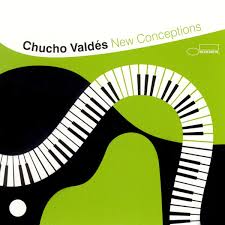
- New Conceptions (1985) — A brilliant demonstration of Valdés’ compositional ambition and pianistic mastery.
- Live at the Village Vanguard (2000) — Capturing the excitement and spontaneity of his trio in one of jazz’s most celebrated venues.
- Juntos Para Siempre (com Bebo Valdés, 2007) — A deeply moving collaboration between father and son, celebrating two generations of Cuban piano excellence.
- Jazz Batá 2 (2018) — A modern masterpiece reconnecting jazz with Afro-Cuban spiritual traditions while demonstrating the continued vitality of Valdés’ musical imagination.
Together, these recordings document the evolution of one of the greatest pianists in jazz history and one of the most influential architects of Afro-Cuban jazz.
The Legacy of Chucho Valdés
Few musicians have transformed the language of jazz as profoundly as Chucho Valdés. Throughout more than six decades of artistic activity, he has demonstrated that Afro-Cuban music is not simply a rhythmic variation within jazz but a complete musical universe capable of generating its own harmonic ideas, compositional structures and improvisational vocabulary.
His influence reaches far beyond Cuba.
Jazz pianists study his extraordinary rhythmic independence.
Composers admire his sophisticated orchestration.
Percussionists analyze the seamless integration of Afro-Cuban folkloric traditions into modern jazz.
Listeners around the world continue to discover a body of work that combines breathtaking virtuosity with deep cultural authenticity.
That achievement has secured Chucho Valdés a place among the greatest pianists in jazz history.
A Global Ambassador for Cuban Music
While many musicians become associated with a single style or historical period, Chucho Valdés has continually expanded the international understanding of Cuban music.
His performances have demonstrated that Cuban musical traditions encompass far more than salsa or dance music. They include sacred Afro-Cuban rhythms, European classical influences, contemporary jazz harmony, popular song traditions and sophisticated orchestral writing.
By presenting these elements as parts of a unified artistic language, Valdés helped audiences appreciate the extraordinary richness of Cuba’s musical heritage.
His work also inspired countless young musicians to explore their own cultural roots with similar confidence.
Rather than imitating established American jazz models, many Latin American artists began developing original musical languages grounded in their local traditions.
JazzLatitude Insight
Chucho Valdés proved that the future of Latin jazz did not depend on becoming more American. It depended on becoming more authentically Cuban. By placing Afro-Cuban musical traditions at the center of his compositions, he expanded the language of jazz for musicians everywhere.
Beyond the Piano
Although Chucho Valdés is universally celebrated as one of jazz’s greatest pianists, his importance extends well beyond performance.
He has been an influential composer, arranger, educator and bandleader whose work has shaped generations of musicians throughout Latin America and beyond. Many of today’s leading Cuban jazz artists either performed with him directly or developed their artistic identities under the influence of his recordings.
His leadership of Irakere created an environment where young musicians could experiment freely while maintaining the highest artistic standards.
That philosophy continues to influence jazz education and ensemble performance today.
Essential Collaborations
Throughout his remarkable career, Chucho Valdés has collaborated with many of the most important figures in Latin and international jazz.
Among the most significant are:
- Bebo Valdés — Their reunion produced one of the most moving collaborations in jazz history, celebrating two generations of Afro-Cuban piano mastery.
- Arturo Sandoval — As members of Irakere, they helped redefine the possibilities of Afro-Cuban jazz through extraordinary technical brilliance and creative freedom.
- Paquito D’Rivera — Their musical partnership combined dazzling improvisation with sophisticated composition, influencing generations of Latin jazz musicians.
- Roy Hargrove — Collaborations that demonstrated the natural dialogue between contemporary American jazz and Afro-Cuban musical traditions.
- Gonzalo Rubalcaba — Although belonging to different generations, the artistic connection between these two Cuban piano giants reflects the continuing evolution of modern Cuban jazz.
These collaborations illustrate Valdés’ lifelong commitment to artistic dialogue, cultural exchange and musical excellence.
Technical Profile
Full Name: Jesús “Chucho” Valdés
Born: October 9, 1941
Birthplace: Quivicán, Cuba
Primary Instrument:
- Piano
Professional Roles:
- Pianist
- Composer
- Arranger
- Bandleader
Primary Styles:
- Afro-Cuban Jazz
- Latin Jazz
- Cuban Jazz
- Modern Jazz
- Afro-Cuban Folkloric Music
Founding Ensemble:
- Irakere
Essential Albums:
- Irakere (1979)
- New Conceptions (1985)
- Live at the Village Vanguard (2000)
- Juntos Para Siempre (with Bebo Valdés, 2007)
- Jazz Batá 2 (2018)
Five Lesser-Known Facts About Chucho Valdés
1. His father was already a jazz pioneer.
Bebo Valdés helped establish Afro-Cuban jazz decades before Chucho achieved international recognition, creating one of the most influential musical legacies in Latin American history.
2. Irakere changed jazz education in Cuba.
Many of Cuba’s greatest contemporary jazz musicians either performed with Irakere or were deeply influenced by its revolutionary approach to rhythm, improvisation and ensemble writing.
3. Afro-Cuban sacred music plays a central role in his compositions.
Rather than using folkloric rhythms as decorative elements, Valdés integrates religious and ceremonial musical traditions into the structural foundation of many of his works.
4. He is equally comfortable performing solo or with large ensembles.
Whether playing intimate solo piano concerts or leading powerful jazz orchestras, Valdés maintains the same balance of rhythmic sophistication, melodic invention and emotional intensity.
5. He has received multiple Grammy Awards.
Over the course of his career, Chucho Valdés has earned numerous Grammy and Latin Grammy Awards, reflecting decades of artistic excellence and international recognition.
Frequently Asked Questions
Who is Chucho Valdés?
Chucho Valdés is a Cuban pianist, composer and bandleader widely regarded as one of the greatest figures in Afro-Cuban jazz. He is the founder of Irakere and one of the most influential pianists in modern jazz history.
What is Chucho Valdés’ most famous group?
Irakere is his most celebrated ensemble. Founded in 1973, the group revolutionized Latin jazz by combining Afro-Cuban traditions, jazz improvisation, classical influences, funk and rock into a groundbreaking musical language.
Is Chucho Valdés related to Bebo Valdés?
Yes.
Bebo Valdés was Chucho’s father and one of the pioneers of Afro-Cuban jazz. Together, they represent one of the most important family legacies in the history of jazz.
Why is Chucho Valdés important?
He transformed Afro-Cuban jazz by integrating folkloric rhythms, sophisticated harmony and modern improvisation into a highly original musical language that continues to influence jazz musicians around the world.
Which artists are similar to Chucho Valdés?
Listeners who appreciate his music often explore Gonzalo Rubalcaba, Arturo O’Farrill, Michel Camilo, Danilo Pérez, Eddie Palmieri, Bebo Valdés and Gonzalo Rubalcaba, all of whom have made significant contributions to Latin jazz and modern piano performance.
JazzLatitude Rating
| Category | Rating |
|---|---|
| Piano Technique | ★★★★★ |
| Compositional Originality | ★★★★★ |
| Rhythmic Innovation | ★★★★★ |
| Afro-Cuban Influence | ★★★★★ |
| Historical Importance | ★★★★★ |
| Improvisational Depth | ★★★★★ |
| Cultural Legacy | ★★★★★ |
| Accessibility for New Listeners | ★★★★★ |
| JazzLatitude Essential | ★★★★★ |
Final Thoughts
Chucho Valdés stands among the rare musicians who permanently changed the course of jazz history. His work demonstrates that innovation is most powerful when it grows from a profound understanding of cultural tradition rather than a desire to break with the past.
Throughout his career, he has expanded the expressive possibilities of the piano while preserving the rhythmic soul of Cuba. His performances combine extraordinary virtuosity with an instinctive sense of groove, allowing even the most sophisticated harmonic ideas to remain deeply connected to dance, ritual and collective musical experience.
That balance explains why his recordings continue to resonate across generations.
Jazz musicians admire his technical brilliance.
Pianists study his remarkable independence between rhythm and harmony.
Listeners are captivated by the energy, lyricism and emotional generosity that define every performance.
Perhaps his greatest achievement, however, lies in demonstrating that Afro-Cuban music is not merely one branch of jazz.
It is one of the music’s essential foundations.
More than fifty years after the birth of Irakere, Chucho Valdés remains one of the most influential pianists in the world and one of the greatest ambassadors of Cuban culture. His recordings continue to inspire musicians everywhere to embrace their own traditions while pursuing fearless artistic innovation.
For anyone seeking to understand the full richness of modern jazz, the music of Chucho Valdés is not simply recommended.
It is indispensable.