The Hurricane That Shattered Swing
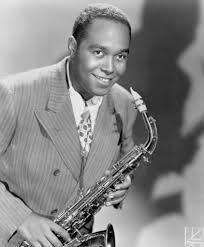
To understand the impact of Charlie Parker, you must completely forget about calmness. In the early 1940s, jazz was the music of large, glamorous big bands, polished dance halls, and polite arrangements tailored to please massive crowds. Then came “Bird.” Armed with an alto saxophone and an almost mystical urgency, he blew the structures of traditional swing to pieces. Alongside his partner-in-crime Dizzy Gillespie, Parker took the familiar chords of popular pop songs and began overloading them with unheard-of harmonic intervals, played at a speed so astonishing it seemed to defy the laws of physics. He dragged jazz off the dance floor and threw it straight into the minds of intellectuals. Bebop was born right there—the definitive soundtrack of a nervous, abstract, and utterly fascinating urban modernity.
The Speed of Thought and the Sound of a Wounded Genius
The global relevance of Charlie Parker didn’t lie just in the impressive agility of his fingers, but in the sheer velocity of his musical thinking. “Bird” thought at the speed of light. His solos were flawless harmonic labyrinths, spaces he entered without any map whatsoever and exited with melodic solutions that left the musicians of his era completely dumbfounded. Anyone who wants to feel this raw magnetism vibrate through their skin needs to scour the historic sessions recorded for the Savoy and Dial labels—treasures we treat with ultimate reverence here at The Jazz Compass. Tracks like “Ko-Ko” and “Ornithology” are true monuments to human genius. Hearing Parker on a well-pressed vinyl is to witness the sound of a man living on the edge of the impossible, translating his deep pains and his towering brilliance into a sharp, lyrical blow.
The Immortal Legacy and the New Latitudes
Charlie Parker’s life was short, intense, and as tragically beautiful as a passing comet—he left us at the young age of 34—but the streak of light he left behind permanently altered the route of all Western music. He established a standard of technical excellence and aesthetic freedom that became the literal oxygen for all the giants who followed, directly influencing the vocal architecture of Sarah Vaughan, the daring evolution of Miles Davis, and, crossing the Atlantic, the hyper-fast vigor of Britain’s own Tubby Hayes. At Jazz Latitude, we celebrate Parker as the man who gave wings to jazz. He proved that true art never asks for permission and that raw talent, when pushed to its absolute limits, is capable of breaking through the barriers of time and space, echoing forever across any coordinate on the planet.