Before Mingus Ah Um: Building a Language Large Enough for Mingus
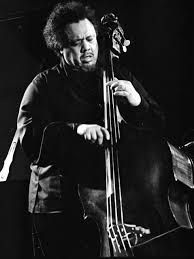
When Mingus Ah Um appeared in 1959, Charles Mingus was thirty-seven years old and had already spent years developing one of the most individual musical languages in modern jazz. The album would eventually become the most accessible entrance into his work, but treating it as the sudden arrival of his genius obscures the long process that made it possible. Mingus had absorbed Duke Ellington, blues, gospel, swing, bebop, European concert music and the emerging freedoms of postwar jazz without accepting that any one of them should determine what jazz was allowed to become. He was a virtuoso bassist, but the bass alone cannot explain his historical importance. Mingus thought like a composer, arranger, bandleader and dramatist. A piece could contain written counterpoint, collective improvisation, church-derived call and response, Ellingtonian orchestral color, abrupt shifts of mood and passages whose apparent disorder was actually carefully controlled. His music could sound ancient and modern simultaneously because he refused the assumption that progress required abandoning tradition.
That contradiction became central to his art. At a moment when jazz was dividing into increasingly identifiable schools, Mingus resisted belonging comfortably to any of them. He could admire Charlie Parker without believing bebop represented the final destination of jazz. He could embrace collective improvisation without surrendering compositional authority. He could write music of extraordinary sophistication while remaining deeply connected to blues and Black church traditions. He could honor Jelly Roll Morton and Lester Young while pushing his musicians toward forms that anticipated the avant-garde. By 1959, these elements had accumulated into a language unmistakably his own. Mingus Ah Um did not simplify that language. It concentrated it.
Watts, Los Angeles and the Formation of an Outsider
Charles Mingus Jr. was born on April 22, 1922, in Nogales, Arizona, and raised primarily in the Watts district of Los Angeles. His childhood placed him inside complicated questions of race and identity that would later become inseparable from his music and writing. Mingus’s ancestry was mixed, and he grew up in a United States organized by rigid racial categories that rarely reflected the complexity of individual lives. His sense of being both inside and outside different communities contributed to the intensity with which he later confronted racism, belonging and American identity.
Music offered one path through that complexity. Mingus initially studied cello before moving toward double bass. The transition was crucial. The bass placed him inside the rhythmic foundation of jazz while his early exposure to classical music encouraged him to think beyond the instrument’s conventional supporting function. He studied seriously, including work with bassist Red Callender, and developed formidable technical command. At the same time, the Los Angeles jazz environment exposed him to swing, blues and the rapidly changing language that would become bebop.
But one figure towered above the others.
Duke Ellington.
Ellington: The First Great Model
Mingus’s admiration for Ellington was profound because Ellington demonstrated that jazz composition did not need to imitate European concert music in order to achieve complexity and scale. An ensemble could be built around the specific personalities of its musicians. Individual timbres could become compositional material. Blues, popular song, orchestral color and formal experimentation could coexist without requiring apology.
Mingus would carry that lesson throughout his life.
He did not write for anonymous instruments.
He wrote for people.
A saxophone part could be shaped around the sound of a particular saxophonist. A drummer’s personality could alter the architecture of an entire piece. Musicians were expected not merely to reproduce notation but to contribute something recognizably their own.
This helps explain why Mingus’s bands could sound simultaneously composed and unstable. The score was not always the final authority. The personalities inside the ensemble mattered.
Ellington had demonstrated that possibility.
Mingus would make it more volatile.
The Bassist Who Wanted More
During the 1940s, Mingus developed professionally in Los Angeles, working with musicians including Louis Armstrong and Lionel Hampton. His composition “Mingus Fingers” was recorded by Hampton in 1947, providing an early indication that the bassist’s ambitions extended well beyond the rhythm section.
Mingus also absorbed the revolution occurring around bebop. Charlie Parker and Dizzy Gillespie had transformed jazz improvisation, harmony and rhythm, and young musicians across the country were forced to confront the new language.
Mingus embraced much of it.
But he never became simply a bebop bassist.
His imagination was too orchestral, his historical awareness too broad and his relationship with the blues too deep. Bebop became another vocabulary he could incorporate rather than a system he needed to obey.
That attitude would eventually distinguish him from musicians who treated stylistic development as replacement.
For Mingus, jazz history remained available.
Morton did not become irrelevant because Parker existed.
Ellington did not disappear because bebop had arrived.
The blues did not become primitive because harmony became more complex.
Everything could remain alive.
Red Norvo and National Recognition
A major step came when Mingus joined the trio of vibraphonist Red Norvo, alongside guitarist Tal Farlow, in the early 1950s. The unusual piano-less instrumentation gave the bass more room than a conventional rhythm-section setting, and Mingus’s virtuosity became increasingly visible.
The trio helped establish his national reputation.
More importantly, it demonstrated how naturally Mingus could operate in an ensemble where the bass participated actively in melodic and contrapuntal conversation. He was not content merely to mark roots beneath another musician’s ideas.
The instrument could argue.
It could answer.
It could redirect.
This conception of the bass would later become essential to Mingus’s bands, but his ambitions were already moving beyond instrumental innovation.
He wanted control over the music itself.
New York, Parker and the Bebop World
Mingus moved into the New York jazz world during a period when bebop’s revolution was becoming institutionalized. He performed with major figures and entered the orbit of Charlie Parker, whose musical brilliance deeply affected him.
Mingus’s relationship with Parker was complicated because admiration for Parker’s artistry existed alongside frustration with the destructive culture surrounding parts of the bebop scene. Mingus could celebrate the musical freedom Parker represented while criticizing the romanticization of addiction and self-destruction.
This tension would later appear throughout Mingus’s career.
He admired Black artistic innovation but rejected the conditions under which Black musicians were frequently exploited.
He loved jazz tradition but despised nostalgia.
He demanded freedom while imposing intense discipline on his own musicians.
Contradictions were not obstacles to Mingus’s identity.
They were part of it.
The Massey Hall Moment
One of Mingus’s most famous early appearances came at the 1953 Massey Hall concert in Toronto, alongside Charlie Parker, Dizzy Gillespie, Bud Powell and Max Roach. The event would later acquire legendary status as one of bebop’s iconic recorded meetings.
But Mingus’s importance to the recording extends beyond playing bass.
He and drummer Max Roach had founded Debut Records, an independent label created partly to give musicians greater control over their work. The Massey Hall performance became one of Debut’s most famous releases.
The episode reveals a side of Mingus essential to understanding everything that followed.
He did not only want musical independence.
He wanted structural independence.
Who owned the recording?
Who controlled the session?
Who benefited from the music?
These questions mattered to him.
Long before debates about artist ownership became routine, Mingus understood that creative freedom could be undermined by economic dependence.
Debut Records
Debut Records, founded by Mingus and Roach with Celia Mingus, became an important experiment in musician-controlled recording. The label released work by emerging and established artists and provided Mingus with experience that would shape his understanding of the recording industry.
It was difficult financially.
But artistically, the principle was significant.
Mingus wanted musicians to possess greater authority over the circumstances in which their work entered the world.
That desire for control paralleled his increasingly demanding approach as a bandleader.
He was moving toward a conception in which composition, rehearsal, performance and improvisation could no longer be treated as separate activities.
The laboratory for that idea became the Jazz Workshop.
The Jazz Workshop
Mingus’s Jazz Workshop was less a conventional band than a method of creating music. Rather than always handing musicians fully notated arrangements, he could teach parts by ear, sing lines, demonstrate ideas at the piano and insist that players internalize the music.
This approach had important consequences.
A musician who memorizes a part differently from someone reading every note from a page may develop a more physical relationship with the composition. The material becomes something heard and felt rather than merely decoded.
Mingus could then demand individual interpretation.
The composition had identity, but it was not frozen.
This helps explain why performances of Mingus pieces can vary dramatically while remaining unmistakably the same composition.
He wanted structure with human friction inside it.
The Jazz Workshop created exactly that.
Composition as Controlled Instability
Mingus’s music from the mid-1950s increasingly challenged the assumption that composition and improvisation were opposites.
A written section could suddenly open.
An improvisation could trigger a transition.
Several horns could play independent lines simultaneously.
A gospel-like passage could collide with sophisticated counterpoint.
The drummer could change the emotional character of the ensemble without altering the written melody.
This is why describing Mingus merely as a bassist who composed undervalues him.
He was developing a theory of ensemble behavior.
Music did not have to proceed politely from theme to solo to theme.
It could behave more like conversation, argument or theater.
Sometimes several things could happen at once.
Mingus trusted listeners to follow the conflict.
Pithecanthropus Erectus
A decisive statement arrived with Pithecanthropus Erectus in 1956. The title composition presented an extended narrative about humanity’s rise and collapse, demonstrating Mingus’s increasing interest in large-scale musical storytelling.
The album also established how effectively he could combine composition with collective improvisation. Instead of treating spontaneous ensemble playing as a return to early jazz conventions or as complete freedom from structure, Mingus incorporated it into carefully conceived dramatic forms.
The music could become chaotic.
But the chaos had a purpose.
This distinction would become central to his work.
Mingus did not pursue freedom because he disliked composition.
He pursued freedom because his compositions required musicians capable of behaving unpredictably inside them.
The Clown
The following year brought The Clown, another important step. The album contained “Haitian Fight Song,” one of Mingus’s most powerful compositions, beginning with an extended bass statement before expanding into a performance of enormous collective force.
“Haitian Fight Song” reveals how Mingus could make political and emotional meaning inseparable from musical structure. The piece does not need lyrics to communicate struggle. The bass establishes tension physically. The horns intensify it. The ensemble builds until the music seems to contain both resistance and celebration.
Mingus later spoke explicitly about the piece’s connection to prejudice and injustice.
For him, instrumental music was not politically neutral simply because no words were being sung.
Sound itself could take a position.
Dannie Richmond
Then came one of the most important relationships of Mingus’s career: drummer Dannie Richmond.
Richmond, originally a saxophonist, became Mingus’s principal drummer beginning in the mid-1950s and would remain closely associated with him for much of the next two decades.
Their relationship transformed Mingus’s music.
Mingus needed a drummer who could do more than keep time. His compositions might accelerate, pull back, change feel abruptly, move from swing into gospel-inflected rhythm or support collective improvisation without allowing the ensemble to collapse.
Richmond understood the drama.
He could respond to Mingus almost conversationally.
The bassist might push.
Richmond could answer.
A transition could emerge through interaction rather than a written instruction.
The rhythm section became the engine of Mingus’s theater.
Blues and Gospel Without Nostalgia
By the late 1950s, Mingus had developed an increasingly powerful relationship with blues and gospel traditions. But his use of these materials was never nostalgic.
He did not present gospel gestures as museum pieces representing an idealized Black past.
He used them because they were alive.
Hand-clapping rhythms, call-and-response structures, blues inflections, shouted ensemble figures and church-like momentum could coexist with advanced harmony and counterpoint.
This combination became one of his most recognizable signatures.
The music could sound communal without becoming simple.
It could be sophisticated without distancing itself from the body.
Mingus refused the assumption that intellectual complexity and emotional directness belonged to different kinds of jazz.
He wanted both.
Often simultaneously.
1959: Jazz Expands in Every Direction
Then came 1959.
The year has acquired almost mythological importance in jazz history because so many radically different statements appeared within a short period. Miles Davis recorded Kind of Blue. Ornette Coleman released The Shape of Jazz to Come. Dave Brubeck recorded Time Out. John Coltrane was creating the music that would become Giant Steps.
It is tempting to arrange these records into a single narrative of jazz progressing toward greater freedom.
Mingus makes that impossible.
His revolution did not depend on abandoning history.
He moved forward by pulling history with him.
Ellington.
The blues.
Gospel.
New Orleans.
Swing.
Bebop.
Collective improvisation.
Modern composition.
Political anger.
Personal memory.
All could occupy the same piece.
Where Miles created space by reducing harmonic information, Mingus often created possibility through collision.
Columbia Records
In 1959, Mingus signed with Columbia Records, giving him access to a major-label recording environment and a larger potential audience. The opportunity resulted in the album that would become the most widely recognized entry point into his music.
But Mingus did not respond to the opportunity by making a conventional commercial jazz record.
Instead, he assembled a program that functioned partly as autobiography, partly as historical dialogue and partly as confrontation.
Some compositions honored musicians who had shaped him.
Others drew directly from church and blues traditions.
One addressed contemporary racism so explicitly that its political implications created problems before the record was even released.
The album looked backward and forward simultaneously.
That was precisely the point.
Enter Mingus Ah Um
Recorded during sessions in May 1959, Mingus Ah Um brought together musicians including John Handy, Booker Ervin, Shafi Hadi, Jimmy Knepper, Willie Dennis, Horace Parlan and Dannie Richmond, with Mingus directing the ensemble from the bass.
The title itself was playful, drawing on the Latin-style declension of his surname.
The music was anything but an academic exercise.
“Better Git It in Your Soul” drew on gospel energy and childhood memories of church.
“Goodbye Pork Pie Hat” became an elegy for Lester Young, who had died only weeks before the session.
“Jelly Roll” looked back toward Jelly Roll Morton.
“Open Letter to Duke” acknowledged Ellington.
“Fables of Faubus” confronted the politics of segregation.
The album was not simply a collection of tunes.
It was Mingus constructing a map of where his music came from and what he believed jazz could become.
The First Sound of Mingus Ah Um
And then the record begins.
Not with abstraction.
Not with a demonstration of advanced harmony.
Not with a virtuosic bass solo.
It begins with something closer to a congregation catching fire.
“Better Git It in Your Soul.”
The horns shout.
The rhythm moves with the physical force of church music.
Voices and exclamations become part of the performance.
Dannie Richmond drives the ensemble while Mingus turns the bass into both foundation and provocation.
It sounds spontaneous.
It sounds dangerous.
It sounds joyful.
And beneath all of that apparent freedom is an extraordinary degree of organization.
This is the central paradox of Charles Mingus.
The music can sound as though it might fall apart at any moment.
It does not.
Someone is controlling the architecture.
That someone is Mingus.
Buy Amazon
Mingus Ah Um: History as Living Material
What makes Mingus Ah Um extraordinary is not simply the quality of its individual compositions but the way Charles Mingus compresses several generations of Black American music into a language that belongs unmistakably to 1959. The album looks backward constantly, yet almost never sounds nostalgic. Duke Ellington, Jelly Roll Morton, Lester Young, blues, gospel, swing and bebop are not presented as historical exhibits. Mingus treats them as living material that can be reorganized, contradicted and pushed into new forms. This separates him from the idea of jazz progress as a sequence in which each new movement replaces the previous one. For Mingus, modernity did not require historical amnesia. The past remained available precisely because it still contained unresolved possibilities.
The musicians therefore needed to understand more than notes. Mingus’s compositions depended on character. John Handy, Booker Ervin, Shafi Hadi, Jimmy Knepper, Willie Dennis, Horace Parlan and Dannie Richmond brought individual voices into structures designed to accommodate personality. Mingus’s bass anchored the ensemble but also directed it, sometimes pushing against Richmond, sometimes establishing figures that organized entire sections. The result can create an illusion of spontaneity so convincing that listeners may underestimate how carefully the music has been conceived. Mingus Ah Um is full of shouts, overlapping horns, sudden transitions and passages that seem ready to overflow their boundaries. The boundaries remain. Mingus simply makes them flexible enough to contain human behavior.
“Better Git It in Your Soul”
The opening track establishes the entire philosophy immediately. “Better Git It in Your Soul” draws deeply from the Black church environment Mingus remembered from childhood. Its rhythmic momentum, call-and-response figures, vocal interjections and repeated riffs create something closer to communal experience than conventional jazz recital.
Yet calling the piece “gospel-influenced” only begins the explanation.
Mingus does not place gospel decoration over a jazz structure. The communal logic of church music becomes part of the composition itself. Repetition builds intensity. Horns respond to one another. Voices enter the recorded space. The rhythm section creates forward motion that feels physical before it feels analytical.
This was a radical statement in 1959 precisely because Mingus refused to separate sophistication from vernacular expression.
The piece can be joyous and compositionally complex at the same time.
Nothing needs to be cleaned up to become art.
Dannie Richmond: The Engine
Listen closely to Dannie Richmond throughout “Better Git It in Your Soul” and Mingus’s choice of drummer becomes obvious. Richmond does not simply maintain tempo underneath a complicated arrangement. He understands the emotional trajectory.
Mingus could alter the intensity of an ensemble through bass figures, shouted cues or physical gestures, and Richmond was capable of responding almost instantly. Their relationship often resembles conversation between two bandleaders operating simultaneously from inside the rhythm section.
This flexibility allowed Mingus to construct forms that did not always depend on predetermined bar counts in the conventional sense. Sections could breathe. Repeated passages could accumulate energy. Transitions could feel triggered by the ensemble rather than imposed from outside it.
Richmond gave Mingus freedom because Mingus trusted him to recognize where the music was going.
The partnership became one of the longest and most important in Mingus’s career.
Composition Through Personality
Mingus’s method also helps explain why his music can be difficult to reproduce convincingly.
The notes alone are insufficient.
A technically accurate performance of “Better Git It in Your Soul” can still fail if the musicians treat the score as the complete composition. The original recording depends on individual tone, timing, interaction and a willingness to make the ensemble sound almost socially alive.
Mingus had learned an essential lesson from Ellington: write for musicians, not abstract instruments.
A tenor saxophone was not simply “tenor saxophone.”
It was Booker Ervin.
A trombone line was affected by the personality of Jimmy Knepper.
Dannie Richmond’s drums could not be replaced conceptually by a generic rhythm pattern.
Mingus built music around difference.
That is why the ensemble sounds populated rather than polished.
“Goodbye Pork Pie Hat”
The mood changes dramatically with “Goodbye Pork Pie Hat,” Mingus’s elegy for tenor saxophonist Lester Young, who had died in March 1959.
Young represented something profound in jazz history. His light, floating tenor sound and relaxed approach to phrasing had provided an alternative to the more forceful saxophone language associated with Coleman Hawkins. His influence reached generations of players, and his image—including the distinctive pork pie hat—became inseparable from jazz culture.
Mingus does not honor him by imitating him.
Instead, he creates a composition whose emotional weight comes through harmony, ensemble color and melodic shape.
The piece mourns without becoming sentimental.
That distinction is essential.
Mingus could express enormous emotion while maintaining compositional discipline. The elegy works because grief is embedded in the structure rather than added through exaggerated performance.
Memory Without Imitation
“Goodbye Pork Pie Hat” demonstrates another important aspect of Mingus’s relationship with jazz history.
Tribute did not require reproduction.
He could honor Lester Young without writing a swing-era pastiche. He could reference Jelly Roll Morton without pretending to live in New Orleans in 1925. He could acknowledge Ellington without becoming an Ellington copyist.
History provided relationships rather than restrictions.
This makes Mingus Ah Um strikingly different from many revivalist approaches to jazz tradition. Mingus believed deeply in the past, but he refused to preserve it behind glass.
To honor a tradition was to continue arguing with it.
“Goodbye Pork Pie Hat” therefore belongs simultaneously to Lester Young’s memory and Mingus’s present.
That tension gives the composition its durability.
“Boogie Stop Shuffle”
If “Goodbye Pork Pie Hat” reveals Mingus’s capacity for controlled mourning, “Boogie Stop Shuffle” returns to rhythmic construction with almost architectural precision.
The title itself suggests the collision of musical vocabularies. Boogie, shuffle and modern jazz rhythm coexist inside a piece built from repeated figures and changing ensemble relationships.
Mingus was fascinated by ostinatos because repetition could provide a foundation strong enough to support considerable freedom above it. A repeated bass figure does not necessarily make music static. When other instruments interact differently with the same foundation, repetition becomes a measuring device: the listener hears change precisely because something underneath remains stable.
This principle would become increasingly important across jazz, funk and later groove-centered improvisational music.
Mingus understood it early.
A bass line could be architecture.
“Self-Portrait in Three Colors”
“Self-Portrait in Three Colors” offers another side of Mingus entirely. Originally conceived in connection with John Cassavetes’s film Shadows, the composition demonstrates his extraordinary melodic sensitivity.
The title is revealing.
Mingus understood music autobiographically.
His compositions could function as portraits of people, political situations, memories and aspects of himself. But self-expression did not require an extended bass solo or explicit confession.
Harmony could become autobiography.
Orchestration could become personality.
A melody could reveal something the composer could not state verbally.
“Self-Portrait in Three Colors” is restrained compared with the explosive tracks surrounding it, but that restraint prevents any simplistic interpretation of Mingus as merely angry or volcanic.
He possessed enormous tenderness.
The fury mattered because tenderness existed beside it.
“Open Letter to Duke”
The connection to Duke Ellington becomes explicit in “Open Letter to Duke.” Mingus had briefly been a member of Ellington’s orchestra in the early 1950s, an association that ended quickly after a notorious confrontation involving trombonist Juan Tizol. Yet Mingus’s admiration for Ellington remained enormous.
Ellington represented artistic independence on a scale few jazz composers had achieved. His orchestra developed a recognizable musical world across decades, and his compositions frequently depended on the particular sounds of individual musicians.
Mingus absorbed this idea deeply.
But an “open letter” is not an act of submission.
Mingus converses with Ellington from his own historical position. By 1959, bebop had happened. Parker had happened. Modern harmony and increasingly open improvisational concepts had changed the available language.
Mingus could acknowledge his predecessor while refusing to sound like him.
That is how a living tradition operates.
“Jelly Roll”
The same principle applies to “Jelly Roll,” Mingus’s salute to Jelly Roll Morton.
Morton had been one of jazz’s earliest great composers and arrangers, a musician who understood that improvisation and organization were not enemies. His ensembles could create the impression of spontaneous collective activity while relying on carefully structured relationships among instruments.
It is easy to see why Mingus found him important.
Both musicians resisted the idea that jazz composition should simply imitate European models.
Both understood the power of collective personality.
Both treated blues and vernacular traditions as sources of sophisticated musical architecture.
By invoking Morton in 1959, Mingus was making a historical argument.
Modern jazz did not begin with bebop.
Its compositional intelligence reached much further back.
“Bird Calls” and Charlie Parker
“Bird Calls” appears at first to provide an obvious connection to Charlie Parker, but Mingus later complicated that assumption, indicating that the piece was not originally conceived as a Parker tribute despite the title’s association.
That ambiguity is useful because Parker’s presence nevertheless hangs over Mingus’s generation.
Mingus had played with him.
He had admired him.
He had also watched the culture surrounding Parker turn musical genius and personal destruction into a mythology that Mingus found deeply troubling.
By the late 1950s, jazz musicians were already confronting the question of what came after bebop.
Mingus’s answer was not rejection.
Bebop became one layer among many.
Parker could exist beside Ellington, Morton, gospel and collective improvisation.
The history did not need to be linear.
“Pussy Cat Dues”
“Pussy Cat Dues” pushes further into Mingus’s ability to combine older jazz vocabularies with contemporary ensemble writing. Blues feeling and echoes of earlier jazz coexist with modern harmonic and rhythmic ideas.
Again, the music refuses stylistic purity.
For Mingus, purity would have been historically false.
Jazz had always developed through interaction, adaptation and memory. New Orleans collective practices, blues, swing orchestration and bebop vocabulary did not occupy sealed rooms.
Mingus opened the doors between them.
The resulting music can sound familiar and strange simultaneously.
A phrase may seem to come from early jazz before the harmony moves somewhere unexpected.
A blues gesture can enter an ensemble texture of considerable complexity.
This instability is part of the pleasure.
The listener recognizes the language just before Mingus changes its context.
“Fables of Faubus”
Then comes the album’s most explicitly political composition: “Fables of Faubus.”
The title refers to Orval Faubus, governor of Arkansas during the 1957 Little Rock integration crisis. Faubus used the Arkansas National Guard in an attempt to prevent nine Black students from entering Little Rock Central High School, becoming an enduring symbol of resistance to school desegregation.
Mingus responded with satire.
This is important because his political music was not always solemn. Anger could become ridicule. Humor could become a weapon.
“Fables of Faubus” transforms political disgust into musical characterization. Its angularity, repeated figures and ensemble responses create a sense of confrontation without requiring the listener to know every historical detail.
But the version on Mingus Ah Um contains a crucial absence.
There are no political lyrics.
The Columbia Controversy
Mingus had written lyrics attacking Faubus and the racism surrounding segregation, but Columbia would not permit them to be recorded for the album. Consequently, the Mingus Ah Um version of “Fables of Faubus” is instrumental.
This corrects a surprisingly persistent misunderstanding. The shouting and satirical vocal exchange commonly associated with the composition belongs to a later recording.
In 1960, Mingus recorded the piece for the independent Candid label as “Original Faubus Fables.” There, Mingus and Dannie Richmond deliver the lyrics openly.
The distinction matters historically.
The instrumental Columbia version is not evidence that Mingus originally conceived the piece without words.
It is evidence of the limits a major record company placed around explicit political expression.
The later version restores what had been excluded.
Mingus and Political Jazz
“Fables of Faubus” places Mingus within a larger history of Black musicians confronting American racism, but his approach was intensely personal.
He did not separate political anger from musical personality.
Nor did he transform every composition into explicit protest.
Politics entered when the subject demanded it.
This makes Mingus difficult to reduce to the category of “protest musician.” His music encompasses love, humor, memory, spirituality, grief, absurdity, sensuality and rage.
The political force comes partly from refusing reduction.
A Black composer could claim the full range of human experience while also confronting the society attempting to limit him.
Mingus’s insistence on artistic complexity was itself significant.
He would not become the character the industry expected.
The Editing of Mingus Ah Um
There is another layer to the album’s history that listeners of later editions may not immediately recognize. Several performances on the original LP were edited for release, with portions removed to fit the practical limitations and programming considerations of the format. Later reissues restored longer versions of tracks.
This matters because Mingus’s music depends heavily on development.
A removed section can alter the perceived proportions of a composition.
Modern listeners therefore have access to perspectives on the sessions unavailable to the album’s first audience.
Neither version should simply be dismissed.
The original LP is the historical object that shaped the album’s reputation.
The restored performances provide additional evidence of how Mingus’s ensembles actually developed the material in the studio.
Together they reveal the relationship between performance and record-making.
The Bass at the Center
Throughout the album, Mingus’s bass occupies an unusual position.
He is not simply accompanying his own compositions.
The bass can establish riffs, provoke transitions, push the drummer, reinforce ensemble figures and occasionally seem to conduct from inside the music.
This is perhaps the best way to understand Mingus as a bandleader.
He does not stand outside the ensemble controlling it.
He enters the argument.
The bass becomes both foundation and commentary.
Dannie Richmond responds.
The horns react.
Energy circulates.
Leadership is audible rather than merely administrative.
Mingus is simultaneously composing, performing and shaping the behavior of everyone around him.
Why Mingus Ah Um Works
For all its historical references and compositional sophistication, Mingus Ah Um remains remarkably accessible.
The melodies stay with you.
The grooves move.
The emotional contrasts are immediate.
One does not need to recognize Lester Young, Jelly Roll Morton or Orval Faubus to respond to the music.
Knowing the references deepens the experience.
It is not required for the experience to begin.
That balance explains why the album became such an effective gateway into Mingus’s world. More difficult works would follow, and some earlier recordings pushed collective improvisation more aggressively.
But Mingus Ah Um contains an unusual concentration of his musical identity.
History.
Blues.
Gospel.
Politics.
Humor.
Grief.
Composition.
Improvisation.
None cancels the others.
1959 Was Not the Destination
And Mingus was nowhere near finished.
Within the same extraordinary period he would produce Mingus Dynasty, extending several ideas from the Columbia sessions. The following years would bring increasingly ambitious compositions, volatile ensembles and some of the greatest recordings of his career.
There would be Eric Dolphy.
There would be Charles Mingus Presents Charles Mingus and the uncensored return of “Fables of Faubus.”
There would be Oh Yeah.
There would be The Black Saint and the Sinner Lady.
There would be Mingus Mingus Mingus Mingus Mingus.
There would be European tours, confrontations, periods of withdrawal and eventually a remarkable creative return during the 1970s.
Mingus Ah Um was not Mingus’s summit followed by decline.
It was the moment when a language he had spent years constructing became unusually visible.
After Mingus Ah Um: Refusing to Become Predictable
The success of Mingus Ah Um could have given Charles Mingus a comfortable formula. He now possessed a recognizable musical identity, a major-label audience and compositions capable of communicating sophistication without sacrificing emotional immediacy. Another bandleader might have refined the approach and repeated it. Mingus did almost the opposite. The years following 1959 produced music that became more confrontational, structurally ambitious and difficult to categorize, confirming that Mingus Ah Um had never been intended as the final definition of his art. Gospel, blues, Ellington, collective improvisation and political anger remained, but their relationships changed constantly. Mingus was less interested in establishing a style than in building musical situations intense enough to reveal the personalities inside them.
This is why his discography can initially feel less orderly than those of musicians associated with a single movement. Mingus belongs to hard bop but never fits comfortably inside it. He anticipated aspects of free jazz while remaining deeply committed to composition. He could write orchestral music of extraordinary detail and then encourage an ensemble to sound as though it were arguing its way through the form. He respected jazz history too deeply to imitate it. After Mingus Ah Um, these contradictions intensified.
Mingus Dynasty
Later in 1959, Columbia released Mingus Dynasty, recorded largely during sessions following Mingus Ah Um. The album is sometimes overshadowed by its predecessor, but hearing them together reveals how productive Mingus had become. Rather than simply extending one successful record, Mingus Dynasty explores another range of ensemble colors and compositional possibilities.
The title itself contains characteristic Mingus humor and ambition. He could simultaneously mock the idea of his own grandeur and insist that his work deserved to be considered on the scale usually reserved for major composers.
That insistence mattered.
Jazz musicians were still frequently treated by the cultural establishment as performers first and composers second. Mingus rejected the distinction. Improvisation did not make composition less serious. Blues did not make orchestration less sophisticated. A piece rooted in Black vernacular music did not require validation through European concert traditions.
Mingus wanted jazz judged on its own terms.
Candid Records and the Return of Faubus
The following year brought one of his most uncompromising recordings, Charles Mingus Presents Charles Mingus, made for Candid Records with a remarkable quartet featuring Eric Dolphy, Ted Curson and Dannie Richmond.
Here Mingus finally recorded the vocal version of “Fables of Faubus” that Columbia had refused, retitling it “Original Faubus Fables.” The performance makes explicit what the instrumental version on Mingus Ah Um had only implied. Mingus and Richmond exchange satirical lines attacking Governor Orval Faubus and racial segregation.
The music becomes political theater.
But reducing the recording to its lyrics misses how effectively Mingus integrates protest into ensemble behavior. The voices, bass, drums and horns all participate in the satire. Politics is not a speech placed on top of jazz.
It is embedded in the performance.
The album also contains “What Love?” and “All the Things You Could Be by Now If Sigmund Freud’s Wife Was Your Mother,” revealing Mingus’s extraordinary combination of seriousness, absurdity and musical intelligence.
Eric Dolphy
The arrival of Eric Dolphy opened another dimension in Mingus’s music.
Dolphy was an ideal Mingus musician because his individuality was impossible to disguise. His alto saxophone could leap unpredictably between registers. His bass clarinet possessed a dark, vocal quality rarely heard as a major improvisational voice in jazz. His phrasing could sound humorous, anguished, abstract or intensely lyrical.
A conventional bandleader might have attempted to control such a personality.
Mingus used it.
This returns us to the lesson he had absorbed from Ellington decades earlier: the musician’s identity is part of the composition.
Dolphy did not simply play Mingus’s music.
Mingus could compose differently because Dolphy existed.
Their relationship became one of the defining musical partnerships of Mingus’s career.
Oh Yeah
In 1961, Mingus recorded Oh Yeah for Atlantic, making one of the most unusual instrumental decisions of his career: instead of playing bass, he performed primarily on piano and vocals, with Doug Watkins handling bass.
The choice demonstrates how misleading it is to define Mingus principally through his instrument.
The bass was important.
The music was larger.
Oh Yeah is earthy, humorous, theatrical and deeply rooted in blues and gospel expression. Tracks such as “Hog Callin’ Blues,” “Devil Woman” and “Ecclusiastics” demonstrate how naturally Mingus could move between sacred and secular associations.
The music can shout.
It can laugh.
It can preach.
It can become deliberately uncomfortable.
This theatrical quality distinguishes Mingus from many composers of comparable sophistication. His structures rarely feel like abstract formal experiments because human behavior is constantly entering them.
The Black Saint and the Sinner Lady
Then, in 1963, came one of Mingus’s most extraordinary achievements: The Black Saint and the Sinner Lady.
If Mingus Ah Um provides an ideal introduction to his musical world, The Black Saint demonstrates how far that world could expand. Conceived as a large-scale continuous suite, the album integrates jazz ensemble writing, blues, Ellingtonian orchestration, shifting meters, collective improvisation and colors associated with Spanish music into an intensely personal architecture.
It is difficult to categorize because the usual distinctions begin collapsing.
Is it jazz composition?
A suite?
An extended improvisational structure?
Program music?
All of these descriptions reveal something.
None contains it.
Mingus was no longer demonstrating that jazz composition could be sophisticated.
He was showing how inadequate the boundary between jazz and composition had always been.
Composition as Emotional Architecture
The importance of The Black Saint and the Sinner Lady also reveals something central to Mingus’s compositional method.
His structures often feel emotional before they feel formal.
Sections can collide because the emotional state changes.
A beautiful passage can become unstable.
An ensemble can suddenly intensify as though an argument has broken out inside the composition.
This does not mean Mingus lacked formal control.
Quite the opposite.
He understood form well enough to make instability structural.
The listener experiences transitions physically even without analyzing why they work.
This is one reason Mingus remains difficult to imitate. A composer can borrow gospel gestures, blues forms, unusual meters or collective improvisation and still miss the essential quality.
Mingus did not assemble techniques.
He organized drama.
Mingus Mingus Mingus Mingus Mingus
Later in 1963, Mingus recorded Mingus Mingus Mingus Mingus Mingus for Impulse!, revisiting and reworking material from different periods of his career.
The practice reveals another important aspect of his thinking: compositions were not necessarily finished simply because they had been recorded.
Mingus could rename them.
Reorchestrate them.
Combine elements.
Alter structures.
Place old material in a new ensemble and discover another version of the piece.
Jazz improvisers routinely reinterpret standards, but Mingus extended this principle to his own compositions.
The work remained alive.
A recording captured one state.
It did not necessarily establish a definitive text.
This makes his catalog especially rewarding to explore across multiple performances.
The 1964 Band
One of Mingus’s greatest ensembles emerged in 1964, featuring musicians including Eric Dolphy, Clifford Jordan, Jaki Byard, Johnny Coles and Dannie Richmond.
The European tour from this period has become legendary because the band combined extraordinary individual personalities with Mingus’s increasingly ambitious compositions.
Jaki Byard was particularly suited to Mingus because his piano playing could move through jazz history almost instantaneously. Stride, swing, bebop and modern harmonic ideas could coexist within a single performance.
Clifford Jordan brought a powerful but more grounded tenor voice.
Dolphy supplied unpredictability.
Richmond remained the rhythmic partner capable of understanding Mingus’s abrupt changes.
The band could sound like several periods of jazz history happening simultaneously.
Which, in a sense, was exactly what Mingus wanted.
Eric Dolphy’s Departure and Death
The European tour also became the final major chapter of the Mingus-Dolphy relationship. Dolphy intended to remain in Europe after the tour rather than return immediately to the United States.
He died unexpectedly in Berlin on June 29, 1964, at only thirty-six.
The loss was devastating to the jazz world and removed one of the most original improvisers of his generation.
For Mingus, it also meant losing a musician uniquely capable of inhabiting his compositions.
Dolphy’s importance demonstrates once again why Mingus’s ensembles cannot be understood simply through scores. Certain periods were defined by particular people.
When those people left, the music changed.
Mingus could rebuild.
But he could not reproduce the same chemistry.
The Difficult Years
The later 1960s brought serious difficulties. Mingus faced financial problems, professional instability and periods in which his recording activity declined substantially. His volatile personality and confrontations had already become part of his public reputation, sometimes overshadowing discussion of the music itself.
This requires careful treatment.
The mythology of the “angry Mingus” can become reductive.
His anger was real.
So were his conflicts.
But turning those characteristics into entertainment risks reproducing the very caricature that his music resists.
Mingus contained far more than rage.
Listen again to “Goodbye Pork Pie Hat.”
Or “Self-Portrait in Three Colors.”
Or the tenderness buried inside the turbulence of The Black Saint and the Sinner Lady.
The same person created all of it.
Complexity is the point.
Return in the 1970s
Mingus returned to greater visibility during the early 1970s, with Let My Children Hear Music becoming one of the major statements of his later career.
The title itself expresses his continuing concern with composition on a large scale. Mingus wanted listeners—and particularly younger musicians—to understand that jazz could sustain ambitious orchestral thought without sacrificing its identity.
The album brought together expanded arrangements and compositions that demonstrated how persistent his larger musical ambitions remained.
After years of instability, Mingus had not returned by simplifying.
He returned by thinking bigger.
Changes One and Changes Two
The mid-1970s produced another strong band and the companion albums Changes One and Changes Two. Musicians including George Adams, Don Pullen, Jack Walrath and Dannie Richmond helped give Mingus’s late work renewed energy.
Again, the personnel mattered.
George Adams’s tenor could be raw, blues-heavy and explosive.
Don Pullen’s piano combined harmonic sophistication with enormous physical intensity.
Richmond remained the connection to earlier Mingus ensembles.
The music demonstrates that Mingus’s language had not become a historical style.
Younger musicians could enter it and alter it.
This is one of the strongest signs of a living compositional system.
It survives new personalities.
Illness and the Final Period
During the late 1970s, Mingus developed amyotrophic lateral sclerosis (ALS), which gradually robbed him of the ability to play bass.
For a musician whose physical relationship with the instrument had been central to his life, the loss was devastating.
Yet composition remained.
Near the end of his life, Mingus collaborated with Joni Mitchell, who created lyrics for several of his compositions and built her 1979 album Mingus around their musical relationship.
Mingus died on January 5, 1979, in Cuernavaca, Mexico.
He was fifty-six.
The relatively short lifespan makes the scale of his work even more remarkable.
The Bassist as Composer
Mingus changed expectations surrounding the double bass, but his legacy cannot be measured primarily through bass technique.
His deeper contribution was conceptual.
He demonstrated that a bassist could direct an ensemble from inside its foundation.
The instrument could organize rhythm, establish form, introduce melodic material and provoke other musicians.
Yet even this description remains too narrow.
Mingus belongs beside the great jazz composers because he developed an identifiable method of organizing sound.
One does not need to hear his bass to recognize his musical world.
That is the test.
Mingus and Ellington
The comparison with Duke Ellington therefore returns inevitably.
Both wrote with individual musicians in mind.
Both understood that jazz composition could emerge through timbre and personality as much as through abstract notation.
Both treated blues as a permanent foundation rather than an early stage to be outgrown.
But their temperaments produced very different results.
Ellington could make complexity sound elegant.
Mingus often allowed the machinery to remain visible.
You hear the struggle.
The arguments.
The pressure.
The possibility that the ensemble might overflow.
Where Ellington’s orchestra can resemble an extraordinary society functioning through difference, Mingus’s bands sometimes sound like that society debating whether it can function at all.
Both visions belong to jazz.
Mingus and the Avant-Garde
Mingus’s relationship with the avant-garde was similarly complicated. He sometimes criticized aspects of free jazz, yet his own music had already incorporated collective improvisation, unstable forms, unconventional harmony and intense ensemble freedom.
The difference was philosophical.
Mingus rarely wanted freedom without memory.
The blues remained.
Ellington remained.
Church remained.
Parker remained.
Morton remained.
A musician could move forward without pretending nothing had existed before.
This is why Mingus occupies such an unusual position between tradition and avant-garde.
He belongs completely to neither camp.
And therefore to both.
Why Mingus Ah Um Remains the Gateway
Among all these achievements, Mingus Ah Um remains the ideal place for many listeners to begin because it compresses his enormous musical universe into remarkably memorable compositions.
Start with “Better Git It in Your Soul.”
Then hear “Goodbye Pork Pie Hat.”
Move to “Fables of Faubus.”
Already three different Minguses appear.
The preacher.
The elegist.
The political satirist.
Then continue through “Boogie Stop Shuffle,” “Jelly Roll,” “Open Letter to Duke” and “Self-Portrait in Three Colors.”
The apparent contradictions multiply.
That is not a problem to solve.
It is the subject.
Where to Go Next
After Mingus Ah Um, the most revealing path is not strictly chronological.
Hear Pithecanthropus Erectus to understand the compositional breakthrough already underway in the mid-1950s.
Then Charles Mingus Presents Charles Mingus for the extraordinary interaction with Eric Dolphy and the uncensored “Original Faubus Fables.”
Move to The Black Saint and the Sinner Lady for the large-scale masterpiece.
Listen to the 1964 European recordings to experience Mingus’s ensemble philosophy under live pressure.
Then reach Let My Children Hear Music and the Changes albums.
Each reveals another version of the same restless intelligence.
Final Thoughts: Jazz as an Argument With History
Charles Mingus did not reinvent jazz by escaping its history.
He reinvented it by refusing to let history become fixed.
He could reach backward toward Jelly Roll Morton and forward toward collective improvisation in the same composition. He could treat Duke Ellington as a foundational master while writing music Ellington would never have written. He could absorb Charlie Parker without accepting bebop as a final language. He could use gospel without turning church music into decoration and blues without treating it as simplicity.
And he could make political anger musical without reducing music to a slogan.
That is why Mingus Ah Um remains such an important record.
It does not present a clean theory of the future in the way jazz history is sometimes taught.
It presents something messier and more truthful.
The past is still speaking.
The present is arguing with it.
The future is emerging from the argument.
Listen to “Better Git It in Your Soul” again. The horns shout at one another. Richmond pushes. The bass answers. Voices enter. Repetition becomes momentum. Individual personalities threaten to pull the music in different directions.
And somehow the composition becomes stronger because of the friction.
That may be the clearest definition of Mingus’s genius.
He did not eliminate contradiction.
He composed with it.