The Search That Never Ends
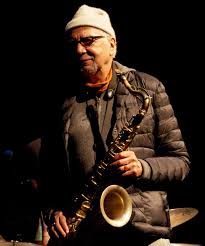
Jazz history often celebrates artists who transformed the music in spectacular bursts. Charlie Parker reinvented improvisation before the age of thirty-five. John Coltrane compressed several artistic lifetimes into little more than a decade. Miles Davis repeatedly abandoned one musical language for another, forever changing the direction of modern jazz. Charles Lloyd belongs to a different category altogether. Rather than redefining jazz through dramatic revolutions, he has spent more than sixty years quietly reshaping it through constant evolution. His career resembles a river rather than an explosion—always moving, never standing still, occasionally disappearing from view before returning with renewed depth and clarity.
That remarkable continuity explains why Lloyd occupies such an unusual place in jazz history. To one generation, he is the charismatic bandleader whose quartet filled concert halls normally reserved for rock stars during the late 1960s. To another, he is the contemplative artist who became one of the defining voices of ECM Records, creating spacious recordings that blurred the boundaries between jazz, chamber music and spiritual meditation. Younger listeners often discover him through collaborations with Bill Frisell, Jason Moran, Charles Lloyd & The Marvels or even through the influence he has exerted on contemporary figures such as Kamasi Washington. Few musicians have remained equally relevant to audiences separated by more than half a century.
His importance, however, extends beyond longevity. Charles Lloyd represents a rare artistic philosophy in which technical mastery exists only to serve emotional and spiritual communication. Throughout his recordings, improvisation is never treated as athletic competition. Instead, every solo unfolds as a conversation—with fellow musicians, with musical tradition and, perhaps most importantly, with silence itself. That relationship with space has become one of the defining characteristics of his music. Lloyd understands something many improvisers never fully discover: the notes left unplayed often possess as much expressive power as those that fill the air.
Understanding Charles Lloyd therefore requires more than following a chronological biography. It requires understanding the remarkable cultural intersections that shaped him: the blues traditions of the American South, the gospel music of Memphis churches, Native American spirituality, classical composition, Eastern philosophy, the revolutionary energy of the 1960s and the contemplative aesthetic that later became synonymous with ECM Records. His music reflects all of these worlds simultaneously without belonging exclusively to any of them.
Memphis: Where Every Musical Language Met
Charles Lloyd was born on March 15, 1938, in Memphis, Tennessee, a city unlike any other in American musical history. Long before Memphis became internationally associated with Stax Records, Sun Studio or the birth of rock and roll, it already functioned as one of the country’s great cultural crossroads. Blues traveled north along the Mississippi River. Gospel echoed through churches every Sunday morning. Jazz orchestras stopped there while touring between New Orleans, Kansas City and Chicago. Country music drifted in from rural Tennessee. Rhythm and blues flourished in neighborhoods where traditions overlapped naturally rather than competing for attention.
For a young musician, Memphis offered something no conservatory could provide: constant exposure to living musical traditions.
Lloyd grew up surrounded by sounds that later generations would treat as separate genres but which, in everyday life, existed side by side. Church choirs shared emotional intensity with blues singers. Jazz improvisers borrowed melodic inflections from gospel. Rural folk traditions blended with sophisticated urban harmony. These experiences profoundly shaped Lloyd’s artistic imagination long before he began thinking consciously about jazz.
Unlike many future jazz musicians whose earliest training centered exclusively on instrumental technique, Lloyd developed an unusually broad musical sensibility from childhood. He listened as carefully to singers as to saxophonists. He absorbed rhythm before theory. Melody before analysis. Feeling before virtuosity. Those priorities never disappeared, even after decades of professional performance.
His first instrument was the piano, an experience that permanently influenced his understanding of harmony and composition. Only later did he devote himself primarily to the saxophone and flute, discovering in both instruments an expressive flexibility that perfectly matched his increasingly expansive musical imagination.
Early Encounters with Greatness
One of the remarkable aspects of growing up in Memphis during the 1940s and 1950s was the proximity to extraordinary musicians who passed through the city with astonishing regularity. Lloyd encountered artists whose names would later become central chapters in jazz history, often before realizing their historical importance.
Among the most significant influences was Phineas Newborn Jr., the brilliant Memphis pianist whose extraordinary technique and harmonic sophistication left a lasting impression on the young saxophonist. Lloyd later recalled how witnessing musicians of Newborn’s caliber transformed his understanding of what jazz could become. These were not merely performers entertaining audiences. They were artists constructing entirely new musical languages in real time.
Equally important was the city’s blues tradition. Memphis blues emphasized vocal expression, emotional honesty and melodic directness rather than technical display. Those qualities remained deeply embedded in Lloyd’s playing throughout his career. Even during his most adventurous improvisations, listeners can hear echoes of the blues phrasing that surrounded him during childhood.
Unlike some avant-garde musicians who intentionally rejected earlier traditions, Lloyd never viewed innovation and accessibility as opposing forces. His Memphis upbringing had already taught him that profound emotional communication and sophisticated musical structure could coexist naturally.
That lesson would become one of the defining principles of his artistry.
The University of Southern California and the California Years
After leaving Tennessee, Lloyd studied at the University of Southern California, where formal education expanded his understanding of composition, orchestration and modern harmony. Yet his real education continued to occur outside the classroom.
Los Angeles during the late 1950s and early 1960s had become one of America’s most vibrant jazz communities. While New York often attracted attention as the center of artistic revolution, the West Coast developed its own remarkably diverse scene, where hard bop, cool jazz, Latin music and experimental improvisation frequently intersected.
Lloyd quickly established himself as one of the city’s most promising young saxophonists.
His versatility became immediately apparent.
He could navigate sophisticated bebop harmony.
Interpret lyrical ballads with remarkable sensitivity.
Support vocalists.
Lead instrumental ensembles.
Move effortlessly between traditional and modern musical settings.
This flexibility soon attracted the attention of established artists searching for musicians capable of combining technical excellence with creative openness.
Chico Hamilton and Cannonball Adderley
The first major turning point in Lloyd’s professional career arrived when drummer Chico Hamilton invited him to join his innovative ensemble in 1960. Hamilton’s groups were already known for challenging conventional jazz instrumentation, frequently incorporating cello, flute and unusual chamber-like textures years before such experiments became common.
For Lloyd, the experience proved transformative.
Hamilton encouraged composition as much as improvisation.
He valued atmosphere alongside virtuosity.
He demonstrated that jazz could become increasingly cinematic without sacrificing spontaneity.
Many of the aesthetic qualities later associated with Charles Lloyd’s mature work first began taking shape during these years.
After leaving Hamilton, Lloyd joined Cannonball Adderley, one of the most beloved alto saxophonists in jazz history. Performing alongside Cannonball exposed him to audiences far larger than any he had previously encountered while reinforcing another crucial lesson.
Technical brilliance alone never creates unforgettable music.
Communication does.
Adderley’s extraordinary warmth, generosity and ability to connect emotionally with listeners left a permanent impression on Lloyd. Even as his own music became increasingly spiritual and exploratory, he never lost sight of the audience’s emotional experience.
This balance between adventurous artistry and genuine human connection would soon propel Charles Lloyd toward one of the most extraordinary—and unexpected—chapters in modern jazz history.
When Jazz Met the Counterculture
By the mid-1960s, jazz occupied an uncertain place within American culture. Rock music had become the defining language of a younger generation, the British Invasion dominated popular radio, and many critics prematurely declared jazz to be an art form in decline. Yet beneath the headlines, something far more interesting was happening. A growing audience of students, artists and seekers began looking beyond commercial pop toward music that promised freedom, spontaneity and deeper emotional engagement. Few musicians were better positioned to meet that moment than Charles Lloyd.
Unlike many of his contemporaries, Lloyd did not view younger audiences with suspicion. Nor did he feel compelled to compete with rock music. Instead, he recognized that the counterculture’s fascination with improvisation, Eastern philosophy, meditation and artistic experimentation shared surprising affinities with the values that had always animated jazz. Without consciously trying to become a cultural bridge, he became exactly that.
His music sounded adventurous without being alienating.
Accessible without becoming simplistic.
Spiritual without becoming doctrinaire.
The timing could not have been more significant.
The Birth of the Charles Lloyd Quartet
In 1965, Lloyd assembled the ensemble that would permanently alter the trajectory of his career. On paper, the lineup seemed almost improbable.
The pianist was a gifted twenty-year-old from Pennsylvania named Keith Jarrett, whose restless imagination already hinted at extraordinary possibilities. On bass stood Cecil McBee, later replaced by Ron McClure, both possessing remarkable melodic sensitivity rather than merely rhythmic support. Behind the drums sat the explosive and endlessly inventive Jack DeJohnette, still years away from becoming one of the defining drummers of modern jazz.
What made the quartet exceptional, however, was not individual brilliance alone.
Many jazz groups have featured remarkable musicians.
Very few achieve genuine collective identity.
From its earliest performances, Lloyd’s quartet displayed an almost telepathic level of interaction. Traditional distinctions between soloist and accompaniment gradually disappeared. Jarrett responded to Lloyd’s phrases before they fully unfolded. DeJohnette shaped the music through texture rather than timekeeping alone. The bass functioned as an equal melodic voice. Every performance evolved organically, as though four independent conversations had somehow become one.
Audiences immediately sensed that something unusual was happening.
Keith Jarrett Before Keith Jarrett
Modern listeners often encounter the Charles Lloyd Quartet after already knowing Keith Jarrett as one of jazz’s greatest pianists. It is easy to forget that Lloyd recognized Jarrett’s extraordinary potential before the wider jazz world fully understood what it was witnessing.
The partnership proved transformative for both musicians.
Jarrett found a leader willing to encourage complete creative freedom.
Lloyd discovered a pianist whose lyrical imagination perfectly complemented his own searching musical personality.
Their relationship rarely resembled the traditional hierarchy between bandleader and sideman. Instead, it functioned as an artistic dialogue in which both musicians continually expanded one another’s possibilities.
Listening today to the quartet’s recordings, one can already hear many qualities that would later define Jarrett’s celebrated solo concerts: the flowing lyricism, the gospel inflections, the fearless transitions between serenity and ecstatic intensity.
Yet those elements never overshadow Lloyd.
Instead, they enriched an ensemble whose greatest achievement lay precisely in its collective balance.
Forest Flower: The Album That Changed Everything
Every generation produces a handful of live albums that permanently alter an artist’s public identity. For Charles Lloyd, that recording was Forest Flower: Charles Lloyd at Monterey, released in 1967.
Recorded during the Monterey Jazz Festival, the album captured the quartet at a moment of extraordinary artistic confidence. More importantly, it revealed how naturally Lloyd’s music connected with audiences extending far beyond traditional jazz circles.
The title composition unfolds with remarkable patience.
Its opening melodies possess almost folk-like simplicity.
Gradually, the performance expands into extended improvisation without ever losing its melodic center.
Jarrett’s piano dances effortlessly between gospel, classical music and blues.
DeJohnette’s drumming constantly reshapes the rhythmic landscape.
Lloyd’s tenor saxophone moves from whispered lyricism to soaring emotional intensity with astonishing ease.
The performance feels less like a sequence of solos than a single evolving organism.
Forest Flower became an unexpected commercial success.
For perhaps the first time since the early years of Dave Brubeck, a modern jazz recording reached listeners who rarely purchased jazz albums.
The reasons were not difficult to understand.
The music invited exploration rather than demanding intellectual effort.
Its emotional openness transcended stylistic boundaries.
Listeners who loved rock discovered improvisation.
Jazz audiences encountered a renewed sense of optimism.
The album became one of the defining recordings of the decade.
JazzLatitude Insight
Charles Lloyd never simplified jazz to attract larger audiences. Instead, he trusted that emotional honesty could communicate across stylistic boundaries. Forest Flower succeeded because it invited listeners into the music rather than asking them to prove they already understood it.
Sharing the Stage with Rock Icons
Perhaps nothing better illustrates Lloyd’s unusual cultural position than the venues where his quartet began performing.
While most jazz musicians remained confined to clubs and concert halls, Lloyd appeared at festivals alongside artists who would define the rock generation.
He performed before audiences who had come expecting psychedelic rock but discovered improvisational jazz instead.
Far from rejecting him, they embraced the experience.
The quartet became one of the first jazz ensembles to appear at venues such as the Fillmore Auditorium, sharing cultural space with musicians including The Grateful Dead, Cream, Jimi Hendrix and Jefferson Airplane.
These performances were historically significant.
They demonstrated that jazz still possessed the power to engage younger generations when presented as a living, evolving art form rather than a historical tradition.
Long before crossover marketing became fashionable, Lloyd had already shown that artistic integrity and broad cultural relevance could coexist.
The Cost of Success
Paradoxically, the extraordinary success of the Charles Lloyd Quartet created its own challenges.
International tours expanded relentlessly.
Recording schedules intensified.
Critical attention grew almost overwhelming.
At precisely the moment when Lloyd seemed poised to become the defining jazz star of his generation, he began feeling increasingly uncomfortable with fame itself.
Unlike many musicians who sought celebrity, Lloyd had always been driven primarily by artistic and spiritual curiosity.
Commercial expectations gradually threatened that balance.
The deeper his public profile became, the stronger his desire for solitude.
Friends later described him as increasingly drawn toward meditation, contemplation and personal exploration.
He began questioning whether constant touring truly served the music—or merely the machinery surrounding it.
These questions would soon lead to one of the most surprising decisions in modern jazz history.
Walking Away
At the beginning of the 1970s, while many observers expected Charles Lloyd to consolidate his position among the biggest names in jazz, he did something almost unimaginable.
He largely withdrew from public performance.
There was no dramatic scandal.
No artistic collapse.
No public dispute.
Simply a deeply personal decision to step away.
For nearly a decade, Lloyd devoted himself primarily to study, meditation and private musical exploration, spending considerable time in Big Sur, California, where the dramatic landscape and contemplative atmosphere profoundly influenced his evolving philosophy.
Many critics assumed his career had effectively ended.
History would prove otherwise.
The silence was not an ending.
It was preparation.
When Charles Lloyd eventually returned, he would do so with an artistic voice deeper, calmer and more complete than ever before—one that would reshape not only his own legacy but also the sound of modern jazz in the decades ahead.
Buy Amazon
Silence, Renewal and the ECM Renaissance
For nearly a decade, Charles Lloyd became one of jazz’s great mysteries. At a moment when many artists would have capitalized on international fame, he deliberately withdrew from the center of the music world. It was not a retirement in the conventional sense, nor an artistic crisis. Rather, it reflected a deeply held conviction that creative growth sometimes requires distance from public expectation. Lloyd immersed himself in meditation, Native American philosophy, Eastern spiritual traditions and the quiet rhythms of life in Big Sur, California, where the Pacific Ocean, towering redwoods and long periods of solitude gradually became as important to his musical imagination as rehearsals or recording studios.
This period of introspection fundamentally altered his relationship with improvisation.
Earlier recordings often radiated youthful energy and expansive lyricism.
The music that emerged after his return possessed a different kind of intensity.
More spacious.
More patient.
Less concerned with virtuosity than with resonance.
Silence itself became an active participant in the performance.
Every phrase seemed to emerge only after genuine reflection.
Listeners familiar only with the exuberance of Forest Flower often found the mature Charles Lloyd almost startlingly different, yet the continuity beneath the surface was unmistakable. The restless search that had defined his early career remained intact. Only its language had changed.
Manfred Eicher and a New Beginning
The decisive turning point came in the 1980s when Lloyd began collaborating with Manfred Eicher, founder and producer of ECM Records. Few partnerships in modern jazz have proved so artistically fruitful.
ECM had already become internationally admired for recordings that emphasized sonic clarity, contemplative atmosphere and extraordinary attention to acoustic detail. Lloyd’s evolving musical philosophy aligned naturally with that aesthetic. Rather than encouraging dramatic reinvention, Eicher provided an environment where Lloyd’s mature voice could flourish without compromise.
Albums such as Fish Out of Water (1989) announced that Charles Lloyd had not merely returned.
He had been transformed.
The recording revealed an artist whose improvisations carried greater emotional economy, whose compositions embraced wider emotional landscapes and whose tone possessed remarkable warmth. Every note seemed carefully weighed without ever losing spontaneity.
The partnership between Lloyd and ECM would become one of the defining artistic relationships of the late twentieth and early twenty-first centuries.
New Quartets, New Conversations
One of Lloyd’s most remarkable gifts has always been his instinct for recognizing exceptional musicians before they achieve widespread recognition.
Just as he had once assembled Keith Jarrett and Jack DeJohnette, his later ensembles repeatedly introduced or elevated some of the most creative improvisers of successive generations.
The quartet featuring Bobo Stenson, Anders Jormin and Billy Hart explored chamber-like interaction with extraordinary subtlety.
Another ensemble paired Lloyd with guitarist John Abercrombie, creating spacious dialogues that blurred the boundaries between jazz improvisation and impressionistic composition.
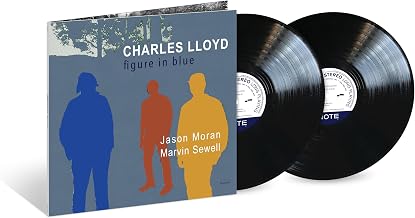
During the 2000s, Lloyd assembled perhaps another career-defining group featuring pianist Jason Moran, bassist Reuben Rogers and drummer Eric Harland.
This quartet demonstrated that Lloyd remained artistically restless well into his seventies.
Moran’s fearless harmonic imagination challenged the leader in ways reminiscent of Keith Jarrett decades earlier.
Harland’s rhythmic elasticity created constantly shifting landscapes beneath Lloyd’s lyrical melodies.
The result was music that felt simultaneously youthful and deeply seasoned.
Rather than surrounding himself with musicians who merely reinforced established habits, Lloyd consistently sought collaborators capable of expanding his own thinking.
JazzLatitude Insight
Charles Lloyd has never viewed leadership as control. His greatest ensembles succeed because they are built upon trust. Every musician receives complete freedom, yet every performance reveals an extraordinary sense of shared purpose. The leader guides the conversation not by speaking the loudest, but by listening the most deeply.
Bill Frisell, Lucinda Williams and The Marvels
Among Lloyd’s most celebrated late-career projects is Charles Lloyd & The Marvels, an ensemble that further expanded his already extraordinary artistic vocabulary.
Featuring guitarist Bill Frisell, pedal steel guitarist Greg Leisz, bassist Reuben Rogers and drummer Eric Harland, the group explored territory where jazz met Americana, folk, blues, country and gospel without reducing any tradition to stylistic decoration.
Albums such as I Long to See You (2016), Vanished Gardens (2018), recorded with the incomparable Lucinda Williams, and Tone Poem (2021) demonstrated Lloyd’s lifelong belief that musical traditions become richer through dialogue rather than isolation.
Frisell’s atmospheric guitar textures complemented Lloyd’s lyrical saxophone with remarkable sensitivity.
Improvisation unfolded almost invisibly.
Songs seemed to breathe rather than develop according to predetermined structures.
The music possessed extraordinary emotional generosity.
Rather than emphasizing technical complexity, these recordings invited listeners into landscapes of memory, reflection and quiet wonder.
An Artist Who Refuses to Repeat Himself
One reason Charles Lloyd’s discography remains endlessly rewarding is his refusal to become imprisoned by his own legacy.
Every decade reveals a different artistic emphasis.
The exuberant energy of the 1960s.
The introspective spaciousness of the ECM years.
The chamber-like lyricism of later quartets.
The Americana explorations of The Marvels.
Collaborations with pianist Gerald Clayton, guitarist Julian Lage, drummer Brian Blade and numerous younger musicians continue demonstrating that Lloyd approaches every new project with genuine curiosity rather than nostalgic repetition.
This creative openness explains why musicians several generations younger continue seeking opportunities to perform alongside him.
Working with Charles Lloyd is not merely an honor.
It remains an artistic adventure.
Essential Albums
For listeners wishing to understand the remarkable breadth of Charles Lloyd’s career, these recordings provide an ideal path through more than six decades of artistic evolution.
- Dream Weaver (1966) — The first major statement of Lloyd’s emerging spiritual and compositional vision.
- Forest Flower: Live at Monterey (1967) — The landmark recording that introduced modern jazz to a new generation and remains one of the defining live albums in jazz history.
- Fish Out of Water (1989) — The beginning of Lloyd’s extraordinary artistic renaissance with ECM Records.
- The Water Is Wide (2000) — A luminous recording featuring John Abercrombie, Brad Mehldau, Larry Grenadier and Billy Higgins, illustrating Lloyd’s mature lyricism.
- Mirror (2010) — A contemplative quartet masterpiece with Jason Moran, Reuben Rogers and Eric Harland.
- Wild Man Dance (2015) — Inspired by a pilgrimage through the Balkans, blending jazz with folk traditions and expansive orchestral textures.
- Tone Poem (2021) — One of the finest recordings by The Marvels, demonstrating Lloyd’s continuing artistic vitality well into his eighties.
Together, these albums reveal an artist who has continually redefined his own musical language without ever abandoning the deeply human qualities that first made his work so compelling.
Technical Profile
Born:
- March 15, 1938
Birthplace:
- Memphis, Tennessee, USA
Primary Instruments:
- Tenor Saxophone
- Flute
Professional Roles:
- Saxophonist
- Flautist
- Composer
- Bandleader
Primary Styles:
- Spiritual Jazz
- Post-Bop
- Contemporary Jazz
- Modal Jazz
- Chamber Jazz
Musical Characteristics:
- Deeply lyrical improvisation
- Spacious phrasing
- Blues-inflected melodic language
- Cross-cultural influences
- Meditative ensemble interaction
Five Lesser-Known Facts About Charles Lloyd
1. He helped launch Keith Jarrett’s international career. Long before Jarrett became one of jazz’s most celebrated pianists, Lloyd entrusted him with extraordinary creative freedom in the Charles Lloyd Quartet.
2. He was one of the first jazz musicians embraced by the rock generation. During the late 1960s, his quartet performed before audiences that rarely attended traditional jazz concerts, helping reconnect jazz with younger listeners.
3. He voluntarily stepped away from fame at its peak. Rather than expanding his commercial success, Lloyd chose years of private study, meditation and artistic reflection.
4. Big Sur became one of his greatest artistic influences. The California coastline profoundly shaped the spacious, contemplative character of his mature music.
5. He continues discovering new collaborators well into his eighties. Rather than relying on nostalgia, Lloyd has consistently surrounded himself with younger musicians whose ideas challenge and inspire him.
Frequently Asked Questions
Who is Charles Lloyd?
Charles Lloyd is an American saxophonist, flautist, composer and bandleader whose career spans more than six decades. He is regarded as one of the leading voices of spiritual and contemporary jazz, celebrated for combining lyrical improvisation with influences from blues, folk, classical music and global traditions.
Why is Charles Lloyd important?
He helped reconnect jazz with younger audiences during the 1960s, introduced musicians such as Keith Jarrett to international prominence and later created one of the most significant late-career renaissances in jazz through his landmark recordings for ECM Records.
What is Forest Flower?
Released in 1967, Forest Flower: Live at Monterey is Charles Lloyd’s breakthrough recording. Its commercial success made it one of the most influential live jazz albums of the decade and introduced modern jazz to many listeners from the emerging rock generation.
Which Charles Lloyd albums should new listeners hear first?
Forest Flower, Dream Weaver, Fish Out of Water, The Water Is Wide, Mirror and Tone Poem provide an excellent overview of the different phases of his remarkable artistic journey.
Which artists are similar to Charles Lloyd?
Listeners who appreciate Charles Lloyd often explore John Coltrane, Pharoah Sanders, Wayne Shorter, Jan Garbarek, Joe Lovano, Kamasi Washington, Bill Frisell and Keith Jarrett, all of whom share his commitment to lyrical improvisation, spiritual exploration and artistic openness.
JazzLatitude Rating
| Category | Rating |
|---|---|
| Compositional Originality | ★★★★★ |
| Improvisational Depth | ★★★★★ |
| Spiritual Expression | ★★★★★ |
| Tone and Sound | ★★★★★ |
| Ensemble Leadership | ★★★★★ |
| Historical Importance | ★★★★★ |
| Longevity and Artistic Evolution | ★★★★★ |
| Replay Value | ★★★★★ |
| JazzLatitude Essential | ★★★★★ |
Final Thoughts
Charles Lloyd’s career offers a rare lesson in artistic longevity. While many musicians become identified with a single era or style, Lloyd has spent more than six decades proving that genuine creativity depends not upon constant reinvention for its own sake, but upon remaining endlessly curious. Every major chapter of his life reflects a willingness to question previous achievements, embrace unfamiliar collaborators and search patiently for deeper forms of musical expression.
His recordings reveal an artist who has gradually stripped away everything unnecessary. The youthful exuberance that captivated audiences during the 1960s matured into a profound economy of expression in later decades, where every phrase seems to emerge from careful listening rather than instinctive display. Few saxophonists possess such complete command of emotional pacing. Lloyd understands when to fill space and, equally importantly, when to leave it untouched.
Perhaps his greatest contribution to jazz lies in demonstrating that artistic growth has no expiration date. Long after many legendary careers have settled into comfortable retrospection, Charles Lloyd continues creating music of remarkable freshness alongside musicians several generations younger than himself. These collaborations never feel symbolic or ceremonial. They are genuine conversations in which every participant contributes equally to an evolving artistic vision.
For listeners discovering his work today, Charles Lloyd offers something increasingly rare in contemporary culture: music that rewards patience. His albums reveal new details with every return, inviting contemplation rather than demanding immediate conclusions. They remind us that jazz, at its finest, is less about virtuosity than about presence—about the courage to listen deeply before speaking.
More than sixty years after first stepping onto the international stage, Charles Lloyd remains not simply one of the greatest living saxophonists.
He remains one of jazz’s most eloquent seekers, an artist whose lifelong journey continues to remind us that the richest destinations are often found in the search itself.