
Tokyo and the Birth of a Different Fusion
Before Casiopea Had a Sound
Casiopea emerged at exactly the kind of historical moment that encourages misleading comparisons. By the middle of the 1970s, jazz fusion had already become an international language. Miles Davis had opened possibilities that extended far beyond conventional jazz instrumentation, Weather Report was developing an increasingly distinctive relationship between composition, electronics and improvisation, Return to Forever had brought virtuosity and rock energy into highly structured electric music, and guitarists such as Jeff Beck were demonstrating how far an instrumental record could travel outside traditional jazz categories. In Japan, these developments arrived not as distant curiosities but as part of a rapidly expanding musical environment in which jazz, rock, funk, electronic instruments and increasingly sophisticated recording culture could meet without requiring musicians to choose a single identity.
Casiopea grew inside that environment, but the group did not begin as an attempt to manufacture a Japanese equivalent of an American fusion band. Its origins were more fluid. Guitarist Issei Noro and bassist Tetsuo Sakurai had begun playing together before Casiopea acquired a stable name or personnel, initially drawing from the energy of rock and funk while gradually moving toward instrumental music shaped by jazz harmony. That transition is important because it helps explain a characteristic that would remain central to the band: Casiopea never treated the boundaries between jazz, rock and funk as ideological problems. The musicians were interested in what those languages could do when organized around composition, instrumental interaction and a strong rhythmic identity.
Noro would become the defining constant in Casiopea’s long history, but the early group was not yet the polished quartet that later audiences would recognize immediately. Personnel shifted. The musical direction developed through rehearsals and performances rather than appearing fully formed. What already existed was an appetite for precision and an attraction to instrumental music in which technique served movement rather than abstraction. Noro could write intricate material, but he also understood hooks. Sakurai could function as the harmonic foundation of a piece while treating the electric bass as a melodic and rhythmic voice. Long before Casiopea became internationally associated with speed and virtuosity, the essential idea was already taking shape: complicated music did not have to feel difficult.
EastWest and the Making of a Band
The Yamaha EastWest competitions became an important stage in Casiopea’s development. In 1976, the group appeared with Noro and Sakurai joined by keyboardist Hidehiko Koike and drummer Tohru “Rika” Suzuki. Noro received recognition as a guitarist, but the significance of the competition extended beyond an individual prize. For a young instrumental band, such events offered a route from rehearsal rooms and local performances toward a professional music industry that was increasingly interested in technically ambitious Japanese musicians.
The lineup did not remain intact. Minoru Mukaiya arrived on keyboards and Takashi Sasaki took the drum chair, creating the version of Casiopea that would move decisively toward its recording debut. When the group returned to EastWest in 1977, its progress was unmistakable: Casiopea received a group award while Noro was again recognized for his guitar playing. The band was still young, but it was no longer simply a collection of promising instrumentalists. An ensemble identity was beginning to emerge.
Mukaiya’s arrival was especially important. Keyboards in fusion could easily become either a decorative electronic layer or a vehicle for soloistic display, but Casiopea’s music increasingly required something more architectural. Synthesizers and electric keyboards could define harmony, double melodies, answer the guitar, introduce contrasting textures and help make dense arrangements feel transparent. Mukaiya developed into a musician capable of occupying all of those roles. His importance to the band’s classic period would eventually extend beyond individual solos because the interaction between guitar and keyboards became one of Casiopea’s most recognizable structural features.
Sasaki completed a rhythm section that could support the increasingly detailed writing. His place in the band’s history is sometimes obscured by the enormous reputation Akira Jimbo would later acquire, but the distinction matters. The Casiopea that entered the professional recording world was not yet the Noro–Mukaiya–Sakurai–Jimbo quartet. Sasaki was the drummer during the crucial transition from ambitious amateur band to recording group, and his playing belongs to the band’s foundational sound.
Japanese Fusion Without an Inferiority Complex
Casiopea’s emergence also belonged to a broader transformation in Japanese jazz and instrumental music. By the late 1970s, Japan had spent decades absorbing, performing and reinterpreting jazz, and the country’s musicians no longer needed to approach modern electric jazz simply as students of an American model. A generation of players was developing inside a sophisticated domestic market, with strong record labels, demanding audiences, high-level instrumental training and access to rapidly evolving musical technology. Bands and musicians could listen internationally while building careers primarily through Japanese institutions.
This context matters because Casiopea is sometimes explained through a list of Western reference points: Weather Report, Return to Forever, the Brecker Brothers, funk, progressive rock, West Coast fusion. Those connections are useful, but only to a point. Influence does not explain identity. What distinguished Casiopea was the way the group reorganized familiar materials. The music could be harmonically elaborate while remaining unusually melodic. Virtuosic passages could lead directly into themes memorable enough to function almost like choruses in pop songs. Funk-derived bass figures were not merely rhythmic foundations; they could become hooks. Synthesizers brought modern color without automatically pushing the music toward abstraction. Noro’s guitar could move from cleanly articulated melody to rapid technical passages while preserving a sense of compositional direction.
The result was fusion that often sounded bright, energetic and immediately communicative without being simple. This emotional openness would become one of Casiopea’s most distinctive qualities. Much electric jazz of the period drew power from darkness, tension or heaviness. Casiopea discovered that sophistication could also sound exuberant. The band’s music could be difficult to perform and easy to enjoy at the same time.
That combination would eventually become part of its international appeal.
The 1979 Debut
Casiopea’s self-titled debut arrived in May 1979 on Alfa Records. The timing was ideal. Fusion had become commercially significant, Japanese instrumental music was expanding rapidly, and Casiopea entered the market with enough technical confidence to sound fully professional from its first album. Yet the record is more interesting as a beginning than as evidence of instant perfection.
The core lineup was Issei Noro on guitar, Minoru Mukaiya on keyboards, Tetsuo Sakurai on bass and Takashi Sasaki on drums. The album also benefited from prominent American guests, including members of the Brecker Brothers and saxophonist David Sanborn. Their presence connected the session visibly with the international fusion world, but it would be a mistake to treat those appearances as the source of the record’s legitimacy. The important material was already coming from inside the band.
Noro’s compositions established several of the characteristics that would define Casiopea. “Time Limit” announced the group’s appetite for velocity and tightly organized ensemble playing. “Space Road” revealed how naturally the band could combine forward motion with melodic clarity. “Midnight Rendezvous” demonstrated another side of the same identity, while “Black Joke” gave the musicians room to emphasize the rhythmic energy that prevented technical sophistication from becoming sterile.
The debut is therefore best heard not as four Japanese musicians proving that they could compete with American fusion players, but as a band beginning to define what would soon become a remarkably recognizable language. The guests expanded the colors of the album. They did not invent its personality.
Issei Noro and Composition Before Display
Noro’s guitar would inevitably become one of the most immediately recognizable elements of Casiopea, and his technical ability made virtuosity an unavoidable part of the band’s reputation. Yet focusing too heavily on speed misses the reason his playing worked so effectively within the group. Noro was a composer before he was a demonstrator of technique.
His strongest material tended to give the listener something to remember. Themes mattered. Even when a piece contained rapid unison lines, shifting harmonic movement or demanding instrumental passages, the complexity usually existed inside a larger melodic design. The guitar therefore had several functions at once: lead voice, rhythmic instrument, source of harmonic color and part of tightly coordinated ensemble figures.
This compositional thinking also prevented Casiopea from becoming a sequence of solos attached to rhythm tracks. Individual virtuosity was important, but the pleasure of the music increasingly came from hearing four musicians execute a design together. A bass figure might be answered by the keyboards; guitar and synthesizer could move through a line in parallel; drums could transform an apparently straightforward groove through accents without disrupting its accessibility. The arrangement itself became part of the excitement.
Noro’s leadership would remain essential through every later incarnation of Casiopea because he understood that a band’s identity must survive individual performances. A great solo can define a moment. A strong composition can define a repertoire.
Casiopea was beginning to build one.
Tetsuo Sakurai and the Bass as a Second Engine
Sakurai’s role was equally important to the emerging sound. Electric fusion had already transformed expectations surrounding the bass guitar, particularly through funk and the increasing visibility of players who refused to remain confined to accompaniment. Casiopea embraced that expanded role immediately.
Sakurai could provide harmonic grounding, but his lines often carried enough rhythmic and melodic information to become central features of a composition. The bass could introduce a hook, push against the drums, answer Noro’s guitar or create momentum beneath keyboard harmonies. This helped give Casiopea a distinctive sense of movement. The music rarely felt as though melody was occurring above a passive rhythm section. Activity was distributed throughout the ensemble.
That distribution became one of the group’s strengths. A listener could follow the guitar and hear one version of a piece, then return to the same recording and discover how much of its character came from bass movement or keyboard voicing. Technical skill became valuable because it increased the number of conversations the musicians could sustain simultaneously.
The danger of this approach is obvious. When every player is capable of doing more, an arrangement can become overcrowded. Casiopea’s development would depend on learning how to make density feel effortless.
The early records document that process.
Super Flight and the First Signs of a Signature
Casiopea did not wait long to follow its debut. Super Flight appeared later in 1979, and the second album already showed a group becoming more comfortable with its own vocabulary. Two compositions in particular would become deeply associated with the band’s identity: “Take Me” and “Asayake.”
Their endurance reveals something fundamental about Casiopea. Neither survives merely because the musicians could play difficult passages. They survive because they are compositions with strong melodic personalities. “Asayake,” in particular, would become one of the band’s signature pieces and an ideal demonstration of the balance Casiopea was learning to control: rhythmic drive, a memorable central idea, instrumental precision and an emotional brightness that made the music immediately recognizable.
Super Flight also marks the end of the first important version of the group. Takashi Sasaki would leave, and the drummer who replaced him would alter Casiopea’s internal mechanics substantially. Akira Jimbo brought a combination of precision, rhythmic imagination and eventually electronic experimentation that would become inseparable from the band’s classic reputation.
But Jimbo did not create Casiopea from nothing.
When he arrived, the essential architecture was already standing.
Before the Classic Quartet
This distinction changes the way Casiopea’s early history should be understood. The story is not that four famous musicians assembled and immediately produced the band’s definitive sound. Noro and Sakurai developed the initial partnership; personnel changed; EastWest helped sharpen the group’s identity; Mukaiya and Sasaki participated in the transition toward professional recording; the debut established a compositional foundation; and Super Flight brought several enduring elements into clearer focus.
Only then did the lineup most strongly associated with Casiopea’s early-1980s peak begin to consolidate.
That gradual formation matters because the band’s later precision can otherwise seem almost mechanical, as though Casiopea were designed from the beginning to produce immaculate fusion. In reality, its precision was learned through ensemble development. The musicians discovered which parts of their influences could be discarded, which could be transformed and which qualities belonged specifically to them.
By the end of 1979, Casiopea had already answered the most important question facing any young fusion group of the period. It had demonstrated that technical ability alone would not be its identity.
The band had melody.
It had groove.
It had compositions capable of surviving beyond the moment in which they were recorded.
And it had begun to understand how Japanese fusion could participate in an international musical conversation without surrendering its own accent.
Akira Jimbo’s arrival in 1980 would not erase that first chapter. It would accelerate everything the band had learned from it.
The classic quartet was about to begin.
Buy Amazon
The Classic Quartet and the Road to Mint Jams
Akira Jimbo and a New Rhythmic Balance
When Akira Jimbo joined Casiopea at the beginning of the 1980s, he entered a band whose fundamental identity was already established. Issei Noro had developed a compositional language built around strong themes, tightly organized ensemble passages and a guitar style capable of moving between melodic directness and technical complexity. Tetsuo Sakurai had made the electric bass an active part of the melodic and rhythmic architecture, while Minoru Mukaiya had learned to use keyboards as both harmonic foundation and an equal conversational voice. What Jimbo changed was not the basic idea of Casiopea but the degree of rhythmic flexibility the quartet could bring to it.
Jimbo possessed the precision required by Noro’s increasingly detailed compositions, yet precision alone would not have distinguished him from other technically accomplished drummers. His importance came from the way he could preserve clarity while adding information. Accents appeared inside grooves without breaking their momentum. Cymbal patterns could provide forward motion while the snare and bass drum interacted more actively with Sakurai’s lines. Even when the arrangements demanded tight unison passages, Jimbo’s playing rarely reduced the drums to a metronomic function. He could make exact music feel mobile.
That distinction became essential to Casiopea. The quartet’s growing technical reputation could easily have pushed it toward a form of fusion in which difficulty became the principal attraction. Instead, the rhythm section made complexity physical. Sakurai and Jimbo could execute demanding figures while preserving a sense of groove strong enough to reach listeners who had little interest in analyzing meters, subdivisions or instrumental technique. Their interaction would become one of the defining relationships of the classic lineup.
From Make Up City to a More Integrated Sound
The albums Casiopea made during the early 1980s reveal how quickly the new quartet learned to function as a unit. Make Up City, released in 1980, arrived at a point when Japanese fusion was becoming increasingly confident as a domestic musical culture rather than simply a regional response to developments elsewhere. Casiopea was now able to participate in that culture with a sound identifiable within seconds.
The compositions continued to depend on melody. This remains one of the easiest qualities to underestimate when discussing technically accomplished bands. Casiopea could perform intricate passages, but the writing frequently gave those passages a destination. Noro understood that instrumental sophistication became more powerful when listeners could retain the central theme after the performance ended. Mukaiya’s keyboards added both harmonic depth and increasingly modern electronic textures, while Sakurai and Jimbo gave the arrangements enough rhythmic definition to prevent the expanding palette from becoming diffuse.
What was changing was the degree of integration. On the earliest recordings, one can sometimes hear Casiopea discovering how its individual strengths fit together. By Make Up City, the distinction between composition and ensemble identity had narrowed. A piece could sound like Casiopea before Noro began a solo because the signature existed in the arrangement itself: the bass movement, keyboard voicings, rhythmic articulation and coordinated melodic lines all contributed.
This was a band sound rather than a star surrounded by accompanists.
Eyes of the Mind and an International Conversation
Casiopea’s ambitions were never limited to Japan. The group had emerged in a period when fusion circulated internationally with unusual speed, and its early recordings already included prominent American guests. Eyes of the Mind, released in 1981 and produced by Harvey Mason, made that international dialogue particularly visible.
Mason understood electric jazz from inside the American studio system, but the significance of the collaboration lies less in the idea that an American producer somehow validated a Japanese band than in what Casiopea could learn through exchange without surrendering its identity. By this point, the quartet no longer needed to demonstrate that Japanese musicians could play fusion at an international technical level. The more interesting question was how Casiopea’s increasingly recognizable language would function when placed in direct conversation with musicians and production practices outside Japan.
The answer was not assimilation. Noro’s compositions remained central, and the quartet’s combination of brightness, precision and rhythmic energy continued to distinguish it from many American counterparts. Casiopea could absorb studio experience, production ideas and the broader vocabulary of contemporary fusion while preserving the qualities developed through its own history.
This is an important distinction because discussions of Japanese jazz sometimes fall into a misleading sequence of influence and imitation: an American innovation appears, Japanese musicians absorb it, and their success is measured according to how convincingly they reproduce the original. Casiopea’s early-1980s work makes that framework increasingly inadequate. The group had influences, as every jazz group does, but it was already producing a musical identity that listeners would soon imitate in return.
Cross Point and the Confidence of Repetition
By Cross Point in 1981, Casiopea was operating with the confidence of a band that understood its own mechanics. The quartet no longer needed to discover its fundamental vocabulary on every album. Instead, it could explore variations within an established identity.
For some bands, reaching this stage creates a danger of predictability. A recognizable sound can become a formula. Casiopea avoided that problem during its strongest period because the musicians’ interaction remained active. Noro’s compositions supplied frameworks, but the rhythm section could alter their energy substantially, and Mukaiya’s expanding keyboard palette changed the color of the arrangements as technology developed.
The group’s precision also began to acquire a different meaning. It was no longer impressive merely because four musicians could execute difficult passages together. Repeated performances had transformed accuracy into instinct. The musicians could anticipate one another. Transitions sounded natural because the ensemble understood them collectively rather than treating them as obstacles to be negotiated.
This is one of the reasons Casiopea’s live reputation became so important. Studio recordings could document compositional detail, but performance revealed that the detail did not depend on studio construction. The band could reproduce the architecture in real time while allowing the music to acquire additional energy.
That ability would lead directly to the recording most strongly associated with the classic quartet.
Why Mint Jams Is Not Simply a Live Album
Mint Jams, recorded at Tokyo’s Chuo Kaikan Hall in February 1982, occupies an unusual position in Casiopea’s catalog. It is a live recording, but describing it only that way misses what makes the album so effective. Rather than presenting a sprawling concert document, it concentrates the quartet’s early repertoire into a compact statement of what the band had become.
Several pieces were already familiar from previous Casiopea albums. “Take Me,” “Asayake,” “Midnight Rendezvous” and “Swallow” did not require the group to invent a new identity for the occasion. Their value on Mint Jams comes from hearing established compositions transformed by accumulated performance experience. Tempos breathe differently, rhythmic relationships feel more immediate, and the ensemble plays with the confidence of musicians who no longer need to think consciously about every structural detail.
This is why the album should not be reduced to the old language of sonic demonstration or technical benchmark. Its importance is musical rather than technological. Mint Jams captures a band at the moment when composition, instrumental personality and collective instinct had become unusually well aligned.
The quartet sounds precise because it knows the material deeply.
That is very different from sounding precise because precision itself is the objective.
“Take Me” and the Power of a Theme
“Take Me” illustrates the point. The composition’s durability comes from the strength of its melodic identity. The theme is immediately recognizable, yet the arrangement gives the musicians enough room to create movement around it. Noro’s guitar can lead without monopolizing the piece, while Mukaiya’s keyboards help shape its harmonic character and the rhythm section gives the melody a buoyancy that prevents it from becoming sentimental.
The live version benefits from familiarity. Casiopea had played the composition enough for the musicians to move beyond simply executing it. Small shifts in articulation and dynamics become meaningful because the structure is secure.
For listeners discovering the band decades later, this accessibility is crucial. “Take Me” does not require knowledge of fusion history to work. A listener can enter through melody and rhythm before noticing the complexity underneath.
Casiopea repeatedly used that sequence to its advantage: communication first, analysis later.
“Asayake” Becomes a Signature
If one composition came to represent the classic Casiopea sound more than any other, “Asayake” is a strong candidate. First recorded during the band’s early period, it became increasingly powerful through live performance, and the Mint Jams version helped establish it as a signature.
The piece brings several defining qualities together. The opening establishes rhythmic identity immediately. The melody has the directness of a hook without sacrificing instrumental sophistication. Noro’s guitar tone and phrasing are unmistakable, but Sakurai’s bass is equally important to the sense of forward movement. Mukaiya supplies harmonic and textural definition, while Jimbo gives the arrangement both discipline and lift.
What makes the performance enduring is not any single display of technique. It is the sensation that four musicians are moving through a complex design with shared understanding. The listener hears coordination without hearing effort.
That apparent ease is the product of years of work.
Sakurai and Jimbo: Movement From Below
The classic rhythm section deserves particular attention because Casiopea’s melodic brightness can sometimes obscure how much of the group’s identity came from below the guitar and keyboards. Sakurai and Jimbo did not simply keep the music organized. They shaped its emotional character.
Sakurai’s bass could be exceptionally active, but his strongest lines remained connected to the composition. He understood when to create a counter-melody, when to reinforce a rhythmic figure and when to simplify. Jimbo’s drumming provided an ideal partner because he could respond to the bass without destabilizing the larger groove.
Together they helped Casiopea avoid one of fusion’s recurring problems: virtuosity that loses contact with the body. Even at high levels of technical complexity, the music retained pulse. Listeners could experience the rhythm physically before understanding what the musicians were doing instrumentally.
This would become particularly influential for later bassists and drummers who encountered Casiopea not simply as jazz but as a model of how a rhythm section could be simultaneously intricate and accessible.
Mukaiya and the Electronic Future
Minoru Mukaiya’s contribution became increasingly important as keyboard technology developed. Fusion had always been closely connected with changing instruments, from the Fender Rhodes and electric piano to analog synthesizers and increasingly sophisticated electronic systems. But technology alone does not create a musical identity. The challenge is deciding what a new sound should do inside an arrangement.
Mukaiya was particularly effective at this. His keyboard parts could modernize the surface of Casiopea’s music without reducing it to technological novelty. Synthesizer colors might reinforce a melody, provide contrast with Noro’s guitar or alter the emotional atmosphere of a section. His playing remained grounded in ensemble function even when the available palette expanded.
That adaptability would help Casiopea navigate the 1980s, when electronic production changed rapidly and many fusion records became strongly associated with the technologies of a particular year. The group would not always escape the aesthetics of its period, but Mukaiya understood that instruments were tools rather than identities.
Casiopea’s identity remained the interaction among musicians.
Four Personalities, One Language
By the time of Mint Jams, the classic quartet had achieved something more difficult than virtuosity. It had developed a language in which four highly recognizable instrumental personalities could coexist without making the music feel like a competition.
Noro remained the principal composer and central melodic voice. Mukaiya gave the harmony and electronic textures distinctive character. Sakurai turned the bass into an active melodic engine. Jimbo transformed rhythmic precision into movement. Remove any one of those functions and the balance changes substantially.
Yet Casiopea was never simply the sum of four soloists.
Its real achievement was organizational. The quartet learned how to distribute complexity so that the listener rarely experienced the music as overloaded. One musician could become active while another created space. Unison passages could increase intensity before opening into a broader groove. A memorable theme could restore orientation after a dense instrumental section.
That is why the band’s technical ability mattered.
It served arrangement.
Mint Jams and the End of the Beginning
Later generations would elevate Mint Jams into something approaching a cult object, particularly as Japanese jazz and fusion were rediscovered internationally through digital platforms. That later history can make the album appear inevitable, as though Casiopea had spent its first years moving consciously toward a universally recognized masterpiece.
The reality was more interesting.
Mint Jams was the result of a process that began before the band had stable personnel. Noro and Sakurai had developed the initial idea; Mukaiya and Sasaki helped transform it into a professional recording group; the first albums established a compositional vocabulary; Jimbo’s arrival changed the rhythmic possibilities; and successive records allowed the quartet to refine its internal communication.
The 1982 album captured that process at an unusually favorable moment.
Casiopea had become experienced without becoming complacent. Its repertoire was familiar without feeling exhausted. The musicians possessed enough technical control to play freely inside demanding arrangements, and the band’s melodic instincts prevented that control from becoming an end in itself.
The classic quartet had found its language.
The next question was what would happen when that language had to survive time: changing technology, personnel changes, new generations of Japanese musicians, shifting ideas about fusion and eventually an international audience discovering Casiopea decades after these records were made.
Mint Jams was not the conclusion.
It was the point at which Casiopea became unmistakably Casiopea.
Reinvention and a Global Afterlife
After Mint Jams, the Problem of Success
Once a band develops a recognizable language, success creates a problem almost as difficult as obscurity. The musicians can repeat the qualities that brought them an audience until those qualities become formula, or they can change so aggressively that the identity disappears. After Mint Jams, Casiopea faced precisely this challenge. The quartet of Issei Noro, Minoru Mukaiya, Tetsuo Sakurai and Akira Jimbo had reached an unusual level of collective understanding, and the sound associated with that period was already becoming identifiable through melodic themes, active bass lines, tightly coordinated ensemble passages and a rhythmic precision that remained connected to groove. The easiest path would have been to preserve that combination indefinitely.
Casiopea instead continued moving through the rapidly changing musical environment of the 1980s. Electronic instruments became more sophisticated, digital technology entered studios and live performance, and the production language of popular music shifted dramatically. Fusion itself was changing. Some of the restless experimentation associated with the 1970s gave way to cleaner production, stronger crossover ambitions and a growing overlap with instrumental pop. Casiopea participated in this transition without entirely surrendering the qualities that had made the band distinctive.
Albums such as Photographs and the records that followed reveal a group increasingly comfortable with brightness, concise melodic writing and polished electronic textures. For listeners who prefer the rawer immediacy of the early period, the change can seem substantial. Yet it was also consistent with something Casiopea had believed from the beginning: instrumental music did not need to apologize for being pleasurable. The band had never treated accessibility as an artistic failure.
Technology Without Losing the Ensemble
The 1980s were particularly important for Minoru Mukaiya. Keyboard technology was evolving quickly, and Casiopea’s music gave him an unusually broad field in which to explore it. Synthesizers, digital keyboards and new electronic textures could alter not only the sound of individual parts but the architecture of an arrangement.
Casiopea embraced these possibilities enthusiastically. That enthusiasm inevitably tied some recordings to the sonic character of their era, but dismissing the period as technological excess misses how naturally the band’s interest in electronics grew from its earlier identity. Casiopea had always valued clarity, coordination and carefully differentiated instrumental roles. New technology simply expanded the number of colors available.
Mukaiya became especially skilled at preventing keyboards from functioning as background decoration. Electronic timbres could introduce themes, answer Noro’s guitar, create orchestral layers or reshape the harmonic atmosphere of a composition. At the same time, Noro’s guitar language continued adapting. The contrast between guitar and keyboards became increasingly central to the band’s identity, particularly as both instruments gained access to wider tonal palettes.
What remained important was interaction. Casiopea was strongest when technology intensified the conversation among the musicians rather than replacing it.
That principle would help the music survive after the specific instruments used to create it became historical objects.
A Classic Lineup Does Not Last Forever
The quartet associated with Casiopea’s classic early-1980s period could not remain unchanged indefinitely. Tetsuo Sakurai and Akira Jimbo eventually departed as regular members, and the transition forced Noro and Mukaiya to reconsider how much of Casiopea’s identity belonged to particular personalities and how much could survive through the compositions themselves.
This was a significant test. Sakurai and Jimbo had developed one of the most recognizable rhythm-section relationships in Japanese fusion. Replacing them could not mean simply hiring musicians capable of reproducing their parts. A functioning band requires chemistry, and new players inevitably change the balance.
Casiopea responded by allowing that balance to change.
Bassist Yoshihiro Naruse became one of the most important figures in the band’s subsequent history, bringing a different personality to an instrument that had always occupied unusual prominence in Casiopea. His playing was highly active and technically formidable, but attempting to become another Sakurai would have been pointless. Naruse instead developed his own place within the ensemble, helping create a later Casiopea identity rather than merely preserving an earlier one.
Drumming responsibilities also evolved, and Jimbo himself maintained a distinctive relationship with the group even after leaving the position of regular member. These changes demonstrated something the band’s early history had already suggested. Casiopea was not born from one immutable quartet. Personnel had changed before the first album, and the celebrated Noro–Mukaiya–Sakurai–Jimbo formation had itself been the result of development.
Change was part of the band’s history from the beginning.
Issei Noro as the Constant
Across Casiopea’s transformations, Issei Noro remained the essential continuity. This does not mean the band should be reduced to his personal project; Mukaiya, Sakurai, Jimbo, Naruse and other musicians each shaped particular periods decisively. But Noro supplied the compositional center that allowed Casiopea to change personnel without losing its name.
His importance becomes clearer when the band’s career is viewed across decades rather than through a single celebrated album. Noro understood the qualities that made a composition belong to Casiopea: melodic strength, rhythmic movement, instrumental conversation and enough structural detail to challenge the musicians without excluding the listener. The balance could shift from record to record, but those principles remained remarkably durable.
His guitar playing also matured without abandoning its recognizable character. Technical command remained available, yet speed was never the entire point. Noro’s most effective lines tended to reinforce the melodic personality of a piece, and his writing repeatedly gave other musicians substantial roles.
That generosity was necessary for longevity. A band built only around the leader’s solos can replace accompanists relatively easily, but it rarely develops the sense of collective identity that encourages listeners to care about different eras. Casiopea’s audience noticed personnel changes precisely because the musicians mattered.
Noro provided continuity without demanding sameness.
Casiopea 2nd and the Refusal to Become a Museum
After a period of inactivity, the band returned in the 1990s under the name Casiopea 2nd. The designation acknowledged both continuity and change. This was not simply the 1979 band restarting after an interruption. The personnel, technology and wider musical environment had changed, and Japanese fusion itself had accumulated a history.
The decision to continue was significant because Casiopea could easily have become a nostalgia act built around early favorites. The group’s established repertoire certainly remained important, and compositions such as “Asayake” retained enormous audience appeal, but Casiopea continued producing new material and exploring the capabilities of its current members.
This stage also demonstrated the durability of the band’s fundamental approach. Fusion had moved far from the cultural position it occupied when Casiopea debuted. The genre no longer represented the same frontier of electric experimentation, and the record industry had been transformed by new forms of popular music. Yet Casiopea’s combination of instrumental skill and melodic accessibility remained viable because it had never depended entirely on being fashionable.
The band had become a tradition of its own.
That is different from becoming static.
From Casiopea 3rd to Casiopea-P4
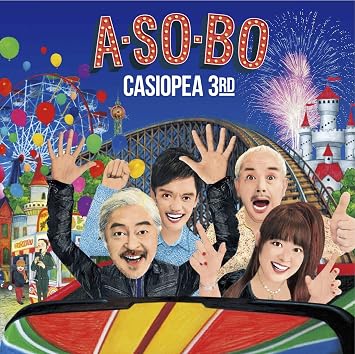
Casiopea’s later history continued to be marked by both continuity and personnel transition. When Minoru Mukaiya departed, another foundational element of the group’s sound disappeared. Keyboardist Kiyomi Otaka joined the new configuration, and the band adopted the name Casiopea 3rd. Once again, the altered name acknowledged that continuity did not require pretending nothing had changed.
Otaka brought her own instrumental identity, including a strong relationship with the Hammond organ, which changed the keyboard color associated with the band. Casiopea could not sound exactly like the Mukaiya era because the musician responsible for that vocabulary was no longer there. The sensible response was not imitation but adaptation.
Another transition eventually produced Casiopea-P4, with keyboardist Yūya Yonezawa joining Noro, Naruse and drummer Yoshinori Imai. By this point, the band’s history extended across several generations of musicians and enormous changes in the musical world around it.
The succession of names — Casiopea, Casiopea 2nd, Casiopea 3rd and Casiopea-P4 — can appear complicated from the outside, but it expresses an unusually transparent idea. The identity continues, but each configuration is allowed to be itself.
Casiopea survives by acknowledging change rather than hiding it.
The Internet Discovers a Band It Did Not Grow Up With
Perhaps the most surprising chapter in Casiopea’s story occurred far from the circumstances in which the original albums were created. Decades after the classic recordings appeared in Japan, a younger international audience began discovering Japanese jazz, fusion, city pop and related music through digital platforms, online communities and recommendation systems.
For many of these listeners, Casiopea did not arrive through the conventional history of jazz fusion. They had not necessarily worked chronologically from Miles Davis to Weather Report, Return to Forever and then Japanese groups. A recording such as Mint Jams could simply appear online, detached from the record-store categories that once organized musical discovery.
That changed the context dramatically.
Music that had once been geographically difficult to obtain could circulate instantly. Album artwork, live footage and recordings from the late 1970s and 1980s reached listeners in Europe, North America, Latin America and elsewhere with no requirement that they understand Japanese music history first. Casiopea’s strongest qualities proved unusually compatible with this form of discovery. The themes were memorable, the musicianship immediately apparent and the rhythmic energy communicated before any historical explanation was necessary.
The music could introduce itself.
Why Mint Jams Found Another Generation
The renewed visibility of Mint Jams is particularly revealing. Its appeal to younger listeners is not difficult to understand. The album offers enough complexity to reward repeated listening but enough melodic clarity to make the first encounter immediate. It also captures the physical interaction of a live band at a level that remains compelling in an era dominated by digital production.
Yet nostalgia alone does not explain the attraction. Many contemporary listeners discovering Mint Jams have no personal memories of 1982. They are not returning to the soundtrack of their youth; they are encountering somebody else’s past as new music.
That distinction matters.
The album’s revival demonstrates how recordings can escape the historical categories originally assigned to them. What might once have been marketed simply as Japanese fusion can now be heard alongside funk, jazz, progressive music, instrumental pop, video-game music and contemporary beat culture. Listeners build connections according to what they hear rather than according to the record-store section where the album once belonged.
Casiopea benefits enormously from that freedom.
Influence Beyond Jazz Fusion
The band’s influence also extends beyond musicians who identify explicitly as jazz-fusion players. Casiopea’s combination of detailed arrangements, memorable themes and electronic textures resonates with listeners familiar with Japanese video-game music, instrumental rock, funk, contemporary jazz and forms of electronic production that developed long after the group’s debut.
This does not mean Casiopea secretly invented all of those languages. Such claims replace history with mythology. The more interesting point is that musicians working in different fields can recognize useful principles in the band’s music: bass lines can function as hooks; technical passages can remain melodic; keyboards and guitar can share the foreground; rhythm sections can be intricate without losing groove; instrumental compositions can communicate without requiring vocals.
Those ideas are portable.
A band becomes influential not only when later musicians copy its sound but when its solutions remain useful in new contexts.
Japanese Fusion Becomes Part of a Global History
Casiopea’s international rediscovery also reflects a larger change in the way jazz history is being understood. For decades, narratives of jazz understandably centered on the United States, where the music originated and where its major early transformations occurred. But jazz became international very early, and by the second half of the twentieth century musicians in numerous countries were developing local languages that could no longer be described adequately as peripheral copies.
Japanese jazz is one of the clearest examples. Its history includes musicians working in bebop, modal jazz, free improvisation, big bands, fusion and many other forms. Casiopea occupies only one part of that landscape, but the band’s career demonstrates how confidently Japanese musicians could participate in an international musical exchange by the late 1970s.
Casiopea listened outward, but eventually the world listened back.
That reversal is essential to the story.
More Than Precision
It is tempting to summarize Casiopea through precision. The musicians execute difficult passages cleanly, the arrangements can be intricate, and the classic quartet developed a degree of coordination that remains impressive. But precision alone cannot explain why the band has lasted.
Perfect execution without personality becomes forgettable.
Casiopea endured because the technique was attached to emotional qualities that were easier to recognize than to measure. The music was often joyful without becoming trivial, sophisticated without becoming inaccessible and energetic without relying on aggression. Strong melodies gave listeners something to carry away from performances, while the interaction among the musicians gave them reasons to return.
The group also understood that virtuosity works best when distributed. Noro’s guitar mattered because Sakurai’s or Naruse’s bass mattered. Mukaiya’s keyboards mattered because Jimbo’s drums mattered. Later configurations altered those relationships, but the principle survived.
Casiopea was never at its best when one musician won.
It was at its best when the arrangement did.
A Language of Its Own
Nearly half a century after its formation, Casiopea can be heard without the anxiety of determining whether the band was sufficiently jazz, sufficiently Japanese, sufficiently innovative or sufficiently comparable to the American fusion groups that preceded it. Those questions once helped listeners place unfamiliar music inside recognizable categories. They are less useful now.
The band’s history provides a clearer answer.
Issei Noro and Tetsuo Sakurai began developing an instrumental group before its identity was fixed. Minoru Mukaiya and Takashi Sasaki helped carry that group into the recording studio. The first albums established a vocabulary built around melody, groove and ensemble precision. Akira Jimbo’s arrival transformed the rhythmic possibilities and helped create the classic quartet that reached a remarkable level of integration on Mint Jams. Later personnel changes forced the band to distinguish identity from nostalgia, while successive incarnations demonstrated that continuity could survive without pretending the past had remained intact.
Then something none of those young musicians could have planned happened.
The world changed the way it discovered music.
Recordings made for a Japanese audience began circulating without borders. Listeners born years or decades after Casiopea’s debut encountered “Asayake,” “Take Me,” “Midnight Rendezvous” and the rest of the group’s repertoire as living music rather than archival material. The technical brilliance attracted attention, but melody and rhythm made the relationship last.
Casiopea had begun during an era when Japanese musicians were often discussed according to how successfully they participated in musical languages developed elsewhere.
Its longevity tells a different story.
The quartet absorbed an international language, reorganized it around its own instincts and created something recognizable enough that generations later would learn the accent.
Casiopea did not need to redefine jazz fusion for everyone.
It only needed to make fusion sound unmistakably like Casiopea.