

The Quartet That Expanded the Language of Brazilian Jazz
Few Brazilian instrumental groups have combined virtuosity, rhythmic sophistication and collective creativity as naturally as Cama de Gato. Since emerging in the early 1980s, the quartet has built a reputation for transforming the rich traditions of Brazilian music into a modern jazz language that is simultaneously elegant, adventurous and unmistakably national.
Rather than treating Brazilian rhythms as colorful additions to jazz harmony, Cama de Gato places them at the very center of its musical identity. Samba, baião, choro, frevo and other regional traditions become the foundation upon which improvisation, sophisticated composition and contemporary ensemble interaction are built.
The result is music that sounds deeply Brazilian while speaking fluently to international jazz audiences.
Over four decades, the group has become one of the most respected ensembles in Brazilian instrumental music and an enduring reference for musicians seeking to balance technical excellence with expressive warmth.
The Birth of an Extraordinary Ensemble
Cama de Gato was formed in Rio de Janeiro in the early 1980s, bringing together four musicians whose individual talents would soon merge into one of the most distinctive ensemble sounds in Brazilian jazz.
The original lineup featured:
- Mauro Senise – saxophones and flute
- Cristóvão Bastos – piano and keyboards
- Nico Assumpção – bass
- Pascoal Meirelles – drums
Each member already possessed considerable experience as a performer, arranger and session musician. Together, however, they discovered a rare musical chemistry built upon attentive listening, rhythmic precision and shared respect for Brazilian musical traditions.
Rather than functioning as a group led by a single star, Cama de Gato developed as a true collective.
Every instrument carried equal importance.
Every arrangement reflected collaboration.
Every performance emphasized dialogue rather than individual display.
Beyond Fusion
During the 1980s, many instrumental groups around the world embraced jazz fusion by drawing heavily from rock and electronic music.
Cama de Gato chose a different path.
While the quartet certainly absorbed elements of modern jazz harmony and contemporary improvisation, its primary inspiration remained Brazilian music itself. Samba grooves, Northeastern rhythms, lyrical melodies and sophisticated harmonic movement formed the foundation of its repertoire.
This decision gave the group a distinctive identity.
Listeners immediately recognized the rhythmic elegance of Brazil.
Jazz musicians admired the freedom of the improvisation.
Neither tradition dominated the other.
Instead, both evolved together.
The Individual Voices Within the Quartet
One of Cama de Gato’s greatest strengths has always been the remarkable individuality of its members.
Mauro Senise brought extraordinary lyricism to the saxophone and flute, combining technical precision with a warm, unmistakably Brazilian tone.
Cristóvão Bastos contributed refined harmonic language rooted equally in Brazilian song and modern jazz.
Nico Assumpção’s melodic approach to the bass gave the ensemble unusual flexibility, while Pascoal Meirelles’ deep understanding of Brazilian rhythm transformed every performance into an intricate conversation between percussion and melody.
Together, they created an ensemble in which composition and improvisation flowed naturally from one another.
JazzLatitude Insight
Cama de Gato’s greatest innovation was demonstrating that Brazilian instrumental music did not need to imitate American jazz fusion to achieve international relevance. By placing Brazilian rhythmic traditions at the center of its artistic vision, the quartet created a sound that was both globally respected and unmistakably Brazilian.
A New Chapter in Brazilian Instrumental Music
As the quartet began performing throughout Brazil and abroad, audiences quickly recognized that Cama de Gato represented something different.
Its music possessed the sophistication expected by jazz listeners while retaining the melodic richness and rhythmic vitality that define Brazil’s greatest musical traditions.
The group’s recordings would soon become landmarks of contemporary Brazilian instrumental music, influencing generations of performers, composers and arrangers.
What began as an ambitious quartet would gradually become one of the most respected ensembles in the history of Brazilian jazz.
Building a Distinctive Brazilian Sound
As Cama de Gato matured throughout the 1980s, the quartet established an artistic identity that set it apart from nearly every other instrumental group in Brazil. While many ensembles were influenced by American fusion or contemporary jazz-rock, Cama de Gato remained firmly committed to Brazilian musical language.
The group’s originality did not come from rejecting jazz.
It came from redefining its relationship with Brazilian music.
Instead of adapting samba or baião into jazz arrangements, the quartet allowed Brazilian rhythms to determine the architecture of each composition. Harmony, improvisation and ensemble interaction naturally grew from these foundations, creating music that felt authentic rather than hybrid.
This approach gave Cama de Gato a musical personality that has remained instantly recognizable for more than four decades.
The First Recordings
The quartet’s early albums immediately demonstrated the remarkable chemistry that existed among its members.
Each composition balanced sophisticated harmonic writing with memorable melodies, while the improvisations emerged naturally from the structure of the music rather than interrupting it. Even during technically demanding passages, the ensemble never lost its sense of groove or melodic clarity.
Listeners quickly noticed another defining characteristic.
No instrument dominated.
The saxophone might introduce a melody before yielding to the piano.
The bass frequently became a melodic voice rather than simply providing harmonic support.
The drums shaped the direction of the music through subtle rhythmic dialogue instead of constant virtuosity.
Every performance reflected the group’s belief that the ensemble itself was the principal soloist.
The Role of Mauro Senise
Although Cama de Gato has always functioned as a collective, Mauro Senise became one of its most recognizable musical voices.
Equally expressive on tenor saxophone, soprano saxophone and flute, Senise developed a lyrical style deeply rooted in Brazilian melody while remaining fully conversant with modern jazz improvisation. His phrasing combines warmth, clarity and rhythmic precision, allowing him to move effortlessly between delicate ballads and energetic samba-inspired compositions.
Unlike many saxophonists whose improvisations emphasize technical display, Senise consistently prioritizes melody.
Every solo tells a story.
Every phrase grows naturally from the composition.
This approach became one of the defining characteristics of the quartet’s sound.
JazzLatitude Insight
One of Cama de Gato’s greatest strengths is the absence of hierarchy within the ensemble. Rather than presenting accompaniment and soloists as separate roles, the quartet allows every instrument to participate equally in shaping rhythm, harmony and melody. This democratic approach gives the music an unusual sense of balance and collective intelligence.
Cristóvão Bastos and Harmonic Elegance
Pianist Cristóvão Bastos contributed another essential element to the quartet’s identity.
His harmonic language reflects the elegance of Brazilian popular music while embracing the harmonic sophistication of modern jazz. Rich voicings, subtle counterpoint and beautifully shaped introductions became trademarks of his playing, providing an ideal foundation for the ensemble’s melodic conversations.
Bastos also demonstrated remarkable sensitivity as an accompanist.
Rather than filling every musical space, he carefully chose moments to support, answer or gently redirect the musical dialogue. This restraint gave the quartet a sense of openness rarely found in technically accomplished ensembles.
His influence extends well beyond Cama de Gato, as he remains one of Brazil’s most respected pianists, arrangers and composers.
Nico Assumpção and Pascoal Meirelles
The rhythm section played an equally vital role in defining the quartet’s personality.
Bassist Nico Assumpção approached the instrument with uncommon melodic imagination. His lines frequently functioned as countermelodies, enriching the harmonic movement while maintaining an exceptionally strong rhythmic foundation. Whether playing acoustic or electric bass, he combined flawless technique with remarkable musical sensitivity.
Drummer Pascoal Meirelles brought decades of experience in Brazilian percussion traditions to every performance.
His playing never relied on excessive complexity.
Instead, it reflected an intimate understanding of samba, baião, maracatu, frevo and countless other Brazilian rhythms. Every groove breathed naturally, giving the quartet extraordinary rhythmic flexibility without sacrificing precision.
Together, Assumpção and Meirelles created one of the finest rhythm sections in Brazilian instrumental music.
International Recognition
Although Cama de Gato has always maintained strong ties to Brazil, the quartet’s music quickly attracted international attention.
Festival appearances, overseas tours and collaborations introduced audiences across Europe, North America and Japan to an ensemble that represented a distinctly Brazilian approach to contemporary jazz. Critics frequently praised the group’s technical excellence, but what impressed listeners most was its musical identity.
The quartet never sounded like an imitation of American fusion.
Nor did it present Brazilian music as an exotic curiosity.
Instead, it demonstrated that Brazilian instrumental music possessed its own sophisticated improvisational tradition capable of standing confidently alongside the world’s leading jazz ensembles.
That authenticity became one of the group’s greatest strengths.
An Ever-Evolving Ensemble
Like many long-running groups, Cama de Gato experienced changes in personnel over the years.
New musicians brought fresh perspectives while preserving the ensemble’s core philosophy of collective interaction, rhythmic sophistication and melodic elegance. Rather than radically altering the group’s identity, these changes allowed its music to evolve naturally, reflecting new experiences while remaining faithful to the artistic values established during its earliest years.
This continuity explains why the quartet has remained artistically relevant across multiple generations.
Its sound continues to evolve.
Its musical identity remains unmistakable.
Essential Albums
For listeners discovering Cama de Gato for the first time, these recordings provide an excellent introduction to the quartet’s remarkable artistic journey.
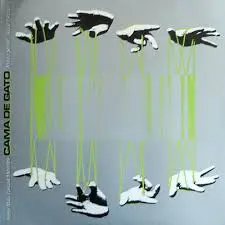
- Cama de Gato (1982) — The debut album that introduced the quartet’s elegant fusion of Brazilian rhythms and modern jazz.
- Danças (1984) — A confident expansion of the group’s compositional language, highlighting its exceptional ensemble interaction.
- Cama de Gato ao Vivo (Live) — Capturing the spontaneity, communication and rhythmic energy that made the quartet such a celebrated live act.
- Roda (1996) — A mature recording that demonstrates the group’s evolving harmonic sophistication while remaining deeply connected to Brazilian traditions.
- Voo Livre (2004) — A later work that reflects the enduring creativity and musical refinement of one of Brazil’s most important instrumental ensembles.
Together, these albums document the evolution of a quartet that helped redefine Brazilian jazz through elegance, imagination and collective artistry.
The Legacy of Cama de Gato
Few ensembles have contributed more to the evolution of Brazilian instrumental music than Cama de Gato. Across more than four decades, the quartet has demonstrated that Brazilian jazz can be simultaneously sophisticated, adventurous and deeply connected to the country’s musical traditions.
Its recordings occupy a unique position within Brazilian music.
They are admired by jazz musicians for their harmonic richness and improvisational depth.
They are respected by composers for their elegant writing and structural balance.
They are loved by audiences for melodies and rhythms that remain unmistakably Brazilian.
This rare combination has secured Cama de Gato’s place among the most important instrumental groups in the history of Brazilian jazz.
A Model of Collective Musicianship
One of the quartet’s greatest achievements has been its unwavering commitment to ensemble playing.
In many jazz groups, the spotlight naturally falls on individual soloists.
Cama de Gato followed a different philosophy.
Every instrument contributes equally to the musical conversation.
The piano introduces harmonic colors.
The saxophone and flute develop lyrical narratives.
The bass shapes both rhythm and melody.
The drums create momentum while responding to every subtle change in the ensemble.
This democratic approach has inspired countless Brazilian instrumental groups, proving that collective interaction can be every bit as compelling as individual virtuosity.
JazzLatitude Insight
Cama de Gato’s lasting importance lies not only in its extraordinary musicianship but also in its artistic philosophy. The quartet demonstrated that Brazilian rhythms, melodies and harmonic traditions possess all the complexity and expressive power needed to sustain world-class jazz without relying on imitation of foreign models.
Influencing New Generations
The influence of Cama de Gato extends far beyond its own recordings.
Many younger Brazilian musicians cite the quartet as an important reference for balancing sophisticated jazz improvisation with authentic Brazilian rhythmic traditions. Its music has helped shape performers working across samba jazz, contemporary instrumental music and modern fusion.
Artists such as André Mehmari, Hamilton de Holanda, Nailor Proveta, Fábio Torres, Sizão Machado, Edu Ribeiro and numerous emerging instrumentalists have continued exploring the dialogue between Brazilian musical heritage and contemporary jazz, building upon pathways that ensembles like Cama de Gato helped establish.
The quartet’s example remains especially valuable because it demonstrates that innovation does not require abandoning cultural identity.
Instead, it grows from understanding that identity more deeply.
Beyond the Stage
The individual members of Cama de Gato have also made enormous contributions outside the quartet.
Throughout their careers they have worked as arrangers, composers, educators and sought-after session musicians, collaborating with many of Brazil’s greatest singers and instrumentalists. Their influence therefore extends into popular music, film scores, orchestral projects and music education.
This broader activity has helped spread the quartet’s musical philosophy far beyond its own discography.
Generations of musicians have absorbed its values through performance, collaboration and teaching.
Essential Collaborations
Although Cama de Gato is best known as a self-contained ensemble, its members have collaborated with many of the most important figures in Brazilian music.
Among the most significant artistic connections are:
- Milton Nascimento — Collaborations that highlight the natural dialogue between Brazilian song and sophisticated instrumental jazz.
- Djavan — Performances and recording work reflecting the harmonic richness shared by both artists.
- Ivan Lins — A meeting of elegant composition, lyrical melody and refined Brazilian musicianship.
- Hermeto Pascoal — While representing different artistic approaches, both helped expand the international perception of Brazilian instrumental music through fearless creativity.
- Rosa Passos — Collaborations that demonstrate the quartet’s remarkable sensitivity as accompanists within Brazil’s rich vocal tradition.
These relationships reveal musicians whose influence reaches far beyond a single ensemble.
Technical Profile
Origin:
- Rio de Janeiro, Brazil
Formed:
- Early 1980s
Founding Members:
- Mauro Senise – Saxophones, Flute
- Cristóvão Bastos – Piano, Keyboards
- Nico Assumpção – Bass
- Pascoal Meirelles – Drums
Primary Styles:
- Brazilian Jazz
- Samba Jazz
- Brazilian Instrumental Music
- Contemporary Jazz
- Brazilian Fusion
Musical Characteristics:
- Collective improvisation
- Brazilian rhythmic traditions
- Sophisticated harmonic writing
- Strong melodic development
- Balanced ensemble interaction
Essential Albums:
- Cama de Gato (1982)
- Danças (1984)
- Cama de Gato ao Vivo
- Roda (1996)
- Voo Livre (2004)
Five Lesser-Known Facts About Cama de Gato
1. The quartet was conceived as a true musical collective.
Unlike many jazz ensembles built around a single leader, Cama de Gato developed through equal artistic participation, with every member contributing significantly to the group’s identity.
2. Brazilian rhythm always came before fusion.
Although often associated with jazz fusion, the quartet consistently built its music from Brazilian rhythmic traditions rather than adapting foreign styles to local sounds.
3. Its members became some of Brazil’s most respected session musicians.
Beyond the quartet, they collaborated with many of the country’s leading singers, composers and orchestras, helping shape Brazilian popular and instrumental music for decades.
4. Mauro Senise became one of Brazil’s leading woodwind players.
His work with Cama de Gato represents only one part of an extraordinary career that includes countless recordings, film scores and collaborations across multiple musical genres.
5. The group’s music remains widely studied.
Students of Brazilian jazz continue analyzing Cama de Gato’s arrangements because of their sophisticated balance between improvisation, composition and rhythmic interaction.
Frequently Asked Questions
What is Cama de Gato?
Cama de Gato is a Brazilian instrumental jazz quartet founded in the early 1980s. The group is celebrated for blending samba, baião, choro and other Brazilian traditions with contemporary jazz improvisation and sophisticated ensemble writing.
Who were the original members?
The original lineup featured Mauro Senise, Cristóvão Bastos, Nico Assumpção and Pascoal Meirelles, four of the most respected instrumentalists in Brazilian music.
Why is Cama de Gato important?
The quartet helped redefine Brazilian jazz by demonstrating that the country’s own rhythmic and melodic traditions could serve as the foundation for highly sophisticated contemporary jazz without relying on imitation of American fusion.
What is Cama de Gato’s best album?
Many listeners consider the debut album Cama de Gato (1982) the group’s defining recording because it introduced the ensemble’s distinctive musical language. Danças and Roda are also regarded as essential works.
Which artists are similar to Cama de Gato?
Listeners who appreciate Cama de Gato often explore Quarteto Novo, Hermeto Pascoal, Egberto Gismonti, César Camargo Mariano, André Mehmari, Hamilton de Holanda, Pau Brasil and Grupo Medusa, all of whom have made major contributions to Brazilian instrumental music and jazz.
JazzLatitude Rating
| Category | Rating |
|---|---|
| Ensemble Interaction | ★★★★★ |
| Compositional Originality | ★★★★★ |
| Brazilian Rhythmic Identity | ★★★★★ |
| Harmonic Sophistication | ★★★★★ |
| Improvisational Depth | ★★★★★ |
| Historical Importance | ★★★★★ |
| Replay Value | ★★★★★ |
| Accessibility for New Listeners | ★★★★☆ |
| JazzLatitude Essential | ★★★★★ |
Final Thoughts
Cama de Gato occupies a distinctive place in the history of Brazilian instrumental music because it demonstrated that artistic sophistication and cultural authenticity are not opposing ideals. Throughout its long career, the quartet consistently proved that the rhythms, melodies and harmonic richness of Brazil provide more than enough creative material to sustain a modern jazz language of international significance.
What makes the ensemble’s recordings so enduring is their remarkable sense of balance.
Every composition is carefully constructed.
Every improvisation serves the music rather than individual ego.
Every rhythmic idea grows naturally from Brazilian tradition instead of treating it as an exotic element.
This commitment to collective expression gives the quartet’s catalog a timeless quality that continues to reward repeated listening.
Its influence remains visible in contemporary Brazilian jazz, where younger musicians increasingly embrace local traditions as sources of innovation rather than limitations. In that sense, Cama de Gato helped establish a model that continues to shape Brazilian instrumental music today.
More than forty years after its formation, the quartet remains one of the finest examples of how jazz can evolve through cultural confidence instead of imitation.
For anyone seeking to understand the richness, elegance and rhythmic imagination of Brazilian jazz, Cama de Gato is not simply an essential ensemble.
It is one of its greatest achievements.