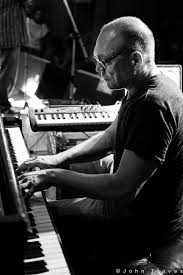
Few European musicians have challenged the boundaries of modern jazz as boldly as Bugge Wesseltoft. Throughout a career spanning more than three decades, the Norwegian pianist, composer and producer has consistently explored the meeting point between acoustic improvisation, electronic music and contemporary production. His recordings demonstrate that jazz can remain deeply rooted in spontaneity while embracing the technological and rhythmic innovations of the modern world.
Although he is frequently associated with the Nu Jazz movement, Wesseltoft has never been comfortable with rigid stylistic labels. His music draws freely from jazz, ambient, house, electronica, Nordic folk traditions and contemporary classical music, combining these influences into a sound that is unmistakably his own. Rather than treating electronics as decorative additions, he integrates them into the very fabric of his compositions, allowing technology to become another improvising voice within the ensemble.
This artistic philosophy has made Bugge Wesseltoft one of the most influential figures in contemporary European jazz.
Growing Up in a Musical Environment
Born on February 1, 1964, in Porsgrunn, Norway, Jens Christian “Bugge” Wesseltoft grew up in a family where music played an important role. His father was a guitarist and church musician, exposing him from an early age to both sacred music and the rich traditions of Scandinavian musical culture.
As he developed as a pianist, Wesseltoft absorbed an unusually broad range of influences. American jazz naturally played a central role, but so did Norwegian folk music, classical composition and the atmospheric soundscapes that would later become closely associated with Nordic jazz. This wide musical education encouraged him to think beyond conventional stylistic boundaries long before electronic music entered his artistic vocabulary.
By the time he began performing professionally, his curiosity had already become one of his defining characteristics.
From Sideman to Creative Force
During the late 1980s and early 1990s, Wesseltoft established himself as one of Norway’s most sought-after pianists. He collaborated with leading Scandinavian musicians while also working with internationally respected artists, developing a reputation for remarkable versatility and imaginative accompaniment.
These experiences proved invaluable.
Rather than simply refining his technical skills, they exposed him to a wide variety of ensemble formats and compositional approaches. Wesseltoft learned how different musical traditions could coexist naturally, a lesson that would later become central to his own work as a bandleader.
His growing confidence as both performer and composer eventually led him to search for a musical language that reflected the realities of contemporary urban life as much as the traditions of jazz.
A Different Vision of Modern Jazz
By the early 1990s, Wesseltoft had begun questioning many of the assumptions surrounding modern jazz performance.
Could electronic textures become integral to improvisation rather than remaining confined to studio production?
Could club rhythms coexist with acoustic piano?
Could jazz communicate with audiences who also listened to techno, ambient music and contemporary electronica?
Rather than treating these questions as theoretical exercises, Wesseltoft answered them through performance. His experiments gradually evolved into a musical language that preserved the spontaneity of jazz while embracing the sonic possibilities of modern technology.
In doing so, he became one of the earliest musicians to demonstrate that electronic music and jazz could interact as equal creative partners.
JazzLatitude Insight
Bugge Wesseltoft’s greatest innovation was not simply adding electronics to jazz. He redefined the role of technology within improvisation, treating synthesizers, loops and digital textures as active participants in musical conversation rather than static background effects. That philosophy would become one of the foundations of Nu Jazz.
The Beginning of a New Concept
As the decade progressed, Wesseltoft’s ideas became increasingly focused.
He envisioned a form of jazz capable of reflecting contemporary culture without abandoning improvisation or artistic depth. That vision would soon find its clearest expression through a groundbreaking recording project whose title perfectly summarized his ambitions:
New Conception of Jazz.
The album would become far more than a successful release.
It would give a name to an entirely new direction in European jazz.
New Conception of Jazz and the Birth of a Movement
When New Conception of Jazz was released in 1996, it sounded unlike almost anything else in contemporary jazz.
The album did not abandon improvisation, nor did it attempt to imitate electronic dance music. Instead, Bugge Wesseltoft created a musical language in which acoustic piano, synthesizers, sampled textures, electronic beats and spontaneous interaction existed as equal partners. The result was a recording that challenged long-held assumptions about what jazz could be in the digital age.
Rather than viewing technology as a threat to jazz tradition, Wesseltoft treated it as another instrument capable of expanding the possibilities of improvisation. Loops became rhythmic foundations rather than rigid patterns. Electronic effects responded organically to the musicians’ ideas. Atmosphere emerged naturally from interaction instead of studio manipulation.
This approach marked the beginning of what many listeners would later recognize as Nu Jazz.
Beyond Fusion
Although Bugge Wesseltoft’s music is often compared with jazz fusion, the similarities are only superficial.
Traditional fusion generally emerged from the meeting of jazz and rock, emphasizing electric instruments, virtuosic solos and powerful rhythmic energy. Wesseltoft pursued a very different objective. His recordings drew inspiration from ambient music, minimalism, techno, house and contemporary electronic production, while maintaining the openness and spontaneity that define jazz improvisation.
Silence remained important.
Space remained important.
Collective listening remained essential.
The electronics never overwhelmed the acoustic instruments. Instead, they expanded the ensemble’s expressive possibilities, creating textures that could not have existed within a purely acoustic setting.
This balance became one of Wesseltoft’s defining artistic achievements.
JazzLatitude Insight
One of Bugge Wesseltoft’s greatest contributions was demonstrating that technology could deepen improvisation rather than replace it. His music never treats electronic sounds as decorative effects. Instead, they function as responsive musical voices that participate fully in the creative dialogue.
Founding Jazzland Recordings
Recognizing that many like-minded musicians lacked an outlet for their increasingly adventurous work, Wesseltoft founded Jazzland Recordings in 1997.
The label quickly became one of the most influential platforms for contemporary Scandinavian jazz, supporting artists who explored the meeting point between jazz, electronics, experimental music and modern production. Rather than promoting a single aesthetic, Jazzland encouraged individuality while fostering a shared spirit of innovation.
The label helped introduce international audiences to a new generation of Nordic musicians whose work reflected the changing cultural landscape of Europe at the turn of the millennium.
Much as ECM Records had transformed perceptions of European jazz during the 1970s, Jazzland became a symbol of its continued evolution.
Collaboration as Creative Exploration
Throughout his career, Wesseltoft has consistently sought collaborators who challenge conventional musical boundaries.
His partnership with guitarist Eivind Aarset produced richly atmospheric soundscapes in which ambient textures and improvisation became inseparable. Aarset’s distinctive use of effects and looping technology complemented Wesseltoft’s piano, creating an ensemble language that felt both intimate and expansive.
Another important artistic connection developed with trumpeter Nils Petter Molvær, whose groundbreaking recordings similarly blurred the line between jazz, electronic music and cinematic sound design. Although each musician maintained a distinct artistic identity, both helped redefine international perceptions of Scandinavian jazz during the late 1990s.
Their work demonstrated that European jazz could innovate without simply following American models.
A Different Kind of Piano
Even when seated at an acoustic piano, Bugge Wesseltoft approaches the instrument differently from many contemporary jazz pianists.
Rather than filling every harmonic space with dense chordal movement, he frequently allows individual notes and sustained harmonies to resonate naturally. His phrasing reflects the influence of Nordic folk music, contemporary classical composition and ambient music as much as traditional bebop vocabulary.
This economy of expression gives his improvisations remarkable emotional clarity.
Every note carries weight.
Every silence contributes to the musical narrative.
His playing illustrates that virtuosity can be measured not only by technical complexity but also by sensitivity, timing and the ability to shape atmosphere.
Beyond the Studio
Although Wesseltoft’s recordings are meticulously crafted, his music truly comes alive in performance.
Live concerts frequently extend far beyond the original studio arrangements. Improvisation remains central, with electronic textures evolving in response to the musicians’ interaction rather than following pre-programmed structures. This flexibility ensures that no two performances sound exactly alike.
The audience witnesses not simply the reproduction of recorded material, but the continuous creation of new musical possibilities.
That commitment to spontaneity places Wesseltoft firmly within the jazz tradition, regardless of the technology surrounding him.
Essential Albums
The following recordings provide an ideal introduction to Bugge Wesseltoft’s artistic evolution.
- New Conception of Jazz (1996) — The groundbreaking album that helped define Nu Jazz.
- Moving (2001) — A deeper exploration of electronic textures and lyrical improvisation.
- Film Ing (2007) — Atmospheric compositions blending jazz, ambient music and cinematic sound.
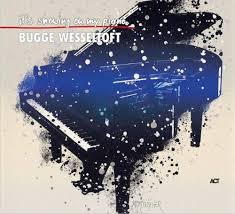
- It’s Snowing on My Piano (1997) — A beautifully intimate solo piano recording that reveals another side of his artistry.
- Everybody Loves Angels (2017) — A mature synthesis of acoustic sensitivity and modern production.
Together, these albums illustrate the remarkable breadth of a musician who has consistently redefined the possibilities of contemporary jazz.
The Legacy of Bugge Wesseltoft
Few European jazz musicians have influenced the direction of contemporary improvisation as profoundly as Bugge Wesseltoft. While many artists have successfully blended jazz with electronic music, Wesseltoft helped establish an entirely new artistic framework in which technology became an integral part of the creative process rather than an external enhancement. His work demonstrated that synthesizers, loops and digital processing could participate in improvisation with the same legitimacy as acoustic instruments.
That achievement extends far beyond the recordings themselves.
By encouraging younger musicians to approach jazz without stylistic prejudice, Wesseltoft helped redefine what it means to be a jazz artist in the twenty-first century. His music respects tradition without being constrained by it, proving that innovation often begins by asking new questions rather than abandoning old values.
Today, his influence can be heard across contemporary European jazz, electronic improvisation and the broader world of experimental instrumental music.
Shaping the Sound of Modern Nordic Jazz
Although Bugge Wesseltoft is often associated with the Nu Jazz movement, his impact on Scandinavian music reaches much further.
His recordings encouraged a generation of Nordic musicians to think beyond established categories, demonstrating that jazz could engage naturally with ambient music, electronica, contemporary classical composition and even elements of club culture without sacrificing artistic integrity.
This philosophy became especially important during the late 1990s and early 2000s, when Scandinavian jazz gained unprecedented international recognition. Alongside artists such as Nils Petter Molvær, Eivind Aarset, Tord Gustavsen, Christian Wallumrød and, later, groups like Jaga Jazzist, Wesseltoft helped establish Northern Europe as one of the most innovative regions in contemporary jazz.
Each artist followed a different path.
What united them was a shared willingness to experiment.
JazzLatitude Insight
Bugge Wesseltoft’s greatest legacy is not a particular recording or stylistic innovation. It is the freedom he gave other musicians to explore new technologies without feeling that they were leaving jazz behind. His work proved that curiosity itself could become a defining musical principle.
Jazzland Recordings and a New Generation
The influence of Jazzland Recordings continues to be felt long after its founding.
The label provided an important platform for musicians whose work did not fit neatly into conventional jazz categories, encouraging artistic independence over commercial conformity. Many younger Scandinavian artists found in Jazzland a space where experimentation was not only accepted but actively encouraged.
This role echoes the historical importance of labels such as ECM, Blue Note and Pacific Jazz during earlier generations.
Each created an environment in which musicians could develop distinctive artistic identities rather than adapt to market expectations.
Through Jazzland, Wesseltoft became not only an influential performer but also an important cultural curator whose vision helped shape the future of European jazz.
Essential Collaborations
Although widely celebrated for his own recordings, Bugge Wesseltoft has consistently sought creative dialogue with musicians from diverse backgrounds. These collaborations reveal different dimensions of his artistic personality while illustrating the openness that defines his approach to improvisation.
Among his most significant musical partnerships are:
- Eivind Aarset — Expanding the relationship between guitar, electronics and atmospheric improvisation.
- Nils Petter Molvær — Exploring the intersection of jazz, ambient music and electronic production.
- Sidsel Endresen — Creating intimate performances where voice, piano and texture interact with remarkable freedom.
- Henrik Schwarz — Bridging contemporary electronic music and live improvisation.
- Trilok Gurtu — Combining Nordic lyricism with global rhythmic traditions.
Each collaboration reflects Wesseltoft’s belief that meaningful musical dialogue begins with listening rather than stylistic labels.
Technical Profile
Full Name: Jens Christian “Bugge” Wesseltoft
Born: February 1, 1964
Birthplace: Porsgrunn, Norway
Primary Instruments:
- Piano
- Keyboards
- Synthesizers
Professional Roles:
- Pianist
- Composer
- Producer
- Bandleader
Primary Styles:
- Nu Jazz
- Nordic Jazz
- Contemporary Jazz
- Electronic Jazz
- Ambient Jazz
- Improvised Music
Founded:
- Jazzland Recordings (1997)
Essential Albums:
- New Conception of Jazz (1996)
- It’s Snowing on My Piano (1997)
- Moving (2001)
- Film Ing (2007)
- Everybody Loves Angels (2017)
Five Lesser-Known Facts About Bugge Wesseltoft
1. He helped popularize the term “Nu Jazz.”
Although the label has been applied to many artists, Wesseltoft’s New Conception of Jazz became one of the defining recordings associated with the movement, influencing musicians across Europe and beyond.
2. His solo piano albums are very different from his electronic work.
Recordings such as It’s Snowing on My Piano reveal an intimate acoustic side that contrasts beautifully with the electronic experimentation of his ensemble projects.
3. He founded Jazzland to support artistic independence.
Rather than relying entirely on established record companies, Wesseltoft created a label that encouraged creative freedom and long-term artistic development.
4. He sees technology as an instrument, not a production tool.
For Wesseltoft, electronics are meant to respond in real time to improvisation, functioning as active participants in performance rather than as fixed backing tracks.
5. His influence extends beyond jazz.
Artists working in ambient music, electronic composition, film scoring and contemporary classical music have drawn inspiration from his atmospheric approach to sound, texture and improvisation.
Frequently Asked Questions
Who is Bugge Wesseltoft?
Bugge Wesseltoft is a Norwegian pianist, composer, producer and founder of Jazzland Recordings. He is widely regarded as one of the pioneers of Nu Jazz and one of the most influential figures in contemporary European jazz.
What is Bugge Wesseltoft’s most important album?
New Conception of Jazz (1996) remains his landmark recording. It introduced a groundbreaking approach to combining jazz improvisation with electronic production and helped define the Nu Jazz movement.
Is Bugge Wesseltoft an ECM artist?
Although he has collaborated with many musicians associated with ECM and shares certain aesthetic qualities with the label, Wesseltoft is most closely identified with Jazzland Recordings, the independent label he founded in 1997.
What makes his music unique?
His ability to integrate acoustic improvisation, electronic textures and contemporary production into a cohesive musical language distinguishes him from most modern jazz pianists. His recordings emphasize atmosphere, interaction and sonic exploration as much as melody and harmony.
Which artists are similar to Bugge Wesseltoft?
Listeners who appreciate his work often explore Nils Petter Molvær, Eivind Aarset, Tord Gustavsen, Christian Wallumrød, Jaga Jazzist, Esbjörn Svensson Trio (e.s.t.), GoGo Penguin and Portico Quartet.
JazzLatitude Rating
| Category | Rating |
|---|---|
| Artistic Innovation | ★★★★★ |
| Compositional Originality | ★★★★★ |
| Electronic Integration | ★★★★★ |
| Improvisational Depth | ★★★★★ |
| Influence on European Jazz | ★★★★★ |
| Production Quality | ★★★★★ |
| Accessibility for New Listeners | ★★★★☆ |
| Long-Term Cultural Impact | ★★★★★ |
| JazzLatitude Essential | ★★★★★ |
Final Thoughts
Bugge Wesseltoft occupies a unique place in the history of modern jazz because he challenged assumptions that many musicians had long accepted as fixed. At a time when electronic music and jazz were often viewed as separate artistic worlds, he demonstrated that both could enrich one another through thoughtful collaboration rather than superficial fusion.
His music also reminds us that innovation is rarely about replacing tradition. Instead, it grows from a deep understanding of what makes a tradition meaningful in the first place. Wesseltoft never abandoned improvisation, collective interaction or careful listening—the qualities that define jazz at its core. He simply expanded the range of tools available to express those values.
The influence of that vision continues to shape contemporary music.
It can be heard in the atmospheric recordings of today’s Nordic pianists, in the seamless integration of electronics within modern jazz ensembles and in the growing confidence with which younger musicians move between genres without feeling the need to justify those choices.
More than three decades after introducing his “new conception of jazz,” Bugge Wesseltoft remains one of the clearest examples of how artistic curiosity can transform an entire musical landscape.
His legacy is not only the sound he created.
It is the freedom he inspired others to pursue.