
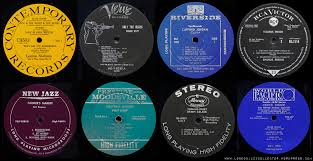
To the casual listener, two copies of the same Blue Note record often appear identical.
The cover artwork is the same.
The catalog number matches.
The music inside is, of course, identical.
Yet one copy might sell for $40, while another commands $4,000 at auction.
How is that possible?
For serious collectors, the answer often lies in details that are almost invisible.
A small groove around the record label.
The shape of the vinyl’s outer edge.
A tiny “P” hidden in the runout.
An address printed in microscopic type.
These seemingly insignificant manufacturing characteristics tell the story of when—and often where—a record was pressed. They distinguish true first pressings from later editions and help collectors determine both historical authenticity and market value.
Among all these identifying features, none has generated more discussion than two terms that frequently appear in collector conversations:
Deep Groove.
And Flat Rim.
Understanding what these terms actually mean is one of the first steps toward becoming a knowledgeable Blue Note collector.
The Birth of Blue Note’s Legendary Pressings
Founded in 1939 by Alfred Lion and Francis Wolff, Blue Note Records gradually became the gold standard for modern jazz.
Its catalog documented the evolution of bebop, hard bop and post-bop through artists such as:
- Art Blakey
- Horace Silver
- Lee Morgan
- Sonny Clark
- Hank Mobley
- Jackie McLean
- Grant Green
- Herbie Hancock
- Wayne Shorter
But Blue Note’s reputation extends beyond the music.
Collectors also celebrate the extraordinary craftsmanship of its original LPs.
The labels.
The laminated covers designed by Reid Miles.
The mastering by Rudy Van Gelder.
And the meticulous manufacturing performed primarily by Plastylite, the New Jersey pressing plant responsible for many of the label’s most valuable releases.
These production choices unintentionally created a series of physical characteristics that now serve as historical fingerprints.
Deep Groove is one of them.
Flat Rim is another.
What Is a Deep Groove?
A Deep Groove is the circular indentation pressed into the paper label area of many American LPs manufactured during the 1950s and early 1960s.
It appears as a pronounced ring surrounding the spindle hole.
Importantly, this groove is not part of the musical surface.
It exists only within the label area.
The feature resulted from the design of the metal pressing dies used by record plants during that period. As the vinyl biscuit was compressed, the machinery left a distinctive recessed circle around the label.
Collectors quickly realized something important.
Many of Blue Note’s earliest LPs displayed this characteristic.
Consequently, the presence of a Deep Groove became associated with early pressings.
However, that association is only partially correct.
Deep Groove is an important clue.
It is not definitive proof.
Many records from other labels also feature Deep Groove labels, and some genuine Blue Note first pressings were manufactured after the industry had already begun abandoning the older pressing equipment.
Understanding this distinction prevents one of the most common mistakes made by beginning collectors.
JazzLatitude Insight
A Deep Groove does not indicate superior sound quality by itself. It simply reflects the type of pressing machinery used during a specific manufacturing period. Its importance is historical rather than sonic.
What Is a Flat Rim?
While Deep Groove refers to the label area, Flat Rim describes something entirely different.
It concerns the outer edge of the record.
Early Blue Note LPs manufactured by Plastylite featured a completely flat outer profile.
Unlike later records, whose edges taper gently downward, these early discs terminate almost vertically before meeting the playing surface.
Collectors often call this feature a Flat Edge or Flat Rim.
It was another byproduct of Plastylite’s early manufacturing process rather than an intentional premium feature.
Over time, improvements in pressing technology led most American plants to adopt the now-familiar raised safety edge.
As a result, Flat Rim records gradually disappeared from production.
Today, they remain one of the most reliable indicators of the earliest Blue Note manufacturing period.
Deep Groove vs. Flat Rim
Although collectors frequently mention these two terms together, they identify completely different parts of the record.
| Feature | Deep Groove | Flat Rim |
|---|---|---|
| Location | Label area | Outer edge of the vinyl |
| Visible without removing sleeve? | Yes | Usually requires side inspection |
| Created by | Label pressing die | Vinyl mould profile |
| Purpose | Manufacturing byproduct | Manufacturing byproduct |
| Indicates | Early pressing equipment | Early Plastylite pressing profile |
Because they describe different physical characteristics, a genuine first pressing may include both.
Or only one.
Everything depends on when the record was manufactured.
Understanding the production timeline is therefore essential.
Why Collectors Care So Much
Blue Note collectors rarely evaluate a record using a single feature.
Instead, they combine multiple pieces of evidence.
Deep Groove.
Flat Rim.
Plastylite Ear.
RVG stamp.
Label address.
Cover construction.
Each clue strengthens—or weakens—the case for originality.
A record displaying every correct manufacturing characteristic may command several times the value of an otherwise identical later pressing.
For collectors, these details are not trivial.
They are the difference between owning a historical artifact and owning an excellent reissue.
That distinction explains why so much attention is devoted to manufacturing details that casual listeners rarely notice.
Beyond the Deep Groove
How to Authenticate a True Blue Note First Pressing
One of the biggest misconceptions among beginning collectors is the belief that a Deep Groove automatically means a first pressing.
It doesn’t.
Likewise, a Flat Rim alone does not prove originality.
Experienced collectors never rely on a single characteristic. Instead, they examine a combination of manufacturing details that, when viewed together, create a remarkably accurate picture of when a particular record left the pressing plant.
Think of it as assembling a puzzle.
The more original pieces that fit together, the greater the confidence that the record is an authentic first pressing.
The Plastylite “Ear”
If there is one manufacturing detail that every Blue Note collector should learn to recognize, it is the famous Plastylite “Ear.”
Officially, it is not an ear at all.
It is a tiny stylized “P”, stamped into the runout groove by Plastylite, the New Jersey pressing plant responsible for manufacturing nearly all original Blue Note LPs from the early 1950s until 1966.
Viewed under strong light, the mark resembles a small ear, giving rise to one of the most famous nicknames in record collecting.
Unlike the Deep Groove, which reflects the type of pressing die used, the Plastylite “Ear” identifies who pressed the record.
This distinction is crucial.
A Deep Groove can appear on records from many different labels.
The Plastylite “Ear” specifically connects a Blue Note LP to the plant that produced its legendary first editions.
When collectors refer to an “ear copy,” this is what they mean.
RVG or VAN GELDER?
Another key clue is found in the runout area.
Mastering engineer Rudy Van Gelder, whose work helped define the Blue Note sound, left his own identifying marks on countless records.
Earlier masterings typically bear the simple hand-etched RVG.
Later pressings often feature the machine-stamped VAN GELDER.
At first glance, this seems like an easy way to determine age.
Reality is more complicated.
Van Gelder frequently reused original metal stampers for later pressings, meaning both first and second pressings may carry identical mastering marks.
An RVG or VAN GELDER stamp confirms that Rudy mastered the lacquer.
It does not, by itself, prove that the record is a first pressing.
Once again, authentication depends on combining multiple characteristics.
JazzLatitude Insight
Many collectors assume that “RVG” automatically means “original.” In fact, numerous Liberty, United Artists and even later reissues continued to use Van Gelder’s original metal parts. Mastering and pressing are two different stages of production, and they should never be confused.
Buy Amazon
The Label Address Timeline
Perhaps no identifying feature is more useful than the address printed around the label.
As Blue Note’s offices moved over the years, the company updated its labels accordingly.
Those changes now serve as one of the clearest ways to estimate a pressing date.
The main sequence is:
| Label Address | Approximate Period |
|---|---|
| 767 Lexington Ave. | 1951–1957 |
| 47 West 63rd Street, New York 23 | 1957–1962 |
| 47 West 63rd NYC | Early 1960s |
| New York USA | 1962–1966 |
| Liberty Records | After 1966 |
Because these changes occurred gradually, transitional copies do exist.
Some early records even combine characteristics from two production periods.
That is why experienced collectors evaluate the entire record—not just the label address.
One Deep Groove or Two?
Another common source of confusion involves records that display a Deep Groove on only one side.
Does this indicate a second pressing?
Not necessarily.
During the transition away from older pressing dies, Plastylite occasionally used different stampers for each side of the same LP.
The result was a record with:
- Deep Groove on Side One.
- No Deep Groove on Side Two.
Or the reverse.
These transitional pressings are entirely legitimate and often left the factory that way.
Understanding the release date is essential.
By the early 1960s, one-sided Deep Groove copies became increasingly common as older equipment was gradually retired.
Rather than treating this as evidence of a later pressing, collectors compare it with documented examples from the same catalog number.
Flat Rim and the Early Years
The Flat Rim provides another important chronological clue.
Generally speaking, the earliest Blue Note LPs manufactured by Plastylite feature this distinctive flat outer edge.
As production methods evolved, the company gradually adopted the raised safety edge that became standard throughout the American record industry.
However, there is no single day on which the change occurred.
Production overlapped.
Stampers were reused.
Old parts remained in service alongside newer equipment.
For this reason, Flat Rim should always be interpreted alongside the label address, the Plastylite Ear and the matrix information.
Collectors who rely on only one feature often reach the wrong conclusion.
The Cover Matters Too
Authentication does not stop with the vinyl itself.
Original Blue Note jackets contain valuable information that can confirm—or contradict—the record inside.
Experienced collectors examine details such as:
- Laminated front covers.
- Heavy cardboard construction.
- Correct printer credits.
- Spine typography.
- Back-cover address.
- Factory inspection stamps.
- Original inner sleeves.
A first-pressing record paired with a later replacement cover is no longer a complete first pressing.
Likewise, an original jacket containing a later Liberty pressing significantly reduces collector value.
For serious buyers, the package must be evaluated as a whole.
Buy Amazon

Building the Evidence
Professional collectors rarely ask a single question:
“Does it have a Deep Groove?”
Instead, they ask several.
Does it have the Plastylite Ear?
Is the label address correct?
Does the matrix match documented originals?
Is the cover period-correct?
Does the Flat Rim fit the production timeline?
When all these details align, confidence increases dramatically.
Authentication is never based on one characteristic.
It is built through cumulative evidence.
Does Deep Groove Sound Better?
Separating Collector Myth from Manufacturing Reality
Among Blue Note collectors, few debates have lasted as long as the question of whether a Deep Groove pressing actually sounds better than a later pressing.
The short answer is surprisingly simple.
No—not because of the Deep Groove itself.
The circular indentation around the label has no direct influence on the music engraved in the grooves. It is merely a byproduct of the pressing dies used by record plants during a particular period.
Yet many collectors sincerely believe that Deep Groove copies sound superior.
Why?
Because these records often possess several other characteristics that do affect sound quality.
Original Rudy Van Gelder masterings.
Fresh metal stampers.
High-quality Plastylite pressings.
Virgin vinyl.
Minimal tape generation.
Those factors frequently appear together on early Blue Note pressings, creating an understandable—but often misunderstood—association between Deep Groove and superior sound.
The groove did not create the better sound.
It simply happened to exist on many records that were produced under exceptional manufacturing conditions.
Why First Pressings Often Sound Better
Although a Deep Groove does not improve audio quality, genuine first pressings frequently offer sonic advantages over later editions.
Several factors contribute to this reputation.
Fresh Metal Stampers
Every metal stamper gradually wears with use.
Early copies pressed from a newly manufactured stamper typically reproduce finer groove detail than copies produced after thousands of pressings.
Original Analog Mastering
Many Blue Note first pressings were cut directly from Rudy Van Gelder’s original master tapes.
Later reissues sometimes relied on production copies or duplicate tapes that introduced small losses in clarity and dynamic range.
Plastylite’s Manufacturing Standards
Collectors continue to praise Plastylite’s consistency during Blue Note’s golden era.
Heavy vinyl.
Careful quality control.
Excellent centering.
Clean pressings.
These qualities contributed significantly to the reputation of original Blue Note LPs.
Buy Amazon

Historical Context
During the 1950s and early 1960s, LP production runs were relatively modest.
Many first pressings reached collectors before stampers experienced significant wear.
This is another reason why early copies often sound remarkably vivid decades later.
JazzLatitude Insight
The phrase “Deep Groove sound” is technically inaccurate. What listeners are hearing is the combined result of Rudy Van Gelder’s mastering, fresh stampers, Plastylite’s pressing quality and original analog tapes—not the circular groove pressed into the label.
The Most Common Blue Note Collecting Myths
The popularity of Blue Note collecting has created countless misconceptions.
Some are harmless.
Others lead collectors to spend thousands of dollars on records they misunderstand.
Myth 1: Every Deep Groove Is a First Pressing.
False.
Many second pressings—and even some non-Blue Note records—also feature Deep Groove labels.
Myth 2: Every First Pressing Has Two Deep Grooves.
False.
Several authentic transitional pressings left Plastylite with a Deep Groove on only one side.
Myth 3: Flat Rim Always Means First Pressing.
False.
Although strongly associated with early production, Flat Rim must always be evaluated alongside other manufacturing details.
Myth 4: RVG Guarantees an Original.
False.
Many Liberty and United Artists reissues still use Rudy Van Gelder’s original mastering.
Myth 5: Every Plastylite Ear Copy Is Worth Thousands.
False.
Condition.
Artist.
Album.
Rarity.
Demand.
These factors influence value far more than any single manufacturing characteristic.
The Ultimate Blue Note Authentication Checklist
Before purchasing an expensive Blue Note LP, experienced collectors typically verify every one of these details.
| Feature | Check |
|---|---|
| Correct catalog number | ✓ |
| Correct label address | ✓ |
| Plastylite “Ear” present | ✓ |
| RVG or VAN GELDER in runout | ✓ |
| Deep Groove consistent with release year | ✓ |
| Flat Rim (when appropriate) | ✓ |
| Correct laminated jacket | ✓ |
| Period-correct inner sleeve | ✓ |
| Matching matrix numbers | ✓ |
| Vinyl condition carefully inspected | ✓ |
The more boxes that can be checked, the greater the confidence that the record is both authentic and accurately described.
Blue Note Manufacturing Timeline (1951–1966)
Understanding the evolution of Blue Note manufacturing is one of the most valuable skills a collector can develop.
| Period | Typical Characteristics |
| 1951–1956 | Lexington labels, Flat Rim, Deep Groove, Plastylite Ear, RVG |
| 1957–1961 | 47 West 63rd labels, Deep Groove, Plastylite Ear |
| 1962–1965 | New York USA labels, one-sided Deep Groove becomes more common, Plastylite Ear |
| 1966 | Transition from Plastylite to Liberty ownership |
| After 1966 | Liberty labels, raised edge, no Plastylite Ear on new pressings |
Like any historical timeline, there are exceptions.
Blue Note frequently used remaining stock, mixed stampers and overlapping production methods during periods of transition.
Collectors should always verify individual catalog numbers rather than relying exclusively on general manufacturing dates.
Frequently Asked Questions
What is a Blue Note Deep Groove?
A Deep Groove is the circular indentation around the center label created by older record-pressing dies. It is a manufacturing characteristic found on many American LPs from the 1950s and early 1960s.
Does Deep Groove mean first pressing?
Not by itself.
It is an important clue, but authentication requires examining additional characteristics such as the Plastylite Ear, label address, matrix numbers and jacket details.
What is a Flat Rim?
A Flat Rim (or Flat Edge) refers to the nearly vertical outer edge found on many early Plastylite pressings before raised safety edges became standard.
What is the Plastylite Ear?
The Plastylite Ear is a small stylized “P” stamped into the runout groove. It identifies records pressed at the Plastylite plant, where most original Blue Note LPs were manufactured until 1966.
Which feature is most important?
None by itself.
Professional collectors evaluate all manufacturing characteristics together before determining whether a record is an authentic first pressing.
Final Thoughts
Collecting original Blue Note records is one of the most rewarding—and challenging—pursuits in the world of vinyl.
The deeper collectors explore the label’s history, the more they discover that authenticity cannot be reduced to a single detail. A Deep Groove, a Flat Rim, the Plastylite Ear or an RVG stamp each contributes an important piece of evidence, but none tells the complete story alone.
That is precisely what makes Blue Note collecting so fascinating.
Every record is an historical object.
Every manufacturing detail reflects a particular moment in the evolution of one of the greatest jazz labels ever created.
The most successful collectors are not those who memorize isolated facts.
They are those who learn to see the entire picture.
By understanding how Blue Note records were designed, mastered and pressed, collectors become better historians, wiser buyers and more careful custodians of a remarkable musical legacy.
In the end, the value of a first pressing extends far beyond its market price.
It represents a direct connection to the moment when some of the greatest jazz performances ever recorded first reached the turntables of the world.
JazzLatitude Collector’s Rating
| Category | Rating |
| Historical Value | ★★★★★ |
| Collector Importance | ★★★★★ |
| Identification Difficulty | ★★★★★ |
| Investment Potential | ★★★★★ |
| Educational Value | ★★★★★ |
| Audiophile Interest | ★★★★★ |
| Beginner Friendliness | ★★★★☆ |
| Long-Term Reference | ★★★★★ |
| JazzLatitude Essential | ★★★★★ |
Further Reading on JazzLatitude
If you’re beginning your journey into Blue Note collecting, these guides are the perfect next step:
- Blue Note Lexington vs. 47 West 63rd Labels
- The Plastylite “Ear”: Everything Collectors Need to Know
- RVG vs. VAN GELDER: Understanding Blue Note Matrix Markings
- Blue Note First Pressing Checklist
- The Complete Guide to Blue Note Label Variations (1951–1966)
Together, these articles form a complete reference library for identifying, authenticating and appreciating one of the most celebrated catalogs in jazz history.