Discover how Bill Evans transformed modern jazz through lyrical harmony, conversational improvisation and one of the most influential piano trios in music history.
Artist: Bill Evans
Born: August 16, 1929 – Plainfield, New Jersey, USA
Died: September 15, 1980 – New York City
Genres: Jazz · Modal Jazz · Post-Bop
Primary Instrument: Piano
Historical Importance: ★★★★★
Musical Innovation: ★★★★★
Recommended For
- Piano enthusiasts
- Jazz newcomers
- Classical musicians discovering jazz
- Audiophiles
- Fans of Keith Jarrett, Brad Mehldau and Esbjörn Svensson
The Quiet Revolutionary
History often remembers its revolutionaries as loud, charismatic figures who command attention the moment they enter a room.
Bill Evans was the opposite.
He rarely sought the spotlight. His voice was soft, his gestures restrained, and his personality almost painfully reserved. Yet when he placed his hands on a piano, the language of modern jazz changed forever.
Before Evans, jazz piano was frequently associated with dazzling virtuosity and rhythmic brilliance. After Evans, pianists began searching for something deeper: color, atmosphere, emotional nuance and genuine musical conversation.
His influence spread far beyond his own generation. Keith Jarrett, Chick Corea, Herbie Hancock, Fred Hersch, Brad Mehldau and Esbjörn Svensson each developed highly individual voices, yet traces of Bill Evans can still be heard in their approach to harmony, phrasing and interaction.
His greatest achievement was not simply playing beautifully.
It was teaching generations of musicians that silence could be just as expressive as sound.
JazzLatitude Insight
Few jazz musicians have influenced so many pianists while remaining so instantly recognizable. Even artists who deliberately moved beyond Evans’ style often acknowledge him as the foundation of their musical language.
A Classical Education
William John Evans was born on August 16, 1929, in Plainfield, New Jersey.
Unlike many jazz musicians of his era, his earliest musical experiences came through classical training rather than church or blues traditions. His mother encouraged piano lessons from an early age, introducing him to Mozart, Beethoven, Debussy and Ravel long before he immersed himself in jazz.
These composers would leave a permanent imprint on his artistic imagination.
Debussy’s floating harmonies.
Ravel’s subtle colors.
Chopin’s lyrical touch.
Rather than treating classical music and jazz as separate worlds, Evans absorbed both naturally. He would later describe improvisation as composition unfolding in real time—a philosophy deeply connected to his classical background.
This unusual foundation allowed him to hear harmony differently from many of his contemporaries.
Instead of building dense chord structures simply for complexity, he searched for transparency.
Every note had a purpose.
Every silence carried meaning.
Discovering Jazz
As a teenager, Evans became fascinated by recordings of Nat King Cole, Bud Powell and Lennie Tristano.
Each offered something unique.
Cole demonstrated elegance.
Powell revealed astonishing technical freedom.
Tristano introduced a more intellectual approach to improvisation.
Yet Evans never became an imitator.
Even during his earliest performances, listeners noticed an uncommon patience. Rather than filling every measure with notes, he allowed melodies to breathe.
This restraint would become one of his defining characteristics.
After studying music at Southeastern Louisiana College, Evans served briefly in the U.S. Army before moving to New York City, where the competitive jazz scene challenged every young musician hoping to establish a career.
The city was overflowing with extraordinary talent.
Standing out required more than technical ability.
It required an original voice.
Bill Evans already possessed one.
Buy Amazon
New York and the Search for Identity
The New York jazz scene of the 1950s demanded versatility.
One evening a pianist might accompany a vocalist.
The next, perform bebop standards at breathtaking tempos.
Evans adapted quickly.
His reputation grew among fellow musicians long before the general public recognized his name.
Unlike many pianists who emphasized speed and virtuosity, Evans preferred interaction.
He listened constantly.
Each performance became a conversation rather than a competition.
This philosophy would soon attract the attention of one of jazz’s greatest innovators.
Miles Davis.
JazzLatitude Insight
Miles Davis once remarked that Bill Evans played the piano “the way it should be played.” Coming from one of jazz’s most demanding bandleaders, the compliment carried enormous weight.
Kind of Blue
When Miles Davis invited Bill Evans to join his sextet, jazz stood on the edge of transformation.
Bebop had reached extraordinary levels of harmonic complexity.
Improvisation often relied on rapidly changing chord progressions that demanded exceptional technical command.
Miles envisioned another possibility.
Instead of navigating dozens of harmonic changes, musicians would explore fewer scales with greater melodic freedom.
This approach became known as modal jazz.
Although Kind of Blue featured several remarkable musicians, Bill Evans played a central role in shaping its harmonic atmosphere.
His impressionistic voicings, influenced by French classical composers, gave the album its unmistakable sense of space.
The opening of “So What” remains one of the most recognizable moments in jazz history.
Its elegance owes much to Evans’ harmonic imagination.
Released in 1959, Kind of Blue became the best-selling jazz album ever recorded.
Its influence continues today.
Reinventing the Piano Trio
If Kind of Blue introduced Bill Evans to a wider audience, his own trio permanently changed the piano trio format.
Before Evans, many trios followed a clear hierarchy.
The pianist led.
The bassist accompanied.
The drummer maintained time.
Evans imagined something entirely different.
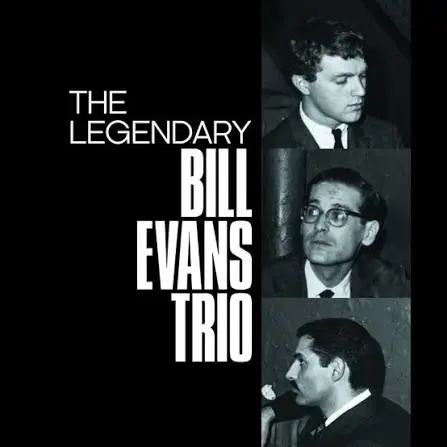
Together with bassist Scott LaFaro and drummer Paul Motian, he created a musical relationship based on equality.
Bass lines became melodic.
Drums became conversational.
The piano no longer dominated every musical decision.
Instead, the trio functioned almost like three improvising composers sharing the same language.
This democratic approach revolutionized jazz performance.
Today, it feels almost natural.
In the late 1950s, it was astonishing.
The Tragedy of Scott LaFaro
In 1961, only days after the trio recorded the legendary performances later released as Sunday at the Village Vanguard and Waltz for Debby, bassist Scott LaFaro died in a car accident at just twenty-five years old.
The loss devastated Bill Evans.
For months he found it almost impossible to perform.
Many close friends feared he might never fully recover artistically.
Yet the music he eventually created carried even greater emotional depth.
Grief became part of his artistic vocabulary.
Listeners often describe Evans’ later recordings as possessing extraordinary vulnerability.
Perhaps because they do.
JazzLatitude Insight
The Village Vanguard recordings are frequently considered the greatest piano trio performances ever captured. They remain essential listening for anyone seeking to understand modern jazz interaction.
The Evans Sound
Describing Bill Evans’ playing purely in technical terms misses its essence.
His music was never about displaying ability.
It was about creating atmosphere.
His touch remained astonishingly delicate.
His harmonic language combined sophistication with clarity.
Even his most complex voicings rarely sounded crowded.
Listeners often speak of Evans’ music using visual language.
Transparent.
Luminous.
Reflective.
These descriptions reveal something important.
His piano seemed less concerned with rhythm than with emotional architecture.
Each phrase unfolded naturally.
Nothing felt forced.
Nothing sounded rushed.
Influence Across Generations
Few pianists have inspired as many major artists.
Keith Jarrett expanded improvisational freedom.
Herbie Hancock explored new harmonic colors.
Chick Corea blended lyricism with rhythmic energy.
Brad Mehldau introduced contemporary influences.
Esbjörn Svensson transformed the modern piano trio.
Despite their differences, all inherited something from Bill Evans.
Usually, it was not a specific phrase or chord.
It was an attitude.
Listening before playing.
Serving the music before serving the ego.
Allowing beauty to emerge through restraint.
This philosophy continues shaping contemporary jazz education worldwide.
Essential Recordings
For listeners beginning their journey into Bill Evans’ music, these recordings provide the clearest introduction:
- Portrait in Jazz (1960)
- Explorations (1961)
- Sunday at the Village Vanguard (1961)
- Waltz for Debby (1961)
- Moon Beams (1962)
- Conversations with Myself (1963)
- You Must Believe in Spring (recorded 1977, released 1981)
Together they reveal an artist constantly refining his language without ever abandoning his identity.
Why Bill Evans Still Matters
More than four decades after his passing, Bill Evans remains one of the defining voices in modern music.
His influence extends beyond jazz.
Classical pianists admire his harmonic sophistication.
Film composers study his emotional pacing.
Contemporary improvisers continue learning from his conversational approach.
Perhaps his greatest lesson is remarkably simple.
Music does not become profound through complexity alone.
It becomes profound when every note feels inevitable.
Bill Evans understood this better than almost anyone.
His recordings continue reminding us that the deepest emotions often emerge not from what musicians choose to play, but from what they choose to leave unsaid.
Technical Data
Full Name: William John Evans
Born: August 16, 1929
Died: September 15, 1980
Nationality: American
Primary Instrument: Piano
Associated Artists: Miles Davis, Scott LaFaro, Paul Motian, Eddie Gómez, Tony Bennett
Genres: Modal Jazz · Post-Bop · Contemporary Jazz
JazzLatitude Rating
| Category | Rating |
|---|---|
| Historical Importance | ★★★★★ |
| Harmonic Innovation | ★★★★★ |
| Improvisation | ★★★★★ |
| Emotional Expression | ★★★★★ |
| Influence on Later Musicians | ★★★★★ |
| Recording Legacy | ★★★★★ |
| Accessibility | ★★★★★ |
| JazzLatitude Essential | ★★★★★ |
Frequently Asked Questions
Why is Bill Evans considered so influential?
Because he transformed jazz harmony, introduced a conversational piano trio format and inspired generations of pianists through his lyrical, impressionistic style.
What is Bill Evans’ most famous recording?
Although he appeared on Kind of Blue, many critics consider Sunday at the Village Vanguard his greatest artistic achievement.
Did Bill Evans invent modal jazz?
No. Miles Davis led the development of modal jazz, but Evans’ harmonic ideas played a crucial role in shaping the sound of Kind of Blue.
Which modern pianists were influenced by Bill Evans?
Keith Jarrett, Chick Corea, Herbie Hancock, Fred Hersch, Brad Mehldau and Esbjörn Svensson are among the many artists who acknowledge his influence.
Where should new listeners begin?
A great starting point includes Portrait in Jazz, Waltz for Debby, Sunday at the Village Vanguard and Kind of Blue, where his contribution helped redefine modern jazz.
Final Thoughts
Bill Evans never sought to revolutionize jazz through spectacle. His revolution was quieter, unfolding through harmony, patience and an extraordinary sensitivity to musical dialogue.
He showed that technical brilliance and emotional honesty are not opposing ideals, but complementary ones. Every performance invited listeners into a world where melody, silence and interaction carried equal weight.
Today, his legacy lives not only in the recordings he left behind, but in the countless musicians who continue to draw inspiration from his approach to listening, improvising and communicating through music.
Few artists have changed the sound of modern jazz so profoundly. Even fewer have done so with such grace.