The Chronicle of an Era: The Sunday Smoke of a Greenwich Village Sanctuary
On the afternoon of Sunday, June 25, 1961, Greenwich Village was the undisputed epicenter of global bohemian intelligence. Outside, the New York summer sun beat down on Seventh Avenue South, where young poets, civil rights activists, and beatniks drifted between bookstores and sidewalk cafés. But down a narrow, unassuming flight of concrete stairs, inside the triangular basement known as the Village Vanguard, the atmosphere belonged to a completely different dimension. The air was a thick, blue haze of cigarette smoke; the soundtrack was a casual, shifting ambient collage of clinking cocktail glasses, low murmurs of conversation, and the occasional burst of dry laughter from the small audience huddled around tiny tables.
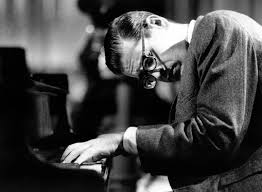
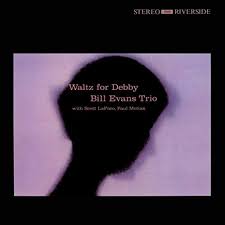
In that subterranean sanctuary, a trio of young musicians sat on the low stage, operating not like a traditional showbiz act, but like three painters sharing a single canvas in real-time. At the piano sat Bill Evans, his posture so severely hunched over the keys that his forehead almost touched the wood, his eyes closed as if he were trying to isolate himself from the physical universe. Over the course of five historic sets recorded that Sunday by producer Orrin Keepnews for Riverside Records, this trio did not merely play a set of jazz standards. They captured a fleeting, diamond-hard moment of pure emotional vulnerability. The resulting album, Waltz for Debby, alongside its companion release Sunday at the Village Vanguard, became a monumental paradigm shift—proving that jazz did not always need to roar with the muscular energy of the streets; it could whisper with the devastating, crystalline beauty of an intimate diary entry.
The Biography & The Construction of a Myth: The Classical Soul Locked in an Indigo Shade
William John Evans was an anomaly in the aggressively masculine, high-octane world of post-bop jazz. Born in Plainfield, New Jersey, in 1929, Evans was classically trained from early childhood, absorbing the rich, impressionistic harmonic palettes of Claude Debussy, Maurice Ravel, and Gabriel Fauré long before he ever fell in love with the swing of Nat King Cole or Bud Powell. When he arrived in New York in the mid-1950s, his appearance matched his musical style: thin, wearing thick-rimmed glasses, neatly combed hair, and possessing a quiet, academic demeanor that earned him the nickname “The Mozart of Jazz.”
Evans possessed a touch on the piano keys that defied the physics of the instrument. While most bebop pianists treated the piano percussively—as an extension of the drums—Evans made it sing. He developed a highly sophisticated method of “rootless voicings,” shifting the core architecture of chords to the middle register of the piano, creating a fluid, open, and watercolor-like harmonic cushion that floated effortlessly in space. This unique lyricism caught the ear of Miles Davis, who hired Evans in 1958 as the structural anchor for his sextet. Evans’s introverted, modal sensibilities became the primary chemical catalyst for Kind of Blue (1959), but the intense racial tensions of the era and Evans’s escalating, tragic dependency on heroin forced him to leave Miles’s side to seek his own definitive creative vehicle.
In late 1959, Evans found his musical soulmates: a young, breathtakingly ambitious 20-year-old double bassist named Scott LaFaro, and the meticulously sensitive drummer Paul Motian. Before this trio emerged, the traditional jazz piano trio was a rigid hierarchy: the pianist played the melody and solos, while the bassist and drummer acted as a human metronome, keeping time in the background. Evans, LaFaro, and Motian threw that rulebook into the fire. They pioneered the concept of “simultaneous collective improvisation.” LaFaro did not just play roots; he engaged in a continuous, contrapuntal dialogue with Evans, playing counter-melodies in the high register of his bass that danced around the piano lines, while Motian used his brushes to color the empty spaces rather than just beat the time. It was an egalitarian utopia operating at the highest level of musical telepathy.
The Anatomy of the Vinyl: A Sensorial Walk Through a Tragic Masterpiece
To place the needle onto the original Riverside press of Waltz for Debby is to step directly into that smoky basement afternoon in 1961. The album opens with “My Foolish Heart”, a performance that stands as perhaps the most sublime ballad ever recorded in the history of improvised music. From the very first chord, Evans establishes a mood of profound, aching nostalgia. His touch is impossibly soft, letting the notes bleed into one another like watercolors on wet paper. Paul Motian’s brushes caress the snare drum with a whisper that sounds like wind through trees, while Scott LaFaro plucks notes on his bass that hang in the air like sighs. The clinking of glasses from the Vanguard bar is entirely audible in the background, transforming the audience into an accidental percussive layer that anchors the music to a specific, beautiful human reality.
The mood shifts into a state of elegant, childlike wonder with the title track, “Waltz for Debby”, a composition Evans wrote for his young niece. Played in a floating 3/4 time signature, the track opens with an unaccompanied piano statement that feels like a classical minuet before dropping into a bright, medium-tempo swing. LaFaro’s bass solo on this track is a historic marvel; his fingers fly across the fingerboard with the speed and articulation of a classical guitarist, yet the swing remains deep, loose, and undeniably jazzy. Evans’s solo blocks out chords with a rhythmic bounce that mimics the innocent steps of a child playing in a garden, capturing a rare moment of unadulterated joy in an otherwise melancholy catalog.
On Side B, the trio tackles Miles Davis’s “Milestones”, providing a definitive masterclass in how to reconstruct a modern standard. Instead of matching the driving, aggressive modal punch of Davis’s original version, Evans’s trio turns it into a fluid, highly conversational chess match. Motian abandons traditional time-keeping on the ride cymbal, using his drums to accent and fracture the rhythm, forcing Evans and LaFaro to constantly shift their phrases. The interplay is dizzying—a display of three minds operating as a single organism, navigating complex harmonic turns at high speed without ever raising their collective voice above a sophisticated whisper.
The emotional climax of the record arrives with the devastating performance of “Some Other Time”. The song’s introduction features Evans playing a simple, repeating two-note motif that feels heavy with premonition. The melody is a meditation on the fleeting nature of time and the agony of unspoken words. LaFaro’s bass lines weave underneath Evans’s chords like a ghost trying to communicate from the ether. It is a track that leaves the room cold with beauty—an immortal fragment of audio where every note feels like it is being torn directly from the musicians’ chest walls.
The Legacy and Modern Coordinates: The Eternal Echo of a Fractured Mirror
The supreme tragedy of Waltz for Debby lies in its timing. Just ten days after these historic sessions at the Village Vanguard, on July 6, 1961, Scott LaFaro was killed in a horrific car accident on a highway in upstate New York. He was only 25 years old. The news completely shattered Bill Evans. Devastated by the loss of his musical alter-ego, Evans retreated into absolute isolation, refusing to touch the piano or look at a stage for months. Though he would eventually return to recording and lead many other brilliant trios across his long career, his friends noted that a part of Evans’s soul died on that highway with LaFaro. His heroin addiction deepened, and his music took on an even darker, more reclusive indigo shade until his own tragic death in 1980.
Despite the heartbreak that followed its creation, Waltz for Debby remains the gold standard, the holy grail, and the definitive blueprint for the modern jazz piano trio. It permanently broke the traditional academic frameworks of how rhythm sections interact, opening the door for generations of future visionaries. Every major piano icon who followed—from Keith Jarrett’s Standards Trio to Brad Mehldau, Bill Charlap, and contemporary European neoclassical piano movements—operates directly under the vast, beautiful shadow cast by Evans, LaFaro, and Motian on that Sunday afternoon in June. Bill Evans etched a crystalline, teardrop-shaped coordinate on the map of Jazz Latitude: a timeless monument that reminds us that when technical genius surrenders to the absolute fragility of the human heart, the music achieves a state of pure, immortal grace.