The Chronicle of an Era: The Acoustic Era Twilight, the Primitive Horn, and Columbia’s Early Race Records
In the freezing weeks of January 1925, the global recording industry was standing on the absolute precipice of its first massive technological revolution. The invention of the electric microphone was still a closely guarded laboratory secret at Western Electric; inside the primitive, cavernous studios of Columbia Records in New York City, engineering was entirely a matter of raw, physical mechanics. Musicians did not perform in front of comfortable electronic capsules. Instead, they gathered in front of a giant, terrifying metal recording horn that narrowed down to a delicate sapphire stylus cutting directly into a rotating wax disc. There were no mixing boards, no volume knobs, and absolutely no room for error. If a performer sang too softly, their voice was lost to the surface hiss of the primitive shellac; if they sang too loudly, the kinetic energy would cause the stylus to physically jump, destroying the master matrix.
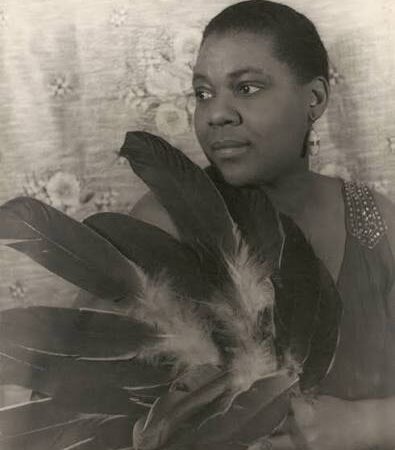
It was precisely within this demanding, hyper-physical acoustic recording environment, on January 14, 1925, that Bessie Smith—already universally feared and revered as “The Empress of the Blues”—stepped into the Columbia studio. She was there to cut a definitive interpretation of W.C. Handy’s foundational standard, “St. Louis Blues”. Backed by a young, twenty-three-year-old Louis Armstrong on cornet, the resulting session did not merely capture a performance. It executed a breathtaking, historically unprecedented convergence of the rough, rural delta blues with the sophisticated, emerging harmonic structures of early jazz, establishing an untouched, historical reference point for raw vocal projection, physical dynamic control, and ancient analog archive restoration.
The Biography & The Concept of the Masterwork: The Empress of the South and the Young King of New Orleans
The artistic trajectory of Bessie Smith (born in Chattanooga, Tennessee, in 1894; died in 1937) is the definitive narrative of early American vocal sovereignty. Emerging from the brutal, unyielding circuits of Southern tent shows and minstrel troupes, Smith possessed a voice of terrifying physical power, rich tonal coloration, and a bone-deep rhythmic elasticity that could bend notes around a beat with complete improvisational freedom. She was the highest-paid Black entertainer of her era, single-handedly rescuing Columbia Records from financial bankruptcy with her “Race Records” series. Smith approached a song not as polite parlor music, but as a visceral, tragi-comic theatrical sermon on the realities of poverty, betrayal, and institutional survival.
The core conceptual architecture of the 1925 “St. Louis Blues” session represents a deliberate, highly minimalist experiment in creative friction.
Columbia’s producers stripped away the polite, ragtime-influenced dance bands that typically backed pop singers of the era, leaving Bessie entirely isolated with just two instrumentalists: Louis Armstrong on cornet and Fred Longshaw on a small, portable reed reed organ (harmonium).
This sparse arrangement forced an extraordinary, real-time creative dialogue. Armstrong, recently arrived in New York from New Orleans and bursting with a revolutionary, virtuosic concept of swing phrasing, did not play standard obbligatos. Instead, he treated his cornet as a second human voice, responding to Bessie’s heavy, mournful vocal statements with a series of brilliant, muted stabs and sweeping blues glissandos that pushed the boundaries of what early acoustic recording horns could mechanically handle.
Buy Amazon
The Anatomy of the Archive: A Sensorial Excursion Through Mechanical Grooves, Muted Cornet, and Pre-Electric Power
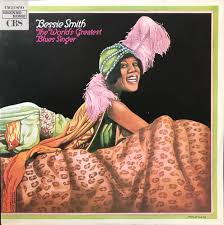
To experience a clean, meticulously restored 78-RPM shellac pressing of this 1925 document—or a masterfully executed modern AAA audiophile vinyl reissue cut via specialized, wide-groove equipment directly from the original metal mother matrices—is to witness a stunning demonstration of raw human lung capacity overcoming primitive mechanical limitations. Because this track was cut entirely without electrical amplification, the soundstage possesses a stark, dried-canvas intimacy that forces the listener to listen through the unavoidable, historical surface crackle of early 1920s shellac. The track opens with Fred Longshaw’s reed organ positioning itself in the deep, foggy background, its low-pressure bellows pumping out a slow, drone-like harmonic mattress.
The physical realism of Bessie Smith’s vocal projection is nothing short of miraculous; the moment she delivers the opening line—“I hate to see that evening sun go down”—the sheer kinetic volume of her diaphragm is captured with astonishing, visceral presence.
Because she had to physically blast her voice directly down the center of the recording horn to move the cutting stylus, her tone carries a thick, muscular mid-range density that bypasses the limitations of the era.
As the arrangement transitions into the tango-inflected bridge, Louis Armstrong’s cornet steps into the left-center mechanical field, his instrument tightly fitted with a metal “cup” mute. The contrast between the two legends is a masterclass in vintage analog contrast. Armstrong’s cornet lines carry a sharp, metallic “bite” that shimmers directly above Bessie’s deep, chest-resonant growls.
The recording captures the absolute absence of electronic compression; when Bessie holds a long, micro-tonal blue note on the word “tomorrow”, you can hear her physically backing away from the mouth of the iron horn to manage the acoustic air pressure, preserving a historic, three-dimensional lesson in how pure human performance technique acted as the very first audio compressor in the history of recorded sound.
The Legacy and Modern Coordinates: The Root Blueprint for All Modern American Vocal Art
The historical, critical, and archival trajectory of Bessie Smith’s 1925 “St. Louis Blues” stands today as an untouchable, globally canonized milestone that rests at the absolute foundation of all modern recorded music. Inducted into the Grammy Hall of Fame and preserved by the Library of Congress in the National Recording Registry, this specific three-minute session served as the definitive structural template that directly informed the vocal identities of Billie Holiday, Mahalia Jackson, Janis Joplin, and Nina Simone. It provided the ultimate, historical proof that the emotional weight of the Black vocal tradition could completely conquer the most primitive industrial mediums, changing the landscape of global popular music forever.
Today, the modern coordinates of Jazz Latitude look directly back to this 1925 mechanical document as the ultimate, foundational root system for the entire tree of jazz, blues, and soul. From the contemporary avant-garde vocalists who strip away modern digital processing to recapture the raw, unamplified power of the human throat to the high-end audiophile engineers who develop specialized, ultra-linear mono phono cartridges designed to extract the rich, historic mid-range secrets hidden within early wide-groove shellac, everyone operates directly within the trade routes mapped out by the Empress. Bessie Smith carved the very first, deeply etched coordinate of clay, shellac, and pure human bone on our map: an eternal, ancient vanguard outpost that stands as an immortal monument to the infinite triumph of the unamplified musical soul.