
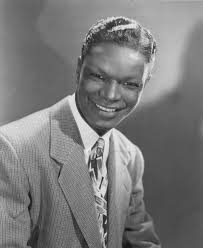
The Keyboard Monarch of the Midnight Swing
Before he became the global, tuxedo-clad icon of American romanticism, Nat King Cole was a fiercely inventive jazz piano prodigy directly descended from the stride laboratory of Earl Hines. Arriving in Los Angeles in the late 1930s, Nat formed The King Cole Trio, an ensemble that would completely rewrite the structural rules of small-group jazz. By discarding the traditional drum kit and anchoring his lineup with only piano, guitar (the brilliant Oscar Moore), and double bass, Cole created a sonic landscape of breathtaking clarity and agility. His piano style was a masterclass in economic elegance—characterized by a light, sparkling touch, sophisticated block chords, and a hyper-refined sense of swing that proved you didn’t need a heavy percussion section to make a room completely sway.
The Crossover Crown: Breaking Barriers with Velvet and Vinyl
For the high-art connoisseur exploring the evolutionary coordinates of The Jazz Compass, Nat King Cole’s mid-1940s transition into a vocal powerhouse represents one of the most significant cultural triumphs in modern music history. When he stepped up to the microphone to record hits like “Straighten Up and Fly Right” and later “Nature Boy”, his smooth-as-silk baritone and immaculate diction captured the ear of the entire planet. He single-handedly put Capitol Records on the map—the iconic Hollywood building is still known today as “The House that Nat Built.” But Nat’s crossover success was also a political victory. Navigating the brutal, segregated landscape of 1950s America with unmatched dignity, he became the first African-American musician to host his own national television show, fighting racism not with anger, but with an untouchable, aristocratic excellence.
The Timeless Echo Across the Infinite Latitude
True to the borderless, forward-thinking spirit of Jazz Latitude, Nat King Cole’s musical geography bridges the golden age of acoustic jazz with the sophisticated architecture of mid-century pop. His later orchestral collaborations with arrangers like Nelson Riddle and Gordon Jenkins set the absolute standard for vocal jazz, layering his intimate, smoky delivery over lush, cinematic strings. Though his brilliant life was cut short by lung cancer in 1965 at the age of 45, his artistic coordinate remains completely permanent and monumental. Nat King Cole proved that absolute commercial dominance and uncompromising musical sophistication could live in the exact same breath—leaving behind a legacy that remains as unforgettable today as the night it was written.