The Coltrane We Think We Know
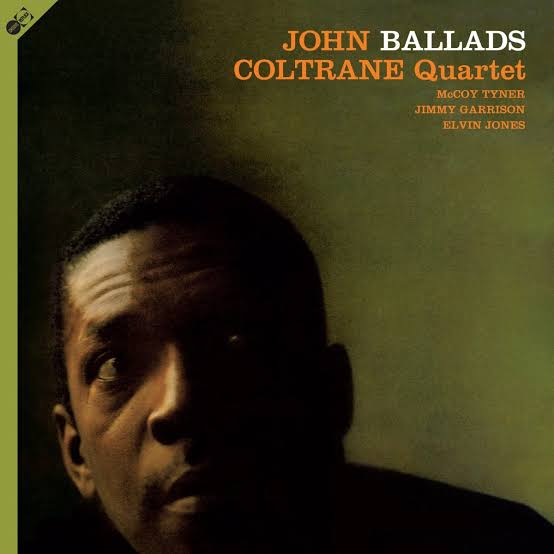
By the beginning of the 1960s, John Coltrane had become one of the musicians most closely associated with the expansion of jazz language. His work had grown increasingly intense, harmonically ambitious and structurally open, and the extraordinary development of his playing between Giant Steps, My Favorite Things and the first recordings for Impulse! made him appear to be moving relentlessly toward greater complexity. Long improvisations, soprano saxophone, modal structures and the almost obsessive investigation of melodic and harmonic possibilities were becoming central to his public identity. To listeners following that trajectory, an album devoted entirely to standards and romantic songs might have seemed like an unexpected retreat. Yet Ballads, released by Impulse! in 1963, makes far more sense when heard not as a retreat from Coltrane’s exploratory work but as another expression of the same discipline.
The album asks a deceptively simple question: what remains when a musician capable of extraordinary intensity decides that intensity is not what a song requires? Coltrane’s answer is restraint without passivity. His tenor remains unmistakable, but the urgency is redirected. Instead of extending melodies until they reveal increasingly distant possibilities, he stays close to their emotional centers. Instead of turning every harmonic sequence into an invitation for exhaustive exploration, he allows the architecture of the songs to remain visible. McCoy Tyner, Jimmy Garrison and Elvin Jones respond with equal sensitivity, creating performances in which the Classic Quartet’s power is present precisely because nobody feels compelled to demonstrate it continuously.
This makes Ballads one of the most revealing recordings in Coltrane’s catalogue. It does not show us a different musician temporarily abandoning his real concerns. It shows how broad those concerns had become. The same artist who could push “My Favorite Things” into extended modal improvisation could also enter “Nancy (With the Laughing Face)” and decide that the melody itself contained enough information.
The radical gesture was knowing when not to add more.
An Album Assembled Across a Year of Change
Although Ballads has the coherence of a carefully conceived session, its eight performances were recorded at Rudy Van Gelder’s studio in Englewood Cliffs across three dates spanning December 1961 to November 1962. “It’s Easy to Remember” came from December 21, 1961, with Coltrane on tenor, McCoy Tyner on piano, Reggie Workman on bass and Elvin Jones on drums. By the September 18, 1962 session that produced “Nancy (With the Laughing Face)” and “What’s New?”, Jimmy Garrison had taken the bass chair; the remaining five album performances were recorded with the same Coltrane-Tyner-Garrison-Jones lineup on November 13.
Those dates matter because they capture the consolidation of one of the most important quartets in jazz history. Garrison’s arrival completed the ensemble generally remembered as Coltrane’s Classic Quartet, and the group’s identity was developing rapidly. Tyner’s spacious voicings could provide harmonic definition without restricting Coltrane’s movement. Jones transformed timekeeping into a continuously active field of cymbal patterns, accents and polyrhythmic energy. Garrison supplied a grounded center capable of remaining stable even as the music above him became increasingly expansive.
On Ballads, however, these qualities appear in compressed form. The musicians do not cease being themselves; they adjust the scale of their conversation. Jones can imply enormous rhythmic energy without overwhelming the song. Tyner can make a chord glow without turning it into a platform for extended development. Garrison’s bass provides shape and movement while rarely demanding attention independently. Coltrane responds by treating melody as something to inhabit rather than something to escape.
The result is not less sophisticated than the quartet’s more adventurous recordings.
Its sophistication is less conspicuous.
“Say It”: Beginning With Intimacy
The album opens with “Say It (Over and Over Again),” a song written by Jimmy McHugh and Frank Loesser. Coltrane’s entrance immediately establishes the record’s emotional scale. There is no dramatic announcement that the great modernist has arrived to transform the standard. Instead, he allows the melody to emerge naturally, shaping phrases with a vocal sensitivity that had always existed in his playing but could sometimes be overshadowed by discussions of technique.
Coltrane’s relationship with songs was never purely harmonic. Even during periods when his improvisational language became extraordinarily dense, melody remained fundamental. His early experience with rhythm and blues, his study of saxophonists such as Johnny Hodges and his deep engagement with popular standards had given him an understanding of how instrumental phrasing could suggest a human voice. On Ballads, that knowledge moves to the foreground.
Listen to the spaces around the notes. Coltrane does not treat silence as absence. A phrase ends, and the rhythm section allows its emotional residue to remain before the next thought begins. Tyner’s accompaniment is supportive without becoming decorative, while Jones seems to reduce his enormous rhythmic vocabulary to exactly what the song can carry.
This is restraint as ensemble intelligence.
No musician sounds diminished by it.
“You Don’t Know What Love Is”: A Familiar Song Becomes Personal
“You Don’t Know What Love Is” had already become a jazz standard by the time Coltrane recorded it, but familiarity is precisely what makes his approach interesting. A standard arrives with accumulated history: previous singers, instrumental interpretations, recognizable harmonic movement and expectations about emotional character. The musician must decide whether to resist that history or enter into conversation with it.
Coltrane chooses conversation.
His performance does not depend upon radical reharmonization or structural reconstruction. Instead, individuality emerges through tone, articulation and pacing. His tenor can carry tenderness without becoming fragile, and the slight grain within the sound prevents the performance from slipping into polished sentimentality. There is always a trace of tension inside the beauty.
That tension is essential to Ballads. The album is gentle, but it is not comfortable in the sense of being emotionally neutral. Coltrane’s playing retains the seriousness that characterizes his more intense work. He simply directs it inward.
A ballad can therefore become a form of concentration.
The slower tempo removes some of the possibilities for momentum that an improviser can rely upon at faster speeds. Every note occupies more space. Phrasing becomes exposed. Tone becomes narrative. A weak melodic decision cannot disappear inside velocity.
Coltrane seems to welcome that exposure.
“Too Young to Go Steady” and the Art of Directness
“Too Young to Go Steady” reinforces the album’s refusal to treat standards as puzzles that must be solved. The melody is allowed to communicate directly, but directness should not be confused with simplicity of execution. Playing this way requires confidence.
Coltrane had already demonstrated that he could reorganize harmony at extraordinary speed. The famous “sheets of sound” description associated with his late-1950s playing captured something of the density of his improvisational thinking, while Giant Steps had made harmonic movement itself into a formidable compositional challenge. By 1962, none of that needed proving.
The question had changed.
Could all that accumulated knowledge be compressed into a phrase that sounded inevitable?
On Ballads, the answer repeatedly is yes.
The album becomes more compelling when heard against Coltrane’s wider activity during the period. In September 1962, the same session that produced “Nancy” and “What’s New?” also yielded “Up ‘Gainst the Wall,” later associated with the very different terrain of Impressions. The discography makes clear that the lyrical and exploratory Coltrane were not separate chronological phases. They existed simultaneously.
This destroys the convenient idea that Ballads represents a temporary pause in his development.
Coltrane was not moving backward.
He was moving in several directions at once.
“All or Nothing at All”: The Quartet Beneath the Surface
The title “All or Nothing at All” almost invites a metaphor for Coltrane himself, yet the performance demonstrates something subtler than absolute intensity. The quartet understands how to generate movement without disturbing intimacy.
Tyner is especially important. His piano style is frequently associated with powerful fourth-based voicings and the spacious harmonic architecture that supported Coltrane’s modal explorations. Here those characteristics are refined into accompaniment that preserves clarity around the tenor. He does not fill every opening. His chords establish emotional perspective, and his touch helps determine how much space Coltrane can leave.
Garrison and Jones perform a similarly delicate balancing act. The rhythm section remains alive beneath the surface, preventing the music from becoming static. Ballad playing can easily turn into an exercise in reverence, with musicians handling the material so carefully that pulse disappears. The Classic Quartet avoids that problem because its internal rhythmic awareness is too strong. Even at restrained tempos, the music breathes forward.
The quartet is powerful because it does not need to sound powerful all the time.
That principle would become increasingly important as Coltrane’s music continued evolving.
Rudy Van Gelder Without the Audiophile Myth
Ballads was recorded at Rudy Van Gelder’s Englewood Cliffs studio, and Van Gelder deserves his place in the story. His work documented an extraordinary portion of modern jazz, and his relationship with Impulse! helped preserve Coltrane’s rapidly changing music during one of the most consequential periods of the saxophonist’s career. The recording dates for Ballads also allow us to reconstruct the quartet’s personnel changes and understand how the album fits within the surrounding sessions.
But Van Gelder’s importance should not turn the album into an argument about playback equipment.
The point is not whether Ballads can reveal a particular loudspeaker’s handling of tenor-saxophone texture, reproduce cymbal decay with sufficient precision or qualify as an “audiophile favorite.” Those questions reduce a historically rich performance to a demonstration object.
What matters is what the recording preserves.
It preserves Coltrane listening to songs.
It preserves Tyner understanding when harmony needs room.
It preserves Jones proving that rhythmic authority does not require constant force.
It preserves the transition from Reggie Workman to Jimmy Garrison and, with it, another step toward the stable quartet that would soon create some of the defining music of the decade.
Van Gelder’s studio matters because these musical relationships happened there and were documented with enough clarity to remain available to us.
The equipment is part of the means.
The quartet is the subject.
The Quiet Side Was Never a Side Project
There is a temptation to divide Coltrane into opposing identities: the romantic ballad player and the relentless explorer, the interpreter of standards and the avant-garde seeker, the musician of tenderness and the musician of overwhelming spiritual intensity.
Ballads suggests that these divisions are largely ours.
For Coltrane, lyricism and exploration were not enemies. Both emerged from attention. One required listening deeply enough to discover how far a musical structure could be expanded; the other required listening deeply enough to recognize when expansion would weaken what was already there.
The sessions surrounding Ballads make this especially clear. Within months, Coltrane would record with Duke Ellington and then, on March 7, 1963, enter Van Gelder’s studio with singer Johnny Hartman and the Classic Quartet to create another of the most enduring lyrical recordings associated with his Impulse! period. The Hartman session produced “They Say It’s Wonderful,” “Lush Life,” “My One and Only Love,” “Autumn Serenade,” “Dedicated to You” and “You Are Too Beautiful.”
Seen from that perspective, Ballads was not an isolated concession to gentleness.
It was part of a larger investigation.
Coltrane was discovering just how much emotional territory the same quartet could contain.
Buy Amazon
“I Wish I Knew”: Melody as a Complete Argument
By the time Ballads reaches “I Wish I Knew,” its central idea has become unmistakable. Coltrane is not using standards as neutral frameworks over which to display an improvisational vocabulary. He is allowing the identity of each song to determine the scale of his response. This sounds obvious until placed beside the extraordinary momentum of his development during the same period. Coltrane had spent years expanding what could happen after a melody was stated; here, he repeatedly asks how much meaning can remain inside the melody itself.
“I Wish I Knew,” written by Harry Warren and Mack Gordon, provides an ideal environment for that investigation. The tune carries the kind of melodic inevitability that can tempt an improviser either to decorate it excessively or to move away from it quickly. Coltrane does neither. His interpretation retains enough of the song’s contour that its emotional identity remains continuously present, while subtle changes in articulation, timing and emphasis make the performance unmistakably his. He does not need to dismantle the composition to claim it.
That approach reveals something important about musical maturity. Innovation is often described through addition: new harmonies, techniques, structures, rhythmic possibilities. But development can also involve subtraction. Once a musician possesses an enormous vocabulary, the decision not to use most of it becomes expressive in itself. Coltrane’s restraint on Ballads therefore makes sense only because of everything we know he could have played.
The unplayed possibilities surround every phrase.
McCoy Tyner and the Architecture of Support
No understanding of Ballads is complete without McCoy Tyner. His relationship with Coltrane had become one of the defining pianist-saxophonist partnerships of modern jazz, and the quieter setting of this album exposes qualities in his playing that can be less obvious during the quartet’s more forceful performances. Tyner’s contribution is not simply beautiful accompaniment. He controls harmonic space.
His voicings provide enough information to orient the music without crowding Coltrane’s tenor. This balance is crucial at slower tempos. When fewer notes are being played, every chord occupies more psychological space. An accompanist who fills every opening can unintentionally remove the flexibility that makes a ballad breathe. Tyner instead seems acutely aware of proportion. He establishes harmonic color, supports melodic direction and then allows the sound to settle.
The characteristic clarity of his playing also prevents the album from dissolving into sentimentality. There is warmth, but the harmony retains definition. Coltrane can linger over a phrase because Tyner’s accompaniment quietly reminds us where the song is going. When the pianist takes greater responsibility for melodic movement, the transition feels organic rather than competitive.
Their relationship is based on trust developed through countless performances. Coltrane does not need accompaniment that follows every detail of his line. Tyner understands the larger structure and creates a field within which the saxophone can move.
The quieter the music becomes, the more visible that understanding is.
“What’s New?” and the Meaning of Familiarity
“What’s New?” carries a title that acquires an unintended irony within Coltrane’s catalogue. By 1962, audiences increasingly expected him to provide an answer to exactly that question. What was the next harmonic development? The next modal expansion? The next transformation of the saxophone’s language?
On this track, the answer is a standard written decades earlier.
Yet familiarity does not prevent discovery. Coltrane demonstrates that novelty can exist inside interpretation rather than requiring new material. A familiar song changes when a musician alters the weight of a note, delays the resolution of a phrase or allows tone itself to become expressive information.
This is where descriptions of Ballads as merely “romantic” become inadequate. The album certainly contains romance, but its deeper subject is concentration. Coltrane is investigating the expressive consequences of limitation. The songs have established melodies and harmonic structures. Their forms are relatively concise. Instead of treating those conditions as restrictions, he uses them to intensify attention.
The performance of “What’s New?” was recorded on September 18, 1962, the same session that produced “Nancy (With the Laughing Face).” Jimmy Garrison was now firmly in the bass role alongside Tyner and Elvin Jones, completing the quartet configuration that would become central to Coltrane’s work during the next several years. The historical importance of that lineup can make it tempting to listen for signs of future masterpieces, but Ballads deserves to be heard on its own terms. The quartet is not rehearsing for something more important.
This is already important.
Jimmy Garrison and the Strength of the Center
Garrison’s role on Ballads illustrates why he became such an essential partner for Coltrane. His bass playing could provide tremendous stability without becoming rigid, a quality that would prove invaluable as the saxophonist moved toward increasingly open structures. On this album, the same ability operates at a smaller scale.
The bass establishes a center from which the others can phrase freely. Garrison does not need to compete with Coltrane’s melodic presence or Jones’s rhythmic imagination. His authority comes from continuity. Notes are placed with enough definition to maintain harmonic movement while leaving the upper register uncluttered.
This becomes particularly significant in ballad performance because the bass can easily make slow music feel heavy. Garrison avoids that. His lines retain direction. Even when the tempo encourages spaciousness, the music never loses forward motion.
The transition from Reggie Workman, heard on “It’s Easy to Remember,” to Garrison across the later sessions also gives Ballads an unusual documentary value. The album quietly contains a personnel change that helped define Coltrane’s subsequent history. Yet the contrast does not disrupt its coherence because both bassists understand the fundamental requirement of the project: the song comes first.
Individual identity remains present, but nobody uses the album as an exhibition.
“It’s Easy to Remember”: Before the Quartet Was Complete
Recorded on December 21, 1961, “It’s Easy to Remember” reaches back further than the other Ballads sessions and features Reggie Workman rather than Garrison. This makes it historically distinct, but musically it fits the later material remarkably well. The continuity suggests that Coltrane’s interest in ballad interpretation was already established before the final Classic Quartet lineup solidified.
The Rodgers and Hart song gives him precisely the kind of melodic material that rewards patience. Coltrane does not approach memory as nostalgia in the superficial sense. His tone contains weight. The melody is beautiful, but beauty does not erase ambiguity.
That combination—tenderness carrying an undercurrent of seriousness—is one of Coltrane’s great strengths as a ballad interpreter. He rarely sounds decorative. Even when the music is gentle, the performance feels consequential.
Workman’s presence also reminds us that musical history tends to impose clean boundaries after the fact. We speak of the Classic Quartet because the Coltrane-Tyner-Garrison-Jones configuration became extraordinarily important, but the music did not suddenly transform at the instant Garrison joined. Coltrane’s development was continuous, shaped by overlapping personnel, repertoire and ideas.
Ballads preserves that continuity unusually well.
Elvin Jones Without the Storm
If any member of the quartet might seem naturally constrained by a ballad album, it would be Elvin Jones. His drumming is frequently described through images of turbulence, polyrhythm and rolling momentum. In more expansive Coltrane performances, Jones could create the impression that several rhythmic currents were moving simultaneously beneath the saxophone.
But Ballads demonstrates that his power never depended simply on volume or density.
Jones understands pulse at an almost bodily level. At slower tempos, he can imply motion through the placement of a cymbal note, the shape of a brush pattern or the subtle interaction between accents. He does not abandon rhythmic complexity; he compresses it.
This distinction is fundamental. A drummer playing less is not necessarily thinking less. Jones’s restraint works because the underlying rhythmic imagination remains active. The listener senses possibilities that do not need to be stated explicitly.
His playing therefore mirrors Coltrane’s approach to melody. Both musicians possess enormous vocabularies, and both deliberately select only what the song requires.
The quartet’s restraint is collective.
“Nancy (With the Laughing Face)”: The Human Voice Inside the Tenor
“Nancy (With the Laughing Face)” provides one of the clearest examples of Coltrane’s ability to make the tenor saxophone behave vocally without imitating a singer literally. Written by Jimmy Van Heusen and Phil Silvers, the song had become closely associated with Frank Sinatra, but Coltrane approaches it without trying to reproduce the emotional gestures of a vocal performance.
Instead, he finds speech inside instrumental phrasing.
A note can arrive with the inflection of a word. A pause can function like breath. A slight change in intensity can transform the emotional meaning of an otherwise familiar melodic contour. Coltrane’s sound carries enough grain and vulnerability that the melody never becomes merely polished.
This quality connects him to an older tenor tradition even as his harmonic thinking pointed toward the future. Before bebop and modal jazz transformed improvisational language, saxophonists had already demonstrated that tone could function as identity. Coleman Hawkins, Lester Young and Ben Webster offered radically different conceptions of how a tenor could speak. Coltrane absorbed that history without surrendering his own voice.
On “Nancy,” modernity does not require rejecting the past.
It requires hearing the past personally.
The Ballad Tradition Was Always Part of Coltrane
The idea that Ballads represents an unusual softening of Coltrane becomes even less convincing when his earlier recordings are considered. He had long demonstrated an affinity for lyrical material. “Naima,” composed for his first wife and recorded for Giant Steps, is among the clearest examples, but the impulse reaches throughout his work. Even recordings celebrated primarily for harmonic or modal innovation often contain moments when melodic expression becomes central.
What changes on Ballads is concentration.
Instead of placing lyricism beside other modes of expression, Coltrane makes it the organizing principle of an entire album.
This also places the record within a broader tenor-saxophone tradition. Ballad playing had long functioned as one of jazz’s most revealing tests of individuality—not because of sonic equipment or recording fidelity, but because slow tempos expose phrasing, tone and emotional judgment. A player cannot hide behind speed indefinitely. The melody must carry weight.
Coltrane understood this tradition deeply.
He also understood that respecting it did not mean reproducing it unchanged.
Three Albums, One Expanding Idea
The most revealing context for Ballads may be the remarkable sequence formed by Duke Ellington & John Coltrane, Ballads and John Coltrane and Johnny Hartman. These records are sometimes treated as a comparatively conservative corner of Coltrane’s Impulse! catalogue, separate from the path leading toward Crescent, A Love Supreme and the increasingly open music that followed.
That division obscures what Coltrane was actually learning.
With Ellington, he entered into dialogue with one of the central composers and pianists in jazz history. On Ballads, the quartet explored how much expressive information could exist inside familiar songs. With Hartman, Coltrane confronted another discipline entirely: supporting a singer whose baritone required the saxophone to become conversational rather than dominant.
Each project involves restraint, but restraint takes a different form.
Together they reveal a musician expanding not only outward toward longer forms and greater improvisational freedom, but inward toward economy.
Coltrane’s evolution was multidirectional.
Restraint as Preparation, Not Retreat
Within two years, the Classic Quartet would record A Love Supreme. After that, Coltrane’s music would continue toward increasingly intense forms of spiritual and structural exploration. Heard retrospectively, it can be tempting to interpret Ballads as the calm before those developments.
But that metaphor makes the album passive.
A better interpretation is that Ballads helped demonstrate a principle that would remain central even when the music became more forceful: intensity is meaningful only when musicians understand proportion.
The Coltrane of A Love Supreme did not cease to value melody. The later Coltrane did not abandon repetition, lyricism or carefully shaped motifs simply because his improvisations became more open. The expressive economy heard on Ballads remained part of the same musical intelligence.
Quietness was not the opposite of exploration.
It was another method of exploring.
Bob Thiele and the Space Around Coltrane
The story of Ballads is also part of John Coltrane’s evolving relationship with Impulse! Records and producer Bob Thiele. Coltrane had joined the label in 1961, and the partnership gave him an unusually productive environment during a period when his music was changing rapidly. Thiele did not create Coltrane’s artistic direction, but he became an important facilitator of it, overseeing sessions that ranged from collaborations with established figures to increasingly ambitious quartet projects. The diversity of those recordings is striking. Within a relatively short period, Coltrane could record standards, work with Duke Ellington, accompany Johnny Hartman and pursue the extended modal and improvisational investigations that were transforming his own music.
That range makes it difficult to sustain the idea that Ballads represents a simple commercial interruption. Coltrane’s Impulse! catalogue was never a straight line from accessibility toward abstraction. Different musical interests overlapped. Some sessions generated material that would appear on albums years later; others produced projects with immediately recognizable identities. Coltrane was simultaneously refining the Classic Quartet, investigating long-form improvisation, revisiting standards and thinking increasingly about music as a spiritual practice. Ballads belongs inside that complexity rather than outside it.
Thiele’s significance lies partly in his willingness to document those different dimensions. A producer working with a major jazz artist could have attempted to establish a repeatable formula, especially once that artist developed a recognizable public identity. Coltrane instead left behind one of the most stylistically varied major-label catalogues of the decade. The contrast between Ballads and the music that followed does not indicate confusion. It reveals how many questions Coltrane was pursuing at once.
Was Ballads Really a Retreat?
A persistent narrative surrounding the album suggests that Coltrane recorded more accessible material because critics, audiences or the record company were unsettled by the increasingly exploratory direction of his music. The story has an appealing dramatic structure: the controversial modernist is pressured to demonstrate that he can still play beautiful standards, produces Ballads, satisfies the skeptics and then resumes his march toward the avant-garde.
The historical reality is less tidy.
Coltrane certainly faced criticism during this period. His extended performances with Eric Dolphy had provoked particularly hostile reactions, including the notorious description of their music as “anti-jazz.” But reducing Ballads to a response to controversy ignores the continuity of lyrical playing throughout Coltrane’s career and the diversity of his recording activity around the sessions.
More importantly, the music itself does not sound defensive.
There is no sense that Coltrane is proving his legitimacy by returning obediently to familiar repertoire. He sounds absorbed by the possibilities of the songs. His relationship with melody is too serious to function merely as public relations.
The distinction matters because artistic histories often become distorted when every change in style is explained as reaction. Musicians are capable of simultaneous desires. Coltrane could want greater improvisational freedom and also want to explore a beautiful melody. One impulse did not cancel the other.
Ballads is convincing precisely because it does not sound like an argument.
It sounds like attention.
The Quartet Learns How Much It Can Contain
By late 1962, the Coltrane-Tyner-Garrison-Jones quartet was becoming one of the most adaptable ensembles in jazz. Its reputation would eventually rest heavily on recordings of extraordinary intensity, but Ballads helps explain why that intensity worked.
The musicians understood contrast.
McCoy Tyner could create enormous harmonic spaces, but he could also support a melody with extraordinary economy. Jimmy Garrison could anchor long modal explorations while remaining equally persuasive beneath a concise standard. Elvin Jones could generate turbulent polyrhythmic momentum, yet his authority did not disappear when he reduced his playing to brushes and restrained accents.
These were not separate skill sets.
They were expressions of the same listening discipline.
A great ensemble does not merely possess an identifiable sound. It understands how much of that sound a particular musical situation requires. The Classic Quartet’s identity was strong enough to survive reduction. Even when the musicians removed many of the features listeners would later associate with them, the underlying relationship remained recognizable.
That is one reason Ballads feels coherent despite having been assembled from sessions spanning almost a year and despite the change from Reggie Workman to Garrison. The organizing force is not production consistency alone.
It is Coltrane’s conception of how these songs should be treated.
Johnny Hartman and the Next Step
The logical continuation arrived on March 7, 1963, when Coltrane entered Van Gelder’s studio with Johnny Hartman. The resulting John Coltrane and Johnny Hartman became one of the most celebrated vocal albums associated with either musician, and its proximity to Ballads reveals how deeply Coltrane was exploring the expressive possibilities of restraint.
Working with Hartman required another adjustment. On Ballads, Coltrane’s tenor carries the primary melodic voice. With Hartman, that role belongs principally to the singer. Coltrane must enter and leave without disrupting the narrative authority of Hartman’s baritone.
The result is conversational.
His saxophone does not compete with the voice. It comments, extends and answers. The economy developed in the ballad sessions becomes invaluable because Coltrane understands that a short phrase placed correctly can carry more emotional weight than an extended improvisation.
This is not a lesser version of improvisational freedom.
It is freedom shaped by responsibility to another voice.
The Hartman album therefore reinforces the central lesson of Ballads: maturity involves knowing not only what one can play but what the music needs.
Duke Ellington and the Weight of Tradition
The collaboration with Duke Ellington provides another essential piece of the picture. Recorded in 1962 and released in 1963, Duke Ellington & John Coltrane brought together musicians representing different generations and different moments in jazz history.
Coltrane did not need to modernize Ellington in order to justify the encounter. Nor did Ellington need to imitate the younger musician’s vocabulary. The value comes from the coexistence of identities.
For Coltrane, working with Ellington also placed his developing language directly beside a tradition he had never actually abandoned. Jazz modernism is sometimes narrated as a sequence of revolutions in which each generation rejects the previous one. Coltrane’s career tells a more complicated story. His innovations grew from obsessive engagement with what came before: standards, blues, bebop, gospel, popular song and the voices of earlier saxophonists.
Ballads belongs to that same conversation.
The standards are not historical baggage.
They are living material.
Melody Was Never the Enemy of Freedom
The trajectory from Ballads toward Crescent and A Love Supreme becomes much clearer once melody and freedom are no longer treated as opposing forces.
Coltrane’s later music could be harmonically open, rhythmically intense and spiritually expansive, but memorable melodic cells remained central to his thinking. A Love Supreme itself demonstrates the power of a simple motif repeated until it acquires enormous emotional and symbolic weight.
That principle is already compatible with the discipline of Ballads.
A musician does not need many notes if the chosen notes carry enough meaning.
The difference lies in context. On Ballads, the melodies come primarily from established songs. In later work, Coltrane increasingly constructs his own frameworks and allows improvisation to expand their implications. But his attention to melodic identity remains.
The quiet record and the spiritual masterpiece are therefore not opposites.
They share an understanding of concentration.
Why Ballads Expose a Musician
Slow music can be unforgiving. Velocity allows momentum to contribute excitement independently of individual phrases. Dense harmonic movement creates its own dramatic energy. At a ballad tempo, those supports become less available.
Tone becomes exposed.
Time becomes exposed.
Judgment becomes exposed.
A musician must decide how long to hold a note, when to leave space and how much ornament a melody can absorb before its character changes. Every entrance carries disproportionate weight because there are fewer events competing for attention.
Coltrane thrives under those conditions.
His tone on Ballads contains vulnerability without losing authority. The grain of the tenor prevents the performances from becoming excessively polished, while his command of pitch and phrasing allows him to shape melodies with remarkable precision.
This is why describing the album primarily as relaxing or romantic undersells it.
The performances are acts of concentration.
Rudy Van Gelder’s Real Contribution
The original Jazz Latitude article gave too much attention to Ballads as an “audiophile favorite.” That language belongs to a way of discussing jazz recordings in which musical importance can become secondary to questions about equipment, pressing quality and sonic demonstration.
Van Gelder deserves better than that interpretation too.
His importance is historical. His Englewood Cliffs studio became one of the central locations in postwar jazz, and his work preserved performances by musicians whose influence would extend far beyond the sessions themselves. The Ballads tapes matter because they document Coltrane and his collaborators during a period of rapid development.
A recording allows us to hear Jones’s restraint, Tyner’s spacing, Garrison’s stability, Workman’s earlier contribution and the extraordinary concentration of Coltrane’s tenor.
That is enough.
The album does not become more meaningful because a particular audio system reproduces it with greater apparent depth. Nor does its place in jazz history depend on the market value of an early pressing.
The recording serves the music.
The music is the reason to return.
The Album’s Reputation Changed With Coltrane’s
When Ballads is heard today, we know what happened afterward. We know Crescent. We know A Love Supreme. We know the increasingly open recordings of 1965 and the radical music of Coltrane’s final years.
That knowledge changes the album.
What might once have appeared conservative can now sound remarkably revealing because we understand that the musician playing these standards was already moving toward some of the most intense work of his life.
The tenderness becomes more meaningful when we know the force that existed beside it.
Coltrane’s later development also prevents Ballads from becoming the definitive representation of his style. It occupies a particular position inside a much larger story. That freedom allows us to appreciate the album without requiring it to summarize him.
No single Coltrane record can do that.
The contradictions are part of the achievement.
The False Choice Between Accessible and Serious
Jazz criticism has often struggled with accessibility. When difficult or experimental artists create work that reaches a broader audience, suspicion can follow. Was the music simplified? Was the artist pressured? Is beauty evidence of compromise?
Ballads exposes the weakness of those questions.
Accessibility describes a relationship between music and listener. It does not determine the seriousness of the artistic process that produced the music.
Coltrane’s playing here is accessible because the melodies are strong, the tempos inviting and the quartet respects recognizable song structures. But none of that makes the performances intellectually or emotionally trivial.
Simplicity can require extraordinary discipline.
In Coltrane’s hands, it becomes another form of rigor.
Hearing Ballads Again
The best way to return to Ballads is therefore to remove the narratives that have accumulated around it. Forget the idea that it is merely Coltrane’s romantic album. Forget the suggestion that it represents a retreat from experimentation. Forget its usefulness as an audiophile demonstration record.
Listen instead to decisions.
Hear how long Coltrane remains with a melody before changing it. Notice the space Tyner leaves beneath him. Follow the quiet forward motion of the bass. Listen to Jones imply energy without releasing all of it.
Then compare that concentration with the quartet’s more expansive recordings.
The musicians are the same.
The discipline is the same.
Only the scale has changed.
The Quiet Center of John Coltrane
John Coltrane’s artistic journey is often described through acceleration: increasingly complex harmony, longer improvisations, deeper modal exploration, greater rhythmic freedom and finally the ecstatic intensity of his late period.
Ballads reminds us that another movement was occurring simultaneously.
Coltrane was learning how little he needed.
A melody.
A quartet that listened.
A few minutes.
Enough space for a note to mean something.
That discovery was not separate from the path toward A Love Supreme. It belonged to the same search for concentration, purpose and emotional truth.
The album’s quietness can therefore be deceptive. Beneath the standards and restrained tempos is one of the central questions of Coltrane’s career: how can a musician move beyond technique toward necessity?
On Ballads, the answer is remarkably simple.
Play what the music needs.
And when it needs nothing more, stop.