
The Chronicle of an Era: The Mid-Sixties Acoustic Revolution and the Birth of Afro-Brazilian Modernism
By 1965, the initial, sun-drenched wave of Rio de Janeiro’s bossa nova was experiencing a creative crossroads. While the elegant, hushed chord geometries of the early movement had successfully captured the global imagination, a new vanguard of Brazilian musicians felt the music was becoming detached from its raw, visceral roots. They sought an artistic redirection—one that rejected sterile pop formulas to plunge deep into the hypnotic, spiritual, and polyrhythmic folk traditions of Bahia and the Afro-Brazilian Candomblé rituals.
This cultural shift demanded a recording philosophy that could document pure, acoustic violence alongside immense harmonic delicacy. Inside the historic Estúdios Forma in Rio de Janeiro, legendary producer Roberto Quartin pioneered an uncompromising, high-fidelity tracking methodology. Quartin rejected artificial equalization and heavy dynamic limiting. He utilized highly sensitive Neumann condenser microphones arranged to capture the full, uncompressed transient speed of a classical nylon-string guitar, the deep wooden resonance of traditional percussion, and the bleeding acoustic ambiance of a live, unvarnished ensemble interacting in a singular physical room.
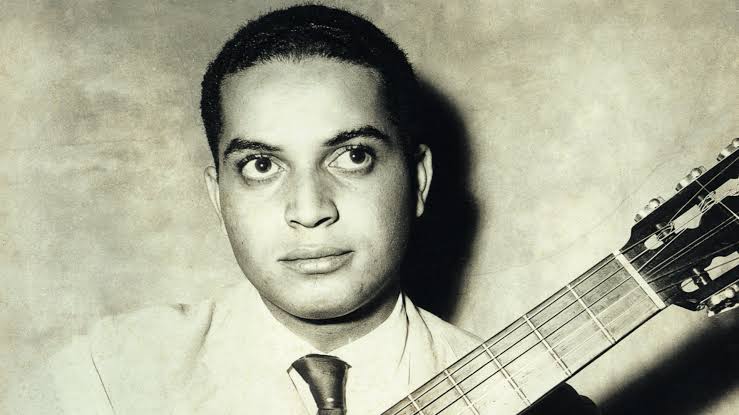
It was precisely within this climate of spiritual and acoustic reclamation, in the early months of 1966, that guitarist Baden Powell teamed up with poet and lyricist Vinicius de Moraes to forge a masterpiece. Titled Os Afro-Sambas de Baden e Vinícius, the album stood as an extraordinary, historic creative threshold. Backed by the haunting vocal arrangements of Quarteto em Cy and a raw, acoustic rhythm section, Baden Powell did not merely perform samba; he executed a fierce, polyphonic bridge between European classical discipline, modern jazz fluidity, and ancient African rhythms, establishing an untouched, reference-grade audiophile monument for string texture, percussive decay, and vocal layering.
The Concept of the Masterwork: The Violão de Terreiro and Syncopated Sorcery
The core conceptual architecture of Os Afro-Sambas represents a total subversion of standard jazz and bossa nova guitar styling. Baden Powell (born in Rio de Janeiro in 1937; died in 2000) possessed a unique technical background that fused rigorous classical conservatory training with deep, late-night explorations of Rio’s street samba circles. He invented an entirely new physical approach to the instrument known as the violão de terreiro (ritual guitar style).
Instead of treating the nylon-string classical guitar as a polite harmonic background voice, Baden attacked the strings with an aggressive, highly percussive right-hand technique, transforming the wooden body of the guitar into a drum.
The structural foundation of the arrangements utilizes polyrhythmic cross-string patterns and deep, modal vamps that mirror the call-and-response structures of Afro-Brazilian religious ceremonies.
By tuning his lower E-string down to D (dropped-D tuning) and using heavy, driving thumb accents, Baden created a dark, droning bass foundation. Over this hypnotic lattice, his fingers executed rapid, syncopated chord stabs and blinding classical runs that floated over the traditional percussion instruments like the atabaque (afro-brazilian drum), agogô (metal bells), and pandeiro. The album strips away all commercial pop polish, replacing it with a dense, mystical, and deeply cinematic atmosphere where the instruments operate as channels for ancient spiritual energy.
Buy Amazon

The Anatomy of the Soundstage: A Sensorial Excursion Through Razor-Sharp Nylon Plucks, Earthy Percussion, and Choral Horizons
To experience an original 1966 Forma monaural pressing—or a masterfully executed, modern AAA audiophile vinyl reissue cut directly from the original analog master tapes—is to witness an astonishing demonstration of mid-century transient authority, raw inner-detail transparency, and absolute acoustic presence. Roberto Quartin’s pristine engineering places Baden Powell’s guitar dead center at the front of the soundstage. Side A opens with the immortal, thunderous masterpiece “Canto de Ossanha”. The track materializes from a dark analog tape silence with Baden’s solo guitar intro, the microphone capturing the terrifying speed of his fingertips striking the nylon strings with such micro-dynamic realism that you can hear the physical slap of the flesh against the frets and the deep, hollow resonance of the guitar’s wooden soundboard.
Suddenly, the percussion erupts, and the physical realism of the soundstage is jaw-dropping. The atabaque hand drum sits slightly to the right-center pocket, its low-frequency leather impacts carrying an immense, tactile weight that never gets muddy or lost in the mix.
When the vocal ensemble Quarteto em Cy enters, their haunting, un-reverbed vocal harmonies spread across a wide, deep horizon, perfectly framing Baden’s intricate guitar lines.
As the record transitions into the melancholic beauty of “Canto de Xangô”, the acoustic separation reaches a true reference standard. Vinicius de Moraes’s deep, gravelly voice occupies a distinct spatial pocket, his whispered, poetic delivery captured with such stunning transparency that every breath and subtle vocal chord vibration is laid bare. The mix preserves the absolute purity of the analog signal chain, allowing the dense percussive metal shimmers of the agogô bells to decay naturally into the studio’s acoustic atmosphere without a hint of high-frequency glare, delivering a definitive masterclass in how vintage minimalist engineering can transform folk mysticism into pure audiophile fine art.
The Legacy and Modern Coordinates: The Immortal Vanguard of the Wooden Soul
The historical, critical, and cultural trajectory of Baden Powell’s Os Afro-Sambas stands today as an untouchable, globally canonized milestone that permanently transformed the DNA of Brazilian music and international acoustic jazz. The album single-handedly liberated samba from the limits of urban lounge music, directly inspiring the radical cultural explosions of the late-1960s Tropicália movement and laying the structural foundations for generations of adventurous guitarists worldwide, from Egberto Gismonti to modern acoustic avant-garde explorers. It proved that absolute technical mastery and raw, primal folk heritage could coexist in perfect artistic harmony.
Today, our coordinates look directly back to this 1966 Rio de Janeiro document as an essential, foundational textbook for the art of string dynamics, percussive realism, and cross-cultural polyphony. From contemporary acoustic ensembles who strive to balance heavy rhythmic drive with complex harmonic shifts to high-end audiophiles who use the demanding, hyper-fast transients of Baden’s heavy right-hand plucks to evaluate the micro-dynamic speed, transient recovery, and mid-range neutrality of premium reference phono cartridges and multi-way loudspeakers, everyone operates within the trade routes mapped out by the King of Nylon. Baden Powell carved a permanent, brilliantly glowing coordinate of dark wood, ancient steel, and pure syncopated gold on our map: an eternal vanguard outpost that stands as an immortal monument to the infinite triumph of the elegant musical soul.