
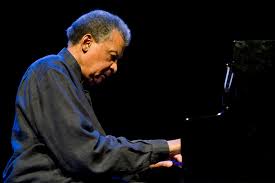
Cape Town, the Jazz Epistles and the Road to Exile
Before exile, before Duke Ellington, before Mannenberg and before the name Abdullah Ibrahim, there was Cape Town. The city was not simply the place where the pianist was born. It provided the musical environment from which almost everything that followed would grow. Adolph Johannes Brand, later known professionally as Dollar Brand and eventually as Abdullah Ibrahim, was born there on October 9, 1934, into a world in which musical traditions met despite a political system increasingly determined to keep people apart. His earliest memories included African songs, Christian hymns, gospel and spirituals heard through his family and church, while the streets and neighborhoods around him offered Cape Malay music, township dance rhythms and other forms of popular expression. American jazz arrived from another direction, carried through records and the cultural traffic of a major port city. Classical music belonged to the picture as well. These were not separate influences waiting to be combined later by an ambitious composer. They formed the everyday musical environment in which Ibrahim learned to hear.
His mother led a church choir, and his grandmother played piano for the local African Methodist Episcopal church. Ibrahim began piano lessons at seven and was performing professionally by fifteen. The church therefore gave him more than religious memory. It introduced an understanding of repetition, melody, communal singing and the relationship between music and collective experience that would remain present even when his compositions became unmistakably secular. Decades later, listeners would often describe his piano playing as spiritual, but the term can become vague if detached from this history. Ibrahim’s musical spirituality did not emerge from atmosphere alone. It had roots in specific sounds, places and practices remembered from childhood.
Cape Town also taught him that musical identity could be plural.
American jazz fascinated him, but it did not arrive in an empty landscape.
He heard it alongside music that already belonged to South African life.
That distinction would become crucial.
Becoming Dollar Brand
The nickname Dollar Brand became attached to the young pianist before Abdullah Ibrahim existed as a public identity. By his teenage years he was already working professionally, including appearances with groups such as the Tuxedo Slickers, while listening intensely to the modern jazz arriving from the United States.
Bebop offered a particularly powerful model.
For young musicians around the world in the 1940s and 1950s, Charlie Parker, Dizzy Gillespie, Thelonious Monk and their contemporaries demonstrated that jazz could be intellectually demanding, harmonically radical and fiercely individual. The music rewarded close listening and technical commitment. For South African musicians living under apartheid, however, modern jazz carried another implication. It belonged to an international Black modernity that contradicted the racial ideology surrounding them.
Ibrahim absorbed the language deeply.
The influence of Monk would remain especially important. Both pianists understood that an unusual interval, an unexpected silence or a deliberately placed dissonance could carry as much personality as technical abundance. Duke Ellington offered another model: a composer could build sophisticated music from the identities and histories of particular musicians rather than separate composition from lived culture.
Yet Ibrahim never became an imitation of either.
His growing language already contained too much Cape Town.
By 1958 he had formed the Dollar Brand Trio. The group participated in a South African jazz culture that was becoming increasingly ambitious despite the country’s political conditions. Musicians moved between Cape Town and Johannesburg, exchanged ideas, absorbed records and sought opportunities to perform modern jazz before audiences hungry for it.
Within that environment, a remarkable ensemble emerged.
The Jazz Epistles
The Jazz Epistles brought together some of the strongest young modern-jazz musicians in South Africa: Dollar Brand on piano, Kippie Moeketsi on alto saxophone, Hugh Masekela on trumpet, Jonas Gwangwa on trombone, Johnny Gertze on bass and Makaya Ntshoko on drums.
The significance of the lineup is easier to understand retrospectively because several members later became major figures individually.
At the time, however, they were musicians attempting something immediate.
They wanted to play modern jazz at the highest level available to them.
Their reference points included American bebop and hard bop, but the group was not simply a South African reproduction of the Jazz Messengers or another American ensemble. The musicians brought their own rhythmic and melodic experiences into the language. Their understanding of jazz had developed through South African dance music, township culture, records, jam sessions and direct collaboration with older local musicians.
Kippie Moeketsi was particularly important.
An alto saxophonist of extraordinary imagination, Moeketsi became one of the musicians through whom younger South African players encountered the sophistication of modern jazz. Formal institutions offered limited opportunities to Black musicians under apartheid, so knowledge frequently moved through informal networks instead.
Records became textbooks.
Jam sessions became classrooms.
Older musicians became teachers.
The Jazz Epistles emerged from that culture.
Jazz Epistle, Verse 1
In January 1960, the group entered the Gallo recording studio in Johannesburg.
The resulting Jazz Epistle, Verse 1 became a landmark: the first full-length modern jazz album recorded by a Black South African ensemble. Only around five hundred copies were originally pressed, a tiny number for a recording whose historical importance would become increasingly apparent decades later.
The scarcity should not obscure what mattered most.
The music was contemporary.
The Jazz Epistles were not presenting a folkloric version of South African music for international consumption. Nor were they performing a nostalgic form of swing. They were participating in the same modern-jazz conversation that musicians elsewhere were advancing through bebop, hard bop and increasingly open compositional structures.
That modernity was itself significant under apartheid.
The regime depended on racial categories that attempted to assign populations fixed identities, territories and cultural roles. Modern jazz behaved differently. It crossed boundaries. It created audiences whose musical interests did not fit comfortably within state definitions. Musicians listened internationally while developing local languages. Ensembles brought together people whose cultural lives were more complicated than apartheid ideology could tolerate.
The Jazz Epistles did not need to turn every composition into an explicit political statement for their existence to carry political implications.
Playing the music was already a form of cultural self-definition.
When the Scene Became Impossible
The political environment deteriorated dramatically in 1960.
On March 21, police opened fire on demonstrators at Sharpeville, killing sixty-nine people. The massacre was followed by a state of emergency, arrests, increased repression and the banning of political organizations including the African National Congress and Pan Africanist Congress.
The consequences extended into cultural life.
Jazz clubs faced pressure and closure. Mixed audiences and ensembles became increasingly difficult to sustain. Musicians were harassed. Opportunities narrowed.
The Jazz Epistles could not escape those conditions.
The group had existed only briefly, but the crackdown helped scatter the musicians. Some left South Africa through opportunities associated with the musical King Kong. Others eventually found different routes into exile.
For Ibrahim, the experience created a contradiction that would define much of his adult life.
South Africa was the source of his music.
It was becoming increasingly difficult for him to make that music there.
Exile would eventually provide professional freedom.
But exile would also intensify the importance of home.
That tension — distance producing stronger memory — became one of the central forces in his later compositions.
Sathima Bea Benjamin
Another relationship had already become essential.
In 1959, Ibrahim met vocalist Sathima Bea Benjamin.
Benjamin would become his wife, artistic partner and a decisive figure in the international direction of his career. Her importance should not be reduced to the familiar story in which she later introduced him to Duke Ellington.
She was a significant musician herself.
Benjamin had developed within the Cape Town jazz world, absorbing standards and the vocal tradition while creating an understated style quite different from the dramatic projection expected of many jazz singers. Her musical sensitivity complemented Ibrahim’s increasingly personal approach to piano.
Their relationship developed during a period when remaining in South Africa was becoming progressively more difficult.
By 1962, the choice could no longer be separated from politics.
Ibrahim and Benjamin left the country.
They did not leave as representatives of the Jazz Epistles, nor did the entire group depart together. The more precise history is important. Ibrahim and Benjamin traveled to Europe and established themselves in Zürich; bassist Johnny Gertze and drummer Makaya Ntshoko later joined them, allowing the Dollar Brand Trio to continue abroad.
The destination might seem unexpected.
Switzerland was far removed from Cape Town.
Yet Zürich would become the place where Ibrahim’s career changed permanently.
Club Africana
The Dollar Brand Trio secured an extended engagement at Club Africana in Zürich.
For an exiled musician, regular club work offered something more valuable than prestige: continuity.
Ibrahim could play night after night.
He could refine compositions, explore tempos, reconsider familiar material and learn how European audiences responded to a musical vocabulary formed thousands of miles away.
The trio format was ideal for this development.
With Johnny Gertze on bass and Makaya Ntshoko on drums, Ibrahim had musicians who shared important parts of his South African musical background. Their collective memory could travel with them.
This matters when listening to Ibrahim’s subsequent development.
Exile did not immediately make his music less South African.
In some ways it made the connection more deliberate.
Away from Cape Town, sounds associated with home could acquire different emotional weight. A melodic gesture was no longer simply part of the environment.
It could become memory.
That transformation would eventually become fundamental to Ibrahim’s mature work.
But in Zürich, another event came first.
Sathima Calls Duke Ellington
In February 1963, Duke Ellington was in Zürich during a European tour.
Sathima Bea Benjamin persuaded him to come to Club Africana and hear the trio.
The encounter has become one of the defining stories of Ibrahim’s biography, but its details matter because Benjamin was the catalyst. She recognized the opportunity and made the connection.
Ellington listened.
What followed was not simply praise from a famous visitor.
He helped arrange recording sessions in Paris.
The resulting album, Duke Ellington Presents the Dollar Brand Trio, introduced Ibrahim to a much wider international audience. A separate session involving Benjamin was also recorded, although that material would remain unreleased for decades before appearing as A Morning in Paris.
Ellington’s support opened doors.
But, as with other stories of artistic “discovery,” the language requires care.
He did not create Dollar Brand.
He encountered a pianist whose musical identity had already been formed through years of work in South Africa and sharpened through exile.
What Ellington provided was access to a network Ibrahim could not easily have reached alone.
The difference is important.
Ellington as More Than a Sponsor
Ibrahim’s admiration for Ellington went much deeper than professional gratitude.
Ellington represented a model of what a jazz composer could become.
His music demonstrated that sophistication did not require abandoning cultural specificity. Blues, dance music, individual instrumental personalities, orchestral color and compositional ambition could coexist.
For a South African pianist trying to understand how the sounds of Cape Town might inhabit modern jazz, this was a profound example.
Ellington’s career suggested that jazz composition did not have to erase where a musician came from in order to become universal.
Ibrahim would take that principle in a very different direction.
His mature music would be less orchestral in its fundamental conception and often radically economical. A short melodic figure could carry an entire composition. Repetition could become structural. A simple progression could accumulate meaning through duration rather than harmonic complexity.
But the belief that local experience could produce internationally significant art was something Ellington embodied powerfully.
The encounter in Zürich therefore mattered at more than one level.
It created opportunity.
It also confirmed a possibility.
Europe Opens
Following the Ellington connection, the Dollar Brand Trio began appearing more widely at European festivals and on radio and television.
The circumstances of exile were changing.
Ibrahim had left South Africa because the political environment increasingly obstructed musical life. Europe now offered audiences, recordings and professional mobility.
Yet the relationship between freedom and displacement remained complicated.
Success abroad did not eliminate the reason he had left.
The more international his career became, the more South Africa remained present as both source and absence.
This dynamic distinguishes Ibrahim from musicians whose international careers simply expanded outward from stable national scenes.
His mobility was partly forced.
Home was not merely where his music had started.
It was a place whose political system had made departure necessary.
That reality would eventually give compositions about South Africa an emotional force that cannot be explained by musical analysis alone.
Before that mature synthesis emerged, however, Ibrahim would encounter another musical world.
New York.
New York, 1965
In 1965, Ibrahim and Benjamin, now married, moved to New York.
The transition placed him inside the city whose records had shaped so much of his early musical imagination.
But the New York he encountered was not the jazz world of his childhood.
The music was changing rapidly.
John Coltrane was pushing improvisation toward increasingly open structures. Ornette Coleman had already challenged conventional harmony and form. Cecil Taylor was developing a radically physical approach to the piano. Archie Shepp connected the avant-garde with Black political consciousness. Don Cherry was exploring musical languages beyond conventional American jazz boundaries.
Ibrahim entered this environment with a perspective that was both connected to and separate from theirs.
He understood bebop.
He admired Ellington and Monk.
But he also carried musical memories none of these musicians possessed.
Cape Town remained inside the piano.
New York would help him discover what he could do with them.
Newport, Carnegie Hall and Elvin Jones
Ellington’s support continued to matter.
Ibrahim appeared at the Newport Jazz Festival and Carnegie Hall, important stages for a musician still establishing himself in the United States. In 1966, he was even asked to substitute for Ellington as leader of the Duke Ellington Orchestra for several performances.
The invitation was extraordinary.
Yet another experience may have been equally important for Ibrahim’s development: touring for approximately six months with Elvin Jones.
Jones represented a radically different rhythmic universe from Ellington.
His drumming with John Coltrane had helped redefine how rhythm could function in modern jazz. Rather than simply marking time, Jones created rolling layers of pulse and momentum capable of making meter feel simultaneously grounded and unstable.
For a pianist already interested in repetition and rhythmic movement, working alongside Jones offered another form of education.
Ibrahim was learning that intensity did not require harmonic density.
Rhythm itself could create architecture.
That insight would become increasingly important when he returned to South African musical sources.
Encountering the American Avant-Garde
New York also brought Ibrahim into contact with musicians associated with the emerging avant-garde, including Don Cherry, Ornette Coleman, Cecil Taylor, Archie Shepp and others.
This part of his biography is sometimes used to place him conveniently inside free jazz.
The relationship was more complicated.
Ibrahim was receptive to the avant-garde because it expanded possibilities. It demonstrated that inherited structures could be questioned and that improvisation could organize music in ways not dependent on conventional chord sequences.
But he never abandoned melody.
Nor did he abandon repetition, groove or the memory of popular South African music.
This would eventually separate his mature language from many American avant-garde approaches.
Freedom, for Ibrahim, did not require severing the relationship with communal musical memory.
A melody could be simple and still contain enormous depth.
A repeated figure could create freedom rather than restrict it.
The piano could become quieter instead of more aggressive.
These ideas were beginning to gather.
But they had not yet fully converged.
The Return
In 1967, Ibrahim received a Rockefeller Foundation grant that allowed him to study at the Juilliard School of Music.
On paper, the trajectory looked increasingly successful.
The South African exile had reached New York, performed at Newport and Carnegie Hall, worked with Ellington and Elvin Jones, encountered some of the most adventurous improvisers in American jazz and gained access to one of the country’s leading musical institutions.
Yet professional advancement did not resolve the deeper questions that exile had intensified.
Who was Dollar Brand away from South Africa?
What did the piano mean after bebop, Ellington, Monk and the avant-garde?
How could the music of Cape Town enter modern jazz without becoming either nostalgia or folklore?
And what kind of spiritual center could sustain a life increasingly divided between countries and identities?
In 1968, Ibrahim returned to Cape Town.
The return would become a turning point.
He converted to Islam and adopted the name Abdullah Ibrahim. Two years later, he would make the pilgrimage to Mecca.
The musician who came back to South Africa was not simply the Dollar Brand who had left six years earlier.
Europe had changed him.
New York had changed him.
Ellington had changed the scale of his career.
The avant-garde had expanded his understanding of freedom.
Exile had changed his understanding of home.
Now those experiences would begin to converge with something that had been present since childhood: the sounds of Cape Town.
The next phase would produce a different kind of piano language — increasingly spacious, repetitive and rooted in memory.
And within a few years, that language would produce one of the most important compositions in South African jazz history.
Mannenberg.
Buy Amazon
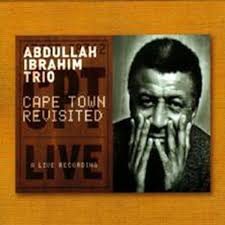
African Piano, Mannenberg and the Sound of Home
When Dollar Brand returned to Cape Town in 1968, the distance he had traveled could not be measured only in geography. He had left South Africa six years earlier as an ambitious modern-jazz pianist whose language had been shaped by bebop, Thelonious Monk, Duke Ellington and the extraordinary musical mixture of Cape Town. Europe had brought professional visibility. New York had placed him among musicians pushing jazz toward new forms of freedom. He had performed at Newport and Carnegie Hall, worked with Elvin Jones, encountered Ornette Coleman, Don Cherry, Cecil Taylor, Archie Shepp and other figures associated with the changing American avant-garde, and entered an international career that would have seemed improbable when he was playing South African dance bands as a teenager. Yet professional success had not resolved the deeper instability produced by exile. His return coincided with a spiritual transformation. He converted to Islam, adopted the name Abdullah Ibrahim and, in 1970, made the pilgrimage to Mecca. The change did not instantly produce a new musical style, but it gave another center to a language that was already moving away from the need to demonstrate modern-jazz sophistication through complexity alone.
This is where the familiar description of Ibrahim as a “spiritual pianist” requires precision. His music did become increasingly contemplative, and his religious life clearly mattered. But the character of his mature piano language cannot be explained by conversion alone. The quieter, more repetitive and spacious qualities that emerged around this period were connected equally to memory, African musical structures, church experience, Ellington, Monk, exile and an increasingly confident willingness to let a small melodic idea carry substantial emotional weight. Ibrahim was learning that reduction could be a form of expansion. A repeated bass figure could create a landscape. A melody could return several times without becoming static. Silence could define the shape of a phrase because the surrounding material had been made strong enough not to require constant elaboration. The virtuosity was still there, but virtuosity was becoming less important than concentration.
The Piano Alone
Solo performance became one of the clearest environments in which this transformation could be heard.
The piano offered Ibrahim something an ensemble could not: complete responsibility for musical time. Without bass and drums, he had to decide not only what to play but how long an idea could survive before it needed to change. Harmony, rhythm, melody and silence became parts of a single continuum.
His solo performances increasingly behaved less like sequences of discrete compositions than extended narratives.
Themes appeared.
They disappeared.
Fragments returned.
A vamp could remain in place until tiny changes in accent or register altered its emotional character. A hymn-like passage might lead toward something rooted in township dance music before opening into freer improvisation.
This way of constructing a performance was already evident around the turn of the 1970s.
Recordings such as African Sketchbook showed a musician becoming more comfortable with tenderness and repetition, while African Piano captured another crucial stage in the development of his solo language. The latter, recorded as a continuous live performance, presented Ibrahim without the protective architecture of an ensemble. The listener could hear the process itself: themes being assembled, interrupted and transformed through recurring figures.
The word “African” in these titles was significant.
It did not indicate a retreat from jazz.
Ibrahim was beginning to reject the assumption that modernity required moving permanently away from local musical memory.
Africa could be the source of modern composition.
Don Cherry and Looking Backward to Move Forward
Don Cherry became particularly important in this process.
Ibrahim later credited Cherry with encouraging him to return more deliberately to African folk sources. The suggestion arrived from a musician who had himself moved beyond conventional definitions of American jazz and was increasingly interested in musical traditions from around the world.
The advice did not mean Ibrahim had forgotten South Africa.
He had never stopped carrying Cape Town with him.
What changed was the confidence with which those memories could move toward the foreground.
This was a larger question facing many musicians from countries outside the United States. Jazz had provided a powerful international language, but mastering that language could create another problem: once a musician could play modern American jazz convincingly, what came next?
Imitation offered diminishing returns.
Ibrahim’s answer was not rejection.
He retained Ellington.
He retained Monk.
He retained bebop, blues and the freedom he had encountered in New York.
But those elements increasingly existed beside marabi, church music, Cape dance traditions and melodies that seemed to emerge from memories of home.
The synthesis became less self-conscious as it deepened.
Eventually, it no longer sounded like a mixture of influences.
It sounded like Abdullah Ibrahim.
Swaziland and the Return South
After his conversion and pilgrimage, Ibrahim spent part of the early 1970s based in Swaziland, where he established a music school. The decision suggests how strongly his priorities were expanding beyond the conventional international career of a touring jazz musician.
Education, spiritual discipline and African cultural continuity had become part of the same search.
In 1973, Ibrahim and his family returned to Cape Town.
The political reality had not improved. Apartheid remained firmly entrenched, and the structural violence that had helped drive him into exile continued shaping daily life.
Yet musically the return was crucial.
Cape Town was no longer merely the place remembered from Europe or New York.
Ibrahim could hear the city again.
He could work with younger musicians.
He could encounter the musical culture that had continued developing during his absence.
And he could test what years abroad had changed in his own understanding of it.
The result was not nostalgia.
It was recognition.
A Session in Cape Town
In June 1974, Ibrahim entered a Cape Town studio for a recording session produced by Rashid Vally.
Vally was a record-shop owner and independent producer whose relationship with Ibrahim would become important in documenting South African work during this period. The session brought Ibrahim together with musicians including tenor saxophonist Basil Coetzee and alto saxophonist Robbie Jansen.
They were younger than Ibrahim and had grown up inside a changing South African popular-music environment.
This difference in generations helped create the conditions for what followed.
Ibrahim was increasingly interested in returning to traditional African and Cape musical sources.
The younger musicians were listening to American soul, funk and contemporary popular music alongside local styles.
These were not contradictory directions.
Cape Town had always been a place of musical crossings.
The session simply brought another generation of them into the room.
The musicians recorded material Ibrahim had prepared.
Then they took a break.
What happened afterward became one of the foundational stories of South African jazz.
The Upright Piano
Ibrahim noticed an upright piano in the studio.
Unlike the grand piano he had been using, it possessed a metallic quality associated with a practice familiar from township instruments: thumbtacks placed against or in the piano hammers could alter the attack, creating a brighter, more percussive sound.
He sat down.
A figure appeared.
The melody was simple enough to remember almost immediately.
Ibrahim called the musicians back.
They began playing.
There was no elaborate written arrangement waiting on music stands. The musicians found the piece together, allowing the repeated harmonic and rhythmic structure to establish itself while the horns entered the developing landscape.
The performance continued for roughly seventeen minutes.
The engineer kept the tape running.
When they listened back, something was different.
Ibrahim later described the realization in remarkably straightforward terms: they had captured the music they wanted to play — traditional music.
That statement reveals more about Mannenberg than descriptions of it as a political anthem alone.
The breakthrough was musical before it was political.
The musicians had heard themselves.
Why the Groove Mattered
The power of Mannenberg begins with accessibility.
Its central material does not require specialist knowledge of jazz harmony to understand. The groove settles quickly. The melody is direct. Repetition gives the listener time to enter the music rather than demanding constant adjustment to new information.
But simplicity is not the same as thinness.
The repeated structure creates space for personality.
Ibrahim’s piano establishes the environment, but the horns transform it into something communal. Basil Coetzee’s tenor saxophone becomes particularly important. His improvisation carries warmth, momentum and an unmistakably vocal quality, extending the composition without destroying its accessibility.
Robbie Jansen contributes another connection to Cape Town’s horn traditions.
The rhythm section keeps the piece moving without turning it into a display of complexity.
Everything serves the larger flow.
This is one reason the recording could communicate far beyond a conventional jazz audience.
A listener did not need to understand the harmonic history of bebop or the formal experiments of the avant-garde.
The music invited participation.
Its sophistication existed inside the groove rather than above it.
Marabi, Church and Cape Town
The musical roots of Mannenberg have often been associated with marabi, the South African keyboard-based dance tradition whose repetitive harmonic cycles helped shape later township jazz.
The connection is important.
Marabi depended on repetition, dance and communal participation. Its musical effectiveness came partly from sustaining a rhythmic and harmonic environment long enough for social energy to accumulate.
Ibrahim understood this instinctively.
He had heard related musical languages since childhood.
Church harmony provided another layer. So did the melodic character of Cape music and the phrasing of musicians who had developed in local dance bands.
None of these sources appears as a museum exhibit inside Mannenberg.
That is precisely why the recording works.
Ibrahim was not quoting tradition in order to prove authenticity.
The tradition had become part of his musical grammar.
American jazz remained present as well.
The saxophone improvisations belong to jazz. Ibrahim’s understanding of ensemble interaction belongs to jazz. His experiences with Ellington, Monk and the American avant-garde had not vanished.
But the center of gravity had moved.
Cape Town no longer appeared inside an American jazz framework.
Jazz had become one of the languages through which Cape Town could speak.
“Mannenberg — Is Where It’s Happening”
The title attached the music to a specific place.
Manenberg was a township on the Cape Flats, created within the brutal geography produced by apartheid’s forced-removal policies. Communities classified by the state were displaced and reorganized according to racial categories, severing neighborhoods and social networks that had developed over generations.
Naming a composition after such a place inevitably carried meaning.
But Ibrahim repeatedly resisted the claim that he had deliberately written a protest anthem.
The distinction is essential.
Mannenberg did not begin with a political slogan and then acquire music.
The music came first.
Its political meaning emerged through reception.
People heard themselves inside it.
That difference makes the story more powerful rather than less.
A government can prohibit an organization.
It can censor explicit statements.
It has far more difficulty controlling the meaning a community assigns to a melody.
Rashid Vally and the Record Shop
Initially, major record companies were not interested.
Ibrahim later remembered taking the recording around and receiving little enthusiasm.
Rashid Vally possessed something more useful than corporate confidence: direct access to listeners.
His record shop in Johannesburg was situated near a busy transport hub. The recording could be played through speakers where ordinary people passing through the area would hear it.
They responded.
Copies began selling rapidly.
Ibrahim later recalled sales reaching approximately twenty thousand, an extraordinary result for this kind of South African jazz recording.
The process matters almost as much as the number.
Mannenberg did not become important because a critic announced its significance.
It moved through public space.
People heard it.
They bought it.
They played it elsewhere.
The music circulated through communities that recognized something familiar in its sound.
This was cultural transmission from below.
When Listeners Change a Composition
Once a piece leaves the studio, the composer loses control over what it means.
Mannenberg demonstrates this vividly.
The recording circulated during a period of intensifying resistance to apartheid. Its melodic directness and rolling groove made it suitable for communal identification. Over time it became associated with political gatherings, protest and the emotional life of resistance.
The people transformed it into an anthem.
Ibrahim acknowledged this distinction throughout his life.
He had not entered the studio intending to manufacture a liberation song.
The community decided what the music represented.
This prevents us from reducing the composition to propaganda.
A protest song written for a particular campaign may lose part of its meaning when the political moment passes.
Mannenberg survived because its emotional world was larger.
There is joy in it.
There is memory.
There is movement.
There is an affirmation of communal life under conditions designed to fragment that life.
Resistance became one of its meanings because those qualities were already present.
Basil “Mannenberg” Coetzee
The recording also transformed Basil Coetzee’s career.
His tenor solo became so closely associated with the piece that he acquired the nickname “Mannenberg.”
That detail captures something essential about Ibrahim’s compositional method.
The composition may have begun at the piano, but its identity depended on other musicians.
This was an Ellingtonian principle translated into another setting.
Ellington had written with particular instrumental personalities in mind. Ibrahim similarly understood that a melody could become inseparable from the person who played it.
Coetzee did not merely execute a written part.
He became one of the voices through which Mannenberg acquired its public identity.
The same principle would later become fundamental to Ibrahim’s ensembles.
His compositions often sound deceptively simple on paper.
Their depth emerges when particular musicians inhabit them.
Beyond Mannenberg
The enormous historical weight eventually attached to Mannenberg can distort Ibrahim’s development if everything around it is treated as preparation or aftermath.
He was producing a much broader body of music during these years.
Solo performances allowed him to explore long-form narrative and meditative concentration. Ensemble recordings demonstrated how South African melodic material could interact with freer improvisation. Pieces such as “The Mountain,” “African Marketplace,” “Soweto,” “Jabulani” and others would eventually create a repertoire in which places, people and memories became recurring compositional subjects.
The names themselves mattered.
Ibrahim’s music increasingly mapped a world.
Cape Town.
Soweto.
African rivers, landscapes, communities and spiritual ideas.
This was not nationalism in a narrow sense.
Exile had taught him that identity could survive movement.
The geography in the titles functioned as memory and orientation.
A musician could be thousands of miles from South Africa and still construct a musical place.
1976
The political crisis intensified again in 1976.
On June 16, school students in Soweto protested against the compulsory use of Afrikaans as a language of instruction. Police opened fire. The uprising spread, and the apartheid state responded with further violence and repression.
For Ibrahim, the events reinforced the impossibility of separating musical life from the political conditions surrounding it.
His official biography records that after the uprising he organized an illegal benefit concert for the African National Congress.
Remaining in South Africa became increasingly dangerous.
Once again, he and his family left.
They returned to the United States and settled in New York.
The cycle was painful.
South Africa had provided the musical renewal that produced Mannenberg.
Now political repression forced another departure.
But the second exile would be different from the first.
When Dollar Brand left in 1962, he was a young modern-jazz musician searching for a viable international career.
When Abdullah Ibrahim left after 1976, he carried a musical language that no longer needed external definition.
He knew what home sounded like.
Taking Cape Town to New York
The importance of this realization would become clear during the next decade.
Ibrahim’s New York ensembles would increasingly be built around compositions rooted in South African memory. American musicians would enter that language rather than requiring Ibrahim to adapt himself entirely to theirs.
This reversal was significant.
The young Dollar Brand had once traveled outward to learn from international jazz.
The mature Abdullah Ibrahim could now bring a developed South African compositional world into New York and invite international musicians inside it.
The process would culminate in Ekaya.
The name means “home.”
It was difficult to imagine a more appropriate word for a musician whose life had been shaped by repeated departure.
Home was no longer merely a physical location.
It could be carried in melody.
It could exist in the voicing of horns.
It could emerge from a repeated piano figure.
It could survive exile.
Mannenberg had demonstrated this more powerfully than Ibrahim could have planned.
A melody found during a recording session had traveled into streets, homes and political gatherings until listeners transformed it into collective memory.
That achievement changed the scale of his music.
He would spend the following decades expanding the idea — through Ekaya, orchestral writing, solo piano and eventually a return to a South Africa that apartheid could no longer control.
But the essential discovery had already happened.
Abdullah Ibrahim had learned that the sound of home did not have to be reconstructed from nostalgia.
It could remain alive enough to move people in the present.
Ekaya, Mandela and the Long Return Home
When Abdullah Ibrahim returned to New York after the Soweto uprising of 1976, exile no longer meant what it had meant fourteen years earlier. In 1962, leaving South Africa had been an escape from a political system that was making sustained artistic life increasingly difficult, and Europe had offered the young Dollar Brand the possibility of becoming an international musician. By the time he left again in the second half of the 1970s, he had already discovered the musical language that would define the rest of his career. Mannenberg had demonstrated that a composition rooted in Cape Town could speak with extraordinary force to South African listeners without sacrificing the openness of jazz. Solo performances had taught him how much could be expressed through repetition, space and melodic economy. His encounters with Duke Ellington and the American avant-garde had become part of his vocabulary rather than external influences to be negotiated. The question was no longer whether a South African pianist could enter international jazz. Ibrahim had already done that. The deeper challenge was how to carry South Africa with him while living thousands of miles away.
New York became the place where he developed an answer.
Ibrahim and Sathima Bea Benjamin established the Ekapa record label in 1981, taking greater control over the documentation and direction of their work. The decision was consistent with a career repeatedly shaped by institutions that could offer opportunity but could never completely define what the music meant. Ibrahim had experienced major European and American recording environments, but independence allowed another relationship with repertoire, musicians and artistic scale. During the same period, his interests expanded beyond the conventional jazz album. He composed for theater, ballet and other forms, including Garth Fagan’s Prelude and the Kalahari Liberation Opera. The widening of his work did not dilute the musical language developed during the previous decade. It demonstrated how portable that language had become.
Cape Town could exist inside a dance work.
It could exist inside a solo piano concert.
It could exist inside a New York jazz ensemble.
And in 1983, Ibrahim gave that ensemble a name that summarized much of his life.
Ekaya.
Home.
Building Home in New York
Ekaya was a septet rather than a conventional piano trio, and its instrumentation allowed Ibrahim to think orchestrally without requiring a large ensemble. The group changed personnel over the years, but its characteristic sound grew from the relationship between piano, rhythm section and multiple horns. Musicians including Carlos Ward, Ricky Ford, Charles Davis, Dick Griffin and others became part of its history.
Ibrahim’s role inside the ensemble was distinctive.
He was unquestionably the composer and conceptual center, but his music did not require him to dominate every performance as a piano soloist. The lesson he had absorbed from Ellington remained fundamental: write with the musicians in mind and allow their individual voices to become part of the composition.
Ibrahim could introduce a theme and then withdraw.
The horns could carry the emotional center.
A bass line could establish the character of an entire passage.
The ensemble could move from hymn-like stillness toward the rolling momentum associated with South African dance music without treating those states as opposites.
This made Ekaya sound simultaneously composed and communal.
The arrangements could be precise, yet the music rarely felt overdetermined. Ibrahim understood that a memorable melodic line did not need constant harmonic development. Sometimes the strongest arrangement was one that allowed a melody to return until the listener understood it physically rather than analytically.
The approach was especially effective because his melodies had become increasingly concentrated.
They could survive repetition.
They could survive reinterpretation.
They could survive distance from South Africa.
Water from an Ancient Well
Among the recordings associated with this mature period, Water from an Ancient Well became one of the clearest summaries of Ibrahim’s musical world.
Recorded with Ekaya during the 1980s, the album gathered compositions that connected personal memory, South African geography and the language the ensemble had developed in New York. Its significance lies less in stylistic innovation than in consolidation. By this stage Ibrahim no longer sounded like a musician trying to reconcile influences.
The reconciliation had already happened.
Pieces could carry echoes of church music, township jazz, Ellington, Monk and South African dance traditions without announcing where one source ended and another began.
“The Mountain” is particularly revealing.
Its melody has the quality of something remembered rather than constructed. Ibrahim does not need elaborate development to establish its emotional weight. The piece unfolds patiently, allowing repetition and ensemble color to deepen what initially appears simple.
That apparent simplicity became one of Ibrahim’s greatest strengths.
A musician with less confidence might have filled the spaces.
Ibrahim increasingly trusted them.
The title Water from an Ancient Well offers an appropriate metaphor for this stage of his career. The music drew from sources older than the individual recording session: childhood memory, communal traditions, religious experience, jazz history and the landscapes of a country from which he had repeatedly been separated.
The well was old.
The music coming from it remained contemporary.
Ekaya Was Not Nostalgia
It would be easy to hear the South African references in Ekaya as expressions of homesickness.
Exile was certainly part of their emotional context.
But nostalgia is too passive a word.
Ibrahim was not attempting to recreate an unchanged Cape Town from his youth. The South Africa he remembered had already been transformed by forced removals, apartheid, resistance and the experiences of people who remained there while he lived abroad.
His own identity had changed as well.
He was now a Muslim, an international composer, a New Yorker and a musician who had spent years interacting with American improvisers.
Ekaya therefore constructed an imagined home rather than reproducing a lost one.
This distinction gave the ensemble unusual depth.
The music could contain longing without pretending that return would restore the past.
That insight would become painfully relevant when return finally became possible.
Beyond the Jazz Club
During the 1980s Ibrahim’s compositional reach continued to widen.
Film became particularly important. He wrote music for Claire Denis’s Chocolat, released in 1988, and subsequently contributed to No Fear, No Die. He also composed for Idrissa Ouédraogo’s Tilaï.
Cinema offered another environment in which Ibrahim’s economy could be effective.
Film music does not always benefit from constant assertion. A composer must understand when sound should enter, when it should disappear and how little information may be required to change the emotional meaning of an image.
Those demands suited Ibrahim’s mature language.
The pianist who had learned to trust silence in solo performance could use the same restraint dramatically.
His involvement in ballet, opera and film also demonstrates why reducing him to “the composer of Mannenberg” would be misleading. That composition remained historically central, but Ibrahim’s career was expanding across forms.
The underlying vocabulary remained recognizable.
The applications multiplied.
Mandela
In February 1990, Nelson Mandela walked out of Victor Verster Prison after twenty-seven years of imprisonment.
For South African exiles, the event altered the emotional geography of home almost immediately.
The apartheid system had not yet disappeared, and the transition ahead would be difficult, but the possibility of a fundamentally different country had become real.
Mandela invited Ibrahim to return.
The invitation carried extraordinary symbolism.
For decades, Ibrahim had written music in which South Africa remained present despite physical separation. Now one of the central figures of the liberation struggle was asking him to come back to a country beginning the process of dismantling apartheid.
Return, however, was not emotionally simple.
A person can spend years imagining home and still discover that returning to it produces disorientation.
Ibrahim confronted exactly that problem.
Mantra Modes and the Difficulty of Return
The music surrounding this period reflected the complexity.
Mantra Modes, released in the early 1990s, included work with South African musicians again after a long absence. Knysna Blue followed as another important statement from the period.
These recordings should not be heard merely as celebrations of political change.
Return required Ibrahim to negotiate memory against reality.
Places associated with fear did not immediately become psychologically neutral because the political system was changing. Habits produced under apartheid survived inside the people who had endured it.
Ibrahim later described this process with striking clarity when discussing Pretoria. Under apartheid, entering parts of the city as a Black South African had carried the possibility of arrest. Political liberation did not instantly erase that physical memory.
The body remembered what the law had once enforced.
This gives Ibrahim’s post-apartheid music a complexity that celebratory narratives can miss.
Freedom had arrived politically.
Learning how to inhabit it was another process.
Pretoria, 1994
On May 10, 1994, Nelson Mandela was inaugurated as president of South Africa at the Union Buildings in Pretoria.
Abdullah Ibrahim performed at the inauguration.
The symbolism was immense.
A musician whose career had been repeatedly disrupted by apartheid was now playing at the installation of South Africa’s first democratically elected Black president, in a city whose racial geography had once represented the power of the state that excluded him.
Yet Ibrahim’s own recollections complicate any temptation to turn the moment into a perfectly resolved ending.
He remembered still feeling fear in Pretoria.
The old psychological boundaries remained.
This makes the performance more meaningful, not less.
History had changed faster than memory.
Ibrahim was standing inside the new South Africa while still carrying the emotional consequences of the old one.
Music occupied the space between them.
“Our Mozart”
Mandela reportedly referred to Ibrahim as “our Mozart.”
The phrase has often been repeated because it captures the extraordinary esteem in which the pianist was held.
But Ibrahim’s significance to South African culture cannot really be explained through comparison with a European composer.
His achievement was specifically his own.
He had demonstrated that South African musical experience could generate a sophisticated compositional language without needing to disguise its origins. He had also shown that cultural specificity and internationalism were not opposites.
Cape Town had made him more, not less, capable of speaking internationally.
That lesson mattered to generations of musicians who followed.
South African jazz did not need to become less South African in order to participate fully in jazz history.
The Orchestra Inside the Piano
As Ibrahim grew older, another aspect of his work became increasingly visible: the relationship between his piano writing and orchestral thinking.
Even when playing alone, he often seemed to hear beyond the physical instrument.
Low-register figures could suggest bass movement.
Middle-register chords could function like ensemble voicings.
Melodies might appear in the upper register with the clarity of a horn line.
The piano became a compressed orchestra.
This made larger-scale projects a natural extension rather than a departure.
Ibrahim worked with orchestras and big bands while continuing to perform solo and with small ensembles. The different formats revealed different dimensions of the same compositional world.
In a large ensemble, the harmonies could bloom outward.
With Ekaya, individual horn personalities could shape the music.
Alone at the piano, everything returned to its skeleton.
Melody.
Pulse.
Space.
Memory.
The ability to move among those scales without losing identity is one reason Ibrahim’s late career remained so compelling.
The Discipline of Less
Age also seemed to intensify his preference for economy.
Where some veteran musicians compensate for diminishing physical power by surrounding themselves with increasingly elaborate arrangements, Ibrahim often moved in the opposite direction.
He trusted fewer notes.
This was not technical decline disguised as minimalism.
The principle had been developing for decades.
Ibrahim understood that a melody becomes stronger when every note appears necessary. He understood that repetition can change meaning depending on touch, register and duration. He understood that silence does not interrupt music when silence has been incorporated into its structure.
His performances could therefore acquire an almost ceremonial concentration.
Yet “meditative” is only part of the picture.
The rhythmic memory of Cape Town never disappeared.
Even in quiet music, there could be dance beneath the surface.
The pulse might be implied rather than stated.
But it remained alive.
A Musician Who Kept Returning
Ibrahim continued traveling between continents rather than settling permanently into the symbolic role of a musician who had finally “come home.”
That mobility suited him.
Home had become plural.
Cape Town remained foundational.
New York had shaped decades of his artistic life.
Europe had provided audiences, collaborators and recording opportunities from the beginning of his exile onward.
He could belong to all of these places without reducing his identity to any one of them.
The later career therefore became less a story of exile followed by return than one of circulation.
This distinction matters because Ibrahim’s music had long challenged the idea that cultural authenticity depends on remaining geographically fixed.
His South African identity survived precisely because it could travel.
Recognition
Institutional recognition accumulated around him.
Honorary doctorates, national and international awards and major festival appearances increasingly acknowledged what musicians and listeners had understood for decades.
In 2019, the United States National Endowment for the Arts named Abdullah Ibrahim an NEA Jazz Master, one of the country’s highest honors for jazz musicians.
The award carried a particular historical resonance.
The teenager who had learned American jazz through records in segregated South Africa had eventually become part of the history recognized by one of America’s central jazz institutions.
Again, however, the story should not be framed as validation arriving from the center.
Ibrahim had already changed the map.
His career demonstrated that jazz history did not belong exclusively to the United States and then spread outward in diluted forms.
The language could travel to Cape Town, change there, return to New York and alter the musicians who encountered it.
Jazz moved in circles.
The Balance
His later recordings continued this conversation.
The Balance, recorded with Ekaya and released late in his career, demonstrated that the ensemble concept remained viable decades after its formation. Ibrahim did not need to reconstruct the sound of the 1980s in order to preserve the group’s identity.
The essential principles were still there.
Strong melodies.
Patient development.
Space for individual musicians.
South African rhythmic memory.
A refusal to separate composition from the personalities of the people playing it.
The music sounded mature because it did not need to announce its maturity.
Nothing was being proved.
The musicians simply inhabited the material.
That quality increasingly defined Ibrahim’s final period.
The Final Years
Ibrahim continued performing into his nineties.
The longevity was remarkable, but treating it merely as a feat of endurance misses what made the final performances meaningful. His entire musical language had prepared him for age.
Because it depended less on speed than concentration, less on density than touch and less on virtuoso display than the placement of ideas, the music could deepen as physical circumstances changed.
The older Ibrahim did not need to compete with the young Dollar Brand.
He had moved beyond that question decades earlier.
His late performances could feel like compressed versions of the journey itself. A few chords might carry church memory. A melody could suggest Cape Town. A brief rhythmic figure might open toward marabi. Ellington and Monk remained somewhere in the background without requiring quotation.
History had become touch.
June 2026
Abdullah Ibrahim died on June 15, 2026, at the age of ninety-one, following a brief illness.
He died in Germany, surrounded by loved ones.
The geography is fitting in an unintended way.
A musician born in Cape Town, repeatedly forced into exile, established internationally through Europe and New York and eventually welcomed back into democratic South Africa ended his life outside the country whose memory had animated so much of his music.
But by then the old distinction between home and exile had lost much of its power.
Ibrahim had spent decades demonstrating that home could be carried.
His music had done exactly that.
Beyond Mannenberg
Mannenberg will inevitably remain the composition most closely associated with Abdullah Ibrahim.
It deserves that place.
Few jazz recordings become so deeply integrated into the political and emotional history of a country.
But Ibrahim’s legacy is larger than one anthem.
He helped establish modern South African jazz before exile through the Jazz Epistles. He carried that experience into Europe and America. He learned from Duke Ellington without becoming an Ellington imitator. He engaged with the American avant-garde without abandoning melody. He developed a solo-piano language in which repetition and silence could become structural forces. He built Ekaya around the idea that composition could emerge through the personalities of particular musicians. He wrote for film, ballet, orchestras and small ensembles. And he continued refining those ideas for more than seven decades.
The continuity is extraordinary.
The young Dollar Brand and the elderly Abdullah Ibrahim can sound very different.
They are nevertheless connected by the same fundamental question:
How can a musician absorb the world without losing home?
The Sound of Home
Ibrahim’s answer was never theoretical.
It was musical.
Home could be a hymn remembered from childhood.
It could be the rhythmic cycle of marabi.
It could be a melody named after a township created by apartheid.
It could be an ensemble formed in New York and called Ekaya.
It could be a piano played alone in a European concert hall.
It could even be the fear remembered while standing in Pretoria on the day Nelson Mandela became president.
Home was not sentimental certainty.
It was memory transformed into sound.
This is why Abdullah Ibrahim occupies such an unusual place in jazz history.
He belongs to South African history, but his importance cannot be confined there. He belongs to the history of jazz piano, but his language cannot be understood only through other pianists. He belongs to the story of exile and resistance, but politics alone cannot explain the tenderness, humor, dance and spiritual concentration in his music.
The categories overlap.
Ibrahim lived between them.
What remained constant was his ability to take enormous histories — apartheid, migration, religion, jazz, African tradition, personal memory — and compress them into musical gestures that could sound almost inevitable.
Sometimes only a few notes were required.
Sometimes a groove lasted long enough for an entire community to recognize itself inside it.
Sometimes silence carried the rest.
When Abdullah Ibrahim died in 2026, jazz lost one of its longest and most distinctive musical lives. But the geography he created remains intact.
Cape Town.
Zürich.
New York.
Mannenberg.
Ekaya.
Pretoria.
The piano connected them all.
And after more than seventy years of music, Abdullah Ibrahim’s most enduring achievement may have been remarkably simple: wherever exile carried him, he found a way to make home audible.