
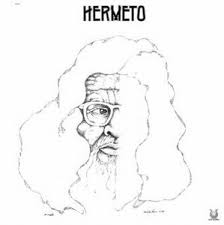
Where to Start with Hermeto Pascoal: An Essential Album Guide
For listeners encountering Hermeto Pascoal for the first time, the difficulty is not finding interesting music. It is deciding where to begin. His discography stretches across decades and refuses the usual boundaries separating jazz, Brazilian regional traditions, composition, improvisation and experimental music. Piano, accordion, flute and saxophone can appear beside whistles, voices, water, animal sounds and objects that most musicians would never consider instruments. A piece may begin with the rhythmic familiarity of baião or choro and suddenly open into dense counterpoint, collective improvisation or an unexpected sonic event. Yet describing Hermeto simply as an avant-garde eccentric misses the essential quality of his work. Experimentation, for him, is rarely an escape from Brazilian musical tradition. It is a way of discovering how much that tradition can contain.
This is why a guide to Hermeto Pascoal should not attempt to identify a single “definitive” record. Different albums reveal different dimensions of the same imagination. Some emphasize the extraordinary ensembles he built around his compositions; others capture the moment when his music reached international jazz audiences or show how naturally regional Brazilian rhythms could coexist with harmonic and structural complexity. The following albums provide a practical route through that world—not a ranking, but a journey from the most accessible entrances toward increasingly expansive forms of what Hermeto calls Música Universal.
Before the Albums: What Is Música Universal?
The phrase Música Universal is fundamental to understanding Hermeto because conventional genre labels quickly become inadequate. He emerged from northeastern Brazil, absorbed forró, baião and other regional traditions, worked in choro and popular music, participated in the innovative Quarteto Novo, encountered modern jazz and eventually developed a musical language in which all of these experiences could interact. What makes the result unusual is that Hermeto does not treat these traditions as ingredients in a calculated fusion. He appears to hear them as parts of the same available musical world.
His curiosity extends beyond recognized musical traditions. Speech contains melody. Animals produce pitches and rhythms. Water changes resonance according to the vessel containing it. Everyday objects can contribute timbre. An unexpected noise does not necessarily interrupt music; under the right circumstances, it can become music.
The sophistication of Hermeto’s compositions makes this philosophy possible. Beneath the apparent freedom are demanding harmonic structures, rhythmic changes and ensemble writing. The strange sounds attract attention, but the discipline holding them together is equally important.
For that reason, the best introduction to Hermeto is not to search immediately for his most bizarre recording. It is to hear how freedom and structure continually coexist.
Start Here: Slaves Mass (1977)
For many listeners outside Brazil, Slaves Mass remains one of the most effective entrances into Hermeto’s world. Recorded in Los Angeles and released by Warner Bros., the album places his compositional personality within an international jazz context and includes musicians such as Airto Moreira, Flora Purim and Alphonso Johnson. It is adventurous without requiring the listener to understand the full history of Brazilian regional music before entering.
The title composition became famous partly because Hermeto incorporated the vocalizations of pigs into the recording. That detail is often repeated because it perfectly fits the mythology surrounding him: the musician who can turn practically anything into an instrument. But the animals are more interesting when understood within his broader philosophy. Hermeto does not insert them merely for shock. Their sounds become material inside an organized musical environment, challenging the assumption that the boundary between composition and the surrounding world is fixed.
Elsewhere, Slaves Mass reveals how naturally Hermeto could move between complex ensemble writing, electric jazz textures, Brazilian rhythmic ideas and improvisation. “Mixing Pot (Tacho)” is a particularly useful track for new listeners because its energy demonstrates that technical complexity in Hermeto’s music does not eliminate physical momentum.
If you know jazz fusion but know little about Hermeto, begin here.
Then Go Back: A Música Livre de Hermeto Pascoal (1973)
After Slaves Mass, move backward to A Música Livre de Hermeto Pascoal. The title—Hermeto Pascoal’s Free Music—provides an appropriate description of the album’s spirit, although “free” should not be confused with absence of structure.
This earlier record catches Hermeto during an important period of development. His instrumental versatility is already extraordinary, and the distinction between composed material, improvisation and environmental sound becomes increasingly unstable. Rather than presenting experimental music as something severe or detached from ordinary experience, Hermeto fills the record with playfulness.
That quality matters.
The history of avant-garde music is often narrated through rupture: musicians breaking harmony, abandoning meter or challenging established forms. Hermeto certainly challenges conventions, but his music frequently does so through curiosity rather than confrontation. There can be humor in an unexpected sound, pleasure in rhythmic complexity and a sense that the musicians themselves are discovering possibilities while playing.
For listeners accustomed to European free improvisation or the more radical edges of post-1960s jazz, A Música Livre reveals a different route toward openness—one deeply connected to Brazilian musical experience.
Listen for the Group: Zabumbê-bum-á (1979)
If Slaves Mass introduces Hermeto within an international jazz environment and A Música Livre exposes his experimental instincts more directly, Zabumbê-bum-á demonstrates something equally important: Hermeto as an ensemble composer.
The title itself points toward northeastern Brazilian rhythmic memory. The zabumba is central to musical traditions including forró, but Hermeto does not approach regional material as something to preserve untouched. Rhythms can be stretched, reorganized and placed beside harmonically intricate writing. Brass and winds can behave with orchestral precision one moment and open toward improvisational freedom the next.
“Susto” provides a particularly vivid example of Hermeto’s theatrical imagination. Sudden changes in texture and dynamics create the sensation suggested by the title—a fright or startle—but the piece is more than a musical joke. It demonstrates how composition can organize psychological response. Silence, interruption and contrast become as important as notes.
This is also where listening to the ensemble rather than only to Hermeto becomes essential. His importance as a multi-instrumentalist can overshadow his achievements as a bandleader. The musicians need to negotiate demanding written material while retaining the responsiveness of an improvising group.
Hermeto’s music becomes truly extraordinary when complexity stops sounding difficult and starts sounding inevitable.
The Essential Detour: Quarteto Novo (1967)
A Hermeto album guide should include at least one recording that predates his mature solo discography, because Quarteto Novo explains where part of his language came from.
The group—Hermeto Pascoal, Airto Moreira, Heraldo do Monte and Theo de Barros—occupied a fascinating position in Brazilian music during the 1960s. Northeastern rhythmic traditions became the basis for instrumental experimentation informed by jazz without simply becoming Brazilian imitations of American post-bop.
Hearing Quarteto Novo after the later Hermeto albums reveals continuity. The regional rhythmic foundation is not something Hermeto added after becoming an experimental composer. It was already fundamental. His later radicalism grows partly from taking those materials seriously enough to discover how far they could travel.
This album is particularly valuable for listeners who encounter Hermeto primarily through the category of “avant-garde jazz.” That description can unintentionally place American and European experimental traditions at the center of his story. Quarteto Novo reminds us that the route into Hermeto’s musical universe also runs directly through Brazil.
For the Mature Grupo: Só Não Toca Quem Não Quer (1987)
By the 1980s, Hermeto’s conception of the Grupo had developed into one of the most distinctive ensemble environments in Brazilian instrumental music. Só Não Toca Quem Não Quer is an excellent place to hear what happens when musicians live inside his language long enough for its complexity to become conversational.
The title itself captures Hermeto’s philosophy with characteristic humor: roughly, “Only Those Who Don’t Want To, Don’t Play.” Music is presented not as an exclusive territory reserved for specialists but as something fundamentally available—even though the compositions themselves can demand formidable musicianship.
This apparent contradiction is central to Hermeto.
Music is everywhere.
But hearing everything requires work.
The mature Grupo demonstrates how deeply written composition and spontaneous interaction can become intertwined. Rhythmic changes no longer feel like technical obstacles; they become part of the ensemble’s speech. Solos emerge from arrangements rather than appearing as separate displays of virtuosity.
For listeners interested in Hermeto the bandleader, this period is indispensable.
For the Composer: Festa dos Deuses (1992)
Festa dos Deuses offers another perspective on the breadth of Hermeto’s mature imagination. By this stage, the characteristics associated with him—dense writing, Brazilian rhythmic multiplicity, improvisation, unusual sounds and instrumental versatility—are not experiments waiting to be proven. They are simply his language.
The title, “Feast of the Gods,” sounds characteristically grand, but the music’s richness comes from detail rather than spectacle. Hermeto’s ensembles can generate extraordinary density because individual parts remain purposeful. Rhythm does not sit underneath harmony; it interacts with it. Melodic lines can become rhythmic information, while percussion can contribute structurally rather than merely decorate the arrangement.
Albums from this period reward listeners who have already spent time with Slaves Mass and Zabumbê-bum-á. What initially sounded chaotic begins to reveal organization.
The more familiar Hermeto becomes, the less eccentric he sounds.
That may be one of the most surprising experiences in exploring his discography.
The Monumental Project: Calendário do Som
Hermeto’s Calendário do Som occupies a special position in his creative life. Beginning on June 23, 1996, he undertook the extraordinary project of writing one composition every day for an entire year, creating 366 pieces so that every date—including February 29—would have its own music.
The idea embodies Música Universal in another form. Instead of waiting for inspiration to arrive as an exceptional event, Hermeto turns composition into daily practice. Every day deserves music because every day contains musical possibility.
For listeners, Calendário do Som is less a conventional album recommendation than an invitation to understand Hermeto as a composer. The scale of the project makes casual descriptions of him as merely spontaneous or eccentric increasingly inadequate. Behind the freedom lies enormous creative discipline.
Writing when inspiration strikes is romantic.
Writing tomorrow because tomorrow exists is something else.
A Late-Career Revelation: Pra Você, Ilza
After exploring the classic recordings, listeners should eventually reach Pra Você, Ilza, recorded with Hermeto Pascoal e Grupo and released in 2024. It reveals a very different emotional dimension of his music.
The compositions came from material written around 1999 and 2000 for Ilza da Silva, Hermeto’s wife of decades, who died in 2000. More than twenty years later, the pieces became the basis of an album involving musicians including André Marques, Itiberê Zwarg, Ajurinã Zwarg, Jota P. and Fábio Pascoal.
The familiar Hermeto characteristics remain: sophisticated ensemble interaction, regional Brazilian references, unconventional timbres and the refusal to separate composition rigidly from improvisation. But the context gives them another meaning.
A glass of water on the title track is no longer interesting simply because Hermeto can make music with water.
It belongs to a piece written for Ilza.
Experimentation becomes memory.
For readers who want to go deeper, our dedicated Jazz Latitude article on Pra Você, Ilza explores that story independently; it should be internally linked here once the revised article is published.
So, Where Should You Actually Start?
There is no universally correct sequence, but a useful listening path is:
Start with Slaves Mass if your background is jazz or fusion. It provides the easiest bridge into Hermeto’s world.
Then hear Quarteto Novo to understand the Brazilian foundations beneath his later experimentation.
Move to A Música Livre de Hermeto Pascoal for a freer and more playful version of his early solo language.
Continue with Zabumbê-bum-á to hear regional traditions transformed through sophisticated ensemble writing.
Explore Só Não Toca Quem Não Quer and Festa dos Deuses for the mature Grupo and the extraordinary discipline behind Hermeto’s compositions.
Then approach Calendário do Som as evidence of the scale of his compositional imagination.
Finally, hear Pra Você, Ilza to discover how that language could remain vital decades later while becoming intensely personal.
The sequence is not a ranking. Each record answers a different question.
Why Hermeto Pascoal Still Resists Categories
Hermeto is routinely placed under jazz, Brazilian instrumental music, avant-garde, fusion, experimental music and MPB. Every description contains some truth, and none is sufficient.
The problem is not that Hermeto has no tradition.
He has too many traditions operating simultaneously.
His music emerged from a specifically Brazilian life, and the regional traditions of northeastern Brazil are fundamental to understanding it. Jazz expanded his improvisational possibilities. Composition provided architecture. His curiosity about environmental sound widened the definition of what an instrument could be.
Yet the final result belongs completely to none of those categories.
This is why Música Universal remains useful. It does not erase Hermeto’s Brazilian identity. It describes his refusal to believe that musical identity requires closing the door on everything outside it.
Final Thoughts: Start Anywhere, but Keep Going
The earlier version of this guide presented Hermeto Pascoal through three supposedly definitive “mind-bending” albums, audiophile editions, collector targets, stereo imaging and records capable of testing the limits of a sound system. The problem was not simply the vocabulary. It reduced a remarkably broad musical life to a series of extreme experiences.
Hermeto deserves a different kind of listening.
Do not begin by asking which record is the rarest.
Do not ask which pressing has the greatest soundstage.
And do not worry about identifying the single album that contains the “real” Hermeto Pascoal.
Start with Slaves Mass.
Or start with Quarteto Novo.
Begin with Zabumbê-bum-á because Brazilian rhythms fascinate you, or jump directly into A Música Livre because free improvisation is already familiar territory.
Then keep moving.
Eventually the apparent contradictions begin to disappear. Regional tradition and experimentation stop sounding like opposites. Composition and improvisation become parts of the same process. A sophisticated harmonic passage can sit naturally beside a whistle, a voice, a glass of water or the rhythm of an ordinary Brazilian street.
That is the discovery at the center of Hermeto Pascoal’s discography.
The strange sounds are not the destination.
They are evidence of a much simpler idea:
Hermeto listens to the world as though nothing in it has been excluded from music yet.