The Album That Revealed John Coltrane’s Most Beautiful Voice
When John Coltrane Chose Beauty Over Brilliance
Few albums in jazz history have surprised listeners as profoundly as Ballads.
By the early 1960s, John Coltrane had become synonymous with fearless innovation.
His breathtaking improvisations on Giant Steps had redefined harmonic possibility.
My Favorite Things introduced the soprano saxophone to a wider jazz audience and demonstrated how modal improvisation could transform even the most familiar melody into something entirely new.
Night after night, audiences watched Coltrane push his music further into uncharted territory.
Longer solos.
Greater harmonic freedom.
An increasingly spiritual artistic vision.
Many assumed there was no turning back.
Then, in 1963, came an album that seemed to whisper where others shouted.
Instead of extended modal explorations, listeners heard timeless melodies.
Instead of astonishing technical displays, they encountered remarkable emotional restraint.
Instead of relentless intensity, they discovered extraordinary tenderness.
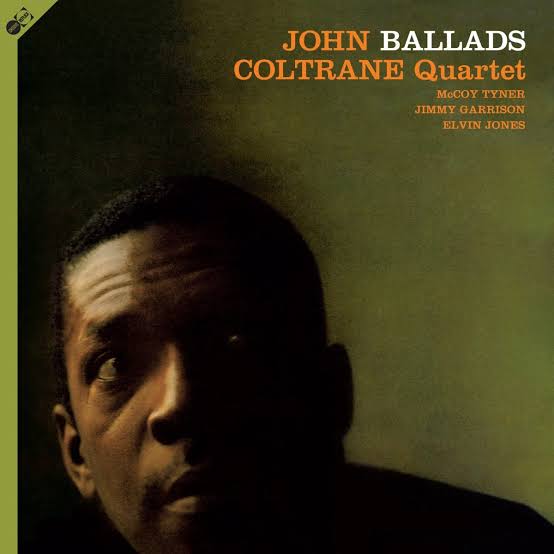
The result was Ballads.
At first glance, the album appeared almost conservative.
Yet beneath its elegant simplicity lay one of the greatest artistic achievements of Coltrane’s career.
Ballads demonstrated that true mastery is not measured solely by complexity.
Sometimes, the deepest emotional impact comes from knowing exactly what not to play.
More than sixty years after its release, the album remains one of the most beloved recordings in the entire jazz canon.
It introduced countless listeners to John Coltrane.
It continues to captivate seasoned jazz fans.
And it reminds us that the same musician capable of reshaping the future of jazz also possessed an extraordinary gift for interpreting the most intimate melodies ever written.
A Different Kind of Recording Session
Unlike many of Coltrane’s landmark albums, Ballads was not conceived as an ambitious conceptual project.
The sessions were spread across several recording dates in late 1961 and 1962 at Rudy Van Gelder’s legendary studio in Englewood Cliffs, New Jersey.
Producer Bob Thiele had a straightforward idea.
Record a collection of classic American ballads.
No radical experimentation.
No manifesto.
Simply beautiful songs performed by one of the greatest quartets in jazz.
For Coltrane, however, even simplicity demanded complete honesty.
Every melody received his full emotional attention.
Every phrase was carefully shaped.
Rather than treating these standards as vehicles for technical display, he approached them with profound respect.
The result feels almost conversational.
Nothing sounds forced.
Nothing sounds hurried.
The music unfolds naturally, allowing each composition to breathe.
Ironically, what began as a relatively modest recording project became one of the defining albums of Coltrane’s career.
The Perfect Quartet
By the time Ballads was recorded, the Classic Quartet had developed an almost telepathic connection.
John Coltrane – tenor saxophone.
McCoy Tyner – piano.
Jimmy Garrison – bass.
Elvin Jones – drums.
Together, they had already begun transforming the language of modern jazz.
Yet on Ballads, they demonstrated a different kind of greatness.
No musician competed for attention.
Tyner’s piano offered luminous harmonic colors without overwhelming the melodies.
Garrison’s bass provided warmth, stability and remarkable patience.
Elvin Jones, often celebrated for volcanic rhythmic power, displayed astonishing delicacy, using brushes and subtle textures that revealed another dimension of his artistry.
The quartet’s collective maturity is evident throughout the album.
Every note serves the song.
Every silence matters.
Their restraint becomes just as impressive as their virtuosity.
JazzLatitude Insight
Many listeners discover John Coltrane through A Love Supreme or Giant Steps. Yet professional musicians often recommend Ballads as the ideal introduction to his artistry because it reveals not only his technical brilliance but also his extraordinary emotional sensitivity.
Inside the Songs
How John Coltrane Turned Familiar Melodies into Timeless Art
One of the greatest misconceptions about Ballads is that it is a “simple” album.
The melodies may be familiar.
The tempos may be relaxed.
The improvisations may be more concise than on many of Coltrane’s other recordings.
But beneath that apparent simplicity lies extraordinary artistic discipline.
Playing a standard beautifully is often far more difficult than dazzling an audience with technical complexity.
There is nowhere to hide.
Every note matters.
Every breath shapes the emotional direction of the performance.
Every pause becomes part of the story.
On Ballads, John Coltrane demonstrated that emotional honesty could be just as revolutionary as harmonic innovation.
Instead of reinventing the songs beyond recognition, he illuminated their deepest emotional possibilities.
Each performance became an intimate conversation between composer, performer and listener.
“Say It (Over and Over Again)”
The album opens with one of the most graceful performances of Coltrane’s career.
Originally written by Jimmy McHugh with lyrics by Frank Loesser in 1937, “Say It (Over and Over Again)” had already become a respected American standard.
Yet Coltrane approached it as though he were discovering it for the very first time.
His opening phrase immediately establishes the album’s atmosphere.
Warm.
Patient.
Completely unhurried.
Instead of filling every measure with elaborate ideas, he allows the melody to breathe naturally.
McCoy Tyner surrounds the saxophone with delicate harmonic colors, while Jimmy Garrison and Elvin Jones create an almost invisible rhythmic foundation.
Nothing competes for attention.
The song itself remains the central character.
It is a masterclass in musical restraint.
“You Don’t Know What Love Is”
If the opening track introduces tenderness, “You Don’t Know What Love Is” explores vulnerability.
Originally composed by Gene de Paul with lyrics by Don Raye, the song had long attracted jazz musicians because of its rich harmonic structure and emotional depth.
Coltrane resists any temptation toward dramatic virtuosity.
Instead, he lingers over individual notes.
He bends phrases gently.
He allows silence to complete musical sentences.
The result feels almost vocal.
Listeners often remark that Coltrane seems to sing through his tenor saxophone.
Few recordings illustrate that quality more clearly than this performance.
“Too Young to Go Steady”
One of the album’s hidden treasures is “Too Young to Go Steady.”
Less frequently performed than some of the other standards, the composition offered Coltrane an opportunity to reveal his remarkable lyrical instincts.
Rather than transforming the tune into an extended improvisational vehicle, he preserves its elegance.
Every phrase unfolds with remarkable balance.
Jimmy Garrison’s bass quietly supports the harmonic movement without drawing attention to itself.
Meanwhile, Elvin Jones demonstrates astonishing sensitivity.
Listeners familiar with his explosive work on live recordings may be surprised by the extraordinary delicacy of his brushwork here.
The quartet proves that intensity is not measured by volume.
It is measured by emotional commitment.
JazzLatitude Insight
During these sessions, John Coltrane rarely discussed elaborate musical concepts. Instead, he encouraged the quartet to trust the songs themselves. That confidence allowed the emotional character of each composition to emerge naturally, without unnecessary complexity.
“I Wish I Knew”
Few performances on Ballads capture quiet longing as beautifully as “I Wish I Knew.”
The melody unfolds almost like a private conversation.
Tyner’s piano gently answers Coltrane’s phrases.
Garrison provides a deep, reassuring pulse.
Jones paints subtle rhythmic textures rather than explicit beats.
The ensemble breathes together.
Every musician listens with extraordinary attention.
The performance illustrates one of the defining qualities of the Classic Quartet.
Although Coltrane was unquestionably the leader, every member shaped the emotional direction of the music.
No voice dominates.
Instead, four remarkable musicians create a single unified expression.
“What’s New?”
Originally introduced in 1939, “What’s New?” had become a favorite among jazz instrumentalists long before Coltrane recorded it.
His interpretation avoids sentimentality.
Rather than exaggerating the melody’s melancholy, he presents it with remarkable dignity.
Each phrase feels carefully considered.
Each note possesses unmistakable purpose.
This economy of expression became one of Coltrane’s greatest strengths.
Listeners expecting torrents of notes instead encounter something even more powerful.
Absolute confidence.
A musician who no longer needed to prove anything.
The Art of Leaving Space
Perhaps the greatest lesson of Ballads lies not in what the quartet plays.
But in what it chooses not to play.
Silence appears throughout the album.
Not as emptiness.
As expression.
Between phrases, Coltrane allows emotions to resonate.
Tyner resists unnecessary harmonic decoration.
Garrison never overwhelms the music with constant movement.
Even Elvin Jones, famous for his rolling polyrhythms, embraces remarkable restraint.
This collective patience transforms each performance into an experience of quiet intimacy.
The listener is invited into the music rather than overwhelmed by it.
In many ways, Ballads demonstrates that maturity often reveals itself through simplicity.
The quartet understood that beauty rarely demands excess.
Sometimes, a single perfectly placed note carries more meaning than an entire page of virtuosity.
Buy Amazon
From Quiet Masterpiece to Timeless Classic
When Ballads was first released in 1963, it surprised nearly everyone.
Many critics and listeners expected John Coltrane to continue moving toward ever greater harmonic complexity and increasingly adventurous improvisation.
Instead, they encountered an album built upon familiar melodies, graceful phrasing and emotional transparency.
Some early reviewers viewed the record as an unexpected detour.
History would prove otherwise.
More than six decades later, Ballads is recognized not as an exception in Coltrane’s catalog, but as one of its defining achievements.
It revealed an essential truth about his artistry:
John Coltrane was never interested in complexity for its own sake.
He pursued honesty.
Whether performing a Broadway standard or an extended spiritual suite, his goal remained the same—to communicate something deeply human.
That commitment is precisely what gives Ballads its enduring power.
An Album That Opened the Door to Jazz
For countless listeners, Ballads became the first John Coltrane album they ever owned.
Its accessible repertoire and lyrical performances made it less intimidating than Giant Steps and more immediately approachable than A Love Supreme or Ascension.
Record collectors frequently recommend it to newcomers because it captures every essential quality of Coltrane’s musicianship without requiring prior familiarity with modal jazz or avant-garde improvisation.
Yet accessibility should never be mistaken for simplicity.
Behind every phrase lies decades of study, discipline and artistic maturity.
The album succeeds because Coltrane had already mastered extraordinary complexity—and consciously chose restraint.
That decision required immense confidence.
The Quartet at Complete Maturity
Although Ballads emphasizes melody above virtuosity, it also documents the Classic Quartet at an extraordinary stage of development.
By the time these recordings were completed, the musicians had learned to anticipate one another almost instinctively.
McCoy Tyner rarely needed dramatic gestures.
His harmonic choices seemed inevitable.
Jimmy Garrison provided unwavering stability while allowing the harmony to breathe naturally.
Elvin Jones demonstrated perhaps the greatest surprise of the album.
Known for explosive rhythmic energy, he revealed astonishing subtlety.
His brushwork, delicate cymbal textures and understated dynamics became essential elements of the recording’s intimate atmosphere.
Throughout the album, the quartet performs with remarkable humility.
No one attempts to dominate.
The music itself remains the priority.
That collective discipline explains why Ballads continues to sound so fresh today.
JazzLatitude Insight
Many musicians consider Ballads one of the finest examples of ensemble listening ever recorded. Rather than treating accompaniment as a secondary role, every member of the quartet contributes equally to the emotional shape of each performance, creating an almost conversational style of interaction.
Rudy Van Gelder’s Sound
Part of the album’s timeless beauty comes from its extraordinary recording quality.
Engineer Rudy Van Gelder, whose Englewood Cliffs studio became synonymous with the golden age of modern jazz, captured the quartet with remarkable warmth and clarity.
Every instrument occupies its own natural space.
Coltrane’s tenor saxophone sounds rich without becoming overpowering.
Tyner’s piano retains both brilliance and depth.
Garrison’s bass resonates with uncommon fullness.
Jones’ drums shimmer with detail while never overwhelming the ensemble.
The recording remains an audiophile favorite not because of technical gimmicks, but because of its honesty.
Listeners feel as though they are seated just a few feet from the musicians.
Few jazz albums have aged so gracefully from a sonic perspective.
Influence Across Generations
Over the decades, Ballads has quietly influenced musicians far beyond the world of jazz.
Its emphasis on lyrical storytelling, dynamic control and emotional authenticity can be heard in contemporary classical music, film scores, singer-songwriter recordings and even ambient music.
Saxophonists continue to study Coltrane’s tone on this album as carefully as they analyze his harmonic innovations elsewhere.
Pianists admire Tyner’s remarkable balance between support and individuality.
Bassists learn from Jimmy Garrison’s patient architecture.
Drummers discover a different side of Elvin Jones—one built on elegance rather than sheer power.
The album reminds every generation that technical mastery reaches its highest purpose only when it serves genuine expression.
A Masterpiece of Emotional Honesty
Unlike concept albums built around elaborate narratives, Ballads asks very little of the listener.
There is no philosophical manifesto.
No spiritual suite.
No revolutionary harmonic system demanding analysis.
Instead, it offers something surprisingly rare.
Beautiful songs.
Performed with complete sincerity.
That simplicity has allowed the album to remain timeless.
Listeners return not because they seek intellectual puzzles.
They return because the music continues to feel profoundly human.
Every performance speaks quietly.
Every melody lingers.
Every phrase invites another listen.
Few albums reward repeated listening so generously.
With each return, new shades of emotion emerge.
That quiet depth is the hallmark of enduring art.
The Lasting Legacy of Ballads
More than sixty years after its release, Ballads remains one of the most cherished albums in jazz history.
It has never been the loudest record in John Coltrane’s catalog.
Nor the most technically demanding.
Nor the most revolutionary.
Yet it continues to captivate listeners with a rare quality that transcends time:
Sincerity.
Every performance feels honest.
Every melody sounds lived rather than merely played.
Every phrase reveals an artist completely at peace with silence, space and emotional truth.
In a musical world that often celebrates complexity, Ballads reminds us that simplicity can be just as profound.
Perhaps even more so.
Why Ballads Still Matters
John Coltrane is frequently remembered as one of jazz’s greatest innovators.
Albums like Giant Steps, A Love Supreme and Ascension transformed the language of modern music.
Yet innovation alone does not explain his lasting influence.
Ballads reveals another side of his genius.
The ability to communicate directly.
Without spectacle.
Without unnecessary complexity.
Without sacrificing artistic depth.
For musicians, the album is a masterclass in phrasing, tone and ensemble listening.
For casual listeners, it offers one of the most welcoming entrances into the world of modern jazz.
For longtime admirers, it serves as a reminder that Coltrane’s greatness rested not only in the ideas he explored, but also in the emotions he conveyed.
That universal accessibility explains why Ballads continues to attract new audiences generation after generation.
Essential Tracks
Although every performance contributes to the album’s remarkable unity, several pieces have become enduring highlights.
“Say It (Over and Over Again)”
A graceful opening that immediately establishes the album’s intimate atmosphere.
Coltrane’s warm tenor tone and unhurried phrasing demonstrate extraordinary emotional control.
“You Don’t Know What Love Is”
One of the finest examples of lyrical saxophone playing ever recorded.
Every phrase feels deeply personal, revealing Coltrane’s remarkable gift for storytelling through melody.
“Too Young to Go Steady”
An often-overlooked gem that showcases the quartet’s exceptional sensitivity and collective restraint.
“I Wish I Knew”
A beautifully balanced performance in which every member of the quartet contributes equally to the emotional landscape.
“It’s Easy to Remember”
Perhaps the album’s most delicate interpretation.
Coltrane transforms the familiar standard into a meditation on memory, longing and quiet reflection.
JazzLatitude Insight
Many jazz educators recommend Ballads before introducing students to Giant Steps or A Love Supreme. The album teaches one of the most valuable lessons in music: before expanding the boundaries of an art form, a musician must first learn to communicate with absolute clarity and emotional honesty.
Technical Profile
Album: Ballads
Artist: John Coltrane Quartet
Release Year: 1963
Recorded: December 1961 – November 1962
Label: Impulse! Records
Producer: Bob Thiele
Recording Engineer: Rudy Van Gelder
Recording Studio: Van Gelder Studio, Englewood Cliffs, New Jersey
Personnel
- John Coltrane — tenor saxophone
- McCoy Tyner — piano
- Jimmy Garrison — double bass (on most tracks; Reggie Workman appears on the earliest session)
- Elvin Jones — drums
Primary Styles
- Modal Jazz
- Post-Bop
- Jazz Ballads
- Contemporary Jazz
Five Lesser-Known Facts About Ballads
1. The album was recorded over multiple sessions.
Rather than being captured in a single continuous project, Ballads was assembled from several recording dates spanning nearly a year, allowing the quartet’s chemistry to evolve naturally.
2. It was never intended as a major artistic statement.
Producer Bob Thiele initially envisioned a straightforward collection of standards. Instead, the sessions produced one of the defining albums of Coltrane’s career.
3. Two bassists appear on the recordings.
Although Jimmy Garrison became the quartet’s permanent bassist, Reggie Workman performs on the earliest session included on the album, making Ballads a unique document of the group’s transition.
4. It remains an audiophile favorite.
Rudy Van Gelder’s warm, natural recording continues to be praised as one of the finest-sounding jazz albums of the 1960s.
5. It introduced countless listeners to John Coltrane.
For many jazz fans, Ballads served as the gateway to Coltrane’s broader catalog before they explored more adventurous recordings such as A Love Supreme or Ascension.
Frequently Asked Questions
Why is Ballads considered one of John Coltrane’s greatest albums?
Because it demonstrates that Coltrane’s genius extended far beyond technical innovation. His lyrical phrasing, emotional honesty and extraordinary tone make the album one of the most beautiful recordings in jazz history.
Is Ballads a good introduction to John Coltrane?
Absolutely. Many critics, musicians and educators consider it the ideal starting point because it balances accessibility with artistic depth.
What style of jazz is featured on Ballads?
The album blends post-bop, modal jazz and traditional jazz ballads, emphasizing lyrical interpretation over extended improvisation.
Who plays on Ballads?
The album features John Coltrane, McCoy Tyner, Elvin Jones and primarily Jimmy Garrison, with Reggie Workman appearing on the earliest recording session.
Why has Ballads remained popular for more than sixty years?
Its timeless melodies, exceptional performances, intimate atmosphere and universal emotional appeal continue to resonate with listeners across generations.
JazzLatitude Rating
| Category | Rating |
|---|---|
| Historical Importance | ★★★★★ |
| Artistic Cohesion | ★★★★★ |
| Emotional Depth | ★★★★★ |
| Performance Quality | ★★★★★ |
| Recording Quality | ★★★★★ |
| Accessibility | ★★★★★ |
| Influence | ★★★★★ |
| Replay Value | ★★★★★ |
| JazzLatitude Essential | ★★★★★ |
Final Thoughts
Some albums change music through revolution.
Others change it through revelation.
Ballads belongs to the second category.
It revealed that one of jazz’s boldest innovators could also be one of its most compassionate storytellers.
John Coltrane did not abandon experimentation when he recorded Ballads.
He simply redirected his focus.
Instead of exploring the outer limits of harmony, he explored the inner landscape of melody.
Instead of dazzling listeners with technical brilliance, he invited them into moments of quiet reflection.
Supported by the incomparable artistry of McCoy Tyner, Jimmy Garrison and Elvin Jones, Coltrane created an album that remains as emotionally moving today as it was in 1963.
Its influence can be heard not only in jazz but in every genre that values sincerity over spectacle and expression over excess.
More than six decades later, Ballads continues to prove that true greatness is not measured by how many notes an artist can play.
It is measured by how deeply those notes stay with us after the music ends.
That is why Ballads remains one of the most beautiful—and most enduring—albums ever recorded.
It is not simply a collection of standards.
It is a timeless lesson in the art of saying more by playing less.